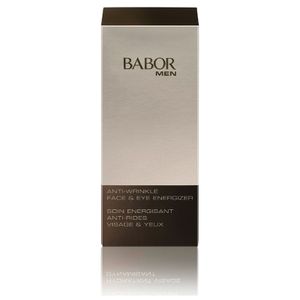
BABOR Men Anti-Wrinkle Face and Eye Energizer
Works for
1 of 2 advertised claims delivered
Moisturizing25 ingredients credited for this claimStrong support
“Fortified with a powerful TAUREC Complex, the advanced formula combines an energising blend of Siberian Ginseng, Taurine and Hops that work in tandem to stimulate cell regeneration and enhance the natural barrier function for stronger and more resilient skin.”
This product can help improve hydration of the skin with the two types of ingredients.
The first type is called “humectants”:
these ingredients help attract water.
When humectants are on the surface of the skin, they “pull in” the moisture from the outside environment, or from
within deeper layers of the skin. The following ingredients in this product do the job:
biosaccharide gum-1, fructose.
This product also contains ingredients called “occlusives”. They help reduce the speed with which our skin loses moisture to the outside environment. These ingredients also help soften the upper layer of the skin, so it feels less tight and nicer to the touch. The following ingredients in this product do the job: dimethicone, squalane.
The following ingredients in this product are especially good for supporting the skin barrier and helping with the hydration level: urea
Anti-aging5 ingredients credited for this claimLimited support
“Men Anti-Wrinkle Face and Eye Energizer”
This product does not contain ingredients that are able to reduce fine lines and wrinkles or help with skin elasticity, but it can improve the look of the skin temporarily through moisturization. Well-moisturized skin might also be able to repair the sun damage better.This ingredient - zinc pca - could be helpful for preventing or repairing signs of aging in theory, but there is no evidence that it actually works.
Can it cause trouble?
Irritancy3 strong irritants: Parfum, Alcohol + 1 more — patch-test recommendedHigh risk
Comedogenic3 ingredients rated 2 or more on the 0–5 pore-clogging scale3 flagged

User reviews
Be the first — your take helps the next person decide.
Ingredients
Filter by role to see what each ingredient is doing.
Water~40–60%
Glycerin~4–6%
- Irritation risk
- Low
One of the best moisturizing ingredients. Naturally present in skin. It attracts water to the upper layer of the skin working as a humectant
More about GlycerinButylene glycol~3.4–5.1%
- Irritation risk
- Low
Used to create a nice product texture and help delivery of other ingredients. Might be somewhat helpful in attracting water to the upper layer of the skin
More about Butylene glycolSqualane~2.7–4.1%
- Irritation risk
- Low
An oil naturally present in skin. Works as an emollient to soften the skin and form a protective layer on its surface without a greasy feeling.
More about SqualaneBetula alba juice~1.9–2.9%
- Irritation risk
- Low
Macadamia integrifolia seed oil~1.6–2.4%
- Irritation risk
- Low
A plant oil that helps soften the upper layer of the skin
More about Macadamia integrifolia seed oilTocopheryl acetate~1.3–1.9%
- Irritation risk
- Medium
A more stable but less bio-available form of vitamin E compared to Tocopherol. Might help moisturize and protect the skin from free radicals, but mostly used in low concentrations to stabilize other ingredients.
More about Tocopheryl acetateEthylhexyl isononanoate~1.2–1.8%
- Irritation risk
- Low
Helps soften the upper layer of the skin and improve the product consistency
More about Ethylhexyl isononanoateHydrogenated vegetable glycerides~0.95–1.4%
- Irritation risk
- Low
Help soften the upper layer of the skin
More about Hydrogenated vegetable glyceridesPistacia vera seed oil~0.55–1.25%
- Irritation risk
- Low
Helps soften the upper layer of the skin
More about Pistacia vera seed oilDimethicone~0.45–1.05%
- Irritation risk
- Low
A silicone that helps to reduce water loss from the surface of the skin. Can temporarily "fill in" lines and wrinkles, absorb oil, and create a nice product finish
More about DimethiconePotassium cetyl phosphate~0.35–0.8%
- Irritation risk
- Medium
Helps oil and water mix together
More about Potassium cetyl phosphatePhenoxyethanol~0.2–0.7%
- Irritation risk
- Low
A preservative. It helps prevent bacterial growth in cosmetic products
More about PhenoxyethanolPanthenol~0.15–0.6%
- Irritation risk
- Low
Helps attract water to the upper layer of the skin and can help improve skin barrier function
More about PanthenolCarbomer~0.15–0.55%
- Irritation risk
- Low
Helps create a thicker or gel-like product texture. It is not a surfactant but can be used in gentle cleansing formulations
More about CarbomerHydrogenated palm glycerides~0.15–0.65%
- Irritation risk
- Low
An emollient that softens the skin
More about Hydrogenated palm glyceridesPropanediol~0.15–0.55%
- Irritation risk
- Low
Acts as a solvent for other ingredients. Speeds up the absorption of other ingredients into the skin
More about PropanediolCetearyl alcohol~0.15–0.6%
- Irritation risk
- Low
- Comedogenicity
- 2/5
A non-drying alcohol. Works as an emollient. Helps water and oil mix together and creates a nice product texture
More about Cetearyl alcoholChlorella vulgaris/lupinus albus protein ferment~0.1–0.4%
- Irritation risk
- Low
- Comedogenicity
- 2/5
Acanthopanax senticosus root extract~0.1–0.35%
- Irritation risk
- High
A plant extract that might have antioxidant properties
More about Acanthopanax senticosus root extractZinc pca~0.1–0.4%
- Irritation risk
- Low
A compound that combines zinc with a hydrating ingredient PCA. Might to be helpful against acne and clogged pores. Can help calm down inflammation in skin. Could be helpful in reducing the formation of free radicals in skin. Might help to reduce fine lines in wrinkles, but solid evidence is missing
More about Zinc pcaXanthan gum~0.1–0.4%
- Irritation risk
- Low
Used to create a thicker product consistency
More about Xanthan gumPropylene glycol~0.05–0.25%
- Irritation risk
- High
Helps oil and water mix together and can enhance the penetration of other ingredients into the skin. It can be irritating
More about Propylene glycolSodium lactate~0.05–0.3%
- Irritation risk
- Medium
Helps attract water to the upper layer of the skin. Is often used to adjust the pH level of the product
More about Sodium lactateSodium pca~0.05–0.3%
- Irritation risk
- Low
Naturally present in skin and helps to attract water to its upper layer
More about Sodium pcaPentylene glycol~0.1–0.4%
- Irritation risk
- Medium
Used to preserve products, dissolve other ingredients and create a nice product texture
More about Pentylene glycolSodium hydroxide~0.05–0.3%
Parfum~0.05–0.25%
- Irritation risk
- High
An aromatic blend of unspecified and possibly irritating ingredients
More about ParfumEthylhexylglycerin~0.05–0.3%
Potassium sorbate~0.1–0.3%
Zea mays kernel extract~0.1–0.3%
- Irritation risk
- Low
- Comedogenicity
- 3/5
Taurine~0.05–0.3%
- Irritation risk
- Medium
Could be helpful in reducing inflammation in skin, evening out the skin tone and neutralizing free radicals, but more research is needed to confirm its effectiveness
More about TaurineTriticum vulgare protein~0.1–0.4%
- Irritation risk
- Low
Disodium edta~0.05–0.3%
Alcohol~0.05–0.3%
- Irritation risk
- High
Can be drying and contribute to skin irritation. Used in formulars to dissolve other ingredients, create a thinner product consistency or for its antibacterial properties
More about AlcoholCaprylic/capric triglyceride~0.1–0.4%
- Irritation risk
- Medium
A good mix of fatty acids that forms a protective layer on the skin. Improves the shelf life of products. Derived from coconut and glycerin
More about Caprylic/capric triglycerideLactic acid~0.05–0.25%
- Irritation risk
- Medium
An exfoliating and moisturizing alpha-hydroxy acid (AHA). Typically causes less irritation than other AHAs, for example, glycolic acid. At high concentrations (about 15%), lactic acid can help reduce lines and wrinkles. Recent studies show that lactic acid can support the "good" bacteria living on skin's surface (healthy skin microbiome)
More about Lactic acidHumulus lupulus extract~0.1–0.3%
- Irritation risk
- High
Hops extract. Can contain common irritants and allergens geraniol, limonene, linalool
More about Humulus lupulus extractGlucose~0.05–0.25%
- Irritation risk
- Low
Helps attract water to the upper layer of the skin. Could be helpful in restoring the skin barrier function
More about GlucoseBiosaccharide gum-1~0.05–0.25%
- Irritation risk
- Low
Helps attract water to the upper layer of the skin and is claimed to provide a longer-lasting hydration because of its ability to create a water-binding film on the surface of the skin
More about Biosaccharide gum-1Sodium benzoate~0.05–0.25%
Pantolactone~0.05–0.25%
- Irritation risk
- Low
Helps attract water to the upper layer of the skin
More about PantolactoneCitric acid~0.05–0.25%
- Irritation risk
- Medium
Can work as an exfoliant but is typically used to adjust the product pH
More about Citric acidFructose~0.05–0.25%
- Irritation risk
- Low
Helps attract water to the upper layer of the skin
More about FructoseGlycine~0.05–0.25%
- Irritation risk
- Low
Helps to attract water to the upper layer of the skin and can help restore the skin barrier function
More about GlycineAscorbyl palmitate~0.05–0.2%
- Irritation risk
- Medium
Being a lipid soluble form of vitamin C, it is more stable and can penetrate the skin better than L-Ascorbic acid. It is effective in protecting the skin from free radicals, as well as evening the skin tone, but is less effective in stimulating collagen production compared to L-Ascorbic acid.
More about Ascorbyl palmitateInositol~0.05–0.15%
Niacinamide~0.05–0.2%
- Irritation risk
- Low
Is proven to be effective in reducing blemishes, evening out skin tone and helping to improve lines and wrinkles. It helps the skin to repair sun damage, calm down inflammation and keep maintain good levels of moisture. The concentration of about 2% is effective for supporting the skin barrier and evening out the skin tone. Concentration of 4-6% is better for helping with acne and balancing the sebum production
More about NiacinamideUrea~0.05–0.15%
- Irritation risk
- Low
Naturally present in skin (urea makes up about 7% of natural moisturizing factors in skin). Attracts water to the upper layer of the skin. Also has a positive effect on the skin barrier beyond the humectant action. Can enhance penetration of other ingredients. Is an exfoliating ingredient when used in high concentrations
More about UreaAscorbic acid~0.01–0.05%
- Irritation risk
- High
The most well-researched antioxidant that works in skin. Helps neutralize free radicals supporting collagen production, helping to even out the skin tone and preventing early signs of aging
More about Ascorbic acidCi 42090~0.01–0.05%
Ingredient list view
Water, Glycerin, Butylene glycol, Squalane, Betula alba juice, Macadamia integrifolia seed oil, Tocopheryl acetate, Ethylhexyl isononanoate, Hydrogenated vegetable glycerides, Pistacia vera seed oil, Dimethicone, Potassium cetyl phosphate, Phenoxyethanol, Panthenol, Carbomer, Hydrogenated palm glycerides, Propanediol, Cetearyl alcohol, Chlorella vulgaris/lupinus albus protein ferment, Acanthopanax senticosus root extract, Zinc pca, Xanthan gum, Propylene glycol, Sodium lactate, Sodium pca, Pentylene glycol, Sodium hydroxide, Parfum, Ethylhexylglycerin, Potassium sorbate, Zea mays kernel extract, Taurine, Triticum vulgare protein, Disodium edta, Alcohol, Caprylic/capric triglyceride, Lactic acid, Humulus lupulus extract, Glucose, Biosaccharide gum-1, Sodium benzoate, Pantolactone, Citric acid, Fructose, Glycine, Ascorbyl palmitate, Inositol, Niacinamide, Urea, Ascorbic acid, Ci 42090
Compare prices
Retailers ranked by price — lowest first.

Affiliate links · prices updated regularly
Worth comparing, line by line.
Match % combines shared ingredients, the first five ingredients, shared actives and hero ingredients, irritancy (lower counts in the alternative's favour), texture and body area. Only products in the same routine step are compared.
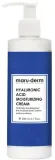
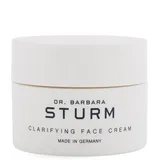
| BABORMen Anti-Wrinkle Face and Eye EnergizerYOUR PRODUCT | Dr. Barbara SturmClarifying Face Cream | BepantholFace and eye cream | MarudermHyaluronic Acid Moisturizer Face & Body Cream | |
|---|---|---|---|---|
| Match | — | 65% | 57% | 57% |
| Price | $78.00 | $198.31+$120.31 | $33.70−$44.30 | $21.99−$56.01 |
| Shared key ingredients | — | 12 of 14 | 9 of 14 | 9 of 14 |
| Key difference | — | Niacinamide | Niacinamide | Niacinamide |
| Irritancy | High | Medium | Medium | Low |
| Drying alcohol | Contains drying alcohol | Contains drying alcohol | — | — |
| View product | Shop | Shop | Shop |
Product summary
Based on the ingredients included, "BABOR - Men Anti-Wrinkle Face and Eye Energizer" works well for moisturizing the skin. This moisturizer uses a good combo of humectants and emollients. These both types of ingredients are essentials for improving the skin hydration and keeping the skin barrier healthy. Humectants in this product (urea, biosaccharide gum-1, fructose, glycerin and glycine) help to increase the water content in the upper layer of the skin. (These ingredients do so by "capturing" water molecules from the outside air or from within the deeper layers of the skin). Emollients in this formulation (dimethicone, squalane, cetearyl alcohol, hydrogenated vegetable glycerides and macadamia integrifolia seed oil) help to reduce the moisture loss from the skin. They also soften the skin surface and relieve the feeling of dryness and tightness.
Ingredient callouts
- This product also contains vitamin C (Ascorbic Acid). It can be an effective active for anti-aging and evening out the skin tone, but in this moisturizer it is used for stabilizing other ingredients in the formulation. In this concentration (0.01% - 0.05%) it cannot have a noticeable benefit for the skin.
Irritation risk
We assess the overall irritancy of this moisturizer to be high. For a detailed overview of all potential irritants: click here
You can see the detailed formula review with the breakdown of all actives in the product and the full ingredient list with estimated concentrations in the tables below.
Price
The product retails for 78.00$ in the United States.
For a detailed price comparison: click here.
Sources cited in this review
Every concentration estimate and effectiveness label is anchored to one of these 23 studies and safety reviews.
- 1
- 2
- 3
- 4
- 5
- 6Final Report on the Safety Assessment of Dimethicone Copolyoljournals.sagepub.com

Affiliate links · As an Amazon Associate, WIMJ earns from qualifying purchases.