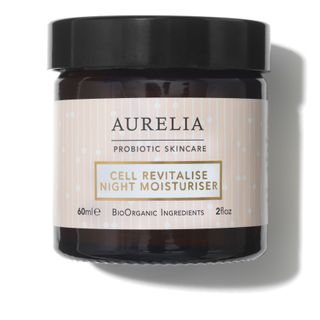
Aurelia Cell Revitalise Night Moisturiser by Aurelia Probiotic Skincare
Works for
2 of 2 advertised claims delivered
Moisturizing19 ingredients credited for this claimStrong support
“Give skin a good night’s sleep with Aurelia Probiotic Skincare Cell Revitalise Night Moisturiser, a rich facial cream that helps reduce the appearance of ageing and restores moisture.”
This product can help improve hydration of the skin with the two types of ingredients.
The first type is called “humectants”:
these ingredients help attract water.
When humectants are on the surface of the skin, they “pull in” the moisture from the outside environment, or from
within deeper layers of the skin. The following ingredients in this product do the job:
glycerin, mannitol.
This product also contains ingredients called “occlusives”. They help reduce the speed with which our skin loses moisture to the outside environment. These ingredients also help soften the upper layer of the skin, so it feels less tight and nicer to the touch. The following ingredients in this product do the job: butyrospermum parkii butter, myristyl myristate.
The following ingredients in this product are especially good for supporting the skin barrier and helping with the hydration level: acetyl tetrapeptide-15, panthenol
Anti-aging2 ingredients credited for this claimModerate support
“Give skin a good night’s sleep with Aurelia Probiotic Skincare Cell Revitalise Night Moisturiser, a rich facial cream that helps reduce the appearance of ageing and restores moisture.”
This product contains acetyl tetrapeptide-15. This ingredient might be able to help reduce and prevent fine lines and wrinkles, improve skin elasticity and firmness, but there is not enough evidence that it actually works.
Anti-oxidationNot advertised by the brand · 6 ingredients credited for this claimModerate support
This product contains antioxidants (bifida ferment lysate) that might be able to help neutralize free radicals in skin to lessen the damage it gets from the UV light (sun). There is not enough evidence to confirm their effectiveness in skin though.
Can it cause trouble?
Irritancy12 strong irritants: Rosa damascena extract, Hibiscus sabdariffa flower extract + 10 more — patch-test recommendedHigh risk
Comedogenic4 ingredients rated 2 or more on the 0–5 pore-clogging scale4 flagged
User reviews
Be the first — your take helps the next person decide.
Ingredients
Filter by role to see what each ingredient is doing.
Water~40–60%
Aloe barbadensis leaf extract~4.9–7.4%
- Irritation risk
- Medium
Traditionally used to treat sunburns, dermatitis and inflammation, but evidence for its effectiveness is lacking. The extract can contain humectants that help attract water into the skin
More about Aloe barbadensis leaf extractGlycerin~3.4–5%
- Irritation risk
- Low
One of the best moisturizing ingredients. Naturally present in skin. It attracts water to the upper layer of the skin working as a humectant
More about GlycerinBifida ferment lysate~2.5–3.8%
- Irritation risk
- Low
Consists of remains of dead yeast bacteria cells. Helps to hydrate the skin and reduce irritation. Might has some anti-oxidant effect
More about Bifida ferment lysateButyrospermum parkii butter~1.9–2.8%
- Irritation risk
- Low
- Comedogenicity
- 3/5
A great moisturising ingredient that softens the skin and reduces water loss from its upper layer. It also can be helpful in protecting skin from free radicals
More about Butyrospermum parkii butterGlyceryl stearate se~1.4–2.1%
- Irritation risk
- Low
- Comedogenicity
- 2/5
Used to stabilize the product formulations and works as an emollient
More about Glyceryl stearate seCoco-caprylate~1.2–1.7%
- Irritation risk
- Medium
An emollient that softens skin and creates a nice product texture
More about Coco-caprylateCetearyl alcohol~1–1.5%
- Irritation risk
- Low
- Comedogenicity
- 2/5
A non-drying alcohol. Works as an emollient. Helps water and oil mix together and creates a nice product texture
More about Cetearyl alcoholMyristyl myristate~0.85–1.3%
- Irritation risk
- Medium
- Comedogenicity
- 3/5
An emollient. Is not recommended for acne-prone skin as it can be comedogenic
More about Myristyl myristateCocoglycerides~0.5–1.15%
- Irritation risk
- High
Help soften the upper layer of the skin and make it easier for oil and water mix together. Recently, a rising number of allergic reactions to cocoglycerides and other coconut-derived surfactants has been reported. As there is a significant overlap between frequent irritants and allergens, we flag this ingredient for attention of those with very sensitive, reactive skin
More about CocoglyceridesRhus verniciflua peel wax~0.35–0.85%
- Irritation risk
- Low
Borago officinalis seed oil~0.35–0.8%
- Irritation risk
- Low
A plant oil that is effective in reducing irritation in skin, restore the barrier function and support its hydration
More about Borago officinalis seed oilRosa damascena extract~0.2–0.7%
- Irritation risk
- High
Oil of a very fragrant pink rose used as fragrance in cosmetics. Extensive research has shown it has mixed benefits. In the pro column, inhaling this flower’s scent seems to have relaxing properties and the plant’s petals contain skin-soothing and antioxidant compounds that can benefit skin. On the flipside, the numerous chemicals that create this rose’s distinctive fragrance pose a risk of causing skin aggravation.
More about Rosa damascena extractMilk protein~0.15–0.65%
- Irritation risk
- Low
Helps attract water to the upper layer of the skin
More about Milk proteinKigelia africana fruit extract~0.15–0.6%
- Irritation risk
- Low
Hibiscus sabdariffa flower extract~0.15–0.6%
- Irritation risk
- High
A plant extract that can be irritating. It might contain a compound anthocyanin that could be helpful in neutralizing free radicals
More about Hibiscus sabdariffa flower extractAdansonia digitata fruit extract~0.15–0.7%
- Irritation risk
- Low
Persea gratissima oil~0.15–0.65%
- Irritation risk
- Medium
An emollient that helps soften the skin and could be helpful in repairing its barrier function
More about Persea gratissima oilPrunus armeniaca kernel oil~0.15–0.6%
- Irritation risk
- Medium
An emollient that helps soften the skin
More about Prunus armeniaca kernel oilSchinziophyton rautanenii kernel oil~0.15–0.5%
- Irritation risk
- Low
Panthenol~0.1–0.4%
- Irritation risk
- Low
Helps attract water to the upper layer of the skin and can help improve skin barrier function
More about PanthenolXanthan gum~0.1–0.4%
- Irritation risk
- Low
Used to create a thicker product consistency
More about Xanthan gumTocopheryl acetate~0.1–0.35%
- Irritation risk
- Medium
A more stable but less bio-available form of vitamin E compared to Tocopherol. Might help moisturize and protect the skin from free radicals, but mostly used in low concentrations to stabilize other ingredients.
More about Tocopheryl acetateSodium stearoyl glutamate~0.1–0.4%
- Irritation risk
- Medium
Helps oil and water mix together
More about Sodium stearoyl glutamateGlyceryl caprylate~0.1–0.4%
- Irritation risk
- Low
An emollient that can also help water and oil mix together, as well as prevent bacteria growth in products
More about Glyceryl caprylateLauroyl lysine~0.05–0.3%
- Irritation risk
- Low
Helps soften the upper layer of the skin and creates a nice product texture
More about Lauroyl lysineCitrus aurantium dulcis flower oil~0.05–0.25%
- Irritation risk
- High
Citrus nobilis peel oil~0.05–0.25%
- Irritation risk
- High
A plant oil with high content of volatile compounds that, especially when exposed to air, can cause allergic reactions and irritate the skin
More about Citrus nobilis peel oilLavandula angustifolia oil~0.05–0.3%
- Irritation risk
- High
An essential oil. Potential allergen and can be irritating. It has some anti-bacterial properties
More about Lavandula angustifolia oilRosa damascena flower oil~0.05–0.25%
- Irritation risk
- High
Used as a fragrance. Can be irritating
More about Rosa damascena flower oilMannitol~0.1–0.35%
- Irritation risk
- Low
Helps to attract water to the upper layer of the skin
More about MannitolSodium citrate~0.05–0.3%
- Irritation risk
- Medium
Helps to control the skin's pH level. Maintains the skin's natural film of amino-lactic acids and oils. Helps to preserve products
More about Sodium citrateAcetyl tetrapeptide-15~0.1–0.3%
- Irritation risk
- Low
A type of peptide. Peptides are excellent moisturizers and might be able support collagen production reducing fine lines and wrinkles
More about Acetyl tetrapeptide-15Benzyl alcohol~0.05–0.25%
- Irritation risk
- High
A preservative. Can be used to mask unpleasant smell. Can be irritating
More about Benzyl alcoholDehydroacetic acid~0.1–0.3%
Sodium phytate~0.1–0.3%
Citric acid~0.05–0.25%
- Irritation risk
- Medium
Can work as an exfoliant but is typically used to adjust the product pH
More about Citric acidLimonene~0.05–0.2%
- Irritation risk
- High
A common frangrance that can easily irritate skin, especially if exposed to air, light or heat
More about LimoneneLinalool~0.05–0.2%
Citronellol~0.05–0.15%
Geraniol~0.05–0.2%
Hydroxycitronellal~0.05–0.2%
- Irritation risk
- High
A fragrance. A likely allergen and can be irritating
More about HydroxycitronellalCitral~0.01–0.05%
Ingredient list view
Water, Aloe barbadensis leaf extract, Glycerin, Bifida ferment lysate, Butyrospermum parkii butter, Glyceryl stearate se, Coco-caprylate, Cetearyl alcohol, Myristyl myristate, Cocoglycerides, Rhus verniciflua peel wax, Borago officinalis seed oil, Rosa damascena extract, Milk protein, Kigelia africana fruit extract, Hibiscus sabdariffa flower extract, Adansonia digitata fruit extract, Persea gratissima oil, Prunus armeniaca kernel oil, Schinziophyton rautanenii kernel oil, Panthenol, Xanthan gum, Tocopheryl acetate, Sodium stearoyl glutamate, Glyceryl caprylate, Lauroyl lysine, Citrus aurantium dulcis flower oil, Citrus nobilis peel oil, Lavandula angustifolia oil, Rosa damascena flower oil, Mannitol, Sodium citrate, Acetyl tetrapeptide-15, Benzyl alcohol, Dehydroacetic acid, Sodium phytate, Citric acid, Limonene, Linalool, Citronellol, Geraniol, Hydroxycitronellal, Citral
Compare prices
Retailers ranked by price — lowest first.
Affiliate links · prices updated regularly · As an Amazon Associate, WIMJ earns from qualifying purchases.
Worth comparing, line by line.
Match % combines shared ingredients, the first five ingredients, shared actives and hero ingredients, irritancy (lower counts in the alternative's favour), texture and body area. Only products in the same routine step are compared.
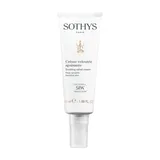
| AureliaCell Revitalise Night Moisturiser by Aurelia Probiotic SkincareYOUR PRODUCT | SothysSoothing Velvet Cream | |
|---|---|---|
| Match | — | 58% |
| Price | $76.68 | $59.50−$17.18 |
| Shared key ingredients | — | 3 of 10 |
| Key difference | — | Dimethicone |
| Irritancy | High | Medium |
| Drying alcohol | — | — |
| View product | Shop |

Product summary
Judging from the ingredient list, "Aurelia - Cell Revitalise Night Moisturiser by Aurelia Probiotic Skincare" works well for improving skin hydration As we expect from a proper moisturizer, the formula includes a combo of effective humectants and emollients. These are the two different types of ingredients that are essential for improving the skin hydration and supporting a healthy skin barrier. Glycerin, mannitol and aloe barbadensis leaf extract in this product (humectants) attract water molecules to the upper layer of the skin (the water comes from the outside air or from the deeper layers of the skin if the air is dry). Emollients in this formulation (borago officinalis seed oil, butyrospermum parkii butter, cetearyl alcohol, coco-caprylate and aloe barbadensis leaf extract) help to reduce the moisture loss from the skin. They also soften the skin surface and relieve the feeling of dryness and tightness.
Ingredient callouts
- We like that this moisturizer contains peptides (acetyl tetrapeptide-15 0.05% - 0.30%). There are many different kind of peptides and they are naturally present in our skin. They all are a combination of amino-acids. Some of them work as natural anti-biotics, promote wound-healing and production of collagen. The science is still not settled on how effective peptides in skincare are, but it is very likely that they have a benefit. Peptides might help restore the skin barrier and fight the signs of aging. At the very least, peptides work as humectants: they attract water to the upper layer of the skin and improve its hydration.
Irritation risk
This moisturizer contains a bunch of common irritants, including ingredients that do not provide any known benefit for the skin. It might not be the best choice if your skin is sensitive. We assess the overall irritancy of this moisturizer to be high. For a detailed overview of all potential irritants: click here
You can see the detailed formula review with the breakdown of all actives in the product and the full ingredient list with estimated concentrations in the tables below.
Price
The product retails from 58.00£ up to 61.64£ in the United Kingdom.
For a detailed price comparison: click here.
Sources cited in this review
Every concentration estimate and effectiveness label is anchored to one of these 15 studies and safety reviews.
- 1
- 2Bifidobacterium longumlysate, a new ingredient forreactive skinonlinelibrary.wiley.com
- 3Use of Probiotics for Dermal Applicationsresearchgate.net
- 4
- 5
- 6

Affiliate links · As an Amazon Associate, WIMJ earns from qualifying purchases.