Works for
3 of 3 advertised claims delivered
Anti-aging4 ingredients credited for this claimStrong support
“Our #1 selling moisturizer for all skin types is formulated with 5% Niacinamide and Licorice Root Extract for younger, healthy, brighter skin.”
This product can help reduce and prevent fine lines and wrinkles, improve skin elasticity and firmness because it contains niacinamide.
Keep in mind that it typically takes at least 6 weeks to notice any results because the changes that are needed to improve fine lines and elasticity happen in the deeper layers of the skin. No topical anti-aging product can “erase” wrinkles or fully reverse signs of aging.
Moisturizing23 ingredients credited for this claimStrong support
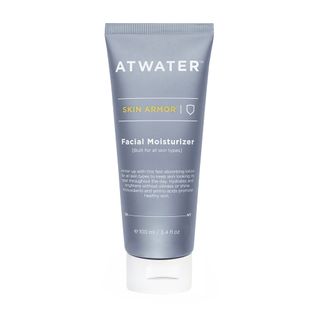
“Skin Armor Facial Moisturizer”
This product can help improve hydration of the skin with the two types of ingredients.
The first type is called “humectants”:
these ingredients help attract water.
When humectants are on the surface of the skin, they “pull in” the moisture from the outside environment, or from
within deeper layers of the skin. The following ingredients in this product do the job:
glucosamine hcl, glycerin.
This product also contains ingredients called “occlusives”. They help reduce the speed with which our skin loses moisture to the outside environment. These ingredients also help soften the upper layer of the skin, so it feels less tight and nicer to the touch. The following ingredients in this product do the job: caprylic/capric triglyceride, dimethicone.
The following ingredients in this product are especially good for supporting the skin barrier and helping with the hydration level: niacinamide, panthenol, urea
Evens skin tone4 ingredients credited for this claimStrong support
“Our #1 selling moisturizer for all skin types is formulated with 5% Niacinamide and Licorice Root Extract for younger, healthy, brighter skin.”
This product can help reduce hypepigmentation and even out the skin tone because it contains the following effective ingredients: niacinamide
The following ingredient (ingredients) in this product might be helpful, but there is no evidence to confirm that it actually can help even out the skin tone: glucosamine hcl, glycyrrhiza glabra root extract.
Keep in mind that you would need to apply any topical skincare targetted at hypigmentation consistently for a couple of months to get a result. No topical skincare product can help get rid of hyperpigmentation (including post-acne marks and age spots) instantly.
Anti-blemishNot advertised by the brand · 2 ingredients credited for this claimStrong support
This product can help reduce breakouts and clogged pores because it contains the following ingredient: niacinamide. This ingredient is used for treating acne and can have a noticeable effect.
Can it cause trouble?
Irritancy2 strong irritants: Sclareolide, Rosmarinus officinalis leaf extractMedium risk
Comedogenic2 ingredients rated 2 or more on the 0–5 pore-clogging scale2 flagged

User reviews
Be the first — your take helps the next person decide.
Ingredients
Filter by role to see what each ingredient is doing.
Water~45–55%
Niacinamide~4.2–5.2%
- Irritation risk
- Low
Is proven to be effective in reducing blemishes, evening out skin tone and helping to improve lines and wrinkles. It helps the skin to repair sun damage, calm down inflammation and keep maintain good levels of moisture. The concentration of about 2% is effective for supporting the skin barrier and evening out the skin tone. Concentration of 4-6% is better for helping with acne and balancing the sebum production
More about NiacinamideCaprylic/capric triglyceride~4.1–5%
- Irritation risk
- Medium
A good mix of fatty acids that forms a protective layer on the skin. Improves the shelf life of products. Derived from coconut and glycerin
More about Caprylic/capric triglycerideGlycerin~3–3.6%
- Irritation risk
- Low
One of the best moisturizing ingredients. Naturally present in skin. It attracts water to the upper layer of the skin working as a humectant
More about GlycerinAstrocaryum tucuma seed butter~2.4–3%
- Irritation risk
- Low
Glyceryl stearate se~1.9–2.4%
- Irritation risk
- Low
- Comedogenicity
- 2/5
Used to stabilize the product formulations and works as an emollient
More about Glyceryl stearate seStearic acid~1.8–2.2%
- Irritation risk
- Low
Helps oil and water mix together and works as an emollient
More about Stearic acidCetyl alcohol~1.5–1.9%
- Irritation risk
- Low
A non-drying alcohol that works to soften the skin and stabilize product formulations helping oil and water mix together
More about Cetyl alcoholOryza sativa bran extract~1.2–1.5%
Saccharide isomerate~0.95–1.15%
- Irritation risk
- Low
Helps attract water to the upper layer of the skin
More about Saccharide isomerateDimethicone~0.75–1.15%
- Irritation risk
- Low
A silicone that helps to reduce water loss from the surface of the skin. Can temporarily "fill in" lines and wrinkles, absorb oil, and create a nice product finish
More about DimethiconeSilica~0.95–1.15%
Phenethyl alcohol~0.55–0.8%
Glyceryl caprylate~0.55–0.8%
- Irritation risk
- Low
An emollient that can also help water and oil mix together, as well as prevent bacteria growth in products
More about Glyceryl caprylateMethylpropanediol~0.45–0.7%
Acrylates/c10-30 alkyl acrylate crosspolymer~0.5–0.7%
- Irritation risk
- Medium
Maintains the texture of skincare products. Allows the product to spread evenly. Helps oil and water mix together
More about Acrylates/c10-30 alkyl acrylate crosspolymer1,2-hexanediol~0.45–0.65%
Helianthus annuus extract~0.45–0.65%
- Irritation risk
- Low
Helps soften the upper layer of the skin
More about Helianthus annuus extractSclareolide~0.3–0.55%
- Irritation risk
- High
Derived from clary sage. Used as a fragrance. Can be irritating
More about SclareolideButylene glycol~0.3–0.55%
- Irritation risk
- Low
Used to create a nice product texture and help delivery of other ingredients. Might be somewhat helpful in attracting water to the upper layer of the skin
More about Butylene glycolRosmarinus officinalis leaf extract~0.25–0.5%
- Irritation risk
- High
Can be helpful in reducing inflammation in skin, including inflamed acne. It can be irritating
More about Rosmarinus officinalis leaf extractTocopherol~0.3–0.5%
- Irritation risk
- Low
Pure form of vitamin E. Can help moisturise and protect the skin from free radicals. Often used to help stabilise other ingredients or the formula itself
More about TocopherolCaffeine~0.25–0.45%
- Irritation risk
- Medium
Might be helpful in neutralizing free radicals. Can have a dehydration effect that might somewhat decrease the look of puffy eyes
More about CaffeineGlycyrrhiza glabra root extract~0.25–0.4%
- Irritation risk
- Medium
A plant extract that can help lighten the skin and calm down inflammation. Might be helpful in neutralizing free radicals
More about Glycyrrhiza glabra root extractOat amino acids~0.25–0.45%
- Irritation risk
- Low
Glycosphingolipids~0.25–0.5%
- Irritation risk
- Low
A type of lipids naturally present in skin. They can be converted to ceramides in skin
More about GlycosphingolipidsTrisodium ethylenediamine disuccinate~0.25–0.45%
- Irritation risk
- Medium
Used to improve stability of the formulation
More about Trisodium ethylenediamine disuccinateUrea~0.25–0.45%
- Irritation risk
- Low
Naturally present in skin (urea makes up about 7% of natural moisturizing factors in skin). Attracts water to the upper layer of the skin. Also has a positive effect on the skin barrier beyond the humectant action. Can enhance penetration of other ingredients. Is an exfoliating ingredient when used in high concentrations
More about UreaGlucosamine hcl~0.25–0.45%
- Irritation risk
- Low
Might be able to stimulate production of skin's natural moisturizing compounds such as hyaluronic acid. Could be helpful for evening the skin tone.
More about Glucosamine hclLaminaria digitata extract~0.25–0.45%
- Irritation risk
- Low
- Comedogenicity
- 3/5
Seaweed extract that helps the skin to attract water and make it more smooth for touch. Also shows promise of anti-aging properties, but good research is lacking at the moment
More about Laminaria digitata extractYeast extract~0.25–0.45%
- Irritation risk
- Low
Helps attract water to the upper layer of the skin and might have some anti-oxidant and skin lightening properties. It can help calm down inflammation in skin
More about Yeast extractTocopheryl acetate~0.25–0.5%
- Irritation risk
- Medium
A more stable but less bio-available form of vitamin E compared to Tocopherol. Might help moisturize and protect the skin from free radicals, but mostly used in low concentrations to stabilize other ingredients.
More about Tocopheryl acetatePanthenol~0.25–0.45%
- Irritation risk
- Low
Helps attract water to the upper layer of the skin and can help improve skin barrier function
More about PanthenolAscorbyl methylsilanol pectinate~0.25–0.45%
- Irritation risk
- Medium
A stable derivative of pectin and vitamin C. It might help neutralize free radicals in skin, but evidence of effectiveness is lacking. Helps create a thicker product consistency and stabilize the product formulation
More about Ascorbyl methylsilanol pectinateCitric acid~0.2–0.4%
- Irritation risk
- Medium
Can work as an exfoliant but is typically used to adjust the product pH
More about Citric acidSodium citrate~0.2–0.4%
- Irritation risk
- Medium
Helps to control the skin's pH level. Maintains the skin's natural film of amino-lactic acids and oils. Helps to preserve products
More about Sodium citrateSodium hyaluronate~0.2–0.4%
- Irritation risk
- Low
One of the best moisturizing ingredients. Attracts water into the upper layer of the skin
More about Sodium hyaluronateSaccharomyces/calcium ferment~0.2–0.4%
- Irritation risk
- Low
Saccharomyces/magnesium ferment~0.2–0.35%
- Irritation risk
- Low
Yeast extract that contains magnesium. Can help to attract water to the upper layer of the skin. Evidence of effectiveness for other benefits is missing
More about Saccharomyces/magnesium fermentSaccharomyces/potassium ferment~0.2–0.35%
- Irritation risk
- Low
Saccharomyces/zinc ferment~0.2–0.35%
- Irritation risk
- Low
Yeast extract that contains zinc. Can help to attract water to the upper layer of the skin. Evidence of effectiveness for other benefits is missing
More about Saccharomyces/zinc fermentMannitol~0.15–0.3%
- Irritation risk
- Low
Helps to attract water to the upper layer of the skin
More about MannitolMaltodextrin~0.15–0.3%
- Irritation risk
- Low
Used to stabilize the product formulation and can help absorb oil
More about MaltodextrinLeuconostoc/radish root ferment filtrate~0.15–0.3%
- Irritation risk
- Medium
A preservative that comes from radishes fermented by a bacteria. New research suggests that the preservation properties in the ingredient come from an ammonium salt that is not present naturally in radish root but used in its cultivation. Is problematic because the exact amount of the preservative agents is difficult to determine
More about Leuconostoc/radish root ferment filtrateLactobacillus ferment~0.15–0.25%
- Irritation risk
- Low
A fermentation product created by bacteria Lactobacillus. The fermented product has anti-bacterial properties and might be helpful in calming down inflammation, but studies are lacking. Helps attract water to the upper layer of the skin. Can be used as a preservative
More about Lactobacillus fermentPhenoxyethanol~0.15–0.25%
- Irritation risk
- Low
A preservative. It helps prevent bacterial growth in cosmetic products
More about PhenoxyethanolTetrasodium edta~0.05–0.15%
Ingredient list view
Water, Niacinamide, Caprylic/capric triglyceride, Glycerin, Astrocaryum tucuma seed butter, Glyceryl stearate se, Stearic acid, Cetyl alcohol, Oryza sativa bran extract, Saccharide isomerate, Dimethicone, Silica, Phenethyl alcohol, Glyceryl caprylate, Methylpropanediol, Acrylates/c10-30 alkyl acrylate crosspolymer, 1,2-hexanediol, Helianthus annuus extract, Sclareolide, Butylene glycol, Rosmarinus officinalis leaf extract, Tocopherol, Caffeine, Glycyrrhiza glabra root extract, Oat amino acids, Glycosphingolipids, Trisodium ethylenediamine disuccinate, Urea, Glucosamine hcl, Laminaria digitata extract, Yeast extract, Tocopheryl acetate, Panthenol, Ascorbyl methylsilanol pectinate, Citric acid, Sodium citrate, Sodium hyaluronate, Saccharomyces/calcium ferment, Saccharomyces/magnesium ferment, Saccharomyces/potassium ferment, Saccharomyces/zinc ferment, Mannitol, Maltodextrin, Leuconostoc/radish root ferment filtrate, Lactobacillus ferment, Phenoxyethanol, Tetrasodium edta
Compare prices
Retailers ranked by price — lowest first.

Worth comparing, line by line.
Match % combines shared ingredients, the first five ingredients, shared actives and hero ingredients, irritancy (lower counts in the alternative's favour), texture and body area. Only products in the same routine step are compared.
| AtwaterSkin Armor Facial MoisturizerYOUR PRODUCT | SimpleX Kindness Hydrating Light Facial Moisturiser | MarudermHyaluronic Acid Moisturizer Face & Body Cream | AtwaterHeavy Armor Facial Moisturizer | |
|---|---|---|---|---|
| Match | — | 87% | 84% | 84% |
| Price | $37.00 | $0.04−$36.96 | $21.99−$15.01 | $35.00−$2.00 |
| Shared key ingredients | — | 5 of 19 | 7 of 19 | 17 of 19 |
| Key difference | — | Mineral Oil | Fructose | Sunflower Seed Oil |
| Irritancy | Medium | Low | Low | Medium |
| Drying alcohol | — | — | — | — |
| View product | Shop | Shop | Shop |


Product summary
Judging from the ingredient list, "Atwater - Skin Armor Facial Moisturizer" works well for improving skin hydration As we expect from a proper moisturizer, the formula includes a combo of effective humectants and emollients. These are the two different types of ingredients that are essential for improving the skin hydration and supporting a healthy skin barrier. Humectants in this product (urea, glycerin, lactobacillus ferment, mannitol and saccharide isomerate) help to increase the water content in the upper layer of the skin. (These ingredients do so by "capturing" water molecules from the outside air or from within the deeper layers of the skin). Emollients in this formulation (glycosphingolipids, helianthus annuus extract, caprylic/capric triglyceride, dimethicone and cetyl alcohol) help to reduce the moisture loss from the skin. They also soften the skin surface and relieve the feeling of dryness and tightness.
Ingredient callouts
- We particularly like that there is a good concentration of Niacinamide (2.40% - 3.60%) in this moisturizer. Niacinamide is a well-studied multi-tasking active. It is a great ingredient to have in a moisturizer. It is stable, and can work well in almost any hydrating formulation. There is solid evidence that Niacinamide can help support skin barrier, regulate oil production and reduce acne and clogged pores. It also helps to fight photodamage and help improve the skin tone, reducing pigmentation marks.
Irritation risk
This formulation includes some common irritants, including ingredients that do not provide a benefit for the skin. We assess the overall irritancy of this moisturizer to be medium. For a detailed overview of all potential irritants: click here
You can see the detailed formula review with the breakdown of all actives in the product and the full ingredient list with estimated concentrations in the tables below.
Price
The product retails for 35.00$ in the United States.
For a detailed price comparison: click here.
Sources cited in this review
Every concentration estimate and effectiveness label is anchored to one of these 23 studies and safety reviews.
- 1
- 2
- 3
- 4
- 5Final Report on the Safety Assessment of Dimethicone Copolyoljournals.sagepub.com
- 6Final Report on the Safety Assessment of Phenethyl Alcoholsemanticscholar.org

Affiliate links · As an Amazon Associate, WIMJ earns from qualifying purchases.