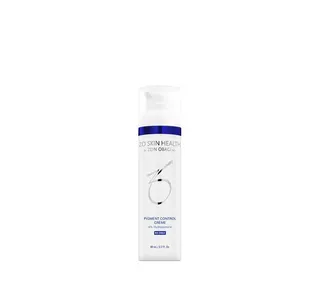
ZO Skin Health Pigment Control Crème 4% HQ - RX
Works for
Evens skin toneAscorbic acid, Hydroquinone + 1 moreWorks well
“Pigment Control Crème 4% HQ - RX”
This product can help reduce hypepigmentation and even out the skin tone because it contains the following effective ingredients: ascorbic acid, hydroquinone.
In addition, this product contains glycolic acid. This ingredient (ingredients) might help reduce hyperpigmentation, but the effect, if any, is likely to be small.
Keep in mind that you would need to apply any topical skincare targetted at hypigmentation consistently for a couple of months to get a result. No topical skincare product can help get rid of hyperpigmentation (including post-acne marks and age spots) instantly.
ExfoliationSide benefit · Glycolic acidWorks well
This product can help exfoliate the skin. In other words, it helps break down the bonds between dead cells on the surface of the skin and speed up the skin turnover. Skin often appears softer and brighter after exfoliation, but overdoing it can result in disrupted skin barrier. The following ingredient is doing the exfoliating job in this product: glycolic acid.
Anti-oxidationSide benefit · Ascorbic acid, Ascorbyl palmitate + 4 moreWorks well
This product contains antioxidants (ascorbic acid) that can help neutralize free radicals in skin. By doing so, they can lessen the damage the skin gets from the UV light (sun).
Anti-agingSide benefit the brand mentions · Ascorbic acid, Glycolic acid + 3 moreWorks well
“Retinol Skin Brightener 1% Retinol Skin Brightener 1% retinol clinically proven improve visible discoloration $130.”
This product can help reduce and prevent fine lines and wrinkles, improve skin elasticity and firmness because it contains ascorbic acid, glycolic acid.
Keep in mind that it typically takes at least 6 weeks to notice any results because the changes that are needed to improve fine lines and elasticity happen in the deeper layers of the skin. No topical anti-aging product can “erase” wrinkles or fully reverse signs of aging.
MoisturizingSide benefit · Beta-glucan, Cetyl alcohol + 4 moreWorks
This product can help improve hydration of the skin with the two types of ingredients.
The first type is called “humectants”:
these ingredients help attract water.
When humectants are on the surface of the skin, they “pull in” the moisture from the outside environment, or from
within deeper layers of the skin. The following ingredients in this product do the job:
glycerin, caprylyl glycol.
This product also contains ingredients called “occlusives”. They help reduce the speed with which our skin loses moisture to the outside environment. These ingredients also help soften the upper layer of the skin, so it feels less tight and nicer to the touch. The following ingredients in this product do the job: helianthus annuus seed oil, cetyl alcohol.
Can it cause trouble?
Irritancy1 strong irritant: HydroquinoneMedium risk
Comedogenic1 ingredient rated 2 or more on the 0–5 pore-clogging scale1 flagged
User reviews
Be the first — your take helps the next person decide.
Ingredients
Filter by role to see what each ingredient is doing.
Hydroquinone4%
- Irritation risk
- High
A potent anti-pigmentation active. It can have serious side-effects though and ideally is used under supervision of a doctor. It should not be used over a long period of time (over a year).
More about HydroquinoneWater~45–55%
Ascorbic acid~8.8–10.7%
- Irritation risk
- High
The most well-researched antioxidant that works in skin. Helps neutralize free radicals supporting collagen production, helping to even out the skin tone and preventing early signs of aging
More about Ascorbic acidAscorbyl palmitate~6–7.3%
- Irritation risk
- Medium
Being a lipid soluble form of vitamin C, it is more stable and can penetrate the skin better than L-Ascorbic acid. It is effective in protecting the skin from free radicals, as well as evening the skin tone, but is less effective in stimulating collagen production compared to L-Ascorbic acid.
More about Ascorbyl palmitateBeta-glucan~4.2–5.2%
- Irritation risk
- Low
Helps attract water to the upper layer of the skin, calm down inflammation and irritation, restore the barrier function and support wound healing. It can be helpful in reducing fine lines and wrinkles
More about Beta-glucanBrassica oleracea italica extract~3–3.6%
- Irritation risk
- Medium
Might have some anti-inflammatory properties but research is lacking
More about Brassica oleracea italica extractC10-16 alcohols~2.3–2.9%
- Irritation risk
- Low
Caprylyl glycol~1.8–2.2%
- Irritation risk
- Medium
Helps preserve products and creates a nice product texture
More about Caprylyl glycolCetyl alcohol~1.6–2%
- Irritation risk
- Low
A non-drying alcohol that works to soften the skin and stabilize product formulations helping oil and water mix together
More about Cetyl alcoholChlorphenesin~0.16–0.32%
Dioscorea villosa root extract~1.1–1.3%
- Irritation risk
- Low
Disodium edta~0.5–1%
Glycerin~0.65–1%
- Irritation risk
- Low
One of the best moisturizing ingredients. Naturally present in skin. It attracts water to the upper layer of the skin working as a humectant
More about GlycerinGlycolic acid~0.55–0.85%
- Irritation risk
- High
An alpha-hydroxy acid (AHA) that helps to remove the dead skin cells on the surface of the skin reveling a more even, smoother complexation. It is also able to stimulate collagen production with long-term use. Could help to reduce pore congestion. It can be irritating to the skin. Apply sunscreen daily if using products with glycolic acid
More about Glycolic acidHelianthus annuus seed oil~0.55–0.8%
- Irritation risk
- Low
A great emollient due to its high linoleic acid content. One of the most effective plant oils in helping skin hydration and repairing skin barrier function
More about Helianthus annuus seed oilMaltodextrin~0.65–1%
- Irritation risk
- Low
Used to stabilize the product formulation and can help absorb oil
More about MaltodextrinPhenoxyethanol~0.4–0.6%
- Irritation risk
- Low
A preservative. It helps prevent bacterial growth in cosmetic products
More about PhenoxyethanolQuillaja saponaria bark extract~0.65–0.95%
- Irritation risk
- Medium
Helps water and oil mix together
More about Quillaja saponaria bark extractSmilax aristolochiifolia root extract~0.25–0.5%
- Irritation risk
- Low
Sodium lauryl sulfate~0.65–0.95%
- Irritation risk
- High
- Comedogenicity
- 3/5
A cleansing agent (SLS). It can be irritating
More about Sodium lauryl sulfateSodium metabisulfite~0.1–0.2%
Stachys officinalis flower/leaf/stem extract~0.15–0.25%
- Irritation risk
- Low
Stearyl alcohol~0.15–0.3%
- Irritation risk
- Low
An emollient that helps soften the skin
More about Stearyl alcoholTocopherol~0.1–0.15%
- Irritation risk
- Low
Pure form of vitamin E. Can help moisturise and protect the skin from free radicals. Often used to help stabilise other ingredients or the formula itself
More about TocopherolTocopheryl acetate~0.05–0.15%
- Irritation risk
- Medium
A more stable but less bio-available form of vitamin E compared to Tocopherol. Might help moisturize and protect the skin from free radicals, but mostly used in low concentrations to stabilize other ingredients.
More about Tocopheryl acetateYucca schidigera root extract~0.05–0.1%
- Irritation risk
- Low
Ingredient list view
Hydroquinone, Water, Ascorbic acid, Ascorbyl palmitate, Beta-glucan, Brassica oleracea italica extract, C10-16 alcohols, Caprylyl glycol, Cetyl alcohol, Chlorphenesin, Dioscorea villosa root extract, Disodium edta, Glycerin, Glycolic acid, Helianthus annuus seed oil, Maltodextrin, Phenoxyethanol, Quillaja saponaria bark extract, Smilax aristolochiifolia root extract, Sodium lauryl sulfate, Sodium metabisulfite, Stachys officinalis flower/leaf/stem extract, Stearyl alcohol, Tocopherol, Tocopheryl acetate, Yucca schidigera root extract
Compare prices
Retailers ranked by price — lowest first.
Worth comparing, line by line.
Match % combines shared ingredients, the first five ingredients, shared actives and hero ingredients, irritancy (lower counts in the alternative's favour), texture and body area. Only products in the same routine step are compared.
| ZO Skin HealthPigment Control Crème 4% HQ - RXYOUR PRODUCT | NuFaceLifter Vitamin C and Hyaluronic Acid Serum S3 | TarteYouth or Dare Multi-Acid & C-Serum | Dr Dennis GrossVITAMIN C AND LACTIC 15% FIRM AND BRIGHT SERUM | |
|---|---|---|---|---|
| Match | — | 78% | 77% | 77% |
| Price | — | — | — | $58.31 |
| Shared key ingredients | — | 3 of 6 | 3 of 6 | 3 of 6 |
| Key difference | — | Dimethicone | Aminopropyl Ascorbyl Phosphate | Ferulic Acid |
| Irritancy | Medium | Low | Low | Low |
| Drying alcohol | — | — | — | — |
| View product | Shop | Shop | Shop |

More alternatives: SkinCeuticals C+AHALaboratoire ACM Duolys.Hyal Intensive Anti-Ageing Serum
Product summary
"ZO Skin Health - Pigment Control Crème 4% HQ - RX" is effective for: Anti-inflammatory, Exfoliation, Anti-aging and Evens skin tone
This product could be helpful for: Moisturizing, but its actives are not the most effective or are not well-studied.
Ingredient callouts
- This product also contains Vitamin C (Ascorbic Acid) 8.80% - 10.70% It can be helpful in stimulating collagen production, neutralizing free radicals in skin and improving pigmentation marks. We recommend to use up this product quickly after opening: Ascorbic Acid degrades fast when it gets in contact with air and light. The moment the product turns orange, it is a sign that a significant share of the vitamin C in it is no longer effective.
- Humectants (glycerin 0.65% - 1.00%). These ingredients help attract water to the upper layer of the skin and improve the skin hydration.
Price
The product retails from 70.00$ up to 103.00$ in the United States.
For a detailed price comparison: click here.
Sources cited in this review
Every concentration estimate and effectiveness label is anchored to one of these 19 studies and safety reviews.
- 1β-Glucans: Multi-Functional Modulator of Wound Healingncbi.nlm.nih.gov
- 2
- 3
- 4
- 5
- 6Improving skin function with CM-glucan, a biological response modifier from yeastonlinelibrary.wiley.com

Affiliate links · As an Amazon Associate, WIMJ earns from qualifying purchases.