Works for
1 of 3 advertised claims delivered
MoisturizingCeramide 3, Caprylic/capric triglyceride + 28 moreStrong evidence
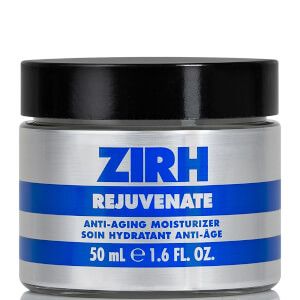
“Rejuvenate Anti-Aging Moisturizer”
This product can help improve hydration of the skin with the two types of ingredients.
The first type is called “humectants”:
these ingredients help attract water.
When humectants are on the surface of the skin, they “pull in” the moisture from the outside environment, or from
within deeper layers of the skin. The following ingredients in this product do the job:
algae extract, glycerin.
This product also contains ingredients called “occlusives”. They help reduce the speed with which our skin loses moisture to the outside environment. These ingredients also help soften the upper layer of the skin, so it feels less tight and nicer to the touch. The following ingredients in this product do the job: caprylic/capric triglyceride, dimethicone.
The following ingredients in this product are especially good for supporting the skin barrier and helping with the hydration level: ceramide 3
Anti-agingGlycine soja protein, Ilex paraguariensis leaf extract + 4 moreLimited evidence
“Rejuvenate Anti-Aging Moisturizer”
This product does not contain ingredients that are able to reduce fine lines and wrinkles or help with skin elasticity, but it can improve the look of the skin temporarily through moisturization. Well-moisturized skin might also be able to repair the sun damage better.These ingredients - glycine soja protein, ilex paraguariensis leaf extract - could be helpful for preventing or repairing signs of aging in theory, but there is no evidence that it actually works.
This ingredient ilex paraguariensis leaf extract might be able to help neutralize free radicals in skin and help it fight off some of the sun damage.
Evens skin toneGlycine soja protein, Ethyl linoleate + 3 moreLimited evidence
“Liquorice Derivatives defends against discolouration and age spots while regulating oil production for a balanced, more even skin tone.”
This product contains ingredients (ethyl linoleate, glycine soja protein) that could help reduce hyperpigmentation (for example, post-acne marks or age spots) in theory, but there is not enough evidence that they actually work.
Anti-blemishNot advertised by the brand · Ethyl linoleate, Zinc gluconate + 2 moreGood evidence
This product might be able to help reduce blemishes and clogged pores because it contains ethyl linoleate.
Anti-oxidationNot advertised by the brand · Ilex paraguariensis leaf extract, Hydrolyzed rice protein + 8 moreModerate evidence
This product contains antioxidants (ilex paraguariensis leaf extract) that might be able to help neutralize free radicals in skin to lessen the damage it gets from the UV light (sun). There is not enough evidence to confirm their effectiveness in skin though.
Can it cause trouble?
Irritancy3 strong irritants: Rosa damascena extract, Ilex paraguariensis leaf extract + 1 more — patch-test recommendedHigh risk
Comedogenic6 ingredients rated 2 or more on the 0–5 pore-clogging scale6 flagged


User reviews
Be the first — your take helps the next person decide.
Ingredients
Filter by role to see what each ingredient is doing.
Water~45–55%
Caprylic/capric triglyceride~5.9–7.2%
- Irritation risk
- Medium
A good mix of fatty acids that forms a protective layer on the skin. Improves the shelf life of products. Derived from coconut and glycerin
More about Caprylic/capric triglycerideGlycerin~4.2–5.1%
- Irritation risk
- Low
One of the best moisturizing ingredients. Naturally present in skin. It attracts water to the upper layer of the skin working as a humectant
More about GlycerinDimethicone~3.3–4%
- Irritation risk
- Low
A silicone that helps to reduce water loss from the surface of the skin. Can temporarily "fill in" lines and wrinkles, absorb oil, and create a nice product finish
More about DimethiconeCyclopentasiloxane~2.4–2.9%
- Irritation risk
- Low
A silicone that helps improve the product texture and spreadability. Can absorb oil creating a short-term mattifying effect on the skin
More about CyclopentasiloxaneGlyceryl stearate se~1.9–2.4%
- Irritation risk
- Low
- Comedogenicity
- 2/5
Used to stabilize the product formulations and works as an emollient
More about Glyceryl stearate seC12-15 alkyl benzoate~1.7–2.1%
- Irritation risk
- Low
Enhances the product texture and makes it more spreadable. Helps reduce water loss from the outer layer of skin. Extands the shelf life by preventing bacteria growth
More about C12-15 alkyl benzoateMyristyl myristate~1.6–1.9%
- Irritation risk
- Medium
- Comedogenicity
- 3/5
An emollient. Is not recommended for acne-prone skin as it can be comedogenic
More about Myristyl myristateButylene glycol~1.2–1.4%
- Irritation risk
- Low
Used to create a nice product texture and help delivery of other ingredients. Might be somewhat helpful in attracting water to the upper layer of the skin
More about Butylene glycolCetearyl isononanoate~0.95–1.15%
- Irritation risk
- Low
An emollient that softens the skin and helps prevent moisture loss.
More about Cetearyl isononanoateEthylene/acrylic acid copolymer~0.7–1.05%
- Irritation risk
- Low
Cetearyl alcohol~0.65–1%
- Irritation risk
- Low
- Comedogenicity
- 2/5
A non-drying alcohol. Works as an emollient. Helps water and oil mix together and creates a nice product texture
More about Cetearyl alcoholSqualane~0.55–0.85%
- Irritation risk
- Low
An oil naturally present in skin. Works as an emollient to soften the skin and form a protective layer on its surface without a greasy feeling.
More about SqualaneSaccharide isomerate~0.45–0.7%
- Irritation risk
- Low
Helps attract water to the upper layer of the skin
More about Saccharide isomerateDimethicone~0.5–0.75%
- Irritation risk
- Low
A silicone that helps to reduce water loss from the surface of the skin. Can temporarily "fill in" lines and wrinkles, absorb oil, and create a nice product finish
More about DimethiconeCetyl dimethicone~0.45–0.7%
- Irritation risk
- Low
A type of silicone. Helps soften the upper layer of the skin and creates a nice, light product texture
More about Cetyl dimethiconeVitis vinifera seed oil~0.45–0.7%
- Irritation risk
- Medium
A great emollient that can also have anti-oxidant properties
More about Vitis vinifera seed oilShorea stenoptera seed butter~0.4–0.6%
- Irritation risk
- Low
Helps soften the upper layer of the skin and can be helpful in restoring the skin barrier function
More about Shorea stenoptera seed butterButter~0.3–0.55%
- Irritation risk
- Low
Sodium hyaluronate~0.3–0.55%
- Irritation risk
- Low
One of the best moisturizing ingredients. Attracts water into the upper layer of the skin
More about Sodium hyaluronateHexyldecanol~0.3–0.55%
- Irritation risk
- Low
Helps soften the upper layer of the skin
More about HexyldecanolCeramide 3~0.3–0.55%
- Irritation risk
- Low
A type of lipid similar to ceramides naturally present in skin. Helps to soften the upper layer of the skin and supports the skin barrier function to keep it hydrated. Can help to prevent inflammation in skin
More about Ceramide 3Hydrolyzed wheat gluten~0.25–0.45%
- Irritation risk
- Low
Ceratonia siliqua gum~0.3–0.55%
- Irritation risk
- Medium
Used to stabilize product formulations and create thicker consistency
More about Ceratonia siliqua gumBisabolol~0.2–0.4%
- Irritation risk
- Low
An active component of chamomile plant that historically has been used to calm down irritated skin. A recent study shows that bisabolol indeed can have some anti-inflammatory effect on skin, even though conclusive data is lacking. Bisabolol has a sweet floral scent and can be added to products for its aromatic properties
More about BisabololHordeum distichon extract~0.25–0.45%
- Irritation risk
- Low
Rosa damascena extract~0.25–0.45%
- Irritation risk
- High
Oil of a very fragrant pink rose used as fragrance in cosmetics. Extensive research has shown it has mixed benefits. In the pro column, inhaling this flower’s scent seems to have relaxing properties and the plant’s petals contain skin-soothing and antioxidant compounds that can benefit skin. On the flipside, the numerous chemicals that create this rose’s distinctive fragrance pose a risk of causing skin aggravation.
More about Rosa damascena extractGlycyrrhiza glabra leaf extract~0.25–0.45%
- Irritation risk
- Low
A plant extract that can be effective for calming down inflammation and lightening the skin, but the effectivenss in products can vary significantly based on the extract quality and concentration used
More about Glycyrrhiza glabra leaf extractAlgae extract~0.3–0.55%
- Irritation risk
- Low
- Comedogenicity
- 3/5
Plant extract that helps the skin to attract water and make it more smooth for touch. Also shows promise of anti-aging properties, but research is not extensive yet
More about Algae extractTriticum vulgare germ extract~0.25–0.5%
- Irritation risk
- Medium
- Comedogenicity
- 3/5
Plant extract that might have moisturizing properties. Avoid if you suffer from wheat or gluten intolerance
More about Triticum vulgare germ extractSaccharomyces cerevisiae extract~0.25–0.45%
- Irritation risk
- Medium
A moisturizing ingredient that works as a humectant to attract water to the upper layer of the skin.
More about Saccharomyces cerevisiae extractCola nitida seed extract~0.25–0.45%
- Irritation risk
- Low
Paullinia cupana seed extract~0.2–0.4%
- Irritation risk
- High
Ilex paraguariensis leaf extract~0.2–0.4%
- Irritation risk
- High
A plant extract that can help neutralize free radicals in skin. Can contain fragrand compounds like linalool that can be irritating
More about Ilex paraguariensis leaf extractHydrolyzed rice protein~0.25–0.45%
- Irritation risk
- Low
Helps attract water to the upper layer of the skin. Might have some anti-oxidant properties
More about Hydrolyzed rice proteinGlycine soja protein~0.3–0.5%
- Irritation risk
- Low
A plant extract that helps to attract water to the upper layer of the skin and soften it. It might be helpful in neutralizing free radicals. It might be somewhat helpful for evening out the skin tone. It might be able to support elastin production but solid research is lacking
More about Glycine soja proteinCopper gluconate~0.25–0.45%
- Irritation risk
- Medium
Typically used to stabilize the product formulations. It is a salt of polyhydroxy acid (PHA) and in larger concentrations, can help shed the dead cells from the skin surface revealing smoother skin. It can help attract water to the upper layer of the skin. Might to be helpful against acne and clogged pores. Could be helpful in neutralizing free radicals, but solid research is missing
More about Copper gluconateZinc gluconate~0.25–0.45%
- Irritation risk
- Medium
Typically used to stabilize the product formulations. It is a salt of a polyhydroxy acid (PHA) and in larger concentrations, can help shed the dead cells from the skin surface revealing smoother skin. It can help attract water to the upper layer of the skin. Might to be helpful against acne and clogged pores. Could be helpful in neutralizing free radicals, but solid research is missing. Due to the zinc content, might help calm down inflammation in skin
More about Zinc gluconateManganese gluconate~0.25–0.45%
- Irritation risk
- Low
Might be able to help restore skin barrier function supporting its hydration
More about Manganese gluconateRetinyl palmitate~0.25–0.45%
- Irritation risk
- High
Three steps removed from the active form of vitamin A - retinoic acid. To have an effect in the skin, it first needs to be converted twice to become the retinoic acid. This means it is less potent than retinol, but could also be less irritating. Once converted to the retinoic acid in the skin, it helps against all signs of aging, improves skin cell turnover and helps fight blemishes and clogged pores. However, in many cosmetic formulations, it is used in a concentration that is too low to have the full effect
More about Retinyl palmitateTocopheryl acetate~0.25–0.5%
- Irritation risk
- Medium
A more stable but less bio-available form of vitamin E compared to Tocopherol. Might help moisturize and protect the skin from free radicals, but mostly used in low concentrations to stabilize other ingredients.
More about Tocopheryl acetateEthyl linoleate~0.25–0.5%
- Irritation risk
- Medium
Helps reduce acne and blemishes. Helps to soften the upper layer of the skin and reduce inflammation. Might be helpful in reducing hyperpigmentation and evening out the skin tone, but evidence of effectiveness in skin are lacking
More about Ethyl linoleateEthyl linolenate~0.3–0.55%
- Irritation risk
- Low
Lecithin~0.3–0.55%
- Irritation risk
- Low
Used mostly for creating emulsions - helping oil and water mix together. Helps soften the upper layer of the skin
More about LecithinOctyldodecanol~0.25–0.5%
- Irritation risk
- Low
An emollient that helps to soften the skin and create a pleasant product texture and stabilize the formulation
More about OctyldodecanolCeteareth-20~0.35–0.6%
- Irritation risk
- Medium
- Comedogenicity
- 2/5
Helps oil and water mix together. Has some emollient properties
More about Ceteareth-20Sorbitan stearate~0.25–0.45%
Cetyl alcohol~0.3–0.55%
- Irritation risk
- Low
A non-drying alcohol that works to soften the skin and stabilize product formulations helping oil and water mix together
More about Cetyl alcoholStearic acid~0.35–0.65%
- Irritation risk
- Low
Helps oil and water mix together and works as an emollient
More about Stearic acidArachidyl propionate~0.25–0.45%
- Irritation risk
- Low
Xanthan gum~0.2–0.35%
- Irritation risk
- Low
Used to create a thicker product consistency
More about Xanthan gumBht~0.15–0.25%
Trisodium edta~0.15–0.3%
Phenoxyethanol~0.2–0.35%
- Irritation risk
- Low
A preservative. It helps prevent bacterial growth in cosmetic products
More about PhenoxyethanolMethylparaben~0.15–0.25%
Propylparaben~0.15–0.25%
Ingredient list view
Water, Caprylic/capric triglyceride, Glycerin, Dimethicone, Cyclopentasiloxane, Glyceryl stearate se, C12-15 alkyl benzoate, Myristyl myristate, Butylene glycol, Cetearyl isononanoate, Ethylene/acrylic acid copolymer, Cetearyl alcohol, Squalane, Saccharide isomerate, Dimethicone, Cetyl dimethicone, Vitis vinifera seed oil, Shorea stenoptera seed butter, Butter, Sodium hyaluronate, Hexyldecanol, Ceramide 3, Hydrolyzed wheat gluten, Ceratonia siliqua gum, Bisabolol, Hordeum distichon extract, Rosa damascena extract, Glycyrrhiza glabra leaf extract, Algae extract, Triticum vulgare germ extract, Saccharomyces cerevisiae extract, Cola nitida seed extract, Paullinia cupana seed extract, Ilex paraguariensis leaf extract, Hydrolyzed rice protein, Glycine soja protein, Copper gluconate, Zinc gluconate, Manganese gluconate, Retinyl palmitate, Tocopheryl acetate, Ethyl linoleate, Ethyl linolenate, Lecithin, Octyldodecanol, Ceteareth-20, Sorbitan stearate, Cetyl alcohol, Stearic acid, Arachidyl propionate, Xanthan gum, Bht, Trisodium edta, Phenoxyethanol, Methylparaben, Propylparaben
Compare prices
Retailers ranked by price — lowest first.

.png)
Worth comparing, line by line.
Match % combines shared ingredients, the first five ingredients, shared actives and hero ingredients, irritancy (lower counts in the alternative's favour), texture and body area. Only products in the same routine step are compared.
| ZirhRejuvenate Anti-Aging MoisturizerYOUR PRODUCT | Derm InstituteAnti-Oxidant Hydration Cream | EucerinAtopiControl Intensive Calming Cream | 3LABSuper Cream | |
|---|---|---|---|---|
| Match | — | 60% | 59% | 58% |
| Price | $37.97 | $150.00+$112.03 | $9.76−$28.21 | $975.00+$937.03 |
| Shared key ingredients | — | 8 of 22 | 5 of 22 | 7 of 22 |
| Key difference | — | Niacinamide | Evening Primrose Oil | Copper Palmitoyl Heptapeptide-14 |
| Irritancy | High | Medium | Medium | High |
| Drying alcohol | — | — | — | Contains drying alcohol |
| View product | Shop | Shop | Shop |

Product summary
"Zirh - Rejuvenate Anti-Aging Moisturizer" is a well-rounded moisturizing product. This moisturizer uses a good combo of humectants and emollients. These both types of ingredients are essentials for improving the skin hydration and keeping the skin barrier healthy. Algae extract, glycerin, saccharide isomerate, saccharomyces cerevisiae extract and sodium hyaluronate in this product (humectants) attract water molecules to the upper layer of the skin (the water comes from the outside air or from the deeper layers of the skin if the air is dry). Emollients in this formulation (ceramide 3, algae extract, cetyl dimethicone, ethyl linoleate and shorea stenoptera seed butter) help to reduce the moisture loss from the skin. They also soften the skin surface and relieve the feeling of dryness and tightness.
Ingredient callouts
- this moisturizer includes a form of retinoids (vitamin A) - retinyl palmitate 0.25% - 0.45%, but this type of vitamin A is not very effective. It could in theory help with fine lines and wrinkles, but the effect is most likely minimal.
- Another benefit is that this moisturizer contain ceramides (ceramide 3 0.30% - 0.55%). Ceramides are an important part of our natural skin barrier. The ceramides used in skincare are synthetic or come from plants. They help soften the skin and can help "fill the gaps" in the skin barrier, keeping the skin hydrated and resilient for longer.
Irritation risk
This moisturizer contains some common irritants, including those without a benefit for the skin. We assess the overall irritancy of this moisturizer to be high. For a detailed overview of all potential irritants: click here
You can see the detailed formula review with the breakdown of all actives in the product and the full ingredient list with estimated concentrations in the tables below.
Price
The product retails for 39.10$ in the United States, for 49.60CA$ in Canada and for 28.33£ in the United Kingdom.
For a detailed price comparison: click here.
Sources cited in this review
Every concentration estimate and effectiveness label is anchored to one of these 27 studies and safety reviews.
- 1
- 2
- 3Final Report on the Safety Assessment of Dimethicone Copolyoljournals.sagepub.com
- 4Hyaluronic acid: A key molecule in skin agingncbi.nlm.nih.gov
- 5
- 6

Affiliate links · As an Amazon Associate, WIMJ earns from qualifying purchases.