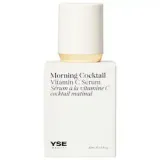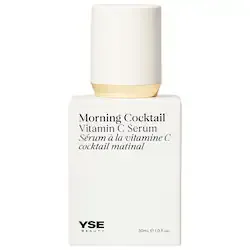
YISE Beauty Morning Cocktail Vitamin C Serum with Niacinamide + Azelaic Acid

YISE Beauty Morning Cocktail Vitamin C Serum with Niacinamide + Azelaic Acid

Efficacy100/100IrritancyMedium

Works for

Moisturizing
Niacinamide, Caprylic/capric triglyceride + 10 more
Works well
What the product description says
“What it is: A hydrating, antioxidant-rich vitamin C serum that targets dark spots and supports visibly brighter, smoother, more even-looking skin.”
Source: Sephora

This product can help improve hydration of the skin with the two types of ingredients.

The first type is called “humectants”:
these ingredients help attract water. When humectants are on the surface of the skin, they “pull in” the moisture from the outside environment, or from within deeper layers of the skin. The following ingredients in this product do the job: arginine, glycerin.

This product also contains ingredients called “occlusives”. They help reduce the speed with which our skin loses moisture to the outside environment. These ingredients also help soften the upper layer of the skin, so it feels less tight and nicer to the touch. The following ingredients in this product do the job: arginine, caprylic/capric triglyceride.

The following ingredients in this product are especially good for supporting the skin barrier and helping with the hydration level: niacinamide

NiacinamideHeroEffect: HighIs proven to be effective in reducing blemishes, evening out skin tone and helping to improve lines and wrinkles. It helps the skin to repair sun damage, calm down inflammation and keep maintain good levels of moisture. The concentration of about 2% is effective for supporting the skin barrier and evening out the skin tone. Concentration of 4-6% is better for helping with acne and balancing the sebum production~1.7–2.1%
Caprylic/capric triglycerideKey active· Emollient, OcclusiveEffect: HighA good mix of fatty acids that forms a protective layer on the skin. Improves the shelf life of products. Derived from coconut and glycerin~3.6–4.4%
GlycerinKey active· HumectantEffect: HighOne of the best moisturizing ingredients. Naturally present in skin. It attracts water to the upper layer of the skin working as a humectant~2.7–3.4%
Potassium azeloyl diglycinateKey activeEffect: MediumA derivative of azelaic acid. It is obtained by reacting the chloride of azelaic acid with two molecules of glycine (an amino acid) and potassium hydroxide. It is less studied than azelaic acid, but the available research suggests that it also can be effective in reducing skin redness, hyperpigmentation and blemishes. There are claims that it is more bio-available and more effective than azelaic acid, but no comparison study is available. Potassium azeloyl diglycinate is better soluble in water compared with azelaic acid. Because of this property, products with potassium azeloyl digclycinate can have a nicer texture~2.3–2.8%
SqualaneKey active· Emollient, OcclusiveEffect: HighAn oil naturally present in skin. Works as an emollient to soften the skin and form a protective layer on its surface without a greasy feeling.~1.5–1.8%
Sodium hyaluronateKey active· HumectantEffect: HighOne of the best moisturizing ingredients. Attracts water into the upper layer of the skin~0.95–1.15%
GlutathioneKey activeEffect: HighA peptide that can help neutralize free radicals in skin and reduce melanin production resulting in skin lightening effect and reduction in hyperpigmentation. It can also help attract moisture to the upper layer of the skin~0.65–1%
Helianthus annuus extractKey active· EmollientEffect: HighHelps soften the upper layer of the skin~0.65–0.95%
ArginineKey active· Humectant, OcclusiveEffect: HighAn amino acid that is naturally present in skin and helps keep it hydrated. When used together with AHAs, it can reduce their irritating effect on the skin~0.45–0.7%
Sorbitol· HumectantEffect: LowHelps attract water to the upper layer of the skin and improves the product texture~0.6–0.9%
Caprylyl glycol· Humectant, EmollientEffect: LowHelps preserve products and creates a nice product texture~0.25–0.5%
TocopherolEffect: Low, below effective dosePure form of vitamin E. Can help moisturise and protect the skin from free radicals. Often used to help stabilise other ingredients or the formula itself~0.55–0.8%
Evens skin tone
Tetrahexyldecyl ascorbate, Potassium azeloyl diglycinate + 3 more
Works well
What the product description says
“What it is: A hydrating, antioxidant-rich vitamin C serum that targets dark spots and supports visibly brighter, smoother, more even-looking skin.”
Source: Sephora

This product can help reduce hypepigmentation and even out the skin tone because it contains the following effective ingredients: glutathione, niacinamide, potassium azeloyl diglycinate, tetrahexyldecyl ascorbate

Keep in mind that you would need to apply any topical skincare targetted at hypigmentation consistently for a couple of months to get a result. No topical skincare product can help get rid of hyperpigmentation (including post-acne marks and age spots) instantly.

Tetrahexyldecyl ascorbateKey activeEffect: HighBeing a lipid soluble form of vitamin C, it is more stable than ascorbic acid, but still degrades quickly and needs to be stabilized in a formulation with another ingredient. It is claimed to penetrate skin better than pure vitamin C and have the the similar benefits, but solid studies of its effectiveness are lacking. Is likely to require a higher concentration in a product than pure vitamin C to be effective. It might be able to help reduce pore clogging.~8.4–10.3%
Potassium azeloyl diglycinateKey activeEffect: HighA derivative of azelaic acid. It is obtained by reacting the chloride of azelaic acid with two molecules of glycine (an amino acid) and potassium hydroxide. It is less studied than azelaic acid, but the available research suggests that it also can be effective in reducing skin redness, hyperpigmentation and blemishes. There are claims that it is more bio-available and more effective than azelaic acid, but no comparison study is available. Potassium azeloyl diglycinate is better soluble in water compared with azelaic acid. Because of this property, products with potassium azeloyl digclycinate can have a nicer texture~2.3–2.8%
NiacinamideKey activeEffect: HighIs proven to be effective in reducing blemishes, evening out skin tone and helping to improve lines and wrinkles. It helps the skin to repair sun damage, calm down inflammation and keep maintain good levels of moisture. The concentration of about 2% is effective for supporting the skin barrier and evening out the skin tone. Concentration of 4-6% is better for helping with acne and balancing the sebum production~1.7–2.1%
GlutathioneKey activeEffect: HighA peptide that can help neutralize free radicals in skin and reduce melanin production resulting in skin lightening effect and reduction in hyperpigmentation. It can also help attract moisture to the upper layer of the skin~0.65–1%
Ascorbic acidUnder-dosedThe most well-researched antioxidant that works in skin. Helps neutralize free radicals supporting collagen production, helping to even out the skin tone and preventing early signs of aging~1.2–1.4%
Anti-oxidation
Side benefit · Tetrahexyldecyl ascorbate, Glutathione + 4 more
Works well

This product contains antioxidants (glutathione, tetrahexyldecyl ascorbate) that can help neutralize free radicals in skin. By doing so, they can lessen the damage the skin gets from the UV light (sun).

Tetrahexyldecyl ascorbateKey activeEffect: HighBeing a lipid soluble form of vitamin C, it is more stable than ascorbic acid, but still degrades quickly and needs to be stabilized in a formulation with another ingredient. It is claimed to penetrate skin better than pure vitamin C and have the the similar benefits, but solid studies of its effectiveness are lacking. Is likely to require a higher concentration in a product than pure vitamin C to be effective. It might be able to help reduce pore clogging.~8.4–10.3%
GlutathioneKey activeEffect: HighA peptide that can help neutralize free radicals in skin and reduce melanin production resulting in skin lightening effect and reduction in hyperpigmentation. It can also help attract moisture to the upper layer of the skin~0.65–1%
Ascorbyl methylsilanol pectinateEffect: LowA stable derivative of pectin and vitamin C. It might help neutralize free radicals in skin, but evidence of effectiveness is lacking. Helps create a thicker product consistency and stabilize the product formulation~0.75–1.1%
Rosmarinus officinalis leaf extractEffect: Low, below effective doseCan be helpful in reducing inflammation in skin, including inflamed acne. It can be irritating~0.5–0.8%
Ascorbic acidUnder-dosedThe most well-researched antioxidant that works in skin. Helps neutralize free radicals supporting collagen production, helping to even out the skin tone and preventing early signs of aging~1.2–1.4%
TocopherolUnder-dosedPure form of vitamin E. Can help moisturise and protect the skin from free radicals. Often used to help stabilise other ingredients or the formula itself~0.55–0.8%
Anti-blemish
Side benefit · Niacinamide, Potassium azeloyl diglycinate + 1 more
Works well

This product can help reduce breakouts and clogged pores because it contains the following ingredient: niacinamide. This ingredient is used for treating acne and can have a noticeable effect.

In addition, this product contains potassium azeloyl diglycinate. It can help in reducing blemishes, even though it is less effective.

NiacinamideHeroEffect: HighIs proven to be effective in reducing blemishes, evening out skin tone and helping to improve lines and wrinkles. It helps the skin to repair sun damage, calm down inflammation and keep maintain good levels of moisture. The concentration of about 2% is effective for supporting the skin barrier and evening out the skin tone. Concentration of 4-6% is better for helping with acne and balancing the sebum production~1.7–2.1%
Potassium azeloyl diglycinateKey activeEffect: HighA derivative of azelaic acid. It is obtained by reacting the chloride of azelaic acid with two molecules of glycine (an amino acid) and potassium hydroxide. It is less studied than azelaic acid, but the available research suggests that it also can be effective in reducing skin redness, hyperpigmentation and blemishes. There are claims that it is more bio-available and more effective than azelaic acid, but no comparison study is available. Potassium azeloyl diglycinate is better soluble in water compared with azelaic acid. Because of this property, products with potassium azeloyl digclycinate can have a nicer texture~2.3–2.8%
Rosmarinus officinalis leaf extractUnder-dosedCan be helpful in reducing inflammation in skin, including inflamed acne. It can be irritating~0.5–0.8%
Anti-aging
Side benefit · Tetrahexyldecyl ascorbate, Niacinamide + 2 more
Works well

This product can help reduce and prevent fine lines and wrinkles, improve skin elasticity and firmness because it contains niacinamide, tetrahexyldecyl ascorbate.

Keep in mind that it typically takes at least 6 weeks to notice any results because the changes that are needed to improve fine lines and elasticity happen in the deeper layers of the skin. No topical anti-aging product can “erase” wrinkles or fully reverse signs of aging.

Tetrahexyldecyl ascorbateKey activeEffect: HighBeing a lipid soluble form of vitamin C, it is more stable than ascorbic acid, but still degrades quickly and needs to be stabilized in a formulation with another ingredient. It is claimed to penetrate skin better than pure vitamin C and have the the similar benefits, but solid studies of its effectiveness are lacking. Is likely to require a higher concentration in a product than pure vitamin C to be effective. It might be able to help reduce pore clogging.~8.4–10.3%
NiacinamideKey activeEffect: HighIs proven to be effective in reducing blemishes, evening out skin tone and helping to improve lines and wrinkles. It helps the skin to repair sun damage, calm down inflammation and keep maintain good levels of moisture. The concentration of about 2% is effective for supporting the skin barrier and evening out the skin tone. Concentration of 4-6% is better for helping with acne and balancing the sebum production~1.7–2.1%
TocopherolEffect: Low, below effective dosePure form of vitamin E. Can help moisturise and protect the skin from free radicals. Often used to help stabilise other ingredients or the formula itself~0.55–0.8%
Ascorbic acidUnder-dosedThe most well-researched antioxidant that works in skin. Helps neutralize free radicals supporting collagen production, helping to even out the skin tone and preventing early signs of aging~1.2–1.4%

Can it cause trouble?

Irritancy
1 strong irritant: Rosmarinus officinalis leaf extract
Medium risk
We flagged 16 ingredients with irritancy potential. Severity depends on your sensitivity threshold; the table lists the worst offenders first.
IngredientFunctionIrritationEst. amount
Ascorbic acidThe most well-researched antioxidant that works in skin. Helps neutralize free radicals supporting collagen production, helping to even out the skin tone and preventing early signs of agingHigh~1.2–1.4%est.
Rosmarinus officinalis leaf extractCan be helpful in reducing inflammation in skin, including inflamed acne. It can be irritatingHigh~0.5–0.8%est.
Tetrahexyldecyl ascorbateBeing a lipid soluble form of vitamin C, it is more stable than ascorbic acid, but still degrades quickly and needs to be stabilized in a formulation with another ingredient. It is claimed to penetrate skin better than pure vitamin C and have the the similar benefits, but solid studies of its effectiveness are lacking. Is likely to require a higher concentration in a product than pure vitamin C to be effective. It might be able to help reduce pore clogging.Medium~8.4–10.3%est.
Caprylic/capric triglycerideA good mix of fatty acids that forms a protective layer on the skin. Improves the shelf life of products. Derived from coconut and glycerinMedium~3.6–4.4%est.
EthoxydiglycolHelps to improve the product consistencyMedium~1.8–2.3%est.
Ascorbyl methylsilanol pectinateA stable derivative of pectin and vitamin C. It might help neutralize free radicals in skin, but evidence of effectiveness is lacking. Helps create a thicker product consistency and stabilize the product formulationMedium~0.75–1.1%est.
GoldA colorant. Does not have any proven benefits in skinMedium~0.7–1.05%est.
GlutathioneA peptide that can help neutralize free radicals in skin and reduce melanin production resulting in skin lightening effect and reduction in hyperpigmentation. It can also help attract moisture to the upper layer of the skinMedium~0.65–1%est.
1,2-hexanediolA preservativeMedium~0.5–0.75%est.
Acrylates/c10-30 alkyl acrylate crosspolymerMaintains the texture of skincare products. Allows the product to spread evenly. Helps oil and water mix togetherMedium~0.45–0.65%est.
Polyglyceryl-6 polyricinoleateHelps oil and water mix togetherMedium~0.4–0.65%est.
MethylpropanediolHelps dissolve other ingredients in a formulationMedium~0.3–0.55%est.
Caprylyl glycolHelps preserve products and creates a nice product textureMedium~0.25–0.5%est.
EthylhexylglycerinA preservativeMedium~0.15–0.3%est.
Hexylene glycolHelps create a more spreadable product textureMedium~0.15–0.25%est.
Citric acidCan work as an exfoliant but is typically used to adjust the product pHMedium~0.1–0.2%est.
Comedogenic
Clean of flagged comedogenic ingredients
None flagged
Did this help you decide?

User reviews

Would you recommend?
No community reviews yet.

Be the first — your take helps the next person decide.

Ingredients

Filter by role to see what each ingredient is doing.

Water~45–55%
Formula
Irritation risk
Low

Plain old water

More about Water
Tetrahexyldecyl ascorbate~8.4–10.3%
Key activeIrritant · medium
Irritation risk
Medium
Works for
Evens skin toneAnti-agingAnti-oxidation

Being a lipid soluble form of vitamin C, it is more stable than ascorbic acid, but still degrades quickly and needs to be stabilized in a formulation with another ingredient. It is claimed to penetrate skin better than pure vitamin C and have the the similar benefits, but solid studies of its effectiveness are lacking. Is likely to require a higher concentration in a product than pure vitamin C to be effective. It might be able to help reduce pore clogging.

More about Tetrahexyldecyl ascorbate
Isopentyldiol~4.7–5.7%
Formula
Irritation risk
Low

Helps dissolve other ingredients in a formulation

More about Isopentyldiol
Caprylic/capric triglyceride~3.6–4.4%
Key activeIrritant · medium
Irritation risk
Medium
Works for
Moisturizing

A good mix of fatty acids that forms a protective layer on the skin. Improves the shelf life of products. Derived from coconut and glycerin

More about Caprylic/capric triglyceride
Glycerin~2.7–3.4%
Key active
Irritation risk
Low
Works for
Moisturizing

One of the best moisturizing ingredients. Naturally present in skin. It attracts water to the upper layer of the skin working as a humectant

More about Glycerin
Potassium azeloyl diglycinate~2.3–2.8%
Key active
Irritation risk
Low
Works for
Anti-inflammatoryEvens skin toneAnti-blemishMoisturizing

A derivative of azelaic acid. It is obtained by reacting the chloride of azelaic acid with two molecules of glycine (an amino acid) and potassium hydroxide. It is less studied than azelaic acid, but the available research suggests that it also can be effective in reducing skin redness, hyperpigmentation and blemishes. There are claims that it is more bio-available and more effective than azelaic acid, but no comparison study is available. Potassium azeloyl diglycinate is better soluble in water compared with azelaic acid. Because of this property, products with potassium azeloyl digclycinate can have a nicer texture

More about Potassium azeloyl diglycinate
Ethoxydiglycol~1.8–2.3%
Irritant · medium
Irritation risk
Medium

Helps to improve the product consistency

More about Ethoxydiglycol
Niacinamide~1.7–2.1%
Hero · Moisturizing, Anti-blemish
Irritation risk
Low
Works for
Anti-agingEvens skin toneMoisturizingAnti-blemishReduces irritationAntibacterialReduces rednessAnti-inflammatory

Is proven to be effective in reducing blemishes, evening out skin tone and helping to improve lines and wrinkles. It helps the skin to repair sun damage, calm down inflammation and keep maintain good levels of moisture. The concentration of about 2% is effective for supporting the skin barrier and evening out the skin tone. Concentration of 4-6% is better for helping with acne and balancing the sebum production

More about Niacinamide
Squalane~1.5–1.8%
Key active
Irritation risk
Low
Works for
Moisturizing

An oil naturally present in skin. Works as an emollient to soften the skin and form a protective layer on its surface without a greasy feeling.

More about Squalane
Ascorbic acid~1.2–1.4%
Under-dosedIrritant · high
Irritation risk
High
Works for
Anti-agingEvens skin toneAnti-oxidation

The most well-researched antioxidant that works in skin. Helps neutralize free radicals supporting collagen production, helping to even out the skin tone and preventing early signs of aging

More about Ascorbic acid
Sodium hyaluronate~0.95–1.15%
Key active
Irritation risk
Low
Works for
Moisturizing

One of the best moisturizing ingredients. Attracts water into the upper layer of the skin

More about Sodium hyaluronate
Ascorbyl methylsilanol pectinate~0.75–1.1%
Irritant · medium
Irritation risk
Medium
Works for
Anti-oxidation

A stable derivative of pectin and vitamin C. It might help neutralize free radicals in skin, but evidence of effectiveness is lacking. Helps create a thicker product consistency and stabilize the product formulation

More about Ascorbyl methylsilanol pectinate
Gold~0.7–1.05%
Irritant · medium
Irritation risk
Medium

A colorant. Does not have any proven benefits in skin

More about Gold
Glutathione~0.65–1%
Key activeIrritant · medium
Irritation risk
Medium
Works for
MoisturizingAnti-oxidationEvens skin tone

A peptide that can help neutralize free radicals in skin and reduce melanin production resulting in skin lightening effect and reduction in hyperpigmentation. It can also help attract moisture to the upper layer of the skin

More about Glutathione
Sorbitol~0.6–0.9%
Formula
Irritation risk
Low
Works for
Moisturizing

Helps attract water to the upper layer of the skin and improves the product texture

More about Sorbitol
Oryza sativa bran extract~0.6–0.9%
Formula
Irritation risk
Low

Used to thicken the product consistency

More about Oryza sativa bran extract
Helianthus annuus extract~0.65–0.95%
Key active
Irritation risk
Low
Works for
Moisturizing

Helps soften the upper layer of the skin

More about Helianthus annuus extract
Rosmarinus officinalis leaf extract~0.5–0.8%
Under-dosedIrritant · high
Irritation risk
High
Works for
Anti-blemishAnti-oxidationAntibacterial

Can be helpful in reducing inflammation in skin, including inflamed acne. It can be irritating

More about Rosmarinus officinalis leaf extract
Tocopherol~0.55–0.8%
Under-dosed
Irritation risk
Low
Works for
Anti-oxidationAnti-agingAnti-inflammatoryMoisturizing

Pure form of vitamin E. Can help moisturise and protect the skin from free radicals. Often used to help stabilise other ingredients or the formula itself

More about Tocopherol
1,2-hexanediol~0.5–0.75%
Irritant · medium
Irritation risk
Medium

A preservative

More about 1,2-hexanediol
Arginine~0.45–0.7%
Key active
Irritation risk
Low
Works for
Moisturizing

An amino acid that is naturally present in skin and helps keep it hydrated. When used together with AHAs, it can reduce their irritating effect on the skin

More about Arginine
Propanediol~0.5–0.7%
Formula
Irritation risk
Low

Acts as a solvent for other ingredients. Speeds up the absorption of other ingredients into the skin

More about Propanediol
Acrylates/c10-30 alkyl acrylate crosspolymer~0.45–0.65%
Irritant · medium
Irritation risk
Medium

Maintains the texture of skincare products. Allows the product to spread evenly. Helps oil and water mix together

More about Acrylates/c10-30 alkyl acrylate crosspolymer
Phenoxyethanol~0.4–0.65%
Formula
Irritation risk
Low

A preservative. It helps prevent bacterial growth in cosmetic products

More about Phenoxyethanol
Polyglyceryl-6 polyricinoleate~0.4–0.65%
Irritant · medium
Irritation risk
Medium
Works for
Cleansing

Helps oil and water mix together

More about Polyglyceryl-6 polyricinoleate
Sodium hydroxide~0.35–0.6%
Formula
Irritation risk
Low

Used to adjust the product's pH

More about Sodium hydroxide
Methylpropanediol~0.3–0.55%
Irritant · medium
Irritation risk
Medium

Helps dissolve other ingredients in a formulation

More about Methylpropanediol
Caprylyl glycol~0.25–0.5%
Irritant · medium
Irritation risk
Medium
Works for
Moisturizing

Helps preserve products and creates a nice product texture

More about Caprylyl glycol
Xanthan gum~0.2–0.4%
Formula
Irritation risk
Low
Works for
Cleansing

Used to create a thicker product consistency

More about Xanthan gum
Ethylhexylglycerin~0.15–0.3%
Irritant · medium
Irritation risk
Medium

A preservative

More about Ethylhexylglycerin
Hexylene glycol~0.15–0.25%
Irritant · medium
Irritation risk
Medium
Works for
Cleansing

Helps create a more spreadable product texture

More about Hexylene glycol
Citric acid~0.1–0.2%
Irritant · medium
Irritation risk
Medium

Can work as an exfoliant but is typically used to adjust the product pH

More about Citric acid
Tetrasodium glutamate diacetate~0.1–0.15%
Formula
Irritation risk
Low

Helps stabilize the product formulation

More about Tetrasodium glutamate diacetate
Ingredient list view

Water, Tetrahexyldecyl ascorbate, Isopentyldiol, Caprylic/capric triglyceride, Glycerin, Potassium azeloyl diglycinate, Ethoxydiglycol, Niacinamide, Squalane, Ascorbic acid, Sodium hyaluronate, Ascorbyl methylsilanol pectinate, Gold, Glutathione, Sorbitol, Oryza sativa bran extract, Helianthus annuus extract, Rosmarinus officinalis leaf extract, Tocopherol, 1,2-hexanediol, Arginine, Propanediol, Acrylates/c10-30 alkyl acrylate crosspolymer, Phenoxyethanol, Polyglyceryl-6 polyricinoleate, Sodium hydroxide, Methylpropanediol, Caprylyl glycol, Xanthan gum, Ethylhexylglycerin, Hexylene glycol, Citric acid, Tetrasodium glutamate diacetate

Compare prices

Retailers ranked by price — lowest first.

Sephora
$85.00
Buy

Affiliate links · As an Amazon Associate, WIMJ earns from qualifying purchases.

Worth comparing, line by line.

Match % combines shared ingredients, the first five ingredients, shared actives and hero ingredients, irritancy (lower counts in the alternative's favour), texture and body area. Only products in the same routine step are compared.

Side-by-side comparison of this product against its closest alternatives
YISE BeautyMorning Cocktail Vitamin C Serum with Niacinamide + Azelaic AcidYOUR PRODUCTFacileBrighten 5% Niacinamide Serum for Dark Spots & Uneven TextureDr. David JackGood Morning Vitamin C SerumNorevaIklen+ [Pure-C-Reverse] Regenerating & Perfecting Booster Serum
Match—65%65%64%
Price$85.00$38.00−$47.00$117.72+$32.72$49.00−$36.00
Shared key ingredients—4 of 134 of 134 of 13
Key difference—Ethylhexyl OlivateSodium Ascorbyl PhosphateSunflower Seed Oil
Irritancy Medium Low Low Medium
Drying alcohol——— Contains drying alcohol
View product Shop Shop Shop

More alternatives: Fig. 1 Even Tone SerumOsea Malibu Anti-Aging Sea Serum

Cheaper alternatives? See how this stacks up against similar formulas.
We compare ingredient profiles across our catalog — pick the closest match for your budget.
Open dupe finder

Sources cited in this review

Every concentration estimate and effectiveness label is anchored to one of these 20 studies and safety reviews.

  1. 1
  2. 2
  3. 3
  4. 4
  5. 5
  6. 6
YISE Beauty Morning Cocktail Vitamin C Serum with Niacinamide + Azelaic Acid
YISE BeautyMorning Cocktail Vitamin C Serum with Niacinamide + Azelaic Acid

Affiliate links · As an Amazon Associate, WIMJ earns from qualifying purchases.

As an Amazon Associate, WIMJ earns from qualifying purchases.