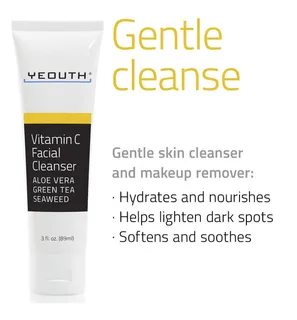
YEOUTH Vitamin C Facial Cleanser with Vitamin C, Aloe, Green Tea Seaweed Extract
Works for
CleansingSodium lauroyl methyl isethionate, Sodium cocoyl isethionate + 5 moreCleanses gently
“Vitamin C Facial Cleanser with Vitamin C, Aloe, Green Tea Seaweed Extract”
This product works by removing dirt and oil from the surface of the skin. It uses a combination of mild cleansing agents (coconut acid, decyl glucoside, disodium cocoamphodiacetate, hexylene glycol, hydroxypropyl methylcellulose, sodium cocoyl isethionate, sodium lauroyl methyl isethionate) and should be able to cleanse the skin gently. Still keep in mind that any cleansing can disrupt the skin barrier, and most people do not need to cleanse their skin more than once per day.
Even though this formulation is mild, the following cleansing agents could trigger an irritation or allergy for some people: decyl glucoside
Can it cause trouble?
Irritancy13 flagged ingredientsLow risk
ComedogenicClean of flagged comedogenic ingredientsNone flagged
User reviews
Be the first — your take helps the next person decide.
Ingredients
Filter by role to see what each ingredient is doing.
Water~45–55%
Sodium lauroyl methyl isethionate~9.5–11.6%
- Irritation risk
- Medium
Works as a cleansing agent
More about Sodium lauroyl methyl isethionateSodium cocoyl isethionate~5.1–6.2%
- Irritation risk
- Medium
Helps water and oil mix together. Can be used as a cleansing agent
More about Sodium cocoyl isethionateGlycerin~3.1–3.8%
- Irritation risk
- Low
One of the best moisturizing ingredients. Naturally present in skin. It attracts water to the upper layer of the skin working as a humectant
More about GlycerinDisodium cocoamphodiacetate~2.4–3%
- Irritation risk
- Medium
Helps oil and water mix together and works as a cleansing agent
More about Disodium cocoamphodiacetateHydroxypropyl methylcellulose~1.9–2.3%
- Irritation risk
- Medium
Used to create a thicker product consistency and stabilize the formulation
More about Hydroxypropyl methylcelluloseDecyl glucoside~1.7–2.1%
- Irritation risk
- High
Helps oil and water mix together. Can be irritating
More about Decyl glucosideSodium ascorbyl phosphate~1.4–1.7%
- Irritation risk
- Medium
A stable derivative of vitamin C. It is oil-soluble which means it is more likely to penetrate the skin compared to the pure form of vitamin C (which is water-soluble), but it is less bio-available and is way less effective in stimulating collagen and reducing wrinkles compared to the pure form of vitamin C (L-ascorbic acid) and its other derivatives (for example, magnesium ascorbyl phosphate). At the same time, this vitamin C derivative has been shown in studies to be effective in reducing acne, blemishes and clogged pores. It is less irritating then the pure form of vitamin C
More about Sodium ascorbyl phosphateCoconut acid~1.3–1.6%
Sodium chloride~1–1.3%
- Irritation risk
- Low
Used to stabilize mixtures of oil and water, and create thicker, gel-like product textures
More about Sodium chloridePhenoxyethanol~0.7–1%
- Irritation risk
- Low
A preservative. It helps prevent bacterial growth in cosmetic products
More about PhenoxyethanolSodium isethionate~0.65–1%
- Irritation risk
- Low
Panthenol~0.55–0.85%
- Irritation risk
- Low
Helps attract water to the upper layer of the skin and can help improve skin barrier function
More about PanthenolPolyquaternium-10~0.55–0.8%
- Irritation risk
- Low
Helps soften the upper layer of the skin and create a nice product finish
More about Polyquaternium-10Caprylyl glycol~0.5–0.75%
- Irritation risk
- Medium
Helps preserve products and creates a nice product texture
More about Caprylyl glycolTrisodium ethylenediamine disuccinate~0.45–0.65%
- Irritation risk
- Medium
Used to improve stability of the formulation
More about Trisodium ethylenediamine disuccinateSodium benzoate~0.25–0.5%
Ethylhexylglycerin~0.25–0.45%
Hexylene glycol~0.2–0.4%
- Irritation risk
- Medium
Helps create a more spreadable product texture
More about Hexylene glycolCamellia sinensis leaf extract~0.2–0.4%
- Irritation risk
- Low
Can contain potent anti-oxidant compounds (abbreviated ECG, GCG, EGC, and EGCG) that might help protect the skin from free radicals. Can help calm down inflammation and has some anti-bacterial properties. Unfortunately, these antioxidants are unstable and lose their effectiveness very quickly in products. The concentration of the antioxidant compounds in the extract also tends to be low to be effective in topical formulation
More about Camellia sinensis leaf extractPanax ginseng extract~0.2–0.35%
- Irritation risk
- High
A plant extract that might have anti-oxidant properties. Can be irritating
More about Panax ginseng extractSodium acetate~0.15–0.25%
- Irritation risk
- Low
Isopropyl alcohol~0.1–0.2%
- Irritation risk
- High
A drying alcohol. Can increase skin's sensitivity and cause dryness and irritation
More about Isopropyl alcoholAloe barbadensis leaf juice~0.1–0.15%
- Irritation risk
- Medium
Traditionally used to treat sunburns, dermatitis and inflammation, but evidence for its effectiveness is lacking. The extract can contain humectants that help attract water into the skin
More about Aloe barbadensis leaf juiceOryza sativa bran oil~0.1–0.2%
- Irritation risk
- Low
Helps soften the upper layer of the skin and might have some anti-oxidant properties
More about Oryza sativa bran oilUndaria pinnatifida extract~0.05–0.1%
- Irritation risk
- Low
A seaweed extract that helps attract water to the upper layer of the skin and might have an anti-oxidant effect
More about Undaria pinnatifida extractIngredient list view
Water, Sodium lauroyl methyl isethionate, Sodium cocoyl isethionate, Glycerin, Disodium cocoamphodiacetate, Hydroxypropyl methylcellulose, Decyl glucoside, Sodium ascorbyl phosphate, Coconut acid, Sodium chloride, Phenoxyethanol, Sodium isethionate, Panthenol, Polyquaternium-10, Caprylyl glycol, Trisodium ethylenediamine disuccinate, Sodium benzoate, Ethylhexylglycerin, Hexylene glycol, Camellia sinensis leaf extract, Panax ginseng extract, Sodium acetate, Isopropyl alcohol, Aloe barbadensis leaf juice, Oryza sativa bran oil, Undaria pinnatifida extract
Compare prices
Retailers ranked by price — lowest first.

Worth comparing, line by line.
Match % combines shared ingredients, the first five ingredients, shared actives and hero ingredients, irritancy (lower counts in the alternative's favour), texture and body area. Only products in the same routine step are compared.
| YEOUTHVitamin C Facial Cleanser with Vitamin C, Aloe, Green Tea Seaweed ExtractYOUR PRODUCT | MilaniGlow Gel Cleanser | SimpleMicellar Water Limited Edition Little Mix | BRTCV10 Powder Cleansing Tea Bag - 2 Types | |
|---|---|---|---|---|
| Match | — | 40% | 34% | 33% |
| Price | $24.99 | $15.00−$9.99 | $8.02−$16.97 | $1.94−$23.05 |
| Shared key ingredients | — | 4 of 13 | 3 of 13 | 3 of 13 |
| Key difference | — | Saccharomyces/Zinc Ferment | Niacinamide | Niacinamide |
| Irritancy | Low | Medium | Medium | High |
| Drying alcohol | Contains drying alcohol | — | — | — |
| View product | Shop | Shop | Shop |


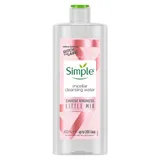

More alternatives: BYNACHT Clean Sheets Cleansing GelNivea Energy Micellar Water Make-Up Remover With Vit C
Sources cited in this review
Every concentration estimate and effectiveness label is anchored to one of these 14 studies and safety reviews.
- 1Final Report on the Safety Assessment of Sodium Cocoyl Isethionatejournals.sagepub.com
- 2
- 3
- 4
- 5Sodium ascorbyl phosphate in topical microemulsionssciencedirect.com
- 6

Affiliate links · As an Amazon Associate, WIMJ earns from qualifying purchases.