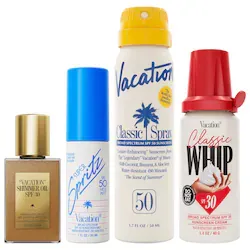
Works for
MoisturizingPalmitoyl tripeptide-1, Glycerin + 21 moreWorks well
“- Aloe Vera: An antioxidant-rich blend that soothes and hydrates sunkissed skin.”
This product can help improve hydration of the skin with the two types of ingredients.
The first type is called “humectants”:
these ingredients help attract water.
When humectants are on the surface of the skin, they “pull in” the moisture from the outside environment, or from
within deeper layers of the skin. The following ingredients in this product do the job:
glycerin, hyaluronic acid.
This product also contains ingredients called “occlusives”. They help reduce the speed with which our skin loses moisture to the outside environment. These ingredients also help soften the upper layer of the skin, so it feels less tight and nicer to the touch. The following ingredients in this product do the job: cocos nucifera oil, dimethicone.
The following ingredients in this product are especially good for supporting the skin barrier and helping with the hydration level: palmitoyl tripeptide-1
Anti-agingSide benefit · Palmitoyl tripeptide-1, Aloe barbadensis leaf juice + 5 moreMay help
This product contains palmitoyl tripeptide-1. There is some human evidence that this ingredient helps reduce and prevent fine lines and wrinkles and improve skin elasticity and firmness, though it is smaller or less consistent than the evidence for the best anti-aging ingredients.
Can it cause trouble?
Irritancy3 strong irritants: Parfum, Alcohol denat. + 1 more — patch-test recommendedHigh risk
Comedogenic8 ingredients rated 2 or more on the 0–5 pore-clogging scale8 flagged

User reviews
Be the first — your take helps the next person decide.
Ingredients
Filter by role to see what each ingredient is doing.
Water~45–55%
Aloe barbadensis leaf juice~6.1–7.4%
- Irritation risk
- Medium
Traditionally used to treat sunburns, dermatitis and inflammation, but evidence for its effectiveness is lacking. The extract can contain humectants that help attract water into the skin
More about Aloe barbadensis leaf juiceTetrafluoropropene~4.2–5.2%
- Irritation risk
- Low
Stearic acid~2.8–3.4%
- Irritation risk
- Low
Helps oil and water mix together and works as an emollient
More about Stearic acidButyloctyl salicylate~2.4–2.9%
- Irritation risk
- Medium
A synthetic ester of salicylic acid that is used to help disperse pigments and boost effectiveness of sunscreen ingredients. It is able to absorb UV light (working as an organic, or chemical filter), but is not approved as a sunscreen ingredient on its own
More about Butyloctyl salicylateGlycerin~2–2.4%
- Irritation risk
- Low
One of the best moisturizing ingredients. Naturally present in skin. It attracts water to the upper layer of the skin working as a humectant
More about GlycerinVp/hexadecene copolymer~1.6–1.9%
- Irritation risk
- Low
Creates a nice product texture and can support water-resistance of sunscreens
More about Vp/hexadecene copolymerTapioca starch~1.2–1.5%
Polysorbate 20~0.95–1.15%
Dimethicone~0.95–1.15%
- Irritation risk
- Low
A silicone that helps to reduce water loss from the surface of the skin. Can temporarily "fill in" lines and wrinkles, absorb oil, and create a nice product finish
More about DimethiconeNiacinamide~0.6–0.9%
- Irritation risk
- Low
Is proven to be effective in reducing blemishes, evening out skin tone and helping to improve lines and wrinkles. It helps the skin to repair sun damage, calm down inflammation and keep maintain good levels of moisture. The concentration of about 2% is effective for supporting the skin barrier and evening out the skin tone. Concentration of 4-6% is better for helping with acne and balancing the sebum production
More about NiacinamideMusa sapientum fruit extract~0.55–0.85%
- Irritation risk
- Low
Cocos nucifera fruit extract~0.55–0.85%
- Irritation risk
- Low
- Comedogenicity
- 3/5
An emollient. Found to be as effective as a moisturizer for dry skin as mineral oil. Could be comedogenic
More about Cocos nucifera fruit extractSodium hyaluronate~0.5–0.75%
- Irritation risk
- Low
One of the best moisturizing ingredients. Attracts water into the upper layer of the skin
More about Sodium hyaluronateTocopheryl acetate~0.5–0.7%
- Irritation risk
- Medium
A more stable but less bio-available form of vitamin E compared to Tocopherol. Might help moisturize and protect the skin from free radicals, but mostly used in low concentrations to stabilize other ingredients.
More about Tocopheryl acetatePhenoxyethanol~0.45–0.7%
- Irritation risk
- Low
A preservative. It helps prevent bacterial growth in cosmetic products
More about PhenoxyethanolMicrocrystalline cellulose~0.45–0.7%
Aminomethyl propanol~0.35–0.65%
Ethylhexylglycerin~0.3–0.55%
Tetrasodium glutamate diacetate~0.25–0.5%
- Irritation risk
- Low
Helps stabilize the product formulation
More about Tetrasodium glutamate diacetatePolymethylsilsesquioxane~0.3–0.5%
- Irritation risk
- Low
A silicone that improves product texture and helps dissolve other ingredients. Can form a non-greasy film on the skin to prevent moisture loss
More about PolymethylsilsesquioxaneParfum~0.25–0.45%
- Irritation risk
- High
An aromatic blend of unspecified and possibly irritating ingredients
More about ParfumNeopentyl glycol diethylhexanoate~0.25–0.45%
- Irritation risk
- Low
Caprylic/capric triglyceride~0.3–0.55%
- Irritation risk
- Medium
A good mix of fatty acids that forms a protective layer on the skin. Improves the shelf life of products. Derived from coconut and glycerin
More about Caprylic/capric triglycerideSimmondsia chinensis seed oil~0.3–0.5%
- Irritation risk
- Medium
Softens the upper layer of skin and helps restore the healthy skin barrier. Has shown to help calm down inflammation in skin. It is a stable oil, meaning that it retains its properties even when exposed to air.
More about Simmondsia chinensis seed oilDextrin palmitate~0.25–0.45%
- Irritation risk
- Medium
Helps water and oil mix together
More about Dextrin palmitateButyloctyl salicylate~0.2–0.4%
- Irritation risk
- Medium
A synthetic ester of salicylic acid that is used to help disperse pigments and boost effectiveness of sunscreen ingredients. It is able to absorb UV light (working as an organic, or chemical filter), but is not approved as a sunscreen ingredient on its own
More about Butyloctyl salicylateTrimethylpentanediol/adipic acid/glycerin crosspolymer~0.2–0.4%
- Irritation risk
- Low
Dimethicone~0.3–0.5%
- Irritation risk
- Low
A silicone that helps to reduce water loss from the surface of the skin. Can temporarily "fill in" lines and wrinkles, absorb oil, and create a nice product finish
More about DimethiconeSclerocarya birrea seed oil~0.25–0.45%
- Irritation risk
- Medium
An emollient that helps to soften the skin. It has a high contetn of oleic acid that might weaken the skin barrier. Might have some anti-oxidant properties. It might be somewhat helpful against hyperpigmentation.
More about Sclerocarya birrea seed oilArgania spinosa kernel oil~0.25–0.45%
- Irritation risk
- Medium
An emollient that helps soften the upper layer of the skin. Might have some weak anti-oxidant properties
More about Argania spinosa kernel oilButyrospermum parkii oil~0.25–0.45%
- Irritation risk
- Low
- Comedogenicity
- 3/5
Calcium sodium borosilicate~0.25–0.45%
Mica~0.25–0.45%
- Irritation risk
- Low
Creates an illusion of smoother and more radiant skin tone. Adds shimmer to the skin by reflecting light
More about MicaTitanium dioxide~0.3–0.6%
- Irritation risk
- Low
Works as a UV filter when used in high concentrations. It is photostable and is effective mostly against the UVB light, with some protection in the UVA range. In small concentrations, used for its ability to improve the color of cosmetic products. Is usually well tolerated by the skin
More about Titanium dioxideBisabolol~0.2–0.35%
- Irritation risk
- Low
An active component of chamomile plant that historically has been used to calm down irritated skin. A recent study shows that bisabolol indeed can have some anti-inflammatory effect on skin, even though conclusive data is lacking. Bisabolol has a sweet floral scent and can be added to products for its aromatic properties
More about BisabololEthyl ferulate~0.25–0.4%
- Irritation risk
- Low
Carthamus tinctorius seed oil~0.25–0.5%
- Irritation risk
- Low
An emollient that helps soften the skin and might help calm down inflammation
More about Carthamus tinctorius seed oilIron oxides~0.2–0.4%
- Irritation risk
- Low
An umbrella term for the following three colorants: CI 77491, CI 77492, CI 77499. They might be able to offer some protection against visible light, but the degree of the protection is not clear
More about Iron oxidesCocos nucifera oil~0.2–0.4%
- Irritation risk
- Low
- Comedogenicity
- 3/5
An emollient. Found to be as effective as a moisturizer for dry skin as mineral oil. Could be comedogenic
More about Cocos nucifera oilHyaluronic acid~0.25–0.4%
- Irritation risk
- Low
One of the best moisturizing ingredients. Attracts water into the upper layer of the skin. Naturally present in skin. Typically has large molecule size unless advertised otherwise on the product label. Helps support skin's barrier function and may help to reduce inflammation
More about Hyaluronic acidTocopherol~0.25–0.45%
- Irritation risk
- Low
Pure form of vitamin E. Can help moisturise and protect the skin from free radicals. Often used to help stabilise other ingredients or the formula itself
More about TocopherolMusa paradisiaca fruit extract~0.2–0.4%
- Irritation risk
- Low
Palmitoyl tripeptide-1~0.25–0.5%
- Irritation risk
- Low
A type of peptide. Peptides are excellent moisturizers and might be able support collagen production reducing fine lines and wrinkles
More about Palmitoyl tripeptide-1Parfum~0.2–0.4%
- Irritation risk
- High
An aromatic blend of unspecified and possibly irritating ingredients
More about ParfumHomosalate7.5%
- Irritation risk
- Medium
A weak sunscreen that offers some protection against the sun rays that cause sunburn (UVB), but does not offer meaningful protection against protect against the most aging sun rays (UVA). It loses its effectiveness quickly when exposed to sunlight. It is an organic, or so called "chemical" sunscreen. When used in low concentrations, helps to stabilize the product formulation
More about HomosalateAlcohol denat.~0.25–0.45%
- Irritation risk
- High
Produces temporary toning effect. Can help dissolve other ingredients or preserve products
More about Alcohol denat.Butyloctyl salicylate~0.25–0.45%
- Irritation risk
- Medium
A synthetic ester of salicylic acid that is used to help disperse pigments and boost effectiveness of sunscreen ingredients. It is able to absorb UV light (working as an organic, or chemical filter), but is not approved as a sunscreen ingredient on its own
More about Butyloctyl salicylateAcrylates/octylacrylamide copolymer~0.3–0.5%
- Irritation risk
- Low
Tocopherol~0.25–0.45%
- Irritation risk
- Low
Pure form of vitamin E. Can help moisturise and protect the skin from free radicals. Often used to help stabilise other ingredients or the formula itself
More about TocopherolMusa paradisiaca fruit extract~0.25–0.45%
- Irritation risk
- Low
Cocos nucifera fruit extract~0.25–0.5%
- Irritation risk
- Low
- Comedogenicity
- 3/5
An emollient. Found to be as effective as a moisturizer for dry skin as mineral oil. Could be comedogenic
More about Cocos nucifera fruit extractAloe barbadensis leaf extract~0.3–0.55%
- Irritation risk
- Medium
Traditionally used to treat sunburns, dermatitis and inflammation, but evidence for its effectiveness is lacking. The extract can contain humectants that help attract water into the skin
More about Aloe barbadensis leaf extractCarthamus tinctorius seed oil~0.3–0.55%
- Irritation risk
- Low
An emollient that helps soften the skin and might help calm down inflammation
More about Carthamus tinctorius seed oilButyrospermum parkii oil~0.3–0.5%
- Irritation risk
- Low
- Comedogenicity
- 3/5
Diisopropyl adipate~0.3–0.5%
- Irritation risk
- Low
Helps soften the upper layer of the skin
More about Diisopropyl adipatePolyester-8~0.3–0.55%
- Irritation risk
- Medium
Used to stabilize product formulations and individual ingredients (for example, sunscreens). Can be an allergen
More about Polyester-8Ethylhexyl methoxycrylene~0.25–0.5%
- Irritation risk
- Medium
Helps improve stability of sunscreen filters and boost their effectiveness
More about Ethylhexyl methoxycryleneParfum~0.25–0.5%
- Irritation risk
- High
An aromatic blend of unspecified and possibly irritating ingredients
More about ParfumButyl methoxydibenzoylmethane3%
- Irritation risk
- Medium
Avobenzone. An organic, or so-called "chemical" UV filter. Protects against both UVA and UVB rays. Needs to be combined with other filters in a formulation to be stable.
More about Butyl methoxydibenzoylmethaneEthylhexyl salicylate5%
- Irritation risk
- Low
Octisalate. A UV filter. It offers some protection against the sun rays that cause sunburn (UVB), but does not protect against the most aging sun rays (UVA). It loses its effectiveness quickly when exposed to sunlight. It is an organic, or so called "chemical" sunscreen
More about Ethylhexyl salicylateOctocrylene5%
- Irritation risk
- Medium
A weak sunscreen that protects against the sun rays that cause sunburn (UVB) and is somewhat effective against the UVA rays. It is quite stable and can help stabilize other, more vulnerable, sunscreen ingredients like Avobenzone. It is an organic, or so called "chemical" sunscreen
More about OctocryleneAlcohol~0.25–0.5%
- Irritation risk
- High
Can be drying and contribute to skin irritation. Used in formulars to dissolve other ingredients, create a thinner product consistency or for its antibacterial properties
More about AlcoholButyloctyl salicylate~0.25–0.5%
- Irritation risk
- Medium
A synthetic ester of salicylic acid that is used to help disperse pigments and boost effectiveness of sunscreen ingredients. It is able to absorb UV light (working as an organic, or chemical filter), but is not approved as a sunscreen ingredient on its own
More about Butyloctyl salicylateEthylhexyl methoxycrylene~0.25–0.5%
- Irritation risk
- Medium
Helps improve stability of sunscreen filters and boost their effectiveness
More about Ethylhexyl methoxycrylenePolyester-8~0.3–0.55%
- Irritation risk
- Medium
Used to stabilize product formulations and individual ingredients (for example, sunscreens). Can be an allergen
More about Polyester-8Va/butyl maleate/isobornyl acrylate copolymer~0.25–0.5%
- Irritation risk
- Low
Chlorella vulgaris extract~0.15–0.3%
- Irritation risk
- Medium
- Comedogenicity
- 3/5
A plant extract that can help to attract water to the upper layer of the skin and might have some anti-oxidant and anti-inflammatory properties
More about Chlorella vulgaris extractBisabolol~0.15–0.3%
- Irritation risk
- Low
An active component of chamomile plant that historically has been used to calm down irritated skin. A recent study shows that bisabolol indeed can have some anti-inflammatory effect on skin, even though conclusive data is lacking. Bisabolol has a sweet floral scent and can be added to products for its aromatic properties
More about BisabololTocopherol~0.2–0.4%
- Irritation risk
- Low
Pure form of vitamin E. Can help moisturise and protect the skin from free radicals. Often used to help stabilise other ingredients or the formula itself
More about TocopherolCamellia sinensis leaf extract~0.2–0.35%
- Irritation risk
- Low
Can contain potent anti-oxidant compounds (abbreviated ECG, GCG, EGC, and EGCG) that might help protect the skin from free radicals. Can help calm down inflammation and has some anti-bacterial properties. Unfortunately, these antioxidants are unstable and lose their effectiveness very quickly in products. The concentration of the antioxidant compounds in the extract also tends to be low to be effective in topical formulation
More about Camellia sinensis leaf extractAloe barbadensis leaf extract~0.25–0.45%
- Irritation risk
- Medium
Traditionally used to treat sunburns, dermatitis and inflammation, but evidence for its effectiveness is lacking. The extract can contain humectants that help attract water into the skin
More about Aloe barbadensis leaf extractCucumis sativus seed oil~0.2–0.4%
- Irritation risk
- Low
Musa sapientum fruit extract~0.15–0.3%
- Irritation risk
- Low
Butyrospermum parkii oil~0.2–0.35%
- Irritation risk
- Low
- Comedogenicity
- 3/5
Cocos nucifera fruit extract~0.15–0.3%
- Irritation risk
- Low
- Comedogenicity
- 3/5
An emollient. Found to be as effective as a moisturizer for dry skin as mineral oil. Could be comedogenic
More about Cocos nucifera fruit extractCaffeine~0.1–0.2%
- Irritation risk
- Medium
Might be helpful in neutralizing free radicals. Can have a dehydration effect that might somewhat decrease the look of puffy eyes
More about CaffeineCarthamus tinctorius seed oil~0.15–0.25%
- Irritation risk
- Low
An emollient that helps soften the skin and might help calm down inflammation
More about Carthamus tinctorius seed oilEthyl ferulate~0.05–0.1%
- Irritation risk
- Low
Diisooctyl succinate~0.1–0.2%
- Irritation risk
- Low
Water~0.05–0.1%
Passiflora edulis seed oil~0.05–0.1%
- Irritation risk
- High
A good emollient helping to soften the skin. Might have some anti-oxidant properties. Adds a fragrance to the product
More about Passiflora edulis seed oilParfum~0.01–0.05%
- Irritation risk
- High
An aromatic blend of unspecified and possibly irritating ingredients
More about ParfumIngredient list view
Water, Aloe barbadensis leaf juice, Tetrafluoropropene, Stearic acid, Butyloctyl salicylate, Glycerin, Vp/hexadecene copolymer, Tapioca starch, Polysorbate 20, Dimethicone, Niacinamide, Musa sapientum fruit extract, Cocos nucifera fruit extract, Sodium hyaluronate, Tocopheryl acetate, Phenoxyethanol, Microcrystalline cellulose, Aminomethyl propanol, Ethylhexylglycerin, Unknown, Tetrasodium glutamate diacetate, Polymethylsilsesquioxane, Parfum, Neopentyl glycol diethylhexanoate, Caprylic/capric triglyceride, Simmondsia chinensis seed oil, Dextrin palmitate, Butyloctyl salicylate, Trimethylpentanediol/adipic acid/glycerin crosspolymer, Dimethicone, Sclerocarya birrea seed oil, Argania spinosa kernel oil, Butyrospermum parkii oil, Calcium sodium borosilicate, Mica, Titanium dioxide, Bisabolol, Ethyl ferulate, Carthamus tinctorius seed oil, Iron oxides, Cocos nucifera oil, Hyaluronic acid, Tocopherol, Musa paradisiaca fruit extract, Palmitoyl tripeptide-1, Parfum, Homosalate, Alcohol denat., Butyloctyl salicylate, Acrylates/octylacrylamide copolymer, Tocopherol, Musa paradisiaca fruit extract, Cocos nucifera fruit extract, Aloe barbadensis leaf extract, Carthamus tinctorius seed oil, Butyrospermum parkii oil, Diisopropyl adipate, Polyester-8, Ethylhexyl methoxycrylene, Parfum, Butyl methoxydibenzoylmethane, Ethylhexyl salicylate, Octocrylene, Alcohol, Butyloctyl salicylate, Ethylhexyl methoxycrylene, Polyester-8, Va/butyl maleate/isobornyl acrylate copolymer, Chlorella vulgaris extract, Bisabolol, Tocopherol, Camellia sinensis leaf extract, Aloe barbadensis leaf extract, Cucumis sativus seed oil, Musa sapientum fruit extract, Butyrospermum parkii oil, Cocos nucifera fruit extract, Caffeine, Carthamus tinctorius seed oil, Ethyl ferulate, Diisooctyl succinate, Water, Passiflora edulis seed oil, Parfum
Compare prices
Retailers ranked by price — lowest first.

Worth comparing, line by line.
Match % combines shared ingredients, the first five ingredients, shared actives and hero ingredients, irritancy (lower counts in the alternative's favour), texture and body area. Only products in the same routine step are compared.
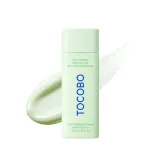
| VacationSun SamplerYOUR PRODUCT | numbuzinNo.9 Sunscreen | Super Defense Glow Sunscreen | PEACH & LILYBeam Blocker Invisible Sunscreen | TOCOBOCica Calming Sun Serum | |
|---|---|---|---|---|
| Match | — | 75% | 70% | 70% |
| Price | $18.00 | $12.75−$5.25 | $34.00+$16.00 | $4.66−$13.34 |
| Shared key ingredients | — | 3 of 23 | 8 of 23 | 6 of 23 |
| Key difference | — | Copper Tripeptide-1 | Ferulic Acid | Madecassoside |
| Irritancy | High | Medium | Medium | Medium |
| Drying alcohol | Contains drying alcohol | — | — | — |
| View product | Shop | Shop | Shop |
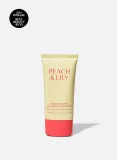
More alternatives: Beauty of Joseon Day Dew SunscreenDr. Althea Aqua Glowing Sunscreen
Sources cited in this review
Every concentration estimate and effectiveness label is anchored to one of these 20 studies and safety reviews.
- 1
- 2
- 3
- 4Final Report on the Safety Assessment of Dimethicone Copolyoljournals.sagepub.com
- 5
- 6

Affiliate links · As an Amazon Associate, WIMJ earns from qualifying purchases.