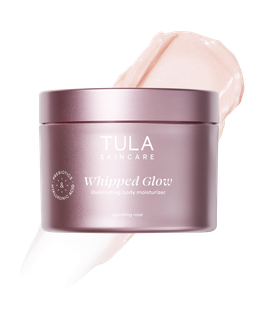
Works for
1 of 1 advertised claim delivered
MoisturizingAlpha-glucan oligosaccharide, Caprylic/capric triglyceride + 21 moreGood evidence
“Deeply hydrating while locking in moisture to nourish the skin microbiome”
This product can help improve hydration of the skin with the two types of ingredients.
The first type is called “humectants”:
these ingredients help attract water.
When humectants are on the surface of the skin, they “pull in” the moisture from the outside environment, or from
within deeper layers of the skin. The following ingredients in this product do the job:
glycerin, lactobacillus ferment.
This product also contains ingredients called “occlusives”. They help reduce the speed with which our skin loses moisture to the outside environment. These ingredients also help soften the upper layer of the skin, so it feels less tight and nicer to the touch. The following ingredients in this product do the job: caprylic/capric triglyceride, dimethicone.
Can it cause trouble?
Irritancy7 strong irritants: Rosa damascena flower water, Rosa damascena flower oil + 5 more — patch-test recommendedHigh risk
Comedogenic2 ingredients rated 2 or more on the 0–5 pore-clogging scale2 flagged

User reviews
Be the first — your take helps the next person decide.
Ingredients
Filter by role to see what each ingredient is doing.
Water~45–55%
Glycerin~4.7–5.7%
- Irritation risk
- Low
One of the best moisturizing ingredients. Naturally present in skin. It attracts water to the upper layer of the skin working as a humectant
More about GlycerinEthylhexyl palmitate~4.1–5%
- Irritation risk
- Low
- Comedogenicity
- 3/5
An emollient that helps soften the skin and create a nice product texture
More about Ethylhexyl palmitateCetyl alcohol~2.4–3%
- Irritation risk
- Low
A non-drying alcohol that works to soften the skin and stabilize product formulations helping oil and water mix together
More about Cetyl alcoholGlyceryl stearate~2.3–2.8%
- Irritation risk
- Low
An emollient that softens the skin and forms a protective layer on its surface. Helps water and oil mix together
More about Glyceryl stearatePeg-100 stearate~2–2.4%
- Irritation risk
- Low
Helps oil and water mix togehter and creates a nice product texture
More about Peg-100 stearateCaprylic/capric triglyceride~1.7–2.1%
- Irritation risk
- Medium
A good mix of fatty acids that forms a protective layer on the skin. Improves the shelf life of products. Derived from coconut and glycerin
More about Caprylic/capric triglycerideRosa damascena flower water~1.4–1.7%
- Irritation risk
- High
Used to add a nice rose smell to the product. Might help attract water to the upper layer of the skin and have some anti-oxidant effect. Can be irritating
More about Rosa damascena flower waterSodium hyaluronate~1.2–1.4%
- Irritation risk
- Low
One of the best moisturizing ingredients. Attracts water into the upper layer of the skin
More about Sodium hyaluronateRosa canina fruit oil~1–1.2%
- Irritation risk
- Medium
A great emollient. Contains vitamin E (tocopherol) which may give it some anti-oxidant properties. Can contain volatile compounds and can be irritating
More about Rosa canina fruit oilRosa damascena flower oil~0.65–1%
- Irritation risk
- High
Used as a fragrance. Can be irritating
More about Rosa damascena flower oilLactococcus ferment lysate~0.55–0.85%
- Irritation risk
- Low
Consists of remains of dead bacteria cells. Is likely helpful in attracting water to the upper layer of the skin. Might be helpful in reducing inflammation and neutralizing free radicals in skin
More about Lactococcus ferment lysateLactobacillus~0.5–0.75%
- Irritation risk
- Low
A non-living ingredient made by fermentation with the bacteria Lactobacillus. It can help attract water to the upper layer of the skin and might help reduce inflammation
More about LactobacillusLactobacillus ferment~0.45–0.7%
- Irritation risk
- Low
A fermentation product created by bacteria Lactobacillus. The fermented product has anti-bacterial properties and might be helpful in calming down inflammation, but studies are lacking. Helps attract water to the upper layer of the skin. Can be used as a preservative
More about Lactobacillus fermentLactic acid~0.4–0.65%
- Irritation risk
- Medium
An exfoliating and moisturizing alpha-hydroxy acid (AHA). Typically causes less irritation than other AHAs, for example, glycolic acid. At high concentrations (about 15%), lactic acid can help reduce lines and wrinkles. Recent studies show that lactic acid can support the "good" bacteria living on skin's surface (healthy skin microbiome)
More about Lactic acidButylene glycol~0.45–0.65%
- Irritation risk
- Low
Used to create a nice product texture and help delivery of other ingredients. Might be somewhat helpful in attracting water to the upper layer of the skin
More about Butylene glycolDimethicone~0.5–0.7%
- Irritation risk
- Low
A silicone that helps to reduce water loss from the surface of the skin. Can temporarily "fill in" lines and wrinkles, absorb oil, and create a nice product finish
More about DimethiconeCurcuma longa root extract~0.3–0.6%
- Irritation risk
- High
A plant extract that can contain an active compound curcumin, that may have some anti-inflammatory properties when applied to the skin, but solid research is lacking and the typical concentration used in skincare products is too low. Can be an irritant
More about Curcuma longa root extractAlpha-glucan oligosaccharide~0.4–0.6%
- Irritation risk
- Low
Helps attract water to the upper layer of the skin
More about Alpha-glucan oligosaccharideInulin~0.3–0.5%
- Irritation risk
- Low
Helps attract water to the upper layer of the skin. Is claimed to support the growth of "good" bacteria in skin (as a "prebiotic"), but the research is lacking
More about InulinBeta vulgaris root extract~0.25–0.5%
- Irritation risk
- Medium
A plant extract that might have some antioxidant properties, but mostly used in cosmetics for its color
More about Beta vulgaris root extractSqualane~0.3–0.6%
- Irritation risk
- Low
An oil naturally present in skin. Works as an emollient to soften the skin and form a protective layer on its surface without a greasy feeling.
More about SqualaneParfum~0.25–0.45%
- Irritation risk
- High
An aromatic blend of unspecified and possibly irritating ingredients
More about ParfumMica~0.3–0.55%
- Irritation risk
- Low
Creates an illusion of smoother and more radiant skin tone. Adds shimmer to the skin by reflecting light
More about MicaSodium chloride~0.3–0.55%
- Irritation risk
- Low
Used to stabilize mixtures of oil and water, and create thicker, gel-like product textures
More about Sodium chlorideCitric acid~0.25–0.45%
- Irritation risk
- Medium
Can work as an exfoliant but is typically used to adjust the product pH
More about Citric acidHydrogenated vegetable oil~0.25–0.5%
- Irritation risk
- Low
- Comedogenicity
- 2/5
An oil from a mixture of different vegetables. Helps soften the upper layer of the skin
More about Hydrogenated vegetable oilMaltodextrin~0.25–0.5%
- Irritation risk
- Low
Used to stabilize the product formulation and can help absorb oil
More about MaltodextrinPolymnia sonchifolia root juice~0.25–0.45%
- Irritation risk
- High
A plant extract that helps attract water to the upper layer of the skin and might have some anti-oxidant properties
More about Polymnia sonchifolia root juiceStearyl alcohol~0.3–0.55%
- Irritation risk
- Low
An emollient that helps soften the skin
More about Stearyl alcoholTocopherol~0.25–0.45%
- Irritation risk
- Low
Pure form of vitamin E. Can help moisturise and protect the skin from free radicals. Often used to help stabilise other ingredients or the formula itself
More about Tocopherol1,2-hexanediol~0.25–0.45%
Carbomer~0.25–0.45%
- Irritation risk
- Low
Helps create a thicker or gel-like product texture. It is not a surfactant but can be used in gentle cleansing formulations
More about CarbomerBenzotriazolyl dodecyl p-cresol~0.25–0.45%
- Irritation risk
- Medium
Used to stabilize the product formulation protecting it from sun light
More about Benzotriazolyl dodecyl p-cresolEthylhexylglycerin~0.25–0.45%
Lecithin~0.3–0.55%
- Irritation risk
- Low
Used mostly for creating emulsions - helping oil and water mix together. Helps soften the upper layer of the skin
More about LecithinPentylene glycol~0.3–0.55%
- Irritation risk
- Medium
Used to preserve products, dissolve other ingredients and create a nice product texture
More about Pentylene glycolPhenoxyethanol~0.25–0.5%
- Irritation risk
- Low
A preservative. It helps prevent bacterial growth in cosmetic products
More about PhenoxyethanolSodium benzoate~0.25–0.45%
Sodium hydroxide~0.25–0.45%
Synthetic fluorphlogopite~0.25–0.5%
- Irritation risk
- Low
A mineral that is used as an optical filter (makes the skin looks nicer through light reflection) and to improve the texture of cosmetic products
More about Synthetic fluorphlogopiteTin oxide~0.35–0.65%
- Irritation risk
- Low
A colorant that can add a pearl-like appearance to the formulation
More about Tin oxideTocopheryl acetate~0.25–0.5%
- Irritation risk
- Medium
A more stable but less bio-available form of vitamin E compared to Tocopherol. Might help moisturize and protect the skin from free radicals, but mostly used in low concentrations to stabilize other ingredients.
More about Tocopheryl acetateTrisodium ethylenediamine disuccinate~0.2–0.4%
- Irritation risk
- Medium
Used to improve stability of the formulation
More about Trisodium ethylenediamine disuccinateDimethyl phenethyl acetate~0.2–0.35%
- Irritation risk
- Low
Tetramethyl acetyloctahydronaphthalenes~0.2–0.35%
- Irritation risk
- Low
Geranyl acetate~0.2–0.35%
- Irritation risk
- Low
Linalool~0.2–0.35%
Citronellol~0.15–0.3%
Hexyl cinnamal~0.15–0.3%
Limonene~0.15–0.25%
- Irritation risk
- High
A common frangrance that can easily irritate skin, especially if exposed to air, light or heat
More about LimoneneCitrus aurantium peel oil~0.1–0.25%
- Irritation risk
- Low
Rose flower oil/extract~0.15–0.25%
- Irritation risk
- Low
Ci 19140~0.15–0.25%
Ci 75470~0.1–0.15%
Titanium dioxide~0.1–0.2%
- Irritation risk
- Low
Works as a UV filter when used in high concentrations. It is photostable and is effective mostly against the UVB light, with some protection in the UVA range. In small concentrations, used for its ability to improve the color of cosmetic products. Is usually well tolerated by the skin
More about Titanium dioxideIngredient list view
Water, Glycerin, Ethylhexyl palmitate, Cetyl alcohol, Glyceryl stearate, Peg-100 stearate, Caprylic/capric triglyceride, Rosa damascena flower water, Sodium hyaluronate, Rosa canina fruit oil, Rosa damascena flower oil, Lactococcus ferment lysate, Lactobacillus, Lactobacillus ferment, Lactic acid, Butylene glycol, Dimethicone, Curcuma longa root extract, Alpha-glucan oligosaccharide, Inulin, Beta vulgaris root extract, Squalane, Parfum, Mica, Sodium chloride, Citric acid, Hydrogenated vegetable oil, Maltodextrin, Polymnia sonchifolia root juice, Stearyl alcohol, Tocopherol, 1,2-hexanediol, Carbomer, Benzotriazolyl dodecyl p-cresol, Ethylhexylglycerin, Lecithin, Pentylene glycol, Phenoxyethanol, Sodium benzoate, Sodium hydroxide, Synthetic fluorphlogopite, Tin oxide, Tocopheryl acetate, Trisodium ethylenediamine disuccinate, Dimethyl phenethyl acetate, Tetramethyl acetyloctahydronaphthalenes, Geranyl acetate, Linalool, Citronellol, Hexyl cinnamal, Limonene, Citrus aurantium peel oil, Rose flower oil/extract, Ci 19140, Ci 75470, Titanium dioxide
Compare prices
Retailers ranked by price — lowest first.

Worth comparing, line by line.
Match % combines shared ingredients, the first five ingredients, shared actives and hero ingredients, irritancy (lower counts in the alternative's favour), texture and body area. Only products in the same routine step are compared.
| TulaWhipped GlowYOUR PRODUCT | PRIORI SkincarePRIORI LCA - Hand and Body Replenisher | |
|---|---|---|
| Match | — | 50% |
| Price | $32.00 | $43.96+$11.96 |
| Shared key ingredients | — | 5 of 13 |
| Key difference | — | Retinyl Palmitate |
| Irritancy | High | Medium |
| Drying alcohol | — | — |
| View product | Shop |
Sources cited in this review
Every concentration estimate and effectiveness label is anchored to one of these 18 studies and safety reviews.
- 1
- 2
- 3Hyaluronic acid: A key molecule in skin agingncbi.nlm.nih.gov
- 4
- 5
- 6

Affiliate links · As an Amazon Associate, WIMJ earns from qualifying purchases.