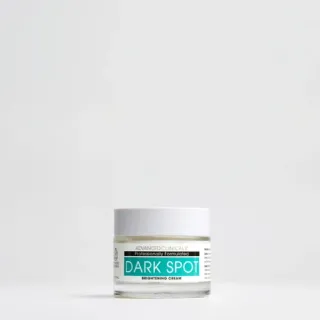
ADVANCED CLINICALS Dark Spot Face Cream
Works for
Evens skin toneLactic acid, Retinyl palmitate + 3 moreWorks well
“This Dark Spot Face Cream, infused with Vitamin C, Licorice Root Extract, Vitamin E, and Vitamin A, helps visibly improve the look of uneven skin and discoloration.”
This product can help reduce hypepigmentation and even out the skin tone because it contains the following effective ingredients: lactic acid
The following ingredient (ingredients) in this product might be helpful, but there is no evidence to confirm that it actually can help even out the skin tone: dipotassium glycyrrhizate, retinyl palmitate.
Keep in mind that you would need to apply any topical skincare targetted at hypigmentation consistently for a couple of months to get a result. No topical skincare product can help get rid of hyperpigmentation (including post-acne marks and age spots) instantly.
MoisturizingCetearyl alcohol, Glycerin + 15 moreWorks
“Hydrates and smooths for a refreshed glow.”
This product can help improve hydration of the skin with the two types of ingredients.
The first type is called “humectants”:
these ingredients help attract water.
When humectants are on the surface of the skin, they “pull in” the moisture from the outside environment, or from
within deeper layers of the skin. The following ingredients in this product do the job:
dipotassium glycyrrhizate, glycerin.
This product also contains ingredients called “occlusives”. They help reduce the speed with which our skin loses moisture to the outside environment. These ingredients also help soften the upper layer of the skin, so it feels less tight and nicer to the touch. The following ingredients in this product do the job: isopropyl myristate, theobroma cacao seed butter.
ExfoliationSide benefit · Lactic acid, Retinyl palmitateWorks well
This product can help exfoliate the skin. In other words, it helps break down the bonds between dead cells on the surface of the skin and speed up the skin turnover. Skin often appears softer and brighter after exfoliation, but overdoing it can result in disrupted skin barrier. The following ingredient is doing the exfoliating job in this product: lactic acid.
Anti-oxidationSide benefit · Camellia sinensis leaf extract, Pyrus malus fruit extract + 6 moreMay help
This product contains antioxidants (camellia sinensis leaf extract) that might be able to help neutralize free radicals in skin to lessen the damage it gets from the UV light (sun). There is not enough evidence to confirm their effectiveness in skin though.
Anti-agingSide benefit · Lactic acid, Retinyl palmitate + 5 moreMay help
This product contains lactic acid, retinyl palmitate. These ingredients might be able to help reduce and prevent fine lines and wrinkles, improve skin elasticity and firmness, but there is not enough evidence that it actually works.
Can it cause trouble?
Irritancy2 strong irritants: Retinyl palmitate, ParfumMedium risk
Comedogenic4 ingredients rated 2 or more on the 0–5 pore-clogging scale4 flagged
User reviews
Be the first — your take helps the next person decide.
Ingredients
Filter by role to see what each ingredient is doing.
Water~45–55%
Cetearyl alcohol~6–7.3%
- Irritation risk
- Low
- Comedogenicity
- 2/5
A non-drying alcohol. Works as an emollient. Helps water and oil mix together and creates a nice product texture
More about Cetearyl alcoholGlyceryl stearate~3.8–4.7%
- Irritation risk
- Low
An emollient that softens the skin and forms a protective layer on its surface. Helps water and oil mix together
More about Glyceryl stearateGlycerin~3.1–3.8%
- Irritation risk
- Low
One of the best moisturizing ingredients. Naturally present in skin. It attracts water to the upper layer of the skin working as a humectant
More about GlycerinLactic acid~2.3–2.8%
- Irritation risk
- Medium
An exfoliating and moisturizing alpha-hydroxy acid (AHA). Typically causes less irritation than other AHAs, for example, glycolic acid. At high concentrations (about 15%), lactic acid can help reduce lines and wrinkles. Recent studies show that lactic acid can support the "good" bacteria living on skin's surface (healthy skin microbiome)
More about Lactic acidPyrus malus fruit extract~2–2.4%
- Irritation risk
- Medium
Can have some moisturizing properties due to its sugar content
More about Pyrus malus fruit extractIsopropyl myristate~1.7–2.1%
- Irritation risk
- Low
- Comedogenicity
- 3/5
An emollient that helps soften the skin. Could be comedogenic
More about Isopropyl myristateCetearyl phosphate~1.4–1.8%
- Irritation risk
- Low
Aloe barbadensis leaf juice~1.2–1.5%
- Irritation risk
- Medium
Traditionally used to treat sunburns, dermatitis and inflammation, but evidence for its effectiveness is lacking. The extract can contain humectants that help attract water into the skin
More about Aloe barbadensis leaf juiceDictyopteris polypodioides extract~1–1.2%
- Irritation risk
- Low
Dipotassium glycyrrhizate~0.7–1.05%
- Irritation risk
- Low
A salt derived from licorice. Works as an emollient to soften the upper layer of the skin and can help calm down inflammation. Might be helpful for skin lightening
More about Dipotassium glycyrrhizateTetrahexyldecyl ascorbate~0.6–0.9%
- Irritation risk
- Medium
Being a lipid soluble form of vitamin C, it is more stable than ascorbic acid, but still degrades quickly and needs to be stabilized in a formulation with another ingredient. It is claimed to penetrate skin better than pure vitamin C and have the the similar benefits, but solid studies of its effectiveness are lacking. Is likely to require a higher concentration in a product than pure vitamin C to be effective. It might be able to help reduce pore clogging.
More about Tetrahexyldecyl ascorbateSodium hyaluronate~0.5–0.8%
- Irritation risk
- Low
One of the best moisturizing ingredients. Attracts water into the upper layer of the skin
More about Sodium hyaluronateTheobroma cacao seed butter~0.5–0.75%
- Irritation risk
- Low
- Comedogenicity
- 3/5
Helps soften the upper layer of the skin and can be helpful in restoring the skin barrier function. Might have some anti-oxidant effect
More about Theobroma cacao seed butterCamellia sinensis leaf extract~0.45–0.7%
- Irritation risk
- Low
Can contain potent anti-oxidant compounds (abbreviated ECG, GCG, EGC, and EGCG) that might help protect the skin from free radicals. Can help calm down inflammation and has some anti-bacterial properties. Unfortunately, these antioxidants are unstable and lose their effectiveness very quickly in products. The concentration of the antioxidant compounds in the extract also tends to be low to be effective in topical formulation
More about Camellia sinensis leaf extractButyrospermum parkii butter~0.5–0.75%
- Irritation risk
- Low
- Comedogenicity
- 3/5
A great moisturising ingredient that softens the skin and reduces water loss from its upper layer. It also can be helpful in protecting skin from free radicals
More about Butyrospermum parkii butterTocopheryl acetate~0.45–0.65%
- Irritation risk
- Medium
A more stable but less bio-available form of vitamin E compared to Tocopherol. Might help moisturize and protect the skin from free radicals, but mostly used in low concentrations to stabilize other ingredients.
More about Tocopheryl acetateCaffeine~0.35–0.65%
- Irritation risk
- Medium
Might be helpful in neutralizing free radicals. Can have a dehydration effect that might somewhat decrease the look of puffy eyes
More about CaffeineRetinyl palmitate~0.3–0.6%
- Irritation risk
- High
Three steps removed from the active form of vitamin A - retinoic acid. To have an effect in the skin, it first needs to be converted twice to become the retinoic acid. This means it is less potent than retinol, but could also be less irritating. Once converted to the retinoic acid in the skin, it helps against all signs of aging, improves skin cell turnover and helps fight blemishes and clogged pores. However, in many cosmetic formulations, it is used in a concentration that is too low to have the full effect
More about Retinyl palmitateTocopherol~0.3–0.55%
- Irritation risk
- Low
Pure form of vitamin E. Can help moisturise and protect the skin from free radicals. Often used to help stabilise other ingredients or the formula itself
More about TocopherolCaprylic/capric triglyceride~0.35–0.6%
- Irritation risk
- Medium
A good mix of fatty acids that forms a protective layer on the skin. Improves the shelf life of products. Derived from coconut and glycerin
More about Caprylic/capric triglycerideCaprylyl glycol~0.3–0.55%
- Irritation risk
- Medium
Helps preserve products and creates a nice product texture
More about Caprylyl glycolButylene glycol~0.25–0.45%
- Irritation risk
- Low
Used to create a nice product texture and help delivery of other ingredients. Might be somewhat helpful in attracting water to the upper layer of the skin
More about Butylene glycolSodium polyacrylate~0.3–0.5%
- Irritation risk
- Low
Used to create a gel-like product texture, as well as to stabilize emulsions
More about Sodium polyacrylateCaprylyl methicone~0.2–0.4%
- Irritation risk
- Low
A type of silicone that helps to soften the upper layer of the skin and create a nice product finish on the skin
More about Caprylyl methiconeAmmonium acryloyldimethyltaurate/vp copolymer~0.2–0.4%
- Irritation risk
- Low
Increases thickness of a product. Texture enhancer for oil-in-water emulsions
More about Ammonium acryloyldimethyltaurate/vp copolymerPhenoxyethanol~0.15–0.3%
- Irritation risk
- Low
A preservative. It helps prevent bacterial growth in cosmetic products
More about PhenoxyethanolEthylhexylglycerin~0.15–0.3%
Hexylene glycol~0.15–0.25%
- Irritation risk
- Medium
Helps create a more spreadable product texture
More about Hexylene glycolSodium hydroxide~0.1–0.25%
Tetrasodium glutamate diacetate~0.05–0.15%
- Irritation risk
- Low
Helps stabilize the product formulation
More about Tetrasodium glutamate diacetateParfum~0.05–0.1%
- Irritation risk
- High
An aromatic blend of unspecified and possibly irritating ingredients
More about ParfumIngredient list view
Water, Cetearyl alcohol, Glyceryl stearate, Glycerin, Lactic acid, Pyrus malus fruit extract, Isopropyl myristate, Cetearyl phosphate, Aloe barbadensis leaf juice, Dictyopteris polypodioides extract, Dipotassium glycyrrhizate, Tetrahexyldecyl ascorbate, Sodium hyaluronate, Theobroma cacao seed butter, Camellia sinensis leaf extract, Butyrospermum parkii butter, Tocopheryl acetate, Caffeine, Retinyl palmitate, Tocopherol, Caprylic/capric triglyceride, Caprylyl glycol, Butylene glycol, Sodium polyacrylate, Caprylyl methicone, Ammonium acryloyldimethyltaurate/vp copolymer, Phenoxyethanol, Ethylhexylglycerin, Hexylene glycol, Sodium hydroxide, Tetrasodium glutamate diacetate, Parfum
Compare prices
Retailers ranked by price — lowest first.

Worth comparing, line by line.
Match % combines shared ingredients, the first five ingredients, shared actives and hero ingredients, irritancy (lower counts in the alternative's favour), texture and body area. Only products in the same routine step are compared.
| ADVANCED CLINICALSDark Spot Face CreamYOUR PRODUCT | OFRAVitamin C Cream | Mario BadescuVitamin C Cream | Colleen Rothschild BeautyVitamin C Nourishing Cream | |
|---|---|---|---|---|
| Match | — | 42% | 42% | 41% |
| Price | $12.99 | — | $18.00+$5.01 | — |
| Shared key ingredients | — | 4 of 14 | 4 of 14 | 3 of 14 |
| Key difference | — | Oxybenzone | Niacinamide | Panthenol |
| Irritancy | Medium | Medium | High | Medium |
| Drying alcohol | — | — | — | — |
| View product | Shop | Shop | Shop |


More alternatives: Maria Åkerberg Face Cream SensitivePRIORI Skincare LCA - Skin Renewal Cream
Sources cited in this review
Every concentration estimate and effectiveness label is anchored to one of these 12 studies and safety reviews.
- 1
- 2Epidermal and dermal effects of topical lactic acidncbi.nlm.nih.gov
- 3Dual Effects of Alpha-Hydroxy Acids on the Skinpdfs.semanticscholar.org
- 4
- 5
- 6

Affiliate links · As an Amazon Associate, WIMJ earns from qualifying purchases.