Tula Tri-Supreme Serum overnight oil concentrate
Works for
Anti-agingNiacinamide, Pentapeptide-34 trifluoroacetate + 3 moreWorks well
“This clinically-proven formula minimizes the look of fine lines and wrinkles*, as well as deep wrinkles**, working overtime to help improve skin’s moisture barrier and improve the appearance of skin tone and texture while you sleep.”
This product can help reduce and prevent fine lines and wrinkles, improve skin elasticity and firmness because it contains niacinamide.
These ingredients in the product can also be helpful, even though there is less evidence for their effectiveness: pentapeptide-34 trifluoroacetate.
Keep in mind that it typically takes at least 6 weeks to notice any results because the changes that are needed to improve fine lines and elasticity happen in the deeper layers of the skin. No topical anti-aging product can “erase” wrinkles or fully reverse signs of aging.
MoisturizingNiacinamide, Ceramide ns + 23 moreWorks well
“This clinically-proven formula minimizes the look of fine lines and wrinkles*, as well as deep wrinkles**, working overtime to help improve skin’s moisture barrier and improve the appearance of skin tone and texture while you sleep.”
This product can help improve hydration of the skin with the two types of ingredients.
The first type is called “humectants”:
these ingredients help attract water.
When humectants are on the surface of the skin, they “pull in” the moisture from the outside environment, or from
within deeper layers of the skin. The following ingredients in this product do the job:
glycerin, lactobacillus ferment.
This product also contains ingredients called “occlusives”. They help reduce the speed with which our skin loses moisture to the outside environment. These ingredients also help soften the upper layer of the skin, so it feels less tight and nicer to the touch. The following ingredients in this product do the job: dimethicone, simmondsia chinensis seed oil.
The following ingredients in this product are especially good for supporting the skin barrier and helping with the hydration level: ceramide ap, ceramide as, ceramide eop, ceramide np, ceramide ns, niacinamide, pentapeptide-34 trifluoroacetate
Evens skin toneNiacinamideWorks well
“This clinically-proven formula minimizes the look of fine lines and wrinkles*, as well as deep wrinkles**, working overtime to help improve skin’s moisture barrier and improve the appearance of skin tone and texture while you sleep.”
This product can help reduce hypepigmentation and even out the skin tone because it contains the following effective ingredients: niacinamide
Keep in mind that you would need to apply any topical skincare targetted at hypigmentation consistently for a couple of months to get a result. No topical skincare product can help get rid of hyperpigmentation (including post-acne marks and age spots) instantly.
Anti-blemishSide benefit · Niacinamide, Oenothera biennis oil + 2 moreWorks well
This product can help reduce breakouts and clogged pores because it contains the following ingredient: niacinamide. This ingredient is used for treating acne and can have a noticeable effect.
Anti-oxidationSide benefit · Rubus idaeus seed oil, Pentapeptide-34 trifluoroacetate + 9 moreWorks well
This product contains antioxidants (pentapeptide-34 trifluoroacetate) that can help neutralize free radicals in skin. By doing so, they can lessen the damage the skin gets from the UV light (sun).
The following ingredients - rubus idaeus seed oil also can have an antioxidant effect, but there is less evidence to confirm their effectiveness in skin.
Can it cause trouble?
Irritancy1 strong irritant: Rosmarinus officinalis leaf extractMedium risk
ComedogenicClean of flagged comedogenic ingredientsNone flagged

User reviews
Be the first — your take helps the next person decide.
Ingredients
Filter by role to see what each ingredient is doing.
Dimethicone~22–33%
- Irritation risk
- Low
A silicone that helps to reduce water loss from the surface of the skin. Can temporarily "fill in" lines and wrinkles, absorb oil, and create a nice product finish
More about DimethiconeCarthamus tinctorius seed oil~4.3–6.4%
- Irritation risk
- Low
An emollient that helps soften the skin and might help calm down inflammation
More about Carthamus tinctorius seed oilWater~4.7–7.1%
Vitis vinifera seed oil~4–6%
- Irritation risk
- Medium
A great emollient that can also have anti-oxidant properties
More about Vitis vinifera seed oilOctyldodecanol~3–4.5%
- Irritation risk
- Low
An emollient that helps to soften the skin and create a pleasant product texture and stabilize the formulation
More about OctyldodecanolRubus idaeus seed oil~2.4–3.6%
- Irritation risk
- Medium
A plant oil that might be able to help neutralize free radicals in skin
More about Rubus idaeus seed oilSimmondsia chinensis seed oil~2–2.9%
- Irritation risk
- Medium
Softens the upper layer of skin and helps restore the healthy skin barrier. Has shown to help calm down inflammation in skin. It is a stable oil, meaning that it retains its properties even when exposed to air.
More about Simmondsia chinensis seed oilNiacinamide~1.3–2%
- Irritation risk
- Low
Is proven to be effective in reducing blemishes, evening out skin tone and helping to improve lines and wrinkles. It helps the skin to repair sun damage, calm down inflammation and keep maintain good levels of moisture. The concentration of about 2% is effective for supporting the skin barrier and evening out the skin tone. Concentration of 4-6% is better for helping with acne and balancing the sebum production
More about NiacinamideLactococcus ferment lysate~1.2–1.8%
- Irritation risk
- Low
Consists of remains of dead bacteria cells. Is likely helpful in attracting water to the upper layer of the skin. Might be helpful in reducing inflammation and neutralizing free radicals in skin
More about Lactococcus ferment lysateGlycerin~1–1.6%
- Irritation risk
- Low
One of the best moisturizing ingredients. Naturally present in skin. It attracts water to the upper layer of the skin working as a humectant
More about GlycerinRhododendron ferrugineum extract~0.8–1.25%
- Irritation risk
- High
Caulerpa lentillifera extract~0.85–1.25%
- Irritation risk
- Low
Tuber aestivum extract~0.55–1.25%
- Irritation risk
- Low
Sodium polyglutamate~0.5–1.15%
- Irritation risk
- Low
Camellia sinensis seed oil~0.55–1.25%
- Irritation risk
- Low
A plant oil that helps to soften the upper layer of the skin and can help restore the skin barrier. Might have some anti-oxidant effect
More about Camellia sinensis seed oilOenothera biennis oil~0.55–1.25%
- Irritation risk
- Medium
Helps soften the upper layer of the skin and can support skin barrier function
More about Oenothera biennis oilCeramide np~0.5–1.2%
- Irritation risk
- Low
A type of lipid similar to ceramides naturally present in skin. Helps to soften the upper layer of the skin and supports the skin barrier function to keep it hydrated. Can help to prevent inflammation in skin
More about Ceramide npCeramide ns~0.5–1.15%
- Irritation risk
- Low
A type of lipid similar to ceramides naturally present in skin. Helps to soften the upper layer of the skin and supports the skin barrier function to keep it hydrated. Can help to prevent inflammation in skin
More about Ceramide nsCeramide as~0.4–0.95%
- Irritation risk
- Low
A type of lipid similar to ceramides naturally present in skin. Helps to soften the upper layer of the skin and supports the skin barrier function to keep it hydrated. Can help to prevent inflammation in skin
More about Ceramide asCeramide ap~0.4–0.9%
- Irritation risk
- Low
A type of lipid similar to ceramides naturally present in skin. Helps to soften the upper layer of the skin and supports the skin barrier function to keep it hydrated. Can help to prevent inflammation in skin
More about Ceramide apCeramide eop~0.45–1%
- Irritation risk
- Low
A type of lipid similar to ceramides naturally present in skin. Helps to soften the upper layer of the skin and supports the skin barrier function to keep it hydrated. Can help to prevent inflammation in skin
More about Ceramide eopHydrolyzed rice bran protein~0.4–0.9%
- Irritation risk
- Low
Pentapeptide-34 trifluoroacetate~0.45–1%
- Irritation risk
- Low
A type of peptide that works as a great moisturizer. It might also have some anti-aging effect and help neutralize free radicals in skin
More about Pentapeptide-34 trifluoroacetateLactobacillus ferment~0.35–0.85%
- Irritation risk
- Low
A fermentation product created by bacteria Lactobacillus. The fermented product has anti-bacterial properties and might be helpful in calming down inflammation, but studies are lacking. Helps attract water to the upper layer of the skin. Can be used as a preservative
More about Lactobacillus fermentLactobacillus~0.35–0.85%
- Irritation risk
- Low
A non-living ingredient made by fermentation with the bacteria Lactobacillus. It can help attract water to the upper layer of the skin and might help reduce inflammation
More about LactobacillusInulin~0.35–0.85%
- Irritation risk
- Low
Helps attract water to the upper layer of the skin. Is claimed to support the growth of "good" bacteria in skin (as a "prebiotic"), but the research is lacking
More about InulinCurcuma longa root extract~0.35–0.8%
- Irritation risk
- High
A plant extract that can contain an active compound curcumin, that may have some anti-inflammatory properties when applied to the skin, but solid research is lacking and the typical concentration used in skincare products is too low. Can be an irritant
More about Curcuma longa root extractAlpha-glucan oligosaccharide~0.4–0.9%
- Irritation risk
- Low
Helps attract water to the upper layer of the skin
More about Alpha-glucan oligosaccharideBeta vulgaris root extract~0.35–0.85%
- Irritation risk
- Medium
A plant extract that might have some antioxidant properties, but mostly used in cosmetics for its color
More about Beta vulgaris root extractCandida bombicola/glucose/methyl rapeseedate ferment~0.4–0.95%
- Irritation risk
- Low
Helps water and oil mix together and preserve the product formulation
More about Candida bombicola/glucose/methyl rapeseedate fermentOryza sativa bran extract~0.35–0.8%
Tocopherol~0.35–0.8%
- Irritation risk
- Low
Pure form of vitamin E. Can help moisturise and protect the skin from free radicals. Often used to help stabilise other ingredients or the formula itself
More about TocopherolHelianthus annuus seed extract~0.35–0.8%
- Irritation risk
- Low
Rosmarinus officinalis leaf extract~0.3–0.75%
- Irritation risk
- High
Can be helpful in reducing inflammation in skin, including inflamed acne. It can be irritating
More about Rosmarinus officinalis leaf extractPolymnia sonchifolia root juice~0.35–0.75%
- Irritation risk
- High
A plant extract that helps attract water to the upper layer of the skin and might have some anti-oxidant properties
More about Polymnia sonchifolia root juiceCholesterol~0.35–0.75%
- Irritation risk
- Low
An emollient that is naturally found in skin
More about CholesterolTrisodium ethylenediamine disuccinate~0.15–0.7%
- Irritation risk
- Medium
Used to improve stability of the formulation
More about Trisodium ethylenediamine disuccinateSodium chloride~0.2–0.75%
- Irritation risk
- Low
Used to stabilize mixtures of oil and water, and create thicker, gel-like product textures
More about Sodium chloridePropanediol~0.2–0.7%
- Irritation risk
- Low
Acts as a solvent for other ingredients. Speeds up the absorption of other ingredients into the skin
More about PropanediolPotassium sorbate~0.3–0.6%
Citric acid~0.15–0.65%
- Irritation risk
- Medium
Can work as an exfoliant but is typically used to adjust the product pH
More about Citric acidMaltodextrin~0.2–0.7%
- Irritation risk
- Low
Used to stabilize the product formulation and can help absorb oil
More about MaltodextrinSodium benzoate~0.25–0.5%
Hydrogenated lecithin~0.15–0.6%
- Irritation risk
- Low
Helps to retain moisture by creating a protective barrier on the skin. Rich in fatty acids. Improves product texture and helps with the penetration of other ingredients.
More about Hydrogenated lecithinButylene glycol~0.1–0.5%
- Irritation risk
- Low
Used to create a nice product texture and help delivery of other ingredients. Might be somewhat helpful in attracting water to the upper layer of the skin
More about Butylene glycolGlyceryl stearate~0.15–0.65%
- Irritation risk
- Low
An emollient that softens the skin and forms a protective layer on its surface. Helps water and oil mix together
More about Glyceryl stearate1,2-hexanediol~0.05–0.25%
Phenoxyethanol~0.1–0.4%
- Irritation risk
- Low
A preservative. It helps prevent bacterial growth in cosmetic products
More about PhenoxyethanolSodium citrate~0.1–0.3%
- Irritation risk
- Medium
Helps to control the skin's pH level. Maintains the skin's natural film of amino-lactic acids and oils. Helps to preserve products
More about Sodium citrate2,3-butanediol~0.05–0.25%
- Irritation risk
- Low
Chlorophyllin-copper complex~0.05–0.2%
- Irritation risk
- Low
Ingredient list view
Dimethicone, Carthamus tinctorius seed oil, Water, Vitis vinifera seed oil, Octyldodecanol, Rubus idaeus seed oil, Simmondsia chinensis seed oil, Niacinamide, Lactococcus ferment lysate, Glycerin, Rhododendron ferrugineum extract, Caulerpa lentillifera extract, Tuber aestivum extract, Sodium polyglutamate, Camellia sinensis seed oil, Oenothera biennis oil, Ceramide np, Ceramide ns, Ceramide as, Ceramide ap, Ceramide eop, Hydrolyzed rice bran protein, Pentapeptide-34 trifluoroacetate, Lactobacillus ferment, Lactobacillus, Inulin, Curcuma longa root extract, Alpha-glucan oligosaccharide, Beta vulgaris root extract, Candida bombicola/glucose/methyl rapeseedate ferment, Oryza sativa bran extract, Tocopherol, Helianthus annuus seed extract, Rosmarinus officinalis leaf extract, Polymnia sonchifolia root juice, Cholesterol, Trisodium ethylenediamine disuccinate, Sodium chloride, Propanediol, Potassium sorbate, Citric acid, Maltodextrin, Sodium benzoate, Hydrogenated lecithin, Butylene glycol, Glyceryl stearate, 1,2-hexanediol, Phenoxyethanol, Sodium citrate, 2,3-butanediol, Chlorophyllin-copper complex
Compare prices
Retailers ranked by price — lowest first.
Affiliate links · As an Amazon Associate, WIMJ earns from qualifying purchases.
Worth comparing, line by line.
Match % combines shared ingredients, the first five ingredients, shared actives and hero ingredients, irritancy (lower counts in the alternative's favour), texture and body area. Only products in the same routine step are compared.
| TulaTri-Supreme Serum overnight oil concentrateYOUR PRODUCT | hellobubbleDay Dream Vitamin C + Niacinamide Tone & Texture Serum | Bubble SkincareDay Dream Tone and Texture Serum | Jeffree Star CosmeticsVitamin C Skin Perfecting Serum | |
|---|---|---|---|---|
| Match | — | 82% | 82% | 78% |
| Price | — | $11.90 | $14.20 | — |
| Shared key ingredients | — | 8 of 23 | 8 of 23 | 10 of 23 |
| Key difference | — | Sodium Ascorbyl Phosphate | Sodium Ascorbyl Phosphate | Tetrahexyldecyl Ascorbate |
| Irritancy | Medium | Low | Low | Medium |
| Drying alcohol | — | — | — | — |
| View product | Shop | Shop | Shop |
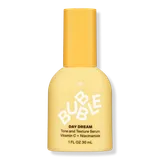
More alternatives: BIODANCE Hydro Cera-nol AmpouleEqqualberry Aloe PDRN Calming Serum
Product summary
"Tula - Tri-Supreme™ Serum overnight oil concentrate" is effective for: Anti-aging, Moisturizing, Anti-blemish and Evens skin tone
Ingredient callouts
- A good concentration of Niacinamide (1.30% - 2.00%). Niacinamide is a well-studied multi-tasking active. It is stable, and can work well in almost any hydrating formulation. There is solid evidence that Niacinamide can help support skin barrier, regulate oil production and reduce acne and clogged pores. It also helps to fight photodamage and improve the skin tone, reducing pigmentation marks.
- Ceramides (ceramide eop 0.45% - 1.00%, ceramide ap 0.40% - 0.90%, ceramide as 0.40% - 0.95%, ceramide ns 0.50% - 1.15% and ceramide np 0.50% - 1.20%). Ceramides are an important part of our natural skin barrier. The Ceramides used in skincare are synthetic or come from plants. They help soften the skin and can help "fill the gaps" in the skin barrier, keeping the skin hydrated and resilient for longer.
- Peptides (peptide q10 0.45% - 1.00%). There are many different kind of Peptides and they are naturally present in our skin. They all are a combination of aminoacids. Some of them work as natural antibiotics, promote wound-healing and production of collagen. The science is still not settled on how effective Peptides are in skincare, but it is very likely that they have a benefit. They might help restore the skin barrier and fight the signs of aging. At the very least, Peptides work as humectants: they attract water to the upper layer of the skin and improve its hydration.
- Humectants (lactobacillus ferment 0.35% - 0.85% and glycerin 1.00% - 1.60%). These ingredients help attract water to the upper layer of the skin and improve the skin hydration.
About the brand
According to Cruelty-Free Kitty "Tula" is cruelty free, but its parent company is not.
Sources cited in this review
Every concentration estimate and effectiveness label is anchored to one of these 20 studies and safety reviews.
- 1
- 2Final Report on the Safety Assessment of Dimethicone Copolyoljournals.sagepub.com
- 3
- 4
- 5
- 6

Affiliate links · As an Amazon Associate, WIMJ earns from qualifying purchases.