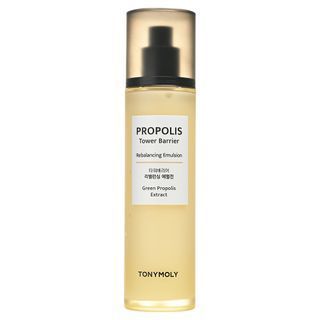
TONYMOLY Propolis Tower Barrier Rebalancing Emulsion
Works for
2 of 2 advertised claims delivered
Anti-agingAdenosine, Niacinamide + 4 moreStrong evidence
“Functional product for skin brightening and wrinkle improvement.”
This product can help reduce and prevent fine lines and wrinkles, improve skin elasticity and firmness because it contains adenosine, niacinamide.
Keep in mind that it typically takes at least 6 weeks to notice any results because the changes that are needed to improve fine lines and elasticity happen in the deeper layers of the skin. No topical anti-aging product can “erase” wrinkles or fully reverse signs of aging.
MoisturizingNiacinamide, Ceramide np + 22 moreStrong evidence
“Propolis Tower Barrier Rebalancing Emulsion”
This product can help improve hydration of the skin with the two types of ingredients.
The first type is called “humectants”:
these ingredients help attract water.
When humectants are on the surface of the skin, they “pull in” the moisture from the outside environment, or from
within deeper layers of the skin. The following ingredients in this product do the job:
glycerin, saccharomyces ferment filtrate.
This product also contains ingredients called “occlusives”. They help reduce the speed with which our skin loses moisture to the outside environment. These ingredients also help soften the upper layer of the skin, so it feels less tight and nicer to the touch. The following ingredients in this product do the job: caprylic/capric triglyceride, jojoba esters.
The following ingredients in this product are especially good for supporting the skin barrier and helping with the hydration level: ceramide np, niacinamide
Evens skin toneNot advertised by the brand · Niacinamide, Camellia sinensis leaf extractStrong evidence
This product can help reduce hypepigmentation and even out the skin tone because it contains the following effective ingredients: niacinamide
Keep in mind that you would need to apply any topical skincare targetted at hypigmentation consistently for a couple of months to get a result. No topical skincare product can help get rid of hyperpigmentation (including post-acne marks and age spots) instantly.
Anti-blemishNot advertised by the brand · Niacinamide, Beta-glucan + 3 moreStrong evidence
This product can help reduce breakouts and clogged pores because it contains the following ingredient: niacinamide. This ingredient is used for treating acne and can have a noticeable effect.
Can it cause trouble?
Irritancy4 strong irritants: Rosa damascena flower water, Jasminum officinale flower water + 2 more — patch-test recommendedHigh risk
Comedogenic1 ingredient rated 2 or more on the 0–5 pore-clogging scale1 flagged
User reviews
Be the first — your take helps the next person decide.
Ingredients
Filter by role to see what each ingredient is doing.
Propolis extract76%
- Irritation risk
- High
A complex substance produced by honey bees. Can have anti-bacterial and some anti-oxidant effect. Is an allergen and can be irritating
More about Propolis extractGlycerin~22–33%
- Irritation risk
- Low
One of the best moisturizing ingredients. Naturally present in skin. It attracts water to the upper layer of the skin working as a humectant
More about GlycerinCaprylic/capric triglyceride~3.8–5.8%
- Irritation risk
- Medium
A good mix of fatty acids that forms a protective layer on the skin. Improves the shelf life of products. Derived from coconut and glycerin
More about Caprylic/capric triglyceridePropanediol~4–6.1%
- Irritation risk
- Low
Acts as a solvent for other ingredients. Speeds up the absorption of other ingredients into the skin
More about Propanediol1,2-hexanediol~2–3%
Niacinamide~2.4–3.6%
- Irritation risk
- Low
Is proven to be effective in reducing blemishes, evening out skin tone and helping to improve lines and wrinkles. It helps the skin to repair sun damage, calm down inflammation and keep maintain good levels of moisture. The concentration of about 2% is effective for supporting the skin barrier and evening out the skin tone. Concentration of 4-6% is better for helping with acne and balancing the sebum production
More about NiacinamidePrunus armeniaca kernel oil~1.9–2.9%
- Irritation risk
- Medium
An emollient that helps soften the skin
More about Prunus armeniaca kernel oilJojoba esters~1.5–2.2%
- Irritation risk
- Medium
An emollient made of jojoba oil. Helps soften the skin and support its barrier function
More about Jojoba estersC14-22 alcohols~1.2–1.8%
- Irritation risk
- Low
A non-drying alcohol that helps stabilize product formulations
More about C14-22 alcoholsPolyglyceryl-10 laurate~0.95–1.45%
- Irritation risk
- Medium
Helps water and oil mix together
More about Polyglyceryl-10 lauratePolyglyceryl-3 methylglucose distearate~0.55–1.25%
- Irritation risk
- Medium
Helps water and oil mix together
More about Polyglyceryl-3 methylglucose distearateCentella asiatica extract~0.3–0.75%
- Irritation risk
- Medium
A plant extract that has been shown to be able to reduce inflammation in skin, support restoration of skin barrier function, as well as support collagen production. Contains active compounds called centelloids: asiaticoside, madecasosside, asiatic acid and madecassic acid. Might be helpful in preventing stretch marks. It can be itself be irritating though.
More about Centella asiatica extractPanthenol~0.2–0.75%
- Irritation risk
- Low
Helps attract water to the upper layer of the skin and can help improve skin barrier function
More about PanthenolScrophularia buergeriana extract~0.15–0.5%
- Irritation risk
- Low
Honey extract~0.1–0.4%
- Irritation risk
- Medium
Helps attract water to the upper layer of the skin
More about Honey extractPortulaca oleracea extract~0.1–0.4%
- Irritation risk
- Medium
A plant extract that has some anti-oxidant activity, but solid research is lacking. Can help attract water to the upper layer of the skin
More about Portulaca oleracea extractPhellinus linteus extract~0.1–0.45%
- Irritation risk
- Low
Arctium lappa root extract~0.1–0.4%
- Irritation risk
- High
Plant extract. Has some anti-microbial and anti-oxidant properties. Can be irritating
More about Arctium lappa root extractLactobacillus ferment lysate~0.1–0.45%
- Irritation risk
- Low
A "broth" with parts of dead cells of lactobacteria. Might be helpful supporting diverse microbiome in skin, but evidence is lacking
More about Lactobacillus ferment lysateSaccharomyces ferment filtrate~0.1–0.45%
- Irritation risk
- Low
A product of yeast fermentation. Helps attract water to the upper layer of the skin
More about Saccharomyces ferment filtrateChamomilla recutita flower extract~0.1–0.4%
- Irritation risk
- High
Plant extract that can have healing and anti-inflammatory properties. It is a potential allergen and can be irritating
More about Chamomilla recutita flower extractVitex agnus-castus extract~0.1–0.35%
- Irritation risk
- Medium
A plant extract that might have some antioxidant properties but evidence of effectiveness in skin is missing
More about Vitex agnus-castus extractC12-20 alkyl glucoside~0.1–0.35%
- Irritation risk
- Medium
Helps water and oil mix together
More about C12-20 alkyl glucosideEthylhexyl stearate~0.1–0.45%
- Irritation risk
- Low
Helps soften the upper layer of the skin
More about Ethylhexyl stearateCorallina officinalis extract~0.05–0.25%
- Irritation risk
- Low
- Comedogenicity
- 3/5
Red algae extract that helps attract water to the upper layer of the skin and might contain antioxidants
More about Corallina officinalis extractBeta-glucan~0.05–0.25%
- Irritation risk
- Low
Helps attract water to the upper layer of the skin, calm down inflammation and irritation, restore the barrier function and support wound healing. It can be helpful in reducing fine lines and wrinkles
More about Beta-glucanPyrus communis fruit extract~0.05–0.25%
- Irritation risk
- Medium
Can have some moisturizing properties due to its sugar content
More about Pyrus communis fruit extractMelia azadirachta leaf extract~0.05–0.25%
- Irritation risk
- High
A plant extract that has anti-bacterial properties. Can be used to preserve the product. Can be irritating
More about Melia azadirachta leaf extractRosa damascena flower water~0.05–0.25%
- Irritation risk
- High
Used to add a nice rose smell to the product. Might help attract water to the upper layer of the skin and have some anti-oxidant effect. Can be irritating
More about Rosa damascena flower waterMelia azadirachta flower extract~0.05–0.25%
- Irritation risk
- Medium
A plant extract that might be helpful to neutralize free radicals in skin
More about Melia azadirachta flower extractCurcuma longa root extract~0.05–0.2%
- Irritation risk
- High
A plant extract that can contain an active compound curcumin, that may have some anti-inflammatory properties when applied to the skin, but solid research is lacking and the typical concentration used in skincare products is too low. Can be an irritant
More about Curcuma longa root extractPrunus persica fruit extract~0.1–0.5%
- Irritation risk
- High
A fruit extact. Might have some anti-oxidant properties
More about Prunus persica fruit extractJasminum officinale flower water~0.05–0.25%
- Irritation risk
- High
Used as a fragrance. Can lead to irritation
More about Jasminum officinale flower waterHedera helix leaf/stem extract~0.05–0.25%
- Irritation risk
- Low
Vanilla planifolia fruit extract~0.05–0.25%
- Irritation risk
- High
A plant extract used as a fragrance. Can be irritating
More about Vanilla planifolia fruit extractCucumis melo fruit extract~0.05–0.25%
- Irritation risk
- Medium
A fruit extract that might have some anti-oxidant properties
More about Cucumis melo fruit extractOcimum sanctum leaf extract~0.05–0.25%
- Irritation risk
- High
A plant extract that is rich in a fragrance compound eugenol that is a frequent allergen and can be irritating. It might also contain anti-oxidants to help neutralize free radicals
More about Ocimum sanctum leaf extractCamellia sinensis leaf extract~0.1–0.35%
- Irritation risk
- Low
Can contain potent anti-oxidant compounds (abbreviated ECG, GCG, EGC, and EGCG) that might help protect the skin from free radicals. Can help calm down inflammation and has some anti-bacterial properties. Unfortunately, these antioxidants are unstable and lose their effectiveness very quickly in products. The concentration of the antioxidant compounds in the extract also tends to be low to be effective in topical formulation
More about Camellia sinensis leaf extractWater~0.05–0.25%
Ceramide np~0.1–0.45%
- Irritation risk
- Low
A type of lipid similar to ceramides naturally present in skin. Helps to soften the upper layer of the skin and supports the skin barrier function to keep it hydrated. Can help to prevent inflammation in skin
More about Ceramide npSodium hyaluronate~0.05–0.2%
- Irritation risk
- Low
One of the best moisturizing ingredients. Attracts water into the upper layer of the skin
More about Sodium hyaluronatePhytosteryl/octyldodecyl lauroyl glutamate~0.1–0.4%
- Irritation risk
- Low
A mix of amino acids and plant-based lipids. Helps to soften the upper layer of the skin and reduce water loss over time
More about Phytosteryl/octyldodecyl lauroyl glutamateHydrogenated lecithin~0.05–0.3%
- Irritation risk
- Low
Helps to retain moisture by creating a protective barrier on the skin. Rich in fatty acids. Improves product texture and helps with the penetration of other ingredients.
More about Hydrogenated lecithinTrideceth-6~0.05–0.3%
Sodium polyacrylate~0.2–0.8%
- Irritation risk
- Low
Used to create a gel-like product texture, as well as to stabilize emulsions
More about Sodium polyacrylateAcrylates/c10-30 alkyl acrylate crosspolymer~0.15–0.6%
- Irritation risk
- Medium
Maintains the texture of skincare products. Allows the product to spread evenly. Helps oil and water mix together
More about Acrylates/c10-30 alkyl acrylate crosspolymerXanthan gum~0.1–0.35%
- Irritation risk
- Low
Used to create a thicker product consistency
More about Xanthan gumTromethamine~0.05–0.3%
Adenosine~0.1–0.3%
- Irritation risk
- Low
Might help improve cell turnover and reduce inflammation in skin. One study shows that the ingredients might be able to help reduce dynamic wrinkles (for example, in the corners of the eyes or on the forehead)
More about AdenosineTocopherol~0.05–0.3%
- Irritation risk
- Low
Pure form of vitamin E. Can help moisturise and protect the skin from free radicals. Often used to help stabilise other ingredients or the formula itself
More about TocopherolCaprylyl glycol~0.1–0.3%
- Irritation risk
- Medium
Helps preserve products and creates a nice product texture
More about Caprylyl glycolEthylhexylglycerin~0.05–0.1%
Ingredient list view
Propolis extract, Glycerin, Caprylic/capric triglyceride, Propanediol, 1,2-hexanediol, Niacinamide, Prunus armeniaca kernel oil, Jojoba esters, C14-22 alcohols, Polyglyceryl-10 laurate, Polyglyceryl-3 methylglucose distearate, Centella asiatica extract, Panthenol, Scrophularia buergeriana extract, Honey extract, Portulaca oleracea extract, Phellinus linteus extract, Arctium lappa root extract, Lactobacillus ferment lysate, Saccharomyces ferment filtrate, Chamomilla recutita flower extract, Vitex agnus-castus extract, C12-20 alkyl glucoside, Ethylhexyl stearate, Corallina officinalis extract, Beta-glucan, Pyrus communis fruit extract, Melia azadirachta leaf extract, Rosa damascena flower water, Melia azadirachta flower extract, Curcuma longa root extract, Prunus persica fruit extract, Jasminum officinale flower water, Hedera helix leaf/stem extract, Vanilla planifolia fruit extract, Cucumis melo fruit extract, Ocimum sanctum leaf extract, Camellia sinensis leaf extract, Water, Ceramide np, Sodium hyaluronate, Phytosteryl/octyldodecyl lauroyl glutamate, Hydrogenated lecithin, Trideceth-6, Sodium polyacrylate, Acrylates/c10-30 alkyl acrylate crosspolymer, Xanthan gum, Tromethamine, Adenosine, Unknown, Tocopherol, Caprylyl glycol, Ethylhexylglycerin
Compare prices
Retailers ranked by price — lowest first.

Affiliate links · prices updated regularly
Worth comparing, line by line.
Match % combines shared ingredients, the first five ingredients, shared actives and hero ingredients, irritancy (lower counts in the alternative's favour), texture and body area. Only products in the same routine step are compared.
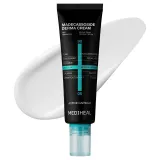
| TONYMOLYPropolis Tower Barrier Rebalancing EmulsionYOUR PRODUCT | hwarang'Bellflower Moisturizing Barrier Cream | MEDIHEALMadecassoside Derma Cream Blemish Repair | NEOGEN X SUR.MEDICSurmedic 24K Gold Caviar Repair Vital Cream | |
|---|---|---|---|---|
| Match | — | 88% | 86% | 86% |
| Price | $26.00 | $16.83−$9.17 | $19.63−$6.37 | $60.00+$34.00 |
| Shared key ingredients | — | 10 of 17 | 8 of 17 | 9 of 17 |
| Key difference | — | Butyrospermum Parkii Butter | Madecassoside | Copper Tripeptide-1 |
| Irritancy | High | Medium | Medium | Medium |
| Drying alcohol | — | — | — | — |
| View product | Shop | Shop | Shop |


Product summary
Based on the ingredient list, "TONYMOLY - Propolis Tower Barrier Rebalancing Emulsion" can work well for skin moisturization. To work well, any moisturizer needs to include a combination of water-binding and emollient ingredients. TONYMOLY - Propolis Tower Barrier Rebalancing Emulsion ticks this box. Glycerin, saccharomyces ferment filtrate, sodium hyaluronate, honey extract and caprylyl glycol in this product (humectants) attract water molecules to the upper layer of the skin (the water comes from the outside air or from the deeper layers of the skin if the air is dry). Emollients in this formulation (ceramide np, jojoba esters, phytosteryl/octyldodecyl lauroyl glutamate, prunus armeniaca kernel oil and caprylic/capric triglyceride) help to reduce the moisture loss from the skin. They also soften the skin surface and relieve the feeling of dryness and tightness.
Ingredient callouts
- We particularly like that there is a good concentration of Niacinamide (2.40% - 3.60%) in this moisturizer. Niacinamide is a well-studied multi-tasking active. It is a great ingredient to have in a moisturizer. It is stable, and can work well in almost any hydrating formulation. There is solid evidence that Niacinamide can help support skin barrier, regulate oil production and reduce acne and clogged pores. It also helps to fight photodamage and help improve the skin tone, reducing pigmentation marks.
- As a plus, this moisturizer also contains Ceramides (ceramide np 0.10% - 0.45%). Ceramides are a type of lipids that our skin produces itself. They are a building block of the skin's barrier. Ceramides used in skincare are synthetic or extracted from plants. They work well for softening the skin surface and "patch holes" in the skin's barrier.
- Adenosine 0.10% - 0.30%. It is a compound that in involved in many biological processes inside the skin cells. According one high-quality clinical trial, topical Adenosine in low concentrations can somewhat help improve "deep wrinkles" - the wrinkles that appear with age in places where our faces are most dynamic (for example, on the forehead or in the corners of the eyes).
Irritation risk
We assess the overall irritancy of this moisturizer to be high. For a detailed overview of all potential irritants: click here
You can see the detailed formula review with the breakdown of all actives in the product and the full ingredient list with estimated concentrations in the tables below.
Price
The product retails for 26.00$ in the United States.
For a detailed price comparison: click here.
Sources cited in this review
Every concentration estimate and effectiveness label is anchored to one of these 41 studies and safety reviews.
- 1
- 2
- 3
- 4
- 5
- 6

Affiliate links · As an Amazon Associate, WIMJ earns from qualifying purchases.