Works for
2 of 2 advertised claims delivered
Moisturizing34 ingredients credited for this claimStrong support
“Blended with Jojoba Seed Oil and 4 Ceramide ingredients that form a glossy coating to help lock in moisture and nutrients.”
This product can help improve hydration of the skin with the two types of ingredients.
The first type is called “humectants”:
these ingredients help attract water.
When humectants are on the surface of the skin, they “pull in” the moisture from the outside environment, or from
within deeper layers of the skin. The following ingredients in this product do the job:
glycerin, hyaluronic acid.
This product also contains ingredients called “occlusives”. They help reduce the speed with which our skin loses moisture to the outside environment. These ingredients also help soften the upper layer of the skin, so it feels less tight and nicer to the touch. The following ingredients in this product do the job: bis-diglyceryl polyacyladipate-2, dimethicone.
The following ingredients in this product are especially good for supporting the skin barrier and helping with the hydration level: ceramide ap, ceramide eop, ceramide np, ceramide ns
Anti-aging4 ingredients credited for this claimStrong support
“Brand from South Korea The Saem. Benefits A functional product offering brightening and anti-wrinkle effects.”
This product can help reduce and prevent fine lines and wrinkles, improve skin elasticity and firmness because it contains adenosine.
Keep in mind that it typically takes at least 6 weeks to notice any results because the changes that are needed to improve fine lines and elasticity happen in the deeper layers of the skin. No topical anti-aging product can “erase” wrinkles or fully reverse signs of aging.
Anti-oxidationNot advertised by the brand · 4 ingredients credited for this claimModerate support
This product contains antioxidants (bifida ferment lysate) that might be able to help neutralize free radicals in skin to lessen the damage it gets from the UV light (sun). There is not enough evidence to confirm their effectiveness in skin though.
Can it cause trouble?
Irritancy1 strong irritant: ParfumMedium risk
Comedogenic2 ingredients rated 2 or more on the 0–5 pore-clogging scale2 flagged


User reviews
Be the first — your take helps the next person decide.
Ingredients
Filter by role to see what each ingredient is doing.
Bifida ferment lysate~25–31%
- Irritation risk
- Low
Consists of remains of dead yeast bacteria cells. Helps to hydrate the skin and reduce irritation. Might has some anti-oxidant effect
More about Bifida ferment lysatePropanediol~4.5–5.6%
- Irritation risk
- Low
Acts as a solvent for other ingredients. Speeds up the absorption of other ingredients into the skin
More about PropanediolGlycerin~4.7–5.7%
- Irritation risk
- Low
One of the best moisturizing ingredients. Naturally present in skin. It attracts water to the upper layer of the skin working as a humectant
More about GlycerinHydrogenated poly(c6-14 olefin)~4.3–5.2%
- Irritation risk
- Low
Helps soften the upper layer of the skin and create a nice product texture
More about Hydrogenated poly(c6-14 olefin)Diisostearyl malate~3.2–3.9%
- Irritation risk
- Medium
Helps to soften the upper layer of the skin
More about Diisostearyl malateWater~2.2–2.7%
Glyceryl stearate~1.8–2.2%
- Irritation risk
- Low
An emollient that softens the skin and forms a protective layer on its surface. Helps water and oil mix together
More about Glyceryl stearate1,2-hexanediol~0.7–1.05%
Butylene glycol~1.2–1.5%
- Irritation risk
- Low
Used to create a nice product texture and help delivery of other ingredients. Might be somewhat helpful in attracting water to the upper layer of the skin
More about Butylene glycolBis-diglyceryl polyacyladipate-2~1.2–1.4%
- Irritation risk
- Low
Helps soften the upper layer of the skin and reduce water loss from its surface
More about Bis-diglyceryl polyacyladipate-2Niacinamide~0.9–1.1%
- Irritation risk
- Low
Is proven to be effective in reducing blemishes, evening out skin tone and helping to improve lines and wrinkles. It helps the skin to repair sun damage, calm down inflammation and keep maintain good levels of moisture. The concentration of about 2% is effective for supporting the skin barrier and evening out the skin tone. Concentration of 4-6% is better for helping with acne and balancing the sebum production
More about NiacinamidePeg-100 stearate~0.8–1.15%
- Irritation risk
- Low
Helps oil and water mix togehter and creates a nice product texture
More about Peg-100 stearateCetearyl alcohol~0.9–1.1%
- Irritation risk
- Low
- Comedogenicity
- 2/5
A non-drying alcohol. Works as an emollient. Helps water and oil mix together and creates a nice product texture
More about Cetearyl alcoholSqualane~0.7–1.05%
- Irritation risk
- Low
An oil naturally present in skin. Works as an emollient to soften the skin and form a protective layer on its surface without a greasy feeling.
More about SqualaneCaprylic/capric triglyceride~0.7–1%
- Irritation risk
- Medium
A good mix of fatty acids that forms a protective layer on the skin. Improves the shelf life of products. Derived from coconut and glycerin
More about Caprylic/capric triglycerideIsododecane~0.6–0.9%
- Irritation risk
- Low
An emollient that helps soften the skin and can decrease moisture loss. Helps create a nice product texture
More about IsododecaneDiphenyl dimethicone~0.65–0.95%
Dimethicone~0.65–0.95%
- Irritation risk
- Low
A silicone that helps to reduce water loss from the surface of the skin. Can temporarily "fill in" lines and wrinkles, absorb oil, and create a nice product finish
More about DimethiconeSodium polyacryloyldimethyl taurate~0.5–0.75%
- Irritation risk
- Medium
Helps oil and water mix together
More about Sodium polyacryloyldimethyl taurateParfum~0.45–0.7%
- Irritation risk
- High
An aromatic blend of unspecified and possibly irritating ingredients
More about ParfumSodium acrylate/sodium acryloyldimethyl taurate copolymer~0.55–0.85%
- Irritation risk
- Low
Used to create a thicker product consistency
More about Sodium acrylate/sodium acryloyldimethyl taurate copolymerIsohexadecane~0.55–0.85%
- Irritation risk
- Low
Improves the texture of the product and helps soften the skin. Helps oil and water mix together and can be used as a cleansing agent
More about IsohexadecaneDimethicone/vinyl dimethicone crosspolymer~0.45–0.65%
- Irritation risk
- Low
Used to stabilize product formulations and create a nice product texture
More about Dimethicone/vinyl dimethicone crosspolymerSodium hyaluronate crosspolymer~0.4–0.65%
- Irritation risk
- Medium
Attracts water into the upper layer of the skin
More about Sodium hyaluronate crosspolymerPolysorbate 80~0.45–0.7%
Hydrolyzed glycosaminoglycans~0.4–0.65%
- Irritation risk
- Low
Long sugars that help attract water to the upper layer of the skin
More about Hydrolyzed glycosaminoglycansEthylhexylglycerin~0.45–0.65%
Adenosine~0.45–0.65%
- Irritation risk
- Low
Might help improve cell turnover and reduce inflammation in skin. One study shows that the ingredients might be able to help reduce dynamic wrinkles (for example, in the corners of the eyes or on the forehead)
More about AdenosineSodium hyaluronate~0.4–0.65%
- Irritation risk
- Low
One of the best moisturizing ingredients. Attracts water into the upper layer of the skin
More about Sodium hyaluronateSorbitan oleate~0.45–0.65%
- Irritation risk
- Medium
- Comedogenicity
- 2/5
Helps oil and water mix together
More about Sorbitan oleateBenzyl glycol~0.45–0.65%
- Irritation risk
- Medium
Helps dissolve other ingredients and preserve products
More about Benzyl glycolDunaliella salina extract~0.45–0.65%
- Irritation risk
- Low
A green micro-algae extract that might help neutralize free radicals in skin, but solid evidence is lacking. It helps to soften the upper layer of the skin
More about Dunaliella salina extractDisodium edta~0.4–0.65%
Caramel~0.45–0.65%
- Irritation risk
- Low
Hydrolyzed hyaluronic acid~0.4–0.65%
- Irritation risk
- Low
One of the best moisturizing ingredients. Attracts water into the upper layer of the skin. A version of it is naturally present in skin
More about Hydrolyzed hyaluronic acidSimmondsia chinensis seed oil~0.5–0.8%
- Irritation risk
- Medium
Softens the upper layer of skin and helps restore the healthy skin barrier. Has shown to help calm down inflammation in skin. It is a stable oil, meaning that it retains its properties even when exposed to air.
More about Simmondsia chinensis seed oilSodium soy hydrolyzed collagen~0.45–0.65%
Hydrolyzed collagen~0.6–0.85%
- Irritation risk
- Low
A typically plant-derived compound that is supposed mimic human collagen. Cannot penetrate the skin barrier so is not particularly useful in skincare products beyond attracting water to the upper layer of the skin
More about Hydrolyzed collagenCollagen amino acids~0.45–0.65%
- Irritation risk
- Low
Help attract water to the upper layer of the skin, soften it and support the skin barrier function
More about Collagen amino acidsPiper methysticum root extract~0.45–0.65%
- Irritation risk
- Low
Citric acid~0.4–0.65%
- Irritation risk
- Medium
Can work as an exfoliant but is typically used to adjust the product pH
More about Citric acidOlea europaea fruit oil~0.5–0.7%
- Irritation risk
- Medium
An emollient that helps soften the skin but is not effective for restoring its barrier function. Might be helpful to calm down inflammation
More about Olea europaea fruit oilHelianthus annuus seed oil unsaponifiables~0.5–0.75%
- Irritation risk
- Low
A great emollient due to its high linoleic acid content. One of the most effective plant oils in helping skin hydration and repairing skin barrier function
More about Helianthus annuus seed oil unsaponifiablesHyaluronic acid~0.4–0.65%
- Irritation risk
- Low
One of the best moisturizing ingredients. Attracts water into the upper layer of the skin. Naturally present in skin. Typically has large molecule size unless advertised otherwise on the product label. Helps support skin's barrier function and may help to reduce inflammation
More about Hyaluronic acidLactobacillus ferment lysate~0.45–0.65%
- Irritation risk
- Low
A "broth" with parts of dead cells of lactobacteria. Might be helpful supporting diverse microbiome in skin, but evidence is lacking
More about Lactobacillus ferment lysateHydrogenated lecithin~0.45–0.65%
- Irritation risk
- Low
Helps to retain moisture by creating a protective barrier on the skin. Rich in fatty acids. Improves product texture and helps with the penetration of other ingredients.
More about Hydrogenated lecithinRaspberry ketone~0.35–0.65%
- Irritation risk
- High
Used as a fragrance. It can reduce skin pigmentation, but it is not safe to use for these purposes in high concentrations as use of raspberry ketone and its derivative is linked to causing loss of skin pigmentation in people (leukoderma)
More about Raspberry ketoneSolanum lycopersicum fruit extract~0.45–0.65%
- Irritation risk
- Low
Leuconostoc ferment filtrate~0.45–0.65%
Sodium hydroxide~0.4–0.65%
Lactococcus ferment lysate~0.4–0.6%
- Irritation risk
- Low
Consists of remains of dead bacteria cells. Is likely helpful in attracting water to the upper layer of the skin. Might be helpful in reducing inflammation and neutralizing free radicals in skin
More about Lactococcus ferment lysateStreptococcus thermophilus ferment~0.4–0.6%
- Irritation risk
- Low
Bifida ferment filtrate~0.4–0.6%
- Irritation risk
- Low
Ceramide np~0.5–0.7%
- Irritation risk
- Low
A type of lipid similar to ceramides naturally present in skin. Helps to soften the upper layer of the skin and supports the skin barrier function to keep it hydrated. Can help to prevent inflammation in skin
More about Ceramide npCeramide ns~0.45–0.7%
- Irritation risk
- Low
A type of lipid similar to ceramides naturally present in skin. Helps to soften the upper layer of the skin and supports the skin barrier function to keep it hydrated. Can help to prevent inflammation in skin
More about Ceramide nsMaltodextrin~0.45–0.65%
- Irritation risk
- Low
Used to stabilize the product formulation and can help absorb oil
More about MaltodextrinCeramide ap~0.3–0.55%
- Irritation risk
- Low
A type of lipid similar to ceramides naturally present in skin. Helps to soften the upper layer of the skin and supports the skin barrier function to keep it hydrated. Can help to prevent inflammation in skin
More about Ceramide apCeramide eop~0.4–0.6%
- Irritation risk
- Low
A type of lipid similar to ceramides naturally present in skin. Helps to soften the upper layer of the skin and supports the skin barrier function to keep it hydrated. Can help to prevent inflammation in skin
More about Ceramide eopDisodium phosphate~0.25–0.4%
- Irritation risk
- Low
Helps adjust the product pH and stabilize the formulation
More about Disodium phosphateMonosodium citrate~0.25–0.45%
- Irritation risk
- Low
Lactobacillus~0.25–0.45%
- Irritation risk
- Low
A non-living ingredient made by fermentation with the bacteria Lactobacillus. It can help attract water to the upper layer of the skin and might help reduce inflammation
More about LactobacillusSodium citrate~0.15–0.3%
- Irritation risk
- Medium
Helps to control the skin's pH level. Maintains the skin's natural film of amino-lactic acids and oils. Helps to preserve products
More about Sodium citrateCyanocobalamin~0.2–0.4%
- Irritation risk
- Low
Can support skin barrier function and reduce inflammation in skin
More about CyanocobalaminIngredient list view
Bifida ferment lysate, Propanediol, Glycerin, Hydrogenated poly(c6-14 olefin), Diisostearyl malate, Water, Glyceryl stearate, 1,2-hexanediol, Butylene glycol, Bis-diglyceryl polyacyladipate-2, Niacinamide, Peg-100 stearate, Cetearyl alcohol, Squalane, Caprylic/capric triglyceride, Isododecane, Diphenyl dimethicone, Dimethicone, Sodium polyacryloyldimethyl taurate, Parfum, Sodium acrylate/sodium acryloyldimethyl taurate copolymer, Isohexadecane, Dimethicone/vinyl dimethicone crosspolymer, Sodium hyaluronate crosspolymer, Polysorbate 80, Hydrolyzed glycosaminoglycans, Ethylhexylglycerin, Adenosine, Sodium hyaluronate, Sorbitan oleate, Benzyl glycol, Dunaliella salina extract, Disodium edta, Caramel, Hydrolyzed hyaluronic acid, Simmondsia chinensis seed oil, Sodium soy hydrolyzed collagen, Hydrolyzed collagen, Collagen amino acids, Piper methysticum root extract, Citric acid, Olea europaea fruit oil, Helianthus annuus seed oil unsaponifiables, Hyaluronic acid, Lactobacillus ferment lysate, Hydrogenated lecithin, Raspberry ketone, Solanum lycopersicum fruit extract, Leuconostoc ferment filtrate, Sodium hydroxide, Lactococcus ferment lysate, Streptococcus thermophilus ferment, Bifida ferment filtrate, Ceramide np, Ceramide ns, Maltodextrin, Ceramide ap, Ceramide eop, Disodium phosphate, Monosodium citrate, Lactobacillus, Sodium citrate, Cyanocobalamin
Compare prices
Retailers ranked by price — lowest first.

Affiliate links · prices updated regularly
Worth comparing, line by line.
Match % combines shared ingredients, the first five ingredients, shared actives and hero ingredients, irritancy (lower counts in the alternative's favour), texture and body area. Only products in the same routine step are compared.
| The SaemMervie Actibiome CreamYOUR PRODUCT | NEOGEN X SUR.MEDICSurmedic 24K Gold Caviar Repair Vital Cream | NERISHSoy Ceramide Barrier Cream | Rephrintense hydration cream 1.0 | |
|---|---|---|---|---|
| Match | — | 86% | 84% | 83% |
| Price | $23.58 | $39.59+$16.01 | $16.11−$7.47 | — |
| Shared key ingredients | — | 15 of 24 | 14 of 24 | 13 of 24 |
| Key difference | — | Copper Tripeptide-1 | Ceramide As | Ceramide Ng |
| Irritancy | Medium | Medium | Medium | Medium |
| Drying alcohol | — | — | — | — |
| View product | Shop | Shop | Shop |


Product summary
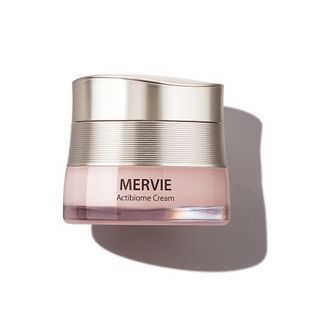
Based on the ingredients included, "The Saem - Mervie Actibiome Cream" works well for moisturizing the skin. This moisturizer uses a good combo of humectants and emollients. These both types of ingredients are essentials for improving the skin hydration and keeping the skin barrier healthy. Glycerin, hyaluronic acid, hydrolyzed collagen, hydrolyzed glycosaminoglycans and hydrolyzed hyaluronic acid in this product (humectants) attract water molecules to the upper layer of the skin (the water comes from the outside air or from the deeper layers of the skin if the air is dry). Ceramide eop, ceramide np, ceramide ns, helianthus annuus seed oil unsaponifiables and hydrolyzed collagen in this product help decrease the water evoporation from the skin, so that it stays hydrated for longer. These ingredients also soften the skin and take away the feeling of tightness and dryness.
Ingredient callouts
- Another benefit is that this moisturizer contain ceramides (ceramide eop 0.40% - 0.60%, ceramide ap 0.30% - 0.55%, ceramide ns 0.45% - 0.70% and ceramide np 0.50% - 0.70%). Ceramides are an important part of our natural skin barrier. The Ceramides used in skincare are synthetic or come from plants. They help soften the skin and can help "fill the gaps" in the skin barrier, keeping the skin hydrated and resilient for longer.
- Adenosine 0.45% - 0.65%. It is a compound that in involved in many biological processes inside the skin cells. According one high-quality clinical trial, topical Adenosine in low concentrations can somewhat help improve "deep wrinkles" - the wrinkles that appear with age in places where our faces are most dynamic (for example, on the forehead or in the corners of the eyes).
Irritation risk
There are some common irritants in this product, including ingredients that do not have benefits for the skin. We assess the overall irritancy of this moisturizer to be medium. For a detailed overview of all potential irritants: click here
You can see the detailed formula review with the breakdown of all actives in the product and the full ingredient list with estimated concentrations in the tables below.
Price
The product retails for 23.58$ in the United States.
For a detailed price comparison: click here.
Sources cited in this review
Every concentration estimate and effectiveness label is anchored to one of these 24 studies and safety reviews.
- 1Bifidobacterium longumlysate, a new ingredient forreactive skinonlinelibrary.wiley.com
- 2Use of Probiotics for Dermal Applicationsresearchgate.net
- 3
- 4
- 5
- 6

Affiliate links · As an Amazon Associate, WIMJ earns from qualifying purchases.