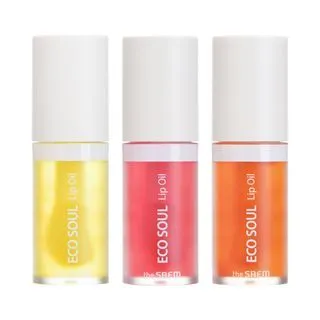
Works for
MoisturizingCeramide np, Simmondsia chinensis seed oil + 17 moreWorks well
“The Saem Eco Soul Lip Oil helps to provide long-lasting hydration to lips to combat dry, chapped lips.”
This product can help improve hydration of the skin with the two types of ingredients.
The first type is called “humectants”:
these ingredients help attract water.
When humectants are on the surface of the skin, they “pull in” the moisture from the outside environment, or from
within deeper layers of the skin. The following ingredients in this product do the job:
camellia sinensis seed oil, monascus extract.
This product also contains ingredients called “occlusives”. They help reduce the speed with which our skin loses moisture to the outside environment. These ingredients also help soften the upper layer of the skin, so it feels less tight and nicer to the touch. The following ingredients in this product do the job: helianthus annuus seed oil, simmondsia chinensis seed oil.
The following ingredients in this product are especially good for supporting the skin barrier and helping with the hydration level: ceramide np
Can it cause trouble?
Irritancy9 strong irritants: Origanum vulgare leaf extract, Chamaecyparis obtusa leaf extract + 7 more — patch-test recommendedHigh risk
Comedogenic2 ingredients rated 2 or more on the 0–5 pore-clogging scale2 flagged

User reviews
Be the first — your take helps the next person decide.
Ingredients
Filter by role to see what each ingredient is doing.
Polyglyceryl-2 isostearate/dimer dilinoleate copolymer~22–33%
- Irritation risk
- Low
Helianthus annuus seed oil~4.1–6.1%
- Irritation risk
- Low
A great emollient due to its high linoleic acid content. One of the most effective plant oils in helping skin hydration and repairing skin barrier function
More about Helianthus annuus seed oilSimmondsia chinensis seed oil~4.9–7.3%
- Irritation risk
- Medium
Softens the upper layer of skin and helps restore the healthy skin barrier. Has shown to help calm down inflammation in skin. It is a stable oil, meaning that it retains its properties even when exposed to air.
More about Simmondsia chinensis seed oilTocopheryl acetate~3.4–5.1%
- Irritation risk
- Medium
A more stable but less bio-available form of vitamin E compared to Tocopherol. Might help moisturize and protect the skin from free radicals, but mostly used in low concentrations to stabilize other ingredients.
More about Tocopheryl acetateOlea europaea fruit oil~2.6–3.9%
- Irritation risk
- Medium
An emollient that helps soften the skin but is not effective for restoring its barrier function. Might be helpful to calm down inflammation
More about Olea europaea fruit oilSilica dimethyl silylate~2.2–3.2%
Camellia japonica seed oil~1.6–2.5%
- Irritation risk
- Low
A plant oil that helps to soften the upper layer of the skin and can help restore skin's barrier function. Might have an anti-oxidant effect
More about Camellia japonica seed oilCamellia sinensis seed oil~1.3–2%
- Irritation risk
- Low
A plant oil that helps to soften the upper layer of the skin and can help restore the skin barrier. Might have some anti-oxidant effect
More about Camellia sinensis seed oilArgania spinosa kernel oil~1.1–1.7%
- Irritation risk
- Medium
An emollient that helps soften the upper layer of the skin. Might have some weak anti-oxidant properties
More about Argania spinosa kernel oilMonascus extract~0.85–1.25%
- Irritation risk
- Low
A yeast extract that might help to attract water to the upper layer of the skin
More about Monascus extractEclipta prostrata extract~0.5–1.2%
- Irritation risk
- High
A plant extract that might help neutralize free radicals in skin. It can be irritating
More about Eclipta prostrata extractOriganum vulgare leaf extract~0.45–1%
- Irritation risk
- High
A plant extract. Can have an anti-oxidant effect, but can also contain irritants
More about Origanum vulgare leaf extractChamaecyparis obtusa leaf extract~0.4–0.9%
Salix alba bark extract~0.35–0.85%
- Irritation risk
- High
A plant extract that can help neutralize free radicals in skin. It contains a compound salicin that can theoretically be converted into salicylic acid that, in turn, helps reduce inflammation in skin, but the evidence of effectiveness in skin is lacking and the extract is usually not used in a concentration that would enable an exfoliating effect
More about Salix alba bark extractMelia azadirachta leaf extract~0.35–0.8%
- Irritation risk
- High
A plant extract that has anti-bacterial properties. Can be used to preserve the product. Can be irritating
More about Melia azadirachta leaf extractLactobacillus/soybean ferment extract~0.35–0.8%
- Irritation risk
- Low
A fermentation product created by bacteria Lactobacillus out of soybean. The fermented product helps to attract water to the upper layer of the skin and has anti-bacterial properties. It might be helpful in calming down inflammation and could be helpful in evening out skin tone, but studies are lacking
More about Lactobacillus/soybean ferment extractPortulaca oleracea extract~0.35–0.75%
- Irritation risk
- Medium
A plant extract that has some anti-oxidant activity, but solid research is lacking. Can help attract water to the upper layer of the skin
More about Portulaca oleracea extractCinnamomum cassia bark extract~0.35–0.8%
Scutellaria baicalensis root extract~0.2–0.7%
- Irritation risk
- High
A plant extract that might contain a compound baicalin that could be helpful in neutralizing free radicals and reducing inflammation in skin. The baicalin concentration in skincare products is often too low for an effective action. Can be used for its fragrant properties
More about Scutellaria baicalensis root extractPolyhydroxystearic acid~0.2–0.8%
- Irritation risk
- Medium
Used to create a thicker product consistency and stabilize the formulation
More about Polyhydroxystearic acidCeramide np~0.3–0.75%
- Irritation risk
- Low
A type of lipid similar to ceramides naturally present in skin. Helps to soften the upper layer of the skin and supports the skin barrier function to keep it hydrated. Can help to prevent inflammation in skin
More about Ceramide npLecithin~0.35–0.75%
- Irritation risk
- Low
Used mostly for creating emulsions - helping oil and water mix together. Helps soften the upper layer of the skin
More about LecithinIsostearic acid~0.3–0.75%
- Irritation risk
- Low
Used to create a nice product texture
More about Isostearic acidIsopropyl myristate~0.3–0.7%
- Irritation risk
- Low
- Comedogenicity
- 3/5
An emollient that helps soften the skin. Could be comedogenic
More about Isopropyl myristateEthylhexyl palmitate~0.3–0.7%
- Irritation risk
- Low
- Comedogenicity
- 3/5
An emollient that helps soften the skin and create a nice product texture
More about Ethylhexyl palmitateDiisostearyl malate~0.3–0.7%
- Irritation risk
- Medium
Helps to soften the upper layer of the skin
More about Diisostearyl malateDehydroacetic acid~0.3–0.6%
Polyglyceryl-3 polyricinoleate~0.2–0.7%
- Irritation risk
- Medium
Helps oil and water mix together
More about Polyglyceryl-3 polyricinoleateTocopherol~0.15–0.65%
- Irritation risk
- Low
Pure form of vitamin E. Can help moisturise and protect the skin from free radicals. Often used to help stabilise other ingredients or the formula itself
More about TocopherolParfum~0.15–0.6%
- Irritation risk
- High
An aromatic blend of unspecified and possibly irritating ingredients
More about ParfumCi 15850~0.15–0.65%
Fragaria vesca fruit extract~0.15–0.65%
- Irritation risk
- Medium
A plant extract that might help neutralize free radicals in skin, but research on its effectiveness is lacking
More about Fragaria vesca fruit extractRosa canina seed extract~0.2–0.75%
- Irritation risk
- Low
Citrus paradisi fruit extract~0.15–0.7%
- Irritation risk
- High
Moringa oleifera seed oil~0.2–0.8%
- Irritation risk
- Medium
A plant oil that helps soften the upper layer of the skin. Is unlikely to be helpful in restoring skin barrier function due to the low content of linoleic acid
More about Moringa oleifera seed oilMorus alba root extract~0.15–0.65%
- Irritation risk
- Low
Macadamia ternifolia seed oil~0.2–0.75%
- Irritation risk
- Medium
Plant oil from nuts that helps soften the upper layer of the skin. Contains a high concentration of oleic acid that can weaken skin's barrier function and increase water-loss while enhancing penetration of other ingredients
More about Macadamia ternifolia seed oilCi 19140~0.15–0.6%
Mentha viridis leaf oil~0.15–0.6%
Ci 15985~0.15–0.55%
Moringa oleifera seed oil~0.2–0.75%
- Irritation risk
- Medium
A plant oil that helps soften the upper layer of the skin. Is unlikely to be helpful in restoring skin barrier function due to the low content of linoleic acid
More about Moringa oleifera seed oilMacadamia integrifolia seed oil~0.15–0.7%
- Irritation risk
- Low
A plant oil that helps soften the upper layer of the skin
More about Macadamia integrifolia seed oilRubus idaeus fruit extract~0.1–0.45%
- Irritation risk
- Medium
A fruit extract that might have some anti-oxidant properties but evidence of effectiveness in skin is lacking
More about Rubus idaeus fruit extractVaccinium angustifolium fruit extract~0.1–0.4%
- Irritation risk
- Medium
A plant extract tha can have anti-oxidant properties, but evidence of effectiveness in skin is lacking
More about Vaccinium angustifolium fruit extractLimonene~0.1–0.35%
- Irritation risk
- High
A common frangrance that can easily irritate skin, especially if exposed to air, light or heat
More about LimoneneBenzyl benzoate~0.05–0.2%
- Irritation risk
- High
Fragrance with sweet balsamic smell. Help to preserve products and dissolve other ingredients. Could trigger allergic reactions and be irritating
More about Benzyl benzoateRosa damascena flower water~0.05–0.25%
- Irritation risk
- High
Used to add a nice rose smell to the product. Might help attract water to the upper layer of the skin and have some anti-oxidant effect. Can be irritating
More about Rosa damascena flower waterIngredient list view
Polyglyceryl-2 isostearate/dimer dilinoleate copolymer, Helianthus annuus seed oil, Simmondsia chinensis seed oil, Tocopheryl acetate, Olea europaea fruit oil, Silica dimethyl silylate, Camellia japonica seed oil, Camellia sinensis seed oil, Argania spinosa kernel oil, Monascus extract, Eclipta prostrata extract, Origanum vulgare leaf extract, Chamaecyparis obtusa leaf extract, Salix alba bark extract, Melia azadirachta leaf extract, Lactobacillus/soybean ferment extract, Portulaca oleracea extract, Cinnamomum cassia bark extract, Scutellaria baicalensis root extract, Polyhydroxystearic acid, Ceramide np, Lecithin, Isostearic acid, Isopropyl myristate, Ethylhexyl palmitate, Diisostearyl malate, Dehydroacetic acid, Polyglyceryl-3 polyricinoleate, Tocopherol, Parfum, Ci 15850, Fragaria vesca fruit extract, Rosa canina seed extract, Citrus paradisi fruit extract, Moringa oleifera seed oil, Morus alba root extract, Macadamia ternifolia seed oil, Ci 19140, Mentha viridis leaf oil, Ci 15985, Moringa oleifera seed oil, Macadamia integrifolia seed oil, Rubus idaeus fruit extract, Vaccinium angustifolium fruit extract, Limonene, Benzyl benzoate, Rosa damascena flower water
Compare prices
Retailers ranked by price — lowest first.
Affiliate links · As an Amazon Associate, WIMJ earns from qualifying purchases.
Worth comparing, line by line.
Match % combines shared ingredients, the first five ingredients, shared actives and hero ingredients, irritancy (lower counts in the alternative's favour), texture and body area. Only products in the same routine step are compared.
| The SaemEco Soul Lip OilYOUR PRODUCT | Holika HolikaHoli Pop Lip Oil | EveredenSuper Rich Lip Oil | Beauty PieWondercolour Glossy Peptide Lip Butter - Ripple | BEAUTY PIE | |
|---|---|---|---|---|
| Match | — | 68% | 58% | 51% |
| Price | $10.00 | $6.80−$3.20 | $17.56+$7.56 | $28.80+$18.80 |
| Shared key ingredients | — | 5 of 7 | 3 of 7 | 2 of 7 |
| Key difference | — | Prunus Amygdalus Dulcis Seed | Persea Gratissima Oil | Copper Tripeptide-1 |
| Irritancy | High | Medium | Low | Medium |
| Drying alcohol | — | — | — | — |
| View product | Shop | Shop | Shop |

More alternatives: marie veronique Finishing OilKrave Beauty Lip Barrier Relief
Product summary
"The Saem - Eco Soul Lip Oil" is effective for: Moisturizing
Ingredient callouts
- As a plus, this moisturizer also contains Ceramides (ceramide np 0.30% - 0.75%). Ceramides are a type of lipids that our skin produces itself. They are a building block of the skin's barrier. Ceramides used in skincare are synthetic or extracted from plants. They work well for softening the skin surface and "patch holes" in the skin's barrier.
Price
The product retails for 9.00A$ in Australia and for 7.14$ in the United States.
For a detailed price comparison: click here.
Sources cited in this review
Every concentration estimate and effectiveness label is anchored to one of these 28 studies and safety reviews.
- 1
- 2
- 3Effect of topically applied lipids on surfactant-irritated skinonlinelibrary.wiley.com
- 4
- 5Use of “natural” oils for moisturization: Review of olive, coconut, and sunflower seed oilonlinelibrary.wiley.com
- 6

Affiliate links · As an Amazon Associate, WIMJ earns from qualifying purchases.