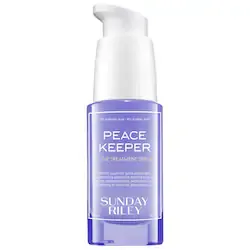
SUNDAY RILEY Peacekeeper Azaleic and Salicylic Acid Acne Treatment Serum
Works for
Evens skin toneAzelaic acid, Salicylic acid + 1 moreWorks well
“An acne-fighting, visibly brightening serum with two percent salicylic acid and eight percent azelaic acid to care for skin and its barrier while clearing up blemishes fast.”
This product can help reduce hypepigmentation and even out the skin tone because it contains the following effective ingredients: azelaic acid, salicylic acid
Keep in mind that you would need to apply any topical skincare targetted at hypigmentation consistently for a couple of months to get a result. No topical skincare product can help get rid of hyperpigmentation (including post-acne marks and age spots) instantly.
Anti-blemishAzelaic acid, Salicylic acid + 4 moreWorks well
“Peacekeeper Azaleic and Salicylic Acid Acne Treatment Serum”
This product can help reduce breakouts and clogged pores because it contains the following ingredient: azelaic acid, salicylic acid. These ingredients is used for treating acne and can have a noticeable effect.
ExfoliationSide benefit · Azelaic acid, Salicylic acidWorks well
This product can help exfoliate the skin. In other words, it helps break down the bonds between dead cells on the surface of the skin and speed up the skin turnover. Skin often appears softer and brighter after exfoliation, but overdoing it can result in disrupted skin barrier. The following ingredient is doing the exfoliating job in this product: salicylic acid.
Anti-oxidationSide benefit · Azelaic acid, Beta-glucanWorks well
This product contains antioxidants (azelaic acid) that can help neutralize free radicals in skin. By doing so, they can lessen the damage the skin gets from the UV light (sun).
MoisturizingSide benefit · Glycerin, Sodium pca + 11 moreWorks
This product contains good ingredients to attract water to the upper layer of the skin. These ingredients are called "humectants": erythritol, glycerin.
When humectants are on the surface of the skin, they “pull in” the moisture from the outside environment, or from within deeper layers of the skin. If the air is dry, humectants can speed up the moisture loss from the skin. This is why it is a good idea to use another product on top of this one to help "seal in" the moisture (look for ingredients like dimethicone, squalane, oils and butters).
Anti-agingSide benefit · Aloe barbadensis leaf juice, Beta-glucanMay help
This product contains azelaic acid. This ingredient help neutralize free radicals in skin. By doing so, they might be able to prevent early signs of aging (like fine lines and wrinkles), at least to some extent. These ingredients will not be able to "reverse" signs of aging.
Can it cause trouble?
Irritancy16 flagged ingredientsMedium risk
Comedogenic2 ingredients rated 2 or more on the 0–5 pore-clogging scale2 flagged
User reviews
Be the first — your take helps the next person decide.
Ingredients
Filter by role to see what each ingredient is doing.
Salicylic acid2%
- Irritation risk
- High
Used for skin exfoliation. It has an anti-inflammatory and anti-bacterial effect, helps to unclog pores, prevent blemishes and speed up healing of the existing ones. Sometimes referred to as a BHA (beta-hydroxy acid)
More about Salicylic acidWater~45–55%
Aloe barbadensis leaf juice~8.5–10.3%
- Irritation risk
- Medium
Traditionally used to treat sunburns, dermatitis and inflammation, but evidence for its effectiveness is lacking. The extract can contain humectants that help attract water into the skin
More about Aloe barbadensis leaf juiceOctyldodecanol~5.8–7.1%
- Irritation risk
- Low
An emollient that helps to soften the skin and create a pleasant product texture and stabilize the formulation
More about OctyldodecanolAzelaic acid~3.6–4.4%
- Irritation risk
- Low
Is produced by a yeast that lives on normal human skin. It is used in medicine as a topical treatment for mild to moderate acne. It has a mild exfoliating effect. It can also help reduce hyperpigmentation, helps calm down inflammation and can help neutralize free radicals
More about Azelaic acidAlgin~2.5–3%
- Irritation risk
- Low
- Comedogenicity
- 3/5
Used to thicken product formulation. Can help attract water to the upper layer of the skin
More about AlginDimethyl isosorbide~2–2.5%
- Irritation risk
- Low
Used to dissolve other ingredients in a product and can enhance their ability to penetrate the skin
More about Dimethyl isosorbideNeopentyl glycol diethylhexanoate~1.7–2.1%
- Irritation risk
- Low
Glycerin~1.6–1.9%
- Irritation risk
- Low
One of the best moisturizing ingredients. Naturally present in skin. It attracts water to the upper layer of the skin working as a humectant
More about GlycerinPropanediol~1.3–1.6%
- Irritation risk
- Low
Acts as a solvent for other ingredients. Speeds up the absorption of other ingredients into the skin
More about PropanediolDisteardimonium hectorite~1.1–1.3%
- Irritation risk
- Low
A type of clay that is used to thicken the product consistency
More about Disteardimonium hectoriteAzelamidopropyl dimethyl amine~0.75–1.15%
- Irritation risk
- Low
Sodium polyacryloyldimethyl taurate~0.65–0.95%
- Irritation risk
- Medium
Helps oil and water mix together
More about Sodium polyacryloyldimethyl taurateSodium pca~0.6–0.85%
- Irritation risk
- Low
Naturally present in skin and helps to attract water to its upper layer
More about Sodium pcaPotassium azeloyl diglycinate~0.55–0.8%
- Irritation risk
- Low
A derivative of azelaic acid. It is obtained by reacting the chloride of azelaic acid with two molecules of glycine (an amino acid) and potassium hydroxide. It is less studied than azelaic acid, but the available research suggests that it also can be effective in reducing skin redness, hyperpigmentation and blemishes. There are claims that it is more bio-available and more effective than azelaic acid, but no comparison study is available. Potassium azeloyl diglycinate is better soluble in water compared with azelaic acid. Because of this property, products with potassium azeloyl digclycinate can have a nicer texture
More about Potassium azeloyl diglycinateBeta-glucan~0.5–0.75%
- Irritation risk
- Low
Helps attract water to the upper layer of the skin, calm down inflammation and irritation, restore the barrier function and support wound healing. It can be helpful in reducing fine lines and wrinkles
More about Beta-glucanCarrageenan~0.55–0.8%
- Irritation risk
- Medium
- Comedogenicity
- 3/5
Helps thicken the product formula and create a nice product formulation
More about CarrageenanLeptospermum scoparium branch/leaf oil~0.5–0.75%
- Irritation risk
- Low
Magnolia officinalis bark extract~0.45–0.7%
- Irritation risk
- Low
Piper nigrum seed extract~0.45–0.65%
- Irritation risk
- Low
Sodium hyaluronate crosspolymer~0.35–0.65%
- Irritation risk
- Medium
Attracts water into the upper layer of the skin
More about Sodium hyaluronate crosspolymerPotassium hydroxide~0.35–0.65%
Phenoxyethanol~0.35–0.65%
- Irritation risk
- Low
A preservative. It helps prevent bacterial growth in cosmetic products
More about PhenoxyethanolPropylene carbonate~0.35–0.6%
- Irritation risk
- Low
Is used to dissolve other ingredients and create nice product texture
More about Propylene carbonateKaolin~0.45–0.7%
- Irritation risk
- Low
A type of clay that consists mainly of aluminum silicate. Helps absorb oil and creates a thicker product consistency. Can be used to add a white color
More about KaolinHydroxyethyl acrylate/sodium acryloyldimethyl taurate copolymer~0.3–0.5%
- Irritation risk
- Medium
A gelling agent that thickens the product consistency and leaves the skin with a velvety finish
More about Hydroxyethyl acrylate/sodium acryloyldimethyl taurate copolymerButylene glycol~0.25–0.5%
- Irritation risk
- Low
Used to create a nice product texture and help delivery of other ingredients. Might be somewhat helpful in attracting water to the upper layer of the skin
More about Butylene glycolErythritol~0.25–0.45%
- Irritation risk
- Low
Helps to attract water to the upper layer of the skin
More about ErythritolPotassium lactate~0.25–0.5%
- Irritation risk
- Low
Caprylyl glycol~0.3–0.55%
- Irritation risk
- Medium
Helps preserve products and creates a nice product texture
More about Caprylyl glycolChlorphenesin~0.16–0.32%
Ethylhexylglycerin~0.25–0.45%
Xanthan gum~0.25–0.45%
- Irritation risk
- Low
Used to create a thicker product consistency
More about Xanthan gumSodium phytate~0.25–0.45%
Citric acid~0.25–0.4%
- Irritation risk
- Medium
Can work as an exfoliant but is typically used to adjust the product pH
More about Citric acidBenzoic acid~0.15–0.3%
Sodium hydroxide~0.15–0.3%
Sorbic acid~0.1–0.15%
Polysorbate 60~0.1–0.2%
Sorbitan isostearate~0.1–0.15%
- Irritation risk
- Low
Helps oil and water mix together
More about Sorbitan isostearatePentylene glycol~0.15–0.3%
- Irritation risk
- Medium
Used to preserve products, dissolve other ingredients and create a nice product texture
More about Pentylene glycol1,2-hexanediol~0.05–0.1%
Sodium benzoate~0.05–0.1%
Ingredient list view
Salicylic acid, Water, Aloe barbadensis leaf juice, Octyldodecanol, Azelaic acid, Algin, Dimethyl isosorbide, Neopentyl glycol diethylhexanoate, Glycerin, Propanediol, Disteardimonium hectorite, Azelamidopropyl dimethyl amine, Sodium polyacryloyldimethyl taurate, Sodium pca, Potassium azeloyl diglycinate, Beta-glucan, Carrageenan, Leptospermum scoparium branch/leaf oil, Magnolia officinalis bark extract, Piper nigrum seed extract, Sodium hyaluronate crosspolymer, Potassium hydroxide, Phenoxyethanol, Propylene carbonate, Kaolin, Hydroxyethyl acrylate/sodium acryloyldimethyl taurate copolymer, Butylene glycol, Erythritol, Potassium lactate, Caprylyl glycol, Chlorphenesin, Ethylhexylglycerin, Xanthan gum, Sodium phytate, Citric acid, Benzoic acid, Sodium hydroxide, Sorbic acid, Polysorbate 60, Sorbitan isostearate, Pentylene glycol, 1,2-hexanediol, Sodium benzoate
Compare prices
Retailers ranked by price — lowest first.


Worth comparing, line by line.
Match % combines shared ingredients, the first five ingredients, shared actives and hero ingredients, irritancy (lower counts in the alternative's favour), texture and body area. Only products in the same routine step are compared.
| SUNDAY RILEYPeacekeeper Azaleic and Salicylic Acid Acne Treatment SerumYOUR PRODUCT | The Purest SolutionsIntensive Hydration Serum Hyaluronic Acid %2 + B5 | SKIN 1004.Azelaic Acid 10 Ampoule | FacileBrighten 5% Niacinamide Serum for Dark Spots & Uneven Texture | |
|---|---|---|---|---|
| Match | — | 74% | 72% | 70% |
| Price | $85.00 | — | $21.60−$63.40 | $38.00−$47.00 |
| Shared key ingredients | — | 4 of 9 | 4 of 9 | 3 of 9 |
| Key difference | — | Panthenol | Panthenol | Niacinamide |
| Irritancy | Medium | Low | Low | Low |
| Drying alcohol | — | Contains drying alcohol | — | — |
| View product | Shop | Shop | Shop |
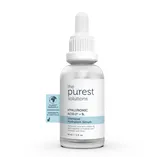
More alternatives: Paula's choice CLEAR DAILY SKIN-CLEARING TREATMENT AZELAIC ACID + BHABiodroga MD 10% Azelaic Skin Booster Serum
Product summary
"SUNDAY RILEY - Peacekeeper Azaleic and Salicylic Acid Acne Treatment Serum" is effective for: Anti-blemish, Evens skin tone and Exfoliation
This product could be helpful for: Anti-aging and Moisturizing, but its actives are not the most effective or are not well-studied.
Ingredient callouts
- Azelaic Acid (3.60% - 4.40%). This active can reduce hyperpigmentation. It also works helps against acne and clogged pores. Please note that Azelaic Acid is most effective against acne in concentrations between 10% and 20%.
- Humectants (erythritol 0.25% - 0.45%, sodium hyaluronate crosspolymer 0.35% - 0.65%, sodium pca 0.60% - 0.85% and glycerin 1.60% - 1.90%). These ingredients help attract water to the upper layer of the skin and improve the skin hydration.
Sources cited in this review
Every concentration estimate and effectiveness label is anchored to one of these 19 studies and safety reviews.
- 1Salicylic acid as a peeling agent: a comprehensive reviewncbi.nlm.nih.gov
- 2Beta Hydroxy Acidsfda.gov
- 3A review of toxicity from topical salicylic acid preparationssciencedirect.com
- 4
- 5
- 6

Affiliate links · As an Amazon Associate, WIMJ earns from qualifying purchases.