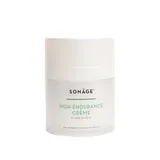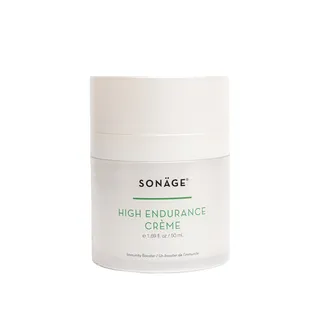
Sonage Skincare High Endurance Creme

Sonage Skincare High Endurance Creme

Efficacy37/100IrritancyHigh

Works for

Moisturizing
Coco-caprylate/caprate, Caprylic/capric triglyceride + 16 more
Works
What the product description says
“Daily Facial Moisturizer Repairs and Restores Healthy Skin”
Source: Sonage

This product can help improve hydration of the skin with the two types of ingredients.

The first type is called “humectants”:
these ingredients help attract water. When humectants are on the surface of the skin, they “pull in” the moisture from the outside environment, or from within deeper layers of the skin. The following ingredients in this product do the job: fructooligosaccharides, glucosamine hcl.

This product also contains ingredients called “occlusives”. They help reduce the speed with which our skin loses moisture to the outside environment. These ingredients also help soften the upper layer of the skin, so it feels less tight and nicer to the touch. The following ingredients in this product do the job: caprylic/capric triglyceride, ricinus communis seed oil.

Coco-caprylate/caprateKey active· EmollientEffect: MediumHelps to soften the upper layer of the skin without creating a greasy texture~5–6.1%
Caprylic/capric triglycerideKey active· Emollient, OcclusiveEffect: HighA good mix of fatty acids that forms a protective layer on the skin. Improves the shelf life of products. Derived from coconut and glycerin~4.6–5.6%
GlycerinKey active· HumectantEffect: HighOne of the best moisturizing ingredients. Naturally present in skin. It attracts water to the upper layer of the skin working as a humectant~3.2–3.9%
Cucurbita pepo seed oilKey active· EmollientEffect: HighHelps soften the upper layer of the skin~2.5–3%
Ricinus communis seed oilKey active· Emollient, OcclusiveEffect: HighA plant oil that can help soften the skin. It might be helpful in calming down inflammation, but solid research is lacking. Is often used in lip products to create the needed product consistency~2.1–2.6%
Olea europaea fruit oilKey active· EmollientEffect: MediumAn emollient that helps soften the skin but is not effective for restoring its barrier function. Might be helpful to calm down inflammation~1.7–2%
Prunus amygdalus dulcis oilKey active· EmollientEffect: MediumAn emollient that softens the skin~1.5–1.8%
Glyceryl stearate seKey activeEffect: MediumUsed to stabilize the product formulations and works as an emollient~1–1.2%
LactobacillusKey activeEffect: HighA non-living ingredient made by fermentation with the bacteria Lactobacillus. It can help attract water to the upper layer of the skin and might help reduce inflammation~0.45–0.65%
Cocos nucifera fruit extractKey active· EmollientEffect: HighAn emollient. Found to be as effective as a moisturizer for dry skin as mineral oil. Could be comedogenic~0.3–0.5%
FructooligosaccharidesKey active· HumectantEffect: HighHelp attract water to the upper layer of the skin~0.25–0.5%
Glucosamine hclKey active· HumectantEffect: HighMight be able to stimulate production of skin's natural moisturizing compounds such as hyaluronic acid. Could be helpful for evening the skin tone.~0.25–0.5%
Dicaprylyl ether· EmollientEffect: LowHelps soften the upper layer of the skin while creating a non-greasy feel on the skin. Helps to dissolve other ingredients~0.75–1.1%
Stearic acid· EmollientEffect: LowHelps oil and water mix together and works as an emollient~0.7–1.05%
Aloe barbadensis leaf juiceEffect: Low, below effective doseTraditionally used to treat sunburns, dermatitis and inflammation, but evidence for its effectiveness is lacking. The extract can contain humectants that help attract water into the skin~1.2–1.5%
TocopherolEffect: Low, below effective dosePure form of vitamin E. Can help moisturise and protect the skin from free radicals. Often used to help stabilise other ingredients or the formula itself~0.25–0.5%
AllantoinUnder-dosedHelps calm down inflammation in skin and can help reduce itching. Helps to repair the skin barrier and keep skin hydrated~0.25–0.4%
GluconolactoneUnder-dosedA polyhydroxy acid (PHA) that helps shed the dead cells from the skin surface revealing smoother skin. Is believed to be genter than AHAs. It helps attract water to the upper layer of the skin and can stimulate production of skin's own hyaluronic acid resulting in improved hydration levels. It has been shown to be helpful against acne and clogged pores if used consistently (e.g over a period of 12 weeks) in high enough concentration. It can help reduce fine lines and wrinkles and improve skin tone with long-term application. Can help neutralize free radicals~0.15–0.25%
Anti-aging
Gluconolactone ~0.15–0.25%, below the ~1% it needs
Under-dosed
What the product description says
“Powerful antioxidant-rich moisturizer for both dry and combination skin builds immunity, combats environmental aging, and calms the appearance of redness.”
Source: Sonage

Effective ingredients missing or their concentration is too low.

Prunus amygdalus dulcis oilEffect: LowAn emollient that softens the skin~1.5–1.8%
Glucosamine hclEffect: LowMight be able to stimulate production of skin's natural moisturizing compounds such as hyaluronic acid. Could be helpful for evening the skin tone.~0.25–0.5%
Aloe barbadensis leaf juiceEffect: Low, below effective doseTraditionally used to treat sunburns, dermatitis and inflammation, but evidence for its effectiveness is lacking. The extract can contain humectants that help attract water into the skin~1.2–1.5%
TocopherolEffect: Low, below effective dosePure form of vitamin E. Can help moisturise and protect the skin from free radicals. Often used to help stabilise other ingredients or the formula itself~0.25–0.5%
GluconolactoneUnder-dosedA polyhydroxy acid (PHA) that helps shed the dead cells from the skin surface revealing smoother skin. Is believed to be genter than AHAs. It helps attract water to the upper layer of the skin and can stimulate production of skin's own hyaluronic acid resulting in improved hydration levels. It has been shown to be helpful against acne and clogged pores if used consistently (e.g over a period of 12 weeks) in high enough concentration. It can help reduce fine lines and wrinkles and improve skin tone with long-term application. Can help neutralize free radicals~0.15–0.25%
Evens skin tone
Side benefit · Glucosamine hcl, Gluconolactone
May help

The following ingredient (ingredients) in this product might be helpful, but there is no evidence to confirm that it actually works: glucosamine hcl.

Glucosamine hclKey activeEffect: MediumMight be able to stimulate production of skin's natural moisturizing compounds such as hyaluronic acid. Could be helpful for evening the skin tone.~0.25–0.5%
GluconolactoneUnder-dosedA polyhydroxy acid (PHA) that helps shed the dead cells from the skin surface revealing smoother skin. Is believed to be genter than AHAs. It helps attract water to the upper layer of the skin and can stimulate production of skin's own hyaluronic acid resulting in improved hydration levels. It has been shown to be helpful against acne and clogged pores if used consistently (e.g over a period of 12 weeks) in high enough concentration. It can help reduce fine lines and wrinkles and improve skin tone with long-term application. Can help neutralize free radicals~0.15–0.25%

Can it cause trouble?

Irritancy
3 strong irritants: Salvia officinalis leaf extract, Jasminum officinale flower extract + 1 more — patch-test recommended
High risk
We flagged 15 ingredients with irritancy potential. Severity depends on your sensitivity threshold; the table lists the worst offenders first.
IngredientFunctionIrritationEst. amount
Chamomilla recutita flower extractPlant extract that can have healing and anti-inflammatory properties. It is a potential allergen and can be irritatingHigh~0.3–0.6%est.
Symphytum officinale leaf extractA plant extract that has an anti-bacterial effectHigh~0.3–0.55%est.
Salvia officinalis leaf extractSage leaf extract. It can be irritatingHigh~0.35–0.6%est.
Jasminum officinale flower extractFragrance. Can be irritatingHigh~0.2–0.4%est.
Hamamelis virginiana waterA plant extract that can help calm down inflammation in skin. Can, however, itself be irritatingHigh~0.2–0.4%est.
Caprylic/capric triglycerideA good mix of fatty acids that forms a protective layer on the skin. Improves the shelf life of products. Derived from coconut and glycerinMedium~4.6–5.6%est.
Ricinus communis seed oilA plant oil that can help soften the skin. It might be helpful in calming down inflammation, but solid research is lacking. Is often used in lip products to create the needed product consistencyMedium~2.1–2.6%est.
Olea europaea fruit oilAn emollient that helps soften the skin but is not effective for restoring its barrier function. Might be helpful to calm down inflammationMedium~1.7–2%est.
Aloe barbadensis leaf juiceTraditionally used to treat sunburns, dermatitis and inflammation, but evidence for its effectiveness is lacking. The extract can contain humectants that help attract water into the skinMedium~1.2–1.5%est.
Sodium stearoyl glutamateHelps oil and water mix togetherMedium~0.55–0.8%est.
Leuconostoc/radish root ferment filtrateA preservative that comes from radishes fermented by a bacteria. New research suggests that the preservation properties in the ingredient come from an ammonium salt that is not present naturally in radish root but used in its cultivation. Is problematic because the exact amount of the preservative agents is difficult to determineMedium~0.45–0.7%est.
Sodium cocoyl glutamateHelps oil and water mix togetherMedium~0.3–0.6%est.
Trisodium ethylenediamine disuccinateUsed to improve stability of the formulationMedium~0.15–0.3%est.
GluconolactoneA polyhydroxy acid (PHA) that helps shed the dead cells from the skin surface revealing smoother skin. Is believed to be genter than AHAs. It helps attract water to the upper layer of the skin and can stimulate production of skin's own hyaluronic acid resulting in improved hydration levels. It has been shown to be helpful against acne and clogged pores if used consistently (e.g over a period of 12 weeks) in high enough concentration. It can help reduce fine lines and wrinkles and improve skin tone with long-term application. Can help neutralize free radicalsMedium~0.15–0.25%est.
Acetyl tributyl citrateUsed to create a thicker product consistencyMedium~0.1–0.2%est.
Comedogenic
2 ingredients rated 2 or more on the 0–5 pore-clogging scale
2 flagged
These ingredients have a comedogenic rating of 2 or more on a 0–5 scale; the table shows each one's rating. In leave-on products they can clog pores in acne-prone skin.
IngredientFunctionRatingEst. amount
Cocos nucifera fruit extractAn emollient. Found to be as effective as a moisturizer for dry skin as mineral oil. Could be comedogenic3/5~0.3–0.5%est.
Glyceryl stearate seUsed to stabilize the product formulations and works as an emollient2/5~1–1.2%est.
Did this help you decide?

User reviews

Would you recommend?
No community reviews yet.

Be the first — your take helps the next person decide.

Ingredients

Filter by role to see what each ingredient is doing.

Water~45–55%
Formula
Irritation risk
Low

Plain old water

More about Water
Coco-caprylate/caprate~5–6.1%
Key active
Irritation risk
Low
Works for
Moisturizing

Helps to soften the upper layer of the skin without creating a greasy texture

More about Coco-caprylate/caprate
Caprylic/capric triglyceride~4.6–5.6%
Key activeIrritant · medium
Irritation risk
Medium
Works for
Moisturizing

A good mix of fatty acids that forms a protective layer on the skin. Improves the shelf life of products. Derived from coconut and glycerin

More about Caprylic/capric triglyceride
Glycerin~3.2–3.9%
Key active
Irritation risk
Low
Works for
Moisturizing

One of the best moisturizing ingredients. Naturally present in skin. It attracts water to the upper layer of the skin working as a humectant

More about Glycerin
Cucurbita pepo seed oil~2.5–3%
Key active
Irritation risk
Low
Works for
Moisturizing

Helps soften the upper layer of the skin

More about Cucurbita pepo seed oil
Ricinus communis seed oil~2.1–2.6%
Key activeIrritant · medium
Irritation risk
Medium
Works for
MoisturizingAnti-inflammatory

A plant oil that can help soften the skin. It might be helpful in calming down inflammation, but solid research is lacking. Is often used in lip products to create the needed product consistency

More about Ricinus communis seed oil
Olea europaea fruit oil~1.7–2%
Key activeIrritant · medium
Irritation risk
Medium
Works for
Moisturizing

An emollient that helps soften the skin but is not effective for restoring its barrier function. Might be helpful to calm down inflammation

More about Olea europaea fruit oil
Prunus amygdalus dulcis oil~1.5–1.8%
Key active
Irritation risk
Low
Works for
MoisturizingAnti-oxidationAnti-aging

An emollient that softens the skin

More about Prunus amygdalus dulcis oil
Aloe barbadensis leaf juice~1.2–1.5%
Irritant · medium
Irritation risk
Medium
Works for
MoisturizingAntibacterialReduces irritationReduces rednessAnti-inflammatoryAnti-blemishAnti-aging

Traditionally used to treat sunburns, dermatitis and inflammation, but evidence for its effectiveness is lacking. The extract can contain humectants that help attract water into the skin

More about Aloe barbadensis leaf juice
Glyceryl stearate se~1–1.2%
Key activeComedogenic 2/5
Irritation risk
Low
Comedogenicity
2/5
Works for
CleansingMoisturizing

Used to stabilize the product formulations and works as an emollient

More about Glyceryl stearate se
Dicaprylyl ether~0.75–1.1%
Formula
Irritation risk
Low
Works for
Moisturizing

Helps soften the upper layer of the skin while creating a non-greasy feel on the skin. Helps to dissolve other ingredients

More about Dicaprylyl ether
Stearic acid~0.7–1.05%
Formula
Irritation risk
Low
Works for
CleansingMoisturizing

Helps oil and water mix together and works as an emollient

More about Stearic acid
Cetearyl olivate~0.55–0.8%
Formula
Irritation risk
Low
Works for
Cleansing

Helps oil and water mix together

More about Cetearyl olivate
Sodium stearoyl glutamate~0.55–0.8%
Irritant · medium
Irritation risk
Medium
Works for
Cleansing

Helps oil and water mix together

More about Sodium stearoyl glutamate
Leuconostoc/radish root ferment filtrate~0.45–0.7%
Irritant · medium
Irritation risk
Medium

A preservative that comes from radishes fermented by a bacteria. New research suggests that the preservation properties in the ingredient come from an ammonium salt that is not present naturally in radish root but used in its cultivation. Is problematic because the exact amount of the preservative agents is difficult to determine

More about Leuconostoc/radish root ferment filtrate
Lactobacillus~0.45–0.65%
Key active
Irritation risk
Low
Works for
Moisturizing

A non-living ingredient made by fermentation with the bacteria Lactobacillus. It can help attract water to the upper layer of the skin and might help reduce inflammation

More about Lactobacillus
Cod liver oil~0.4–0.65%
Formula
Irritation risk
Low
More about Cod liver oil
Vigna aconitifolia seed extract~0.35–0.6%
Formula
Chamomilla recutita flower extract~0.3–0.6%
Irritant · high
Irritation risk
High
Works for
Anti-inflammatory

Plant extract that can have healing and anti-inflammatory properties. It is a potential allergen and can be irritating

More about Chamomilla recutita flower extract
Symphytum officinale leaf extract~0.3–0.55%
Irritant · high
Irritation risk
High
Works for
Antibacterial

A plant extract that has an anti-bacterial effect

More about Symphytum officinale leaf extract
Salvia officinalis leaf extract~0.35–0.6%
Irritant · high
Irritation risk
High

Sage leaf extract. It can be irritating

More about Salvia officinalis leaf extract
Phenyl t-butylnitrone~0.3–0.55%
Formula
Tocopherol~0.25–0.5%
Formula
Irritation risk
Low
Works for
Anti-oxidationAnti-inflammatoryAnti-agingMoisturizing

Pure form of vitamin E. Can help moisturise and protect the skin from free radicals. Often used to help stabilise other ingredients or the formula itself

More about Tocopherol
Glucosamine hcl~0.25–0.5%
Key active
Irritation risk
Low
Works for
AntibacterialMoisturizingEvens skin toneAnti-agingAnti-oxidation

Might be able to stimulate production of skin's natural moisturizing compounds such as hyaluronic acid. Could be helpful for evening the skin tone.

More about Glucosamine hcl
Fructooligosaccharides~0.25–0.5%
Key active
Irritation risk
Low
Works for
Moisturizing

Help attract water to the upper layer of the skin

More about Fructooligosaccharides
Allantoin~0.25–0.4%
Under-dosed
Irritation risk
Low
Works for
MoisturizingAnti-inflammatoryReduces irritationReduces rednessAnti-blemishExfoliation

Helps calm down inflammation in skin and can help reduce itching. Helps to repair the skin barrier and keep skin hydrated

More about Allantoin
Cocos nucifera fruit extract~0.3–0.5%
Key activeComedogenic 3/5
Irritation risk
Low
Comedogenicity
3/5
Works for
Moisturizing

An emollient. Found to be as effective as a moisturizer for dry skin as mineral oil. Could be comedogenic

More about Cocos nucifera fruit extract
Jasminum officinale flower extract~0.2–0.4%
Irritant · high
Irritation risk
High

Fragrance. Can be irritating

More about Jasminum officinale flower extract
Hamamelis virginiana water~0.2–0.4%
Irritant · high
Irritation risk
High
Works for
Anti-inflammatory

A plant extract that can help calm down inflammation in skin. Can, however, itself be irritating

More about Hamamelis virginiana water
Sorbitan olivate~0.25–0.45%
Formula
Irritation risk
Low
Works for
Cleansing

Helps oil and water mix together

More about Sorbitan olivate
Sodium cocoyl glutamate~0.3–0.6%
Irritant · medium
Irritation risk
Medium
Works for
Cleansing

Helps oil and water mix together

More about Sodium cocoyl glutamate
Glucamine~0.2–0.4%
Formula
Irritation risk
Low
More about Glucamine
Hydroxyethylcellulose~0.2–0.35%
Formula
Irritation risk
Low

Used to thicken product formulations and create gel-like textures

More about Hydroxyethylcellulose
Trisodium ethylenediamine disuccinate~0.15–0.3%
Irritant · medium
Irritation risk
Medium

Used to improve stability of the formulation

More about Trisodium ethylenediamine disuccinate
Gluconolactone~0.15–0.25%
Under-dosedIrritant · medium
Irritation risk
Medium
Works for
ExfoliationMoisturizingAnti-agingEvens skin toneAnti-oxidationAnti-blemish

A polyhydroxy acid (PHA) that helps shed the dead cells from the skin surface revealing smoother skin. Is believed to be genter than AHAs. It helps attract water to the upper layer of the skin and can stimulate production of skin's own hyaluronic acid resulting in improved hydration levels. It has been shown to be helpful against acne and clogged pores if used consistently (e.g over a period of 12 weeks) in high enough concentration. It can help reduce fine lines and wrinkles and improve skin tone with long-term application. Can help neutralize free radicals

More about Gluconolactone
Acetyl tributyl citrate~0.1–0.2%
Irritant · medium
Irritation risk
Medium

Used to create a thicker product consistency

More about Acetyl tributyl citrate
Sodium benzoate~0.1–0.2%
Formula
Irritation risk
Low

A preservative

More about Sodium benzoate
Phenoxyethanol~0.15–0.25%
Formula
Irritation risk
Low

A preservative. It helps prevent bacterial growth in cosmetic products

More about Phenoxyethanol
Ingredient list view

Water, Coco-caprylate/caprate, Caprylic/capric triglyceride, Glycerin, Cucurbita pepo seed oil, Ricinus communis seed oil, Olea europaea fruit oil, Prunus amygdalus dulcis oil, Aloe barbadensis leaf juice, Glyceryl stearate se, Dicaprylyl ether, Stearic acid, Cetearyl olivate, Sodium stearoyl glutamate, Leuconostoc/radish root ferment filtrate, Lactobacillus, Cod liver oil, Vigna aconitifolia seed extract, Chamomilla recutita flower extract, Symphytum officinale leaf extract, Salvia officinalis leaf extract, Phenyl t-butylnitrone, Tocopherol, Glucosamine hcl, Fructooligosaccharides, Allantoin, Cocos nucifera fruit extract, Jasminum officinale flower extract, Hamamelis virginiana water, Sorbitan olivate, Sodium cocoyl glutamate, Glucamine, Hydroxyethylcellulose, Trisodium ethylenediamine disuccinate, Gluconolactone, Acetyl tributyl citrate, Sodium benzoate, Phenoxyethanol

Compare prices

Retailers ranked by price — lowest first.

Amazon USPrice as of 11/25 18:08 GMT
$84.00
Buy
Sonage
Price unavailable
Check
Sonage
Price unavailable
Check

Affiliate links · As an Amazon Associate, WIMJ earns from qualifying purchases.

Worth comparing, line by line.

Match % combines shared ingredients, the first five ingredients, shared actives and hero ingredients, irritancy (lower counts in the alternative's favour), texture and body area. Only products in the same routine step are compared.

Side-by-side comparison of this product against its closest alternatives
Sonage SkincareHigh Endurance CremeYOUR PRODUCTElizabeth GrantCaviar Cellular Recharge Super Night CreamBrandProbiotic Rebalancing CreamTopicremMELA Corrective Night Cream
Match—59%59%58%
Price$84.00——$26.18−$57.82
Shared key ingredients—5 of 114 of 113 of 11
Key difference—Palmitoyl Tetrapeptide-7Butyrospermum Parkii ButterNiacinamide
Irritancy High Medium Low Medium
Drying alcohol————
View product Shop Shop Shop

More alternatives: Estelle and Thild Ultra Rich Repair CreamSeed Phytonutrients Ultra Rich Facial Cream

Cheaper alternatives? See how this stacks up against similar formulas.
We compare ingredient profiles across our catalog — pick the closest match for your budget.
Open dupe finder

Sources cited in this review

Every concentration estimate and effectiveness label is anchored to one of these 27 studies and safety reviews.

  1. 1
  2. 2
  3. 3
  4. 4
  5. 5
  6. 6
Sonage Skincare High Endurance Creme
Sonage SkincareHigh Endurance Creme

Affiliate links · As an Amazon Associate, WIMJ earns from qualifying purchases.

As an Amazon Associate, WIMJ earns from qualifying purchases.