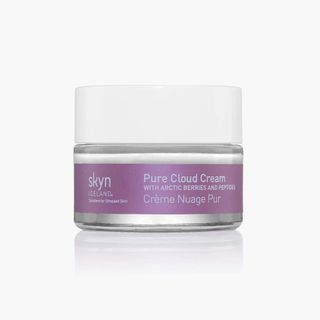
Works for
1 of 1 advertised claim delivered
Moisturizing22 ingredients credited for this claimStrong support
“Light-as-air daily moisturizing cream to hydrate, soothe, pamper and protect severely dry, sensitive skin.”
This product can help improve hydration of the skin with the two types of ingredients.
The first type is called “humectants”:
these ingredients help attract water.
When humectants are on the surface of the skin, they “pull in” the moisture from the outside environment, or from
within deeper layers of the skin. The following ingredients in this product do the job:
glycerin, sodium hyaluronate.
This product also contains ingredients called “occlusives”. They help reduce the speed with which our skin loses moisture to the outside environment. These ingredients also help soften the upper layer of the skin, so it feels less tight and nicer to the touch. The following ingredients in this product do the job: ceramide np, canola oil.
The following ingredients in this product are especially good for supporting the skin barrier and helping with the hydration level: acetyl dipeptide-1 cetyl ester, ceramide np
Anti-oxidationNot advertised by the brand · 8 ingredients credited for this claimStrong support
This product contains antioxidants (camellia oleifera leaf extract, retinol) that can help neutralize free radicals in skin. By doing so, they can lessen the damage the skin gets from the UV light (sun).
Evens skin toneNot advertised by the brand · 1 ingredient credited for this claimStrong support
This product can help reduce hypepigmentation and even out the skin tone because it contains the following effective ingredients: retinol.
Keep in mind that you would need to apply any topical skincare targetted at hypigmentation consistently for a couple of months to get a result. No topical skincare product can help get rid of hyperpigmentation (including post-acne marks and age spots) instantly.
Can it cause trouble?
Irritancy4 strong irritants: Thymus vulgaris flower/leaf extract, Citrus grandis peel oil + 2 more — patch-test recommendedHigh risk
Comedogenic1 ingredient rated 2 or more on the 0–5 pore-clogging scale1 flagged


User reviews
Be the first — your take helps the next person decide.
Ingredients
Filter by role to see what each ingredient is doing.
Water~45–55%
Hydrogenated didecene~4.5–5.5%
- Irritation risk
- Low
Butylene glycol~4–4.9%
- Irritation risk
- Low
Used to create a nice product texture and help delivery of other ingredients. Might be somewhat helpful in attracting water to the upper layer of the skin
More about Butylene glycolBisabolol~3–3.7%
- Irritation risk
- Low
An active component of chamomile plant that historically has been used to calm down irritated skin. A recent study shows that bisabolol indeed can have some anti-inflammatory effect on skin, even though conclusive data is lacking. Bisabolol has a sweet floral scent and can be added to products for its aromatic properties
More about BisabololPrunus amygdalus dulcis seed~2.3–2.8%
- Irritation risk
- Low
Helps soften the upper layer of the skin
More about Prunus amygdalus dulcis seedLeuconostoc/radish root ferment filtrate~1.9–2.3%
- Irritation risk
- Medium
A preservative that comes from radishes fermented by a bacteria. New research suggests that the preservation properties in the ingredient come from an ammonium salt that is not present naturally in radish root but used in its cultivation. Is problematic because the exact amount of the preservative agents is difficult to determine
More about Leuconostoc/radish root ferment filtrateCanola oil~1.6–2%
- Irritation risk
- Medium
A plant oil that can help soften the upper layer of the skin
More about Canola oilHydrolyzed rice protein~1.4–1.7%
- Irritation risk
- Low
Helps attract water to the upper layer of the skin. Might have some anti-oxidant properties
More about Hydrolyzed rice proteinSodium hyaluronate~1.2–1.4%
- Irritation risk
- Low
One of the best moisturizing ingredients. Attracts water into the upper layer of the skin
More about Sodium hyaluronateCamellia oleifera leaf extract~0.95–1.15%
- Irritation risk
- Low
A plant extract that can help neutralize free radicals and reduce inflammation, even though it is not usually used in sufficient concentration in cosmetics
More about Camellia oleifera leaf extractAvena sativa kernel extract~0.7–1.1%
- Irritation risk
- Low
An effective moisturizing and skin barrier repair ingredient. Helps calm down inflammation and has some anti-oxidant properties
More about Avena sativa kernel extractAloe barbadensis leaf juice~0.6–0.85%
- Irritation risk
- Medium
Traditionally used to treat sunburns, dermatitis and inflammation, but evidence for its effectiveness is lacking. The extract can contain humectants that help attract water into the skin
More about Aloe barbadensis leaf juiceRubus chamaemorus seed oil~0.5–0.75%
- Irritation risk
- High
A berry extract that can have some anti-oxidant properties. It helps to preserve product formulations and improve their smell. It can be irritating
More about Rubus chamaemorus seed oilOxycoccus palustris seed oil~0.55–0.8%
- Irritation risk
- Low
Thymus vulgaris flower/leaf extract~0.4–0.65%
- Irritation risk
- High
Plant extract that has some anti-bacterial properties. Can be used as a fragrance. Can be irritating
More about Thymus vulgaris flower/leaf extractAngelica archangelica root water~0.45–0.65%
- Irritation risk
- Low
Simmondsia chinensis seed oil~0.5–0.7%
- Irritation risk
- Medium
Softens the upper layer of skin and helps restore the healthy skin barrier. Has shown to help calm down inflammation in skin. It is a stable oil, meaning that it retains its properties even when exposed to air.
More about Simmondsia chinensis seed oilBuddleja davidii extract~0.35–0.6%
- Irritation risk
- Low
Citrus grandis peel oil~0.3–0.55%
- Irritation risk
- High
A plant oil with high content of volatile compounds that, especially when exposed to air, can cause allergic reactions and irritate the skin
More about Citrus grandis peel oilAscorbyl palmitate~0.3–0.55%
- Irritation risk
- Medium
Being a lipid soluble form of vitamin C, it is more stable and can penetrate the skin better than L-Ascorbic acid. It is effective in protecting the skin from free radicals, as well as evening the skin tone, but is less effective in stimulating collagen production compared to L-Ascorbic acid.
More about Ascorbyl palmitateRetinol~0.25–0.5%
- Irritation risk
- High
Two steps removed from the active form of vitamin A - retinoic acid. Once converted to the retinoic acid in the skin, retinol is proven to be effective against all signs of aging. It improves skin cell turnover, helps fight blemishes and clogged pores, can regulate excess oil production and even skin tone. It can, however, be quite irritating
More about RetinolTocopherol~0.3–0.5%
- Irritation risk
- Low
Pure form of vitamin E. Can help moisturise and protect the skin from free radicals. Often used to help stabilise other ingredients or the formula itself
More about TocopherolTriceteareth-4 phosphate~0.25–0.5%
- Irritation risk
- Medium
Helps oil and water mix together
More about Triceteareth-4 phosphateSodium polyacrylate~0.3–0.55%
- Irritation risk
- Low
Used to create a gel-like product texture, as well as to stabilize emulsions
More about Sodium polyacrylateGlyceryl stearate~0.3–0.55%
- Irritation risk
- Low
An emollient that softens the skin and forms a protective layer on its surface. Helps water and oil mix together
More about Glyceryl stearatePeg-100 stearate~0.35–0.65%
- Irritation risk
- Low
Helps oil and water mix togehter and creates a nice product texture
More about Peg-100 stearateBiotin~0.25–0.45%
- Irritation risk
- Low
Might have some moisturising properties. Is not effective when applied topically beyond some moisturizing effect
More about BiotinGlycerin~0.3–0.55%
- Irritation risk
- Low
One of the best moisturizing ingredients. Naturally present in skin. It attracts water to the upper layer of the skin working as a humectant
More about GlycerinZea mays starch~0.25–0.5%
- Irritation risk
- Medium
- Comedogenicity
- 3/5
Used to thicken the product's consistency
More about Zea mays starchLauryl glucoside~0.35–0.6%
Polyglyceryl-2 dipolyhydroxystearate~0.25–0.5%
- Irritation risk
- Low
Helps to soften the upper layer of the skin
More about Polyglyceryl-2 dipolyhydroxystearateEthylhexyl stearate~0.3–0.55%
- Irritation risk
- Low
Helps soften the upper layer of the skin
More about Ethylhexyl stearateLaureth-3~0.25–0.5%
Silica~0.4–0.65%
Hydroxyethylcellulose~0.3–0.5%
- Irritation risk
- Low
Used to thicken product formulations and create gel-like textures
More about HydroxyethylcelluloseTrideceth-6~0.25–0.5%
Acetyl dipeptide-1 cetyl ester~0.25–0.5%
- Irritation risk
- Low
A type of peptide. Peptides are excellent moisturizers and might be able support collagen production reducing fine lines and wrinkles
More about Acetyl dipeptide-1 cetyl esterAlcohol~0.25–0.5%
- Irritation risk
- High
Can be drying and contribute to skin irritation. Used in formulars to dissolve other ingredients, create a thinner product consistency or for its antibacterial properties
More about AlcoholPerfluorodecalin~0.25–0.5%
- Irritation risk
- Low
Sucrose palmitate~0.3–0.55%
Ceramide np~0.3–0.55%
- Irritation risk
- Low
A type of lipid similar to ceramides naturally present in skin. Helps to soften the upper layer of the skin and supports the skin barrier function to keep it hydrated. Can help to prevent inflammation in skin
More about Ceramide npStearic acid~0.4–0.6%
- Irritation risk
- Low
Helps oil and water mix together and works as an emollient
More about Stearic acidSorbitan stearate~0.25–0.5%
Sodium benzoate~0.25–0.45%
Caprylyl glycol~0.3–0.5%
- Irritation risk
- Medium
Helps preserve products and creates a nice product texture
More about Caprylyl glycolPotassium phosphate~0.25–0.45%
Lecithin~0.3–0.5%
- Irritation risk
- Low
Used mostly for creating emulsions - helping oil and water mix together. Helps soften the upper layer of the skin
More about LecithinPentylene glycol~0.25–0.5%
- Irritation risk
- Medium
Used to preserve products, dissolve other ingredients and create a nice product texture
More about Pentylene glycolXanthan gum~0.25–0.45%
- Irritation risk
- Low
Used to create a thicker product consistency
More about Xanthan gumPotassium sorbate~0.2–0.4%
Polysorbate 20~0.2–0.4%
Sodium hydroxide~0.2–0.35%
Acrylates/c10-30 alkyl acrylate crosspolymer~0.15–0.3%
- Irritation risk
- Medium
Maintains the texture of skincare products. Allows the product to spread evenly. Helps oil and water mix together
More about Acrylates/c10-30 alkyl acrylate crosspolymerCetyl alcohol~0.2–0.35%
- Irritation risk
- Low
A non-drying alcohol that works to soften the skin and stabilize product formulations helping oil and water mix together
More about Cetyl alcoholCetyl ricinoleate~0.2–0.35%
- Irritation risk
- Low
An emollient that helps soften the upper layer of the skin
More about Cetyl ricinoleateEthylhexyl methoxycinnamate~0.2–0.4%
- Irritation risk
- High
Octinoxate. When used in higher concentrations, works as a sunscreen protecting the skin from UVB rays. When used in lower concentration, helps to preserve the product formulation. Is shown to be harmful to coral reefs - consider avoiding bathing in coral reef areas when wearing a product with this ingredient. It can be irritating
More about Ethylhexyl methoxycinnamatePhenoxyethanol~0.15–0.25%
- Irritation risk
- Low
A preservative. It helps prevent bacterial growth in cosmetic products
More about PhenoxyethanolIngredient list view
Water, Hydrogenated didecene, Butylene glycol, Bisabolol, Prunus amygdalus dulcis seed, Leuconostoc/radish root ferment filtrate, Canola oil, Hydrolyzed rice protein, Sodium hyaluronate, Camellia oleifera leaf extract, Avena sativa kernel extract, Aloe barbadensis leaf juice, Rubus chamaemorus seed oil, Oxycoccus palustris seed oil, Thymus vulgaris flower/leaf extract, Angelica archangelica root water, Simmondsia chinensis seed oil, Buddleja davidii extract, Citrus grandis peel oil, Ascorbyl palmitate, Retinol, Tocopherol, Triceteareth-4 phosphate, Sodium polyacrylate, Glyceryl stearate, Peg-100 stearate, Biotin, Glycerin, Zea mays starch, Lauryl glucoside, Polyglyceryl-2 dipolyhydroxystearate, Ethylhexyl stearate, Laureth-3, Silica, Hydroxyethylcellulose, Trideceth-6, Acetyl dipeptide-1 cetyl ester, Alcohol, Perfluorodecalin, Sucrose palmitate, Ceramide np, Stearic acid, Sorbitan stearate, Sodium benzoate, Caprylyl glycol, Potassium phosphate, Lecithin, Pentylene glycol, Xanthan gum, Potassium sorbate, Polysorbate 20, Sodium hydroxide, Acrylates/c10-30 alkyl acrylate crosspolymer, Cetyl alcohol, Cetyl ricinoleate, Ethylhexyl methoxycinnamate, Phenoxyethanol
Compare prices
Retailers ranked by price — lowest first.


Worth comparing, line by line.
Match % combines shared ingredients, the first five ingredients, shared actives and hero ingredients, irritancy (lower counts in the alternative's favour), texture and body area. Only products in the same routine step are compared.
| Skyn IcelandPure Cloud CreamYOUR PRODUCT | No7Pure Retinol Night Repair Cream | AHCHydrating Essential Real Eye Cream for Face | skintificRetinol Skin Renewal Moisturizer Acne & Anti-Aging Night Cream | |
|---|---|---|---|---|
| Match | — | 79% | 76% | 76% |
| Price | $11.00 | $30.00+$19.00 | $21.14+$10.14 | — |
| Shared key ingredients | — | 5 of 14 | 5 of 14 | 5 of 14 |
| Key difference | — | Palmitoyl Tetrapeptide-7 | Copper Tripeptide-1 | Niacinamide |
| Irritancy | High | Medium | High | Medium |
| Drying alcohol | Contains drying alcohol | Contains drying alcohol | Contains drying alcohol | — |
| View product | Shop | Shop | Shop |

Product summary
"Skyn Iceland - Pure Cloud Cream" has a good moisturizing formula. As we expect from a proper moisturizer, the formula includes a combo of effective humectants and emollients. These are the two different types of ingredients that are essential for improving the skin hydration and supporting a healthy skin barrier. Humectants in this product (glycerin, sodium hyaluronate, hydrolyzed rice protein, aloe barbadensis leaf juice and butylene glycol) help to increase the water content in the upper layer of the skin. (These ingredients do so by "capturing" water molecules from the outside air or from within the deeper layers of the skin). Glycosphingolipids, canola oil, cetyl alcohol, cetyl ricinoleate and prunus amygdalus dulcis oil in this product help decrease the water evoporation from the skin, so that it stays hydrated for longer. These ingredients also soften the skin and take away the feeling of tightness and dryness.
Ingredient callouts
- this moisturizer includes a form of retinoids (vitamin A) - retinyl palmitate 0.20% - 0.40%, but this type of vitamin A is not very effective. It could in theory help with fine lines and wrinkles, but the effect is most likely minimal.
- This moistruizer also contains peptides (acetyl dipeptide-1 cetyl ester 1.80% - 2.20%). Peptides is a very big group of ingredients. They all consist of a different combination of amino-acids. Our skin produces peptides naturally. Some of them work as natural anti-biotics, promote wound-healing and production of collagen. The scientists are still studying how effective the topical application of peptides is, but it is very likely that peptides in skincare are helpful. They might be able to support skin barrier restoration and even have an anti-aging benefit. At the very least, they certainly help attract water to the skin and support the hydration in this way.
Irritation risk
We assess the overall irritancy of this moisturizer to be high. For a detailed overview of all potential irritants: click here
You can see the detailed formula review with the breakdown of all actives in the product and the full ingredient list with estimated concentrations in the tables below.
About the brand
According to Cruelty-Free Kitty "Skyn Iceland" is cruelty free and so is its parent company.
Price
The product retails from 11.00$ up to 58.00$ in the United States, for 49.00£ in the United Kingdom and from 72.50CA$ up to 85.80CA$ in Canada.
For a detailed price comparison: click here.
Sources cited in this review
Every concentration estimate and effectiveness label is anchored to one of these 14 studies and safety reviews.
- 1
- 2Canola Oilsciencedirect.com
- 3
- 4
- 5Hyaluronic acid: A key molecule in skin agingncbi.nlm.nih.gov
- 6

Affiliate links · As an Amazon Associate, WIMJ earns from qualifying purchases.