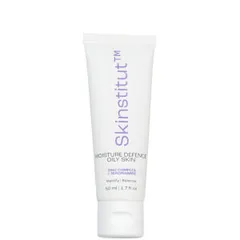
Works for:
based on ingredients and %- Moisturizing
Doesn't work for:
based on ingredients and %- Exfoliation
- Anti-blemish
Can it cause trouble?
- Irritation risk: high
- Comedogenic risk ingredients: 0
Key actives


Moisturizing
What does the product description say?
Oily Skin Moisture Defence
Source: From product name
This product can help improve hydration of the skin with the two types of ingredients.
The first type is called “humectants”:
these ingredients help attract water.
When humectants are on the surface of the skin, they “pull in” the moisture from the outside environment, or from
within deeper layers of the skin. The following ingredients in this product do the job:
glycerin, trehalose.
This product also contains ingredients called “occlusives”. They help reduce the speed with which our skin loses moisture to the outside environment. These ingredients also help soften the upper layer of the skin, so it feels less tight and nicer to the touch. The following ingredients in this product do the job: squalane, caprylyl glycol.
An oil naturally present in skin. Works as an emollient to soften the skin and form a protective layer on its surface without a greasy feeling.
One of the best moisturizing ingredients. Naturally present in skin. It attracts water to the upper layer of the skin working as a humectant
A sugar that attracts water to the upper layer of the skin
Helps soften the upper layer of the skin
Helps preserve products and creates a nice product texture
Helps attract water to the upper layer of the skin and can help improve skin barrier function
Typically used to stabilize the product formulations. It is a salt of a polyhydroxy acid (PHA) and in larger concentrations, can help shed the dead cells from the skin surface revealing smoother skin. It can help attract water to the upper layer of the skin. Might to be helpful against acne and clogged pores. Could be helpful in neutralizing free radicals, but solid research is missing. Due to the zinc content, might help calm down inflammation in skin
An exfoliating and moisturizing alpha-hydroxy acid (AHA). Typically causes less irritation than other AHAs, for example, glycolic acid. At high concentrations (about 15%), lactic acid can help reduce lines and wrinkles. Recent studies show that lactic acid can support the "good" bacteria living on skin's surface (healthy skin microbiome)
Pure form of vitamin E. Can help moisturise and protect the skin from free radicals. Often used to help stabilise other ingredients or the formula itself
Exfoliation
What does the product description say?
In fact, this formula not only hydrates but it also gently exfoliates, helping to improve congestion and move dead skin cells along before they morph into blackheads and then acne.
Source: Lookfantastic US
This product might help exfoliate the skin with papain, but This ingredient is not the most effective.
An enzyme extracted from papaya fruit. Can have an exfoliating effect on the skin. Can be irritating
An exfoliating and moisturizing alpha-hydroxy acid (AHA). Typically causes less irritation than other AHAs, for example, glycolic acid. At high concentrations (about 15%), lactic acid can help reduce lines and wrinkles. Recent studies show that lactic acid can support the "good" bacteria living on skin's surface (healthy skin microbiome)
Typically used to stabilize the product formulations. It is a salt of a polyhydroxy acid (PHA) and in larger concentrations, can help shed the dead cells from the skin surface revealing smoother skin. It can help attract water to the upper layer of the skin. Might to be helpful against acne and clogged pores. Could be helpful in neutralizing free radicals, but solid research is missing. Due to the zinc content, might help calm down inflammation in skin
Anti-blemish
What does the product description say?
But it overachieves to ensure it doesn’t add excess oil to the skin or clog pores, both major concerns for oily skins and acne sufferers.
Source: Lookfantastic US
Effective ingredients missing or their concentration is too low.
Typically used to stabilize the product formulations. It is a salt of a polyhydroxy acid (PHA) and in larger concentrations, can help shed the dead cells from the skin surface revealing smoother skin. It can help attract water to the upper layer of the skin. Might to be helpful against acne and clogged pores. Could be helpful in neutralizing free radicals, but solid research is missing. Due to the zinc content, might help calm down inflammation in skin
How honest is this product?
| Promise | Can it deliver? |
|---|---|
| Moisturizing | |
| Exfoliation | |
| Anti-blemish |
Total Promises Fulfilled score: 41/100.
We receive a small commission for purchases made through these links at no cost for you. Thank you for your support! Learn more
Potential irritants
Comedogenic ingredients
No comedogenic ingredients detected
User reviews (0)
Averages from community submissions.
No reviews yet for this product.
Be the first to share your experience!
Tried this product?
Help capture what the ingredient list can't—texture, finish, pilling, scent, and more. Answer what you can, skip the rest.
Takes ~30 seconds.
Reviews are shown in aggregate. No personal details.
| Product | Similarity | Price | Irritancy |
|---|---|---|---|
 Skinstitut Oily Skin Moisture Defence | Current | $45.00 | |
 3LAB Anti-Aging Cream | 57% | $750.00 | |
 endota spa Blue Light Defence Hydro Cream | 57% | - | |
 TOUN28 Waterful Lotion Ceramide + Antarcticine | 56% | ≈ $29.34 | |
 LANEIGE Bright Dew Original Cream | 56% | - | |
 MDO by Simon Ourian MD D. Intense Hydrating Moisturizer | 56% | ≈ $105.35 |
Key Actives
Pure form of vitamin E. Can help moisturise and protect the skin from free radicals. Often used to help stabilise other ingredients or the formula itself
Helps attract water to the upper layer of the skin and can help improve skin barrier function
Might be helpful in neutralizing free radicals. Can have a dehydration effect that might somewhat decrease the look of puffy eyes
One of the best moisturizing ingredients. Naturally present in skin. It attracts water to the upper layer of the skin working as a humectant
Helps soften the upper layer of the skin
An oil naturally present in skin. Works as an emollient to soften the skin and form a protective layer on its surface without a greasy feeling.
A sugar that attracts water to the upper layer of the skin
Potential irritants
Helps oil and water mix together and can enhance the penetration of other ingredients into the skin. It can be irritating
An enzyme extracted from papaya fruit. Can have an exfoliating effect on the skin. Can be irritating
An aromatic blend of unspecified and possibly irritating ingredients
Plant extract. Might have some anti-oxidant properties. Can be irritating
A gelling agent that thickens the product consistency and leaves the skin with a velvety finish
A plant extract that might have some anti-oxidant effect in skin, but evidence is lacking
Helps preserve products and creates a nice product texture
A plant extract that might have some anti-oxidant and anti-inflammatory properties but evidence for effectiveness in skin is missing
An exfoliating and moisturizing alpha-hydroxy acid (AHA). Typically causes less irritation than other AHAs, for example, glycolic acid. At high concentrations (about 15%), lactic acid can help reduce lines and wrinkles. Recent studies show that lactic acid can support the "good" bacteria living on skin's surface (healthy skin microbiome)
Can work as an exfoliant but is typically used to adjust the product pH
Typically used to stabilize the product formulations. It is a salt of a polyhydroxy acid (PHA) and in larger concentrations, can help shed the dead cells from the skin surface revealing smoother skin. It can help attract water to the upper layer of the skin. Might to be helpful against acne and clogged pores. Could be helpful in neutralizing free radicals, but solid research is missing. Due to the zinc content, might help calm down inflammation in skin
Might be helpful in neutralizing free radicals. Can have a dehydration effect that might somewhat decrease the look of puffy eyes
Comedogenic ingredients
We couldn't find any comedogenic ingredients in this product
All ingredients
One of the best moisturizing ingredients. Naturally present in skin. It attracts water to the upper layer of the skin working as a humectant
Used to stabilize product formulations and create a nice product texture
Helps oil and water mix together and can enhance the penetration of other ingredients into the skin. It can be irritating
Pure form of vitamin E. Can help moisturise and protect the skin from free radicals. Often used to help stabilise other ingredients or the formula itself
A gelling agent that thickens the product consistency and leaves the skin with a velvety finish
An oil naturally present in skin. Works as an emollient to soften the skin and form a protective layer on its surface without a greasy feeling.
A preservative. It helps prevent bacterial growth in cosmetic products
A plant extract that might have some anti-oxidant effect in skin, but evidence is lacking
Helps preserve products and creates a nice product texture
An enzyme extracted from papaya fruit. Can have an exfoliating effect on the skin. Can be irritating
An aromatic blend of unspecified and possibly irritating ingredients
A plant extract that might have some anti-oxidant and anti-inflammatory properties but evidence for effectiveness in skin is missing
An exfoliating and moisturizing alpha-hydroxy acid (AHA). Typically causes less irritation than other AHAs, for example, glycolic acid. At high concentrations (about 15%), lactic acid can help reduce lines and wrinkles. Recent studies show that lactic acid can support the "good" bacteria living on skin's surface (healthy skin microbiome)
Helps attract water to the upper layer of the skin and can help improve skin barrier function
Plant extract. Might have some anti-oxidant properties. Can be irritating
Can work as an exfoliant but is typically used to adjust the product pH
Typically used to stabilize the product formulations. It is a salt of a polyhydroxy acid (PHA) and in larger concentrations, can help shed the dead cells from the skin surface revealing smoother skin. It can help attract water to the upper layer of the skin. Might to be helpful against acne and clogged pores. Could be helpful in neutralizing free radicals, but solid research is missing. Due to the zinc content, might help calm down inflammation in skin
Might be helpful in neutralizing free radicals. Can have a dehydration effect that might somewhat decrease the look of puffy eyes
Ingredient list view
Water, Glycerin, Dimethicone/vinyl dimethicone crosspolymer, Pistacia vera seed oil, Polysorbate 60, Ethoxydiglycol, Propylene glycol, Tocopherol, Hydrolyzed vegetable protein, C12-14 pareth-12, Hydroxyethyl acrylate/sodium acryloyldimethyl taurate copolymer, Squalane, Trehalose, Phenoxyethanol, Terminalia ferdinandiana fruit extract, Caprylyl glycol, Papain, Parfum, Moringa oleifera leaf extract, Olea europaea leaf extract, Tetrahydropiperine, Lactic acid, Panthenol, Aesculus hippocastanum seed extract, Sorbic acid, Sodium benzoate, Sodium hydroxide, Citric acid, Syzygium luehmannii fruit extract, Acronychia acidula fruit extract, Davidsonia pruriens fruit extract, Potassium sorbate, Ammonium glycyrrhizate, Zinc gluconate, Caffeine, Citronellol, Geraniol, Linalool
- Glycerol and the skin: holistic approach to its origin and functions
- Oil quality of pistachios (Pistacia vera L.) grown in East Azarbaijan, Iran
- Surfactants and experimental irritant contact dermatitis
- Propylene Glycol
- Skin-sensitizing and irritant properties of propylene glycol
- Vitamin E in dermatology
- Vitamin E and Skin Health
- The chemotherapeutic potential of Terminalia ferdinandiana: Phytochemistry and bioactivity
- Wound Repair Potential of Olea europaea L. Leaf Extracts Revealed by In Vivo Experimental Models and Comparative Evaluation of the Extracts' Antioxidant Activity
- Epidermal and dermal effects of topical lactic acid
- Dual Effects of Alpha-Hydroxy Acids on the Skin
- Skin moisturizing effects of panthenol-based formulations
- Safety Assessment of Panthenol, Pantothenic Acid, and Derivatives as Used in Cosmetics
- Contact dermatitis as an adverse reaction to some topically used European herbal medicinal products – part 1: Achillea millefolium–Curcuma longa
- Zinc salts in dermatology
- An overview of zinc and its importance in dermatology-Part II: The association of zinc with some dermatologic disorders
- Zinc, copper and manganese enhanced keratinocyte migration through a functional modulation of keratinocyte integrins
- Evaluation of the effects of topical zinc gluconate in wound healing
- A polyhydroxy acid skin care regimen provides antiaging effects comparable to an alpha-hydroxyacid regimen
- Applications of hydroxy acids: classification, mechanisms, and photoactivity
- Annex I: Clinical evidence regarding sensitisation to individual fragrance chemicals and to natural extracts