Works for
2 of 2 advertised claims delivered
Anti-aging4 ingredients credited for this claimModerate support
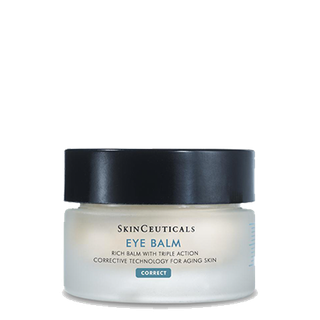
“Eye Balm Formulated for dry ageing skin, this eyelid moisturiser is designed to improve the appearance of age ... Read more”
This product contains tocopherol. This ingredient help neutralize free radicals in skin. By doing so, they might be able to prevent early signs of aging (like fine lines and wrinkles), at least to some extent. These ingredients will not be able to "reverse" signs of aging.
Moisturizing21 ingredients credited for this claimGood support
“Eye Balm Formulated for dry ageing skin, this eyelid moisturiser is designed to improve the appearance of age ... Read more”
This product can help improve hydration of the skin with the two types of ingredients.
The first type is called “humectants”:
these ingredients help attract water.
When humectants are on the surface of the skin, they “pull in” the moisture from the outside environment, or from
within deeper layers of the skin. The following ingredients in this product do the job:
glycerin, glycine soja protein.
This product also contains ingredients called “occlusives”. They help reduce the speed with which our skin loses moisture to the outside environment. These ingredients also help soften the upper layer of the skin, so it feels less tight and nicer to the touch. The following ingredients in this product do the job: dimethicone, helianthus annuus seed oil.
Anti-oxidationNot advertised by the brand · 5 ingredients credited for this claimStrong support
This product contains antioxidants (tocopherol) that can help neutralize free radicals in skin. By doing so, they can lessen the damage the skin gets from the UV light (sun).
Can it cause trouble?
Irritancy2 strong irritants: Retinyl palmitate, FarnesolMedium risk
Comedogenic4 ingredients rated 2 or more on the 0–5 pore-clogging scale4 flagged
User reviews
Be the first — your take helps the next person decide.
Ingredients
Filter by role to see what each ingredient is doing.
Water~45–55%
Glycerin~4.5–5.5%
- Irritation risk
- Low
One of the best moisturizing ingredients. Naturally present in skin. It attracts water to the upper layer of the skin working as a humectant
More about GlycerinAloe barbadensis leaf juice~3.9–4.8%
- Irritation risk
- Medium
Traditionally used to treat sunburns, dermatitis and inflammation, but evidence for its effectiveness is lacking. The extract can contain humectants that help attract water into the skin
More about Aloe barbadensis leaf juiceMyristyl myristate~3.1–3.8%
- Irritation risk
- Medium
- Comedogenicity
- 3/5
An emollient. Is not recommended for acne-prone skin as it can be comedogenic
More about Myristyl myristateCetyl palmitate~2.4–2.9%
- Irritation risk
- Low
An emollient that helps soften the skin and is used to improve product texture and stability
More about Cetyl palmitateTocopherol~1.8–2.2%
- Irritation risk
- Low
Pure form of vitamin E. Can help moisturise and protect the skin from free radicals. Often used to help stabilise other ingredients or the formula itself
More about TocopherolStearic acid~1.9–2.3%
- Irritation risk
- Low
Helps oil and water mix together and works as an emollient
More about Stearic acidHydrogenated vegetable oil~1.4–1.8%
- Irritation risk
- Low
- Comedogenicity
- 2/5
An oil from a mixture of different vegetables. Helps soften the upper layer of the skin
More about Hydrogenated vegetable oilParaffin~1.2–1.4%
- Irritation risk
- Low
Prevents water loss from the skin surface and thickens the product consistency
More about ParaffinPalmitic acid~1–1.2%
- Irritation risk
- Low
An emollient that is naturally present in skin and helps soften it
More about Palmitic acidPetrolatum~0.7–1.05%
- Irritation risk
- Low
One of the most effective and the most studied occlusive ingredients that creates a protective layer on top of the skin preventing moisture loss
More about PetrolatumDimethicone~0.6–0.95%
- Irritation risk
- Low
A silicone that helps to reduce water loss from the surface of the skin. Can temporarily "fill in" lines and wrinkles, absorb oil, and create a nice product finish
More about DimethiconeHydrogenated lecithin~0.5–0.75%
- Irritation risk
- Low
Helps to retain moisture by creating a protective barrier on the skin. Rich in fatty acids. Improves product texture and helps with the penetration of other ingredients.
More about Hydrogenated lecithinCetyl alcohol~0.55–0.85%
- Irritation risk
- Low
A non-drying alcohol that works to soften the skin and stabilize product formulations helping oil and water mix together
More about Cetyl alcoholCaprylic/capric/myristic/stearic triglyceride~0.45–0.65%
- Irritation risk
- Low
Helps to soften the upper layer of the skin
More about Caprylic/capric/myristic/stearic triglyceridePhenoxyethanol~0.45–0.65%
- Irritation risk
- Low
A preservative. It helps prevent bacterial growth in cosmetic products
More about PhenoxyethanolTriethanolamine~0.4–0.65%
- Irritation risk
- Medium
Used to adjust pH of the product and can help improve the product's smell
More about TriethanolamineLauroyl lysine~0.3–0.6%
- Irritation risk
- Low
Helps soften the upper layer of the skin and creates a nice product texture
More about Lauroyl lysineCarbomer~0.3–0.55%
- Irritation risk
- Low
Helps create a thicker or gel-like product texture. It is not a surfactant but can be used in gentle cleansing formulations
More about CarbomerGlycine soja protein~0.3–0.6%
- Irritation risk
- Low
A plant extract that helps to attract water to the upper layer of the skin and soften it. It might be helpful in neutralizing free radicals. It might be somewhat helpful for evening out the skin tone. It might be able to support elastin production but solid research is lacking
More about Glycine soja proteinPentylene glycol~0.3–0.6%
- Irritation risk
- Medium
Used to preserve products, dissolve other ingredients and create a nice product texture
More about Pentylene glycolCaprylyl glycol~0.3–0.55%
- Irritation risk
- Medium
Helps preserve products and creates a nice product texture
More about Caprylyl glycolChlorphenesin~0.16–0.32%
Bisabolol~0.2–0.35%
- Irritation risk
- Low
An active component of chamomile plant that historically has been used to calm down irritated skin. A recent study shows that bisabolol indeed can have some anti-inflammatory effect on skin, even though conclusive data is lacking. Bisabolol has a sweet floral scent and can be added to products for its aromatic properties
More about BisabololMyristic acid~0.4–0.6%
- Irritation risk
- Medium
- Comedogenicity
- 3/5
Helps oil and water mix together. Could be comedogenic
More about Myristic acidPentaerythrityl tetra-di-t-butyl hydroxyhydrocinnamate~0.25–0.45%
- Irritation risk
- Low
Used to increase stability of product formulations
More about Pentaerythrityl tetra-di-t-butyl hydroxyhydrocinnamateSilybum marianum extract~0.25–0.45%
- Irritation risk
- High
Might be able to help neutralize free radical, calm down inflammation in skin, and even skin tone
More about Silybum marianum extractDisodium edta~0.2–0.4%
Caprylic/capric triglyceride~0.25–0.5%
- Irritation risk
- Medium
A good mix of fatty acids that forms a protective layer on the skin. Improves the shelf life of products. Derived from coconut and glycerin
More about Caprylic/capric triglycerideRetinyl palmitate~0.2–0.35%
- Irritation risk
- High
Three steps removed from the active form of vitamin A - retinoic acid. To have an effect in the skin, it first needs to be converted twice to become the retinoic acid. This means it is less potent than retinol, but could also be less irritating. Once converted to the retinoic acid in the skin, it helps against all signs of aging, improves skin cell turnover and helps fight blemishes and clogged pores. However, in many cosmetic formulations, it is used in a concentration that is too low to have the full effect
More about Retinyl palmitateSodium cocoyl glutamate~0.4–0.65%
- Irritation risk
- Medium
Helps oil and water mix together
More about Sodium cocoyl glutamateHelianthus annuus seed oil~0.25–0.45%
- Irritation risk
- Low
A great emollient due to its high linoleic acid content. One of the most effective plant oils in helping skin hydration and repairing skin barrier function
More about Helianthus annuus seed oilEthylhexylglycerin~0.2–0.35%
Sodium benzoate~0.15–0.3%
Potassium sorbate~0.15–0.25%
Farnesol~0.1–0.2%
Citric acid~0.1–0.2%
- Irritation risk
- Medium
Can work as an exfoliant but is typically used to adjust the product pH
More about Citric acidCrithmum maritimum extract~0.1–0.2%
- Irritation risk
- Low
- Comedogenicity
- 3/5
An algae extract that might have anti-oxidant properties
More about Crithmum maritimum extractBht~0.05–0.1%
Ingredient list view
Water, Glycerin, Aloe barbadensis leaf juice, Myristyl myristate, Cetyl palmitate, Tocopherol, Stearic acid, Hydrogenated vegetable oil, Paraffin, Palmitic acid, Petrolatum, Dimethicone, Hydrogenated lecithin, Cetyl alcohol, Caprylic/capric/myristic/stearic triglyceride, Phenoxyethanol, Triethanolamine, Lauroyl lysine, Carbomer, Glycine soja protein, Pentylene glycol, Caprylyl glycol, Chlorphenesin, Bisabolol, Myristic acid, Pentaerythrityl tetra-di-t-butyl hydroxyhydrocinnamate, Silybum marianum extract, Disodium edta, Caprylic/capric triglyceride, Retinyl palmitate, Sodium cocoyl glutamate, Helianthus annuus seed oil, Ethylhexylglycerin, Sodium benzoate, Potassium sorbate, Farnesol, Citric acid, Crithmum maritimum extract, Bht
Compare prices
Retailers ranked by price — lowest first.
Affiliate links · prices updated regularly · As an Amazon Associate, WIMJ earns from qualifying purchases.
Worth comparing, line by line.
Match % combines shared ingredients, the first five ingredients, shared actives and hero ingredients, irritancy (lower counts in the alternative's favour), texture and body area. Only products in the same routine step are compared.
| SKINEye BalmYOUR PRODUCT | OlayTotal Effects Eye Transforming Cream | |
|---|---|---|
| Match | — | 52% |
| Price | $21.15 | $29.80+$8.65 |
| Shared key ingredients | — | 3 of 10 |
| Key difference | — | Niacinamide |
| Irritancy | Medium | Low |
| Drying alcohol | — | — |
| View product | Shop |


Sources cited in this review
Every concentration estimate and effectiveness label is anchored to one of these 17 studies and safety reviews.
- 1
- 2Vitamin E in dermatologyncbi.nlm.nih.gov
- 3Vitamin E and Skin Healthlpi.oregonstate.edu
- 4
- 5Final Report on the Safety Assessment of Dimethicone Copolyoljournals.sagepub.com
- 6

Affiliate links · As an Amazon Associate, WIMJ earns from qualifying purchases.