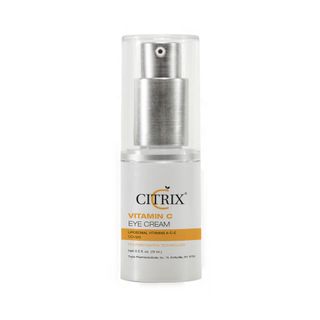
Works for
1 of 1 advertised claim delivered
Anti-aging3 ingredients credited for this claimModerate support
“The rich blend of vitamins A, C, E, green tea, and Co-Q10 smooth and refine fine lines and wrinkles around the eyes.”
This product contains ubiquinone. This ingredient help neutralize free radicals in skin. By doing so, they might be able to prevent early signs of aging (like fine lines and wrinkles), at least to some extent. These ingredients will not be able to "reverse" signs of aging.
Anti-oxidationNot advertised by the brand · 4 ingredients credited for this claimStrong support
This product contains antioxidants (ubiquinone) that can help neutralize free radicals in skin. By doing so, they can lessen the damage the skin gets from the UV light (sun).
The following ingredients - camellia sinensis extract also can have an antioxidant effect, but there is less evidence to confirm their effectiveness in skin.
MoisturizingNot advertised by the brand · 6 ingredients credited for this claimStrong support
This product can help improve hydration of the skin with the two types of ingredients.
The first type is called “humectants”:
these ingredients help attract water.
When humectants are on the surface of the skin, they “pull in” the moisture from the outside environment, or from
within deeper layers of the skin. The following ingredients in this product do the job:
glycerin, glyceryl polymethacrylate.
This product also contains ingredients called “occlusives”. They help reduce the speed with which our skin loses moisture to the outside environment. These ingredients also help soften the upper layer of the skin, so it feels less tight and nicer to the touch. The following ingredients in this product do the job: myristyl myristate, glyceryl polymethacrylate.
The following ingredients in this product are especially good for supporting the skin barrier and helping with the hydration level: petrolatum
Can it cause trouble?
Irritancy2 strong irritants: Retinyl palmitate, Diazolidinyl ureaMedium risk
Comedogenic1 ingredient rated 2 or more on the 0–5 pore-clogging scale1 flagged

User reviews
Be the first — your take helps the next person decide.
Ingredients
Filter by role to see what each ingredient is doing.
Water~40–60%
Petrolatum~4.7–7.1%
- Irritation risk
- Low
One of the most effective and the most studied occlusive ingredients that creates a protective layer on top of the skin preventing moisture loss
More about PetrolatumGlycerin~3.5–5.3%
- Irritation risk
- Low
One of the best moisturizing ingredients. Naturally present in skin. It attracts water to the upper layer of the skin working as a humectant
More about GlycerinGlyceryl dilaurate~2.5–3.7%
- Irritation risk
- Medium
Helps oil and water mix together
More about Glyceryl dilaurateMica~2.1–3.1%
- Irritation risk
- Low
Creates an illusion of smoother and more radiant skin tone. Adds shimmer to the skin by reflecting light
More about MicaGlyceryl polymethacrylate~1.8–2.6%
- Irritation risk
- Low
Used to create a nice product texture
More about Glyceryl polymethacrylateOctyldodecyl stearoyl stearate~1.5–2.2%
- Irritation risk
- Low
Myristyl myristate~1.4–2.1%
- Irritation risk
- Medium
- Comedogenicity
- 3/5
An emollient. Is not recommended for acne-prone skin as it can be comedogenic
More about Myristyl myristateAscorbyl palmitate~1–1.5%
- Irritation risk
- Medium
Being a lipid soluble form of vitamin C, it is more stable and can penetrate the skin better than L-Ascorbic acid. It is effective in protecting the skin from free radicals, as well as evening the skin tone, but is less effective in stimulating collagen production compared to L-Ascorbic acid.
More about Ascorbyl palmitateGlucosamine~0.85–1.25%
- Irritation risk
- Low
Tocopheryl acetate~0.55–1.25%
- Irritation risk
- Medium
A more stable but less bio-available form of vitamin E compared to Tocopherol. Might help moisturize and protect the skin from free radicals, but mostly used in low concentrations to stabilize other ingredients.
More about Tocopheryl acetatePhospholipids~0.45–1%
- Irritation risk
- Low
Emollients that are naturaly present in skin. In addition, they help water and oil mix together in the product
More about PhospholipidsRetinyl palmitate~0.4–0.9%
- Irritation risk
- High
Three steps removed from the active form of vitamin A - retinoic acid. To have an effect in the skin, it first needs to be converted twice to become the retinoic acid. This means it is less potent than retinol, but could also be less irritating. Once converted to the retinoic acid in the skin, it helps against all signs of aging, improves skin cell turnover and helps fight blemishes and clogged pores. However, in many cosmetic formulations, it is used in a concentration that is too low to have the full effect
More about Retinyl palmitateUbiquinone~0.4–0.9%
- Irritation risk
- Low
Coenzyme Q10. It helps neutralize free radicals in skin, improves skin hydration and might be helpful agains fine lines and wrinkles. It can be an allergen
More about UbiquinoneCamellia sinensis extract~0.35–0.75%
- Irritation risk
- Low
Tea extract. Might be helpful in neutralizing free radicals in skin
More about Camellia sinensis extractCucumis sativus extract~0.35–0.75%
- Irritation risk
- Medium
Chamomilla recutita extract~0.3–0.7%
- Irritation risk
- High
Plant extract that can have healing and anti-inflammatory properties. It is a potential allergen and can be irritating
More about Chamomilla recutita extractButylated pvp~0.15–0.65%
- Irritation risk
- Low
Acrylates copolymer~0.15–0.55%
- Irritation risk
- Medium
Used to stabilize product formulation, help create an even product layer over skin (for example, in sunscreen) and create a thicker product consistency
More about Acrylates copolymerSteareth-20~0.15–0.65%
Sodium hydroxide~0.1–0.3%
Disodium edta~0.05–0.25%
Methylparaben~0.05–0.2%
Propylparaben~0.05–0.15%
Diazolidinyl urea~0.05–0.15%
- Irritation risk
- High
A preservative. Works by releasing formaldehyde. Can be irritating
More about Diazolidinyl ureaIngredient list view
Water, Petrolatum, Glycerin, Glyceryl dilaurate, Mica, Glyceryl polymethacrylate, Octyldodecyl stearoyl stearate, Myristyl myristate, Ascorbyl palmitate, Unknown, Glucosamine, Tocopheryl acetate, Phospholipids, Retinyl palmitate, Ubiquinone, Camellia sinensis extract, Cucumis sativus extract, Chamomilla recutita extract, Butylated pvp, Acrylates copolymer, Unknown, Steareth-20, Unknown, Sodium hydroxide, Disodium edta, Methylparaben, Propylparaben, Diazolidinyl urea
Compare prices
Retailers ranked by price — lowest first.

Worth comparing, line by line.
Match % combines shared ingredients, the first five ingredients, shared actives and hero ingredients, irritancy (lower counts in the alternative's favour), texture and body area. Only products in the same routine step are compared.
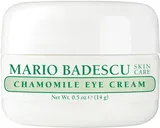
| CitrixAntioxidant Eye CreamYOUR PRODUCT | OlayTransforming Eye Cream | Mario BadescuChamomile Eye Cream | PYUNKANG YULEye Cream | |
|---|---|---|---|---|
| Match | — | 56% | 55% | 53% |
| Price | $38.40 | $26.99−$11.41 | $18.00−$20.40 | $8.99−$29.41 |
| Shared key ingredients | — | 2 of 6 | 3 of 6 | 2 of 6 |
| Key difference | — | Niacinamide | Mineral Oil | Acetyl Glucosamine |
| Irritancy | Medium | Medium | Medium | Medium |
| Drying alcohol | — | — | — | — |
| View product | Shop | Shop | Shop |


Product summary
Based on the ingredients included, "Citrix - Antioxidant Eye Cream" works well for moisturizing the skin. To work well, any moisturizer needs to include a combination of water-binding and emollient ingredients. Citrix - Antioxidant Eye Cream ticks this box. Glycerin and glyceryl polymethacrylate in this product (humectants) attract water molecules to the upper layer of the skin (the water comes from the outside air or from the deeper layers of the skin if the air is dry). Emollients in this formulation (petrolatum, myristyl myristate and glyceryl polymethacrylate) help to reduce the moisture loss from the skin. They also soften the skin surface and relieve the feeling of dryness and tightness.
Ingredient callouts
- this moisturizer includes a form of retinoids (vitamin A) - retinyl palmitate 0.40% - 0.90%, but this type of vitamin A is not very effective. It could in theory help with fine lines and wrinkles, but the effect is most likely minimal.
Irritation risk
This moisturizer contains some common irritants, including those without a benefit for the skin. We assess the overall irritancy of this moisturizer to be medium. For a detailed overview of all potential irritants: click here
You can see the detailed formula review with the breakdown of all actives in the product and the full ingredient list with estimated concentrations in the tables below.
Price
The product retails for 38.40$ in the United States.
For a detailed price comparison: click here.
Sources cited in this review
Every concentration estimate and effectiveness label is anchored to one of these 3 studies and safety reviews.
- 1
- 2
- 3

Affiliate links · As an Amazon Associate, WIMJ earns from qualifying purchases.