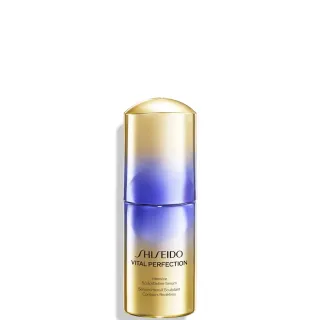
Shiseido Vital Perfection Intensive Sculptdefine Serum
Works for
Anti-agingAspartic acid, Tocopherol + 1 moreMay help
“Together, they work to rebuild and reinforce your skin’s inner structure to improve the appearance of sagging and loss of elasticity.”
This product contains aspartic acid. There is some human evidence that this ingredient helps reduce and prevent fine lines and wrinkles and improve skin elasticity and firmness, though it is smaller or less consistent than the evidence for the best anti-aging ingredients.
Evens skin toneSide benefit · Potassium methoxysalicylate, Glycyrrhiza glabra root extract + 1 moreWorks well
This product can help reduce hypepigmentation and even out the skin tone because it contains the following effective ingredients: potassium methoxysalicylate
The following ingredient (ingredients) in this product might be helpful, but there is no evidence to confirm that it actually can help even out the skin tone: glycyrrhiza glabra root extract.
Keep in mind that you would need to apply any topical skincare targetted at hypigmentation consistently for a couple of months to get a result. No topical skincare product can help get rid of hyperpigmentation (including post-acne marks and age spots) instantly.
MoisturizingSide benefit · Glycerin, Dimethicone + 14 moreWorks
This product can help improve hydration of the skin with the two types of ingredients.
The first type is called “humectants”:
these ingredients help attract water.
When humectants are on the surface of the skin, they “pull in” the moisture from the outside environment, or from
within deeper layers of the skin. The following ingredients in this product do the job:
aspartic acid, glycerin.
This product also contains ingredients called “occlusives”. They help reduce the speed with which our skin loses moisture to the outside environment. These ingredients also help soften the upper layer of the skin, so it feels less tight and nicer to the touch. The following ingredients in this product do the job: dimethicone, peg-10 dimethicone.
Can it cause trouble?
Irritancy11 strong irritants: Alcohol denat., Lavandula angustifolia oil + 9 more — patch-test recommendedHigh risk
Comedogenic1 ingredient rated 2 or more on the 0–5 pore-clogging scale1 flagged


User reviews
Be the first — your take helps the next person decide.
Ingredients
Filter by role to see what each ingredient is doing.
Water~45–55%
Dipropylene glycol~6.7–8.2%
- Irritation risk
- Low
Helps to dissolve other ingredients in a formulation. Slows down the rate of product drying
More about Dipropylene glycolGlycerin~3.8–4.7%
- Irritation risk
- Low
One of the best moisturizing ingredients. Naturally present in skin. It attracts water to the upper layer of the skin working as a humectant
More about GlycerinAlcohol denat.~3.1–3.8%
- Irritation risk
- High
Produces temporary toning effect. Can help dissolve other ingredients or preserve products
More about Alcohol denat.Butylene glycol~2.3–2.8%
- Irritation risk
- Low
Used to create a nice product texture and help delivery of other ingredients. Might be somewhat helpful in attracting water to the upper layer of the skin
More about Butylene glycolDimethicone~2–2.4%
- Irritation risk
- Low
A silicone that helps to reduce water loss from the surface of the skin. Can temporarily "fill in" lines and wrinkles, absorb oil, and create a nice product finish
More about DimethiconeBehenyl alcohol~1.7–2.1%
- Irritation risk
- Low
Non-drying alcohol that helps water and oil mix together. Also serves as an emollient
More about Behenyl alcoholPeg-150~1.4–1.7%
- Irritation risk
- Low
Hydrogenated polyisobutene~1.2–1.4%
- Irritation risk
- Low
Used to improve the product consistency and soften the upper layer of the skin
More about Hydrogenated polyisobuteneIsododecane~0.75–1.15%
- Irritation risk
- Low
An emollient that helps soften the skin and can decrease moisture loss. Helps create a nice product texture
More about IsododecaneTriethylhexanoin~0.5–0.75%
- Irritation risk
- Medium
Helps soften the upper layer of the skin
More about TriethylhexanoinPotassium methoxysalicylate~0.45–0.65%
- Irritation risk
- Medium
Can help reduce hyperpigmentation
More about Potassium methoxysalicylatePeg/ppg-14/7 dimethyl ether~0.45–0.65%
- Irritation risk
- Low
An emollient that helps soften the skin. It also forms a protective on its surface to reduce water loss
More about Peg/ppg-14/7 dimethyl etherTrimethylsiloxysilicate~0.3–0.55%
- Irritation risk
- Low
A type of silicone that helps create a nice product consistency and support the delivery of other ingredients
More about TrimethylsiloxysilicateVp/va copolymer~0.3–0.5%
- Irritation risk
- Low
Used to stabilize product formulation and create a nice product consistency
More about Vp/va copolymerPhytosteryl/octyldodecyl lauroyl glutamate~0.3–0.55%
- Irritation risk
- Low
A mix of amino acids and plant-based lipids. Helps to soften the upper layer of the skin and reduce water loss over time
More about Phytosteryl/octyldodecyl lauroyl glutamateTocopheryl acetate~0.25–0.45%
- Irritation risk
- Medium
A more stable but less bio-available form of vitamin E compared to Tocopherol. Might help moisturize and protect the skin from free radicals, but mostly used in low concentrations to stabilize other ingredients.
More about Tocopheryl acetateSodium polyacrylate~0.25–0.45%
- Irritation risk
- Low
Used to create a gel-like product texture, as well as to stabilize emulsions
More about Sodium polyacrylate2-o-ethyl ascorbic acid~0.2–0.35%
- Irritation risk
- Low
Xanthan gum~0.2–0.4%
- Irritation risk
- Low
Used to create a thicker product consistency
More about Xanthan gumCaffeine~0.15–0.3%
- Irritation risk
- Medium
Might be helpful in neutralizing free radicals. Can have a dehydration effect that might somewhat decrease the look of puffy eyes
More about CaffeineLavandula angustifolia oil~0.15–0.3%
- Irritation risk
- High
An essential oil. Potential allergen and can be irritating. It has some anti-bacterial properties
More about Lavandula angustifolia oilLauryl betaine~0.2–0.4%
Niacinamide~0.15–0.25%
- Irritation risk
- Low
Is proven to be effective in reducing blemishes, evening out skin tone and helping to improve lines and wrinkles. It helps the skin to repair sun damage, calm down inflammation and keep maintain good levels of moisture. The concentration of about 2% is effective for supporting the skin barrier and evening out the skin tone. Concentration of 4-6% is better for helping with acne and balancing the sebum production
More about NiacinamideGlycyrrhiza glabra root extract~0.1–0.2%
- Irritation risk
- Medium
A plant extract that can help lighten the skin and calm down inflammation. Might be helpful in neutralizing free radicals
More about Glycyrrhiza glabra root extractAngelica acutiloba root extract~0.15–0.25%
- Irritation risk
- Low
Angelica keiskei leaf/stem extract~0.15–0.25%
- Irritation risk
- High
A fragrant plant extract. Might have some anti-oxidant properties. Can be irritating
More about Angelica keiskei leaf/stem extractIris florentina root extract~0.15–0.25%
- Irritation risk
- Low
Aspartic acid~0.15–0.25%
- Irritation risk
- Low
An amino-acid that helps increase skin hydration and might help to slightly improve skin firmness, potentially reducing lines and wrinkles
More about Aspartic acidCrataegus monogyna flower extract~0.15–0.25%
- Irritation risk
- Low
Sanguisorba officinalis root extract~0.2–0.35%
- Irritation risk
- Low
Panax ginseng root extract~0.15–0.3%
- Irritation risk
- High
A plant extract that might have some anti-inflammatory properties, but solid evidence is lacking. It can be irritating
More about Panax ginseng root extractCarthamus tinctorius flower extract~0.15–0.25%
- Irritation risk
- Low
Ziziphus jujuba fruit extract~0.15–0.25%
- Irritation risk
- Low
Rosmarinus officinalis leaf extract~0.15–0.25%
- Irritation risk
- High
Can be helpful in reducing inflammation in skin, including inflamed acne. It can be irritating
More about Rosmarinus officinalis leaf extractBupleurum falcatum root extract~0.15–0.25%
- Irritation risk
- High
A plant extract that might help to attract water to the upper layer of the skin, but it is not well studied. It can be irritating
More about Bupleurum falcatum root extractNasturtium officinale leaf/stem extract~0.15–0.3%
- Irritation risk
- Low
Microcrystalline wax~0.2–0.35%
Batyl alcohol~0.2–0.4%
- Irritation risk
- Low
Non-drying alcohol. Used to stabilize other ingredients and is an emollient
More about Batyl alcoholBehenic acid~0.25–0.5%
Polyvinyl alcohol~0.2–0.35%
Peg-60 glyceryl isostearate~0.2–0.35%
Peg-10 dimethicone~0.2–0.4%
- Irritation risk
- Low
A silicone that works to soften the upper layer of the skin and reduce its water loss
More about Peg-10 dimethiconeDisodium edta~0.15–0.3%
Myristyl myristate~0.2–0.35%
- Irritation risk
- Medium
- Comedogenicity
- 3/5
An emollient. Is not recommended for acne-prone skin as it can be comedogenic
More about Myristyl myristateSodium citrate~0.15–0.3%
- Irritation risk
- Medium
Helps to control the skin's pH level. Maintains the skin's natural film of amino-lactic acids and oils. Helps to preserve products
More about Sodium citrateIsostearic acid~0.25–0.5%
- Irritation risk
- Low
Used to create a nice product texture
More about Isostearic acidPotassium hydroxide~0.2–0.35%
Citric acid~0.15–0.3%
- Irritation risk
- Medium
Can work as an exfoliant but is typically used to adjust the product pH
More about Citric acidAlcohol~0.15–0.3%
- Irritation risk
- High
Can be drying and contribute to skin irritation. Used in formulars to dissolve other ingredients, create a thinner product consistency or for its antibacterial properties
More about AlcoholSodium metaphosphate~0.15–0.3%
Tocopherol~0.2–0.35%
- Irritation risk
- Low
Pure form of vitamin E. Can help moisturise and protect the skin from free radicals. Often used to help stabilise other ingredients or the formula itself
More about TocopherolSodium metabisulfite~0.1–0.2%
Alpinia speciosa leaf extract~0.15–0.3%
- Irritation risk
- Low
Phenoxyethanol~0.2–0.35%
- Irritation risk
- Low
A preservative. It helps prevent bacterial growth in cosmetic products
More about PhenoxyethanolSodium benzoate~0.15–0.3%
Parfum~0.15–0.3%
- Irritation risk
- High
An aromatic blend of unspecified and possibly irritating ingredients
More about ParfumIron oxides~0.15–0.3%
- Irritation risk
- Low
An umbrella term for the following three colorants: CI 77491, CI 77492, CI 77499. They might be able to offer some protection against visible light, but the degree of the protection is not clear
More about Iron oxidesIron oxides~0.15–0.3%
- Irritation risk
- Low
An umbrella term for the following three colorants: CI 77491, CI 77492, CI 77499. They might be able to offer some protection against visible light, but the degree of the protection is not clear
More about Iron oxidesLavandula oil/extract~0.15–0.25%
- Irritation risk
- Low
Tetramethyl acetyloctahydronaphthalenes~0.15–0.25%
- Irritation risk
- Low
Limonene~0.15–0.25%
- Irritation risk
- High
A common frangrance that can easily irritate skin, especially if exposed to air, light or heat
More about LimoneneLinalyl acetate~0.15–0.3%
- Irritation risk
- Low
Citrus aurantium peel oil~0.15–0.25%
- Irritation risk
- Low
Linalool~0.1–0.2%
Hexyl cinnamal~0.1–0.2%
Citronellol~0.15–0.25%
Trimethylbenzenepropanol~0.1–0.2%
- Irritation risk
- Low
Pinene~0.1–0.2%
- Irritation risk
- Low
Citrus aurantium bergamia peel oil~0.1–0.15%
- Irritation risk
- High
Ingredient list view
Water, Dipropylene glycol, Glycerin, Alcohol denat., Butylene glycol, Dimethicone, Behenyl alcohol, Peg-150, Hydrogenated polyisobutene, Isododecane, Triethylhexanoin, Potassium methoxysalicylate, Peg/ppg-14/7 dimethyl ether, Trimethylsiloxysilicate, Vp/va copolymer, Phytosteryl/octyldodecyl lauroyl glutamate, Tocopheryl acetate, Sodium polyacrylate, 2-o-ethyl ascorbic acid, Xanthan gum, Caffeine, Lavandula angustifolia oil, Lauryl betaine, Niacinamide, Glycyrrhiza glabra root extract, Angelica acutiloba root extract, Angelica keiskei leaf/stem extract, Iris florentina root extract, Aspartic acid, Crataegus monogyna flower extract, Sanguisorba officinalis root extract, Panax ginseng root extract, Carthamus tinctorius flower extract, Ziziphus jujuba fruit extract, Rosmarinus officinalis leaf extract, Bupleurum falcatum root extract, Nasturtium officinale leaf/stem extract, Microcrystalline wax, Batyl alcohol, Behenic acid, Polyvinyl alcohol, Peg-60 glyceryl isostearate, Peg-10 dimethicone, Disodium edta, Myristyl myristate, Sodium citrate, Isostearic acid, Potassium hydroxide, Citric acid, Alcohol, Sodium metaphosphate, Tocopherol, Sodium metabisulfite, Alpinia speciosa leaf extract, Phenoxyethanol, Sodium benzoate, Parfum, Iron oxides, Iron oxides, Lavandula oil/extract, Tetramethyl acetyloctahydronaphthalenes, Limonene, Linalyl acetate, Citrus aurantium peel oil, Linalool, Hexyl cinnamal, Citronellol, Trimethylbenzenepropanol, Pinene, Citrus aurantium bergamia peel oil
Compare prices
Retailers ranked by price — lowest first.
Affiliate links · As an Amazon Associate, WIMJ earns from qualifying purchases.
Worth comparing, line by line.
Match % combines shared ingredients, the first five ingredients, shared actives and hero ingredients, irritancy (lower counts in the alternative's favour), texture and body area. Only products in the same routine step are compared.
| ShiseidoVital Perfection Intensive Sculptdefine SerumYOUR PRODUCT | Coreana LabPeptide Shot Ampoule | AMPLE:NPeptide Shot Ampoule | MamondeRed Energy Serum Ultra Repair | |
|---|---|---|---|---|
| Match | — | 89% | 89% | 89% |
| Price | $155.00 | $14.73−$140.27 | $18.19−$136.81 | $35.71−$119.29 |
| Shared key ingredients | — | 3 of 13 | 3 of 13 | 3 of 13 |
| Key difference | — | Adenosine | Glycolic Acid | Adenosine |
| Irritancy | High | Medium | Medium | Medium |
| Drying alcohol | Contains drying alcohol | Contains drying alcohol | Contains drying alcohol | Contains drying alcohol |
| View product | Shop | Shop | Shop |


More alternatives: AHC Hydrating Korean Skincare Aqualuronic Face SerumThe Crème Shop Chia Seed Concentrated Serum
Sources cited in this review
Every concentration estimate and effectiveness label is anchored to one of these 19 studies and safety reviews.
- 1
- 2
- 3Final Report on the Safety Assessment of Dimethicone Copolyoljournals.sagepub.com
- 4
- 5
- 6

Affiliate links · As an Amazon Associate, WIMJ earns from qualifying purchases.