Works for
2 of 2 advertised claims delivered
Moisturizing30 ingredients credited for this claimStrong support
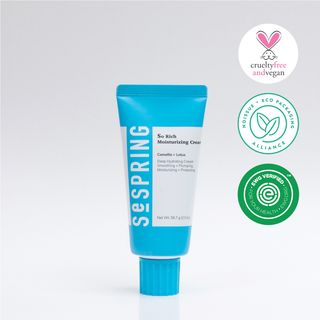
“So Rich Moisturizing Cream”
This product can help improve hydration of the skin with the two types of ingredients.
The first type is called “humectants”:
these ingredients help attract water.
When humectants are on the surface of the skin, they “pull in” the moisture from the outside environment, or from
within deeper layers of the skin. The following ingredients in this product do the job:
glycerin, sodium hyaluronate.
This product also contains ingredients called “occlusives”. They help reduce the speed with which our skin loses moisture to the outside environment. These ingredients also help soften the upper layer of the skin, so it feels less tight and nicer to the touch. The following ingredients in this product do the job: dimethicone, limnanthes alba seed oil.
The following ingredients in this product are especially good for supporting the skin barrier and helping with the hydration level: madecassoside, niacinamide
Anti-blemish2 ingredients credited for this claimGood support
“The addition of vitamin B3, lavender, and tea tree oil help calm and sooth the skin, fighting acne and stimulating skin healing.”
This product might be able to help reduce blemishes and clogged pores because it contains niacinamide.
Anti-agingNot advertised by the brand · 7 ingredients credited for this claimStrong support
This product can help reduce and prevent fine lines and wrinkles, improve skin elasticity and firmness because it contains niacinamide.
These ingredients in the product can also be helpful, even though there is less evidence for their effectiveness: adenosine, asiaticoside, madecassoside.
Keep in mind that it typically takes at least 6 weeks to notice any results because the changes that are needed to improve fine lines and elasticity happen in the deeper layers of the skin. No topical anti-aging product can “erase” wrinkles or fully reverse signs of aging.
Evens skin toneNot advertised by the brand · 2 ingredients credited for this claimStrong support
This product can help reduce hypepigmentation and even out the skin tone because it contains the following effective ingredients: niacinamide
The following ingredient (ingredients) in this product might be helpful, but there is no evidence to confirm that it actually can help even out the skin tone: madecassoside.
Keep in mind that you would need to apply any topical skincare targetted at hypigmentation consistently for a couple of months to get a result. No topical skincare product can help get rid of hyperpigmentation (including post-acne marks and age spots) instantly.
Anti-oxidationNot advertised by the brand · 11 ingredients credited for this claimStrong support
This product contains antioxidants (asiaticoside, madecassoside) that can help neutralize free radicals in skin. By doing so, they can lessen the damage the skin gets from the UV light (sun).
The following ingredients - camellia japonica flower extract also can have an antioxidant effect, but there is less evidence to confirm their effectiveness in skin.
Can it cause trouble?
Irritancy3 strong irritants: Nelumbo nucifera flower extract, Lavandula angustifolia extract + 1 more — patch-test recommendedHigh risk
Comedogenic4 ingredients rated 2 or more on the 0–5 pore-clogging scale4 flagged
User reviews
Be the first — your take helps the next person decide.
Ingredients
Filter by role to see what each ingredient is doing.
Water~45–55%
Dipropylene glycol~6.5–8%
- Irritation risk
- Low
Helps to dissolve other ingredients in a formulation. Slows down the rate of product drying
More about Dipropylene glycolGlycerin~4.2–5.2%
- Irritation risk
- Low
One of the best moisturizing ingredients. Naturally present in skin. It attracts water to the upper layer of the skin working as a humectant
More about GlycerinIsopropyl palmitate~3.1–3.8%
- Irritation risk
- Medium
- Comedogenicity
- 3/5
Helps soften the upper layer of the skin and create a thicker product consistency
More about Isopropyl palmitateIsohexadecane~2.5–3%
- Irritation risk
- Low
Improves the texture of the product and helps soften the skin. Helps oil and water mix together and can be used as a cleansing agent
More about IsohexadecaneMacadamia integrifolia seed oil~2–2.5%
- Irritation risk
- Low
A plant oil that helps soften the upper layer of the skin
More about Macadamia integrifolia seed oilNiacinamide~1.7–2.1%
- Irritation risk
- Low
Is proven to be effective in reducing blemishes, evening out skin tone and helping to improve lines and wrinkles. It helps the skin to repair sun damage, calm down inflammation and keep maintain good levels of moisture. The concentration of about 2% is effective for supporting the skin barrier and evening out the skin tone. Concentration of 4-6% is better for helping with acne and balancing the sebum production
More about NiacinamideGlyceryl stearate~1.5–1.8%
- Irritation risk
- Low
An emollient that softens the skin and forms a protective layer on its surface. Helps water and oil mix together
More about Glyceryl stearatePolyglyceryl-2 stearate~1.2–1.4%
- Irritation risk
- Medium
Helps water and oil mix together
More about Polyglyceryl-2 stearateMethylpropanediol~0.95–1.15%
Butyrospermum parkii butter~0.7–1.05%
- Irritation risk
- Low
- Comedogenicity
- 3/5
A great moisturising ingredient that softens the skin and reduces water loss from its upper layer. It also can be helpful in protecting skin from free radicals
More about Butyrospermum parkii butterCetearyl alcohol~0.65–1%
- Irritation risk
- Low
- Comedogenicity
- 2/5
A non-drying alcohol. Works as an emollient. Helps water and oil mix together and creates a nice product texture
More about Cetearyl alcoholStearyl alcohol~0.6–0.9%
- Irritation risk
- Low
An emollient that helps soften the skin
More about Stearyl alcoholCamellia japonica flower extract~0.5–0.7%
- Irritation risk
- High
A plant extract that might help neutralize free radicals in skin
More about Camellia japonica flower extractPaeonia albiflora flower extract~0.4–0.6%
- Irritation risk
- Low
Nelumbo nucifera flower extract~0.4–0.6%
Nelumbo nucifera leaf extract~0.4–0.6%
- Irritation risk
- Low
Nelumbo nucifera root extract~0.35–0.6%
- Irritation risk
- Low
Nelumbo nucifera seed extract~0.4–0.6%
- Irritation risk
- Low
Sodium hyaluronate~0.3–0.55%
- Irritation risk
- Low
One of the best moisturizing ingredients. Attracts water into the upper layer of the skin
More about Sodium hyaluronateStearic acid~0.45–0.65%
- Irritation risk
- Low
Helps oil and water mix together and works as an emollient
More about Stearic acidArachidic acid~0.4–0.65%
Palmitic acid~0.3–0.55%
- Irritation risk
- Low
An emollient that is naturally present in skin and helps soften it
More about Palmitic acidOleic acid~0.3–0.55%
- Irritation risk
- Medium
Helps soften the upper layer of the skin. At the same time, it can weaken the skin's barrier enhancing penetration of other ingredients and increasing the risk of skin dryness
More about Oleic acidCetyl palmitate~0.3–0.55%
- Irritation risk
- Low
An emollient that helps soften the skin and is used to improve product texture and stability
More about Cetyl palmitateSorbitan olivate~0.25–0.5%
Sorbitan palmitate~0.25–0.5%
- Irritation risk
- Medium
Helps water and oil mix together and stabilize the product formulation
More about Sorbitan palmitatePolyglyceryl-4 isostearate~0.3–0.5%
- Irritation risk
- Medium
Helps water and oil mix together
More about Polyglyceryl-4 isostearateSodium polyacryloyldimethyl taurate~0.25–0.45%
- Irritation risk
- Medium
Helps oil and water mix together
More about Sodium polyacryloyldimethyl taurateDicaprylyl ether~0.3–0.5%
- Irritation risk
- Low
Helps soften the upper layer of the skin while creating a non-greasy feel on the skin. Helps to dissolve other ingredients
More about Dicaprylyl etherPolyglyceryl-10 dilaurate~0.25–0.5%
Theobroma cacao seed butter~0.3–0.5%
- Irritation risk
- Low
- Comedogenicity
- 3/5
Helps soften the upper layer of the skin and can be helpful in restoring the skin barrier function. Might have some anti-oxidant effect
More about Theobroma cacao seed butterLimnanthes alba seed oil~0.3–0.55%
- Irritation risk
- Low
This oil's cmposition is closest to rapeseed oil. It is a very stable oil and serves as an emoillient
More about Limnanthes alba seed oilPentaerythrityl tetraethylhexanoate~0.3–0.55%
- Irritation risk
- Low
Used to create a nice product consistency while softening the upper layer of the skin
More about Pentaerythrityl tetraethylhexanoateTrimethylpentanediol/adipic acid/glycerin crosspolymer~0.25–0.45%
- Irritation risk
- Low
Carbomer~0.25–0.5%
- Irritation risk
- Low
Helps create a thicker or gel-like product texture. It is not a surfactant but can be used in gentle cleansing formulations
More about CarbomerTromethamine~0.25–0.45%
Trehalose~0.25–0.45%
- Irritation risk
- Low
A sugar that attracts water to the upper layer of the skin
More about TrehaloseDimethicone~0.3–0.6%
- Irritation risk
- Low
A silicone that helps to reduce water loss from the surface of the skin. Can temporarily "fill in" lines and wrinkles, absorb oil, and create a nice product finish
More about DimethiconeLavandula angustifolia extract~0.25–0.45%
- Irritation risk
- High
Used for fragrance and contains volatile compounds that can irritate the skin
More about Lavandula angustifolia extractMelaleuca alternifolia leaf extract~0.2–0.4%
- Irritation risk
- High
An essential oil that can be irritating. Has some anti-bacterial properties
More about Melaleuca alternifolia leaf extractNymphaea alba flower extract~0.25–0.45%
- Irritation risk
- Low
Portulaca oleracea extract~0.25–0.45%
- Irritation risk
- Medium
A plant extract that has some anti-oxidant activity, but solid research is lacking. Can help attract water to the upper layer of the skin
More about Portulaca oleracea extractCentella asiatica extract~0.3–0.55%
- Irritation risk
- Medium
A plant extract that has been shown to be able to reduce inflammation in skin, support restoration of skin barrier function, as well as support collagen production. Contains active compounds called centelloids: asiaticoside, madecasosside, asiatic acid and madecassic acid. Might be helpful in preventing stretch marks. It can be itself be irritating though.
More about Centella asiatica extractMadecassoside~0.25–0.45%
- Irritation risk
- Medium
An antioxidant that is typically derived from plant Centella Asiatica. It can help neutralize free radicals in skin and support skin barrier function. It could, however, itself be irritating. It is often unstable in formulations
More about MadecassosideMadecassic acid~0.25–0.45%
- Irritation risk
- Medium
An active compound of Centella Asiatica plant extract. In combination with other active compounds of Centella Asiatica extract (asiaticoside, madecasosside and asiatic acid), madecassic acid has been shown to be helpful in wound-healing, restoring skin barrier function and supporting collagen production in skin. It can, however, itself be irritating
More about Madecassic acidAsiaticoside~0.2–0.4%
- Irritation risk
- Medium
An active compound of Centella Asiatica plant extract. In combination with other active compounds of Centella Asiatica extract (madecasosside, asiatic acid and madecassic acid), asiaticoside has been shown to be helpful in wound-healing, restoring skin barrier function and supporting collagen production in skin. It can, however, itself be irritating
More about AsiaticosideAsiatic acid~0.25–0.45%
- Irritation risk
- Medium
An active compound of Centella Asiatica plant extract. In combination with other active compounds of Centella Asiatica extract (asiaticoside, madecasosside and madecassic acid) asiatic acid has been shown to be helpful in wound-healing, restoring skin barrier function and supporting collagen production in skin. It can, however, itself be irritating
More about Asiatic acid1,2-hexanediol~0.25–0.45%
Xanthan gum~0.25–0.45%
- Irritation risk
- Low
Used to create a thicker product consistency
More about Xanthan gumTocopheryl acetate~0.25–0.45%
- Irritation risk
- Medium
A more stable but less bio-available form of vitamin E compared to Tocopherol. Might help moisturize and protect the skin from free radicals, but mostly used in low concentrations to stabilize other ingredients.
More about Tocopheryl acetateAdenosine~0.2–0.4%
- Irritation risk
- Low
Might help improve cell turnover and reduce inflammation in skin. One study shows that the ingredients might be able to help reduce dynamic wrinkles (for example, in the corners of the eyes or on the forehead)
More about AdenosineDisodium edta~0.2–0.35%
Ethylhexylglycerin~0.15–0.3%
Pentylene glycol~0.2–0.4%
- Irritation risk
- Medium
Used to preserve products, dissolve other ingredients and create a nice product texture
More about Pentylene glycolButylene glycol~0.15–0.3%
- Irritation risk
- Low
Used to create a nice product texture and help delivery of other ingredients. Might be somewhat helpful in attracting water to the upper layer of the skin
More about Butylene glycolCaprylyl glycol~0.2–0.35%
- Irritation risk
- Medium
Helps preserve products and creates a nice product texture
More about Caprylyl glycolHydroxyacetophenone~0.1–0.2%
Phenoxyethanol~0.15–0.25%
- Irritation risk
- Low
A preservative. It helps prevent bacterial growth in cosmetic products
More about PhenoxyethanolIngredient list view
Water, Dipropylene glycol, Glycerin, Isopropyl palmitate, Isohexadecane, Macadamia integrifolia seed oil, Niacinamide, Glyceryl stearate, Polyglyceryl-2 stearate, Methylpropanediol, Butyrospermum parkii butter, Cetearyl alcohol, Stearyl alcohol, Camellia japonica flower extract, Paeonia albiflora flower extract, Nelumbo nucifera flower extract, Nelumbo nucifera leaf extract, Nelumbo nucifera root extract, Nelumbo nucifera seed extract, Sodium hyaluronate, Stearic acid, Arachidic acid, Palmitic acid, Oleic acid, Cetyl palmitate, Sorbitan olivate, Sorbitan palmitate, Polyglyceryl-4 isostearate, Sodium polyacryloyldimethyl taurate, Dicaprylyl ether, Polyglyceryl-10 dilaurate, Theobroma cacao seed butter, Limnanthes alba seed oil, Pentaerythrityl tetraethylhexanoate, Trimethylpentanediol/adipic acid/glycerin crosspolymer, Carbomer, Tromethamine, Trehalose, Dimethicone, Lavandula angustifolia extract, Melaleuca alternifolia leaf extract, Nymphaea alba flower extract, Portulaca oleracea extract, Centella asiatica extract, Madecassoside, Madecassic acid, Asiaticoside, Asiatic acid, 1,2-hexanediol, Xanthan gum, Tocopheryl acetate, Adenosine, Disodium edta, Ethylhexylglycerin, Pentylene glycol, Butylene glycol, Caprylyl glycol, Hydroxyacetophenone, Phenoxyethanol
Compare prices
Retailers ranked by price — lowest first.

Worth comparing, line by line.
Match % combines shared ingredients, the first five ingredients, shared actives and hero ingredients, irritancy (lower counts in the alternative's favour), texture and body area. Only products in the same routine step are compared.
| SeSpringSo Rich Moisturizing CreamYOUR PRODUCT | SkinRx LabMadeCera Cream | The Crème ShopCica-Mend - Cica Balm | Skin79Cica Pine Intense Relief Cream | |
|---|---|---|---|---|
| Match | — | 90% | 88% | 88% |
| Price | — | $2.64 | $6.79 | $58.04 |
| Shared key ingredients | — | 8 of 15 | 9 of 15 | 8 of 15 |
| Key difference | — | Ceramide Np | Cyclopentasiloxane | Panthenol |
| Irritancy | High | Medium | Medium | Medium |
| Drying alcohol | — | — | Contains drying alcohol | — |
| View product | Shop | Shop | Shop |



Sources cited in this review
Every concentration estimate and effectiveness label is anchored to one of these 33 studies and safety reviews.
- 1
- 2Final Report on the Safety Assessment of Isopropyl Isostearatejournals.sagepub.com
- 3
- 4
- 5
- 6

Affiliate links · As an Amazon Associate, WIMJ earns from qualifying purchases.