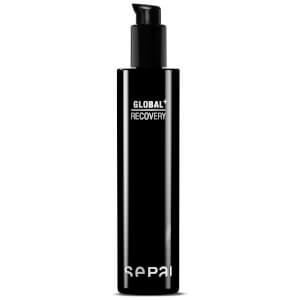
Sepai Global+ Recovery Moisturiser

Sepai Global+ Recovery Moisturiser

Efficacy100/100IrritancyHigh
Edit

Works for

2 of 2 advertised claims delivered

Anti-aging
10 ingredients credited for this claim
Strong support
What the product description says
“It has a rejuvenating and revitalising effect, recharging skin with energy while smoothing the appearance of lines and wrinkles for a softer, smoother-looking and more radiant visage.”
Source: Lookfantastic

This product can help reduce and prevent fine lines and wrinkles, improve skin elasticity and firmness because it contains adenosine.

These ingredients in the product can also be helpful, even though there is less evidence for their effectiveness: centella asiatica leaf extract, palmitoyl tripeptide-8, serine.

Keep in mind that it typically takes at least 6 weeks to notice any results because the changes that are needed to improve fine lines and elasticity happen in the deeper layers of the skin. No topical anti-aging product can “erase” wrinkles or fully reverse signs of aging.

AdenosineKey activeEffect: HighMight help improve cell turnover and reduce inflammation in skin. One study shows that the ingredients might be able to help reduce dynamic wrinkles (for example, in the corners of the eyes or on the forehead)~0.45–0.65%
Palmitoyl tripeptide-8Key activeEffect: Medium~0.4–0.6%
Centella asiatica leaf extractKey activeEffect: MediumA plant extract that has been shown to be able to reduce inflammation in skin, support restoration of skin barrier function, as well as support collagen production. It can be irritating to sensitive skin. Might be helpful in preventing stretch marks. It could, however, itself be irritating.~0.25–0.45%
SerineKey activeEffect: MediumAn amino-acid that helps to attract water to the upper layer of the skin. In combination with other amino-acids, might help to reduce fine lines and wrinkles~0.25–0.45%
Thermus thermophillus fermentEffect: LowMight be helpful in neutralising free radicals in skin and have some hydration properties~1.9–2.3%
Decarboxy carnosine hclEffect: LowMight be able to protect the skin from free radicals, but further evidence of effectiveness is needed~0.25–0.45%
Aloe barbadensis leaf juiceEffect: LowTraditionally used to treat sunburns, dermatitis and inflammation, but evidence for its effectiveness is lacking. The extract can contain humectants that help attract water into the skin~1.6–2%
NiacinamideUnder-dosedEffect: HighIs proven to be effective in reducing blemishes, evening out skin tone and helping to improve lines and wrinkles. It helps the skin to repair sun damage, calm down inflammation and keep maintain good levels of moisture. The concentration of about 2% is effective for supporting the skin barrier and evening out the skin tone. Concentration of 4-6% is better for helping with acne and balancing the sebum production~0.4–0.65%
Copper gluconateEffect: Low, below effective doseTypically used to stabilize the product formulations. It is a salt of polyhydroxy acid (PHA) and in larger concentrations, can help shed the dead cells from the skin surface revealing smoother skin. It can help attract water to the upper layer of the skin. Might to be helpful against acne and clogged pores. Could be helpful in neutralizing free radicals, but solid research is missing~0.25–0.45%
Zinc gluconateEffect: Low, below effective doseTypically used to stabilize the product formulations. It is a salt of a polyhydroxy acid (PHA) and in larger concentrations, can help shed the dead cells from the skin surface revealing smoother skin. It can help attract water to the upper layer of the skin. Might to be helpful against acne and clogged pores. Could be helpful in neutralizing free radicals, but solid research is missing. Due to the zinc content, might help calm down inflammation in skin~0.25–0.45%
Moisturizing
28 ingredients credited for this claim
Strong support
What the product description says
“Addresses all possible causes of skin ageing while providing long-lasting hydration and moisture.”
Source: Lookfantastic

This product can help improve hydration of the skin with the two types of ingredients.

The first type is called “humectants”:
these ingredients help attract water. When humectants are on the surface of the skin, they “pull in” the moisture from the outside environment, or from within deeper layers of the skin. The following ingredients in this product do the job: dextran, faex.

This product also contains ingredients called “occlusives”. They help reduce the speed with which our skin loses moisture to the outside environment. These ingredients also help soften the upper layer of the skin, so it feels less tight and nicer to the touch. The following ingredients in this product do the job: caprylic/capric triglyceride, argania spinosa kernel oil.

The following ingredients in this product are especially good for supporting the skin barrier and helping with the hydration level: palmitoyl tripeptide-8, panthenol

Caprylic/capric triglycerideKey active· Emollient, OcclusiveEffect: HighA good mix of fatty acids that forms a protective layer on the skin. Improves the shelf life of products. Derived from coconut and glycerin~5.8–7.1%
Saccharide isomerateKey active· HumectantEffect: HighHelps attract water to the upper layer of the skin~0.25–0.45%
SerineKey activeEffect: HighAn amino-acid that helps to attract water to the upper layer of the skin. In combination with other amino-acids, might help to reduce fine lines and wrinkles~0.25–0.45%
Sesamum indicum seed oilKey active· EmollientEffect: HighA good moisturizing plant oil. Due to the high linoleic acid content, it helps soften the upper layer of the skin, reduce water loss and support skin barrier function~1.4–1.7%
Sodium hyaluronateKey active· HumectantEffect: HighOne of the best moisturizing ingredients. Attracts water into the upper layer of the skin~0.35–0.65%
Superoxide dismutaseKey activeEffect: HighAn antioxidant enzyme that is naturally present in skin. It can help support skin barrier function and reduce inflammation in skin. It is used in topical medications for inflammatory skin conditions including atopic dermatitis (eczema) and psoriasis. There are three types of natural Superoxide Dismutase in human skin. The compound used in topical treatments and cosmetics are mimics of typically one of these natural variants~0.25–0.45%
DextranKey active· HumectantEffect: HighHelps attract water to the most upper layer of the skin. Derived from sugar~0.25–0.45%
FaexKey active· HumectantEffect: HighYeast extract. Helps to attract water to the upper layer of the skin~0.25–0.45%
GlycerinKey active· HumectantEffect: HighOne of the best moisturizing ingredients. Naturally present in skin. It attracts water to the upper layer of the skin working as a humectant~4.2–5.1%
Argania spinosa kernel oilKey active· EmollientEffect: HighAn emollient that helps soften the upper layer of the skin. Might have some weak anti-oxidant properties~0.9–1.15%
Imperata cylindrica root extractKey active· HumectantEffect: HighA plat extract that might help neutralize free radicals in skin and attract water to its upper layer~0.25–0.45%
Undaria pinnatifida extractKey activeEffect: HighA seaweed extract that helps attract water to the upper layer of the skin and might have an anti-oxidant effect~0.25–0.45%
Thermus thermophillus fermentKey active· HumectantEffect: HighMight be helpful in neutralising free radicals in skin and have some hydration properties~1.9–2.3%
SphingolipidsKey active· EmollientEffect: HighSphingolipids are a group of lipids with a common chemical structure. Some of them are naturally present in skin and can be converted to ceramides~0.25–0.5%
Palmitoyl tripeptide-8HeroEffect: High~0.4–0.6%
PanthenolHero· HumectantEffect: HighHelps attract water to the upper layer of the skin and can help improve skin barrier function~0.65–0.95%
AdenosineKey activeEffect: MediumMight help improve cell turnover and reduce inflammation in skin. One study shows that the ingredients might be able to help reduce dynamic wrinkles (for example, in the corners of the eyes or on the forehead)~0.45–0.65%
Glyceryl stearate seKey activeEffect: MediumUsed to stabilize the product formulations and works as an emollient~2.8–3.5%
Lactobacillus/soybean ferment extractKey activeEffect: MediumA fermentation product created by bacteria Lactobacillus out of soybean. The fermented product helps to attract water to the upper layer of the skin and has anti-bacterial properties. It might be helpful in calming down inflammation and could be helpful in evening out skin tone, but studies are lacking~0.25–0.45%
Magnesium aspartateKey activeEffect: MediumMight be helpful in restoring skin barrier function and calm down inflammation in skin~0.25–0.45%
PhospholipidsKey activeEffect: MediumEmollients that are naturaly present in skin. In addition, they help water and oil mix together in the product~0.25–0.45%
Aloe barbadensis leaf juice· HumectantEffect: LowTraditionally used to treat sunburns, dermatitis and inflammation, but evidence for its effectiveness is lacking. The extract can contain humectants that help attract water into the skin~1.6–2%
Calcium gluconate· HumectantEffect: LowHelps attract water to the upper layer of the skin and helps to improve appearance of the product~0.25–0.5%
Butylene glycol· HumectantEffect: LowUsed to create a nice product texture and help delivery of other ingredients. Might be somewhat helpful in attracting water to the upper layer of the skin~0.15–0.3%
Copper gluconateUnder-dosedEffect: HighTypically used to stabilize the product formulations. It is a salt of polyhydroxy acid (PHA) and in larger concentrations, can help shed the dead cells from the skin surface revealing smoother skin. It can help attract water to the upper layer of the skin. Might to be helpful against acne and clogged pores. Could be helpful in neutralizing free radicals, but solid research is missing~0.25–0.45%
NiacinamideUnder-dosedEffect: HighIs proven to be effective in reducing blemishes, evening out skin tone and helping to improve lines and wrinkles. It helps the skin to repair sun damage, calm down inflammation and keep maintain good levels of moisture. The concentration of about 2% is effective for supporting the skin barrier and evening out the skin tone. Concentration of 4-6% is better for helping with acne and balancing the sebum production~0.4–0.65%
Zinc gluconateUnder-dosedEffect: HighTypically used to stabilize the product formulations. It is a salt of a polyhydroxy acid (PHA) and in larger concentrations, can help shed the dead cells from the skin surface revealing smoother skin. It can help attract water to the upper layer of the skin. Might to be helpful against acne and clogged pores. Could be helpful in neutralizing free radicals, but solid research is missing. Due to the zinc content, might help calm down inflammation in skin~0.25–0.45%
Triticum vulgare germ extractUnder-dosedEffect: MediumPlant extract that might have moisturizing properties. Avoid if you suffer from wheat or gluten intolerance~0.25–0.5%
Anti-oxidation
Not advertised by the brand · 15 ingredients credited for this claim
Strong support

This product contains antioxidants (superoxide dismutase) that can help neutralize free radicals in skin. By doing so, they can lessen the damage the skin gets from the UV light (sun).

The following ingredients - decarboxy carnosine hcl, ginkgo biloba leaf extract, imperata cylindrica root extract also can have an antioxidant effect, but there is less evidence to confirm their effectiveness in skin.

Superoxide dismutaseKey activeEffect: HighAn antioxidant enzyme that is naturally present in skin. It can help support skin barrier function and reduce inflammation in skin. It is used in topical medications for inflammatory skin conditions including atopic dermatitis (eczema) and psoriasis. There are three types of natural Superoxide Dismutase in human skin. The compound used in topical treatments and cosmetics are mimics of typically one of these natural variants~0.25–0.45%
Ginkgo biloba leaf extractKey activeEffect: MediumA plant extract that might help neutralize free radicals and reduce inflammation in skin. It can be irritating~0.25–0.45%
Imperata cylindrica root extractKey activeEffect: MediumA plat extract that might help neutralize free radicals in skin and attract water to its upper layer~0.25–0.45%
Decarboxy carnosine hclKey activeEffect: MediumMight be able to protect the skin from free radicals, but further evidence of effectiveness is needed~0.25–0.45%
Viscum album leaf extractEffect: LowA plant extract that has anti-inflammatory and anti-bacterial properties and might help neutralize free radicals in skin, but solid research is lacking~0.2–0.4%
Thermus thermophillus fermentEffect: LowMight be helpful in neutralising free radicals in skin and have some hydration properties~1.9–2.3%
Vaccinium myrtillus fruit extractEffect: LowA plant extract that might help neutralize free radicals in skin, but research on its efficacy in skin is lacking~0.25–0.45%
Undaria pinnatifida extractEffect: LowA seaweed extract that helps attract water to the upper layer of the skin and might have an anti-oxidant effect~0.25–0.45%
AdenosineEffect: LowMight help improve cell turnover and reduce inflammation in skin. One study shows that the ingredients might be able to help reduce dynamic wrinkles (for example, in the corners of the eyes or on the forehead)~0.45–0.65%
Argania spinosa kernel oilEffect: LowAn emollient that helps soften the upper layer of the skin. Might have some weak anti-oxidant properties~0.9–1.15%
Zinc gluconateEffect: Low, below effective doseTypically used to stabilize the product formulations. It is a salt of a polyhydroxy acid (PHA) and in larger concentrations, can help shed the dead cells from the skin surface revealing smoother skin. It can help attract water to the upper layer of the skin. Might to be helpful against acne and clogged pores. Could be helpful in neutralizing free radicals, but solid research is missing. Due to the zinc content, might help calm down inflammation in skin~0.25–0.45%
Copper gluconateEffect: Low, below effective doseTypically used to stabilize the product formulations. It is a salt of polyhydroxy acid (PHA) and in larger concentrations, can help shed the dead cells from the skin surface revealing smoother skin. It can help attract water to the upper layer of the skin. Might to be helpful against acne and clogged pores. Could be helpful in neutralizing free radicals, but solid research is missing~0.25–0.45%
Tocopheryl acetateEffect: Low, below effective doseA more stable but less bio-available form of vitamin E compared to Tocopherol. Might help moisturize and protect the skin from free radicals, but mostly used in low concentrations to stabilize other ingredients.~0.25–0.5%
Triticum vulgare germ extractEffect: Low, below effective dosePlant extract that might have moisturizing properties. Avoid if you suffer from wheat or gluten intolerance~0.25–0.5%
Panax ginseng root extractEffect: Low, below effective doseA plant extract that might have some anti-inflammatory properties, but solid evidence is lacking. It can be irritating~0.25–0.5%

Can it cause trouble?

Irritancy
6 strong irritants: Rosa moschata oil, Citrus aurantium bergamia fruit extract + 4 more — patch-test recommended
High risk
We flagged 30 ingredients with irritancy potential. Severity depends on your sensitivity threshold; the table lists the worst offenders first.
IngredientFunctionIrritationEst. amount
Rosa moschata oil—High~1.1–1.3%est.
Panax ginseng root extractA plant extract that might have some anti-inflammatory properties, but solid evidence is lacking. It can be irritatingHigh~0.25–0.5%est.
Ginkgo biloba leaf extractA plant extract that might help neutralize free radicals and reduce inflammation in skin. It can be irritatingHigh~0.25–0.45%est.
Citrus nobilis fruit extract—High~0.25–0.45%est.
Citrus grandis fruit extract—High~0.2–0.35%est.
Citrus aurantium dulcis fruit extractA plant extract that is used as a fragrance. Can be irritating and lead to photosensitivityHigh~0.25–0.45%est.
Benzyl alcoholA preservative. Can be used to mask unpleasant smell. Can be irritatingHigh~0.15–0.25%est.
ParfumAn aromatic blend of unspecified and possibly irritating ingredientsHigh~0.1–0.25%est.
Caprylic/capric triglycerideA good mix of fatty acids that forms a protective layer on the skin. Improves the shelf life of products. Derived from coconut and glycerinMedium~5.8–7.1%est.
Thermus thermophillus fermentMight be helpful in neutralising free radicals in skin and have some hydration propertiesMedium~1.9–2.3%est.
Aloe barbadensis leaf juiceTraditionally used to treat sunburns, dermatitis and inflammation, but evidence for its effectiveness is lacking. The extract can contain humectants that help attract water into the skinMedium~1.6–2%est.
Argania spinosa kernel oilAn emollient that helps soften the upper layer of the skin. Might have some weak anti-oxidant propertiesMedium~0.9–1.15%est.
Potassium cetyl phosphateHelps oil and water mix togetherMedium~0.55–0.8%est.
Imperata cylindrica root extractA plat extract that might help neutralize free radicals in skin and attract water to its upper layerMedium~0.25–0.45%est.
Vaccinium myrtillus fruit extractA plant extract that might help neutralize free radicals in skin, but research on its efficacy in skin is lackingMedium~0.25–0.45%est.
Viscum album leaf extractA plant extract that has anti-inflammatory and anti-bacterial properties and might help neutralize free radicals in skin, but solid research is lackingMedium~0.2–0.4%est.
Centella asiatica leaf extractA plant extract that has been shown to be able to reduce inflammation in skin, support restoration of skin barrier function, as well as support collagen production. It can be irritating to sensitive skin. Might be helpful in preventing stretch marks. It could, however, itself be irritating.Medium~0.25–0.45%est.
Copper gluconateTypically used to stabilize the product formulations. It is a salt of polyhydroxy acid (PHA) and in larger concentrations, can help shed the dead cells from the skin surface revealing smoother skin. It can help attract water to the upper layer of the skin. Might to be helpful against acne and clogged pores. Could be helpful in neutralizing free radicals, but solid research is missingMedium~0.25–0.45%est.
Zinc gluconateTypically used to stabilize the product formulations. It is a salt of a polyhydroxy acid (PHA) and in larger concentrations, can help shed the dead cells from the skin surface revealing smoother skin. It can help attract water to the upper layer of the skin. Might to be helpful against acne and clogged pores. Could be helpful in neutralizing free radicals, but solid research is missing. Due to the zinc content, might help calm down inflammation in skinMedium~0.25–0.45%est.
Acacia senegal gumHelps mask the small of other ingredients and improve the product textureMedium~0.25–0.5%est.
Triticum vulgare germ extractPlant extract that might have moisturizing properties. Avoid if you suffer from wheat or gluten intoleranceMedium~0.25–0.5%est.
Tocopheryl acetateA more stable but less bio-available form of vitamin E compared to Tocopherol. Might help moisturize and protect the skin from free radicals, but mostly used in low concentrations to stabilize other ingredients.Medium~0.25–0.5%est.
Potassium sorbateA preservativeMedium~0.25–0.45%est.
Sodium citrateHelps to control the skin's pH level. Maintains the skin's natural film of amino-lactic acids and oils. Helps to preserve productsMedium~0.25–0.4%est.
Dehydroacetic acidA preservativeMedium~0.2–0.4%est.
Benzoic acidA preservativeMedium~0.25–0.45%est.
Sorbic acidA preservativeMedium~0.2–0.4%est.
Citric acidCan work as an exfoliant but is typically used to adjust the product pHMedium~0.2–0.35%est.
EthylhexylglycerinA preservativeMedium~0.15–0.25%est.
Comedogenic
2 ingredients rated 2 or more on the 0–5 pore-clogging scale
2 flagged
These ingredients have a comedogenic rating of 2 or more on a 0–5 scale; the table shows each one's rating. In leave-on products they can clog pores in acne-prone skin.
IngredientFunctionRatingEst. amount
Triticum vulgare germ extractPlant extract that might have moisturizing properties. Avoid if you suffer from wheat or gluten intolerance3/5~0.25–0.5%est.
Glyceryl stearate seUsed to stabilize the product formulations and works as an emollient2/5~2.8–3.5%est.
Edit

User reviews

Would you recommend?
No community reviews yet.

Be the first — your take helps the next person decide.

Write a review · ~30s

Ingredients

Filter by role to see what each ingredient is doing.

Water~45–55%
Formula
Irritation risk
Low

Plain old water

More about Water
Caprylic/capric triglyceride~5.8–7.1%
Key activeIrritant · medium
Irritation risk
Medium
Works for
Moisturizing

A good mix of fatty acids that forms a protective layer on the skin. Improves the shelf life of products. Derived from coconut and glycerin

More about Caprylic/capric triglyceride
Glycerin~4.2–5.1%
Key active
Irritation risk
Low
Works for
Moisturizing

One of the best moisturizing ingredients. Naturally present in skin. It attracts water to the upper layer of the skin working as a humectant

More about Glycerin
Glyceryl stearate se~2.8–3.5%
Key activeComedogenic 2/5
Irritation risk
Low
Comedogenicity
2/5
Works for
CleansingMoisturizing

Used to stabilize the product formulations and works as an emollient

More about Glyceryl stearate se
Propanediol~2.3–2.9%
Formula
Irritation risk
Low

Acts as a solvent for other ingredients. Speeds up the absorption of other ingredients into the skin

More about Propanediol
Thermus thermophillus ferment~1.9–2.3%
Key activeIrritant · medium
Irritation risk
Medium
Works for
MoisturizingAnti-oxidationAnti-aging

Might be helpful in neutralising free radicals in skin and have some hydration properties

More about Thermus thermophillus ferment
Aloe barbadensis leaf juice~1.6–2%
Irritant · medium
Irritation risk
Medium
Works for
MoisturizingAntibacterialReduces irritationReduces rednessAnti-inflammatoryAnti-blemishAnti-aging

Traditionally used to treat sunburns, dermatitis and inflammation, but evidence for its effectiveness is lacking. The extract can contain humectants that help attract water into the skin

More about Aloe barbadensis leaf juice
Sesamum indicum seed oil~1.4–1.7%
Key active
Irritation risk
Low
Works for
Moisturizing

A good moisturizing plant oil. Due to the high linoleic acid content, it helps soften the upper layer of the skin, reduce water loss and support skin barrier function

More about Sesamum indicum seed oil
Rosa moschata oil~1.1–1.3%
Irritant · high
Argania spinosa kernel oil~0.9–1.15%
Key activeIrritant · medium
Irritation risk
Medium
Works for
MoisturizingAnti-oxidation

An emollient that helps soften the upper layer of the skin. Might have some weak anti-oxidant properties

More about Argania spinosa kernel oil
Panthenol~0.65–0.95%
Hero · Moisturizing
Irritation risk
Low
Works for
MoisturizingReduces rednessReduces irritation

Helps attract water to the upper layer of the skin and can help improve skin barrier function

More about Panthenol
Potassium cetyl phosphate~0.55–0.8%
Irritant · medium
Irritation risk
Medium
Works for
Cleansing

Helps oil and water mix together

More about Potassium cetyl phosphate
Adenosine~0.45–0.65%
Key active
Irritation risk
Low
Works for
Anti-agingMoisturizingAnti-oxidation

Might help improve cell turnover and reduce inflammation in skin. One study shows that the ingredients might be able to help reduce dynamic wrinkles (for example, in the corners of the eyes or on the forehead)

More about Adenosine
Palmitoyl tripeptide-8~0.4–0.6%
Hero · Moisturizing
Irritation risk
Low
Works for
MoisturizingAnti-aging
More about Palmitoyl tripeptide-8
Niacinamide~0.4–0.65%
Under-dosed
Irritation risk
Low
Works for
Anti-agingEvens skin toneMoisturizingAnti-blemishReduces irritationAntibacterialReduces rednessAnti-inflammatory

Is proven to be effective in reducing blemishes, evening out skin tone and helping to improve lines and wrinkles. It helps the skin to repair sun damage, calm down inflammation and keep maintain good levels of moisture. The concentration of about 2% is effective for supporting the skin barrier and evening out the skin tone. Concentration of 4-6% is better for helping with acne and balancing the sebum production

More about Niacinamide
Tuber magnatum extract~0.35–0.65%
Formula
Sodium hyaluronate~0.35–0.65%
Key active
Irritation risk
Low
Works for
Moisturizing

One of the best moisturizing ingredients. Attracts water into the upper layer of the skin

More about Sodium hyaluronate
Hydrolyzed manihot esculenta tuber extract~0.3–0.6%
Formula
Hydrolyzed elastin~0.3–0.6%
Formula
Marrubium vulgare extract~0.25–0.45%
Formula
Decarboxy carnosine hcl~0.25–0.45%
Key active
Irritation risk
Low
Works for
Anti-oxidationAnti-aging

Might be able to protect the skin from free radicals, but further evidence of effectiveness is needed

More about Decarboxy carnosine hcl
Lactobacillus/soybean ferment extract~0.25–0.45%
Key active
Irritation risk
Low
Works for
Moisturizing

A fermentation product created by bacteria Lactobacillus out of soybean. The fermented product helps to attract water to the upper layer of the skin and has anti-bacterial properties. It might be helpful in calming down inflammation and could be helpful in evening out skin tone, but studies are lacking

More about Lactobacillus/soybean ferment extract
Saccharide isomerate~0.25–0.45%
Key active
Irritation risk
Low
Works for
Moisturizing

Helps attract water to the upper layer of the skin

More about Saccharide isomerate
Crocus sativus flower extract~0.25–0.45%
Formula
Panax ginseng root extract~0.25–0.5%
Irritant · high
Irritation risk
High
Works for
Anti-inflammatoryAnti-oxidation

A plant extract that might have some anti-inflammatory properties, but solid evidence is lacking. It can be irritating

More about Panax ginseng root extract
Citrus aurantium bergamia fruit extract~0.25–0.45%
Irritant · high
Ginkgo biloba leaf extract~0.25–0.45%
Key activeIrritant · high
Irritation risk
High
Works for
Anti-oxidationAnti-blemishAntibacterialAnti-inflammatory

A plant extract that might help neutralize free radicals and reduce inflammation in skin. It can be irritating

More about Ginkgo biloba leaf extract
Undaria pinnatifida extract~0.25–0.45%
Key active
Irritation risk
Low
Works for
MoisturizingAnti-oxidation

A seaweed extract that helps attract water to the upper layer of the skin and might have an anti-oxidant effect

More about Undaria pinnatifida extract
Imperata cylindrica root extract~0.25–0.45%
Key activeIrritant · medium
Irritation risk
Medium
Works for
MoisturizingAnti-oxidationAnti-inflammatory

A plat extract that might help neutralize free radicals in skin and attract water to its upper layer

More about Imperata cylindrica root extract
Sphingolipids~0.25–0.5%
Key active
Irritation risk
Low
Works for
Moisturizing

Sphingolipids are a group of lipids with a common chemical structure. Some of them are naturally present in skin and can be converted to ceramides

More about Sphingolipids
Citrus nobilis fruit extract~0.25–0.45%
Irritant · high
Phospholipids~0.25–0.45%
Key active
Irritation risk
Low
Works for
Moisturizing

Emollients that are naturaly present in skin. In addition, they help water and oil mix together in the product

More about Phospholipids
Vaccinium myrtillus fruit extract~0.25–0.45%
Irritant · medium
Irritation risk
Medium
Works for
Anti-oxidation

A plant extract that might help neutralize free radicals in skin, but research on its efficacy in skin is lacking

More about Vaccinium myrtillus fruit extract
Superoxide dismutase~0.25–0.45%
Key active
Irritation risk
Low
Works for
Anti-oxidationMoisturizingAnti-inflammatory

An antioxidant enzyme that is naturally present in skin. It can help support skin barrier function and reduce inflammation in skin. It is used in topical medications for inflammatory skin conditions including atopic dermatitis (eczema) and psoriasis. There are three types of natural Superoxide Dismutase in human skin. The compound used in topical treatments and cosmetics are mimics of typically one of these natural variants

More about Superoxide dismutase
Viscum album leaf extract~0.2–0.4%
Irritant · medium
Irritation risk
Medium
Works for
AntibacterialAnti-oxidationAnti-inflammatory

A plant extract that has anti-inflammatory and anti-bacterial properties and might help neutralize free radicals in skin, but solid research is lacking

More about Viscum album leaf extract
Magnesium aspartate~0.25–0.45%
Key active
Irritation risk
Low
Works for
Anti-inflammatoryMoisturizing

Might be helpful in restoring skin barrier function and calm down inflammation in skin

More about Magnesium aspartate
Centella asiatica leaf extract~0.25–0.45%
Key activeIrritant · medium
Irritation risk
Medium
Works for
Anti-inflammatoryReduces irritationReduces rednessAnti-agingAnti-blemish

A plant extract that has been shown to be able to reduce inflammation in skin, support restoration of skin barrier function, as well as support collagen production. It can be irritating to sensitive skin. Might be helpful in preventing stretch marks. It could, however, itself be irritating.

More about Centella asiatica leaf extract
Copper gluconate~0.25–0.45%
Under-dosedIrritant · medium
Irritation risk
Medium
Works for
MoisturizingEvens skin toneAnti-blemishExfoliationAnti-oxidationAnti-aging

Typically used to stabilize the product formulations. It is a salt of polyhydroxy acid (PHA) and in larger concentrations, can help shed the dead cells from the skin surface revealing smoother skin. It can help attract water to the upper layer of the skin. Might to be helpful against acne and clogged pores. Could be helpful in neutralizing free radicals, but solid research is missing

More about Copper gluconate
Citrus grandis fruit extract~0.2–0.35%
Irritant · high
Zinc gluconate~0.25–0.45%
Under-dosedIrritant · medium
Irritation risk
Medium
Works for
MoisturizingAnti-inflammatoryAnti-agingExfoliationAnti-oxidationAnti-blemishEvens skin tone

Typically used to stabilize the product formulations. It is a salt of a polyhydroxy acid (PHA) and in larger concentrations, can help shed the dead cells from the skin surface revealing smoother skin. It can help attract water to the upper layer of the skin. Might to be helpful against acne and clogged pores. Could be helpful in neutralizing free radicals, but solid research is missing. Due to the zinc content, might help calm down inflammation in skin

More about Zinc gluconate
Hydrolyzed candida saitoana extract~0.25–0.45%
Formula
Faex~0.25–0.45%
Key active
Irritation risk
Low
Works for
Moisturizing

Yeast extract. Helps to attract water to the upper layer of the skin

More about Faex
Acacia senegal gum~0.25–0.5%
Irritant · medium
Irritation risk
Medium

Helps mask the small of other ingredients and improve the product texture

More about Acacia senegal gum
Serine~0.25–0.45%
Key active
Irritation risk
Low
Works for
MoisturizingAnti-aging

An amino-acid that helps to attract water to the upper layer of the skin. In combination with other amino-acids, might help to reduce fine lines and wrinkles

More about Serine
Triticum vulgare germ extract~0.25–0.5%
Under-dosedComedogenic 3/5Irritant · medium
Irritation risk
Medium
Comedogenicity
3/5
Works for
MoisturizingAnti-oxidation

Plant extract that might have moisturizing properties. Avoid if you suffer from wheat or gluten intolerance

More about Triticum vulgare germ extract
Citrus aurantium dulcis fruit extract~0.25–0.45%
Irritant · high
Irritation risk
High

A plant extract that is used as a fragrance. Can be irritating and lead to photosensitivity

More about Citrus aurantium dulcis fruit extract
Xanthan gum~0.25–0.5%
Formula
Irritation risk
Low
Works for
Cleansing

Used to create a thicker product consistency

More about Xanthan gum
Dextran~0.25–0.45%
Key active
Irritation risk
Low
Works for
Moisturizing

Helps attract water to the most upper layer of the skin. Derived from sugar

More about Dextran
Tocopheryl acetate~0.25–0.5%
Irritant · medium
Irritation risk
Medium
Works for
Anti-oxidation

A more stable but less bio-available form of vitamin E compared to Tocopherol. Might help moisturize and protect the skin from free radicals, but mostly used in low concentrations to stabilize other ingredients.

More about Tocopheryl acetate
Calcium gluconate~0.25–0.5%
Formula
Irritation risk
Low
Works for
Moisturizing

Helps attract water to the upper layer of the skin and helps to improve appearance of the product

More about Calcium gluconate
Potassium sorbate~0.25–0.45%
Irritant · medium
Irritation risk
Medium

A preservative

More about Potassium sorbate
Sodium hydroxide~0.25–0.45%
Formula
Irritation risk
Low

Used to adjust the product's pH

More about Sodium hydroxide
Sodium benzoate~0.25–0.45%
Formula
Irritation risk
Low

A preservative

More about Sodium benzoate
Sodium citrate~0.25–0.4%
Irritant · medium
Irritation risk
Medium

Helps to control the skin's pH level. Maintains the skin's natural film of amino-lactic acids and oils. Helps to preserve products

More about Sodium citrate
Dehydroacetic acid~0.2–0.4%
Irritant · medium
Irritation risk
Medium

A preservative

More about Dehydroacetic acid
Benzoic acid~0.25–0.45%
Irritant · medium
Irritation risk
Medium

A preservative

More about Benzoic acid
Sorbic acid~0.2–0.4%
Irritant · medium
Irritation risk
Medium

A preservative

More about Sorbic acid
Citric acid~0.2–0.35%
Irritant · medium
Irritation risk
Medium

Can work as an exfoliant but is typically used to adjust the product pH

More about Citric acid
Benzyl alcohol~0.15–0.25%
Irritant · high
Irritation risk
High

A preservative. Can be used to mask unpleasant smell. Can be irritating

More about Benzyl alcohol
Butylene glycol~0.15–0.3%
Formula
Irritation risk
Low
Works for
Moisturizing

Used to create a nice product texture and help delivery of other ingredients. Might be somewhat helpful in attracting water to the upper layer of the skin

More about Butylene glycol
Ethylhexylglycerin~0.15–0.25%
Irritant · medium
Irritation risk
Medium

A preservative

More about Ethylhexylglycerin
Phenoxyethanol~0.15–0.3%
Formula
Irritation risk
Low

A preservative. It helps prevent bacterial growth in cosmetic products

More about Phenoxyethanol
Parfum~0.1–0.25%
Irritant · high
Irritation risk
High

An aromatic blend of unspecified and possibly irritating ingredients

More about Parfum
Mica~0.1–0.2%
Formula
Irritation risk
Low

Creates an illusion of smoother and more radiant skin tone. Adds shimmer to the skin by reflecting light

More about Mica
Titanium dioxide~0.1–0.2%
Formula
Irritation risk
Low
Works for
Sun protection

Works as a UV filter when used in high concentrations. It is photostable and is effective mostly against the UVB light, with some protection in the UVA range. In small concentrations, used for its ability to improve the color of cosmetic products. Is usually well tolerated by the skin

More about Titanium dioxide
Ingredient list view

Water, Caprylic/capric triglyceride, Glycerin, Glyceryl stearate se, Propanediol, Thermus thermophillus ferment, Aloe barbadensis leaf juice, Sesamum indicum seed oil, Rosa moschata oil, Argania spinosa kernel oil, Panthenol, Potassium cetyl phosphate, Adenosine, Palmitoyl tripeptide-8, Niacinamide, Tuber magnatum extract, Sodium hyaluronate, Hydrolyzed manihot esculenta tuber extract, Hydrolyzed elastin, Marrubium vulgare extract, Decarboxy carnosine hcl, Lactobacillus/soybean ferment extract, Saccharide isomerate, Crocus sativus flower extract, Panax ginseng root extract, Citrus aurantium bergamia fruit extract, Ginkgo biloba leaf extract, Undaria pinnatifida extract, Imperata cylindrica root extract, Sphingolipids, Citrus nobilis fruit extract, Phospholipids, Vaccinium myrtillus fruit extract, Superoxide dismutase, Viscum album leaf extract, Magnesium aspartate, Centella asiatica leaf extract, Copper gluconate, Citrus grandis fruit extract, Zinc gluconate, Hydrolyzed candida saitoana extract, Faex, Acacia senegal gum, Serine, Triticum vulgare germ extract, Citrus aurantium dulcis fruit extract, Xanthan gum, Dextran, Tocopheryl acetate, Calcium gluconate, Potassium sorbate, Sodium hydroxide, Sodium benzoate, Sodium citrate, Dehydroacetic acid, Benzoic acid, Sorbic acid, Citric acid, Benzyl alcohol, Butylene glycol, Ethylhexylglycerin, Phenoxyethanol, Parfum, Mica, Titanium dioxide

Compare prices

Retailers ranked by price — lowest first.

Lookfantastic
≈ $176.82
Buy

Affiliate links · prices updated regularly

Worth comparing, line by line.

Match % combines shared ingredients, the first five ingredients, shared actives and hero ingredients, irritancy (lower counts in the alternative's favour), texture and body area. Only products in the same routine step are compared.

Side-by-side comparison of this product against its closest alternatives
SepaiGlobal+ Recovery MoisturiserYOUR PRODUCTNatureONEMelaone Whitening Creamthe Torriden StoreCellmazing Firming Cream 60mlTOSOWOONGCica Snail Cream
Match—82%82%82%
Price$176.62$20.15−$156.47$42.97−$133.65$16.40−$160.22
Shared key ingredients—7 of 247 of 247 of 24
Key difference—BetaineHexapeptide-2Copper Tripeptide-1
Irritancy High Medium Medium Medium
Drying alcohol————
View product Shop Shop Shop
Cheaper alternatives? See how this stacks up against similar formulas.
We compare ingredient profiles across our catalog — pick the closest match for your budget.
Open dupe finder

Product summary

Judging from the ingredient list, "Sepai - Global+ Recovery Moisturiser" works well for improving skin hydration The formulation is based on a combination of good humectants and emollients. Both are needed to increase the skin hydration level. Humectants in this product (panthenol, dextran, faex, glycerin and imperata cylindrica root extract) help to increase the water content in the upper layer of the skin. (These ingredients do so by "capturing" water molecules from the outside air or from within the deeper layers of the skin). Emollients in this formulation (sesamum indicum seed oil, sphingolipids and caprylic/capric triglyceride) help to reduce the moisture loss from the skin. They also soften the skin surface and relieve the feeling of dryness and tightness.

Ingredient callouts

  • We like that this moisturizer contains peptides (palmitoyl tripeptide-8 0.40% - 0.60%). There are many different kind of peptides and they are naturally present in our skin. They all are a combination of amino-acids. Some of them work as natural anti-biotics, promote wound-healing and production of collagen. The science is still not settled on how effective peptides in skincare are, but it is very likely that they have a benefit. Peptides might help restore the skin barrier and fight the signs of aging. At the very least, peptides work as humectants: they attract water to the upper layer of the skin and improve its hydration.
  • Adenosine 0.45% - 0.65% in this moisturizer adds an anti-aging benefit. Adenosine is a compound that in involved in many biological processes inside the skin cells. According one high-quality clinical trial, topical adenosine in low concentrations can help improve "deep wrinkles" - the wrinkles that appear with age in places where our faces are most dynamic (for example, on the forehead or in the corners of the eyes).
  • This formulation also includes panthenol (pro-vitamin B5) at about 0.65% - 0.95% concentration. In this concentration, panthenol works effectively to improve the skin barrier and reduce inflammation.

Irritation risk

This moisturizer contains a bunch of common irritants, including ingredients that do not provide any known benefit for the skin. It might not be the best choice if your skin is sensitive. We assess the overall irritancy of this moisturizer to be high. For a detailed overview of all potential irritants: click here

You can see the detailed formula review with the breakdown of all actives in the product and the full ingredient list with estimated concentrations in the tables below.

Price

The product retails for 230.50$ in the United States, for 292.30CA$ in Canada and from 133.60£ up to 167.00£ in the United Kingdom.

For a detailed price comparison: click here.

Sources cited in this review

Every concentration estimate and effectiveness label is anchored to one of these 43 studies and safety reviews.

  1. 1
  2. 2
  3. 3
  4. 4
  5. 5
  6. 6
Sepai Global+ Recovery Moisturiser
SepaiGlobal+ Recovery Moisturiser

Affiliate links · As an Amazon Associate, WIMJ earns from qualifying purchases.

As an Amazon Associate, WIMJ earns from qualifying purchases.