Works for
1 of 1 advertised claim delivered
Moisturizing16 ingredients credited for this claimStrong support
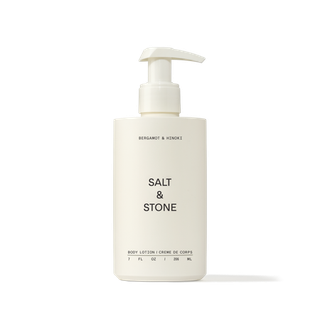
“A fast-absorbing, daily body lotion infused with seaweed extracts and niacinamide, this deeply hydrating lotion delivers nourishing ingredients to the skin quickly, drying down to a silky, soft finish while helping to restore the drying effects of outdoor activity, wind, sun and sea.”
This product can help improve hydration of the skin with the two types of ingredients.
The first type is called “humectants”:
these ingredients help attract water.
When humectants are on the surface of the skin, they “pull in” the moisture from the outside environment, or from
within deeper layers of the skin. The following ingredients in this product do the job:
algae extract, glycerin.
This product also contains ingredients called “occlusives”. They help reduce the speed with which our skin loses moisture to the outside environment. These ingredients also help soften the upper layer of the skin, so it feels less tight and nicer to the touch. The following ingredients in this product do the job: caprylic/capric triglyceride, chondrus crispus extract.
The following ingredients in this product are especially good for supporting the skin barrier and helping with the hydration level: niacinamide
Anti-agingNot advertised by the brand · 6 ingredients credited for this claimStrong support
This product can help reduce and prevent fine lines and wrinkles, improve skin elasticity and firmness because it contains niacinamide.
Keep in mind that it typically takes at least 6 weeks to notice any results because the changes that are needed to improve fine lines and elasticity happen in the deeper layers of the skin. No topical anti-aging product can “erase” wrinkles or fully reverse signs of aging.
Evens skin toneNot advertised by the brand · 2 ingredients credited for this claimStrong support
This product can help reduce hypepigmentation and even out the skin tone because it contains the following effective ingredients: niacinamide
Keep in mind that you would need to apply any topical skincare targetted at hypigmentation consistently for a couple of months to get a result. No topical skincare product can help get rid of hyperpigmentation (including post-acne marks and age spots) instantly.
Anti-blemishNot advertised by the brand · 4 ingredients credited for this claimStrong support
This product can help reduce breakouts and clogged pores because it contains the following ingredient: niacinamide. This ingredient is used for treating acne and can have a noticeable effect.
Can it cause trouble?
Irritancy6 strong irritants: Parfum, Rosmarinus officinalis leaf extract + 4 more — patch-test recommendedHigh risk
Comedogenic8 ingredients rated 2 or more on the 0–5 pore-clogging scale8 flagged


User reviews
Be the first — your take helps the next person decide.
Ingredients
Filter by role to see what each ingredient is doing.
Water~45–55%
Caprylic/capric triglyceride~6.6–8.1%
- Irritation risk
- Medium
A good mix of fatty acids that forms a protective layer on the skin. Improves the shelf life of products. Derived from coconut and glycerin
More about Caprylic/capric triglycerideGlycerin~4.1–5%
- Irritation risk
- Low
One of the best moisturizing ingredients. Naturally present in skin. It attracts water to the upper layer of the skin working as a humectant
More about GlycerinIsopropyl myristate~3.2–4%
- Irritation risk
- Low
- Comedogenicity
- 3/5
An emollient that helps soften the skin. Could be comedogenic
More about Isopropyl myristateCetearyl olivate~2.4–2.9%
Niacinamide~2–2.4%
- Irritation risk
- Low
Is proven to be effective in reducing blemishes, evening out skin tone and helping to improve lines and wrinkles. It helps the skin to repair sun damage, calm down inflammation and keep maintain good levels of moisture. The concentration of about 2% is effective for supporting the skin barrier and evening out the skin tone. Concentration of 4-6% is better for helping with acne and balancing the sebum production
More about NiacinamideShea butter glycerides~1.7–2%
Sorbitan olivate~1.4–1.7%
Cetearyl alcohol~1.3–1.5%
- Irritation risk
- Low
- Comedogenicity
- 2/5
A non-drying alcohol. Works as an emollient. Helps water and oil mix together and creates a nice product texture
More about Cetearyl alcoholAlgae extract~1.1–1.3%
- Irritation risk
- Low
- Comedogenicity
- 3/5
Plant extract that helps the skin to attract water and make it more smooth for touch. Also shows promise of anti-aging properties, but research is not extensive yet
More about Algae extractSpirulina maxima extract~0.7–1%
- Irritation risk
- Low
- Comedogenicity
- 3/5
Laminaria digitata extract~0.55–0.85%
- Irritation risk
- Low
- Comedogenicity
- 3/5
Seaweed extract that helps the skin to attract water and make it more smooth for touch. Also shows promise of anti-aging properties, but good research is lacking at the moment
More about Laminaria digitata extractChondrus crispus extract~0.55–0.8%
- Irritation risk
- Low
- Comedogenicity
- 3/5
Red algae extract that helps attract water to the upper layer of the skin and create a nicer product consistency
More about Chondrus crispus extractMacrocystis pyrifera extract~0.45–0.7%
- Irritation risk
- Low
- Comedogenicity
- 3/5
Porphyra umbilicalis extract~0.45–0.65%
- Irritation risk
- Low
- Comedogenicity
- 3/5
An algae extract that can help attract water to the upper layer of the skin. Might have an anti-oxidant effect in skin but evidence is lacking
More about Porphyra umbilicalis extractSimmondsia chinensis seed oil~0.5–0.75%
- Irritation risk
- Medium
Softens the upper layer of skin and helps restore the healthy skin barrier. Has shown to help calm down inflammation in skin. It is a stable oil, meaning that it retains its properties even when exposed to air.
More about Simmondsia chinensis seed oilCarthamus tinctorius seed oil~0.45–0.7%
- Irritation risk
- Low
An emollient that helps soften the skin and might help calm down inflammation
More about Carthamus tinctorius seed oilPolyacrylate crosspolymer-6~0.35–0.65%
- Irritation risk
- Low
Sclerocarya birrea seed oil~0.35–0.6%
- Irritation risk
- Medium
An emollient that helps to soften the skin. It has a high contetn of oleic acid that might weaken the skin barrier. Might have some anti-oxidant properties. It might be somewhat helpful against hyperpigmentation.
More about Sclerocarya birrea seed oilTocopherol~0.3–0.55%
- Irritation risk
- Low
Pure form of vitamin E. Can help moisturise and protect the skin from free radicals. Often used to help stabilise other ingredients or the formula itself
More about TocopherolParfum~0.25–0.45%
- Irritation risk
- High
An aromatic blend of unspecified and possibly irritating ingredients
More about ParfumTetrasodium glutamate diacetate~0.25–0.5%
- Irritation risk
- Low
Helps stabilize the product formulation
More about Tetrasodium glutamate diacetateSodium ascorbyl phosphate~0.25–0.45%
- Irritation risk
- Medium
A stable derivative of vitamin C. It is oil-soluble which means it is more likely to penetrate the skin compared to the pure form of vitamin C (which is water-soluble), but it is less bio-available and is way less effective in stimulating collagen and reducing wrinkles compared to the pure form of vitamin C (L-ascorbic acid) and its other derivatives (for example, magnesium ascorbyl phosphate). At the same time, this vitamin C derivative has been shown in studies to be effective in reducing acne, blemishes and clogged pores. It is less irritating then the pure form of vitamin C
More about Sodium ascorbyl phosphateOryza sativa bran extract~0.2–0.4%
Helianthus annuus extract~0.25–0.45%
- Irritation risk
- Low
Helps soften the upper layer of the skin
More about Helianthus annuus extractRosmarinus officinalis leaf extract~0.2–0.35%
- Irritation risk
- High
Can be helpful in reducing inflammation in skin, including inflamed acne. It can be irritating
More about Rosmarinus officinalis leaf extractCamellia sinensis leaf extract~0.2–0.4%
- Irritation risk
- Low
Can contain potent anti-oxidant compounds (abbreviated ECG, GCG, EGC, and EGCG) that might help protect the skin from free radicals. Can help calm down inflammation and has some anti-bacterial properties. Unfortunately, these antioxidants are unstable and lose their effectiveness very quickly in products. The concentration of the antioxidant compounds in the extract also tends to be low to be effective in topical formulation
More about Camellia sinensis leaf extractPhenoxyethanol~0.2–0.35%
- Irritation risk
- Low
A preservative. It helps prevent bacterial growth in cosmetic products
More about PhenoxyethanolCaprylyl glycol~0.2–0.4%
- Irritation risk
- Medium
Helps preserve products and creates a nice product texture
More about Caprylyl glycolSodium hydroxide~0.15–0.3%
Citric acid~0.15–0.25%
- Irritation risk
- Medium
Can work as an exfoliant but is typically used to adjust the product pH
More about Citric acidBenzyl benzoate~0.15–0.25%
- Irritation risk
- High
Fragrance with sweet balsamic smell. Help to preserve products and dissolve other ingredients. Could trigger allergic reactions and be irritating
More about Benzyl benzoateCitral~0.1–0.2%
Limonene~0.1–0.15%
- Irritation risk
- High
A common frangrance that can easily irritate skin, especially if exposed to air, light or heat
More about LimoneneLinalool~0.05–0.1%
Ingredient list view
Water, Caprylic/capric triglyceride, Glycerin, Isopropyl myristate, Cetearyl olivate, Niacinamide, Shea butter glycerides, Sorbitan olivate, Cetearyl alcohol, Algae extract, Spirulina maxima extract, Laminaria digitata extract, Chondrus crispus extract, Macrocystis pyrifera extract, Porphyra umbilicalis extract, Simmondsia chinensis seed oil, Carthamus tinctorius seed oil, Polyacrylate crosspolymer-6, Sclerocarya birrea seed oil, Tocopherol, Parfum, Tetrasodium glutamate diacetate, Sodium ascorbyl phosphate, Oryza sativa bran extract, Helianthus annuus extract, Rosmarinus officinalis leaf extract, Camellia sinensis leaf extract, Phenoxyethanol, Caprylyl glycol, Sodium hydroxide, Citric acid, Benzyl benzoate, Citral, Limonene, Linalool
Compare prices
Retailers ranked by price — lowest first.

Worth comparing, line by line.
Match % combines shared ingredients, the first five ingredients, shared actives and hero ingredients, irritancy (lower counts in the alternative's favour), texture and body area. Only products in the same routine step are compared.
| Salt & StoneBody LotionYOUR PRODUCT | NécessaireThe Body Lotion | VaselineClinical Care Aging Skin Rescue Body Lotion | EltaMDMoisture Rich Body Crème | |
|---|---|---|---|---|
| Match | — | 90% | 86% | 86% |
| Price | $32.00 | $15.00−$17.00 | $6.99−$25.01 | $10.50−$21.50 |
| Shared key ingredients | — | 4 of 12 | 2 of 12 | 3 of 12 |
| Key difference | — | Palmitoyl Dipeptide-5 Diaminobutyroyl Hydroxythreonine | Petrolatum | Anhydroxylitol |
| Irritancy | High | Low | Medium | Medium |
| Drying alcohol | — | — | — | — |
| View product | Shop | Shop | Shop |


Product summary
Judging from the ingredient list, "Salt & Stone - Body Lotion" works well for improving skin hydration This moisturizer uses a good combo of humectants and emollients. These both types of ingredients are essentials for improving the skin hydration and keeping the skin barrier healthy. Algae extract, glycerin and caprylyl glycol in this product (humectants) attract water molecules to the upper layer of the skin (the water comes from the outside air or from the deeper layers of the skin if the air is dry). Algae extract, carthamus tinctorius seed oil, helianthus annuus extract, isopropyl myristate and caprylic/capric triglyceride in this product help decrease the water evoporation from the skin, so that it stays hydrated for longer. These ingredients also soften the skin and take away the feeling of tightness and dryness.
Ingredient callouts
- We love that this moisturizer contains a good concentration of niacinamide 2.00% - 2.40%. Niacinamide is a perfect active in a moistruizer because it helps calm down inflamation in skin and support the skin barrier. More than that, it is helpful for most common skin concerns: it helps regulat oil production, help reduce acne and clogged pores, improve skin tone and prevent pigmentation marks. It also helps fight photodamage.
Irritation risk
This moisturizer contains a bunch of common irritants, including ingredients that do not provide any known benefit for the skin. It might not be the best choice if your skin is sensitive. We assess the overall irritancy of this moisturizer to be high. For a detailed overview of all potential irritants: click here
You can see the detailed formula review with the breakdown of all actives in the product and the full ingredient list with estimated concentrations in the tables below.
Price
The product retails from 32.00$ up to 43.00$ in the United States and for 20.00£ in the United Kingdom.
For a detailed price comparison: click here.
Sources cited in this review
Every concentration estimate and effectiveness label is anchored to one of these 20 studies and safety reviews.
- 1
- 2
- 3
- 4
- 5
- 6

Affiliate links · As an Amazon Associate, WIMJ earns from qualifying purchases.