Works for
1 of 1 advertised claim delivered
Moisturizing37 ingredients credited for this claimGood support
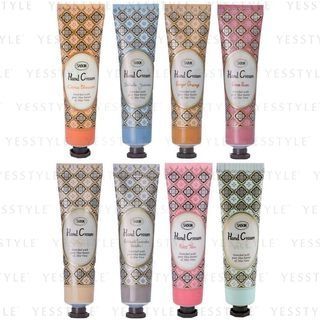
“Mini Hand Cream , 8 Types”
This product can help improve hydration of the skin with the two types of ingredients.
The first type is called “humectants”:
these ingredients help attract water.
When humectants are on the surface of the skin, they “pull in” the moisture from the outside environment, or from
within deeper layers of the skin. The following ingredients in this product do the job:
allantoin, glycerin.
This product also contains ingredients called “occlusives”. They help reduce the speed with which our skin loses moisture to the outside environment. These ingredients also help soften the upper layer of the skin, so it feels less tight and nicer to the touch. The following ingredients in this product do the job: bis-diglyceryl polyacyladipate-2, dimethicone.
Can it cause trouble?
Irritancy15 strong irritants: Hydroxycitronellal, Alpha-isomethyl ionone + 13 more — patch-test recommendedHigh risk
Comedogenic9 ingredients rated 2 or more on the 0–5 pore-clogging scale9 flagged
User reviews
Be the first — your take helps the next person decide.
Ingredients
Filter by role to see what each ingredient is doing.
Water~45–55%
Sorbitol~6.7–8.1%
- Irritation risk
- Low
Helps attract water to the upper layer of the skin and improves the product texture
More about SorbitolPeg-40 stearate~3.6–4.4%
Allantoin~3–3.6%
- Irritation risk
- Low
Helps calm down inflammation in skin and can help reduce itching. Helps to repair the skin barrier and keep skin hydrated
More about AllantoinPhenylpropanol~2.1–2.5%
- Irritation risk
- High
Helps mask the smell of other ingredients and helps preserve the product formulation
More about PhenylpropanolDicaprylyl ether~1.8–2.2%
- Irritation risk
- Low
Helps soften the upper layer of the skin while creating a non-greasy feel on the skin. Helps to dissolve other ingredients
More about Dicaprylyl etherPassiflora edulis seed oil~1.5–1.9%
- Irritation risk
- High
A good emollient helping to soften the skin. Might have some anti-oxidant properties. Adds a fragrance to the product
More about Passiflora edulis seed oilHydroxycitronellal~1.2–1.5%
- Irritation risk
- High
A fragrance. A likely allergen and can be irritating
More about HydroxycitronellalGlycerin~1.1–1.3%
- Irritation risk
- Low
One of the best moisturizing ingredients. Naturally present in skin. It attracts water to the upper layer of the skin working as a humectant
More about GlycerinAloe barbadensis leaf extract~0.95–1.15%
- Irritation risk
- Medium
Traditionally used to treat sunburns, dermatitis and inflammation, but evidence for its effectiveness is lacking. The extract can contain humectants that help attract water into the skin
More about Aloe barbadensis leaf extractCyclopentasiloxane~0.65–0.95%
- Irritation risk
- Low
A silicone that helps improve the product texture and spreadability. Can absorb oil creating a short-term mattifying effect on the skin
More about CyclopentasiloxanePropanediol~0.5–0.75%
- Irritation risk
- Low
Acts as a solvent for other ingredients. Speeds up the absorption of other ingredients into the skin
More about PropanediolZinc pca~0.45–0.65%
- Irritation risk
- Low
A compound that combines zinc with a hydrating ingredient PCA. Might to be helpful against acne and clogged pores. Can help calm down inflammation in skin. Could be helpful in reducing the formation of free radicals in skin. Might help to reduce fine lines in wrinkles, but solid evidence is missing
More about Zinc pcaAlpha-isomethyl ionone~0.35–0.65%
- Irritation risk
- High
A fragrance. Potential allergen and can be irritating
More about Alpha-isomethyl iononeGlyceryl caprylate~0.45–0.65%
- Irritation risk
- Low
An emollient that can also help water and oil mix together, as well as prevent bacteria growth in products
More about Glyceryl caprylateCitronellol~0.3–0.6%
Glyceryl stearate se~0.35–0.65%
- Irritation risk
- Low
- Comedogenicity
- 2/5
Used to stabilize the product formulations and works as an emollient
More about Glyceryl stearate sePhenoxyethanol~0.3–0.55%
- Irritation risk
- Low
A preservative. It helps prevent bacterial growth in cosmetic products
More about PhenoxyethanolPeg-100 stearate~0.4–0.6%
- Irritation risk
- Low
Helps oil and water mix togehter and creates a nice product texture
More about Peg-100 stearatePolyacrylate crosspolymer-6~0.25–0.5%
- Irritation risk
- Low
Sodium phytate~0.25–0.45%
Linalool~0.2–0.4%
Caprylyl glycol~0.25–0.45%
- Irritation risk
- Medium
Helps preserve products and creates a nice product texture
More about Caprylyl glycolGlyceryl caprylate~0.25–0.5%
- Irritation risk
- Low
An emollient that can also help water and oil mix together, as well as prevent bacteria growth in products
More about Glyceryl caprylateDipropylene glycol~0.2–0.35%
- Irritation risk
- Low
Helps to dissolve other ingredients in a formulation. Slows down the rate of product drying
More about Dipropylene glycolPotassium sorbate~0.2–0.4%
Linalool~0.2–0.35%
Isopropyl myristate~0.25–0.45%
- Irritation risk
- Low
- Comedogenicity
- 3/5
An emollient that helps soften the skin. Could be comedogenic
More about Isopropyl myristateBenzyl alcohol~0.2–0.35%
- Irritation risk
- High
A preservative. Can be used to mask unpleasant smell. Can be irritating
More about Benzyl alcoholGlyceryl stearate~0.25–0.5%
- Irritation risk
- Low
An emollient that softens the skin and forms a protective layer on its surface. Helps water and oil mix together
More about Glyceryl stearateTocopheryl acetate~0.2–0.4%
- Irritation risk
- Medium
A more stable but less bio-available form of vitamin E compared to Tocopherol. Might help moisturize and protect the skin from free radicals, but mostly used in low concentrations to stabilize other ingredients.
More about Tocopheryl acetateStearyl alcohol~0.25–0.5%
- Irritation risk
- Low
An emollient that helps soften the skin
More about Stearyl alcoholPhenoxyethanol~0.2–0.4%
- Irritation risk
- Low
A preservative. It helps prevent bacterial growth in cosmetic products
More about PhenoxyethanolMethylparaben~0.15–0.3%
Butylparaben~0.2–0.4%
Ethylparaben~0.2–0.4%
Propylparaben~0.2–0.35%
Butylphenyl methylpropional~0.2–0.35%
- Irritation risk
- High
A fragrance. Can trigger allergic reactions and be irritating
More about Butylphenyl methylpropionalGlycerin~0.25–0.45%
- Irritation risk
- Low
One of the best moisturizing ingredients. Naturally present in skin. It attracts water to the upper layer of the skin working as a humectant
More about GlycerinParfum~0.2–0.35%
- Irritation risk
- High
An aromatic blend of unspecified and possibly irritating ingredients
More about ParfumButyrospermum parkii butter~0.25–0.45%
- Irritation risk
- Low
- Comedogenicity
- 3/5
A great moisturising ingredient that softens the skin and reduces water loss from its upper layer. It also can be helpful in protecting skin from free radicals
More about Butyrospermum parkii butterPhenoxyethanol~0.2–0.4%
- Irritation risk
- Low
A preservative. It helps prevent bacterial growth in cosmetic products
More about PhenoxyethanolTriethanolamine~0.25–0.4%
- Irritation risk
- Medium
Used to adjust pH of the product and can help improve the product's smell
More about TriethanolamineGeraniol~0.2–0.35%
Helianthus annuus seed oil~0.25–0.45%
- Irritation risk
- Low
A great emollient due to its high linoleic acid content. One of the most effective plant oils in helping skin hydration and repairing skin barrier function
More about Helianthus annuus seed oilBenzyl benzoate~0.2–0.35%
- Irritation risk
- High
Fragrance with sweet balsamic smell. Help to preserve products and dissolve other ingredients. Could trigger allergic reactions and be irritating
More about Benzyl benzoatePropylparaben~0.2–0.35%
Butyrospermum parkii oil~0.25–0.45%
- Irritation risk
- Low
- Comedogenicity
- 3/5
Caprylyl glycol~0.25–0.45%
- Irritation risk
- Medium
Helps preserve products and creates a nice product texture
More about Caprylyl glycolGlyceryl caprylate~0.25–0.5%
- Irritation risk
- Low
An emollient that can also help water and oil mix together, as well as prevent bacteria growth in products
More about Glyceryl caprylateDipropylene glycol~0.2–0.35%
- Irritation risk
- Low
Helps to dissolve other ingredients in a formulation. Slows down the rate of product drying
More about Dipropylene glycolHydroxyethyl acrylate/sodium acryloyldimethyl taurate copolymer~0.2–0.4%
- Irritation risk
- Medium
A gelling agent that thickens the product consistency and leaves the skin with a velvety finish
More about Hydroxyethyl acrylate/sodium acryloyldimethyl taurate copolymerDisodium edta~0.2–0.4%
Tetrasodium edta~0.2–0.4%
Lactic acid~0.2–0.35%
- Irritation risk
- Medium
An exfoliating and moisturizing alpha-hydroxy acid (AHA). Typically causes less irritation than other AHAs, for example, glycolic acid. At high concentrations (about 15%), lactic acid can help reduce lines and wrinkles. Recent studies show that lactic acid can support the "good" bacteria living on skin's surface (healthy skin microbiome)
More about Lactic acidIsononyl isononanoate~0.25–0.45%
- Irritation risk
- Low
Forms a protective film on the surface of the skin to prevent moisture loss. Gives a velvety feel to products while reducing tackiness
More about Isononyl isononanoateBis-peg-18 methyl ether dimethyl silane~0.2–0.4%
- Irritation risk
- Low
A type of silicone that helps soften the upper layer of the skin and create a nice product texture
More about Bis-peg-18 methyl ether dimethyl silanePropylene glycol~0.2–0.35%
- Irritation risk
- High
Helps oil and water mix together and can enhance the penetration of other ingredients into the skin. It can be irritating
More about Propylene glycolCaprylyl glycol~0.25–0.45%
- Irritation risk
- Medium
Helps preserve products and creates a nice product texture
More about Caprylyl glycolTriticum vulgare germ oil~0.25–0.45%
- Irritation risk
- Low
- Comedogenicity
- 3/5
A good emoillient. Contains vitamin E which can help neutralise free radicals, however the oil is unstable. Avoid if you have gluten or wheat sensitivity (including food allergies).
More about Triticum vulgare germ oilPropane~0.25–0.5%
- Irritation risk
- Low
Isoamyl laurate~0.25–0.5%
- Irritation risk
- Medium
Helps stabilize emulsions and create a nice product texture
More about Isoamyl laurateLanolin~0.3–0.55%
- Irritation risk
- Low
Sebum of wool-bearing animals (most commonly sheep). Helps soften the upper layer of the skin and reduce the skin water loss. In rare cases could be an allergen. Not suitable for vegans
More about LanolinPanthenol~0.25–0.45%
- Irritation risk
- Low
Helps attract water to the upper layer of the skin and can help improve skin barrier function
More about PanthenolSorbitan tristearate~0.25–0.5%
- Irritation risk
- Medium
Helps oil and water mix together
More about Sorbitan tristearateCetyl palmitate~0.3–0.5%
- Irritation risk
- Low
An emollient that helps soften the skin and is used to improve product texture and stability
More about Cetyl palmitateGlyceryl stearate~0.3–0.55%
- Irritation risk
- Low
An emollient that softens the skin and forms a protective layer on its surface. Helps water and oil mix together
More about Glyceryl stearateHydroxyisohexyl 3-cyclohexene carboxaldehyde~0.2–0.4%
- Irritation risk
- High
A fragrance. Can be irritating
More about Hydroxyisohexyl 3-cyclohexene carboxaldehydeXanthan gum~0.25–0.5%
- Irritation risk
- Low
Used to create a thicker product consistency
More about Xanthan gumSodium cetearyl sulfate~0.4–0.65%
- Irritation risk
- Medium
Helps water and oil mix together and works as a cleansing agent
More about Sodium cetearyl sulfateDimethicone~0.3–0.55%
- Irritation risk
- Low
A silicone that helps to reduce water loss from the surface of the skin. Can temporarily "fill in" lines and wrinkles, absorb oil, and create a nice product finish
More about DimethiconeBenzyl alcohol~0.2–0.4%
- Irritation risk
- High
A preservative. Can be used to mask unpleasant smell. Can be irritating
More about Benzyl alcoholCoumarin~0.2–0.4%
Hydroxyisohexyl 3-cyclohexene carboxaldehyde~0.2–0.4%
- Irritation risk
- High
A fragrance. Can be irritating
More about Hydroxyisohexyl 3-cyclohexene carboxaldehydeAcrylates/c10-30 alkyl acrylate crosspolymer~0.25–0.5%
- Irritation risk
- Medium
Maintains the texture of skincare products. Allows the product to spread evenly. Helps oil and water mix together
More about Acrylates/c10-30 alkyl acrylate crosspolymerIsohexadecane~0.4–0.6%
- Irritation risk
- Low
Improves the texture of the product and helps soften the skin. Helps oil and water mix together and can be used as a cleansing agent
More about IsohexadecaneButyrospermum parkii butter~0.3–0.55%
- Irritation risk
- Low
- Comedogenicity
- 3/5
A great moisturising ingredient that softens the skin and reduces water loss from its upper layer. It also can be helpful in protecting skin from free radicals
More about Butyrospermum parkii butterCetyl alcohol~0.3–0.55%
- Irritation risk
- Low
A non-drying alcohol that works to soften the skin and stabilize product formulations helping oil and water mix together
More about Cetyl alcoholLimonene~0.2–0.4%
- Irritation risk
- High
A common frangrance that can easily irritate skin, especially if exposed to air, light or heat
More about LimoneneButyl methoxydibenzoylmethane~0.45–0.7%
- Irritation risk
- Medium
Avobenzone. An organic, or so-called "chemical" UV filter. Protects against both UVA and UVB rays. Needs to be combined with other filters in a formulation to be stable.
More about Butyl methoxydibenzoylmethaneWater~0.25–0.45%
Tocopheryl acetate~0.25–0.5%
- Irritation risk
- Medium
A more stable but less bio-available form of vitamin E compared to Tocopherol. Might help moisturize and protect the skin from free radicals, but mostly used in low concentrations to stabilize other ingredients.
More about Tocopheryl acetateCarapa guaianensis seed oil~0.25–0.45%
- Irritation risk
- High
A plant oil that contains limonoids. Might help neutralize free radicals in skin. Can be irritating
More about Carapa guaianensis seed oilBis-diglyceryl polyacyladipate-2~0.3–0.55%
- Irritation risk
- Low
Helps soften the upper layer of the skin and reduce water loss from its surface
More about Bis-diglyceryl polyacyladipate-2Tocopherol~0.25–0.45%
- Irritation risk
- Low
Pure form of vitamin E. Can help moisturise and protect the skin from free radicals. Often used to help stabilise other ingredients or the formula itself
More about TocopherolBht~0.25–0.45%
Isoeugenol~0.2–0.4%
- Irritation risk
- High
Macadamia ternifolia seed oil~0.3–0.5%
- Irritation risk
- Medium
Plant oil from nuts that helps soften the upper layer of the skin. Contains a high concentration of oleic acid that can weaken skin's barrier function and increase water-loss while enhancing penetration of other ingredients
More about Macadamia ternifolia seed oilPersea gratissima oil~0.3–0.55%
- Irritation risk
- Medium
An emollient that helps soften the skin and could be helpful in repairing its barrier function
More about Persea gratissima oilChlorphenesin~0.16–0.32%
Sodium methylparaben~0.2–0.4%
Olea europaea husk oil~0.25–0.45%
- Irritation risk
- Low
Simmondsia chinensis seed oil~0.3–0.55%
- Irritation risk
- Medium
Softens the upper layer of skin and helps restore the healthy skin barrier. Has shown to help calm down inflammation in skin. It is a stable oil, meaning that it retains its properties even when exposed to air.
More about Simmondsia chinensis seed oilBenzyl salicylate~0.2–0.4%
Glyceryl stearate citrate~0.3–0.55%
- Irritation risk
- Low
Helps oil and water mix together while softening the upper layer of the skin
More about Glyceryl stearate citrateHexyl cinnamal~0.2–0.4%
Tocopheryl acetate~0.25–0.45%
- Irritation risk
- Medium
A more stable but less bio-available form of vitamin E compared to Tocopherol. Might help moisturize and protect the skin from free radicals, but mostly used in low concentrations to stabilize other ingredients.
More about Tocopheryl acetateHexyl cinnamal~0.2–0.4%
Sodium acrylate/sodium acryloyldimethyl taurate copolymer~0.2–0.4%
- Irritation risk
- Low
Used to create a thicker product consistency
More about Sodium acrylate/sodium acryloyldimethyl taurate copolymerRicinus communis seed oil~0.25–0.45%
- Irritation risk
- Medium
A plant oil that can help soften the skin. It might be helpful in calming down inflammation, but solid research is lacking. Is often used in lip products to create the needed product consistency
More about Ricinus communis seed oilPeg-40 stearate~0.25–0.45%
Polysorbate 80~0.2–0.4%
Borago officinalis seed oil~0.2–0.4%
- Irritation risk
- Low
A plant oil that is effective in reducing irritation in skin, restore the barrier function and support its hydration
More about Borago officinalis seed oilParfum~0.1–0.2%
- Irritation risk
- High
An aromatic blend of unspecified and possibly irritating ingredients
More about ParfumCetyl lactate~0.15–0.25%
- Irritation risk
- Low
Decyl oleate~0.1–0.2%
- Irritation risk
- Low
- Comedogenicity
- 2/5
Helps soften the upper layer of the skin
More about Decyl oleateChlorphenesin~0.05–0.1%
Cetearyl alcohol~0.1–0.2%
- Irritation risk
- Low
- Comedogenicity
- 2/5
A non-drying alcohol. Works as an emollient. Helps water and oil mix together and creates a nice product texture
More about Cetearyl alcoholCitral~0.01–0.05%
Cetearyl alcohol~0.1–0.15%
- Irritation risk
- Low
- Comedogenicity
- 2/5
A non-drying alcohol. Works as an emollient. Helps water and oil mix together and creates a nice product texture
More about Cetearyl alcoholIngredient list view
Water, Sorbitol, Peg-40 stearate, Allantoin, Phenylpropanol, Dicaprylyl ether, Passiflora edulis seed oil, Hydroxycitronellal, Glycerin, Aloe barbadensis leaf extract, Cyclopentasiloxane, Propanediol, Zinc pca, Alpha-isomethyl ionone, Glyceryl caprylate, Citronellol, Glyceryl stearate se, Phenoxyethanol, Peg-100 stearate, Polyacrylate crosspolymer-6, Sodium phytate, Linalool, Caprylyl glycol, Glyceryl caprylate, Dipropylene glycol, Potassium sorbate, Linalool, Unknown, Isopropyl myristate, Benzyl alcohol, Glyceryl stearate, Tocopheryl acetate, Stearyl alcohol, Phenoxyethanol, Methylparaben, Butylparaben, Ethylparaben, Propylparaben, Butylphenyl methylpropional, Glycerin, Parfum, Butyrospermum parkii butter, Phenoxyethanol, Triethanolamine, Geraniol, Helianthus annuus seed oil, Benzyl benzoate, Propylparaben, Butyrospermum parkii oil, Caprylyl glycol, Glyceryl caprylate, Dipropylene glycol, Hydroxyethyl acrylate/sodium acryloyldimethyl taurate copolymer, Disodium edta, Tetrasodium edta, Unknown, Lactic acid, Isononyl isononanoate, Bis-peg-18 methyl ether dimethyl silane, Propylene glycol, Caprylyl glycol, Triticum vulgare germ oil, Unknown, Propane, Isoamyl laurate, Lanolin, Panthenol, Sorbitan tristearate, Cetyl palmitate, Glyceryl stearate, Hydroxyisohexyl 3-cyclohexene carboxaldehyde, Xanthan gum, Sodium cetearyl sulfate, Dimethicone, Benzyl alcohol, Coumarin, Hydroxyisohexyl 3-cyclohexene carboxaldehyde, Acrylates/c10-30 alkyl acrylate crosspolymer, Isohexadecane, Butyrospermum parkii butter, Cetyl alcohol, Limonene, Butyl methoxydibenzoylmethane, Water, Tocopheryl acetate, Carapa guaianensis seed oil, Bis-diglyceryl polyacyladipate-2, Tocopherol, Bht, Isoeugenol, Macadamia ternifolia seed oil, Persea gratissima oil, Chlorphenesin, Sodium methylparaben, Olea europaea husk oil, Simmondsia chinensis seed oil, Benzyl salicylate, Glyceryl stearate citrate, Hexyl cinnamal, Tocopheryl acetate, Hexyl cinnamal, Sodium acrylate/sodium acryloyldimethyl taurate copolymer, Ricinus communis seed oil, Peg-40 stearate, Polysorbate 80, Borago officinalis seed oil, Parfum, Cetyl lactate, Decyl oleate, Chlorphenesin, Cetearyl alcohol, Citral, Cetearyl alcohol
Compare prices
Retailers ranked by price — lowest first.

Affiliate links · prices updated regularly
Sources cited in this review
Every concentration estimate and effectiveness label is anchored to one of these 30 studies and safety reviews.
- 1
- 2
- 3
- 4Zinc Therapy in Dermatology: A Review hindawi.com
- 5
- 6

Affiliate links · As an Amazon Associate, WIMJ earns from qualifying purchases.