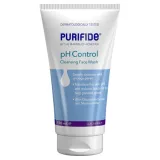
Purifide pH Control Face Wash

Purifide pH Control Face Wash

Efficacy100/100IrritancyMedium

Works for

Cleansing
Sodium cocoyl glutamate, Cocamidopropyl betaine + 2 more
Cleanses gently
What the product description says
“pH Control Face Wash”
From product name

This product works by removing dirt and oil from the surface of the skin. It uses a combination of mild cleansing agents (cocamidopropyl betaine, sodium cocoyl alaninate, sodium cocoyl glutamate, xanthan gum) and should be able to cleanse the skin gently. Still keep in mind that any cleansing can disrupt the skin barrier, and most people do not need to cleanse their skin more than once per day.

Even though this formulation is mild, the following cleansing agents could trigger an irritation or allergy for some people: cocamidopropyl betaine

Sodium cocoyl glutamateEffect: HighHelps oil and water mix together~3.9–5.9%
Cocamidopropyl betaineEffect: HighHelps water and oil mix together. Used as a cleansing ingredient. Could be an allergen~2.7–4.1%
Xanthan gumEffect: HighUsed to create a thicker product consistency~1.1–1.7%
Sodium cocoyl alaninateEffect: High~0.15–0.5%
Anti-blemish
Niacinamide, Gluconolactone + 3 more
Works well
What the product description says
“Dissolves pore clogging impurities.”
Source: Face the future

This product can help reduce breakouts and clogged pores because it contains the following ingredient: niacinamide. This ingredient is used for treating acne and can have a noticeable effect.

The following ingredient (ingredients) in this product might be helpful, but there is no evidence to confirm that it actually works: gluconolactone, glycolic acid, mandelic acid

NiacinamideHeroEffect: HighIs proven to be effective in reducing blemishes, evening out skin tone and helping to improve lines and wrinkles. It helps the skin to repair sun damage, calm down inflammation and keep maintain good levels of moisture. The concentration of about 2% is effective for supporting the skin barrier and evening out the skin tone. Concentration of 4-6% is better for helping with acne and balancing the sebum production~1.6–2.4%
GluconolactoneKey activeEffect: MediumA polyhydroxy acid (PHA) that helps shed the dead cells from the skin surface revealing smoother skin. Is believed to be genter than AHAs. It helps attract water to the upper layer of the skin and can stimulate production of skin's own hyaluronic acid resulting in improved hydration levels. It has been shown to be helpful against acne and clogged pores if used consistently (e.g over a period of 12 weeks) in high enough concentration. It can help reduce fine lines and wrinkles and improve skin tone with long-term application. Can help neutralize free radicals~2.7–4%
Mandelic acidKey activeEffect: MediumHelps shed the upper layer of dead cells from the surface of the skin revealing smoother, brighter skin. It can help to reduce hyperpigmentation. It has anti-bacterial properties, and might help to reduce blemishes, as well as fine lines and wrinkles. It is considered to be gentler than glycolic acid~0.35–0.75%
Glycolic acidKey activeEffect: MediumAn alpha-hydroxy acid (AHA) that helps to remove the dead skin cells on the surface of the skin reveling a more even, smoother complexation. It is also able to stimulate collagen production with long-term use. Could help to reduce pore congestion. It can be irritating to the skin. Apply sunscreen daily if using products with glycolic acid~0.15–0.65%
Zinc gluconateEffect: Low, below effective doseTypically used to stabilize the product formulations. It is a salt of a polyhydroxy acid (PHA) and in larger concentrations, can help shed the dead cells from the skin surface revealing smoother skin. It can help attract water to the upper layer of the skin. Might to be helpful against acne and clogged pores. Could be helpful in neutralizing free radicals, but solid research is missing. Due to the zinc content, might help calm down inflammation in skin~0.4–0.9%
Exfoliation
Side benefit · Gluconolactone, Mandelic acid + 2 more
Works well

This product can help exfoliate the skin. In other words, it helps break down the bonds between dead cells on the surface of the skin and speed up the skin turnover. Skin often appears softer and brighter after exfoliation, but overdoing it can result in disrupted skin barrier. The following ingredient is doing the exfoliating job in this product: gluconolactone, glycolic acid, mandelic acid.

GluconolactoneKey activeEffect: HighA polyhydroxy acid (PHA) that helps shed the dead cells from the skin surface revealing smoother skin. Is believed to be genter than AHAs. It helps attract water to the upper layer of the skin and can stimulate production of skin's own hyaluronic acid resulting in improved hydration levels. It has been shown to be helpful against acne and clogged pores if used consistently (e.g over a period of 12 weeks) in high enough concentration. It can help reduce fine lines and wrinkles and improve skin tone with long-term application. Can help neutralize free radicals~2.7–4%
Mandelic acidKey activeEffect: HighHelps shed the upper layer of dead cells from the surface of the skin revealing smoother, brighter skin. It can help to reduce hyperpigmentation. It has anti-bacterial properties, and might help to reduce blemishes, as well as fine lines and wrinkles. It is considered to be gentler than glycolic acid~0.35–0.75%
Glycolic acidKey activeEffect: HighAn alpha-hydroxy acid (AHA) that helps to remove the dead skin cells on the surface of the skin reveling a more even, smoother complexation. It is also able to stimulate collagen production with long-term use. Could help to reduce pore congestion. It can be irritating to the skin. Apply sunscreen daily if using products with glycolic acid~0.15–0.65%
Zinc gluconateEffect: Low, below effective doseTypically used to stabilize the product formulations. It is a salt of a polyhydroxy acid (PHA) and in larger concentrations, can help shed the dead cells from the skin surface revealing smoother skin. It can help attract water to the upper layer of the skin. Might to be helpful against acne and clogged pores. Could be helpful in neutralizing free radicals, but solid research is missing. Due to the zinc content, might help calm down inflammation in skin~0.4–0.9%

Can it cause trouble?

Irritancy
1 strong irritant: Parfum
Medium risk
We flagged 10 ingredients with irritancy potential. Severity depends on your sensitivity threshold; the table lists the worst offenders first.
IngredientFunctionIrritationEst. amount
Cocamidopropyl betaineHelps water and oil mix together. Used as a cleansing ingredient. Could be an allergenHigh~2.7–4.1%est.
Mandelic acidHelps shed the upper layer of dead cells from the surface of the skin revealing smoother, brighter skin. It can help to reduce hyperpigmentation. It has anti-bacterial properties, and might help to reduce blemishes, as well as fine lines and wrinkles. It is considered to be gentler than glycolic acidHigh~0.35–0.75%est.
Glycolic acidAn alpha-hydroxy acid (AHA) that helps to remove the dead skin cells on the surface of the skin reveling a more even, smoother complexation. It is also able to stimulate collagen production with long-term use. Could help to reduce pore congestion. It can be irritating to the skin. Apply sunscreen daily if using products with glycolic acidHigh~0.15–0.65%est.
ParfumAn aromatic blend of unspecified and possibly irritating ingredientsHigh~0.05–0.2%est.
Sodium cocoyl glutamateHelps oil and water mix togetherMedium~3.9–5.9%est.
GluconolactoneA polyhydroxy acid (PHA) that helps shed the dead cells from the skin surface revealing smoother skin. Is believed to be genter than AHAs. It helps attract water to the upper layer of the skin and can stimulate production of skin's own hyaluronic acid resulting in improved hydration levels. It has been shown to be helpful against acne and clogged pores if used consistently (e.g over a period of 12 weeks) in high enough concentration. It can help reduce fine lines and wrinkles and improve skin tone with long-term application. Can help neutralize free radicalsMedium~2.7–4%est.
Sodium citrateHelps to control the skin's pH level. Maintains the skin's natural film of amino-lactic acids and oils. Helps to preserve productsMedium~1.3–1.9%est.
Citric acidCan work as an exfoliant but is typically used to adjust the product pHMedium~0.95–1.4%est.
Zinc gluconateTypically used to stabilize the product formulations. It is a salt of a polyhydroxy acid (PHA) and in larger concentrations, can help shed the dead cells from the skin surface revealing smoother skin. It can help attract water to the upper layer of the skin. Might to be helpful against acne and clogged pores. Could be helpful in neutralizing free radicals, but solid research is missing. Due to the zinc content, might help calm down inflammation in skinMedium~0.4–0.9%est.
Caprylyl glycolHelps preserve products and creates a nice product textureMedium~0.15–0.5%est.
Comedogenic
Clean of flagged comedogenic ingredients
None flagged

User reviews

Would you recommend?
No community reviews yet.

Be the first — your take helps the next person decide.

Ingredients

Filter by role to see what each ingredient is doing.

Water~40–60%
Formula
Irritation risk
Low

Plain old water

More about Water
Glycerin~3.9–5.8%
Formula
Irritation risk
Low
Works for
Moisturizing

One of the best moisturizing ingredients. Naturally present in skin. It attracts water to the upper layer of the skin working as a humectant

More about Glycerin
Sodium cocoyl glutamate~3.9–5.9%
Irritant · medium
Irritation risk
Medium
Works for
Cleansing

Helps oil and water mix together

More about Sodium cocoyl glutamate
Gluconolactone~2.7–4%
Key activeIrritant · medium
Irritation risk
Medium
Works for
Anti-agingEvens skin toneExfoliationMoisturizingAnti-blemishAnti-oxidation

A polyhydroxy acid (PHA) that helps shed the dead cells from the skin surface revealing smoother skin. Is believed to be genter than AHAs. It helps attract water to the upper layer of the skin and can stimulate production of skin's own hyaluronic acid resulting in improved hydration levels. It has been shown to be helpful against acne and clogged pores if used consistently (e.g over a period of 12 weeks) in high enough concentration. It can help reduce fine lines and wrinkles and improve skin tone with long-term application. Can help neutralize free radicals

More about Gluconolactone
Cocamidopropyl betaine~2.7–4.1%
Irritant · high
Irritation risk
High
Works for
Cleansing

Helps water and oil mix together. Used as a cleansing ingredient. Could be an allergen

More about Cocamidopropyl betaine
Niacinamide~1.6–2.4%
Hero · Anti-blemish
Irritation risk
Low
Works for
Anti-agingEvens skin toneMoisturizingAnti-blemishReduces irritationAntibacterialReduces rednessAnti-inflammatory

Is proven to be effective in reducing blemishes, evening out skin tone and helping to improve lines and wrinkles. It helps the skin to repair sun damage, calm down inflammation and keep maintain good levels of moisture. The concentration of about 2% is effective for supporting the skin barrier and evening out the skin tone. Concentration of 4-6% is better for helping with acne and balancing the sebum production

More about Niacinamide
Sodium citrate~1.3–1.9%
Irritant · medium
Irritation risk
Medium

Helps to control the skin's pH level. Maintains the skin's natural film of amino-lactic acids and oils. Helps to preserve products

More about Sodium citrate
Xanthan gum~1.1–1.7%
Formula
Irritation risk
Low
Works for
Cleansing

Used to create a thicker product consistency

More about Xanthan gum
Citric acid~0.95–1.4%
Irritant · medium
Irritation risk
Medium

Can work as an exfoliant but is typically used to adjust the product pH

More about Citric acid
Sodium hydroxide~0.6–1.35%
Formula
Irritation risk
Low

Used to adjust the product's pH

More about Sodium hydroxide
Propanediol~0.5–1.1%
Formula
Irritation risk
Low

Acts as a solvent for other ingredients. Speeds up the absorption of other ingredients into the skin

More about Propanediol
Zinc gluconate~0.4–0.9%
Irritant · medium
Irritation risk
Medium
Works for
MoisturizingAnti-agingEvens skin toneAnti-inflammatoryExfoliationAnti-blemishAnti-oxidation

Typically used to stabilize the product formulations. It is a salt of a polyhydroxy acid (PHA) and in larger concentrations, can help shed the dead cells from the skin surface revealing smoother skin. It can help attract water to the upper layer of the skin. Might to be helpful against acne and clogged pores. Could be helpful in neutralizing free radicals, but solid research is missing. Due to the zinc content, might help calm down inflammation in skin

More about Zinc gluconate
Mandelic acid~0.35–0.75%
Key activeIrritant · high
Irritation risk
High
Works for
Evens skin toneExfoliationAnti-blemishAntibacterial

Helps shed the upper layer of dead cells from the surface of the skin revealing smoother, brighter skin. It can help to reduce hyperpigmentation. It has anti-bacterial properties, and might help to reduce blemishes, as well as fine lines and wrinkles. It is considered to be gentler than glycolic acid

More about Mandelic acid
Glycolic acid~0.15–0.65%
Key activeIrritant · high
Irritation risk
High
Works for
Anti-agingEvens skin toneExfoliationAnti-blemish

An alpha-hydroxy acid (AHA) that helps to remove the dead skin cells on the surface of the skin reveling a more even, smoother complexation. It is also able to stimulate collagen production with long-term use. Could help to reduce pore congestion. It can be irritating to the skin. Apply sunscreen daily if using products with glycolic acid

More about Glycolic acid
Sodium cocoyl alaninate~0.15–0.5%
Formula
Irritation risk
Low
Works for
Cleansing
More about Sodium cocoyl alaninate
Caprylyl glycol~0.15–0.5%
Irritant · medium
Irritation risk
Medium
Works for
Moisturizing

Helps preserve products and creates a nice product texture

More about Caprylyl glycol
Parfum~0.05–0.2%
Irritant · high
Irritation risk
High

An aromatic blend of unspecified and possibly irritating ingredients

More about Parfum
Sodium chloride~0.05–0.2%
Formula
Irritation risk
Low

Used to stabilize mixtures of oil and water, and create thicker, gel-like product textures

More about Sodium chloride
Ingredient list view

Water, Glycerin, Sodium cocoyl glutamate, Gluconolactone, Cocamidopropyl betaine, Niacinamide, Sodium citrate, Xanthan gum, Citric acid, Sodium hydroxide, Propanediol, Zinc gluconate, Mandelic acid, Glycolic acid, Sodium cocoyl alaninate, Caprylyl glycol, Parfum, Sodium chloride

Compare prices

Retailers ranked by price — lowest first.

🇦🇺 Amazon Australia (AU)
Price unavailable Out of stock
Check
🇬🇧 Amazon UK (UK)
Price unavailable Out of stock
Check

Affiliate links · As an Amazon Associate, WIMJ earns from qualifying purchases.

Worth comparing, line by line.

Match % combines shared ingredients, the first five ingredients, shared actives and hero ingredients, irritancy (lower counts in the alternative's favour), texture and body area. Only products in the same routine step are compared.

Side-by-side comparison of this product against its closest alternatives
PurifidepH Control Face WashYOUR PRODUCTAcnecidePurifide Ph Control Face WashSkinfixAcne+ 2% BHA CleanserReviumAnti Redness Sensitive Face Wash Gel
Match—97%77%77%
Price—$13.29$10.00$30.77
Shared key ingredients—10 of 105 of 103 of 10
Key difference——Azelaic AcidPolysorbate 80
Irritancy Medium Medium Low Low
Drying alcohol————
View product Shop Shop Shop

More alternatives: CeraVe Gel Moussant Anti-ImperfectionsDerma E Vitamin C Daily Brightening Cleanser

Cheaper alternatives? Browse formulas in the same category.
We compare ingredient profiles across our catalog — pick the closest match for your budget.
Open dupe finder

Sources cited in this review

Every concentration estimate and effectiveness label is anchored to one of these 25 studies and safety reviews.

  1. 1
  2. 2
  3. 3
  4. 4
  5. 5
  6. 6
Purifide pH Control Face Wash
PurifidepH Control Face Wash

Affiliate links · As an Amazon Associate, WIMJ earns from qualifying purchases.

As an Amazon Associate, WIMJ earns from qualifying purchases.