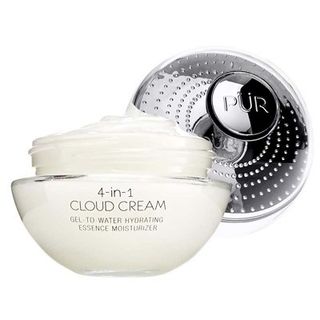
PR 4-in-1 Cloud Cream Gel to Water Hydrating Essence Moisturizer
Works for
2 of 2 advertised claims delivered
Moisturizing18 ingredients credited for this claimStrong support
“4-in-1 Cloud Cream Gel to Water Hydrating Essence Moisturizer”
This product can help improve hydration of the skin with the two types of ingredients.
The first type is called “humectants”:
these ingredients help attract water.
When humectants are on the surface of the skin, they “pull in” the moisture from the outside environment, or from
within deeper layers of the skin. The following ingredients in this product do the job:
glycerin, xylitylglucoside.
This product also contains ingredients called “occlusives”. They help reduce the speed with which our skin loses moisture to the outside environment. These ingredients also help soften the upper layer of the skin, so it feels less tight and nicer to the touch. The following ingredients in this product do the job: butyrospermum parkii butter, dimethicone.
The following ingredients in this product are especially good for supporting the skin barrier and helping with the hydration level: ceramide ap
Anti-aging5 ingredients credited for this claimStrong support
“Enriched with age-defying, skin-smoothing Ceretin Complex, the moisturizing, light-as-air 4-in-1 Cloud Cream nourishes and primes skin with limitless hydration for a radiant and healthier-looking complexion that glows.”
This product can help reduce and prevent fine lines and wrinkles, improve skin elasticity and firmness because it contains retinol.
Keep in mind that it typically takes at least 6 weeks to notice any results because the changes that are needed to improve fine lines and elasticity happen in the deeper layers of the skin. No topical anti-aging product can “erase” wrinkles or fully reverse signs of aging.
Anti-oxidationNot advertised by the brand · 9 ingredients credited for this claimStrong support
This product contains antioxidants (retinol) that can help neutralize free radicals in skin. By doing so, they can lessen the damage the skin gets from the UV light (sun).
The following ingredients - camellia sinensis leaf extract also can have an antioxidant effect, but there is less evidence to confirm their effectiveness in skin.
ExfoliationNot advertised by the brand · 3 ingredients credited for this claimStrong support
This product can help exfoliate the skin. In other words, it helps break down the bonds between dead cells on the surface of the skin and speed up the skin turnover. Skin often appears softer and brighter after exfoliation, but overdoing it can result in disrupted skin barrier. The following ingredient is doing the exfoliating job in this product: retinol.
Evens skin toneNot advertised by the brand · 3 ingredients credited for this claimStrong support
This product can help reduce hypepigmentation and even out the skin tone because it contains the following effective ingredients: retinol.
Keep in mind that you would need to apply any topical skincare targetted at hypigmentation consistently for a couple of months to get a result. No topical skincare product can help get rid of hyperpigmentation (including post-acne marks and age spots) instantly.
Anti-blemishNot advertised by the brand · 3 ingredients credited for this claimStrong support
This product can help reduce breakouts and clogged pores because it contains the following ingredient: retinol. This ingredient is used for treating acne and can have a noticeable effect.
Can it cause trouble?
Irritancy6 strong irritants: Retinol, Lavandula angustifolia flower/leaf/stem extract + 4 more — patch-test recommendedHigh risk
Comedogenic1 ingredient rated 2 or more on the 0–5 pore-clogging scale1 flagged

User reviews
Be the first — your take helps the next person decide.
Ingredients
Filter by role to see what each ingredient is doing.
Water~45–55%
Dimethicone~5.2–6.3%
- Irritation risk
- Low
A silicone that helps to reduce water loss from the surface of the skin. Can temporarily "fill in" lines and wrinkles, absorb oil, and create a nice product finish
More about DimethiconePropylene glycol~4.2–5.1%
- Irritation risk
- High
Helps oil and water mix together and can enhance the penetration of other ingredients into the skin. It can be irritating
More about Propylene glycolGlycerin~3.1–3.8%
- Irritation risk
- Low
One of the best moisturizing ingredients. Naturally present in skin. It attracts water to the upper layer of the skin working as a humectant
More about GlycerinCyclopentasiloxane~2.4–2.9%
- Irritation risk
- Low
A silicone that helps improve the product texture and spreadability. Can absorb oil creating a short-term mattifying effect on the skin
More about CyclopentasiloxaneEthylhexyl methoxycinnamate~2.5–3.1%
- Irritation risk
- High
Octinoxate. When used in higher concentrations, works as a sunscreen protecting the skin from UVB rays. When used in lower concentration, helps to preserve the product formulation. Is shown to be harmful to coral reefs - consider avoiding bathing in coral reef areas when wearing a product with this ingredient. It can be irritating
More about Ethylhexyl methoxycinnamateCeramide ap~1.7–2%
- Irritation risk
- Low
A type of lipid similar to ceramides naturally present in skin. Helps to soften the upper layer of the skin and supports the skin barrier function to keep it hydrated. Can help to prevent inflammation in skin
More about Ceramide apRetinol~1.4–1.7%
- Irritation risk
- High
Two steps removed from the active form of vitamin A - retinoic acid. Once converted to the retinoic acid in the skin, retinol is proven to be effective against all signs of aging. It improves skin cell turnover, helps fight blemishes and clogged pores, can regulate excess oil production and even skin tone. It can, however, be quite irritating
More about RetinolLactic acid~1.2–1.4%
- Irritation risk
- Medium
An exfoliating and moisturizing alpha-hydroxy acid (AHA). Typically causes less irritation than other AHAs, for example, glycolic acid. At high concentrations (about 15%), lactic acid can help reduce lines and wrinkles. Recent studies show that lactic acid can support the "good" bacteria living on skin's surface (healthy skin microbiome)
More about Lactic acidButyrospermum parkii butter~1–1.3%
- Irritation risk
- Low
- Comedogenicity
- 3/5
A great moisturising ingredient that softens the skin and reduces water loss from its upper layer. It also can be helpful in protecting skin from free radicals
More about Butyrospermum parkii butterSodium starch octenylsuccinate~0.7–1.05%
- Irritation risk
- Low
Scenedesmus rubescens extract~0.6–0.85%
- Irritation risk
- Medium
A micro-algae extract that might help attract water to the upper layer of the skin, support its barrier function, amd might help neutralize free radicals, but evidence of effectiveness in skin is lacking
More about Scenedesmus rubescens extractCamellia sinensis leaf extract~0.55–0.8%
- Irritation risk
- Low
Can contain potent anti-oxidant compounds (abbreviated ECG, GCG, EGC, and EGCG) that might help protect the skin from free radicals. Can help calm down inflammation and has some anti-bacterial properties. Unfortunately, these antioxidants are unstable and lose their effectiveness very quickly in products. The concentration of the antioxidant compounds in the extract also tends to be low to be effective in topical formulation
More about Camellia sinensis leaf extractXylitylglucoside~0.5–0.75%
- Irritation risk
- Low
Helps attract water to the upper layer of the skin and repair the skin barrier function
More about XylitylglucosideXylitol~0.45–0.65%
- Irritation risk
- Low
Helps attract water to the upper layer of the skin and repair the skin barrier function
More about XylitolRubus idaeus fruit extract~0.45–0.65%
- Irritation risk
- Medium
A fruit extract that might have some anti-oxidant properties but evidence of effectiveness in skin is lacking
More about Rubus idaeus fruit extractLavandula angustifolia flower/leaf/stem extract~0.45–0.65%
Vaccinium macrocarpon fruit extract~0.4–0.6%
- Irritation risk
- High
A berry extract. Might have some anti-oxidant properties
More about Vaccinium macrocarpon fruit extractPunica granatum seed extract~0.3–0.6%
Citrus limon peel extract~0.3–0.55%
Citrus paradisi peel extract~0.25–0.5%
- Irritation risk
- High
Vanilla planifolia fruit extract~0.3–0.5%
- Irritation risk
- High
A plant extract used as a fragrance. Can be irritating
More about Vanilla planifolia fruit extractAnanas sativus fruit extract~0.25–0.5%
- Irritation risk
- Medium
A fruit extract that might help to attract water to the upper layer of the skin, but there is no evidence for any other benefits to the skin
More about Ananas sativus fruit extractPyrus malus fruit extract~0.25–0.5%
- Irritation risk
- Medium
Can have some moisturizing properties due to its sugar content
More about Pyrus malus fruit extractRosa damascena extract~0.25–0.5%
- Irritation risk
- High
Oil of a very fragrant pink rose used as fragrance in cosmetics. Extensive research has shown it has mixed benefits. In the pro column, inhaling this flower’s scent seems to have relaxing properties and the plant’s petals contain skin-soothing and antioxidant compounds that can benefit skin. On the flipside, the numerous chemicals that create this rose’s distinctive fragrance pose a risk of causing skin aggravation.
More about Rosa damascena extractVitis vinifera fruit extract~0.25–0.5%
- Irritation risk
- Medium
A plant extract that helps attract water to the upper layer of the skin. It might be helpful in neutralizing free radicals in skin, but is less potent than the extract from the seeds
More about Vitis vinifera fruit extractAloe barbadensis leaf juice~0.25–0.5%
- Irritation risk
- Medium
Traditionally used to treat sunburns, dermatitis and inflammation, but evidence for its effectiveness is lacking. The extract can contain humectants that help attract water into the skin
More about Aloe barbadensis leaf juicePeg-10 dimethicone~0.3–0.6%
- Irritation risk
- Low
A silicone that works to soften the upper layer of the skin and reduce its water loss
More about Peg-10 dimethiconePhenyl trimethicone~0.3–0.55%
- Irritation risk
- Low
A type of silicone that can decrease loss of moisture from the skin surface. It helps create a nice product texture
More about Phenyl trimethiconeTrimethylsiloxysilicate~0.3–0.55%
- Irritation risk
- Low
A type of silicone that helps create a nice product consistency and support the delivery of other ingredients
More about TrimethylsiloxysilicateCaprylyl glycol~0.3–0.55%
- Irritation risk
- Medium
Helps preserve products and creates a nice product texture
More about Caprylyl glycolCaprylic/capric triglyceride~0.3–0.55%
- Irritation risk
- Medium
A good mix of fatty acids that forms a protective layer on the skin. Improves the shelf life of products. Derived from coconut and glycerin
More about Caprylic/capric triglycerideTriethyl citrate~0.2–0.4%
Dimethicone/peg-10/15 crosspolymer~0.25–0.4%
Peg/ppg-20/15 dimethicone~0.25–0.45%
- Irritation risk
- Medium
Helps oil and water mix together
More about Peg/ppg-20/15 dimethiconeDisodium edta~0.2–0.35%
Sodium citrate~0.2–0.35%
- Irritation risk
- Medium
Helps to control the skin's pH level. Maintains the skin's natural film of amino-lactic acids and oils. Helps to preserve products
More about Sodium citrateSea salt~0.15–0.3%
- Irritation risk
- Medium
Used to thicken the product formulation and might help to add minerals to the surface of the skin. It is used in scrubs as a physical exfoliant. Can increase sensitivity to other ingredients if left on the skin or used in high concentration
More about Sea saltSodium benzoate~0.15–0.25%
Potassium sorbate~0.15–0.3%
Phenoxyethanol~0.15–0.3%
- Irritation risk
- Low
A preservative. It helps prevent bacterial growth in cosmetic products
More about PhenoxyethanolIngredient list view
Water, Dimethicone, Propylene glycol, Glycerin, Cyclopentasiloxane, Ethylhexyl methoxycinnamate, Ceramide ap, Retinol, Lactic acid, Butyrospermum parkii butter, Sodium starch octenylsuccinate, Scenedesmus rubescens extract, Camellia sinensis leaf extract, Xylitylglucoside, Xylitol, Rubus idaeus fruit extract, Lavandula angustifolia flower/leaf/stem extract, Vaccinium macrocarpon fruit extract, Punica granatum seed extract, Citrus limon peel extract, Citrus paradisi peel extract, Vanilla planifolia fruit extract, Ananas sativus fruit extract, Pyrus malus fruit extract, Rosa damascena extract, Vitis vinifera fruit extract, Aloe barbadensis leaf juice, Peg-10 dimethicone, Phenyl trimethicone, Trimethylsiloxysilicate, Caprylyl glycol, Caprylic/capric triglyceride, Triethyl citrate, Dimethicone/peg-10/15 crosspolymer, Peg/ppg-20/15 dimethicone, Disodium edta, Sodium citrate, Sea salt, Sodium benzoate, Potassium sorbate, Phenoxyethanol
Compare prices
Retailers ranked by price — lowest first.
Worth comparing, line by line.
Match % combines shared ingredients, the first five ingredients, shared actives and hero ingredients, irritancy (lower counts in the alternative's favour), texture and body area. Only products in the same routine step are compared.
| PR4-in-1 Cloud Cream Gel to Water Hydrating Essence MoisturizerYOUR PRODUCT | PÜR4-in-1 Cloud Cream Moisturizer | No7Pure Retinol Night Repair Cream | RodialPink Diamond Deluxe Magic Night Gel | |
|---|---|---|---|---|
| Match | — | 90% | 76% | 73% |
| Price | $25.12 | $12.00−$13.12 | $30.00+$4.88 | $21.15−$3.97 |
| Shared key ingredients | — | 15 of 15 | 6 of 15 | 4 of 15 |
| Key difference | — | — | Acetyl Dipeptide-1 Cetyl Ester | Decapeptide-22 |
| Irritancy | High | High | Medium | Medium |
| Drying alcohol | — | — | Contains drying alcohol | — |
| View product | Shop | Shop | Shop |

Sources cited in this review
Every concentration estimate and effectiveness label is anchored to one of these 16 studies and safety reviews.
- 1
- 2Final Report on the Safety Assessment of Dimethicone Copolyoljournals.sagepub.com
- 3Surfactants and experimental irritant contact dermatitisncbi.nlm.nih.gov
- 4Propylene Glycolpubmed.ncbi.nlm.nih.gov
- 5Skin-sensitizing and irritant properties of propylene glycolonlinelibrary.wiley.com
- 6

Affiliate links · As an Amazon Associate, WIMJ earns from qualifying purchases.