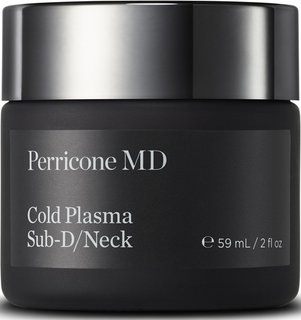
Perricone MD Cold Plasma Sub-D

Perricone MD Cold Plasma Sub-D

Efficacy91/100IrritancyHigh
Edit

Works for

3 of 3 advertised claims delivered

Anti-aging
Glycolic acid, Alanyl glutamine + 7 more
Strong evidence
What the product description says
“Formulated with DMAE and glycolic acid to smooth the appearance of lines, wrinkles and uneven texture.”
Source: Skinstore

This product can help reduce and prevent fine lines and wrinkles, improve skin elasticity and firmness because it contains glycolic acid.

These ingredients in the product can also be helpful, even though there is less evidence for their effectiveness: alanyl glutamine, astaxanthin, carnosine, tocotrienols.

Keep in mind that it typically takes at least 6 weeks to notice any results because the changes that are needed to improve fine lines and elasticity happen in the deeper layers of the skin. No topical anti-aging product can “erase” wrinkles or fully reverse signs of aging.

Glycolic acidKey activeEffect: HighAn alpha-hydroxy acid (AHA) that helps to remove the dead skin cells on the surface of the skin reveling a more even, smoother complexation. It is also able to stimulate collagen production with long-term use. Could help to reduce pore congestion. It can be irritating to the skin. Apply sunscreen daily if using products with glycolic acid~5.3–6.5%
Alanyl glutamineKey activeEffect: MediumA type of peptide. Peptides are excellent moisturizers and might be able support collagen production reducing fine lines and wrinkles~0.05–0.1%
TocotrienolsKey activeEffect: MediumA type of vitamin E that is more powerful in neutralizing free radicals compared to its other forms~0.2–0.4%
AstaxanthinKey activeEffect: MediumHelps neutralize free radicals in skin and might help to calm down inflammation~0.2–0.4%
CarnosineKey activeEffect: MediumA type of peptide. It attracts water to the upper layer of the skin. It can help neutralize free radicals in skin combatting the sun damage~0.25–0.5%
Thioctic acidEffect: Low~0.7–1.05%
Zinc gluconateEffect: Low, below effective doseTypically used to stabilize the product formulations. It is a salt of a polyhydroxy acid (PHA) and in larger concentrations, can help shed the dead cells from the skin surface revealing smoother skin. It can help attract water to the upper layer of the skin. Might to be helpful against acne and clogged pores. Could be helpful in neutralizing free radicals, but solid research is missing. Due to the zinc content, might help calm down inflammation in skin~0.4–0.65%
Copper gluconateEffect: Low, below effective doseTypically used to stabilize the product formulations. It is a salt of polyhydroxy acid (PHA) and in larger concentrations, can help shed the dead cells from the skin surface revealing smoother skin. It can help attract water to the upper layer of the skin. Might to be helpful against acne and clogged pores. Could be helpful in neutralizing free radicals, but solid research is missing~0.2–0.4%
TocopherolEffect: Low, below effective dosePure form of vitamin E. Can help moisturise and protect the skin from free radicals. Often used to help stabilise other ingredients or the formula itself~0.1–0.25%
Evens skin tone
Glycolic acid, Copper gluconate + 1 more
Strong evidence
What the product description says
“wrinkles, enlarged pores, dryness, redness, discoloration, uneven skin tone, impurities, loss of firmness, loss of smoothness, and loss of radiance.”
Source: Bluemercury

This product can help reduce hypepigmentation and even out the skin tone because it contains the following effective ingredients: glycolic acid

Keep in mind that you would need to apply any topical skincare targetted at hypigmentation consistently for a couple of months to get a result. No topical skincare product can help get rid of hyperpigmentation (including post-acne marks and age spots) instantly.

Glycolic acidKey activeEffect: HighAn alpha-hydroxy acid (AHA) that helps to remove the dead skin cells on the surface of the skin reveling a more even, smoother complexation. It is also able to stimulate collagen production with long-term use. Could help to reduce pore congestion. It can be irritating to the skin. Apply sunscreen daily if using products with glycolic acid~5.3–6.5%
Copper gluconateEffect: Low, below effective doseTypically used to stabilize the product formulations. It is a salt of polyhydroxy acid (PHA) and in larger concentrations, can help shed the dead cells from the skin surface revealing smoother skin. It can help attract water to the upper layer of the skin. Might to be helpful against acne and clogged pores. Could be helpful in neutralizing free radicals, but solid research is missing~0.2–0.4%
Zinc gluconateEffect: Low, below effective doseTypically used to stabilize the product formulations. It is a salt of a polyhydroxy acid (PHA) and in larger concentrations, can help shed the dead cells from the skin surface revealing smoother skin. It can help attract water to the upper layer of the skin. Might to be helpful against acne and clogged pores. Could be helpful in neutralizing free radicals, but solid research is missing. Due to the zinc content, might help calm down inflammation in skin~0.4–0.65%
Moisturizing
Dimethicone, Sodium hyaluronate + 16 more
Good evidence
What the product description says
“Delivers dramatic improvements to the chin, neck and décolleté.”
Source: Skinstore

This product can help improve hydration of the skin with the two types of ingredients.

The first type is called “humectants”:
these ingredients help attract water. When humectants are on the surface of the skin, they “pull in” the moisture from the outside environment, or from within deeper layers of the skin. The following ingredients in this product do the job: alanyl glutamine, arginine.

This product also contains ingredients called “occlusives”. They help reduce the speed with which our skin loses moisture to the outside environment. These ingredients also help soften the upper layer of the skin, so it feels less tight and nicer to the touch. The following ingredients in this product do the job: arginine, dimethicone.

DimethiconeKey active· Emollient, OcclusiveEffect: HighA silicone that helps to reduce water loss from the surface of the skin. Can temporarily "fill in" lines and wrinkles, absorb oil, and create a nice product finish~0.65–0.95%
Sodium hyaluronateKey active· HumectantEffect: HighOne of the best moisturizing ingredients. Attracts water into the upper layer of the skin~0.1–0.2%
Saccharomyces fermentKey activeEffect: HighA product of yeast fermentation. Helps attract water to the upper layer of the skin~0.45–0.7%
ArginineKey active· Humectant, OcclusiveEffect: HighAn amino acid that is naturally present in skin and helps keep it hydrated. When used together with AHAs, it can reduce their irritating effect on the skin~1.7–2.1%
Vaccinium macrocarpon seed oilKey active· EmollientEffect: HighA plant oil that can help neutralize free radicals, soften the upper layer of the skin, and support skin's barrier function~0.65–1%
CarnosineKey active· HumectantEffect: HighA type of peptide. It attracts water to the upper layer of the skin. It can help neutralize free radicals in skin combatting the sun damage~0.25–0.5%
Alanyl glutamineKey active· HumectantEffect: HighA type of peptide. Peptides are excellent moisturizers and might be able support collagen production reducing fine lines and wrinkles~0.05–0.1%
TyrosineKey activeEffect: High~4.3–5.3%
Elaeis guineensis oilKey active· EmollientEffect: MediumHelps soften the upper layer of the skin~0.3–0.55%
Acetyl carnitine hclKey activeEffect: MediumMight be helpful in decreasing sebum production making the skin less oily. Is claimed to be able to support ceramide production in skin that leads to better hydration, but evidence is lacking. Is able to attract water to the upper layer of the skin~2.1–2.6%
Cetearyl alcoholKey active· EmollientEffect: MediumA non-drying alcohol. Works as an emollient. Helps water and oil mix together and creates a nice product texture~1.5–1.9%
Magnesium aspartateKey activeEffect: MediumMight be helpful in restoring skin barrier function and calm down inflammation in skin~0.45–0.65%
Glyceryl stearate· EmollientEffect: LowAn emollient that softens the skin and forms a protective layer on its surface. Helps water and oil mix together~1.4–1.7%
Caprylyl glycol· Humectant, EmollientEffect: LowHelps preserve products and creates a nice product texture~0.3–0.55%
Isopropyl palmitate· EmollientEffect: LowHelps soften the upper layer of the skin and create a thicker product consistency~2.6–3.1%
Zinc gluconateUnder-dosedEffect: HighTypically used to stabilize the product formulations. It is a salt of a polyhydroxy acid (PHA) and in larger concentrations, can help shed the dead cells from the skin surface revealing smoother skin. It can help attract water to the upper layer of the skin. Might to be helpful against acne and clogged pores. Could be helpful in neutralizing free radicals, but solid research is missing. Due to the zinc content, might help calm down inflammation in skin~0.4–0.65%
Copper gluconateUnder-dosedEffect: HighTypically used to stabilize the product formulations. It is a salt of polyhydroxy acid (PHA) and in larger concentrations, can help shed the dead cells from the skin surface revealing smoother skin. It can help attract water to the upper layer of the skin. Might to be helpful against acne and clogged pores. Could be helpful in neutralizing free radicals, but solid research is missing~0.2–0.4%
TocopherolEffect: Low, below effective dosePure form of vitamin E. Can help moisturise and protect the skin from free radicals. Often used to help stabilise other ingredients or the formula itself~0.1–0.25%
Anti-oxidation
Not advertised by the brand · Astaxanthin, Thioctic acid + 7 more
Strong evidence

This product contains antioxidants (astaxanthin, carnosine, thioctic acid, tocotrienols) that can help neutralize free radicals in skin. By doing so, they can lessen the damage the skin gets from the UV light (sun).

The following ingredients - vaccinium macrocarpon seed oil also can have an antioxidant effect, but there is less evidence to confirm their effectiveness in skin.

AstaxanthinKey activeEffect: HighHelps neutralize free radicals in skin and might help to calm down inflammation~0.2–0.4%
Thioctic acidKey activeEffect: High~0.7–1.05%
TocotrienolsKey activeEffect: HighA type of vitamin E that is more powerful in neutralizing free radicals compared to its other forms~0.2–0.4%
CarnosineKey activeEffect: HighA type of peptide. It attracts water to the upper layer of the skin. It can help neutralize free radicals in skin combatting the sun damage~0.25–0.5%
Vaccinium macrocarpon seed oilKey activeEffect: MediumA plant oil that can help neutralize free radicals, soften the upper layer of the skin, and support skin's barrier function~0.65–1%
CaffeineEffect: LowMight be helpful in neutralizing free radicals. Can have a dehydration effect that might somewhat decrease the look of puffy eyes~0.6–0.9%
TocopherolUnder-dosedEffect: HighPure form of vitamin E. Can help moisturise and protect the skin from free radicals. Often used to help stabilise other ingredients or the formula itself~0.1–0.25%
Zinc gluconateEffect: Low, below effective doseTypically used to stabilize the product formulations. It is a salt of a polyhydroxy acid (PHA) and in larger concentrations, can help shed the dead cells from the skin surface revealing smoother skin. It can help attract water to the upper layer of the skin. Might to be helpful against acne and clogged pores. Could be helpful in neutralizing free radicals, but solid research is missing. Due to the zinc content, might help calm down inflammation in skin~0.4–0.65%
Copper gluconateEffect: Low, below effective doseTypically used to stabilize the product formulations. It is a salt of polyhydroxy acid (PHA) and in larger concentrations, can help shed the dead cells from the skin surface revealing smoother skin. It can help attract water to the upper layer of the skin. Might to be helpful against acne and clogged pores. Could be helpful in neutralizing free radicals, but solid research is missing~0.2–0.4%
Exfoliation
Not advertised by the brand · Glycolic acid, Copper gluconate + 1 more
Strong evidence

This product can help exfoliate the skin. In other words, it helps break down the bonds between dead cells on the surface of the skin and speed up the skin turnover. Skin often appears softer and brighter after exfoliation, but overdoing it can result in disrupted skin barrier. The following ingredient is doing the exfoliating job in this product: glycolic acid.

Glycolic acidKey activeEffect: HighAn alpha-hydroxy acid (AHA) that helps to remove the dead skin cells on the surface of the skin reveling a more even, smoother complexation. It is also able to stimulate collagen production with long-term use. Could help to reduce pore congestion. It can be irritating to the skin. Apply sunscreen daily if using products with glycolic acid~5.3–6.5%
Copper gluconateEffect: Low, below effective doseTypically used to stabilize the product formulations. It is a salt of polyhydroxy acid (PHA) and in larger concentrations, can help shed the dead cells from the skin surface revealing smoother skin. It can help attract water to the upper layer of the skin. Might to be helpful against acne and clogged pores. Could be helpful in neutralizing free radicals, but solid research is missing~0.2–0.4%
Zinc gluconateEffect: Low, below effective doseTypically used to stabilize the product formulations. It is a salt of a polyhydroxy acid (PHA) and in larger concentrations, can help shed the dead cells from the skin surface revealing smoother skin. It can help attract water to the upper layer of the skin. Might to be helpful against acne and clogged pores. Could be helpful in neutralizing free radicals, but solid research is missing. Due to the zinc content, might help calm down inflammation in skin~0.4–0.65%

Can it cause trouble?

Irritancy
4 strong irritants: Rosa moschata seed oil, Parfum + 2 more — patch-test recommended
High risk
We flagged 18 ingredients with irritancy potential. Severity depends on your sensitivity threshold; the table lists the worst offenders first.
IngredientFunctionIrritationEst. amount
Glycolic acidAn alpha-hydroxy acid (AHA) that helps to remove the dead skin cells on the surface of the skin reveling a more even, smoother complexation. It is also able to stimulate collagen production with long-term use. Could help to reduce pore congestion. It can be irritating to the skin. Apply sunscreen daily if using products with glycolic acidHigh~5.3–6.5%est.
Rosa moschata seed oil—High~0.7–1.05%est.
ParfumAn aromatic blend of unspecified and possibly irritating ingredientsHigh~0.1–0.2%est.
LimoneneA common frangrance that can easily irritate skin, especially if exposed to air, light or heatHigh~0.1–0.2%est.
LinaloolA fragrance. Can be irritatingHigh~0.05–0.1%est.
Isopropyl palmitateHelps soften the upper layer of the skin and create a thicker product consistencyMedium~2.6–3.1%est.
PhosphatidylcholineUsed to enhance the delivery of other ingredientsMedium~0.8–1.2%est.
Vaccinium macrocarpon seed oilA plant oil that can help neutralize free radicals, soften the upper layer of the skin, and support skin's barrier functionMedium~0.65–1%est.
Ceteareth-20Helps oil and water mix together. Has some emollient propertiesMedium~0.7–1%est.
CaffeineMight be helpful in neutralizing free radicals. Can have a dehydration effect that might somewhat decrease the look of puffy eyesMedium~0.6–0.9%est.
BhtA preservativeMedium~0.5–0.75%est.
Zinc gluconateTypically used to stabilize the product formulations. It is a salt of a polyhydroxy acid (PHA) and in larger concentrations, can help shed the dead cells from the skin surface revealing smoother skin. It can help attract water to the upper layer of the skin. Might to be helpful against acne and clogged pores. Could be helpful in neutralizing free radicals, but solid research is missing. Due to the zinc content, might help calm down inflammation in skinMedium~0.4–0.65%est.
Caprylyl glycolHelps preserve products and creates a nice product textureMedium~0.3–0.55%est.
Phytic acidAn alpha-hydroxy acid (AHA), but is mostly used to stabilize product formulations in cosmeticsMedium~0.3–0.55%est.
Disodium edtaStabilizes the product formulationMedium~0.25–0.5%est.
AstaxanthinHelps neutralize free radicals in skin and might help to calm down inflammationMedium~0.2–0.4%est.
Copper gluconateTypically used to stabilize the product formulations. It is a salt of polyhydroxy acid (PHA) and in larger concentrations, can help shed the dead cells from the skin surface revealing smoother skin. It can help attract water to the upper layer of the skin. Might to be helpful against acne and clogged pores. Could be helpful in neutralizing free radicals, but solid research is missingMedium~0.2–0.4%est.
Sorbic acidA preservativeMedium~0.15–0.3%est.
Comedogenic
3 ingredients rated 2 or more on the 0–5 pore-clogging scale
3 flagged
These ingredients have a comedogenic rating of 2 or more on a 0–5 scale; the table shows each one's rating. In leave-on products they can clog pores in acne-prone skin.
IngredientFunctionRatingEst. amount
Isopropyl palmitateHelps soften the upper layer of the skin and create a thicker product consistency3/5~2.6–3.1%est.
Cetearyl alcoholA non-drying alcohol. Works as an emollient. Helps water and oil mix together and creates a nice product texture2/5~1.5–1.9%est.
Ceteareth-20Helps oil and water mix together. Has some emollient properties2/5~0.7–1%est.
Edit

User reviews

Would you recommend?
No community reviews yet.

Be the first — your take helps the next person decide.

Write a review · ~30s

Ingredients

Filter by role to see what each ingredient is doing.

Water~45–55%
Formula
Irritation risk
Low

Plain old water

More about Water
Glycolic acid~5.3–6.5%
Key activeIrritant · high
Irritation risk
High
Works for
Anti-agingEvens skin toneExfoliationAnti-blemish

An alpha-hydroxy acid (AHA) that helps to remove the dead skin cells on the surface of the skin reveling a more even, smoother complexation. It is also able to stimulate collagen production with long-term use. Could help to reduce pore congestion. It can be irritating to the skin. Apply sunscreen daily if using products with glycolic acid

More about Glycolic acid
Tyrosine~4.3–5.3%
Key active
Irritation risk
Low
Works for
Moisturizing
More about Tyrosine
Dimethyl mea~3.3–4.1%
Formula
Irritation risk
Low
More about Dimethyl mea
Isopropyl palmitate~2.6–3.1%
Comedogenic 3/5Irritant · medium
Irritation risk
Medium
Comedogenicity
3/5
Works for
Moisturizing

Helps soften the upper layer of the skin and create a thicker product consistency

More about Isopropyl palmitate
Acetyl carnitine hcl~2.1–2.6%
Key active
Irritation risk
Low
Works for
MattifyingMoisturizingAnti-blemish

Might be helpful in decreasing sebum production making the skin less oily. Is claimed to be able to support ceramide production in skin that leads to better hydration, but evidence is lacking. Is able to attract water to the upper layer of the skin

More about Acetyl carnitine hcl
Arginine~1.7–2.1%
Key active
Irritation risk
Low
Works for
Moisturizing

An amino acid that is naturally present in skin and helps keep it hydrated. When used together with AHAs, it can reduce their irritating effect on the skin

More about Arginine
Cetearyl alcohol~1.5–1.9%
Key activeComedogenic 2/5
Irritation risk
Low
Comedogenicity
2/5
Works for
CleansingMoisturizing

A non-drying alcohol. Works as an emollient. Helps water and oil mix together and creates a nice product texture

More about Cetearyl alcohol
Glyceryl stearate~1.4–1.7%
Formula
Irritation risk
Low
Works for
CleansingMoisturizing

An emollient that softens the skin and forms a protective layer on its surface. Helps water and oil mix together

More about Glyceryl stearate
Peg-100 stearate~1.1–1.4%
Formula
Irritation risk
Low
Works for
Cleansing

Helps oil and water mix togehter and creates a nice product texture

More about Peg-100 stearate
Phosphatidylcholine~0.8–1.2%
Irritant · medium
Irritation risk
Medium
Works for
Cleansing

Used to enhance the delivery of other ingredients

More about Phosphatidylcholine
Thioctic acid~0.7–1.05%
Key active
Irritation risk
Low
Works for
Anti-oxidationAnti-aging
More about Thioctic acid
Rosa moschata seed oil~0.7–1.05%
Irritant · high
Vaccinium macrocarpon seed oil~0.65–1%
Key activeIrritant · medium
Irritation risk
Medium
Works for
MoisturizingAnti-oxidationAnti-inflammatory

A plant oil that can help neutralize free radicals, soften the upper layer of the skin, and support skin's barrier function

More about Vaccinium macrocarpon seed oil
Ceteareth-20~0.7–1%
Comedogenic 2/5Irritant · medium
Irritation risk
Medium
Comedogenicity
2/5
Works for
Cleansing

Helps oil and water mix together. Has some emollient properties

More about Ceteareth-20
Caffeine~0.6–0.9%
Irritant · medium
Irritation risk
Medium
Works for
De-puffingAnti-oxidation

Might be helpful in neutralizing free radicals. Can have a dehydration effect that might somewhat decrease the look of puffy eyes

More about Caffeine
Dimethicone~0.65–0.95%
Key active
Irritation risk
Low
Works for
MoisturizingMattifying

A silicone that helps to reduce water loss from the surface of the skin. Can temporarily "fill in" lines and wrinkles, absorb oil, and create a nice product finish

More about Dimethicone
Bht~0.5–0.75%
Irritant · medium
Irritation risk
Medium

A preservative

More about Bht
Saccharomyces ferment~0.45–0.7%
Key active
Irritation risk
Low
Works for
Moisturizing

A product of yeast fermentation. Helps attract water to the upper layer of the skin

More about Saccharomyces ferment
Magnesium aspartate~0.45–0.65%
Key active
Irritation risk
Low
Works for
MoisturizingAnti-inflammatory

Might be helpful in restoring skin barrier function and calm down inflammation in skin

More about Magnesium aspartate
Zinc gluconate~0.4–0.65%
Under-dosedIrritant · medium
Irritation risk
Medium
Works for
MoisturizingAnti-blemishAnti-agingAnti-oxidationEvens skin toneAnti-inflammatoryExfoliation

Typically used to stabilize the product formulations. It is a salt of a polyhydroxy acid (PHA) and in larger concentrations, can help shed the dead cells from the skin surface revealing smoother skin. It can help attract water to the upper layer of the skin. Might to be helpful against acne and clogged pores. Could be helpful in neutralizing free radicals, but solid research is missing. Due to the zinc content, might help calm down inflammation in skin

More about Zinc gluconate
Phenoxyethanol~0.4–0.65%
Formula
Irritation risk
Low

A preservative. It helps prevent bacterial growth in cosmetic products

More about Phenoxyethanol
Rhodiola rosea root extract~0.3–0.55%
Formula
Caprylyl glycol~0.3–0.55%
Irritant · medium
Irritation risk
Medium
Works for
Moisturizing

Helps preserve products and creates a nice product texture

More about Caprylyl glycol
Phytic acid~0.3–0.55%
Irritant · medium
Irritation risk
Medium

An alpha-hydroxy acid (AHA), but is mostly used to stabilize product formulations in cosmetics

More about Phytic acid
Carnosine~0.25–0.5%
Key active
Irritation risk
Low
Works for
MoisturizingAnti-oxidationAnti-aging

A type of peptide. It attracts water to the upper layer of the skin. It can help neutralize free radicals in skin combatting the sun damage

More about Carnosine
Disodium edta~0.25–0.5%
Irritant · medium
Irritation risk
Medium

Stabilizes the product formulation

More about Disodium edta
Elaeis guineensis oil~0.3–0.55%
Key active
Irritation risk
Low
Works for
Moisturizing

Helps soften the upper layer of the skin

More about Elaeis guineensis oil
Astaxanthin~0.2–0.4%
Key activeIrritant · medium
Irritation risk
Medium
Works for
Anti-oxidationAnti-inflammatoryAnti-aging

Helps neutralize free radicals in skin and might help to calm down inflammation

More about Astaxanthin
Copper gluconate~0.2–0.4%
Under-dosedIrritant · medium
Irritation risk
Medium
Works for
MoisturizingAnti-agingEvens skin toneAnti-blemishExfoliationAnti-oxidation

Typically used to stabilize the product formulations. It is a salt of polyhydroxy acid (PHA) and in larger concentrations, can help shed the dead cells from the skin surface revealing smoother skin. It can help attract water to the upper layer of the skin. Might to be helpful against acne and clogged pores. Could be helpful in neutralizing free radicals, but solid research is missing

More about Copper gluconate
Tocotrienols~0.2–0.4%
Key active
Irritation risk
Low
Works for
Anti-oxidationAnti-aging

A type of vitamin E that is more powerful in neutralizing free radicals compared to its other forms

More about Tocotrienols
Sorbic acid~0.15–0.3%
Irritant · medium
Irritation risk
Medium

A preservative

More about Sorbic acid
Parfum~0.1–0.2%
Irritant · high
Irritation risk
High

An aromatic blend of unspecified and possibly irritating ingredients

More about Parfum
Limonene~0.1–0.2%
Irritant · high
Irritation risk
High

A common frangrance that can easily irritate skin, especially if exposed to air, light or heat

More about Limonene
Tocopherol~0.1–0.25%
Under-dosed
Irritation risk
Low
Works for
Anti-oxidationAnti-agingAnti-inflammatoryMoisturizing

Pure form of vitamin E. Can help moisturise and protect the skin from free radicals. Often used to help stabilise other ingredients or the formula itself

More about Tocopherol
Sodium hyaluronate~0.1–0.2%
Key active
Irritation risk
Low
Works for
Moisturizing

One of the best moisturizing ingredients. Attracts water into the upper layer of the skin

More about Sodium hyaluronate
Linalool~0.05–0.1%
Irritant · high
Irritation risk
High

A fragrance. Can be irritating

More about Linalool
Alanyl glutamine~0.05–0.1%
Key active
Irritation risk
Low
Works for
MoisturizingAnti-aging

A type of peptide. Peptides are excellent moisturizers and might be able support collagen production reducing fine lines and wrinkles

More about Alanyl glutamine
Ingredient list view

Water, Glycolic acid, Tyrosine, Dimethyl mea, Isopropyl palmitate, Acetyl carnitine hcl, Arginine, Cetearyl alcohol, Glyceryl stearate, Peg-100 stearate, Phosphatidylcholine, Thioctic acid, Rosa moschata seed oil, Vaccinium macrocarpon seed oil, Ceteareth-20, Caffeine, Dimethicone, Bht, Saccharomyces ferment, Magnesium aspartate, Zinc gluconate, Phenoxyethanol, Rhodiola rosea root extract, Caprylyl glycol, Phytic acid, Carnosine, Disodium edta, Elaeis guineensis oil, Astaxanthin, Copper gluconate, Tocotrienols, Sorbic acid, Parfum, Limonene, Tocopherol, Sodium hyaluronate, Linalool, Alanyl glutamine

Compare prices

Retailers ranked by price — lowest first.

Amazon USPrice as of 10/27/2026 15:11 GMT
$135.00
Buy

Affiliate links · prices updated regularly · As an Amazon Associate, WIMJ earns from qualifying purchases.

Cheaper alternatives? See how this stacks up against similar formulas.
We compare ingredient profiles across our catalog — pick the closest match for your budget.
Open dupe finder

Sources cited in this review

Every concentration estimate and effectiveness label is anchored to one of these 33 studies and safety reviews.

  1. 1
  2. 2
  3. 3
  4. 4
  5. 5
  6. 6

Affiliate links · As an Amazon Associate, WIMJ earns from qualifying purchases.

As an Amazon Associate, WIMJ earns from qualifying purchases.