Works for:
based on ingredients and %- Cleansing
- Exfoliation
Can it cause trouble?
- Irritation risk: high
- Comedogenic risk ingredients: 9
Key actives


Works for
Cleansing
What does the product description say?
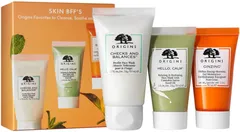
Skin BFF'S Origins Favorites to Cleanse, Soothe and Hydrate
Source: From product name
This product works by removing dirt and oil from the surface of the skin. It uses a combination of mild cleansing agents (behenic acid, carbomer, cetearyl alcohol, glyceryl stearate, hexylene glycol, isostearic acid, lauric acid, linolenic acid, myristic acid, palmitic acid, peg-100 stearate, peg-3 distearate, peg-7 glyceryl cocoate, polysorbate 60, sodium methyl cocoyl taurate, stearic acid, stearyl alcohol, tin, xanthan gum) and should be able to cleanse the skin gently. Still keep in mind that any cleansing can disrupt the skin barrier, and most people do not need to cleanse their skin more than once per day.
Even though this formulation is mild, the following cleansing agents could trigger an irritation or allergy for some people: sodium methyl cocoyl taurate
Used to create a thicker product consistency
Helps create a thicker or gel-like product texture. It is not a surfactant but can be used in gentle cleansing formulations
A non-drying alcohol. Works as an emollient. Helps water and oil mix together and creates a nice product texture
An emollient that softens the skin and forms a protective layer on its surface. Helps water and oil mix together
Helps create a more spreadable product texture
Used to create a nice product texture
Helps water and oil mix together. Has anti-bacterial properties that might be helpful in preventing blemishes
Helps water and oil mix together
An emollient that helps soften the skin and calm down inflammation
Helps oil and water mix together. Could be comedogenic
An emollient that is naturally present in skin and helps soften it
Helps oil and water mix togehter and creates a nice product texture
Helps oils and water mix together and works as a cleansing agent
Helps oil and water mix together
Helps oil and water mix together. Can be used as cleansing agent
Helps oil and water mix together and works as an emollient
An emollient that helps soften the skin
An excellent emollient. Helps soften the skin, restore its barrier function, and can help to calm down inflammation. It can be helpful to prevent blemishes and clogged pores
Exfoliation
This product can help exfoliate the skin. In other words, it helps break down the bonds between dead cells on the surface of the skin and speed up the skin turnover. Skin often appears softer and brighter after exfoliation, but overdoing it can result in disrupted skin barrier. The following ingredient is doing the exfoliating job in this product: hydroxyethyl urea.
A derivative of urea, a compound that is naturally present in skin. Attracts water to the upper layer of the skin. Can enhance penetration of other ingredients
How honest is this product?
| Promise | Can it deliver? |
|---|---|
| Cleansing |
Total Promises Fulfilled score: 100/100.
Potential irritants
Comedogenic ingredients
User reviews (0)
Averages from community submissions.
No reviews yet for this product.
Be the first to share your experience!
Tried this product?
Help capture what the ingredient list can't—texture, finish, pilling, scent, and more. Answer what you can, skip the rest.
Takes ~30 seconds.
Reviews are shown in aggregate. No personal details.
| Product | Similarity | Price | Irritancy |
|---|---|---|---|
 Origins Skin BFF'S Origins Favorites to Cleanse, Soothe and Hydrate | Current | - | |
REVOLUTION SKINCARE Purifying Facial Gel Cleanser with Niacinamide | 76% | ≈ $8.46 | |
Naturium Multi-Calm Cream Cleanser | 76% | ≈ $15.60 | |
 Simple Kind to Skin Instant Glow Cleansing Wipes | 76% | - | |
 CeraVe Makeup Removing Cleanser Cloths | 75% | $9.99 | |
 Kanebo Freeplus Mild Cream Cleanser | 75% | $34.20 |
Key Actives
Is proven to be effective in reducing blemishes, evening out skin tone and helping to improve lines and wrinkles. It helps the skin to repair sun damage, calm down inflammation and keep maintain good levels of moisture. The concentration of about 2% is effective for supporting the skin barrier and evening out the skin tone. Concentration of 4-6% is better for helping with acne and balancing the sebum production
Helps soften the upper layer of the skin and can support skin barrier function
A fermentation product created by bacteria Lactobacillus. The fermented product has anti-bacterial properties and might be helpful in calming down inflammation, but studies are lacking. Helps attract water to the upper layer of the skin. Can be used as a preservative
An emollient that helps soften the skin and calm down inflammation
Helps water and oil mix together. Has anti-bacterial properties that might be helpful in preventing blemishes
A great moisturising ingredient that softens the skin and reduces water loss from its upper layer. It also can be helpful in protecting skin from free radicals
An excellent emollient. Helps soften the skin, restore its barrier function, and can help to calm down inflammation. It can be helpful to prevent blemishes and clogged pores
An excellent emollient. Helps soften the skin, restore its barrier function, and can help to calm down inflammation. It can be helpful to prevent blemishes and clogged pores
An emollient that is naturally present in skin and helps soften it
Helps oil and water mix together and works as an emollient
A non-drying alcohol. Works as an emollient. Helps water and oil mix together and creates a nice product texture
A derivative of urea, a compound that is naturally present in skin. Attracts water to the upper layer of the skin. Can enhance penetration of other ingredients
Might be helpful in neutralizing free radicals. Can have a dehydration effect that might somewhat decrease the look of puffy eyes
An emollient that helps soften the skin
An emollient that helps soften the skin and might help calm down inflammation
An emollient that softens the skin and forms a protective layer on its surface. Helps water and oil mix together
Helps oil and water mix together and works as an emollient
An algae extract that can help attract water to the upper layer of the skin and have some anti-oxidant properties
A plant extract that helps attract water to the upper layer of the skin and can help neutralize free radicals
Might be helpful in neutralizing free radicals. Can have a dehydration effect that might somewhat decrease the look of puffy eyes
A non-drying alcohol. Works as an emollient. Helps water and oil mix together and creates a nice product texture
A silicone that helps to reduce water loss from the surface of the skin. Can temporarily "fill in" lines and wrinkles, absorb oil, and create a nice product finish
Helps oil and water mix together. Could be comedogenic
One of the best moisturizing ingredients. Naturally present in skin. It attracts water to the upper layer of the skin working as a humectant
Helps oil and water mix together. Can be used as cleansing agent
One of the best moisturizing ingredients. Naturally present in skin. It attracts water to the upper layer of the skin working as a humectant
Helps soften the upper layer of the skin
A sugar that attracts water to the upper layer of the skin
Naturally present in skin and helps to attract water to its upper layer
An oil naturally present in skin. Works as an emollient to soften the skin and form a protective layer on its surface without a greasy feeling.
One of the best moisturizing ingredients. Attracts water into the upper layer of the skin
Helps create a thicker or gel-like product texture. It is not a surfactant but can be used in gentle cleansing formulations
Used to create a thicker product consistency
A plant oil that due to its high linoleic acid content can help strengthen skin's barrier function and soften its upper layer
A plant oil that due to its high linoleic acid content can help strengthen skin's barrier function and soften its upper layer
Can help attract water to the upper layer of the skin. In crystal form, it can work as a gentle exfoliant, gentler than the salt scrub. Helps stabilize the emulsion
Helps oil and water mix togehter and creates a nice product texture
Helps soften the upper layer of the skin and might have some anti-oxidant properties
Helps oils and water mix together and works as a cleansing agent
Plant extract that might hep calm down inflammation in skin
A plant oil that might be able to help neutralize free radicals in skin
An oil naturally present in skin. Works as an emollient to soften the skin and form a protective layer on its surface without a greasy feeling.
A good mix of fatty acids that forms a protective layer on the skin. Improves the shelf life of products. Derived from coconut and glycerin
One of the best moisturizing ingredients. Attracts water into the upper layer of the skin
An emollient made of jojoba oil. Helps soften the skin and support its barrier function
Helps soften the upper layer of the skin and reduce water loss from its surface
Helps create a thicker or gel-like product texture. It is not a surfactant but can be used in gentle cleansing formulations
An emollient that helps soften the skin
Helps create a more spreadable product texture
Potential irritants
Helps oil and water mix together. Can be used as cleansing agent
An essential oil that is used as a fragrance and can be irritating. It might have some anti-oxidant effect in skin
An essential oil. Can be irritating. Can become an allergen with oxidation
Plant extract that can be irritating and is a known allergen
A plant oil with a high content of volatile compounds that can irritate the skin and lead to allergic reactions. Can lead to photosensitivity
A preservative. Is a frequent allergen in cosmetics
A plant oil with high content of volatile compounds that, especially when exposed to air, can cause allergic reactions and irritate the skin
An essentil oil from orange peel. Potential allergen and can be irritating
A common frangrance that can easily irritate skin, especially if exposed to air, light or heat
A plant extract that might have some anti-inflammatory properties, but solid evidence is lacking. It can be irritating
An essential oil. Potential allergen and can be irritating. It has some anti-bacterial properties
Aromatic plant oil used in cosmetics as a fragrance. A likely irritant
Plant extract that might hep calm down inflammation in skin
Hops extract. Can contain common irritants and allergens geraniol, limonene, linalool
An algae extract that can help attract water to the upper layer of the skin and have some anti-oxidant properties
Helps oil and water mix together. Could be comedogenic
Helps water and oil mix together. Has anti-bacterial properties that might be helpful in preventing blemishes
Can help attract water to the upper layer of the skin. Avoid if sensitive to gluten
A plant extract that might have some anti-oxidant properties. Avoid if you are sensitive to gluten
Might be somewhat helpful in reducing hyperpigmentation and neutralizing free radicals but its typical concentration in a product is too low for having an effect
Helps attract water to the upper layer of the skin and can help stabilize the product formulation
A more stable but less bio-available form of vitamin E compared to Tocopherol. Might help moisturize and protect the skin from free radicals, but mostly used in low concentrations to stabilize other ingredients.
Might be helpful in neutralizing free radicals. Can have a dehydration effect that might somewhat decrease the look of puffy eyes
Plant extract that might help neutralize free radicals and support skin barrier function, but research on its effectiveness in skin is lacking
Helps preserve products and creates a nice product texture
A plant oil that due to its high linoleic acid content can help strengthen skin's barrier function and soften its upper layer
Helps oils and water mix together and works as a cleansing agent
A plant extract that can help lighten the skin and calm down inflammation. Might be helpful in neutralizing free radicals
A plant extract that can contain resveratrol, an antioxidant that can help neutralize free radicals in skin. The effectiveness depends on the extract quality and concentration in the product
Helps soften the upper layer of the skin and can support skin barrier function
A plant extract that helps attract water to the upper layer of the skin and can help neutralize free radicals
A plant oil that might be able to help neutralize free radicals in skin
Plant extract that might have moisturizing properties. Avoid if you suffer from wheat or gluten intolerance
An emollient that helps soften the skin and calm down inflammation
A good mix of fatty acids that forms a protective layer on the skin. Improves the shelf life of products. Derived from coconut and glycerin
An emollient made of jojoba oil. Helps soften the skin and support its barrier function
Comedogenic ingredients
Helps oil and water mix together. Could be comedogenic
Helps water and oil mix together. Has anti-bacterial properties that might be helpful in preventing blemishes
A seaweed extract that contains sugars and can be helpful in attracting water to the upper layers of the skin if used in high enough concentrations
A non-drying alcohol. Works as an emollient. Helps water and oil mix together and creates a nice product texture
An emollient that helps soften the skin
A great moisturising ingredient that softens the skin and reduces water loss from its upper layer. It also can be helpful in protecting skin from free radicals
Might help to attract water to the upper layer of the skin
Plant extract that might have moisturizing properties. Avoid if you suffer from wheat or gluten intolerance
A non-drying alcohol. Works as an emollient. Helps water and oil mix together and creates a nice product texture
All ingredients
Helps oil and water mix together. Could be comedogenic
One of the best moisturizing ingredients. Naturally present in skin. It attracts water to the upper layer of the skin working as a humectant
Helps oil and water mix together. Can be used as cleansing agent
An emollient that is naturally present in skin and helps soften it
Helps water and oil mix together. Has anti-bacterial properties that might be helpful in preventing blemishes
An essential oil that is used as a fragrance and can be irritating. It might have some anti-oxidant effect in skin
An essential oil. Can be irritating. Can become an allergen with oxidation
Plant extract that can be irritating and is a known allergen
A plant oil with a high content of volatile compounds that can irritate the skin and lead to allergic reactions. Can lead to photosensitivity
A seaweed extract that contains sugars and can be helpful in attracting water to the upper layers of the skin if used in high enough concentrations
Can help attract water to the upper layer of the skin. Avoid if sensitive to gluten
A non-drying alcohol. Works as an emollient. Helps water and oil mix together and creates a nice product texture
Helps soften the upper layer of the skin and create a nice product finish
Used to create a nice product texture and help delivery of other ingredients. Might be somewhat helpful in attracting water to the upper layer of the skin
A preservative. Is a frequent allergen in cosmetics
Used to create a nice product texture and help delivery of other ingredients. Might be somewhat helpful in attracting water to the upper layer of the skin
Helps products spread more easily and works as an emollient to soften skin
One of the best moisturizing ingredients. Naturally present in skin. It attracts water to the upper layer of the skin working as a humectant
Is proven to be effective in reducing blemishes, evening out skin tone and helping to improve lines and wrinkles. It helps the skin to repair sun damage, calm down inflammation and keep maintain good levels of moisture. The concentration of about 2% is effective for supporting the skin barrier and evening out the skin tone. Concentration of 4-6% is better for helping with acne and balancing the sebum production
An emollient that helps soften the skin
A plant oil with high content of volatile compounds that, especially when exposed to air, can cause allergic reactions and irritate the skin
An essentil oil from orange peel. Potential allergen and can be irritating
A common frangrance that can easily irritate skin, especially if exposed to air, light or heat
A great moisturising ingredient that softens the skin and reduces water loss from its upper layer. It also can be helpful in protecting skin from free radicals
A derivative of urea, a compound that is naturally present in skin. Attracts water to the upper layer of the skin. Can enhance penetration of other ingredients
A plant extract that might have some anti-oxidant properties. Avoid if you are sensitive to gluten
Might be somewhat helpful in reducing hyperpigmentation and neutralizing free radicals but its typical concentration in a product is too low for having an effect
A plant extract that might have some anti-inflammatory properties, but solid evidence is lacking. It can be irritating
Helps attract water to the upper layer of the skin and can help stabilize the product formulation
A more stable but less bio-available form of vitamin E compared to Tocopherol. Might help moisturize and protect the skin from free radicals, but mostly used in low concentrations to stabilize other ingredients.
Naturally present in skin and helps to attract water to its upper layer
Helps attract water to the upper layer of the skin and improves the product texture
Might be helpful in neutralizing free radicals. Can have a dehydration effect that might somewhat decrease the look of puffy eyes
An excellent emollient. Helps soften the skin, restore its barrier function, and can help to calm down inflammation. It can be helpful to prevent blemishes and clogged pores
Plant extract that might help neutralize free radicals and support skin barrier function, but research on its effectiveness in skin is lacking
An oil naturally present in skin. Works as an emollient to soften the skin and form a protective layer on its surface without a greasy feeling.
One of the best moisturizing ingredients. Attracts water into the upper layer of the skin
Help soften the upper layer of the skin and create a nice product consistency
Increases thickness of a product. Texture enhancer for oil-in-water emulsions
Helps create a thicker or gel-like product texture. It is not a surfactant but can be used in gentle cleansing formulations
Helps preserve products and creates a nice product texture
A preservative. It helps prevent bacterial growth in cosmetic products
A plant oil that due to its high linoleic acid content can help strengthen skin's barrier function and soften its upper layer
Used to create a nice product texture and help delivery of other ingredients. Might be somewhat helpful in attracting water to the upper layer of the skin
A plant oil that due to its high linoleic acid content can help strengthen skin's barrier function and soften its upper layer
Can help attract water to the upper layer of the skin. In crystal form, it can work as a gentle exfoliant, gentler than the salt scrub. Helps stabilize the emulsion
An emollient that helps soften the skin and might help calm down inflammation
An essential oil. Potential allergen and can be irritating. It has some anti-bacterial properties
Aromatic plant oil used in cosmetics as a fragrance. A likely irritant
An essential oil that is used as a fragrance and can be irritating. It might have some anti-oxidant effect in skin
A plant oil with a high content of volatile compounds that can irritate the skin and lead to allergic reactions. Can lead to photosensitivity
A common frangrance that can easily irritate skin, especially if exposed to air, light or heat
Helps oil and water mix togehter and creates a nice product texture
Helps soften the upper layer of the skin and might have some anti-oxidant properties
An emollient that softens the skin and forms a protective layer on its surface. Helps water and oil mix together
Used to create a thicker product consistency and soften the upper layer of the skin
Helps oils and water mix together and works as a cleansing agent
Helps to soften the upper layer of the skin
Plant extract that might hep calm down inflammation in skin
A plant extract that can help lighten the skin and calm down inflammation. Might be helpful in neutralizing free radicals
Hops extract. Can contain common irritants and allergens geraniol, limonene, linalool
A plant extract that can contain resveratrol, an antioxidant that can help neutralize free radicals in skin. The effectiveness depends on the extract quality and concentration in the product
A plant extract that might have some anti-oxidant properties. Avoid if you are sensitive to gluten
Helps soften the upper layer of the skin and can support skin barrier function
Might help to attract water to the upper layer of the skin
An algae extract that can help attract water to the upper layer of the skin and have some anti-oxidant properties
A plant extract that helps attract water to the upper layer of the skin and can help neutralize free radicals
A plant oil that might be able to help neutralize free radicals in skin
An oil naturally present in skin. Works as an emollient to soften the skin and form a protective layer on its surface without a greasy feeling.
An excellent emollient. Helps soften the skin, restore its barrier function, and can help to calm down inflammation. It can be helpful to prevent blemishes and clogged pores
Might be helpful in neutralizing free radicals. Can have a dehydration effect that might somewhat decrease the look of puffy eyes
Plant extract that might have moisturizing properties. Avoid if you suffer from wheat or gluten intolerance
A fermentation product created by bacteria Lactobacillus. The fermented product has anti-bacterial properties and might be helpful in calming down inflammation, but studies are lacking. Helps attract water to the upper layer of the skin. Can be used as a preservative
An emollient that helps soften the skin and calm down inflammation
Helps preserve products and creates a nice product texture
A good mix of fatty acids that forms a protective layer on the skin. Improves the shelf life of products. Derived from coconut and glycerin
One of the best moisturizing ingredients. Attracts water into the upper layer of the skin
An emollient made of jojoba oil. Helps soften the skin and support its barrier function
A non-drying alcohol. Works as an emollient. Helps water and oil mix together and creates a nice product texture
A more stable but less bio-available form of vitamin E compared to Tocopherol. Might help moisturize and protect the skin from free radicals, but mostly used in low concentrations to stabilize other ingredients.
Helps soften the upper layer of the skin and reduce water loss from its surface
Helps create a thicker or gel-like product texture. It is not a surfactant but can be used in gentle cleansing formulations
A silicone that helps to reduce water loss from the surface of the skin. Can temporarily "fill in" lines and wrinkles, absorb oil, and create a nice product finish
Increases thickness of a product. Texture enhancer for oil-in-water emulsions
A type of silicone that helps oil and water mix well together. Helps to disperse other ingredients, e.g. pigments, evenly in a formulation
A preservative. It helps prevent bacterial growth in cosmetic products
Creates an illusion of smoother and more radiant skin tone. Adds shimmer to the skin by reflecting light
An umbrella term for the following three colorants: CI 77491, CI 77492, CI 77499. They might be able to offer some protection against visible light, but the degree of the protection is not clear
An umbrella term for the following three colorants: CI 77491, CI 77492, CI 77499. They might be able to offer some protection against visible light, but the degree of the protection is not clear
An umbrella term for the following three colorants: CI 77491, CI 77492, CI 77499. They might be able to offer some protection against visible light, but the degree of the protection is not clear
Works as a UV filter when used in high concentrations. It is photostable and is effective mostly against the UVB light, with some protection in the UVA range. In small concentrations, used for its ability to improve the color of cosmetic products. Is usually well tolerated by the skin
Ingredient list view
Water, Lavandula angustifolia flower water, Myristic acid, Glycerin, Behenic acid, Sodium methyl cocoyl taurate, Palmitic acid, Potassium hydroxide, Lauric acid, Stearic acid, Anthemis nobilis flower oil, Mentha viridis leaf oil, Pelargonium graveolens flower oil, Lavandula hybrida oil, Citrus aurantium bergamia fruit oil, Styrax benzoin gum, Linalool, Peg-3 distearate, Tourmaline, Laminaria saccharina extract, Hydrolyzed wheat protein, Cetearyl alcohol, Polyquaternium-7, Butylene glycol, Disodium edta, Methylchloroisothiazolinone, Methylisothiazolinone, Tin, Unknown, Water, Butylene glycol, Dicaprylyl carbonate, Silica, Glycerin, Niacinamide, Isopropyl isostearate, Citrus limon peel oil, Citrus grandis peel oil, Mentha viridis leaf oil, Citrus aurantium dulcis peel oil, Limonene, Linalool, Citral, Butyrospermum parkii butter, Simmondsia chinensis butter, Hydroxyethyl urea, Hordeum vulgare extract, Trehalose, Cucumis sativus fruit extract, Panax ginseng root extract, Sodium polyaspartate, Tocopheryl acetate, Sodium pca, Helianthus annuus seedcake, Sorbitol, Caffeine, Linoleic acid, Ophiopogon japonicus root extract, Squalane, Sodium hyaluronate, Ppg-15 stearyl ether, Ammonium acryloyldimethyltaurate/vp copolymer, Hydroxyacetophenone, Carbomer, Caprylyl glycol, Xanthan gum, Sodium hydroxide, Ethylhexylglycerin, Disodium edta, Phenoxyethanol, Tin, Unknown, Cannabis sativa seed oil, Water, Butylene glycol, Prunus armeniaca kernel oil, Cannabis sativa seed oil, Sucrose, Carthamus tinctorius seed oil, Lavandula angustifolia oil, Cymbopogon martini oil, Pogostemon cablin oil, Amyris balsamifera bark oil, Anthemis nobilis flower oil, Salvia sclarea oil, Citrus aurantium bergamia fruit oil, Cupressus sempervirens leaf/nut/stem oil, Myristica fragrans kernel oil, Vetiveria zizanoides root oil, Geraniol, Linalool, Limonene, Citral, Farnesol, Peg-100 stearate, Oryza sativa bran oil, Glyceryl stearate, Stearic acid, Tribehenin, Peg-7 glyceryl cocoate, Caprylic/capric/myristic/stearic triglyceride, Spilanthes acmella flower extract, Glycyrrhiza glabra root extract, Humulus lupulus extract, Polygonum cuspidatum root extract, Hordeum vulgare extract, Oenothera biennis oil, Hypnea musciformis extract, Gelidiella acerosa extract, Castanea sativa seed extract, Rubus idaeus seed oil, Squalane, Linoleic acid, Caffeine, Triticum vulgare germ extract, Lactobacillus ferment, Linolenic acid, Ethylhexylglycerin, Caprylyl glycol, Caprylic/capric triglyceride, Sodium hyaluronate, Isostearic acid, Jojoba esters, Cetearyl alcohol, Tocopheryl acetate, Polysorbate 60, Bis-diglyceryl polyacyladipate-2, Carbomer, Stearyl alcohol, Dimethicone, Potassium hydroxide, Hexylene glycol, Ammonium acryloyldimethyltaurate/vp copolymer, Triethoxycaprylylsilane, Disodium edta, Sodium dehydroacetate, Phenoxyethanol, Mica, Ci 77163, Chromium oxide greens, Ci 77288, Iron oxides, Ci 77491, Iron oxides, Ci 77492, Iron oxides, Ci 77499, Titanium dioxide, Ci 77891
- The fatty acid profile of the skin surface lipid layer in papulopustular rosacea
- Glycerol and the skin: holistic approach to its origin and functions
- Safety Assessment of Alkyl Taurate Amides and Taurate Salts as Used in Cosmetics
- Safety Assessment of Anthemis nobilis– Derived Ingredients as Used in Cosmetics
- Fragrance Compound Geraniol Forms Contact Allergens on Air Exposure. Identification and Quantification of Oxidation Products and Effect on Skin Sensitization
- Safety Assessment of Citrus-Derived Peel Oils as Used in Cosmetics
- Oxidized citrus oil (R-limonene): A frequent skin sensitizer in Europe
- Air oxidation increases skin irritation from fragrance terpenes
- Safety Assessment of Brown Algae-Derived Ingredients as Used in Cosmetics
- The effect of laminaria saccharina extract on suppressing pigmentation in in-vitro system
- Wheat in skin care
- Methylisothiazolinone contact allergy: a review
- Niacinamide - mechanisms of action and its topical use in dermatology
- Gehring, W. (2004). Nicotinic acid/niacinamide and the skin. Journal of Cosmetic Dermatology, 3(2), 88–93. doi:10.1111/j.1473-2130.2004.00115.x
- Safety Assessment of Hydroxyethyl Urea As Used in Cosmetics
- Celiac Disease & Skin Care Products
- Preventive and Therapeutic Role of Functional Ingredients of Barley Grass for Chronic Diseases in Human Beings
- Ginseng in Dermatology: A Review
- Antiaging effects of the mixture of Panax ginseng and Crataegus pinnatifida in human dermal fibroblasts and healthy human skin
- Application of sodium polyaspartate in skin care products
- Safety Assessment of Helianthus annuus (Sunflower)-Derived Ingredients as Used in Cosmetics
- The Permeability Barrier in Essential Fatty Acid Deficiency: Evidence for a Direct Role for Linoleic Acid in Barrier Function
- Digital image analysis of the effect of topically applied linoleic acid on acne microcomedones.
- Effects of steroidal saponins extract from Ophiopogon japonicus root ameliorates doxorubicin-induced chronic heart failure by inhibiting oxidative stress and inflammatory response
- Cosmetic use of an ophiopogon japonicus active principle
- Hyaluronic acid: A key molecule in skin aging
- Hyaluronan (Hyaluronic Acid): a natural moisturizer for skin care
- Final report on the safety assessment of PPG-11 and PPG-15 stearyl ethers
- Hemp (Cannabis sativa L.) seed oil: Analytical and phytochemical characterization of unsaponifiable fraction
- Hemp (Cannabis sativa L.) as a Resource for Green Cosmetics
- Annex I: Clinical evidence regarding sensitisation to individual fragrance chemicals and to natural extracts
- Study on the Composition of Rice Bran Oil and Its Higher Free Fatty Acids Value
- Amended Safety Assessment of Triglycerides as Used in Cosmeti
- Transdermal behaviour of the N-alkylamide spilanthol (affinin) from Spilanthes acmella (Compositae) extracts
- Nuclear Factor Kappa B Inhibition as a Therapeutic Target of Nutraceuticals in Arthritis, Osteoarthritis, and Related Inflammation
- Resveratrol as an active ingredient for cosmetic and dermatological applications: a review
- Marine Bioactive Compounds and Their Health Benefits: A Review
- Antioxidant Capacity and Lipophilic Content of Seaweeds Collected from the Qingdao Coastline
- Chestnut extract
- The effect of probiotics on immune regulation, acne, and photoaging
- Comparison of clinical and histological effects between lactobacillus-fermented Chamaecyparis obtusa and tea tree oil for the treatment of acne: an eight-week double-blind randomized controlled split-face study
- Use of Probiotics for Dermal Applications
- Safety assessment of bis-diglyceryl polyacyladipate-2 and bis-diglyceryl polyacyladipate-1 as used in cosmetics
- Dimethicone as a protective ingredient in topical medications
- Final Report on the Safety Assessment of Dimethicone Copolyol
- 4 Final Report on the Safety Assessment of Sodium Dehydroacetate and Dehydroacetic Acid