Works for:
based on ingredients and %- Moisturizing
- Anti-oxidation
- Anti-aging
Can it cause trouble?
- Irritation risk: high
- Comedogenic risk ingredients: 8
Key actives

![Perfectionist [CP+R] - Wrinkle Lifting/Firming Serum](/_ipx/q_80&f_webp&fit_inside&s_160x160/https://image-delivery.nyc3.cdn.digitaloceanspaces.com/thumbs/big/45dadb34a4f71b32b396c06104cd1775d5931ebb.png)
Works for
Anti-oxidation
This product contains antioxidants (tocotrienols) that can help neutralize free radicals in skin. By doing so, they can lessen the damage the skin gets from the UV light (sun).
The following ingredients - squalene also can have an antioxidant effect, but there is less evidence to confirm their effectiveness in skin.
A type of vitamin E that is more powerful in neutralizing free radicals compared to its other forms
An oil that is naturally part of skin sebum that helps to soften its upper layer, reduce water loss and neutralize free radicals. It might be comedogenic. Avoid applying large concentrations (or pure oil) before sun exposure as oxidized squalene can clog pores and lead to skin irritation. Today squalene is mostly derived from vegetable oils or synthetized by yeast
An emollient that helps soften the skin and might help calm down inflammation
A plant extract that might have some anti-oxidant effect
A plant extract that can help lighten the skin and calm down inflammation. Might be helpful in neutralizing free radicals
A plant extract that might help neutralize free radicals in skin, but research on its effectiveness is lacking
A fermentation product created by bacteria Lactobacillus. The fermented product has anti-bacterial properties and might be helpful in calming down inflammation, but studies are lacking. Helps attract water to the upper layer of the skin. Can be used as a preservative
A plant extract that is rich in a fragrance compound eugenol that is a frequent allergen and can be irritating. It might also contain anti-oxidants to help neutralize free radicals
Brown seaweed extract. Can help attract water to the upper layer of the skin and might have some antioxidant effect
Red seaweed extract. Can help attract water to the upper layer of the skin and might have some antioxidant effect
Might be helpful in neutralizing free radicals. Can have a dehydration effect that might somewhat decrease the look of puffy eyes
Helps to soften the upper layer of the skin and might have some anti-oxidant effect
A plant extract that can contain an irritating essential oil. Might have some anti-oxidant effect, but evidence is lacking
An essential oil. Can be irritating. Can become an allergen with oxidation
An algae extract that can help attract water to the upper layer of the skin and have some anti-oxidant properties
Used as a fragrance. Can be irritating
A plant extract that might have some anti-oxidant and anti-inflammatory properties but evidence for effectiveness in skin is missing
Pure form of vitamin E. Can help moisturise and protect the skin from free radicals. Often used to help stabilise other ingredients or the formula itself
Can help neutralize free radicals in skin. Preliminary studies show that it can be more effective than coenzyme Q10 but studies on effective concentration for topical applications are lacking
Helps attract water to the upper layer of the skin and might have some anti-oxidant and skin lightening properties. It can help calm down inflammation in skin
A plant extract that has been shown to be able to reduce inflammation in skin, support restoration of skin barrier function, as well as support collagen production. Contains active compounds called centelloids: asiaticoside, madecasosside, asiatic acid and madecassic acid. Might be helpful in preventing stretch marks. It can be itself be irritating though.
A plant extract that can contain an antioxidant compound
Can have some moisturizing properties due to its sugar content
A plant extract that might have some anti-oxidant properties. Avoid if you are sensitive to gluten
A great moisturising ingredient that softens the skin and reduces water loss from its upper layer. It also can be helpful in protecting skin from free radicals
A more stable but less bio-available form of vitamin E compared to Tocopherol. Might help moisturize and protect the skin from free radicals, but mostly used in low concentrations to stabilize other ingredients.
Plant extract that might have moisturizing properties. Avoid if you suffer from wheat or gluten intolerance
A plant extract containing sugars that might help attract water to the upper layer of the skin. Is claimed by the manufacturer to help reduce pore size but evidence is lacking
Moisturizing
What does the product description say?
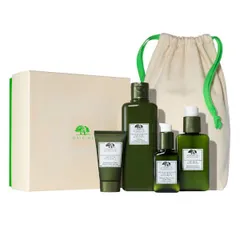
This dual-efficacy, weightless milky lotion with potent Mushrooms and Advanced Hydrators helps fortify skin with 48 hours of continuous hydration and reduce visible redness.
Source: Lookfantastic
This product can help improve hydration of the skin with the two types of ingredients.
The first type is called “humectants”:
these ingredients help attract water.
When humectants are on the surface of the skin, they “pull in” the moisture from the outside environment, or from
within deeper layers of the skin. The following ingredients in this product do the job:
algae extract, glycerin.
This product also contains ingredients called “occlusives”. They help reduce the speed with which our skin loses moisture to the outside environment. These ingredients also help soften the upper layer of the skin, so it feels less tight and nicer to the touch. The following ingredients in this product do the job: dimethicone, helianthus annuus seed oil.
The following ingredients in this product are especially good for supporting the skin barrier and helping with the hydration level: phytosphingosine
An emollient that helps soften the skin and might help calm down inflammation
A type of lipid that is naturally present in skin. It might help in repairing skin barrier function and has anti-bacterial effect
A product of yeast fermentation. Helps attract water to the upper layer of the skin
Helps attract water to the upper layer of the skin. Can have some anti-inflammatory effect
One of the best moisturizing ingredients. Attracts water into the upper layer of the skin
Helps attract water to the upper layer of the skin. Is often used to adjust the pH level of the product
Naturally present in skin and helps to attract water to its upper layer
Helps to soften the upper layer of the skin and might have some anti-oxidant effect
An oil naturally present in skin. Works as an emollient to soften the skin and form a protective layer on its surface without a greasy feeling.
An oil that is naturally part of skin sebum that helps to soften its upper layer, reduce water loss and neutralize free radicals. It might be comedogenic. Avoid applying large concentrations (or pure oil) before sun exposure as oxidized squalene can clog pores and lead to skin irritation. Today squalene is mostly derived from vegetable oils or synthetized by yeast
Can help attract water to the upper layer of the skin. In crystal form, it can work as a gentle exfoliant, gentler than the salt scrub. Helps stabilize the emulsion
A fermentation product created by bacteria Lactobacillus. The fermented product has anti-bacterial properties and might be helpful in calming down inflammation, but studies are lacking. Helps attract water to the upper layer of the skin. Can be used as a preservative
A great emollient due to its high linoleic acid content. One of the most effective plant oils in helping skin hydration and repairing skin barrier function
One of the best moisturizing ingredients. Naturally present in skin. It attracts water to the upper layer of the skin working as a humectant
An algae extract that can help attract water to the upper layer of the skin and have some anti-oxidant properties
A sugar that attracts water to the upper layer of the skin
Plant extract that helps the skin to attract water and make it more smooth for touch. Also shows promise of anti-aging properties, but research is not extensive yet
Brown seaweed extract. Can help attract water to the upper layer of the skin and might have some antioxidant effect
Red seaweed extract. Can help attract water to the upper layer of the skin and might have some antioxidant effect
Helps soften the upper layer of the skin. Could be comedogenic due to the myrisic acid content
Helps attract water to the upper layer of the skin
A silicone that helps to reduce water loss from the surface of the skin. Can temporarily "fill in" lines and wrinkles, absorb oil, and create a nice product finish
Lipids that work as an emollient and can be helpful in repairing skin barrier function
Helps soften the upper layer of the skin
Helps to soften the upper layer of the skin without creating a greasy texture
A non-drying alcohol. Works as an emollient. Helps water and oil mix together and creates a nice product texture
Helps soften the upper layer of the skin
Might help to attract water to the upper layer of the skin
An emollient that helps soften the skin but is not effective for restoring its barrier function. Might be helpful to calm down inflammation
Used to create a nice product texture and help delivery of other ingredients. Might be somewhat helpful in attracting water to the upper layer of the skin
Helps preserve products and creates a nice product texture
Used to preserve products, dissolve other ingredients and create a nice product texture
Helps to soften the upper layer of the skin
Non-drying alcohol that helps water and oil mix together. Also serves as an emollient
Helps attract water to the upper layer of the skin and improves the product texture
A sugar that is used to stabilize the product formulation. Can help attract water to the upper layer of the skin
An emollient that is naturally present in skin and helps soften it
An emollient that softens the skin and forms a protective layer on its surface. Helps water and oil mix together
Used to create a thicker product consistency and soften the upper layer of the skin
A plant extract that has been shown to be able to reduce inflammation in skin, support restoration of skin barrier function, as well as support collagen production. Contains active compounds called centelloids: asiaticoside, madecasosside, asiatic acid and madecassic acid. Might be helpful in preventing stretch marks. It can be itself be irritating though.
A great moisturising ingredient that softens the skin and reduces water loss from its upper layer. It also can be helpful in protecting skin from free radicals
Helps attract water to the upper layer of the skin and might have some anti-oxidant and skin lightening properties. It can help calm down inflammation in skin
Softens the upper layer of skin and helps restore the healthy skin barrier. Has shown to help calm down inflammation in skin. It is a stable oil, meaning that it retains its properties even when exposed to air.
A seaweed extract that contains sugars and can be helpful in attracting water to the upper layers of the skin if used in high enough concentrations
An excellent emollient. Helps soften the skin, restore its barrier function, and can help to calm down inflammation. It can be helpful to prevent blemishes and clogged pores
A good mix of fatty acids that forms a protective layer on the skin. Improves the shelf life of products. Derived from coconut and glycerin
A plant extract containing sugars that might help attract water to the upper layer of the skin. Is claimed by the manufacturer to help reduce pore size but evidence is lacking
Plant extract that might have moisturizing properties. Avoid if you suffer from wheat or gluten intolerance
Can have some moisturizing properties due to its sugar content
Pure form of vitamin E. Can help moisturise and protect the skin from free radicals. Often used to help stabilise other ingredients or the formula itself
Anti-aging
This product contains tocotrienols. This ingredient might be able to help reduce and prevent fine lines and wrinkles, improve skin elasticity and firmness, but there is not enough evidence that it actually works.
A type of vitamin E that is more powerful in neutralizing free radicals compared to its other forms
Might be helpful in restoring skin barrier function and, when combined with zinc carbonate and malonic acid, reducing fine lines and wrinkles by stimulating elastin production. Also helps stabilize the product formulation
Plant extract that helps the skin to attract water and make it more smooth for touch. Also shows promise of anti-aging properties, but research is not extensive yet
A plant extract that has been shown to be able to reduce inflammation in skin, support restoration of skin barrier function, as well as support collagen production. Contains active compounds called centelloids: asiaticoside, madecasosside, asiatic acid and madecassic acid. Might be helpful in preventing stretch marks. It can be itself be irritating though.
A seaweed extract that contains sugars and can be helpful in attracting water to the upper layers of the skin if used in high enough concentrations
A great moisturising ingredient that softens the skin and reduces water loss from its upper layer. It also can be helpful in protecting skin from free radicals
Pure form of vitamin E. Can help moisturise and protect the skin from free radicals. Often used to help stabilise other ingredients or the formula itself
How honest is this product?
| Promise | Can it deliver? |
|---|---|
| Moisturizing |
Total Promises Fulfilled score: 100/100.
We receive a small commission for purchases made through these links at no cost for you. Thank you for your support! Learn more
Affiliate link · supports WIMJ at no cost to you
Potential irritants
Comedogenic ingredients
User reviews (0)
Averages from community submissions.
No reviews yet for this product.
Be the first to share your experience!
Tried this product?
Help capture what the ingredient list can't—texture, finish, pilling, scent, and more. Answer what you can, skip the rest.
Takes ~30 seconds.
Reviews are shown in aggregate. No personal details.
| Product | Similarity | Price | Irritancy |
|---|---|---|---|
 Origins Sensational Soothers Mega-Mushroom Skin-Soothing Regimen | Current | ≈ $80.01 | |
Clinique Even Better Brightening Moisture Mask | 55% | ≈ $30.76 | |
Estée Lauder Perfectionist [CP+R] - Wrinkle Lifting/Firming Serum | 53% | ≈ $108.75 |
Key Actives
A plant extract that has been shown to be able to reduce inflammation in skin, support restoration of skin barrier function, as well as support collagen production. Contains active compounds called centelloids: asiaticoside, madecasosside, asiatic acid and madecassic acid. Might be helpful in preventing stretch marks. It can be itself be irritating though.
Helps attract water to the upper layer of the skin and might have some anti-oxidant and skin lightening properties. It can help calm down inflammation in skin
A fermentation product created by bacteria Lactobacillus. The fermented product has anti-bacterial properties and might be helpful in calming down inflammation, but studies are lacking. Helps attract water to the upper layer of the skin. Can be used as a preservative
A fermentation product created by bacteria Lactobacillus. The fermented product has anti-bacterial properties and might be helpful in calming down inflammation, but studies are lacking. Helps attract water to the upper layer of the skin. Can be used as a preservative
A fermentation product created by bacteria Lactobacillus. The fermented product has anti-bacterial properties and might be helpful in calming down inflammation, but studies are lacking. Helps attract water to the upper layer of the skin. Can be used as a preservative
A great moisturising ingredient that softens the skin and reduces water loss from its upper layer. It also can be helpful in protecting skin from free radicals
An excellent emollient. Helps soften the skin, restore its barrier function, and can help to calm down inflammation. It can be helpful to prevent blemishes and clogged pores
A type of lipid that is naturally present in skin. It might help in repairing skin barrier function and has anti-bacterial effect
Might be helpful in neutralizing free radicals. Can have a dehydration effect that might somewhat decrease the look of puffy eyes
An algae extract that can help attract water to the upper layer of the skin and have some anti-oxidant properties
Helps to soften the upper layer of the skin and might have some anti-oxidant effect
A silicone that helps to reduce water loss from the surface of the skin. Can temporarily "fill in" lines and wrinkles, absorb oil, and create a nice product finish
Might be helpful in neutralizing free radicals. Can have a dehydration effect that might somewhat decrease the look of puffy eyes
An algae extract that can help attract water to the upper layer of the skin and have some anti-oxidant properties
A type of vitamin E that is more powerful in neutralizing free radicals compared to its other forms
An oil that is naturally part of skin sebum that helps to soften its upper layer, reduce water loss and neutralize free radicals. It might be comedogenic. Avoid applying large concentrations (or pure oil) before sun exposure as oxidized squalene can clog pores and lead to skin irritation. Today squalene is mostly derived from vegetable oils or synthetized by yeast
Plant extract that helps the skin to attract water and make it more smooth for touch. Also shows promise of anti-aging properties, but research is not extensive yet
Might be helpful in neutralizing free radicals. Can have a dehydration effect that might somewhat decrease the look of puffy eyes
An emollient that helps soften the skin and might help calm down inflammation
A type of clay that consists mainly of aluminum silicate. Helps absorb oil and creates a thicker product consistency. Can be used to add a white color
Brown seaweed extract. Can help attract water to the upper layer of the skin and might have some antioxidant effect
Red seaweed extract. Can help attract water to the upper layer of the skin and might have some antioxidant effect
Helps attract water to the upper layer of the skin
Can help neutralize free radicals in skin. Preliminary studies show that it can be more effective than coenzyme Q10 but studies on effective concentration for topical applications are lacking
Helps soften the upper layer of the skin
A great emollient due to its high linoleic acid content. One of the most effective plant oils in helping skin hydration and repairing skin barrier function
Helps attract water to the upper layer of the skin. Can have some anti-inflammatory effect
Can help attract water to the upper layer of the skin. In crystal form, it can work as a gentle exfoliant, gentler than the salt scrub. Helps stabilize the emulsion
A product of yeast fermentation. Helps attract water to the upper layer of the skin
One of the best moisturizing ingredients. Naturally present in skin. It attracts water to the upper layer of the skin working as a humectant
One of the best moisturizing ingredients. Attracts water into the upper layer of the skin
A great emollient due to its high linoleic acid content. One of the most effective plant oils in helping skin hydration and repairing skin barrier function
Can help attract water to the upper layer of the skin. In crystal form, it can work as a gentle exfoliant, gentler than the salt scrub. Helps stabilize the emulsion
Softens the upper layer of skin and helps restore the healthy skin barrier. Has shown to help calm down inflammation in skin. It is a stable oil, meaning that it retains its properties even when exposed to air.
One of the best moisturizing ingredients. Naturally present in skin. It attracts water to the upper layer of the skin working as a humectant
Helps soften the upper layer of the skin
Helps attract water to the upper layer of the skin
Can help neutralize free radicals in skin. Preliminary studies show that it can be more effective than coenzyme Q10 but studies on effective concentration for topical applications are lacking
An oil naturally present in skin. Works as an emollient to soften the skin and form a protective layer on its surface without a greasy feeling.
A great emollient due to its high linoleic acid content. One of the most effective plant oils in helping skin hydration and repairing skin barrier function
A product of yeast fermentation. Helps attract water to the upper layer of the skin
Lipids that work as an emollient and can be helpful in repairing skin barrier function
One of the best moisturizing ingredients. Attracts water into the upper layer of the skin
A great emollient due to its high linoleic acid content. One of the most effective plant oils in helping skin hydration and repairing skin barrier function
An oil naturally present in skin. Works as an emollient to soften the skin and form a protective layer on its surface without a greasy feeling.
Softens the upper layer of skin and helps restore the healthy skin barrier. Has shown to help calm down inflammation in skin. It is a stable oil, meaning that it retains its properties even when exposed to air.
One of the best moisturizing ingredients. Naturally present in skin. It attracts water to the upper layer of the skin working as a humectant
Helps attract water to the upper layer of the skin
One of the best moisturizing ingredients. Attracts water into the upper layer of the skin
A great emollient due to its high linoleic acid content. One of the most effective plant oils in helping skin hydration and repairing skin barrier function
Helps soften the upper layer of the skin
A product of yeast fermentation. Helps attract water to the upper layer of the skin
Can help attract water to the upper layer of the skin. In crystal form, it can work as a gentle exfoliant, gentler than the salt scrub. Helps stabilize the emulsion
Helps attract water to the upper layer of the skin. Is often used to adjust the pH level of the product
Can help neutralize free radicals in skin. Preliminary studies show that it can be more effective than coenzyme Q10 but studies on effective concentration for topical applications are lacking
Naturally present in skin and helps to attract water to its upper layer
Can help attract water to the upper layer of the skin. In crystal form, it can work as a gentle exfoliant, gentler than the salt scrub. Helps stabilize the emulsion
An oil naturally present in skin. Works as an emollient to soften the skin and form a protective layer on its surface without a greasy feeling.
A good mix of fatty acids that forms a protective layer on the skin. Improves the shelf life of products. Derived from coconut and glycerin
One of the best moisturizing ingredients. Naturally present in skin. It attracts water to the upper layer of the skin working as a humectant
Helps attract water to the upper layer of the skin
Helps soften the upper layer of the skin. Could be comedogenic due to the myrisic acid content
A sugar that attracts water to the upper layer of the skin
Lipids that work as an emollient and can be helpful in repairing skin barrier function
A great emollient due to its high linoleic acid content. One of the most effective plant oils in helping skin hydration and repairing skin barrier function
One of the best moisturizing ingredients. Attracts water into the upper layer of the skin
Potential irritants
Used as a fragrance. It can be irritating and cause photosensitivity
An essential oil. Potential allergen and can be irritating. It has some anti-bacterial properties
A plant oil with high content of volatile compounds that, especially when exposed to air, can cause allergic reactions and irritate the skin
An essential oil. Can be irritating. Can become an allergen with oxidation
A common frangrance that can easily irritate skin, especially if exposed to air, light or heat
A plant extract that can contain an irritating essential oil. Might have some anti-oxidant effect, but evidence is lacking
A plant extract that can contain an active compound curcumin, that may have some anti-inflammatory properties when applied to the skin, but solid research is lacking and the typical concentration used in skincare products is too low. Can be an irritant
A plant extract that is rich in a fragrance compound eugenol that is a frequent allergen and can be irritating. It might also contain anti-oxidants to help neutralize free radicals
An algae extract that can help attract water to the upper layer of the skin and have some anti-oxidant properties
A plant extract that might have some anti-oxidant effect
An aromatic irritating plant extract that can cause photosensitivity in skin
Helps attract water to the upper layer of the skin
A plant extract that has been shown to be able to reduce inflammation in skin, support restoration of skin barrier function, as well as support collagen production. Contains active compounds called centelloids: asiaticoside, madecasosside, asiatic acid and madecassic acid. Might be helpful in preventing stretch marks. It can be itself be irritating though.
Might be helpful in neutralizing free radicals. Can have a dehydration effect that might somewhat decrease the look of puffy eyes
A more stable but less bio-available form of vitamin E compared to Tocopherol. Might help moisturize and protect the skin from free radicals, but mostly used in low concentrations to stabilize other ingredients.
Used to preserve products, dissolve other ingredients and create a nice product texture
Can work as an exfoliant but is typically used to adjust the product pH
A plant extract that might help neutralize free radicals in skin, but research on its effectiveness is lacking
Softens the upper layer of skin and helps restore the healthy skin barrier. Has shown to help calm down inflammation in skin. It is a stable oil, meaning that it retains its properties even when exposed to air.
An emollient that helps soften the skin but is not effective for restoring its barrier function. Might be helpful to calm down inflammation
Plant extract that might have moisturizing properties. Avoid if you suffer from wheat or gluten intolerance
A plant extract that might have some anti-oxidant properties. Avoid if you are sensitive to gluten
Helps preserve products and creates a nice product texture
Lipids that work as an emollient and can be helpful in repairing skin barrier function
Helps water and oil mix together
A plant extract containing sugars that might help attract water to the upper layer of the skin. Is claimed by the manufacturer to help reduce pore size but evidence is lacking
Can have some moisturizing properties due to its sugar content
A plant extract that can contain an antioxidant compound
Helps attract water to the upper layer of the skin. Is often used to adjust the pH level of the product
Maintains the texture of skincare products. Allows the product to spread evenly. Helps oil and water mix together
Used to dissolve other ingredients and to improve smell of products. It could be irritating
A good mix of fatty acids that forms a protective layer on the skin. Improves the shelf life of products. Derived from coconut and glycerin
A plant extract that might have some anti-oxidant and anti-inflammatory properties but evidence for effectiveness in skin is missing
A plant extract that can help lighten the skin and calm down inflammation. Might be helpful in neutralizing free radicals
Helps soften the upper layer of the skin. Could be comedogenic due to the myrisic acid content
Comedogenic ingredients
Might help to attract water to the upper layer of the skin
A great moisturising ingredient that softens the skin and reduces water loss from its upper layer. It also can be helpful in protecting skin from free radicals
Plant extract that might have moisturizing properties. Avoid if you suffer from wheat or gluten intolerance
Might help to attract water to the upper layer of the skin
A seaweed extract that contains sugars and can be helpful in attracting water to the upper layers of the skin if used in high enough concentrations
An oil that is naturally part of skin sebum that helps to soften its upper layer, reduce water loss and neutralize free radicals. It might be comedogenic. Avoid applying large concentrations (or pure oil) before sun exposure as oxidized squalene can clog pores and lead to skin irritation. Today squalene is mostly derived from vegetable oils or synthetized by yeast
Plant extract that helps the skin to attract water and make it more smooth for touch. Also shows promise of anti-aging properties, but research is not extensive yet
A non-drying alcohol. Works as an emollient. Helps water and oil mix together and creates a nice product texture
All ingredients
Used to create a nice product texture and help delivery of other ingredients. Might be somewhat helpful in attracting water to the upper layer of the skin
Used as a fragrance. It can be irritating and cause photosensitivity
An essential oil. Potential allergen and can be irritating. It has some anti-bacterial properties
A plant oil with high content of volatile compounds that, especially when exposed to air, can cause allergic reactions and irritate the skin
An essential oil. Can be irritating. Can become an allergen with oxidation
A common frangrance that can easily irritate skin, especially if exposed to air, light or heat
Helps attract water to the upper layer of the skin
Can help neutralize free radicals in skin. Preliminary studies show that it can be more effective than coenzyme Q10 but studies on effective concentration for topical applications are lacking
A fermentation product created by bacteria Lactobacillus. The fermented product has anti-bacterial properties and might be helpful in calming down inflammation, but studies are lacking. Helps attract water to the upper layer of the skin. Can be used as a preservative
A plant extract that can contain an irritating essential oil. Might have some anti-oxidant effect, but evidence is lacking
A plant extract that can contain an active compound curcumin, that may have some anti-inflammatory properties when applied to the skin, but solid research is lacking and the typical concentration used in skincare products is too low. Can be an irritant
A plant extract that is rich in a fragrance compound eugenol that is a frequent allergen and can be irritating. It might also contain anti-oxidants to help neutralize free radicals
A great emollient due to its high linoleic acid content. One of the most effective plant oils in helping skin hydration and repairing skin barrier function
Helps attract water to the upper layer of the skin. Can have some anti-inflammatory effect
A plant extract that has been shown to be able to reduce inflammation in skin, support restoration of skin barrier function, as well as support collagen production. Contains active compounds called centelloids: asiaticoside, madecasosside, asiatic acid and madecassic acid. Might be helpful in preventing stretch marks. It can be itself be irritating though.
Might help to attract water to the upper layer of the skin
Might be helpful in neutralizing free radicals. Can have a dehydration effect that might somewhat decrease the look of puffy eyes
Can help attract water to the upper layer of the skin. In crystal form, it can work as a gentle exfoliant, gentler than the salt scrub. Helps stabilize the emulsion
A product of yeast fermentation. Helps attract water to the upper layer of the skin
An algae extract that can help attract water to the upper layer of the skin and have some anti-oxidant properties
One of the best moisturizing ingredients. Naturally present in skin. It attracts water to the upper layer of the skin working as a humectant
One of the best moisturizing ingredients. Attracts water into the upper layer of the skin
A more stable but less bio-available form of vitamin E compared to Tocopherol. Might help moisturize and protect the skin from free radicals, but mostly used in low concentrations to stabilize other ingredients.
Used to stabilize the product formulation and can help absorb oil
Used to preserve products, dissolve other ingredients and create a nice product texture
Can work as an exfoliant but is typically used to adjust the product pH
A preservative. It helps prevent bacterial growth in cosmetic products
A great emollient due to its high linoleic acid content. One of the most effective plant oils in helping skin hydration and repairing skin barrier function
A plant extract that might help neutralize free radicals in skin, but research on its effectiveness is lacking
A plant extract that might have some anti-oxidant effect
Can help attract water to the upper layer of the skin. In crystal form, it can work as a gentle exfoliant, gentler than the salt scrub. Helps stabilize the emulsion
Used as a fragrance. It can be irritating and cause photosensitivity
An essential oil. Potential allergen and can be irritating. It has some anti-bacterial properties
Softens the upper layer of skin and helps restore the healthy skin barrier. Has shown to help calm down inflammation in skin. It is a stable oil, meaning that it retains its properties even when exposed to air.
One of the best moisturizing ingredients. Naturally present in skin. It attracts water to the upper layer of the skin working as a humectant
An emollient that helps soften the skin but is not effective for restoring its barrier function. Might be helpful to calm down inflammation
Helps to soften the upper layer of the skin
Helps to retain moisture by creating a protective barrier on the skin. Rich in fatty acids. Improves product texture and helps with the penetration of other ingredients.
A great moisturising ingredient that softens the skin and reduces water loss from its upper layer. It also can be helpful in protecting skin from free radicals
Helps to soften the upper layer of the skin and might have some anti-oxidant effect
Used as a fragrance. It can be irritating and cause photosensitivity
An essential oil. Potential allergen and can be irritating. It has some anti-bacterial properties
A plant oil with high content of volatile compounds that, especially when exposed to air, can cause allergic reactions and irritate the skin
An essential oil. Can be irritating. Can become an allergen with oxidation
A common frangrance that can easily irritate skin, especially if exposed to air, light or heat
Helps attract water to the upper layer of the skin
Can help neutralize free radicals in skin. Preliminary studies show that it can be more effective than coenzyme Q10 but studies on effective concentration for topical applications are lacking
A fermentation product created by bacteria Lactobacillus. The fermented product has anti-bacterial properties and might be helpful in calming down inflammation, but studies are lacking. Helps attract water to the upper layer of the skin. Can be used as a preservative
Used to create a nice product texture and help delivery of other ingredients. Might be somewhat helpful in attracting water to the upper layer of the skin
A plant extract that can contain an irritating essential oil. Might have some anti-oxidant effect, but evidence is lacking
Plant extract that might have moisturizing properties. Avoid if you suffer from wheat or gluten intolerance
A plant extract that is rich in a fragrance compound eugenol that is a frequent allergen and can be irritating. It might also contain anti-oxidants to help neutralize free radicals
A silicone that helps to reduce water loss from the surface of the skin. Can temporarily "fill in" lines and wrinkles, absorb oil, and create a nice product finish
An oil naturally present in skin. Works as an emollient to soften the skin and form a protective layer on its surface without a greasy feeling.
A plant extract that can contain an active compound curcumin, that may have some anti-inflammatory properties when applied to the skin, but solid research is lacking and the typical concentration used in skincare products is too low. Can be an irritant
A plant extract that might have some anti-oxidant properties. Avoid if you are sensitive to gluten
A great emollient due to its high linoleic acid content. One of the most effective plant oils in helping skin hydration and repairing skin barrier function
Might be helpful in restoring skin barrier function and, when combined with zinc carbonate and malonic acid, reducing fine lines and wrinkles by stimulating elastin production. Also helps stabilize the product formulation
A product of yeast fermentation. Helps attract water to the upper layer of the skin
Might help to attract water to the upper layer of the skin
A seaweed extract that contains sugars and can be helpful in attracting water to the upper layers of the skin if used in high enough concentrations
Helps preserve products and creates a nice product texture
Might be helpful in neutralizing free radicals. Can have a dehydration effect that might somewhat decrease the look of puffy eyes
An algae extract that can help attract water to the upper layer of the skin and have some anti-oxidant properties
An excellent emollient. Helps soften the skin, restore its barrier function, and can help to calm down inflammation. It can be helpful to prevent blemishes and clogged pores
Lipids that work as an emollient and can be helpful in repairing skin barrier function
Used to stabilize the product formulation and can help absorb oil
A type of vitamin E that is more powerful in neutralizing free radicals compared to its other forms
An oil that is naturally part of skin sebum that helps to soften its upper layer, reduce water loss and neutralize free radicals. It might be comedogenic. Avoid applying large concentrations (or pure oil) before sun exposure as oxidized squalene can clog pores and lead to skin irritation. Today squalene is mostly derived from vegetable oils or synthetized by yeast
One of the best moisturizing ingredients. Attracts water into the upper layer of the skin
Pure form of vitamin E. Can help moisturise and protect the skin from free radicals. Often used to help stabilise other ingredients or the formula itself
A preservative. It helps prevent bacterial growth in cosmetic products
A great emollient due to its high linoleic acid content. One of the most effective plant oils in helping skin hydration and repairing skin barrier function
A plant extract that might help neutralize free radicals in skin, but research on its effectiveness is lacking
A plant extract that might have some anti-oxidant effect
Used as a fragrance. It can be irritating and cause photosensitivity
An essential oil. Potential allergen and can be irritating. It has some anti-bacterial properties
An oil naturally present in skin. Works as an emollient to soften the skin and form a protective layer on its surface without a greasy feeling.
Softens the upper layer of skin and helps restore the healthy skin barrier. Has shown to help calm down inflammation in skin. It is a stable oil, meaning that it retains its properties even when exposed to air.
Used to create a nice product texture and help delivery of other ingredients. Might be somewhat helpful in attracting water to the upper layer of the skin
One of the best moisturizing ingredients. Naturally present in skin. It attracts water to the upper layer of the skin working as a humectant
Helps water and oil mix together
An essential oil. Potential allergen and can be irritating. It has some anti-bacterial properties
A plant oil with high content of volatile compounds that, especially when exposed to air, can cause allergic reactions and irritate the skin
Used as a fragrance. It can be irritating and cause photosensitivity
An essential oil. Can be irritating. Can become an allergen with oxidation
A common frangrance that can easily irritate skin, especially if exposed to air, light or heat
Helps attract water to the upper layer of the skin
Plant extract that helps the skin to attract water and make it more smooth for touch. Also shows promise of anti-aging properties, but research is not extensive yet
A plant extract containing sugars that might help attract water to the upper layer of the skin. Is claimed by the manufacturer to help reduce pore size but evidence is lacking
Can have some moisturizing properties due to its sugar content
A plant extract that can contain an irritating essential oil. Might have some anti-oxidant effect, but evidence is lacking
A plant extract that can contain an active compound curcumin, that may have some anti-inflammatory properties when applied to the skin, but solid research is lacking and the typical concentration used in skincare products is too low. Can be an irritant
A plant extract that is rich in a fragrance compound eugenol that is a frequent allergen and can be irritating. It might also contain anti-oxidants to help neutralize free radicals
One of the best moisturizing ingredients. Attracts water into the upper layer of the skin
A great emollient due to its high linoleic acid content. One of the most effective plant oils in helping skin hydration and repairing skin barrier function
A fermentation product created by bacteria Lactobacillus. The fermented product has anti-bacterial properties and might be helpful in calming down inflammation, but studies are lacking. Helps attract water to the upper layer of the skin. Can be used as a preservative
A more stable but less bio-available form of vitamin E compared to Tocopherol. Might help moisturize and protect the skin from free radicals, but mostly used in low concentrations to stabilize other ingredients.
A plant extract that can contain an antioxidant compound
Helps attract water to the upper layer of the skin and improves the product texture
A product of yeast fermentation. Helps attract water to the upper layer of the skin
Might be helpful in neutralizing free radicals. Can have a dehydration effect that might somewhat decrease the look of puffy eyes
Helps to soften the upper layer of the skin without creating a greasy texture
Can help attract water to the upper layer of the skin. In crystal form, it can work as a gentle exfoliant, gentler than the salt scrub. Helps stabilize the emulsion
Helps attract water to the upper layer of the skin. Is often used to adjust the pH level of the product
Can help neutralize free radicals in skin. Preliminary studies show that it can be more effective than coenzyme Q10 but studies on effective concentration for topical applications are lacking
Used to stabilize the product formulation and can help absorb oil
Non-drying alcohol that helps water and oil mix together. Also serves as an emollient
Naturally present in skin and helps to attract water to its upper layer
Increases thickness of a product. Texture enhancer for oil-in-water emulsions
Helps to retain moisture by creating a protective barrier on the skin. Rich in fatty acids. Improves product texture and helps with the penetration of other ingredients.
Maintains the texture of skincare products. Allows the product to spread evenly. Helps oil and water mix together
An emollient that is naturally present in skin and helps soften it
Helps preserve products and creates a nice product texture
Used to dissolve other ingredients and to improve smell of products. It could be irritating
A preservative. It helps prevent bacterial growth in cosmetic products
Can help attract water to the upper layer of the skin. In crystal form, it can work as a gentle exfoliant, gentler than the salt scrub. Helps stabilize the emulsion
An emollient that helps soften the skin and might help calm down inflammation
Used to create a nice product texture and help delivery of other ingredients. Might be somewhat helpful in attracting water to the upper layer of the skin
An oil naturally present in skin. Works as an emollient to soften the skin and form a protective layer on its surface without a greasy feeling.
Helps oil and water mix togehter and creates a nice product texture
A good mix of fatty acids that forms a protective layer on the skin. Improves the shelf life of products. Derived from coconut and glycerin
An emollient that softens the skin and forms a protective layer on its surface. Helps water and oil mix together
Used to create a thicker product consistency and soften the upper layer of the skin
One of the best moisturizing ingredients. Naturally present in skin. It attracts water to the upper layer of the skin working as a humectant
A non-drying alcohol. Works as an emollient. Helps water and oil mix together and creates a nice product texture
A type of clay that consists mainly of aluminum silicate. Helps absorb oil and creates a thicker product consistency. Can be used to add a white color
Used as a fragrance. It can be irritating and cause photosensitivity
An essential oil. Potential allergen and can be irritating. It has some anti-bacterial properties
A plant oil with high content of volatile compounds that, especially when exposed to air, can cause allergic reactions and irritate the skin
An essential oil. Can be irritating. Can become an allergen with oxidation
A common frangrance that can easily irritate skin, especially if exposed to air, light or heat
Helps attract water to the upper layer of the skin
A plant extract that can contain an irritating essential oil. Might have some anti-oxidant effect, but evidence is lacking
A plant extract that is rich in a fragrance compound eugenol that is a frequent allergen and can be irritating. It might also contain anti-oxidants to help neutralize free radicals
A plant extract that can contain an active compound curcumin, that may have some anti-inflammatory properties when applied to the skin, but solid research is lacking and the typical concentration used in skincare products is too low. Can be an irritant
A plant extract that might have some anti-oxidant and anti-inflammatory properties but evidence for effectiveness in skin is missing
An aromatic irritating plant extract that can cause photosensitivity in skin
A plant extract that can help lighten the skin and calm down inflammation. Might be helpful in neutralizing free radicals
Brown seaweed extract. Can help attract water to the upper layer of the skin and might have some antioxidant effect
Helps soften the upper layer of the skin. Could be comedogenic due to the myrisic acid content
Red seaweed extract. Can help attract water to the upper layer of the skin and might have some antioxidant effect
Helps attract water to the upper layer of the skin and might have some anti-oxidant and skin lightening properties. It can help calm down inflammation in skin
Non-drying alcohol that helps water and oil mix together. Also serves as an emollient
Helps attract water to the upper layer of the skin and improves the product texture
Helps preserve products and creates a nice product texture
Lipids that work as an emollient and can be helpful in repairing skin barrier function
A great emollient due to its high linoleic acid content. One of the most effective plant oils in helping skin hydration and repairing skin barrier function
A type of lipid that is naturally present in skin. It might help in repairing skin barrier function and has anti-bacterial effect
One of the best moisturizing ingredients. Attracts water into the upper layer of the skin
Helps create a thicker or gel-like product texture. It is not a surfactant but can be used in gentle cleansing formulations
A sugar that is used to stabilize the product formulation. Can help attract water to the upper layer of the skin
Can be used to help absorb oil as well as add volume and imporve texture of products.
A preservative. It helps prevent bacterial growth in cosmetic products
Ingredient list view
Water, Butylene glycol, Peg-4, Citrus aurantium dulcis oil, Lavandula angustifolia oil, Pogostemon cablin oil, Citrus nobilis peel oil, Pelargonium graveolens flower oil, Boswellia carterii oil, Limonene, Linalool, Citronellol, Geraniol, Ganoderma lucidum extract, Fuscoporia obliqua sclerotium extract, Cordyceps sinensis extract, Ergothioneine, Camelina sativa seed oil, Lactobacillus ferment, Hippophae rhamnoides extract, Zingiber officinale root extract, Curcuma longa root extract, Ocimum sanctum leaf extract, Helianthus annuus seed oil, Silybum marianum fruit extract, Saccharomyces lysate extract, Centella asiatica extract, Hypnea musciformis extract, Caffeine, Sucrose, Salvia sclarea extract, Saccharomyces ferment filtrate, Peg-40 hydrogenated castor oil, Gelidiella acerosa extract, Trideceth-9, Glycerin, Glycereth-26, Polysorbate 20, Sodium hyaluronate, Tocopheryl acetate, Maltodextrin, Pentylene glycol, Sodium hydroxide, Citric acid, Potassium sorbate, Phenoxyethanol, Helianthus annuus seed oil, Hippophae rhamnoides fruit extract, Zingiber officinale extract, Curcuma longa leaf extract, Sucrose, Citrus aurantium dulcis oil, Citrus nobilis oil, Pogostemon cablin oil, Pelargonium graveolens oil, Lavandula angustifolia oil, Water, Simmondsia chinensis seed oil, Glycerin, Olea europaea fruit oil, Caprylic/capric/myristic/stearic triglyceride, Hydrogenated lecithin, Camelina sativa seed oil, Butyrospermum parkii butter, Mangifera indica seed butter, Citrus aurantium dulcis oil, Lavandula angustifolia oil, Pogostemon cablin oil, Citrus nobilis peel oil, Pelargonium graveolens flower oil, Boswellia carterii oil, Limonene, Linalool, Citronellol, Geraniol, Citral, Ganoderma lucidum extract, Fuscoporia obliqua sclerotium extract, Cordyceps sinensis extract, Ergothioneine, Lactobacillus ferment, Butylene glycol, Hippophae rhamnoides extract, Zingiber officinale root extract, Triticum vulgare germ extract, Ocimum sanctum leaf extract, Dimethicone, Squalane, Curcuma longa root extract, Hordeum vulgare extract, Helianthus annuus seed oil, Garcinia mangostana peel extract, Silybum marianum fruit extract, Magnesium aluminum silicate, Saccharomyces ferment filtrate, Hypnea musciformis extract, Laminaria saccharina extract, Caprylyl glycol, Caffeine, Gelidiella acerosa extract, Linoleic acid, Polysorbate 20, Phytosterols, Maltodextrin, Tocotrienols, Squalene, Sodium hyaluronate, Xanthan gum, Elaeis guineensis oil, Sodium hydroxide, Tocopherol, Phenoxyethanol, Sorbic acid, Chlorphenesin, Helianthus annuus seed oil, Hippophae rhamnoides fruit extract, Zingiber officinale extract, Curcuma longa leaf extract, Citrus aurantium dulcis oil, Citrus nobilis oil, Pogostemon cablin oil, Pelargonium graveolens oil, Lavandula angustifolia oil, Water, Squalane, Simmondsia chinensis seed oil, Butylene glycol, Glycerin, Polyglyceryl-3 methylglucose distearate, Lavandula angustifolia oil, Citrus nobilis peel oil, Pogostemon cablin oil, Boswellia carterii oil, Citrus aurantium dulcis oil, Pelargonium graveolens flower oil, Linalool, Citronellol, Limonene, Geraniol, Ganoderma lucidum extract, Algae extract, Lens esculenta fruit extract, Pyrus malus fruit extract, Fuscoporia obliqua sclerotium extract, Cordyceps sinensis extract, Zingiber officinale root extract, Curcuma longa root extract, Ocimum sanctum leaf extract, Silybum marianum fruit extract, Sodium hyaluronate, Helianthus annuus seed oil, Lactobacillus ferment, Tocopheryl acetate, Citrullus lanatus fruit extract, Camelina sativa seed oil, Sorbitol, Saccharomyces ferment filtrate, Sodium stearoyl glutamate, Hippophae rhamnoides extract, Caffeine, Coco-caprylate/caprate, Sucrose, Polysorbate 20, Sodium hydroxide, Sodium lactate, Ergothioneine, Maltodextrin, Behenyl alcohol, Polyacrylate crosspolymer-6, Sodium pca, Ammonium acryloyldimethyltaurate/vp copolymer, Hydrogenated lecithin, Acrylates/c10-30 alkyl acrylate crosspolymer, Palmitic acid, Caprylyl glycol, Hexylene glycol, T-butyl alcohol, Sodium benzoate, Phenoxyethanol, Potassium sorbate, Sucrose, Water, Carthamus tinctorius seed oil, Butylene glycol, Squalane, Peg-100 stearate, Caprylic/capric triglyceride, Glyceryl stearate, Tribehenin, Glycerin, Cetearyl alcohol, Euphorbia cerifera wax, Kaolin, Citrus aurantium dulcis oil, Lavandula angustifolia oil, Pogostemon cablin oil, Citrus nobilis peel oil, Pelargonium graveolens flower oil, Boswellia carterii oil, Limonene, Linalool, Citronellol, Geraniol, Hippophae rhamnoides extract, Ganoderma lucidum extract, Cordyceps sinensis extract, Zingiber officinale root extract, Ocimum sanctum leaf extract, Curcuma longa root extract, Olea europaea leaf extract, Citrus grandis peel extract, Silybum marianum fruit extract, Glycyrrhiza glabra root extract, Menyanthes trifoliata leaf extract, Ascophyllum nodosum extract, Unknown, Astrocaryum murumuru seed butter, Asparagopsis armata extract, Yeast extract, Cladosiphon okamuranus extract, Behenyl alcohol, Sorbitol, Trehalose, Caprylyl glycol, Phytosterols, Helianthus annuus seed oil, Persea gratissima fruit extract, Charcoal powder, Phytosphingosine, Sodium hyaluronate, Unknown, Potassium hydroxide, Carbomer, Hexylene glycol, Dextrin, Cellulose, Phenoxyethanol
- Safety Assessment of Citrus-Derived Peel Oils as Used in Cosmetics
- Oxidized citrus oil (R-limonene): A frequent skin sensitizer in Europe
- Air oxidation increases skin irritation from fragrance terpenes
- Fragrance Compound Geraniol Forms Contact Allergens on Air Exposure. Identification and Quantification of Oxidation Products and Effect on Skin Sensitization
- Annex I: Clinical evidence regarding sensitisation to individual fragrance chemicals and to natural extracts
- A comparison of the relative antioxidant potency of L‐ergothioneine and idebenone
- l-Ergothioneine Protects Skin Cells against UV-Induced Damage—A Preliminary Study
- Physical and chemical characteristics and fatty acids composition of seeds oil isolated from Camelina sativa (L) cultivated in Mongolia
- The effect of probiotics on immune regulation, acne, and photoaging
- Comparison of clinical and histological effects between lactobacillus-fermented Chamaecyparis obtusa and tea tree oil for the treatment of acne: an eight-week double-blind randomized controlled split-face study
- Use of Probiotics for Dermal Applications
- Some phytochemical, pharmacological and toxicological properties of ginger (Zingiber officinale Roscoe): A review of recent research
- Vaughn, A. R., Branum, A., & Sivamani, R. K. (2016). Effects of Turmeric (Curcuma longa) on Skin Health: A Systematic Review of the Clinical Evidence. Phytotherapy Research, 30(8), 1243–1264. doi:10.1002/ptr.5640
- Effect of Olive and Sunflower Seed Oil on the Adult Skin Barrier: Implications for Neonatal Skin Care
- Topically Applied Sunflower Seed Oil Prevents Invasive Bacterial Infections in Preterm Infants in Egypt
- Effect of topically applied lipids on surfactant-irritated skin
- Impact of topical oils on the skin barrier: possible implications for neonatal health in developing countries
- Anti-Inflammatory Effect of Titrated Extract of Centella asiatica in Phthalic Anhydride-Induced Allergic Dermatitis Animal Model
- Centella asiatica in cosmetology
- Triterpene Composition and Bioactivities of Centella asiatica
- Asiaticoside induction for cell-cycle progression, proliferation and collagen synthesis in human dermal fibroblasts
- Assessment report on Centella asiatica (L.) Urban, herba
- Contact dermatitis due to Madecassol
- The Effects of a Standardized Extract of Centella asiatica on Postlaser Resurfacing Wound Healing on the Face: A Split-Face, Double-Blind, Randomized, Placebo-Controlled Trial
- Amended Safety Assessment of PEGylated Oils as Used in Cosmetics
- Marine Bioactive Compounds and Their Health Benefits: A Review
- Antioxidant Capacity and Lipophilic Content of Seaweeds Collected from the Qingdao Coastline
- Glycerol and the skin: holistic approach to its origin and functions
- Safety Assessment of Glycerin Ethoxylates as Used in Cosmetics
- Hyaluronic acid: A key molecule in skin aging
- Hyaluronan (Hyaluronic Acid): a natural moisturizer for skin care
- Abundance of active ingredients in sea-buckthorn oil
- Use of “natural” oils for moisturization: Review of olive, coconut, and sunflower seed oil
- Amended Safety Assessment of Triglycerides as Used in Cosmeti
- Extraction and Characteristics of Seed Kernel Oil from Mango
- Promising features of mango (Mangifera indica L.) kernel oil: a review
- Evaluation of the fatty acid composition of the seeds of Mangifera indica L. and their application
- Wheat in skin care
- Dimethicone as a protective ingredient in topical medications
- Final Report on the Safety Assessment of Dimethicone Copolyol
- Celiac Disease & Skin Care Products
- Preventive and Therapeutic Role of Functional Ingredients of Barley Grass for Chronic Diseases in Human Beings
- Final report on the safety assessment of aluminum silicate, calcium silicate, magnesium aluminum silicate, magnesium silicate, magnesium trisilicate, sodium magnesium silicate, zirconium silicate, attapulgite, bentonite, Fuller's earth, hectorite, kaolin, lithium magnesium silicate, lithium magnesium sodium silicate, montmorillonite, pyrophyllite, and zeolite
- Extracellular matrix in cutaneous ageing: the effects of 0.1% copper-zinc malonate-containing cream on elastin biosynthesis
- Safety Assessment of Brown Algae-Derived Ingredients as Used in Cosmetics
- The effect of laminaria saccharina extract on suppressing pigmentation in in-vitro system
- The Permeability Barrier in Essential Fatty Acid Deficiency: Evidence for a Direct Role for Linoleic Acid in Barrier Function
- Digital image analysis of the effect of topically applied linoleic acid on acne microcomedones.
- Safety Assessment of Tocopherols and Tocotrienols as Used in Cosmetics
- Tocotrienol‐rich fraction attenuates UV‐induced inflammaging: A bench to bedside study
- Tocotrienols: Vitamin E beyond tocopherols
- Clinical evaluation of photoprotective effect by a topical antioxidants combination (tocopherols and tocotrienols)
- Tocotrienols: the unsaturated sidekick shifting new paradigms in vitamin E therapeutics
- Squalene and its potential clinical uses
- Biological and Pharmacological Activities of Squalene and Related Compounds: Potential Uses in Cosmetic Dermatology
- Enhanced comedo formation in rabbit ear skin by squalene and oleic acid peroxides
- Genetic Architecture of Palm Oil Fatty Acid Composition in Cultivated Oil Palm (Elaeis guineensis Jacq.) Compared to Its Wild Relative E. oleifera (H.B.K) Cortés
- Nutrient composition of Nigerian palm kernel from the dura and tenera varieties of the oil palm (Elaeis guineensis)
- Vitamin E in dermatology
- Vitamin E and Skin Health
- Analyzing Lycopene Content in Fruits
- Safety Assessment of Alkyl Esters as Used in Cosmetics
- Amended final report of the safety assessment of t-Butyl Alcohol as used in cosmetics
- Wound Repair Potential of Olea europaea L. Leaf Extracts Revealed by In Vivo Experimental Models and Comparative Evaluation of the Extracts' Antioxidant Activity
- Safety Assessment of Citrus Peel-Derived Ingredients as Used in Cosmetics
- Photosensitivity in children: An approach to diagnosis and management
- AMAZON RAINFOREST COSMETICS: CHEMICAL APPROACH FOR QUALITY CONTROL
- The natural yeast extract isolated by ethanol precipitation inhibits melanin synthesis by modulating tyrosinase activity and downregulating melanosome transfer
- Evaluation of dermatological effects of cosmetic formulations containing Saccharomyces cerevisiae extract and vitamins