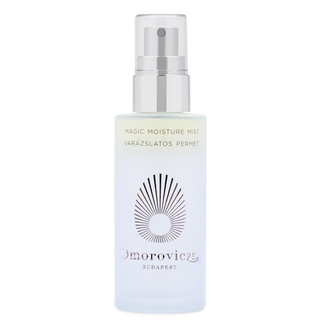
Works for
1 of 2 advertised claims delivered
Moisturizing16 ingredients credited for this claimGood support
“This liquid moisturiser, powered by an innovative, two phase formula, makes weightless hydration a reality.”
This product can help improve hydration of the skin with the two types of ingredients.
The first type is called “humectants”:
these ingredients help attract water.
When humectants are on the surface of the skin, they “pull in” the moisture from the outside environment, or from
within deeper layers of the skin. The following ingredients in this product do the job:
glycerin.
This product also contains ingredients called “occlusives”. They help reduce the speed with which our skin loses moisture to the outside environment. These ingredients also help soften the upper layer of the skin, so it feels less tight and nicer to the touch. The following ingredients in this product do the job: caprylic/capric triglyceride, helianthus annuus seed oil.
Anti-aging2 ingredients credited for this claimWeak support
“Omorovicza’s Patented Healing ConcentrateTM leaves skin firmer, suppler and more youthful in appearance.”
Effective ingredients missing or their concentration is too low.
Can it cause trouble?
Irritancy14 strong irritants: Limonene, Citrus aurantium dulcis peel oil + 12 more — patch-test recommendedHigh risk
Comedogenic1 ingredient rated 2 or more on the 0–5 pore-clogging scale1 flagged
User reviews
Be the first — your take helps the next person decide.
Ingredients
Filter by role to see what each ingredient is doing.
Water~45–55%
Caprylic/capric triglyceride~6.1–7.4%
- Irritation risk
- Medium
A good mix of fatty acids that forms a protective layer on the skin. Improves the shelf life of products. Derived from coconut and glycerin
More about Caprylic/capric triglycerideGlycerin~4.2–5.2%
- Irritation risk
- Low
One of the best moisturizing ingredients. Naturally present in skin. It attracts water to the upper layer of the skin working as a humectant
More about GlycerinMacadamia integrifolia seed oil~3.2–3.9%
- Irritation risk
- Low
A plant oil that helps soften the upper layer of the skin
More about Macadamia integrifolia seed oilRosa canina fruit oil~2.4–3%
- Irritation risk
- Medium
A great emollient. Contains vitamin E (tocopherol) which may give it some anti-oxidant properties. Can contain volatile compounds and can be irritating
More about Rosa canina fruit oilTriticum vulgare germ oil~2–2.5%
- Irritation risk
- Low
- Comedogenicity
- 3/5
A good emoillient. Contains vitamin E which can help neutralise free radicals, however the oil is unstable. Avoid if you have gluten or wheat sensitivity (including food allergies).
More about Triticum vulgare germ oilSodium benzoate~0.25–0.5%
Benzyl alcohol~0.5–1%
- Irritation risk
- High
A preservative. Can be used to mask unpleasant smell. Can be irritating
More about Benzyl alcoholBorago officinalis seed oil~1.2–1.4%
- Irritation risk
- Low
A plant oil that is effective in reducing irritation in skin, restore the barrier function and support its hydration
More about Borago officinalis seed oilCarthamus tinctorius seed oil~0.95–1.2%
- Irritation risk
- Low
An emollient that helps soften the skin and might help calm down inflammation
More about Carthamus tinctorius seed oilHelianthus annuus seed oil~0.7–1.05%
- Irritation risk
- Low
A great emollient due to its high linoleic acid content. One of the most effective plant oils in helping skin hydration and repairing skin barrier function
More about Helianthus annuus seed oilOenothera biennis oil~0.6–0.9%
- Irritation risk
- Medium
Helps soften the upper layer of the skin and can support skin barrier function
More about Oenothera biennis oilOlea europaea fruit oil~0.5–0.75%
- Irritation risk
- Medium
An emollient that helps soften the skin but is not effective for restoring its barrier function. Might be helpful to calm down inflammation
More about Olea europaea fruit oilPrunus amygdalus dulcis seed~0.45–0.65%
- Irritation risk
- Low
Helps soften the upper layer of the skin
More about Prunus amygdalus dulcis seedPrunus armeniaca kernel oil~0.45–0.7%
- Irritation risk
- Medium
An emollient that helps soften the skin
More about Prunus armeniaca kernel oilSimmondsia chinensis seed oil~0.5–0.7%
- Irritation risk
- Medium
Softens the upper layer of skin and helps restore the healthy skin barrier. Has shown to help calm down inflammation in skin. It is a stable oil, meaning that it retains its properties even when exposed to air.
More about Simmondsia chinensis seed oilPersea gratissima oil~0.45–0.7%
- Irritation risk
- Medium
An emollient that helps soften the skin and could be helpful in repairing its barrier function
More about Persea gratissima oilSodium levulinate~0.3–0.6%
Citric acid~0.3–0.55%
- Irritation risk
- Medium
Can work as an exfoliant but is typically used to adjust the product pH
More about Citric acidCaprylyl/capryl glucoside~0.45–0.65%
- Irritation risk
- Medium
Helps oil and water mix together. Can be used as a cleansing agent
More about Caprylyl/capryl glucosideLimonene~0.25–0.45%
- Irritation risk
- High
A common frangrance that can easily irritate skin, especially if exposed to air, light or heat
More about LimoneneCitrus aurantium dulcis peel oil~0.25–0.45%
- Irritation risk
- High
An essentil oil from orange peel. Potential allergen and can be irritating
More about Citrus aurantium dulcis peel oilLavandula angustifolia oil~0.25–0.45%
- Irritation risk
- High
An essential oil. Potential allergen and can be irritating. It has some anti-bacterial properties
More about Lavandula angustifolia oilPelargonium graveolens flower oil~0.25–0.45%
- Irritation risk
- High
An essential oil. Can be irritating. Can become an allergen with oxidation
More about Pelargonium graveolens flower oilSodium anisate~0.25–0.45%
Linalool~0.2–0.4%
Citronellol~0.2–0.4%
Citrus aurantium amara flower oil~0.25–0.45%
- Irritation risk
- High
Used as a fragrance. Can be irritating
More about Citrus aurantium amara flower oilGeraniol~0.2–0.35%
Eucalyptus globulus leaf oil~0.2–0.35%
- Irritation risk
- High
An essential oil that can be very irritating. Has some anti-bacterial properties
More about Eucalyptus globulus leaf oilMentha piperita oil~0.2–0.35%
Phospholipids~0.2–0.4%
- Irritation risk
- Low
Emollients that are naturaly present in skin. In addition, they help water and oil mix together in the product
More about PhospholipidsLeuconostoc/radish root ferment filtrate~0.2–0.4%
- Irritation risk
- Medium
A preservative that comes from radishes fermented by a bacteria. New research suggests that the preservation properties in the ingredient come from an ammonium salt that is not present naturally in radish root but used in its cultivation. Is problematic because the exact amount of the preservative agents is difficult to determine
More about Leuconostoc/radish root ferment filtrateSolanum lycopersicum leaf cell culture extract~0.2–0.35%
- Irritation risk
- Low
Citral~0.15–0.3%
Farnesol~0.15–0.25%
Rosmarinus officinalis leaf extract~0.1–0.2%
- Irritation risk
- High
Can be helpful in reducing inflammation in skin, including inflamed acne. It can be irritating
More about Rosmarinus officinalis leaf extract4-terpineol~0.1–0.2%
- Irritation risk
- Low
Anthemis nobilis flower oil~0.1–0.15%
- Irritation risk
- High
An essential oil that is used as a fragrance and can be irritating. It might have some anti-oxidant effect in skin
More about Anthemis nobilis flower oilTocopherol~0.1–0.15%
- Irritation risk
- Low
Pure form of vitamin E. Can help moisturise and protect the skin from free radicals. Often used to help stabilise other ingredients or the formula itself
More about TocopherolAscorbyl palmitate~0.05–0.1%
- Irritation risk
- Medium
Being a lipid soluble form of vitamin C, it is more stable and can penetrate the skin better than L-Ascorbic acid. It is effective in protecting the skin from free radicals, as well as evening the skin tone, but is less effective in stimulating collagen production compared to L-Ascorbic acid.
More about Ascorbyl palmitateIngredient list view
Water, Caprylic/capric triglyceride, Glycerin, Macadamia integrifolia seed oil, Rosa canina fruit oil, Triticum vulgare germ oil, Sodium benzoate, Benzyl alcohol, Borago officinalis seed oil, Carthamus tinctorius seed oil, Helianthus annuus seed oil, Oenothera biennis oil, Olea europaea fruit oil, Prunus amygdalus dulcis seed, Prunus armeniaca kernel oil, Simmondsia chinensis seed oil, Persea gratissima oil, Sodium levulinate, Unknown, Citric acid, Caprylyl/capryl glucoside, Limonene, Citrus aurantium dulcis peel oil, Lavandula angustifolia oil, Pelargonium graveolens flower oil, Sodium anisate, Linalool, Citronellol, Citrus aurantium amara flower oil, Geraniol, Eucalyptus globulus leaf oil, Mentha piperita oil, Phospholipids, Leuconostoc/radish root ferment filtrate, Solanum lycopersicum leaf cell culture extract, Citral, Farnesol, Rosmarinus officinalis leaf extract, 4-terpineol, Anthemis nobilis flower oil, Tocopherol, Ascorbyl palmitate
Compare prices
Retailers ranked by price — lowest first.


Sources cited in this review
Every concentration estimate and effectiveness label is anchored to one of these 18 studies and safety reviews.
- 1
- 2
- 3
- 4
- 5
- 6

Affiliate links · As an Amazon Associate, WIMJ earns from qualifying purchases.