Works for
MoisturizingLinoleic acid, Caprylic/capric triglyceride + 12 moreWorks well
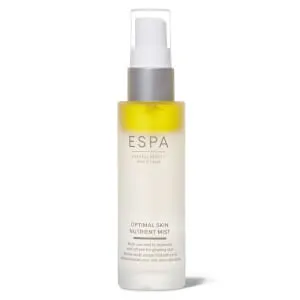
“This glow-to multi-tasking formula brings you a nutrient-rich veil of botanical oils to give skin instant luminosity, hydration, and a dewy glow.”
This product can help improve hydration of the skin with the two types of ingredients.
The first type is called “humectants”:
these ingredients help attract water.
When humectants are on the surface of the skin, they “pull in” the moisture from the outside environment, or from
within deeper layers of the skin. The following ingredients in this product do the job:
glycerin.
This product also contains ingredients called “occlusives”. They help reduce the speed with which our skin loses moisture to the outside environment. These ingredients also help soften the upper layer of the skin, so it feels less tight and nicer to the touch. The following ingredients in this product do the job: caprylic/capric triglyceride, helianthus annuus seed oil.
The following ingredients in this product are especially good for supporting the skin barrier and helping with the hydration level: linoleic acid
Can it cause trouble?
Irritancy7 strong irritants: Alcohol denat., Limonene + 5 more — patch-test recommendedHigh risk
Comedogenic2 ingredients rated 2 or more on the 0–5 pore-clogging scale2 flagged

User reviews
Be the first — your take helps the next person decide.
Ingredients
Filter by role to see what each ingredient is doing.
Water~45–55%
Caprylic/capric triglyceride~6.3–7.7%
- Irritation risk
- Medium
A good mix of fatty acids that forms a protective layer on the skin. Improves the shelf life of products. Derived from coconut and glycerin
More about Caprylic/capric triglyceridePersea gratissima oil~4.4–5.3%
- Irritation risk
- Medium
An emollient that helps soften the skin and could be helpful in repairing its barrier function
More about Persea gratissima oilGlycerin~3.1–3.8%
- Irritation risk
- Low
One of the best moisturizing ingredients. Naturally present in skin. It attracts water to the upper layer of the skin working as a humectant
More about GlycerinPropanediol~2.3–2.8%
- Irritation risk
- Low
Acts as a solvent for other ingredients. Speeds up the absorption of other ingredients into the skin
More about PropanediolCoconut alkanes~1.9–2.4%
- Irritation risk
- Medium
- Comedogenicity
- 2/5
An emollient that helps soften the skin
More about Coconut alkanesSimmondsia chinensis seed oil~1.7–2.1%
- Irritation risk
- Medium
Softens the upper layer of skin and helps restore the healthy skin barrier. Has shown to help calm down inflammation in skin. It is a stable oil, meaning that it retains its properties even when exposed to air.
More about Simmondsia chinensis seed oilPentylene glycol~1.5–1.8%
- Irritation risk
- Medium
Used to preserve products, dissolve other ingredients and create a nice product texture
More about Pentylene glycolAlcohol denat.~1.2–1.4%
- Irritation risk
- High
Produces temporary toning effect. Can help dissolve other ingredients or preserve products
More about Alcohol denat.Levulinic acid~0.9–1.1%
Coco-caprylate/caprate~0.7–1.05%
- Irritation risk
- Low
Helps to soften the upper layer of the skin without creating a greasy texture
More about Coco-caprylate/caprateSodium benzoate~0.25–0.5%
Sodium levulinate~0.5–0.75%
Sodium gluconate~0.45–0.65%
Echium plantagineum seed oil~0.4–0.65%
- Irritation risk
- Medium
A plant oil that because of its high content of alpha-linolenic acid help support skin barrier function and moisturize the skin
More about Echium plantagineum seed oilRaphanus sativus seed extract~0.4–0.6%
- Irritation risk
- Low
Limonene~0.35–0.65%
- Irritation risk
- High
A common frangrance that can easily irritate skin, especially if exposed to air, light or heat
More about LimoneneSargassum muticum extract~0.35–0.6%
- Irritation risk
- Low
Sea water extract~0.3–0.55%
- Irritation risk
- Low
Citrus aurantium dulcis peel oil~0.3–0.5%
- Irritation risk
- High
An essentil oil from orange peel. Potential allergen and can be irritating
More about Citrus aurantium dulcis peel oilLinoleic acid~0.45–0.65%
- Irritation risk
- Low
An excellent emollient. Helps soften the skin, restore its barrier function, and can help to calm down inflammation. It can be helpful to prevent blemishes and clogged pores
More about Linoleic acidTocopherol~0.25–0.5%
- Irritation risk
- Low
Pure form of vitamin E. Can help moisturise and protect the skin from free radicals. Often used to help stabilise other ingredients or the formula itself
More about TocopherolXanthan gum~0.25–0.45%
- Irritation risk
- Low
Used to create a thicker product consistency
More about Xanthan gumGlycine soja oil~0.25–0.5%
- Irritation risk
- Medium
- Comedogenicity
- 2/5
A good emollient that helps soften the skin and helps repair its barrier function. It can clog pores if used in high concentrations.
More about Glycine soja oilCurcuma longa root extract~0.2–0.4%
- Irritation risk
- High
A plant extract that can contain an active compound curcumin, that may have some anti-inflammatory properties when applied to the skin, but solid research is lacking and the typical concentration used in skincare products is too low. Can be an irritant
More about Curcuma longa root extractParfum~0.2–0.4%
- Irritation risk
- High
An aromatic blend of unspecified and possibly irritating ingredients
More about ParfumJuniperus communis fruit oil~0.2–0.4%
- Irritation risk
- Low
Zanthoxylum alatum fruit extract~0.2–0.4%
- Irritation risk
- Low
Canarium commune gum oil~0.2–0.4%
- Irritation risk
- Low
Citrus paradisi peel oil~0.2–0.35%
Helianthus annuus seed oil~0.25–0.45%
- Irritation risk
- Low
A great emollient due to its high linoleic acid content. One of the most effective plant oils in helping skin hydration and repairing skin barrier function
More about Helianthus annuus seed oilLinalool~0.15–0.3%
Potassium sorbate~0.15–0.25%
Linolenic acid~0.25–0.45%
- Irritation risk
- Medium
An emollient that helps soften the skin and calm down inflammation
More about Linolenic acidMoringa oleifera seed oil~0.15–0.3%
- Irritation risk
- Medium
A plant oil that helps soften the upper layer of the skin. Is unlikely to be helpful in restoring skin barrier function due to the low content of linoleic acid
More about Moringa oleifera seed oilBeta-carotene~0.1–0.2%
Daucus carota sativa root extract~0.1–0.15%
- Irritation risk
- Low
Carrot extract. Might have anti-oxidant properties and be used to add orange color
More about Daucus carota sativa root extractRosmarinus officinalis leaf extract~0.05–0.1%
- Irritation risk
- High
Can be helpful in reducing inflammation in skin, including inflamed acne. It can be irritating
More about Rosmarinus officinalis leaf extractIngredient list view
Water, Caprylic/capric triglyceride, Persea gratissima oil, Glycerin, Propanediol, Coconut alkanes, Simmondsia chinensis seed oil, Pentylene glycol, Alcohol denat., Levulinic acid, Coco-caprylate/caprate, Sodium benzoate, Sodium levulinate, Sodium gluconate, Echium plantagineum seed oil, Raphanus sativus seed extract, Limonene, Sargassum muticum extract, Sea water extract, Citrus aurantium dulcis peel oil, Linoleic acid, Tocopherol, Xanthan gum, Glycine soja oil, Curcuma longa root extract, Parfum, Juniperus communis fruit oil, Zanthoxylum alatum fruit extract, Canarium commune gum oil, Citrus paradisi peel oil, Helianthus annuus seed oil, Linalool, Potassium sorbate, Linolenic acid, Moringa oleifera seed oil, Beta-carotene, Daucus carota sativa root extract, Rosmarinus officinalis leaf extract
Compare prices
Retailers ranked by price — lowest first.


Worth comparing, line by line.
Match % combines shared ingredients, the first five ingredients, shared actives and hero ingredients, irritancy (lower counts in the alternative's favour), texture and body area. Only products in the same routine step are compared.
| ESPAOptimal Skin Nutrient MistYOUR PRODUCT | Drunk ElephantSweet Biome Fermented Sake Spray | hellobubbleCosmic Silk Toner | Rhodeglazing milk — Default Title | |
|---|---|---|---|---|
| Match | — | 58% | 51% | 51% |
| Price | $54.00 | $42.00−$12.00 | — | — |
| Shared key ingredients | — | 3 of 10 | 3 of 10 | 3 of 10 |
| Key difference | — | Lactic Acid | Anhydroxylitol | Phytosphingosine |
| Irritancy | High | Medium | Medium | Medium |
| Drying alcohol | Contains drying alcohol | — | — | — |
| View product | Shop | Shop | Shop |


More alternatives: Librederm Успокаивающий тоник-софтнер с церамидами и пребиотикомBobbi Brown Hydrating Face Tonic Toner
Sources cited in this review
Every concentration estimate and effectiveness label is anchored to one of these 17 studies and safety reviews.
- 1
- 2Safety Assessment of Alkyl Esters as Used in Cosmeticscir-safety.org
- 3
- 4
- 5
- 6Vitamin E in dermatologyncbi.nlm.nih.gov

Affiliate links · As an Amazon Associate, WIMJ earns from qualifying purchases.