Works for
1 of 1 advertised claim delivered
Moisturizing16 ingredients credited for this claimGood support
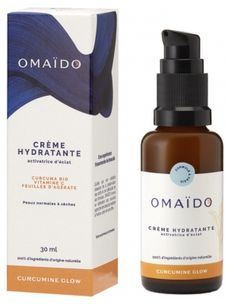
“Moisturizing Cream”
This product can help improve hydration of the skin with the two types of ingredients.
The first type is called “humectants”:
these ingredients help attract water.
When humectants are on the surface of the skin, they “pull in” the moisture from the outside environment, or from
within deeper layers of the skin. The following ingredients in this product do the job:
anhydroxylitol, glycerin.
This product also contains ingredients called “occlusives”. They help reduce the speed with which our skin loses moisture to the outside environment. These ingredients also help soften the upper layer of the skin, so it feels less tight and nicer to the touch. The following ingredients in this product do the job: caprylic/capric triglyceride, glycine soja oil.
Anti-oxidationNot advertised by the brand · 5 ingredients credited for this claimStrong support
This product contains antioxidants (asiaticoside) that can help neutralize free radicals in skin. By doing so, they can lessen the damage the skin gets from the UV light (sun).
The following ingredients - ascorbyl glucoside also can have an antioxidant effect, but there is less evidence to confirm their effectiveness in skin.
Evens skin toneNot advertised by the brand · 2 ingredients credited for this claimModerate support
The following ingredient (ingredients) in this product might be helpful, but there is no evidence to confirm that it actually works: ascorbyl glucoside, glycine soja seed extract.
Anti-agingNot advertised by the brand · 4 ingredients credited for this claimModerate support
This product contains ascorbyl glucoside, asiaticoside. These ingredients might be able to help reduce and prevent fine lines and wrinkles, improve skin elasticity and firmness, but there is not enough evidence that it actually works.
Can it cause trouble?
Irritancy6 strong irritants: Sodium anisate, Cananga odorata flower oil + 4 more — patch-test recommendedHigh risk
Comedogenic1 ingredient rated 2 or more on the 0–5 pore-clogging scale1 flagged


User reviews
Be the first — your take helps the next person decide.
Ingredients
Filter by role to see what each ingredient is doing.
Pelargonium graveolens flower/leaf/stem water~22–33%
- Irritation risk
- Low
Water~12–18%
Coco-caprylate/caprate~5.3–7.9%
- Irritation risk
- Low
Helps to soften the upper layer of the skin without creating a greasy texture
More about Coco-caprylate/caprateGlycerin~3.4–5.1%
- Irritation risk
- Low
One of the best moisturizing ingredients. Naturally present in skin. It attracts water to the upper layer of the skin working as a humectant
More about GlycerinCaprylic/capric triglyceride~2.9–4.4%
- Irritation risk
- Medium
A good mix of fatty acids that forms a protective layer on the skin. Improves the shelf life of products. Derived from coconut and glycerin
More about Caprylic/capric triglycerideMoringa oleifera seed oil~2–3%
- Irritation risk
- Medium
A plant oil that helps soften the upper layer of the skin. Is unlikely to be helpful in restoring skin barrier function due to the low content of linoleic acid
More about Moringa oleifera seed oilSclerocarya birrea seed oil~1.6–2.3%
- Irritation risk
- Medium
An emollient that helps to soften the skin. It has a high contetn of oleic acid that might weaken the skin barrier. Might have some anti-oxidant properties. It might be somewhat helpful against hyperpigmentation.
More about Sclerocarya birrea seed oilAscorbyl glucoside~1.4–2.1%
- Irritation risk
- Medium
A vitamin C derivative that is more stable but less potent than pure form of vitamin C. Has a potential to boost collagen production, nutralise free radicals and reduce hyperpigmentation, but the required concentration is likely to be much higher than for the pure form of vitamin C, limiting the ingredient's effectiveness in products
More about Ascorbyl glucosideSilica~1.4–2.1%
Butylene glycol~0.9–1.35%
- Irritation risk
- Low
Used to create a nice product texture and help delivery of other ingredients. Might be somewhat helpful in attracting water to the upper layer of the skin
More about Butylene glycolAdansonia grandidieri seed oil~0.55–1.25%
- Irritation risk
- Low
Sodium stearoyl glutamate~0.5–1.15%
- Irritation risk
- Medium
Helps oil and water mix together
More about Sodium stearoyl glutamateXanthan gum~0.45–1%
- Irritation risk
- Low
Used to create a thicker product consistency
More about Xanthan gumGlycine soja seed extract~0.45–1%
- Irritation risk
- Medium
An emollient that helps soften the skin. Might be somewhat helpful in evening the skin tone.
More about Glycine soja seed extractHelianthus annuus hybrid oil~0.4–0.95%
- Irritation risk
- Low
Helps soften the upper layer of the skin
More about Helianthus annuus hybrid oilSodium levulinate~0.35–0.85%
Xylitylglucoside~0.35–0.8%
- Irritation risk
- Low
Helps attract water to the upper layer of the skin and repair the skin barrier function
More about XylitylglucosideSodium hydroxide~0.35–0.75%
Lauroyl lysine~0.3–0.7%
- Irritation risk
- Low
Helps soften the upper layer of the skin and creates a nice product texture
More about Lauroyl lysineAnhydroxylitol~0.2–0.7%
- Irritation risk
- Low
Helps attract water to the upper layer of the skin and repair the skin barrir function
More about AnhydroxylitolGlyceryl caprylate~0.2–0.75%
- Irritation risk
- Low
An emollient that can also help water and oil mix together, as well as prevent bacteria growth in products
More about Glyceryl caprylateSodium anisate~0.15–0.65%
Adansonia digitata pulp extract~0.15–0.6%
- Irritation risk
- Low
Maltodextrin~0.3–0.75%
- Irritation risk
- Low
Used to stabilize the product formulation and can help absorb oil
More about MaltodextrinXylitol~0.15–0.5%
- Irritation risk
- Low
Helps attract water to the upper layer of the skin and repair the skin barrier function
More about XylitolAsiaticoside~0.1–0.45%
- Irritation risk
- Medium
An active compound of Centella Asiatica plant extract. In combination with other active compounds of Centella Asiatica extract (madecasosside, asiatic acid and madecassic acid), asiaticoside has been shown to be helpful in wound-healing, restoring skin barrier function and supporting collagen production in skin. It can, however, itself be irritating
More about AsiaticosideGlycine soja oil~0.15–0.55%
- Irritation risk
- Medium
- Comedogenicity
- 2/5
A good emollient that helps soften the skin and helps repair its barrier function. It can clog pores if used in high concentrations.
More about Glycine soja oilTocopherol~0.15–0.55%
- Irritation risk
- Low
Pure form of vitamin E. Can help moisturise and protect the skin from free radicals. Often used to help stabilise other ingredients or the formula itself
More about TocopherolCurcuma longa root extract~0.1–0.45%
- Irritation risk
- High
A plant extract that can contain an active compound curcumin, that may have some anti-inflammatory properties when applied to the skin, but solid research is lacking and the typical concentration used in skincare products is too low. Can be an irritant
More about Curcuma longa root extractCurcuma longa root oil~0.1–0.45%
- Irritation risk
- Low
Ageratum conyzoides leaf extract~0.1–0.5%
- Irritation risk
- Low
Cananga odorata flower oil~0.1–0.3%
Pelargonium graveolens oil~0.1–0.3%
Glucose~0.05–0.3%
- Irritation risk
- Low
Helps attract water to the upper layer of the skin. Could be helpful in restoring the skin barrier function
More about GlucoseGeraniol~0.05–0.2%
Linalool~0.05–0.15%
Citronellol~0.05–0.15%
Ingredient list view
Pelargonium graveolens flower/leaf/stem water, Water, Coco-caprylate/caprate, Glycerin, Caprylic/capric triglyceride, Moringa oleifera seed oil, Sclerocarya birrea seed oil, Ascorbyl glucoside, Silica, Butylene glycol, Adansonia grandidieri seed oil, Sodium stearoyl glutamate, Xanthan gum, Glycine soja seed extract, Helianthus annuus hybrid oil, Sodium levulinate, Xylitylglucoside, Sodium hydroxide, Lauroyl lysine, Anhydroxylitol, Glyceryl caprylate, Sodium anisate, Adansonia digitata pulp extract, Maltodextrin, Xylitol, Asiaticoside, Glycine soja oil, Tocopherol, Curcuma longa root extract, Curcuma longa root oil, Ageratum conyzoides leaf extract, Cananga odorata flower oil, Pelargonium graveolens oil, Glucose, Geraniol, Linalool, Citronellol
Compare prices
Retailers ranked by price — lowest first.

Affiliate links · prices updated regularly
Worth comparing, line by line.
Match % combines shared ingredients, the first five ingredients, shared actives and hero ingredients, irritancy (lower counts in the alternative's favour), texture and body area. Only products in the same routine step are compared.
| OmaïdoMoisturizing CreamYOUR PRODUCT | JowaéMoisturizing Rich Cream | ThalgoSource Marine Hydrating Melting Cream | NEOGEN X SUR.MEDICSurmedic 24K Gold Caviar Repair Vital Cream | |
|---|---|---|---|---|
| Match | — | 62% | 61% | 61% |
| Price | $44.82 | $15.96−$28.86 | $84.28+$39.46 | $39.59−$5.23 |
| Shared key ingredients | — | 5 of 8 | 5 of 8 | 4 of 8 |
| Key difference | — | Lactic Acid | Gluconolactone | Copper Tripeptide-1 |
| Irritancy | High | Medium | Medium | Medium |
| Drying alcohol | — | — | — | — |
| View product | Shop | Shop | Shop |


Sources cited in this review
Every concentration estimate and effectiveness label is anchored to one of these 17 studies and safety reviews.
- 1Safety Assessment of Alkyl Esters as Used in Cosmeticscir-safety.org
- 2
- 3
- 4
- 5
- 6

Affiliate links · As an Amazon Associate, WIMJ earns from qualifying purchases.