Works for:
based on ingredients and %- Cleansing
Can it cause trouble?
- Irritation risk: high
- Comedogenic risk ingredients: 1
Key actives

Works for
Cleansing
What does the product description say?
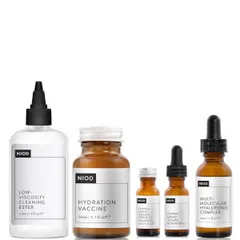
NIOD Low-Viscosity Cleaning Ester 240ml A skin cleaning system that respects dermal barriers while regulating visible sebum production, cleaning the skin thoroughly and removing all traces of makeup in a single step.
Source: Lookfantastic US
This product works by removing dirt and oil from the surface of the skin. It uses a combination of mild cleansing agents (isoceteth-20, polysorbate 20, xanthan gum) and should be able to cleanse the skin gently. Still keep in mind that any cleansing can disrupt the skin barrier, and most people do not need to cleanse their skin more than once per day.
Helps water and oil mix together
Helps oil and water mix together
Used to create a thicker product consistency
Used mostly for creating emulsions - helping oil and water mix together. Helps soften the upper layer of the skin
How honest is this product?
| Promise | Can it deliver? |
|---|---|
| Cleansing |
Total Promises Fulfilled score: 100/100.
We receive a small commission for purchases made through these links at no cost for you. Thank you for your support! Learn more
Potential irritants
Comedogenic ingredients
User reviews (0)
Averages from community submissions.
No reviews yet for this product.
Be the first to share your experience!
Tried this product?
Help capture what the ingredient list can't—texture, finish, pilling, scent, and more. Answer what you can, skip the rest.
Takes ~30 seconds.
Reviews are shown in aggregate. No personal details.
Key Actives
A polyhydroxy acid (PHA) that helps shed the dead cells from the skin surface revealing smoother skin. Is believed to be genter than AHAs. It helps attract water to the upper layer of the skin and can stimulate production of skin's own hyaluronic acid resulting in improved hydration levels. It has been shown to be helpful against acne and clogged pores if used consistently (e.g over a period of 12 weeks) in high enough concentration. It can help reduce fine lines and wrinkles and improve skin tone with long-term application. Can help neutralize free radicals
Pure form of vitamin E. Can help moisturise and protect the skin from free radicals. Often used to help stabilise other ingredients or the formula itself
Pure form of vitamin E. Can help moisturise and protect the skin from free radicals. Often used to help stabilise other ingredients or the formula itself
Can be helpful in reducing inflammation in skin, including inflamed acne. It can be irritating
Helps attract water to the upper layer of the skin and might have some anti-oxidant and skin lightening properties
One of the best moisturizing ingredients. Attracts water into the upper layer of the skin. Naturally present in skin. Typically has large molecule size unless advertised otherwise on the product label. Helps support skin's barrier function and may help to reduce inflammation
A type of peptide. Peptides are excellent moisturizers and might be able support collagen production reducing fine lines and wrinkles
A type of peptide. Peptides are excellent moisturizers and might be able support collagen production reducing fine lines and wrinkles
A type of peptide. Peptides are excellent moisturizers and might be able support collagen production reducing fine lines and wrinkles
A type of peptide. Peptides are excellent moisturizers and might be able support collagen production reducing fine lines and wrinkles
An amino-acid that helps to attract water to the upper layer of the skin and might help to lighten the skin, but solid evidence is lacking
An amino-acid that helps to attract water to the upper layer of the skin. In combination with other amino-acids, might help to reduce fine lines and wrinkles
Helps to soften the upper layer of the skin and might have some anti-oxidant effect
A plant oil that can help soften the upper layer of the skin. Might be helpful in calming down inflammation in skin
Used mostly for creating emulsions - helping oil and water mix together. Helps soften the upper layer of the skin
A silicone that helps improve the product texture and spreadability. Can absorb oil creating a short-term mattifying effect on the skin
A silicone that helps to reduce water loss from the surface of the skin. Can temporarily "fill in" lines and wrinkles, absorb oil, and create a nice product finish
A silicone that forms a light film on the skin surface helping to bind water and temporarily absorb oils creating a matt and powdery feel
A peptide. It helps attract water to the upper layer of the skin, support skin's barrier function and might have some slight anti-aging effect through stimulating skin's own production of hyaluronic acid
Mushroom extract that helps attract water to the upper layer of the skin
A type of peptide. Peptides are excellent moisturizers and might be able support collagen production reducing fine lines and wrinkles
An amino-acid that helps increase skin hydration and might help to slightly improve skin firmness, potentially reducing lines and wrinkles
An amino-acid that helps to attract water to the upper layer of the skin and might help to lighten the skin, but solid evidence is lacking
An amino-acid that helps to attract water to the upper layer of the skin. In combination with other amino-acids, might help to reduce fine lines and wrinkles
An amino-acid that helps to attract water to the upper layer of the skin. In combination with other amino-acids, might help to reduce fine lines and wrinkles
A synthetic version of green tea polyphenol that helps neutralize free radicals in skin
Plant extract that helps the skin to attract water and make it more smooth for touch. Also shows promise of anti-aging properties, but research is not extensive yet
Used mostly for creating emulsions - helping oil and water mix together. Helps soften the upper layer of the skin
A good mix of fatty acids that forms a protective layer on the skin. Improves the shelf life of products. Derived from coconut and glycerin
A plant oil that works as a good moisturizer by softening the upper layer of the skin. Might be helpful in reducing inflammation in skin and reducing blemishes due to the large content of linoleic acid
One of the best moisturizing ingredients. Naturally present in skin. It attracts water to the upper layer of the skin working as a humectant
Attracts water into the upper layer of the skin
Helps attract water to the upper layer of the skin
Helps attract water to the most upper layer of the skin. Derived from sugar
One of the best moisturizing ingredients. Naturally present in skin. It attracts water to the upper layer of the skin working as a humectant
Used to create a gel-like product texture, as well as to stabilize emulsions
Helps attract water to the upper layer of the skin and repair the skin barrier function
Helps attract water to the upper layer of the skin and repair the skin barrir function
An oil naturally present in skin. Works as an emollient to soften the skin and form a protective layer on its surface without a greasy feeling.
Used to create a thicker product consistency
One of the best moisturizing ingredients. Naturally present in skin. It attracts water to the upper layer of the skin working as a humectant
One of the best moisturizing ingredients. Attracts water into the upper layer of the skin
Attracts water into the upper layer of the skin
Attracts water into the upper layer of the skin
An amino acid that is naturally present in skin and helps keep it hydrated. When used together with AHAs, it can reduce their irritating effect on the skin
Helps to attract water to the upper layer of the skin and can help restore the skin barrier function
An amino acid that can help attract water to the upper layer of the skin and support skin's barrier function
Naturally present in skin and helps to attract water to its upper layer
Naturally present in skin and helps to attract water to its upper layer
Helps attract water to the upper layer of the skin and improves the product texture
Helps attract water to the upper layer of the skin. Is often used to adjust the pH level of the product
Used to create a thicker product consistency
Creates a thin drying film on the skin resulting in a short-term tightening effect
Potential irritants
Can be helpful in reducing inflammation in skin, including inflamed acne. It can be irritating
A preservative. Can be used to mask unpleasant smell. Can be irritating
Creates a thin drying film on the skin resulting in a short-term tightening effect
An emollient that helps soften the skin and creates a thicker product texture
A good mix of fatty acids that forms a protective layer on the skin. Improves the shelf life of products. Derived from coconut and glycerin
Helps oil and water mix together and works as a cleansing agent
Helps preserve product formulations and can mask the smell of other ingredients in a product
Attracts water into the upper layer of the skin
Used to preserve products, dissolve other ingredients and create a nice product texture
A preservative that comes from radishes fermented by a bacteria. New research suggests that the preservation properties in the ingredient come from an ammonium salt that is not present naturally in radish root but used in its cultivation. Is problematic because the exact amount of the preservative agents is difficult to determine
Helps preserve products and creates a nice product texture
A more stable but less bio-available form of vitamin E compared to Tocopherol. Might help moisturize and protect the skin from free radicals, but mostly used in low concentrations to stabilize other ingredients.
A gelling agent that thickens the product consistency and leaves the skin with a velvety finish
Can work as an exfoliant but is typically used to adjust the product pH
A polyhydroxy acid (PHA) that helps shed the dead cells from the skin surface revealing smoother skin. Is believed to be genter than AHAs. It helps attract water to the upper layer of the skin and can stimulate production of skin's own hyaluronic acid resulting in improved hydration levels. It has been shown to be helpful against acne and clogged pores if used consistently (e.g over a period of 12 weeks) in high enough concentration. It can help reduce fine lines and wrinkles and improve skin tone with long-term application. Can help neutralize free radicals
Helps to attract water to the upper layer of the skin and create a nice product finish on the skin
Used to stabilize product formulations and create thicker consistency
A plant extract that might have anti-oxidant properties
Helps attract water to the upper layer of the skin. Is often used to adjust the pH level of the product
The salt of salicylic acid. Helps exfoliate the upper layer of the skin. Can also work to preserve cosmetic products
Used to improve stability of the formulation
Comedogenic ingredients
Plant extract that helps the skin to attract water and make it more smooth for touch. Also shows promise of anti-aging properties, but research is not extensive yet
All ingredients
An emollient that helps soften the skin and creates a thicker product texture
A good mix of fatty acids that forms a protective layer on the skin. Improves the shelf life of products. Derived from coconut and glycerin
Helps oil and water mix together and works as a cleansing agent
A plant oil that works as a good moisturizer by softening the upper layer of the skin. Might be helpful in reducing inflammation in skin and reducing blemishes due to the large content of linoleic acid
Can be helpful in reducing inflammation in skin, including inflamed acne. It can be irritating
Pure form of vitamin E. Can help moisturise and protect the skin from free radicals. Often used to help stabilise other ingredients or the formula itself
An anti-oxidant. Is also called 6-paradol. It might be able to neutralize free radicals in skin. The manufacturer claims that it is able to stimulate synthesis of hyaluronic acid in skin, but there is no evidence of effectiveness of this ingredient so far. The only evidence of efficacy for this ingredient so far come from small lab tests. This ingredient comes together with Caprylic/Capric Triglyceride as part of the complex called SymDecanox HA produced by a cosmetic ingredient supplier Symrise.
Helps preserve product formulations and can mask the smell of other ingredients in a product
Used to dissolve other ingredients in a product and can enhance their ability to penetrate the skin
One of the best moisturizing ingredients. Naturally present in skin. It attracts water to the upper layer of the skin working as a humectant
A type of peptide. Peptides are excellent moisturizers and might be able support collagen production reducing fine lines and wrinkles
A type of peptide. Peptides are excellent moisturizers and might be able support collagen production reducing fine lines and wrinkles
A type of peptide. Peptides are excellent moisturizers and might be able support collagen production reducing fine lines and wrinkles
A type of peptide. Peptides are excellent moisturizers and might be able support collagen production reducing fine lines and wrinkles
Attracts water into the upper layer of the skin
Acts as a solvent for other ingredients. Speeds up the absorption of other ingredients into the skin
Used to preserve products, dissolve other ingredients and create a nice product texture
Helps attract water to the most upper layer of the skin. Derived from sugar
Used to dissolve other ingredients in a product and can enhance their ability to penetrate the skin
A preservative that comes from radishes fermented by a bacteria. New research suggests that the preservation properties in the ingredient come from an ammonium salt that is not present naturally in radish root but used in its cultivation. Is problematic because the exact amount of the preservative agents is difficult to determine
Helps preserve products and creates a nice product texture
A preservative. It helps prevent bacterial growth in cosmetic products
A type of silicone that helps to soften the upper layer of the skin and create a nice product finish on the skin
One of the best moisturizing ingredients. Naturally present in skin. It attracts water to the upper layer of the skin working as a humectant
Acts as a solvent for other ingredients. Speeds up the absorption of other ingredients into the skin
Used to create a gel-like product texture, as well as to stabilize emulsions
A plant stem cell extract that might help neutralize free radicals and reduce inflammation in skin
An amino-acid that helps to attract water to the upper layer of the skin and might help to lighten the skin, but solid evidence is lacking
An amino-acid that helps to attract water to the upper layer of the skin. In combination with other amino-acids, might help to reduce fine lines and wrinkles
Helps attract water to the upper layer of the skin and repair the skin barrier function
Helps attract water to the upper layer of the skin and repair the skin barrier function
Helps attract water to the upper layer of the skin and repair the skin barrir function
Pure form of vitamin E. Can help moisturise and protect the skin from free radicals. Often used to help stabilise other ingredients or the formula itself
A more stable but less bio-available form of vitamin E compared to Tocopherol. Might help moisturize and protect the skin from free radicals, but mostly used in low concentrations to stabilize other ingredients.
Helps to soften the upper layer of the skin and might have some anti-oxidant effect
A plant oil that can help soften the upper layer of the skin. Might be helpful in calming down inflammation in skin
An oil naturally present in skin. Works as an emollient to soften the skin and form a protective layer on its surface without a greasy feeling.
Used mostly for creating emulsions - helping oil and water mix together. Helps soften the upper layer of the skin
A type of silicone that helps create a nice product consistency and support the delivery of other ingredients
A silicone that helps improve the product texture and spreadability. Can absorb oil creating a short-term mattifying effect on the skin
A silicone that helps to reduce water loss from the surface of the skin. Can temporarily "fill in" lines and wrinkles, absorb oil, and create a nice product finish
A silicone that forms a light film on the skin surface helping to bind water and temporarily absorb oils creating a matt and powdery feel
Used to stabilize product formulations and create a nice product texture
A gelling agent that thickens the product consistency and leaves the skin with a velvety finish
Can work as an exfoliant but is typically used to adjust the product pH
A polyhydroxy acid (PHA) that helps shed the dead cells from the skin surface revealing smoother skin. Is believed to be genter than AHAs. It helps attract water to the upper layer of the skin and can stimulate production of skin's own hyaluronic acid resulting in improved hydration levels. It has been shown to be helpful against acne and clogged pores if used consistently (e.g over a period of 12 weeks) in high enough concentration. It can help reduce fine lines and wrinkles and improve skin tone with long-term application. Can help neutralize free radicals
A preservative. Can be used to mask unpleasant smell. Can be irritating
Helps preserve products and creates a nice product texture
A preservative. It helps prevent bacterial growth in cosmetic products
Helps attract water to the upper layer of the skin and might have some anti-oxidant and skin lightening properties
One of the best moisturizing ingredients. Naturally present in skin. It attracts water to the upper layer of the skin working as a humectant
One of the best moisturizing ingredients. Attracts water into the upper layer of the skin. Naturally present in skin. Typically has large molecule size unless advertised otherwise on the product label. Helps support skin's barrier function and may help to reduce inflammation
One of the best moisturizing ingredients. Attracts water into the upper layer of the skin
Attracts water into the upper layer of the skin
Attracts water into the upper layer of the skin
A peptide. It helps attract water to the upper layer of the skin, support skin's barrier function and might have some slight anti-aging effect through stimulating skin's own production of hyaluronic acid
Helps to attract water to the upper layer of the skin and create a nice product finish on the skin
Mushroom extract that helps attract water to the upper layer of the skin
Used to stabilize product formulations and create thicker consistency
A type of peptide. Peptides are excellent moisturizers and might be able support collagen production reducing fine lines and wrinkles
A plant extract that might have anti-oxidant properties
An amino acid that is naturally present in skin and helps keep it hydrated. When used together with AHAs, it can reduce their irritating effect on the skin
An amino-acid that helps increase skin hydration and might help to slightly improve skin firmness, potentially reducing lines and wrinkles
Helps to attract water to the upper layer of the skin and can help restore the skin barrier function
An amino-acid that helps to attract water to the upper layer of the skin and might help to lighten the skin, but solid evidence is lacking
An amino-acid that helps to attract water to the upper layer of the skin. In combination with other amino-acids, might help to reduce fine lines and wrinkles
An amino acid that can help attract water to the upper layer of the skin and support skin's barrier function
An amino-acid that helps to attract water to the upper layer of the skin. In combination with other amino-acids, might help to reduce fine lines and wrinkles
Naturally present in skin and helps to attract water to its upper layer
Naturally present in skin and helps to attract water to its upper layer
Helps attract water to the upper layer of the skin and improves the product texture
Helps attract water to the upper layer of the skin. Is often used to adjust the pH level of the product
A synthetic version of green tea polyphenol that helps neutralize free radicals in skin
Plant extract that helps the skin to attract water and make it more smooth for touch. Also shows promise of anti-aging properties, but research is not extensive yet
The salt of salicylic acid. Helps exfoliate the upper layer of the skin. Can also work to preserve cosmetic products
Used mostly for creating emulsions - helping oil and water mix together. Helps soften the upper layer of the skin
Often used to support the moisturization effect of polysaccharides (contained, for example, in yeast extract)
Used to improve stability of the formulation
Creates a thin drying film on the skin resulting in a short-term tightening effect
Used to create a thicker product consistency and stabilize formulations
Acts as a solvent for other ingredients. Speeds up the absorption of other ingredients into the skin
Used to preserve products, dissolve other ingredients and create a nice product texture
Used to dissolve other ingredients in a product and can enhance their ability to penetrate the skin
Can work as an exfoliant but is typically used to adjust the product pH
Helps preserve product formulations and can mask the smell of other ingredients in a product
A preservative. Can be used to mask unpleasant smell. Can be irritating
Helps preserve products and creates a nice product texture
A preservative. It helps prevent bacterial growth in cosmetic products
Ingredient list view
Cetyl ethylhexanoate, Isoamyl laurate, Caprylic/capric triglyceride, Isoamyl cocoate, Butyl avocadate, Plukenetia volubilis seed oil, Rosmarinus officinalis leaf extract, Tocopherol, Hydroxymethoxyphenyl decanone, Propyl gallate, Ethoxydiglycol, Dimethyl isosorbide, Farnesol, Linalool, Unknown, Water, Glycerin, Tripeptide-29, Tripeptide-1, Myristoyl nonapeptide-3, Trifluoroacetyl tripeptide-2, Acetyl tetrapeptide-2, Sodium hyaluronate crosspolymer, Glycogen, Propanediol, Pentylene glycol, Dextran, Dimethyl isosorbide, Ethoxydiglycol, Isoceteth-20, Leuconostoc/radish root ferment filtrate, Caprylyl glycol, Ethylhexylglycerin, Phenoxyethanol, Chlorphenesin, Cream, Caprylyl methicone, Water, Peg-12 dimethicone/ppg-20 crosspolymer, Glycerin, Propanediol, Sodium polyacrylate, Leontopodium alpinum callus culture extract, Disodium acetyl glucosamine phosphate, Proline, Alanine, Serine, Xylitol, Xylitylglucoside, Anhydroxylitol, Adansonia digitata fruit extract, Polypodium vulgare rhizome extract, Cetraria islandica thallus extract, Sphagnum magellanicum extract, Pseudoalteromonas ferment extract, Tocopherol, Tocopheryl acetate, Mangifera indica seed butter, Orbignya oleifera seed oil, Squalane, Lecithin, Disiloxane, Trimethylsiloxysilicate, Cyclopentasiloxane, Dimethicone, Polysilicone-11, Dimethicone/vinyl dimethicone crosspolymer, Hydroxyethyl acrylate/sodium acryloyldimethyl taurate copolymer, Xanthan gum, Citric acid, Sodium phosphate, Sodium hydroxide, Gluconolactone, Benzyl alcohol, Sodium benzoate, Potassium sorbate, Caprylyl glycol, Ethylhexylglycerin, Phenoxyethanol, Chlorphenesin, Water, Hydrolyzed yeast extract, Glycerin, Hyaluronic acid, Sodium hyaluronate, Sodium butyroyl hyaluronate, Sodium hyaluronate crosspolymer, Hydrolyzed sodium hyaluronate, Disodium acetyl glucosamine phosphate, Tetradecyl aminobutyroylvalylaminobutyric urea trifluoroacetate, Pseudoalteromonas exopolysaccharides, Tamarindus indica seed gum, Tremella fuciformis sporocarp extract, Ceratonia siliqua gum, Myristoyl nonapeptide-3, Plantago lanceolata leaf extract, Salvia sclarea extract, Arginine, Aspartic acid, Glycine, Alanine, Serine, Valine, Isoleucine, Proline, Threonine, Histidine, Phenylalanine, Pca, Sodium pca, Betaine, Sodium lactate, Epigallocatechin gallatyl glucoside, Gallyl glucoside, Algae extract, Sodium salicylate, Lecithin, Polyglucuronic acid, Xanthan gum, Trisodium ethylenediamine disuccinate, Sclerotium gum, Pullulan, Cetyl hydroxyethylcellulose, Propanediol, Pentylene glycol, Dimethyl isosorbide, Citric acid, Magnesium chloride, Silica, Polysorbate 20, Ethoxydiglycol, Propyl gallate, Dehydroacetic acid, Benzyl alcohol, Potassium sorbate, Sodium benzoate, Ethylhexylglycerin, 1,2-hexanediol, Caprylyl glycol, Phenoxyethanol
- Chemical composition of Sacha Inchi ( Plukenetia volubilis L.) seeds and characteristics of their lipid fraction
- Allergic contact dermatitis induced by rosemary leaf extract in a cleansing gel
- Safety Assessment of Rosmarinus officinalis (Rosemary)-Derived Ingredients as Used in Cosmetics
- Rosmarinus officinalis Extract Suppresses Propionibacterium acnes–Induced Inflammatory Responses
- Vitamin E in dermatology
- Vitamin E and Skin Health
- COMPOSITION COMPRISING A CROSSLINKED HYALURONIC ACID (HA) IN COMBINATION WITH A LOW-MOLECULAR HA AND/OR AN AGENT STIMULATING ENDOGENOUS HA SYNTHESIS
- Designing topical hyaluronic acid technology—Size does matter
- Activity enhancement of ferulic acid with dimethyl isosorbride in cosmetic compositions
- Glycerol and the skin: holistic approach to its origin and functions
- Safety Assessment of Alkyl PEG/PPG Ethers as Used in Cosmetics
- Anti-Inflammatory Effects of Concentrated Ethanol Extracts of Edelweiss (Leontopodium alpinum Cass.) Callus Cultures towards Human Keratinocytes and Endothelial Cells
- Combination of amino acids reduces pigmentation in B16F0 melanoma cells
- Topical palmitoyl pentapeptide provides improvement in photoaged human facial skin
- Extraction and Characteristics of Seed Kernel Oil from Mango
- Promising features of mango (Mangifera indica L.) kernel oil: a review
- Evaluation of the fatty acid composition of the seeds of Mangifera indica L. and their application
- Anti-Inflammatory Activity of Babassu Oil and Development of a Microemulsion System for Topical Delivery
- Dimethicone as a protective ingredient in topical medications
- Final Report on the Safety Assessment of Dimethicone Copolyol
- A comparative study of gluconolactone versus benzoyl peroxide in the treatment of acne
- The Polyhydroxy Acid Gluconolactone Protects Against Ultraviolet Radiation in an In Vitro Model of Cutaneous Photoaging
- Applications of hydroxy acids: classification, mechanisms, and photoactivity
- The efficacy of glycolic acid, salicylic acid, gluconolactone, and licochalcone A combined with 0.1% adapalene vs adapalene monotherapy in mild-to-moderate acne vulgaris: a double-blinded within-person comparative study
- A polyhydroxy acid skin care regimen provides antiaging effects comparable to an alpha-hydroxyacid regimen
- The use of polyhydroxy acids (PHAs) in photoaged skin
- Blackwell Publishing, Ltd. Alpha-hydroxyacids and carboxylic acids
- An evaluation of a polyhydroxy acid skin care regimen in combination with azelaic acid 15% gel in rosacea patients
- Aging Skin: Causes, Treatments, and Prevention
- Clinical and cosmeceutical uses of hydroxyacids
- Polyhydroxy Acids (PHAs) Provide Conditioning Effects to Skin Without Increasing Sensitivity to UV Light
- The natural yeast extract isolated by ethanol precipitation inhibits melanin synthesis by modulating tyrosinase activity and downregulating melanosome transfer
- Evaluation of dermatological effects of cosmetic formulations containing Saccharomyces cerevisiae extract and vitamins
- Efficacy of a New Topical Nano-hyaluronic Acid in Humans
- Physiochemical properties and application of hyaluronic acid: a systematic review
- Hyaluronic acid: A key molecule in skin aging
- Hyaluronan (Hyaluronic Acid): a natural moisturizer for skin care
- Safety Assessment of Polysaccharide Gums as Used in Cosmetics
- Carboxymethylation of polysaccharides from Tremella fuciformis for antioxidant and moisture-preserving activities
- On the Safety Assessment of Galactomannans As Used in Cosmetics
- Acetyl aspartic acid, a novel active ingredient, demonstrates potential to improve signs of skin ageing: from consumer need to clinical proof
- In vivo topical application of acetyl aspartic acid increases fibrillin-1 and collagen IV deposition leading to a significant improvement of skin firmness
- Effect of Topical Application of Glycine and Proline on Recalcitrant Leg Ulcers of Prolidase Deficiency
- Functional glycine receptor in cultured human keratinocytes
- Local rhamnosoft, ceramides and L‐isoleucine in atopic eczema: a randomized, placebo controlled trial
- Histidine and/or Histidine Derivative for the Treatment of Inflammatory Skin Diseases
- Safety Assessment of α-Amino Acids as Used in Cosmetics
- Three clinical studies showing the anti-aging benefits of sodium salicylate in human skin
- Polyglucuronic acids: Structures, functions and degrading enzymes
- 4 Final Report on the Safety Assessment of Sodium Dehydroacetate and Dehydroacetic Acid
- The influence of alkane chain length on the skin irritation potential of 1,2-alkanediols