Works for
4 of 4 advertised claims delivered
Exfoliation5 ingredients credited for this claimStrong support
“Glycolic Acid is known to be the workhorse of the Alpha Hydroxy Acid (AHA) family for those looking to really retexture and refine their skin’s surface.”
This product can help exfoliate the skin. In other words, it helps break down the bonds between dead cells on the surface of the skin and speed up the skin turnover. Skin often appears softer and brighter after exfoliation, but overdoing it can result in disrupted skin barrier. The following ingredient is doing the exfoliating job in this product: gluconolactone, glycolic acid, maltobionic acid, mandelic acid.
Evens skin tone5 ingredients credited for this claimStrong support
“Glycolic Acid, known to even skin tone, is a natural component of sugar cane that normalizes the skin’s exfoliation process, refining the appearance of pore size and smoothing the look of fine lines and wrinkles as it retexturizes skin.”
This product can help reduce hypepigmentation and even out the skin tone because it contains the following effective ingredients: gluconolactone, glycolic acid, maltobionic acid, mandelic acid
Keep in mind that you would need to apply any topical skincare targetted at hypigmentation consistently for a couple of months to get a result. No topical skincare product can help get rid of hyperpigmentation (including post-acne marks and age spots) instantly.
Anti-aging5 ingredients credited for this claimStrong support
“Glycolic Acid, known to even skin tone, is a natural component of sugar cane that normalizes the skin’s exfoliation process, refining the appearance of pore size and smoothing the look of fine lines and wrinkles as it retexturizes skin.”
This product can help reduce and prevent fine lines and wrinkles, improve skin elasticity and firmness because it contains gluconolactone, glycolic acid, maltobionic acid.
Keep in mind that it typically takes at least 6 weeks to notice any results because the changes that are needed to improve fine lines and elasticity happen in the deeper layers of the skin. No topical anti-aging product can “erase” wrinkles or fully reverse signs of aging.
Moisturizing11 ingredients credited for this claimStrong support
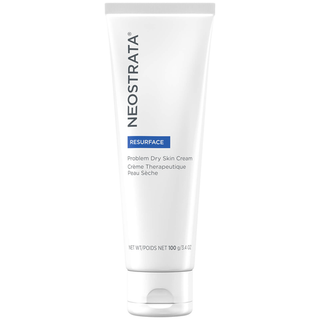
“Problem Dry Skin Cream”
This product can help improve hydration of the skin with the two types of ingredients.
The first type is called “humectants”:
these ingredients help attract water.
When humectants are on the surface of the skin, they “pull in” the moisture from the outside environment, or from
within deeper layers of the skin. The following ingredients in this product do the job:
arginine, propylene glycol.
This product also contains ingredients called “occlusives”. They help reduce the speed with which our skin loses moisture to the outside environment. These ingredients also help soften the upper layer of the skin, so it feels less tight and nicer to the touch. The following ingredients in this product do the job: arginine, beeswax.
The following ingredients in this product are especially good for supporting the skin barrier and helping with the hydration level: paraffinum liquidum, petrolatum
Anti-oxidationNot advertised by the brand · 3 ingredients credited for this claimModerate support
This product contains antioxidants (gluconolactone) that might be able to help neutralize free radicals in skin to lessen the damage it gets from the UV light (sun). There is not enough evidence to confirm their effectiveness in skin though.
Can it cause trouble?
Irritancy13 flagged ingredientsLow risk
ComedogenicClean of flagged comedogenic ingredientsNone flagged
User reviews
Be the first — your take helps the next person decide.
Ingredients
Filter by role to see what each ingredient is doing.
Water~40–60%
Propylene glycol~4.5–6.8%
- Irritation risk
- High
Helps oil and water mix together and can enhance the penetration of other ingredients into the skin. It can be irritating
More about Propylene glycolPetrolatum~3.6–5.5%
- Irritation risk
- Low
One of the most effective and the most studied occlusive ingredients that creates a protective layer on top of the skin preventing moisture loss
More about PetrolatumParaffinum liquidum~2.8–4.1%
- Irritation risk
- Low
Mineral oil. One of the most effective and well studied occlusive and emollient moisturizing ingredients. Helps reduce moisture loss in skin and repair skin barrier function
More about Paraffinum liquidumGlycolic acid~2–3%
- Irritation risk
- High
An alpha-hydroxy acid (AHA) that helps to remove the dead skin cells on the surface of the skin reveling a more even, smoother complexation. It is also able to stimulate collagen production with long-term use. Could help to reduce pore congestion. It can be irritating to the skin. Apply sunscreen daily if using products with glycolic acid
More about Glycolic acidLactic acid~1.6–2.5%
- Irritation risk
- Medium
An exfoliating and moisturizing alpha-hydroxy acid (AHA). Typically causes less irritation than other AHAs, for example, glycolic acid. At high concentrations (about 15%), lactic acid can help reduce lines and wrinkles. Recent studies show that lactic acid can support the "good" bacteria living on skin's surface (healthy skin microbiome)
More about Lactic acidMandelic acid~1.4–2.1%
- Irritation risk
- High
Helps shed the upper layer of dead cells from the surface of the skin revealing smoother, brighter skin. It can help to reduce hyperpigmentation. It has anti-bacterial properties, and might help to reduce blemishes, as well as fine lines and wrinkles. It is considered to be gentler than glycolic acid
More about Mandelic acidGluconolactone~1.2–1.8%
- Irritation risk
- Medium
A polyhydroxy acid (PHA) that helps shed the dead cells from the skin surface revealing smoother skin. Is believed to be genter than AHAs. It helps attract water to the upper layer of the skin and can stimulate production of skin's own hyaluronic acid resulting in improved hydration levels. It has been shown to be helpful against acne and clogged pores if used consistently (e.g over a period of 12 weeks) in high enough concentration. It can help reduce fine lines and wrinkles and improve skin tone with long-term application. Can help neutralize free radicals
More about GluconolactoneStearyl alcohol~1.1–1.6%
- Irritation risk
- Low
An emollient that helps soften the skin
More about Stearyl alcoholCera alba~1–1.45%
- Irritation risk
- Medium
Forms a protective barrier that holds water and keeps dry skin hydrated. Keeps an emulsion from separating into its oil and liquid components, and increases the thickness of a product. Can be an allergen
More about Cera albaBeeswax~0.55–1.3%
- Irritation risk
- Low
Forms a protective barrier that holds water and keeps dry skin hydrated. Keeps an emulsion from separating into its oil and liquid components, and increases the thickness of a product. Can be an allergen
More about BeeswaxPeg-40 stearate~0.45–1.05%
Sorbitan stearate~0.4–0.95%
Arginine~0.35–0.85%
- Irritation risk
- Low
An amino acid that is naturally present in skin and helps keep it hydrated. When used together with AHAs, it can reduce their irritating effect on the skin
More about ArginineAmmonium hydroxide~0.35–0.8%
Maltobionic acid~0.35–0.8%
- Irritation risk
- Medium
A polyhydroxy acid (PHA) that helps shed the dead cells from the skin surface revealing smoother skin. Is genter than AHAs. In addition, it helps attract water to the upper layer of the skin. It has been shown to be helpful against acne and clogged pores. Might help reduce fine lines and wrinkles and improve skin tone with long-term application. Can help neutralize free radicals
More about Maltobionic acidCetyl alcohol~0.35–0.85%
- Irritation risk
- Low
A non-drying alcohol that works to soften the skin and stabilize product formulations helping oil and water mix together
More about Cetyl alcoholDimethicone~0.2–0.8%
- Irritation risk
- Low
A silicone that helps to reduce water loss from the surface of the skin. Can temporarily "fill in" lines and wrinkles, absorb oil, and create a nice product finish
More about DimethiconeTocopheryl acetate~0.15–0.55%
- Irritation risk
- Medium
A more stable but less bio-available form of vitamin E compared to Tocopherol. Might help moisturize and protect the skin from free radicals, but mostly used in low concentrations to stabilize other ingredients.
More about Tocopheryl acetateMagnesium aluminum silicate~0.15–0.55%
- Irritation risk
- Low
Might be helpful in restoring skin barrier function and, when combined with zinc carbonate and malonic acid, reducing fine lines and wrinkles by stimulating elastin production. Also helps stabilize the product formulation
More about Magnesium aluminum silicateXanthan gum~0.1–0.45%
- Irritation risk
- Low
Used to create a thicker product consistency
More about Xanthan gumDisodium edta~0.1–0.35%
Sodium bisulfite~0.1–0.2%
Methylparaben~0.05–0.25%
Propylparaben~0.05–0.2%
Ci 19140~0.05–0.15%
Ci 17200~0.05–0.1%
Ingredient list view
Water, Propylene glycol, Petrolatum, Paraffinum liquidum, Glycolic acid, Lactic acid, Mandelic acid, Gluconolactone, Stearyl alcohol, Cera alba, Beeswax, Peg-40 stearate, Sorbitan stearate, Arginine, Ammonium hydroxide, Maltobionic acid, Cetyl alcohol, Dimethicone, Tocopheryl acetate, Magnesium aluminum silicate, Xanthan gum, Disodium edta, Sodium bisulfite, Methylparaben, Propylparaben, Ci 19140, Ci 17200
Compare prices
Retailers ranked by price — lowest first.


Worth comparing, line by line.
Match % combines shared ingredients, the first five ingredients, shared actives and hero ingredients, irritancy (lower counts in the alternative's favour), texture and body area. Only products in the same routine step are compared.
| NEOSTRATAProblem Dry Skin CreamYOUR PRODUCT | ExuvianceProfessional Pedi-Peel | |
|---|---|---|
| Match | — | 55% |
| Price | $35.42 | $56.46+$21.04 |
| Shared key ingredients | — | 11 of 11 |
| Key difference | — | — |
| Irritancy | Low | Low |
| Drying alcohol | — | — |
| View product | Shop |

Product summary
"NEOSTRATA - Problem Dry Skin Cream" is effective for: Exfoliation, Evens skin tone, Anti-aging and Moisturizing
Ingredient callouts
- Exfoliating acids (glycolic acid 2.00% - 3.00%, lactic acid 1.60% - 2.50% and mandelic acid 1.40% - 2.10%). In this concentration, they will have a noticeable exfoliating effect. They can also have an anti-aging effect and stimulate collagen production in a long-run. PHAs (maltobionic acid 0.35% - 0.80% and gluconolactone 1.20% - 1.80%) in this product also work for improving skin hydration. They might be even able to stimulate the production of skin's natural humectants and support the healthy skin microbiome.
Price
The product retails for 44.00$ in the United States, from 65.36A$ up to 98.25A$ in Australia, from 30.00£ up to 36.50£ in the United Kingdom and for 52.80CA$ in Canada.
For a detailed price comparison: click here.
Sources cited in this review
Every concentration estimate and effectiveness label is anchored to one of these 28 studies and safety reviews.
- 1Surfactants and experimental irritant contact dermatitisncbi.nlm.nih.gov
- 2Propylene Glycolpubmed.ncbi.nlm.nih.gov
- 3Skin-sensitizing and irritant properties of propylene glycolonlinelibrary.wiley.com
- 4A review on the extensive skin benefits of mineral oilncbi.nlm.nih.gov
- 5
- 6Glycolic acid peel therapy – a current reviewncbi.nlm.nih.gov

Affiliate links · As an Amazon Associate, WIMJ earns from qualifying purchases.