Works for
2 of 2 advertised claims delivered
Moisturizing25 ingredients credited for this claimStrong support
“Contains naturally-derived ingredients such as Green Tea Extract, Centella Asiatica Extract that deliver intense moisture and help soothe sensitive skin.”
This product can help improve hydration of the skin with the two types of ingredients.
The first type is called “humectants”:
these ingredients help attract water.
When humectants are on the surface of the skin, they “pull in” the moisture from the outside environment, or from
within deeper layers of the skin. The following ingredients in this product do the job:
anhydroxylitol, glycerin.
This product also contains ingredients called “occlusives”. They help reduce the speed with which our skin loses moisture to the outside environment. These ingredients also help soften the upper layer of the skin, so it feels less tight and nicer to the touch. The following ingredients in this product do the job: linolenic acid, cyclohexasiloxane.
The following ingredients in this product are especially good for supporting the skin barrier and helping with the hydration level: niacinamide
Evens skin tone5 ingredients credited for this claimStrong support
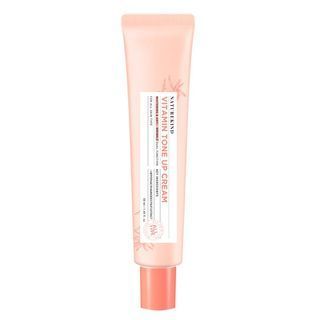
“Brand from South Korea NATUREKIND. Benefits A tone-up cream helps brighten up the skin tone with a soft, creamy texture.”
This product can help reduce hypepigmentation and even out the skin tone because it contains the following effective ingredients: glutathione, niacinamide
Keep in mind that you would need to apply any topical skincare targetted at hypigmentation consistently for a couple of months to get a result. No topical skincare product can help get rid of hyperpigmentation (including post-acne marks and age spots) instantly.
Anti-oxidationNot advertised by the brand · 10 ingredients credited for this claimStrong support
This product contains antioxidants (asiaticoside, glutathione) that can help neutralize free radicals in skin. By doing so, they can lessen the damage the skin gets from the UV light (sun).
Anti-blemishNot advertised by the brand · 4 ingredients credited for this claimStrong support
This product can help reduce breakouts and clogged pores because it contains the following ingredient: niacinamide. This ingredient is used for treating acne and can have a noticeable effect.
Anti-agingNot advertised by the brand · 8 ingredients credited for this claimStrong support
This product can help reduce and prevent fine lines and wrinkles, improve skin elasticity and firmness because it contains adenosine, niacinamide.
These ingredients in the product can also be helpful, even though there is less evidence for their effectiveness: asiaticoside.
Keep in mind that it typically takes at least 6 weeks to notice any results because the changes that are needed to improve fine lines and elasticity happen in the deeper layers of the skin. No topical anti-aging product can “erase” wrinkles or fully reverse signs of aging.
Can it cause trouble?
Irritancy2 strong irritants: Melaleuca alternifolia leaf water, Chamaecyparis obtusa leaf extractMedium risk
Comedogenic1 ingredient rated 2 or more on the 0–5 pore-clogging scale1 flagged


User reviews
Be the first — your take helps the next person decide.
Ingredients
Filter by role to see what each ingredient is doing.
Hippophae rhamnoides fruit extract~22–33%
- Irritation risk
- Medium
A plant extract that might help neutralize free radicals in skin, but research on its effectiveness is lacking
More about Hippophae rhamnoides fruit extractButylene glycol~5.3–7.9%
- Irritation risk
- Low
Used to create a nice product texture and help delivery of other ingredients. Might be somewhat helpful in attracting water to the upper layer of the skin
More about Butylene glycolGlycerin~4.8–7.2%
- Irritation risk
- Low
One of the best moisturizing ingredients. Naturally present in skin. It attracts water to the upper layer of the skin working as a humectant
More about GlycerinCyclohexasiloxane~3.7–5.5%
- Irritation risk
- Low
A silicone that serves as an emollient. Helps create a nice non-greasy feels
More about CyclohexasiloxaneWater~2.6–3.9%
Titanium dioxide~2.4–3.6%
- Irritation risk
- Low
Works as a UV filter when used in high concentrations. It is photostable and is effective mostly against the UVB light, with some protection in the UVA range. In small concentrations, used for its ability to improve the color of cosmetic products. Is usually well tolerated by the skin
More about Titanium dioxideNiacinamide~1.5–2.2%
- Irritation risk
- Low
Is proven to be effective in reducing blemishes, evening out skin tone and helping to improve lines and wrinkles. It helps the skin to repair sun damage, calm down inflammation and keep maintain good levels of moisture. The concentration of about 2% is effective for supporting the skin barrier and evening out the skin tone. Concentration of 4-6% is better for helping with acne and balancing the sebum production
More about NiacinamideCaprylyl methicone~1.2–1.8%
- Irritation risk
- Low
A type of silicone that helps to soften the upper layer of the skin and create a nice product finish on the skin
More about Caprylyl methiconeSodium acrylate/sodium acryloyldimethyl taurate copolymer~1.2–1.7%
- Irritation risk
- Low
Used to create a thicker product consistency
More about Sodium acrylate/sodium acryloyldimethyl taurate copolymerCarbon~0.55–1.3%
- Irritation risk
- Low
Water~0.4–0.95%
Melaleuca alternifolia leaf water~0.35–0.8%
- Irritation risk
- High
Betula platyphylla japonica juice~0.3–0.7%
- Irritation risk
- Low
Oryza sativa bran extract~0.2–0.75%
Chamaecyparis obtusa leaf extract~0.2–0.7%
Camellia sinensis leaf extract~0.2–0.7%
- Irritation risk
- Low
Can contain potent anti-oxidant compounds (abbreviated ECG, GCG, EGC, and EGCG) that might help protect the skin from free radicals. Can help calm down inflammation and has some anti-bacterial properties. Unfortunately, these antioxidants are unstable and lose their effectiveness very quickly in products. The concentration of the antioxidant compounds in the extract also tends to be low to be effective in topical formulation
More about Camellia sinensis leaf extractCentella asiatica extract~0.2–0.8%
- Irritation risk
- Medium
A plant extract that has been shown to be able to reduce inflammation in skin, support restoration of skin barrier function, as well as support collagen production. Contains active compounds called centelloids: asiaticoside, madecasosside, asiatic acid and madecassic acid. Might be helpful in preventing stretch marks. It can be itself be irritating though.
More about Centella asiatica extractBacillus/folic acid/soybean ferment extract~0.15–0.6%
- Irritation risk
- Low
Pyrus communis fruit extract~0.15–0.5%
- Irritation risk
- Medium
Can have some moisturizing properties due to its sugar content
More about Pyrus communis fruit extractRose extract~0.1–0.5%
Hedera helix leaf/stem extract~0.1–0.4%
- Irritation risk
- Low
Fragaria chiloensis fruit extract~0.1–0.45%
- Irritation risk
- Medium
Pimpinella anisum fruit extract~0.1–0.45%
- Irritation risk
- High
A plant extract that can have some anti-oxidant properties. Can be used as a fragrance and to help preserve product formulations. Can be irritating
More about Pimpinella anisum fruit extractFructan~0.1–0.45%
- Irritation risk
- Low
Linolenic acid~0.15–0.7%
- Irritation risk
- Medium
An emollient that helps soften the skin and calm down inflammation
More about Linolenic acidMenadione~0.1–0.45%
- Irritation risk
- Low
Cyanocobalamin~0.1–0.45%
- Irritation risk
- Low
Can support skin barrier function and reduce inflammation in skin
More about CyanocobalaminAscorbic acid~0.1–0.45%
- Irritation risk
- High
The most well-researched antioxidant that works in skin. Helps neutralize free radicals supporting collagen production, helping to even out the skin tone and preventing early signs of aging
More about Ascorbic acidAscorbyl tetraisopalmitate~0.15–0.65%
- Irritation risk
- Medium
A vitamin C derivative. Studies show that is might be effective in reducing hyperpigmentation, but there are no studies confirming that it is effectively converted into the bioavailable form of Vitamin C in skin. It is not clear how this derivative compares in effectiveness to the topical application of bioavailable form of vitamin C (L-ascorbic acid)
More about Ascorbyl tetraisopalmitateTocopherol~0.15–0.5%
- Irritation risk
- Low
Pure form of vitamin E. Can help moisturise and protect the skin from free radicals. Often used to help stabilise other ingredients or the formula itself
More about TocopherolPanthenol~0.15–0.5%
- Irritation risk
- Low
Helps attract water to the upper layer of the skin and can help improve skin barrier function
More about PanthenolGlutathione~0.15–0.55%
- Irritation risk
- Medium
A peptide that can help neutralize free radicals in skin and reduce melanin production resulting in skin lightening effect and reduction in hyperpigmentation. It can also help attract moisture to the upper layer of the skin
More about GlutathioneSodium hyaluronate~0.15–0.5%
- Irritation risk
- Low
One of the best moisturizing ingredients. Attracts water into the upper layer of the skin
More about Sodium hyaluronateSodium acetylated hyaluronate~0.15–0.5%
- Irritation risk
- Low
A type of hyaluronic acid that works as an excellent moisturizer by attracting water into the upper layer of the skin. Is typically feels less sticky on the skin compared to the usual hyaluronic acid
More about Sodium acetylated hyaluronateHydrolyzed hyaluronic acid~0.1–0.5%
- Irritation risk
- Low
One of the best moisturizing ingredients. Attracts water into the upper layer of the skin. A version of it is naturally present in skin
More about Hydrolyzed hyaluronic acidAnhydroxylitol~0.15–0.5%
- Irritation risk
- Low
Helps attract water to the upper layer of the skin and repair the skin barrir function
More about AnhydroxylitolXylitol~0.1–0.5%
- Irritation risk
- Low
Helps attract water to the upper layer of the skin and repair the skin barrier function
More about XylitolAllantoin~0.1–0.45%
- Irritation risk
- Low
Helps calm down inflammation in skin and can help reduce itching. Helps to repair the skin barrier and keep skin hydrated
More about AllantoinGlucose~0.15–0.5%
- Irritation risk
- Low
Helps attract water to the upper layer of the skin. Could be helpful in restoring the skin barrier function
More about GlucoseMadecassic acid~0.15–0.5%
- Irritation risk
- Medium
An active compound of Centella Asiatica plant extract. In combination with other active compounds of Centella Asiatica extract (asiaticoside, madecasosside and asiatic acid), madecassic acid has been shown to be helpful in wound-healing, restoring skin barrier function and supporting collagen production in skin. It can, however, itself be irritating
More about Madecassic acidAsiaticoside~0.1–0.45%
- Irritation risk
- Medium
An active compound of Centella Asiatica plant extract. In combination with other active compounds of Centella Asiatica extract (madecasosside, asiatic acid and madecassic acid), asiaticoside has been shown to be helpful in wound-healing, restoring skin barrier function and supporting collagen production in skin. It can, however, itself be irritating
More about AsiaticosideAsiatic acid~0.15–0.55%
- Irritation risk
- Medium
An active compound of Centella Asiatica plant extract. In combination with other active compounds of Centella Asiatica extract (asiaticoside, madecasosside and madecassic acid) asiatic acid has been shown to be helpful in wound-healing, restoring skin barrier function and supporting collagen production in skin. It can, however, itself be irritating
More about Asiatic acidAdenosine~0.15–0.6%
- Irritation risk
- Low
Might help improve cell turnover and reduce inflammation in skin. One study shows that the ingredients might be able to help reduce dynamic wrinkles (for example, in the corners of the eyes or on the forehead)
More about AdenosineAluminum hydroxide~0.2–0.75%
- Irritation risk
- Low
Is used to add opaque (non-transparent) appearance to formulations. Can be used to coat other ingredients for even dispersion. This is a different ingredient compared to the ones used in antipersperants (aluminium chloride and aluminium chlorohydrate)
More about Aluminum hydroxideGlyceryl caprylate~0.2–0.8%
- Irritation risk
- Low
An emollient that can also help water and oil mix together, as well as prevent bacteria growth in products
More about Glyceryl caprylateSorbitan oleate~0.15–0.65%
- Irritation risk
- Medium
- Comedogenicity
- 2/5
Helps oil and water mix together
More about Sorbitan oleateSorbitan olivate~0.15–0.65%
Cetearyl olivate~0.15–0.65%
Caprylyl/capryl glucoside~0.2–0.7%
- Irritation risk
- Medium
Helps oil and water mix together. Can be used as a cleansing agent
More about Caprylyl/capryl glucosidePolyisobutene~0.2–0.7%
Triethoxycaprylylsilane~0.1–0.5%
- Irritation risk
- Low
A type of silicone that helps oil and water mix well together. Helps to disperse other ingredients, e.g. pigments, evenly in a formulation
More about Triethoxycaprylylsilane1,2-hexanediol~0.1–0.4%
Benzyl glycol~0.15–0.5%
- Irritation risk
- Medium
Helps dissolve other ingredients and preserve products
More about Benzyl glycolEthylhexylglycerin~0.1–0.45%
Raspberry ketone~0.1–0.35%
- Irritation risk
- High
Used as a fragrance. It can reduce skin pigmentation, but it is not safe to use for these purposes in high concentrations as use of raspberry ketone and its derivative is linked to causing loss of skin pigmentation in people (leukoderma)
More about Raspberry ketoneDisodium edta~0.05–0.3%
Ingredient list view
Hippophae rhamnoides fruit extract, Butylene glycol, Glycerin, Cyclohexasiloxane, Water, Titanium dioxide, Niacinamide, Caprylyl methicone, Sodium acrylate/sodium acryloyldimethyl taurate copolymer, Carbon, Water, Melaleuca alternifolia leaf water, Betula platyphylla japonica juice, Oryza sativa bran extract, Chamaecyparis obtusa leaf extract, Camellia sinensis leaf extract, Centella asiatica extract, Bacillus/folic acid/soybean ferment extract, Pyrus communis fruit extract, Rose extract, Hedera helix leaf/stem extract, Fragaria chiloensis fruit extract, Pimpinella anisum fruit extract, Fructan, Linolenic acid, Menadione, Cyanocobalamin, Ascorbic acid, Ascorbyl tetraisopalmitate, Tocopherol, Panthenol, Glutathione, Sodium hyaluronate, Sodium acetylated hyaluronate, Hydrolyzed hyaluronic acid, Anhydroxylitol, Xylitol, Allantoin, Glucose, Madecassic acid, Asiaticoside, Asiatic acid, Adenosine, Aluminum hydroxide, Glyceryl caprylate, Sorbitan oleate, Sorbitan olivate, Cetearyl olivate, Caprylyl/capryl glucoside, Polyisobutene, Triethoxycaprylylsilane, 1,2-hexanediol, Benzyl glycol, Ethylhexylglycerin, Raspberry ketone, Disodium edta
Compare prices
Retailers ranked by price — lowest first.

Affiliate links · prices updated regularly
Worth comparing, line by line.
Match % combines shared ingredients, the first five ingredients, shared actives and hero ingredients, irritancy (lower counts in the alternative's favour), texture and body area. Only products in the same routine step are compared.
| NATUREKINDVitamin Tone Up CreamYOUR PRODUCT | TOSOWOONGCica Snail Cream | BeplainCicaterol Moisturizer | CiracleAnti-Redness K Cream | |
|---|---|---|---|---|
| Match | — | 84% | 83% | 82% |
| Price | $16.60 | $16.40 | $25.60+$9.00 | $22.80+$6.20 |
| Shared key ingredients | — | 11 of 17 | 9 of 17 | 9 of 17 |
| Key difference | — | Copper Tripeptide-1 | Madecassoside | Betaine |
| Irritancy | Medium | Medium | Low | Medium |
| Drying alcohol | — | — | — | — |
| View product | Shop | Shop | Shop |


Product summary
Based on the ingredient list, "NATUREKIND - Vitamin Tone Up Cream" can work well for skin moisturization. To work well, any moisturizer needs to include a combination of water-binding and emollient ingredients. NATUREKIND - Vitamin Tone Up Cream ticks this box. Humectants in this product (anhydroxylitol, glycerin, hydrolyzed hyaluronic acid, sodium acetylated hyaluronate and sodium hyaluronate) help to increase the water content in the upper layer of the skin. (These ingredients do so by "capturing" water molecules from the outside air or from within the deeper layers of the skin). Linolenic acid, cyclohexasiloxane and glyceryl caprylate in this product help decrease the water evoporation from the skin, so that it stays hydrated for longer. These ingredients also soften the skin and take away the feeling of tightness and dryness.
Ingredient callouts
- We love that this moisturizer contains a good concentration of niacinamide 1.50% - 2.20%. Niacinamide is a perfect active in a moistruizer because it helps calm down inflamation in skin and support the skin barrier. More than that, it is helpful for most common skin concerns: it helps regulat oil production, help reduce acne and clogged pores, improve skin tone and prevent pigmentation marks. It also helps fight photodamage.
- This product also contains Vitamin C (Ascorbic Acid). It can be an effective active for anti-aging and evening out the skin tone, but in this moisturizer it is used for stabilizing other ingredients in the formulation. In this concentration (0.10% - 0.45%) it cannot have a noticeable benefit for the skin.
- Adenosine 0.15% - 0.60%. It is a chemical present inside our skin cells. A clinical trial confirmed that topical application of Adenosine in a low concentration can reduce dynamic wrinkles (these are the wrinkles that appear with age in a places where our mimic is the most active, for example, in the corners of the eyes or on the forehead).
- Actives derived from an extract of the Centella Asiatica plant (also known as Gotu Kola) - asiatic acid 0.15% - 0.55%, asiaticoside 0.10% - 0.45% and madecassic acid 0.15% - 0.50% The Centella Asiatica Actives, even in low concentration, can help reduce inflammation in skin, strengthen the skin barrier and reduce photodamage. They can also help to decrease scarring.
Irritation risk
We assess the overall irritancy of this moisturizer to be medium. For a detailed overview of all potential irritants: click here
You can see the detailed formula review with the breakdown of all actives in the product and the full ingredient list with estimated concentrations in the tables below.
Price
The product retails for 16.60$ in the United States.
For a detailed price comparison: click here.
Sources cited in this review
Every concentration estimate and effectiveness label is anchored to one of these 40 studies and safety reviews.
- 1Abundance of active ingredients in sea-buckthorn oilncbi.nlm.nih.gov
- 2
- 3
- 4
- 5
- 6Centella asiatica in cosmetologyncbi.nlm.nih.gov

Affiliate links · As an Amazon Associate, WIMJ earns from qualifying purchases.