Works for
1 of 3 advertised claims delivered
Moisturizing8 ingredients credited for this claimGood evidence
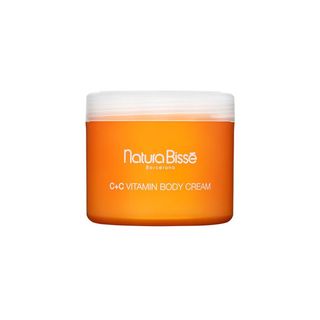
“C+C Vitamin Body Cream”
This product can help soften the skin and reduce its moisture loss with emollients and occlusives: caprylic/capric triglyceride, dimethicone.
Keep in mind that this product does not contain effective ingredients to attract water to the upper layer of the skin. This is why an additional product with humectants like glycerin or hyaluronic acid can be helpful (apply it before this product for the best results).
Anti-aging2 ingredients credited for this claimWeak evidence
“Orange extracts, derived from vitamin C and magnesium, for its anti-radical action and for brightening and revitalising the skin.”
Effective ingredients missing or their concentration is too low.
Evens skin tone1 ingredient credited for this claimWeak evidence
“It nourishes, repairs and protects the skin, while efficiently maintaining its tone and elasticity.”
Effective ingredients missing or their concentration is too low
Can it cause trouble?
Irritancy11 strong irritants: Citrus aurantium dulcis fruit extract, Alcohol denat. + 9 more — patch-test recommendedHigh risk
Comedogenic1 ingredient rated 2 or more on the 0–5 pore-clogging scale1 flagged
User reviews
Be the first — your take helps the next person decide.
Ingredients
Filter by role to see what each ingredient is doing.
Water~45–55%
Decyl oleate~4.5–5.5%
- Irritation risk
- Low
- Comedogenicity
- 2/5
Helps soften the upper layer of the skin
More about Decyl oleateCetearyl ethylhexanoate~4.2–5.2%
- Irritation risk
- Low
An emollient that helps soften the skin
More about Cetearyl ethylhexanoateCaprylic/capric triglyceride~3.3–4%
- Irritation risk
- Medium
A good mix of fatty acids that forms a protective layer on the skin. Improves the shelf life of products. Derived from coconut and glycerin
More about Caprylic/capric triglycerideC12-20 acid peg-8 ester~2.3–2.8%
- Irritation risk
- Medium
Helps oil and water mix together
More about C12-20 acid peg-8 esterPropylene glycol~1.9–2.3%
- Irritation risk
- High
Helps oil and water mix together and can enhance the penetration of other ingredients into the skin. It can be irritating
More about Propylene glycolGlyceryl stearate~1.7–2.1%
- Irritation risk
- Low
An emollient that softens the skin and forms a protective layer on its surface. Helps water and oil mix together
More about Glyceryl stearatePeg-100 stearate~1.5–1.8%
- Irritation risk
- Low
Helps oil and water mix togehter and creates a nice product texture
More about Peg-100 stearateRosa canina fruit oil~1.2–1.5%
- Irritation risk
- Medium
A great emollient. Contains vitamin E (tocopherol) which may give it some anti-oxidant properties. Can contain volatile compounds and can be irritating
More about Rosa canina fruit oilHydrolyzed elastin~0.95–1.2%
- Irritation risk
- Low
Citrus aurantium dulcis fruit extract~0.65–0.95%
- Irritation risk
- High
A plant extract that is used as a fragrance. Can be irritating and lead to photosensitivity
More about Citrus aurantium dulcis fruit extractAlcohol denat.~0.55–0.8%
- Irritation risk
- High
Produces temporary toning effect. Can help dissolve other ingredients or preserve products
More about Alcohol denat.Dimethicone~0.55–0.8%
- Irritation risk
- Low
A silicone that helps to reduce water loss from the surface of the skin. Can temporarily "fill in" lines and wrinkles, absorb oil, and create a nice product finish
More about DimethiconeTriethanolamine~0.45–0.65%
- Irritation risk
- Medium
Used to adjust pH of the product and can help improve the product's smell
More about TriethanolaminePotassium cetyl phosphate~0.45–0.65%
- Irritation risk
- Medium
Helps oil and water mix together
More about Potassium cetyl phosphateCarbomer~0.4–0.6%
- Irritation risk
- Low
Helps create a thicker or gel-like product texture. It is not a surfactant but can be used in gentle cleansing formulations
More about CarbomerMethylpropanediol~0.35–0.65%
Tocopheryl acetate~0.3–0.6%
- Irritation risk
- Medium
A more stable but less bio-available form of vitamin E compared to Tocopherol. Might help moisturize and protect the skin from free radicals, but mostly used in low concentrations to stabilize other ingredients.
More about Tocopheryl acetateMagnesium ascorbyl phosphate~0.3–0.5%
- Irritation risk
- Medium
A derivative of vitamin C that is more stable, but less bioavailable than the pure form of vitamin C. It does not penetrate the skin well, but has been shown to convert to pure vitamin C once in skin. It can be helpful in stimulating collagen production and lightening the skin tone, but the required concentration is likely to be very high
More about Magnesium ascorbyl phosphateAllantoin~0.25–0.45%
- Irritation risk
- Low
Helps calm down inflammation in skin and can help reduce itching. Helps to repair the skin barrier and keep skin hydrated
More about AllantoinCaprylyl glycol~0.25–0.5%
- Irritation risk
- Medium
Helps preserve products and creates a nice product texture
More about Caprylyl glycolHydroxyethylcellulose~0.25–0.45%
- Irritation risk
- Low
Used to thicken product formulations and create gel-like textures
More about HydroxyethylcelluloseBht~0.2–0.35%
Ascorbyl palmitate~0.2–0.35%
- Irritation risk
- Medium
Being a lipid soluble form of vitamin C, it is more stable and can penetrate the skin better than L-Ascorbic acid. It is effective in protecting the skin from free radicals, as well as evening the skin tone, but is less effective in stimulating collagen production compared to L-Ascorbic acid.
More about Ascorbyl palmitateCitric acid~0.2–0.35%
- Irritation risk
- Medium
Can work as an exfoliant but is typically used to adjust the product pH
More about Citric acidSorbic acid~0.2–0.35%
Potassium sorbate~0.2–0.4%
Methylparaben~0.15–0.3%
Ethylparaben~0.2–0.35%
Propylparaben~0.15–0.3%
Isobutylparaben~0.2–0.35%
Butylparaben~0.2–0.35%
Imidazolidinyl urea~0.2–0.35%
- Irritation risk
- High
A preservative. Is more irritating than many other preservatives available
More about Imidazolidinyl ureaPhenoxyethanol~0.2–0.35%
- Irritation risk
- Low
A preservative. It helps prevent bacterial growth in cosmetic products
More about PhenoxyethanolParfum~0.15–0.3%
- Irritation risk
- High
An aromatic blend of unspecified and possibly irritating ingredients
More about ParfumLimonene~0.15–0.3%
- Irritation risk
- High
A common frangrance that can easily irritate skin, especially if exposed to air, light or heat
More about LimoneneLinalool~0.15–0.25%
Butylphenyl methylpropional~0.15–0.25%
- Irritation risk
- High
A fragrance. Can trigger allergic reactions and be irritating
More about Butylphenyl methylpropionalBenzyl benzoate~0.15–0.25%
- Irritation risk
- High
Fragrance with sweet balsamic smell. Help to preserve products and dissolve other ingredients. Could trigger allergic reactions and be irritating
More about Benzyl benzoateHydroxycitronellal~0.15–0.25%
- Irritation risk
- High
A fragrance. A likely allergen and can be irritating
More about HydroxycitronellalHexyl cinnamal~0.1–0.2%
Citral~0.1–0.15%
Ingredient list view
Water, Decyl oleate, Cetearyl ethylhexanoate, Caprylic/capric triglyceride, C12-20 acid peg-8 ester, Propylene glycol, Glyceryl stearate, Peg-100 stearate, Rosa canina fruit oil, Hydrolyzed elastin, Citrus aurantium dulcis fruit extract, Alcohol denat., Dimethicone, Triethanolamine, Potassium cetyl phosphate, Carbomer, Methylpropanediol, Tocopheryl acetate, Magnesium ascorbyl phosphate, Allantoin, Caprylyl glycol, Hydroxyethylcellulose, Bht, Ascorbyl palmitate, Citric acid, Sorbic acid, Potassium sorbate, Methylparaben, Ethylparaben, Propylparaben, Isobutylparaben, Butylparaben, Imidazolidinyl urea, Phenoxyethanol, Parfum, Limonene, Linalool, Butylphenyl methylpropional, Benzyl benzoate, Hydroxycitronellal, Hexyl cinnamal, Citral
Compare prices
Retailers ranked by price — lowest first.

Sources cited in this review
Every concentration estimate and effectiveness label is anchored to one of these 11 studies and safety reviews.
- 1Surfactants and experimental irritant contact dermatitisncbi.nlm.nih.gov
- 2Propylene Glycolpubmed.ncbi.nlm.nih.gov
- 3Skin-sensitizing and irritant properties of propylene glycolonlinelibrary.wiley.com
- 4
- 5
- 6

Affiliate links · As an Amazon Associate, WIMJ earns from qualifying purchases.