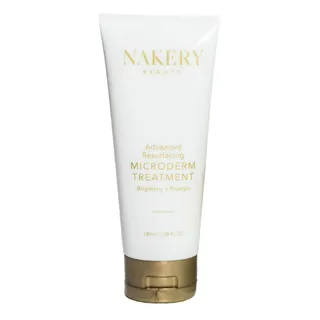
Works for
ExfoliationGlycolic acid, Retinol + 4 moreWorks well
“Advanced Resurfacing Microderm Scrub”
This product can help exfoliate the skin. In other words, it helps break down the bonds between dead cells on the surface of the skin and speed up the skin turnover. Skin often appears softer and brighter after exfoliation, but overdoing it can result in disrupted skin barrier. The following ingredient is doing the exfoliating job in this product: glycolic acid, retinol.
MoisturizingTripeptide-29, Palmitoyl pentapeptide-4 + 11 moreWorks well
“Unique mousse-like lather hydrates while delivering a luxurious polish, leaving skin feeling soft, refreshed, and radiant.”
This product can help improve hydration of the skin with the two types of ingredients.
The first type is called “humectants”:
these ingredients help attract water.
When humectants are on the surface of the skin, they “pull in” the moisture from the outside environment, or from
within deeper layers of the skin. The following ingredients in this product do the job:
glycerin.
This product also contains ingredients called “occlusives”. They help reduce the speed with which our skin loses moisture to the outside environment. These ingredients also help soften the upper layer of the skin, so it feels less tight and nicer to the touch. The following ingredients in this product do the job: helianthus annuus seed oil, glycine soja oil.
The following ingredients in this product are especially good for supporting the skin barrier and helping with the hydration level: palmitoyl pentapeptide-4, tripeptide-29
Evens skin toneRetinol, 3-o-ethyl ascorbic acid + 4 moreWorks well
“Formulated with both physical and chemical exfoliants (Lactic Acid, Glycolic Acid, and Flower Acids) that help to brighten the look of skin, remove topical dead skin cells, visibly brighten the look of uneven skin tone, and temporarily improve the look of pores, fine lines and wrinkles.”
This product can help reduce hypepigmentation and even out the skin tone because it contains the following effective ingredients: retinol.
In addition, this product contains glycolic acid. This ingredient (ingredients) might help reduce hyperpigmentation, but the effect, if any, is likely to be small.
The following ingredient (ingredients) in this product might be helpful, but there is no evidence to confirm that it actually can help even out the skin tone: 3-o-ethyl ascorbic acid, resveratrol.
Keep in mind that you would need to apply any topical skincare targetted at hypigmentation consistently for a couple of months to get a result. No topical skincare product can help get rid of hyperpigmentation (including post-acne marks and age spots) instantly.
Anti-agingRetinol, Glycolic acid + 8 moreWorks well
“Specifically engineered micro-spheres gently buff away dull, rough skin while improving the look of fine lines and wrinkles without scratching the skin.”
This product can help reduce and prevent fine lines and wrinkles, improve skin elasticity and firmness because it contains retinol, glycolic acid.
These ingredients in the product can also be helpful, even though there is less evidence for their effectiveness: palmitoyl pentapeptide-4, resveratrol, tripeptide-29.
Keep in mind that it typically takes at least 6 weeks to notice any results because the changes that are needed to improve fine lines and elasticity happen in the deeper layers of the skin. No topical anti-aging product can “erase” wrinkles or fully reverse signs of aging.
Anti-oxidationSide benefit · 3-o-ethyl ascorbic acid, Retinol + 7 moreWorks well
This product contains antioxidants (resveratrol, retinol) that can help neutralize free radicals in skin. By doing so, they can lessen the damage the skin gets from the UV light (sun).
The following ingredients - 3-o-ethyl ascorbic acid, tartaric acid also can have an antioxidant effect, but there is less evidence to confirm their effectiveness in skin.
Anti-blemishSide benefit · Retinol, Glycolic acid + 1 moreWorks well
This product can help reduce breakouts and clogged pores because it contains the following ingredient: retinol. This ingredient is used for treating acne and can have a noticeable effect.
The following ingredient (ingredients) in this product might be helpful, but there is no evidence to confirm that it actually works: glycolic acid
Can it cause trouble?
Irritancy6 strong irritants: Juglans regia shell powder, Parfum + 4 more — patch-test recommendedHigh risk
Comedogenic4 ingredients rated 2 or more on the 0–5 pore-clogging scale4 flagged


User reviews
Be the first — your take helps the next person decide.
Ingredients
Filter by role to see what each ingredient is doing.
Water~45–55%
Glycerin~4.6–5.6%
- Irritation risk
- Low
One of the best moisturizing ingredients. Naturally present in skin. It attracts water to the upper layer of the skin working as a humectant
More about GlycerinHelianthus annuus seed oil~4.1–5%
- Irritation risk
- Low
A great emollient due to its high linoleic acid content. One of the most effective plant oils in helping skin hydration and repairing skin barrier function
More about Helianthus annuus seed oilPumice~3.1–3.8%
- Irritation risk
- Low
Milled volcanic rock. Used as an abrasive for physical exfoliation
More about PumiceCetearyl alcohol~2.3–2.8%
- Irritation risk
- Low
- Comedogenicity
- 2/5
A non-drying alcohol. Works as an emollient. Helps water and oil mix together and creates a nice product texture
More about Cetearyl alcoholCeteareth-20~2–2.4%
- Irritation risk
- Medium
- Comedogenicity
- 2/5
Helps oil and water mix together. Has some emollient properties
More about Ceteareth-20Phenoxyethanol~0.5–1%
- Irritation risk
- Low
A preservative. It helps prevent bacterial growth in cosmetic products
More about PhenoxyethanolCellulose gum~1.5–1.8%
- Irritation risk
- Low
Used to create thicker product consistency and stabilize emulsions
More about Cellulose gumCarrageenan~1.2–1.5%
- Irritation risk
- Medium
- Comedogenicity
- 3/5
Helps thicken the product formula and create a nice product formulation
More about CarrageenanJuglans regia shell powder~1.1–1.3%
- Irritation risk
- High
Parfum~0.65–0.95%
- Irritation risk
- High
An aromatic blend of unspecified and possibly irritating ingredients
More about ParfumHydroxyethyl acrylate/sodium acryloyldimethyl taurate copolymer~0.55–0.85%
- Irritation risk
- Medium
A gelling agent that thickens the product consistency and leaves the skin with a velvety finish
More about Hydroxyethyl acrylate/sodium acryloyldimethyl taurate copolymerPotassium sorbate~0.3–0.6%
C15-23 alkane~0.45–0.7%
Hydrated silica~0.6–0.9%
Ethylhexylglycerin~0.4–0.65%
C13-14 alkane~0.4–0.6%
- Irritation risk
- Low
Helps soften the upper layer of the skin
More about C13-14 alkaneDecyl glucoside~0.45–0.7%
- Irritation risk
- High
Helps oil and water mix together. Can be irritating
More about Decyl glucosideLactic acid~0.3–0.55%
- Irritation risk
- Medium
An exfoliating and moisturizing alpha-hydroxy acid (AHA). Typically causes less irritation than other AHAs, for example, glycolic acid. At high concentrations (about 15%), lactic acid can help reduce lines and wrinkles. Recent studies show that lactic acid can support the "good" bacteria living on skin's surface (healthy skin microbiome)
More about Lactic acid3-o-ethyl ascorbic acid~0.3–0.5%
- Irritation risk
- High
A vitamin C derivative that is more stable but less potent than pure form of vitamin C. Can help neutralize free radicals and help reduce hyperpigmentation, but the required concentration is likely to be much higher than for the pure form of vitamin C, limiting the ingredient's effectiveness in products
More about 3-o-ethyl ascorbic acidBromelain~0.25–0.5%
- Irritation risk
- Low
Magnesium oxide~0.3–0.5%
- Irritation risk
- Low
Moonstone powder~0.25–0.45%
- Irritation risk
- Low
Sapphire powder~0.25–0.45%
- Irritation risk
- Low
Sea salt~0.25–0.45%
- Irritation risk
- Medium
Used to thicken the product formulation and might help to add minerals to the surface of the skin. It is used in scrubs as a physical exfoliant. Can increase sensitivity to other ingredients if left on the skin or used in high concentration
More about Sea saltSodium ascorbyl phosphate~0.25–0.45%
- Irritation risk
- Medium
A stable derivative of vitamin C. It is oil-soluble which means it is more likely to penetrate the skin compared to the pure form of vitamin C (which is water-soluble), but it is less bio-available and is way less effective in stimulating collagen and reducing wrinkles compared to the pure form of vitamin C (L-ascorbic acid) and its other derivatives (for example, magnesium ascorbyl phosphate). At the same time, this vitamin C derivative has been shown in studies to be effective in reducing acne, blemishes and clogged pores. It is less irritating then the pure form of vitamin C
More about Sodium ascorbyl phosphateSodium bicarbonate~0.3–0.6%
Tetrahexyldecyl ascorbate~0.25–0.45%
- Irritation risk
- Medium
Being a lipid soluble form of vitamin C, it is more stable than ascorbic acid, but still degrades quickly and needs to be stabilized in a formulation with another ingredient. It is claimed to penetrate skin better than pure vitamin C and have the the similar benefits, but solid studies of its effectiveness are lacking. Is likely to require a higher concentration in a product than pure vitamin C to be effective. It might be able to help reduce pore clogging.
More about Tetrahexyldecyl ascorbateTripeptide-29~0.25–0.45%
Glycine soja oil~0.25–0.5%
- Irritation risk
- Medium
- Comedogenicity
- 2/5
A good emollient that helps soften the skin and helps repair its barrier function. It can clog pores if used in high concentrations.
More about Glycine soja oilGlycolic acid~0.25–0.45%
- Irritation risk
- High
An alpha-hydroxy acid (AHA) that helps to remove the dead skin cells on the surface of the skin reveling a more even, smoother complexation. It is also able to stimulate collagen production with long-term use. Could help to reduce pore congestion. It can be irritating to the skin. Apply sunscreen daily if using products with glycolic acid
More about Glycolic acidMaltodextrin~0.25–0.45%
- Irritation risk
- Low
Used to stabilize the product formulation and can help absorb oil
More about MaltodextrinPapain~0.25–0.45%
- Irritation risk
- High
An enzyme extracted from papaya fruit. Can have an exfoliating effect on the skin. Can be irritating
More about PapainHibiscus sabdariffa flower extract~0.25–0.45%
- Irritation risk
- High
A plant extract that can be irritating. It might contain a compound anthocyanin that could be helpful in neutralizing free radicals
More about Hibiscus sabdariffa flower extractPhospholipids~0.25–0.45%
- Irritation risk
- Low
Emollients that are naturaly present in skin. In addition, they help water and oil mix together in the product
More about PhospholipidsRetinol~0.2–0.4%
- Irritation risk
- High
Two steps removed from the active form of vitamin A - retinoic acid. Once converted to the retinoic acid in the skin, retinol is proven to be effective against all signs of aging. It improves skin cell turnover, helps fight blemishes and clogged pores, can regulate excess oil production and even skin tone. It can, however, be quite irritating
More about RetinolVaccinium myrtillus fruit extract~0.25–0.45%
- Irritation risk
- Medium
A plant extract that might help neutralize free radicals in skin, but research on its efficacy in skin is lacking
More about Vaccinium myrtillus fruit extractAcer saccharum extract~0.25–0.45%
- Irritation risk
- Medium
A plant extract that contains small percentage of AHAs. Is unlikely to have any skin benefit due the small concentration of the active compounds
More about Acer saccharum extractCitrus aurantium dulcis fruit extract~0.25–0.45%
- Irritation risk
- High
A plant extract that is used as a fragrance. Can be irritating and lead to photosensitivity
More about Citrus aurantium dulcis fruit extractCitrus limon fruit extract~0.25–0.45%
- Irritation risk
- High
Used as a fragrance. Can be irritating and cause photosensitivity
More about Citrus limon fruit extractSaccharum officinarum extract~0.25–0.4%
- Irritation risk
- Low
Sugar extract that helps attract water to the upper layer of the skin
More about Saccharum officinarum extractLeuconostoc/radish root ferment filtrate~0.25–0.45%
- Irritation risk
- Medium
A preservative that comes from radishes fermented by a bacteria. New research suggests that the preservation properties in the ingredient come from an ammonium salt that is not present naturally in radish root but used in its cultivation. Is problematic because the exact amount of the preservative agents is difficult to determine
More about Leuconostoc/radish root ferment filtrateCollagen amino acids~0.2–0.4%
- Irritation risk
- Low
Help attract water to the upper layer of the skin, soften it and support the skin barrier function
More about Collagen amino acidsCitric acid~0.2–0.4%
- Irritation risk
- Medium
Can work as an exfoliant but is typically used to adjust the product pH
More about Citric acidAnanas sativus fruit extract~0.2–0.4%
- Irritation risk
- Medium
A fruit extract that might help to attract water to the upper layer of the skin, but there is no evidence for any other benefits to the skin
More about Ananas sativus fruit extractAscorbyl palmitate~0.2–0.35%
- Irritation risk
- Medium
Being a lipid soluble form of vitamin C, it is more stable and can penetrate the skin better than L-Ascorbic acid. It is effective in protecting the skin from free radicals, as well as evening the skin tone, but is less effective in stimulating collagen production compared to L-Ascorbic acid.
More about Ascorbyl palmitateMalic acid~0.2–0.35%
Tartaric acid~0.2–0.35%
- Irritation risk
- Medium
An AHA (alpha-hydroxy acid). It oxidizes quickly which makes it less effective in skincare formulations. It can support skin's barrier and moisture levels
More about Tartaric acidXanthan gum~0.15–0.3%
- Irritation risk
- Low
Used to create a thicker product consistency
More about Xanthan gumSodium benzoate~0.15–0.25%
Diamond powder~0.25–0.4%
- Irritation risk
- Low
Does not have known skin benefits. Might help create an optical illusion of smoother skin
More about Diamond powderPalmitoyl pentapeptide-4~0.1–0.15%
- Irritation risk
- Low
A type of peptide. Peptides are excellent moisturizers and might be able support collagen production reducing fine lines and wrinkles
More about Palmitoyl pentapeptide-4Resveratrol~0.1–0.2%
- Irritation risk
- Medium
Helps neutralize free radicals in skin and might help reduce fine lines and wrinkles, as well as even out the skin tone
More about ResveratrolIngredient list view
Water, Glycerin, Helianthus annuus seed oil, Pumice, Cetearyl alcohol, Ceteareth-20, Phenoxyethanol, Cellulose gum, Carrageenan, Juglans regia shell powder, Parfum, Hydroxyethyl acrylate/sodium acryloyldimethyl taurate copolymer, Potassium sorbate, C15-23 alkane, Hydrated silica, Ethylhexylglycerin, C13-14 alkane, Decyl glucoside, Lactic acid, 3-o-ethyl ascorbic acid, Bromelain, Magnesium oxide, Moonstone powder, Sapphire powder, Sea salt, Sodium ascorbyl phosphate, Sodium bicarbonate, Tetrahexyldecyl ascorbate, Tripeptide-29, Glycine soja oil, Glycolic acid, Maltodextrin, Papain, Hibiscus sabdariffa flower extract, Phospholipids, Retinol, Vaccinium myrtillus fruit extract, Acer saccharum extract, Citrus aurantium dulcis fruit extract, Citrus limon fruit extract, Saccharum officinarum extract, Leuconostoc/radish root ferment filtrate, Collagen amino acids, Citric acid, Ananas sativus fruit extract, Ascorbyl palmitate, Malic acid, Tartaric acid, Xanthan gum, Sodium benzoate, Diamond powder, Palmitoyl pentapeptide-4, Resveratrol
Worth comparing, line by line.
Match % combines shared ingredients, the first five ingredients, shared actives and hero ingredients, irritancy (lower counts in the alternative's favour), texture and body area. Only products in the same routine step are compared.
| NakeryAdvanced Resurfacing Microderm ScrubYOUR PRODUCT | EmerginCTriple-Threat Peel | Dr Dennis GrossPeel. Love. Joy | StackedSkincareOvernight Exfoliating Facial | |
|---|---|---|---|---|
| Match | — | 69% | 67% | 66% |
| Price | $24.95 | $62.64+$37.69 | — | — |
| Shared key ingredients | — | 4 of 14 | 6 of 14 | 3 of 14 |
| Key difference | — | Vitamin C | Colloidal Oatmeal | Vitamin C |
| Irritancy | High | Medium | High | Medium |
| Drying alcohol | — | — | Contains drying alcohol | Contains drying alcohol |
| View product | Shop | Shop | Shop |

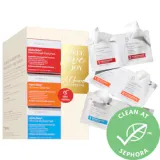

More alternatives: Dermadoctor Picture Porefect Pore MinimizerARCONA Golden Grain Gommage
Sources cited in this review
Every concentration estimate and effectiveness label is anchored to one of these 41 studies and safety reviews.
- 1
- 2
- 3
- 4Effect of topically applied lipids on surfactant-irritated skinonlinelibrary.wiley.com
- 5
- 6
