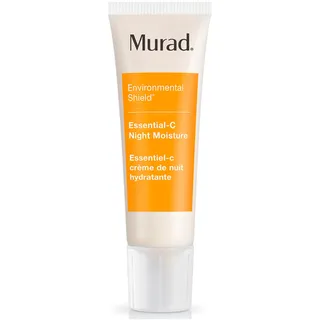
Murad Essential-C Night Moisture

Murad Essential-C Night Moisture

Efficacy91/100IrritancyHigh

Works for

Anti-oxidation
Vitis vinifera seed extract, Ginkgo biloba leaf extract + 3 more
Works well

This product contains antioxidants (vitis vinifera seed extract) that can help neutralize free radicals in skin. By doing so, they can lessen the damage the skin gets from the UV light (sun).

The following ingredients - ginkgo biloba leaf extract also can have an antioxidant effect, but there is less evidence to confirm their effectiveness in skin.

Vitis vinifera seed extractKey activeEffect: HighA plant extract that contains resveratrol and other anti-oxidant compounds that can help neutralize free radicals, reduce inflammation in skin and even out its tone. Can be also used to stabilize the product formulation~0.25–0.45%
Ginkgo biloba leaf extractKey activeEffect: MediumA plant extract that might help neutralize free radicals and reduce inflammation in skin. It can be irritating~0.2–0.4%
Tocopheryl acetateEffect: Low, below effective doseA more stable but less bio-available form of vitamin E compared to Tocopherol. Might help moisturize and protect the skin from free radicals, but mostly used in low concentrations to stabilize other ingredients.~0.4–0.6%
Ascorbyl palmitateEffect: Low, below effective doseBeing a lipid soluble form of vitamin C, it is more stable and can penetrate the skin better than L-Ascorbic acid. It is effective in protecting the skin from free radicals, as well as evening the skin tone, but is less effective in stimulating collagen production compared to L-Ascorbic acid.~0.3–0.55%
Butyrospermum parkii butterEffect: Low, below effective doseA great moisturising ingredient that softens the skin and reduces water loss from its upper layer. It also can be helpful in protecting skin from free radicals~0.25–0.5%
Moisturizing
Panthenol, Ethylhexyl hydroxystearate + 12 more
Works well
What the product description says
“Hydrate | Protect Renew youthful texture with this rich, anti-aging hydrating cream”
Source: Skinstore

This product can help improve hydration of the skin with the two types of ingredients.

The first type is called “humectants”:
these ingredients help attract water. When humectants are on the surface of the skin, they “pull in” the moisture from the outside environment, or from within deeper layers of the skin. The following ingredients in this product do the job: glycerin, rice amino acids.

This product also contains ingredients called “occlusives”. They help reduce the speed with which our skin loses moisture to the outside environment. These ingredients also help soften the upper layer of the skin, so it feels less tight and nicer to the touch. The following ingredients in this product do the job: dimethicone, ethylhexyl hydroxystearate.

The following ingredients in this product are especially good for supporting the skin barrier and helping with the hydration level: panthenol

PanthenolHero· HumectantEffect: HighHelps attract water to the upper layer of the skin and can help improve skin barrier function~0.25–0.5%
Ethylhexyl hydroxystearateKey active· Emollient, OcclusiveEffect: HighHelps soften the upper layer of the skin and reduce water loss from it~4.2–5.2%
Cetearyl alcoholKey active· EmollientEffect: MediumA non-drying alcohol. Works as an emollient. Helps water and oil mix together and creates a nice product texture~2.3–2.8%
Rice amino acidsKey active· HumectantEffect: HighHelp attract water to the upper layer of the skin~0.45–0.7%
PhospholipidsKey activeEffect: MediumEmollients that are naturaly present in skin. In addition, they help water and oil mix together in the product~0.4–0.6%
DimethiconeKey active· Emollient, OcclusiveEffect: HighA silicone that helps to reduce water loss from the surface of the skin. Can temporarily "fill in" lines and wrinkles, absorb oil, and create a nice product finish~0.3–0.6%
Ethyl linoleateKey active· EmollientEffect: HighHelps reduce acne and blemishes. Helps to soften the upper layer of the skin and reduce inflammation. Might be helpful in reducing hyperpigmentation and evening out the skin tone, but evidence of effectiveness in skin are lacking~0.3–0.5%
GlycerinKey active· HumectantEffect: HighOne of the best moisturizing ingredients. Naturally present in skin. It attracts water to the upper layer of the skin working as a humectant~0.25–0.5%
Sodium pcaKey active· HumectantEffect: HighNaturally present in skin and helps to attract water to its upper layer~0.2–0.4%
Cetearyl ethylhexanoate· EmollientEffect: LowAn emollient that helps soften the skin~4.8–5.9%
Stearic acid· EmollientEffect: LowHelps oil and water mix together and works as an emollient~2.8–3.4%
Butylene glycol· HumectantEffect: LowUsed to create a nice product texture and help delivery of other ingredients. Might be somewhat helpful in attracting water to the upper layer of the skin~1.9–2.4%
Glyceryl stearate· EmollientEffect: LowAn emollient that softens the skin and forms a protective layer on its surface. Helps water and oil mix together~1.7–2%
Butyrospermum parkii butterUnder-dosedA great moisturising ingredient that softens the skin and reduces water loss from its upper layer. It also can be helpful in protecting skin from free radicals~0.25–0.5%
Anti-aging
Retinyl palmitate, Vitis vinifera seed extract + 2 more
May help
What the product description says
“Repair by night to look younger by morning.”
Source: Skinstore

This product contains retinyl palmitate, vitis vinifera seed extract. These ingredients might be able to help reduce and prevent fine lines and wrinkles, improve skin elasticity and firmness, but there is not enough evidence that it actually works.

Retinyl palmitateKey activeEffect: MediumThree steps removed from the active form of vitamin A - retinoic acid. To have an effect in the skin, it first needs to be converted twice to become the retinoic acid. This means it is less potent than retinol, but could also be less irritating. Once converted to the retinoic acid in the skin, it helps against all signs of aging, improves skin cell turnover and helps fight blemishes and clogged pores. However, in many cosmetic formulations, it is used in a concentration that is too low to have the full effect~0.3–0.55%
Vitis vinifera seed extractKey activeEffect: MediumA plant extract that contains resveratrol and other anti-oxidant compounds that can help neutralize free radicals, reduce inflammation in skin and even out its tone. Can be also used to stabilize the product formulation~0.25–0.45%
Ascorbyl palmitateEffect: Low, below effective doseBeing a lipid soluble form of vitamin C, it is more stable and can penetrate the skin better than L-Ascorbic acid. It is effective in protecting the skin from free radicals, as well as evening the skin tone, but is less effective in stimulating collagen production compared to L-Ascorbic acid.~0.3–0.55%
Butyrospermum parkii butterEffect: Low, below effective doseA great moisturising ingredient that softens the skin and reduces water loss from its upper layer. It also can be helpful in protecting skin from free radicals~0.25–0.5%
Anti-blemish
Not advertised by the brand · Zinc aspartate, Ethyl linoleate + 2 more
May help

This product might be able to help reduce blemishes and clogged pores because it contains ethyl linoleate, zinc aspartate.

The following ingredient (ingredients) in this product might be helpful, but there is no evidence to confirm that it actually works: retinyl palmitate

Zinc aspartateKey activeEffect: HighCan help reduce acne and blemishes and reduce inflammation in skin~0.4–0.65%
Ethyl linoleateKey activeEffect: HighHelps reduce acne and blemishes. Helps to soften the upper layer of the skin and reduce inflammation. Might be helpful in reducing hyperpigmentation and evening out the skin tone, but evidence of effectiveness in skin are lacking~0.3–0.5%
Retinyl palmitateKey activeEffect: MediumThree steps removed from the active form of vitamin A - retinoic acid. To have an effect in the skin, it first needs to be converted twice to become the retinoic acid. This means it is less potent than retinol, but could also be less irritating. Once converted to the retinoic acid in the skin, it helps against all signs of aging, improves skin cell turnover and helps fight blemishes and clogged pores. However, in many cosmetic formulations, it is used in a concentration that is too low to have the full effect~0.3–0.55%
Ginkgo biloba leaf extractEffect: LowA plant extract that might help neutralize free radicals and reduce inflammation in skin. It can be irritating~0.2–0.4%
Evens skin tone
Not advertised by the brand · Retinyl palmitate, Ethyl linoleate
May help

The following ingredient (ingredients) in this product might be helpful, but there is no evidence to confirm that it actually works: ethyl linoleate, retinyl palmitate.

Retinyl palmitateKey activeEffect: MediumThree steps removed from the active form of vitamin A - retinoic acid. To have an effect in the skin, it first needs to be converted twice to become the retinoic acid. This means it is less potent than retinol, but could also be less irritating. Once converted to the retinoic acid in the skin, it helps against all signs of aging, improves skin cell turnover and helps fight blemishes and clogged pores. However, in many cosmetic formulations, it is used in a concentration that is too low to have the full effect~0.3–0.55%
Ethyl linoleateEffect: LowHelps reduce acne and blemishes. Helps to soften the upper layer of the skin and reduce inflammation. Might be helpful in reducing hyperpigmentation and evening out the skin tone, but evidence of effectiveness in skin are lacking~0.3–0.5%

Can it cause trouble?

Irritancy
7 strong irritants: Retinyl palmitate, Citrus grandis peel oil + 5 more — patch-test recommended
High risk
We flagged 16 ingredients with irritancy potential. Severity depends on your sensitivity threshold; the table lists the worst offenders first.
IngredientFunctionIrritationEst. amount
Retinyl palmitateThree steps removed from the active form of vitamin A - retinoic acid. To have an effect in the skin, it first needs to be converted twice to become the retinoic acid. This means it is less potent than retinol, but could also be less irritating. Once converted to the retinoic acid in the skin, it helps against all signs of aging, improves skin cell turnover and helps fight blemishes and clogged pores. However, in many cosmetic formulations, it is used in a concentration that is too low to have the full effectHigh~0.3–0.55%est.
Ginkgo biloba leaf extractA plant extract that might help neutralize free radicals and reduce inflammation in skin. It can be irritatingHigh~0.2–0.4%est.
Citrus grandis peel oilA plant oil with high content of volatile compounds that, especially when exposed to air, can cause allergic reactions and irritate the skinHigh~0.15–0.3%est.
Citrus aurantium dulcis oilUsed as a fragrance. It can be irritating and cause photosensitivityHigh~0.15–0.3%est.
Aniba rosaeodora wood oil—High~0.1–0.2%est.
Geranium maculatum oilAn essential oil. Can be irritatingHigh~0.1–0.25%est.
Lavandula angustifolia oilAn essential oil. Potential allergen and can be irritating. It has some anti-bacterial propertiesHigh~0.1–0.2%est.
Thymus vulgaris oil—High~0.05–0.1%est.
Ci 15985A colorantHigh~0.05–0.15%est.
Polysorbate 60Helps oil and water mix togetherMedium~0.9–1.1%est.
Zinc aspartateCan help reduce acne and blemishes and reduce inflammation in skinMedium~0.4–0.65%est.
Tocopheryl acetateA more stable but less bio-available form of vitamin E compared to Tocopherol. Might help moisturize and protect the skin from free radicals, but mostly used in low concentrations to stabilize other ingredients.Medium~0.4–0.6%est.
Ascorbyl palmitateBeing a lipid soluble form of vitamin C, it is more stable and can penetrate the skin better than L-Ascorbic acid. It is effective in protecting the skin from free radicals, as well as evening the skin tone, but is less effective in stimulating collagen production compared to L-Ascorbic acid.Medium~0.3–0.55%est.
Ethyl linoleateHelps reduce acne and blemishes. Helps to soften the upper layer of the skin and reduce inflammation. Might be helpful in reducing hyperpigmentation and evening out the skin tone, but evidence of effectiveness in skin are lackingMedium~0.3–0.5%est.
Disodium edtaStabilizes the product formulationMedium~0.2–0.4%est.
TriethanolamineUsed to adjust pH of the product and can help improve the product's smellMedium~0.2–0.4%est.
Comedogenic
3 ingredients rated 2 or more on the 0–5 pore-clogging scale
3 flagged
These ingredients have a comedogenic rating of 2 or more on a 0–5 scale; the table shows each one's rating. In leave-on products they can clog pores in acne-prone skin.
IngredientFunctionRatingEst. amount
Enteromorpha compressa extract—3/5~0.25–0.45%est.
Butyrospermum parkii butterA great moisturising ingredient that softens the skin and reduces water loss from its upper layer. It also can be helpful in protecting skin from free radicals3/5~0.25–0.5%est.
Cetearyl alcoholA non-drying alcohol. Works as an emollient. Helps water and oil mix together and creates a nice product texture2/5~2.3–2.8%est.

User reviews

Would you recommend?
No community reviews yet.

Be the first — your take helps the next person decide.

Ingredients

Filter by role to see what each ingredient is doing.

Water~45–55%
Formula
Irritation risk
Low

Plain old water

More about Water
Cetearyl ethylhexanoate~4.8–5.9%
Formula
Irritation risk
Low
Works for
Moisturizing

An emollient that helps soften the skin

More about Cetearyl ethylhexanoate
Ethylhexyl hydroxystearate~4.2–5.2%
Key active
Irritation risk
Low
Works for
Moisturizing

Helps soften the upper layer of the skin and reduce water loss from it

More about Ethylhexyl hydroxystearate
Stearic acid~2.8–3.4%
Formula
Irritation risk
Low
Works for
CleansingMoisturizing

Helps oil and water mix together and works as an emollient

More about Stearic acid
Cetearyl alcohol~2.3–2.8%
Key activeComedogenic 2/5
Irritation risk
Low
Comedogenicity
2/5
Works for
CleansingMoisturizing

A non-drying alcohol. Works as an emollient. Helps water and oil mix together and creates a nice product texture

More about Cetearyl alcohol
Butylene glycol~1.9–2.4%
Formula
Irritation risk
Low
Works for
Moisturizing

Used to create a nice product texture and help delivery of other ingredients. Might be somewhat helpful in attracting water to the upper layer of the skin

More about Butylene glycol
Glyceryl stearate~1.7–2%
Formula
Irritation risk
Low
Works for
CleansingMoisturizing

An emollient that softens the skin and forms a protective layer on its surface. Helps water and oil mix together

More about Glyceryl stearate
Peg-100 stearate~1.5–1.8%
Formula
Irritation risk
Low
Works for
Cleansing

Helps oil and water mix togehter and creates a nice product texture

More about Peg-100 stearate
Dea-cetyl phosphate~1.2–1.5%
Formula
Polysorbate 60~0.9–1.1%
Irritant · medium
Irritation risk
Medium
Works for
Cleansing

Helps oil and water mix together

More about Polysorbate 60
Chitosan ascorbate~0.65–1%
Formula
Lysine lauroyl methionate~0.55–0.8%
Formula
Rice amino acids~0.45–0.7%
Key active
Irritation risk
Low
Works for
Moisturizing

Help attract water to the upper layer of the skin

More about Rice amino acids
Zinc aspartate~0.4–0.65%
Key activeIrritant · medium
Irritation risk
Medium
Works for
Anti-dandruffAnti-blemishAnti-inflammatory

Can help reduce acne and blemishes and reduce inflammation in skin

More about Zinc aspartate
Phospholipids~0.4–0.6%
Key active
Irritation risk
Low
Works for
Moisturizing

Emollients that are naturaly present in skin. In addition, they help water and oil mix together in the product

More about Phospholipids
Tocopheryl acetate~0.4–0.6%
Irritant · medium
Irritation risk
Medium
Works for
Anti-oxidation

A more stable but less bio-available form of vitamin E compared to Tocopherol. Might help moisturize and protect the skin from free radicals, but mostly used in low concentrations to stabilize other ingredients.

More about Tocopheryl acetate
Retinyl palmitate~0.3–0.55%
Key activeIrritant · high
Irritation risk
High
Works for
Anti-agingEvens skin toneAnti-blemishExfoliation

Three steps removed from the active form of vitamin A - retinoic acid. To have an effect in the skin, it first needs to be converted twice to become the retinoic acid. This means it is less potent than retinol, but could also be less irritating. Once converted to the retinoic acid in the skin, it helps against all signs of aging, improves skin cell turnover and helps fight blemishes and clogged pores. However, in many cosmetic formulations, it is used in a concentration that is too low to have the full effect

More about Retinyl palmitate
Ascorbyl palmitate~0.3–0.55%
Irritant · medium
Irritation risk
Medium
Works for
Anti-agingAnti-oxidation

Being a lipid soluble form of vitamin C, it is more stable and can penetrate the skin better than L-Ascorbic acid. It is effective in protecting the skin from free radicals, as well as evening the skin tone, but is less effective in stimulating collagen production compared to L-Ascorbic acid.

More about Ascorbyl palmitate
Phytonadione~0.3–0.6%
Formula
Irritation risk
Low
More about Phytonadione
Ethyl linoleate~0.3–0.5%
Key activeIrritant · medium
Irritation risk
Medium
Works for
MoisturizingAnti-blemishEvens skin toneAnti-inflammatory

Helps reduce acne and blemishes. Helps to soften the upper layer of the skin and reduce inflammation. Might be helpful in reducing hyperpigmentation and evening out the skin tone, but evidence of effectiveness in skin are lacking

More about Ethyl linoleate
Panthenol~0.25–0.5%
Hero · Moisturizing
Irritation risk
Low
Works for
MoisturizingReduces rednessReduces irritation

Helps attract water to the upper layer of the skin and can help improve skin barrier function

More about Panthenol
Dimethicone~0.3–0.6%
Key active
Irritation risk
Low
Works for
MoisturizingMattifying

A silicone that helps to reduce water loss from the surface of the skin. Can temporarily "fill in" lines and wrinkles, absorb oil, and create a nice product finish

More about Dimethicone
Ginkgo biloba leaf extract~0.2–0.4%
Key activeIrritant · high
Irritation risk
High
Works for
Anti-oxidationAnti-inflammatoryAnti-blemishAntibacterial

A plant extract that might help neutralize free radicals and reduce inflammation in skin. It can be irritating

More about Ginkgo biloba leaf extract
Vitis vinifera seed extract~0.25–0.45%
Key active
Irritation risk
Low
Works for
Anti-oxidationAnti-agingAnti-inflammatoryAntibacterial

A plant extract that contains resveratrol and other anti-oxidant compounds that can help neutralize free radicals, reduce inflammation in skin and even out its tone. Can be also used to stabilize the product formulation

More about Vitis vinifera seed extract
Passiflora incarnata flower extract~0.2–0.4%
Formula
Hydrolyzed ulva lactuca extract~0.2–0.4%
Formula
Enteromorpha compressa extract~0.25–0.45%
Comedogenic 3/5
Irritation risk
Low
Comedogenicity
3/5
More about Enteromorpha compressa extract
Butyrospermum parkii butter~0.25–0.5%
Under-dosedComedogenic 3/5
Irritation risk
Low
Comedogenicity
3/5
Works for
MoisturizingAnti-oxidationAnti-aging

A great moisturising ingredient that softens the skin and reduces water loss from its upper layer. It also can be helpful in protecting skin from free radicals

More about Butyrospermum parkii butter
Sodium pca~0.2–0.4%
Key active
Irritation risk
Low
Works for
Moisturizing

Naturally present in skin and helps to attract water to its upper layer

More about Sodium pca
Isostearic acid~0.3–0.55%
Formula
Irritation risk
Low
Works for
Cleansing

Used to create a nice product texture

More about Isostearic acid
Glycerin~0.25–0.5%
Key active
Irritation risk
Low
Works for
Moisturizing

One of the best moisturizing ingredients. Naturally present in skin. It attracts water to the upper layer of the skin working as a humectant

More about Glycerin
Carbomer~0.2–0.4%
Formula
Irritation risk
Low
Works for
Cleansing

Helps create a thicker or gel-like product texture. It is not a surfactant but can be used in gentle cleansing formulations

More about Carbomer
Disodium edta~0.2–0.4%
Irritant · medium
Irritation risk
Medium

Stabilizes the product formulation

More about Disodium edta
Triethanolamine~0.2–0.4%
Irritant · medium
Irritation risk
Medium
Works for
Cleansing

Used to adjust pH of the product and can help improve the product's smell

More about Triethanolamine
Phenoxyethanol~0.2–0.4%
Formula
Irritation risk
Low

A preservative. It helps prevent bacterial growth in cosmetic products

More about Phenoxyethanol
Methylparaben~0.15–0.3%
Formula
Irritation risk
Low

A preservative

More about Methylparaben
Propylparaben~0.15–0.25%
Formula
Irritation risk
Low

A preservative

More about Propylparaben
Citrus grandis peel oil~0.15–0.3%
Irritant · high
Irritation risk
High

A plant oil with high content of volatile compounds that, especially when exposed to air, can cause allergic reactions and irritate the skin

More about Citrus grandis peel oil
Citrus aurantium dulcis oil~0.15–0.3%
Irritant · high
Irritation risk
High

Used as a fragrance. It can be irritating and cause photosensitivity

More about Citrus aurantium dulcis oil
Aniba rosaeodora wood oil~0.1–0.2%
Irritant · high
Geranium maculatum oil~0.1–0.25%
Irritant · high
Irritation risk
High

An essential oil. Can be irritating

More about Geranium maculatum oil
Lavandula angustifolia oil~0.1–0.2%
Irritant · high
Irritation risk
High

An essential oil. Potential allergen and can be irritating. It has some anti-bacterial properties

More about Lavandula angustifolia oil
Thymus vulgaris oil~0.05–0.1%
Irritant · high
Ci 15985~0.05–0.15%
Irritant · high
Irritation risk
High

A colorant

More about Ci 15985
Ingredient list view

Water, Cetearyl ethylhexanoate, Ethylhexyl hydroxystearate, Stearic acid, Cetearyl alcohol, Butylene glycol, Glyceryl stearate, Peg-100 stearate, Dea-cetyl phosphate, Polysorbate 60, Chitosan ascorbate, Lysine lauroyl methionate, Rice amino acids, Zinc aspartate, Phospholipids, Tocopheryl acetate, Retinyl palmitate, Ascorbyl palmitate, Phytonadione, Ethyl linoleate, Panthenol, Dimethicone, Ginkgo biloba leaf extract, Vitis vinifera seed extract, Passiflora incarnata flower extract, Hydrolyzed ulva lactuca extract, Enteromorpha compressa extract, Butyrospermum parkii butter, Sodium pca, Isostearic acid, Glycerin, Carbomer, Disodium edta, Triethanolamine, Phenoxyethanol, Methylparaben, Propylparaben, Citrus grandis peel oil, Citrus aurantium dulcis oil, Aniba rosaeodora wood oil, Geranium maculatum oil, Lavandula angustifolia oil, Thymus vulgaris oil, Ci 15985

Compare prices

Retailers ranked by price — lowest first.

Amazon US
Price unavailable Out of stock
Check

Affiliate links · As an Amazon Associate, WIMJ earns from qualifying purchases.

Worth comparing, line by line.

Match % combines shared ingredients, the first five ingredients, shared actives and hero ingredients, irritancy (lower counts in the alternative's favour), texture and body area. Only products in the same routine step are compared.

Side-by-side comparison of this product against its closest alternatives
MuradEssential-C Night MoistureYOUR PRODUCTBABORSkinovage Argan CreamLA CLINICA FOR SKIN & BODYDeep Hydration Moisture Creamendota spaBlue Light Defence Hydro Cream
Match—58%58%58%
Price————
Shared key ingredients—5 of 126 of 125 of 12
Key difference—NiacinamideNiacinamideUrea
Irritancy High Medium Medium Medium
Drying alcohol— Contains drying alcohol ——
View product Shop Shop Shop

More alternatives: Danne Montague-King DMK Pro Amino CremeDecubal face cream vital

Cheaper alternatives? Browse formulas in the same category.
We compare ingredient profiles across our catalog — pick the closest match for your budget.
Open dupe finder

Sources cited in this review

Every concentration estimate and effectiveness label is anchored to one of these 18 studies and safety reviews.

  1. 1
  2. 2
  3. 3
  4. 4
  5. 5
  6. 6
Murad Essential-C Night Moisture
MuradEssential-C Night Moisture

Affiliate links · As an Amazon Associate, WIMJ earns from qualifying purchases.

As an Amazon Associate, WIMJ earns from qualifying purchases.