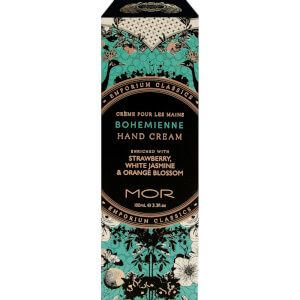
Works for
1 of 1 advertised claim delivered
MoisturizingHelianthus annuus seed oil, Isopropyl myristate + 8 moreGood evidence
“Nourishing Jojoba Oil, Vitamin E and Chamomile extract”
This product can help soften the skin and reduce its moisture loss with emollients and occlusives: helianthus annuus seed oil, ricinus communis seed oil.
Keep in mind that this product does not contain effective ingredients to attract water to the upper layer of the skin. This is why an additional product with humectants like glycerin or hyaluronic acid can be helpful (apply it before this product for the best results).
Can it cause trouble?
Irritancy13 strong irritants: Parfum, Lactobacillus/papaya fruit ferment extract + 11 more — patch-test recommendedHigh risk
Comedogenic2 ingredients rated 2 or more on the 0–5 pore-clogging scale2 flagged
User reviews
Be the first — your take helps the next person decide.
Ingredients
Filter by role to see what each ingredient is doing.
Water~40–60%
Isopropyl myristate~4.6–6.9%
- Irritation risk
- Low
- Comedogenicity
- 3/5
An emollient that helps soften the skin. Could be comedogenic
More about Isopropyl myristateCetearyl alcohol~3.2–4.8%
- Irritation risk
- Low
- Comedogenicity
- 2/5
A non-drying alcohol. Works as an emollient. Helps water and oil mix together and creates a nice product texture
More about Cetearyl alcoholGlyceryl stearate~2.5–3.7%
- Irritation risk
- Low
An emollient that softens the skin and forms a protective layer on its surface. Helps water and oil mix together
More about Glyceryl stearatePotassium cetyl phosphate~2–3%
- Irritation risk
- Medium
Helps oil and water mix together
More about Potassium cetyl phosphateParfum~1.5–2.3%
- Irritation risk
- High
An aromatic blend of unspecified and possibly irritating ingredients
More about ParfumHelianthus annuus seed oil~1.5–2.2%
- Irritation risk
- Low
A great emollient due to its high linoleic acid content. One of the most effective plant oils in helping skin hydration and repairing skin barrier function
More about Helianthus annuus seed oilRicinus communis seed oil~1.3–2%
- Irritation risk
- Medium
A plant oil that can help soften the skin. It might be helpful in calming down inflammation, but solid research is lacking. Is often used in lip products to create the needed product consistency
More about Ricinus communis seed oilPalmitic acid~1–1.6%
- Irritation risk
- Low
An emollient that is naturally present in skin and helps soften it
More about Palmitic acidStearic acid~0.9–1.35%
- Irritation risk
- Low
Helps oil and water mix together and works as an emollient
More about Stearic acidFragaria ananassa fruit extract~0.45–1.1%
- Irritation risk
- Low
Chamomilla recutita flower extract~0.4–0.9%
- Irritation risk
- High
Plant extract that can have healing and anti-inflammatory properties. It is a potential allergen and can be irritating
More about Chamomilla recutita flower extractPassiflora incarnata extract~0.35–0.8%
- Irritation risk
- High
A plant extract that might help neutralize free radicals in skin
More about Passiflora incarnata extractLactobacillus/papaya fruit ferment extract~0.4–0.95%
- Irritation risk
- High
Jasminum sambac flower extract~0.2–0.75%
- Irritation risk
- Low
Aloe barbadensis leaf juice powder~0.2–0.75%
- Irritation risk
- Medium
Traditionally used to treat sunburns, dermatitis and inflammation, but evidence for its effectiveness is lacking. The extract can contain humectants that help attract water into the skin
More about Aloe barbadensis leaf juice powderCitrus aurantium amara flower oil~0.2–0.7%
- Irritation risk
- High
Used as a fragrance. Can be irritating
More about Citrus aurantium amara flower oilSimmondsia chinensis seed oil~0.2–0.8%
- Irritation risk
- Medium
Softens the upper layer of skin and helps restore the healthy skin barrier. Has shown to help calm down inflammation in skin. It is a stable oil, meaning that it retains its properties even when exposed to air.
More about Simmondsia chinensis seed oilRosmarinus officinalis leaf oil~0.15–0.6%
- Irritation risk
- High
A plant oil with high content of volatile compounds that can irritate the skin. Can be used as a fragrance. Has anti-bacterial properties and might help neutralize free radicals on the surface of the skin
More about Rosmarinus officinalis leaf oilTocopheryl acetate~0.15–0.6%
- Irritation risk
- Medium
A more stable but less bio-available form of vitamin E compared to Tocopherol. Might help moisturize and protect the skin from free radicals, but mostly used in low concentrations to stabilize other ingredients.
More about Tocopheryl acetateXanthan gum~0.15–0.55%
- Irritation risk
- Low
Used to create a thicker product consistency
More about Xanthan gumSodium citrate~0.1–0.5%
- Irritation risk
- Medium
Helps to control the skin's pH level. Maintains the skin's natural film of amino-lactic acids and oils. Helps to preserve products
More about Sodium citrateCitric acid~0.1–0.45%
- Irritation risk
- Medium
Can work as an exfoliant but is typically used to adjust the product pH
More about Citric acidDisodium edta~0.1–0.45%
Potassium sorbate~0.1–0.5%
Phenoxyethanol~0.1–0.45%
- Irritation risk
- Low
A preservative. It helps prevent bacterial growth in cosmetic products
More about PhenoxyethanolPhenethyl alcohol~0.1–0.5%
Caprylyl glycol~0.15–0.55%
- Irritation risk
- Medium
Helps preserve products and creates a nice product texture
More about Caprylyl glycolAlcohol~0.1–0.45%
- Irritation risk
- High
Can be drying and contribute to skin irritation. Used in formulars to dissolve other ingredients, create a thinner product consistency or for its antibacterial properties
More about AlcoholIsobutyl acetate~0.1–0.4%
- Irritation risk
- Low
Limonene~0.1–0.35%
- Irritation risk
- High
A common frangrance that can easily irritate skin, especially if exposed to air, light or heat
More about LimoneneCitronellol~0.1–0.35%
Linalool~0.05–0.3%
Geraniol~0.05–0.25%
Citral~0.05–0.25%
Benzyl benzoate~0.05–0.2%
- Irritation risk
- High
Fragrance with sweet balsamic smell. Help to preserve products and dissolve other ingredients. Could trigger allergic reactions and be irritating
More about Benzyl benzoateBenzyl salicylate~0.05–0.1%
Hexyl cinnamal~0.01–0.1%
Ingredient list view
Water, Isopropyl myristate, Cetearyl alcohol, Glyceryl stearate, Potassium cetyl phosphate, Parfum, Helianthus annuus seed oil, Ricinus communis seed oil, Palmitic acid, Stearic acid, Fragaria ananassa fruit extract, Chamomilla recutita flower extract, Passiflora incarnata extract, Lactobacillus/papaya fruit ferment extract, Jasminum sambac flower extract, Aloe barbadensis leaf juice powder, Citrus aurantium amara flower oil, Simmondsia chinensis seed oil, Rosmarinus officinalis leaf oil, Tocopheryl acetate, Xanthan gum, Sodium citrate, Citric acid, Disodium edta, Potassium sorbate, Phenoxyethanol, Phenethyl alcohol, Caprylyl glycol, Alcohol, Isobutyl acetate, Limonene, Citronellol, Linalool, Geraniol, Citral, Benzyl benzoate, Benzyl salicylate, Hexyl cinnamal
Compare prices
Retailers ranked by price — lowest first.
Affiliate links · prices updated regularly · As an Amazon Associate, WIMJ earns from qualifying purchases.
Sources cited in this review
Every concentration estimate and effectiveness label is anchored to one of these 17 studies and safety reviews.
- 1
- 2
- 3Effect of topically applied lipids on surfactant-irritated skinonlinelibrary.wiley.com
- 4
- 5
- 6

Affiliate links · As an Amazon Associate, WIMJ earns from qualifying purchases.