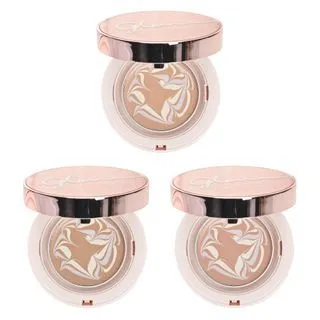
MISSHA Glow Ampoule Pact - 3 Colors

MISSHA Glow Ampoule Pact - 3 Colors

SPF 50Efficacy100/100IrritancyHigh·5 UV filters

Works for

Sun protection
SPF 50 · 5 UV filters
Broad spectrum
SPF 50Broad spectrumMineral + chemical filters

This product offers a good level of protection against both UVB and UVA rays.

This sunscreen uses organic (so-called "chemical") sunscreen filters. Organic, or "chemical" filters usually provide reliable sun protection and rarely leave a white cast. Sunscreens with organic filters can sting eyes.

UV spectrum
UVB290–320 nmUVA II320–340 nmUVA I340–400 nm
Octinoxate
Octisalate
Homosalate
Titanium Dioxide
Uvinul A Plus
FilterCoverageWhat it doesEst. amount
OctinoxateEthylhexyl MethoxycinnamateUVBOctinoxate. When used in higher concentrations, works as a sunscreen protecting the skin from UVB rays. When used in lower concentration, helps to preserve the product formulation. Is shown to be harmful to coral reefs - consider avoiding bathing in coral reef areas when wearing a product with this ingredient. It can be irritating~3.7–4.6%
OctisalateEthylhexyl SalicylateUVBOctisalate. A UV filter. It offers some protection against the sun rays that cause sunburn (UVB), but does not protect against the most aging sun rays (UVA). It loses its effectiveness quickly when exposed to sunlight. It is an organic, or so called "chemical" sunscreen~3.4–4.2%
HomosalateUVB Photo-stable A weak sunscreen that offers some protection against the sun rays that cause sunburn (UVB), but does not offer meaningful protection against protect against the most aging sun rays (UVA). It loses its effectiveness quickly when exposed to sunlight. It is an organic, or so called "chemical" sunscreen. When used in low concentrations, helps to stabilize the product formulation~2.2–2.7%
Titanium Dioxide Mineral UVBUVA2 Photo-stable Works as a UV filter when used in high concentrations. It is photostable and is effective mostly against the UVB light, with some protection in the UVA range. In small concentrations, used for its ability to improve the color of cosmetic products. Is usually well tolerated by the skin~4.8–5.9%
Uvinul A PlusDiethylamino Hydroxybenzoyl Hexyl BenzoateUVA1 Photo-stable Uvinul A Plus. A new generation broad spectrum sunscreen that offers an effective protection especially in the UVA range. It is stable in formulations. Unfortunately, is not approved by the FDA (US) yet~0.6–0.9%
~ marks concentrations estimated from label position and typical use levels
Moisturizing
Niacinamide, Panthenol + 36 more
Works well
What the product description says
“Infused with active ingredients from Missha Night Repair Probio Ampoule as well as the brand's Glow Infusion Complex to hydrate and firm up skin.”
Source: Yesstyle

This product can help improve hydration of the skin with the two types of ingredients.

The first type is called “humectants”:
these ingredients help attract water. When humectants are on the surface of the skin, they “pull in” the moisture from the outside environment, or from within deeper layers of the skin. The following ingredients in this product do the job: betaine, cyclomethicone.

This product also contains ingredients called “occlusives”. They help reduce the speed with which our skin loses moisture to the outside environment. These ingredients also help soften the upper layer of the skin, so it feels less tight and nicer to the touch. The following ingredients in this product do the job: dimethicone, phenyl trimethicone.

The following ingredients in this product are especially good for supporting the skin barrier and helping with the hydration level: niacinamide, panthenol

NiacinamideHeroEffect: HighIs proven to be effective in reducing blemishes, evening out skin tone and helping to improve lines and wrinkles. It helps the skin to repair sun damage, calm down inflammation and keep maintain good levels of moisture. The concentration of about 2% is effective for supporting the skin barrier and evening out the skin tone. Concentration of 4-6% is better for helping with acne and balancing the sebum production~1.2–1.5%
PanthenolHero· HumectantEffect: HighHelps attract water to the upper layer of the skin and can help improve skin barrier function~0.45–0.65%
Bifida ferment lysateKey activeEffect: HighConsists of remains of dead yeast bacteria cells. Helps to hydrate the skin and reduce irritation. Might has some anti-oxidant effect~4.8–5.9%
CyclopentasiloxaneKey active· EmollientEffect: MediumA silicone that helps improve the product texture and spreadability. Can absorb oil creating a short-term mattifying effect on the skin~2.2–2.6%
Phenyl trimethiconeKey active· OcclusiveEffect: HighA type of silicone that can decrease loss of moisture from the skin surface. It helps create a nice product texture~1–1.2%
Diisostearyl malateKey active· EmollientEffect: MediumHelps to soften the upper layer of the skin~0.55–0.85%
Beta-sitosterolKey active· EmollientEffect: HighA phytosterol that can support skin's barrier function and help the skin stay hydrated~0.5–0.7%
CholesterolKey active· EmollientEffect: HighAn emollient that is naturally found in skin~0.5–0.75%
Limnanthes alba seed oilKey active· EmollientEffect: HighThis oil's cmposition is closest to rapeseed oil. It is a very stable oil and serves as an emoillient~0.5–0.75%
GlycerinKey active· HumectantEffect: HighOne of the best moisturizing ingredients. Naturally present in skin. It attracts water to the upper layer of the skin working as a humectant~0.45–0.65%
CyclomethiconeKey active· Humectant, EmollientEffect: HighA type of silicone that leaves a nice silky finish on the skin and can help soften its upper layer~0.45–0.7%
UbiquinoneKey activeEffect: HighCoenzyme Q10. It helps neutralize free radicals in skin, improves skin hydration and might be helpful agains fine lines and wrinkles. It can be an allergen~0.45–0.65%
Lactobacillus/soybean ferment extractKey activeEffect: MediumA fermentation product created by bacteria Lactobacillus out of soybean. The fermented product helps to attract water to the upper layer of the skin and has anti-bacterial properties. It might be helpful in calming down inflammation and could be helpful in evening out skin tone, but studies are lacking~0.45–0.65%
DimethiconeKey active· Emollient, OcclusiveEffect: HighA silicone that helps to reduce water loss from the surface of the skin. Can temporarily "fill in" lines and wrinkles, absorb oil, and create a nice product finish~0.4–0.65%
Lactobacillus fermentKey active· HumectantEffect: HighA fermentation product created by bacteria Lactobacillus. The fermented product has anti-bacterial properties and might be helpful in calming down inflammation, but studies are lacking. Helps attract water to the upper layer of the skin. Can be used as a preservative~0.35–0.6%
Sodium hyaluronateKey active· HumectantEffect: HighOne of the best moisturizing ingredients. Attracts water into the upper layer of the skin~0.35–0.65%
SqualaneKey active· Emollient, OcclusiveEffect: HighAn oil naturally present in skin. Works as an emollient to soften the skin and form a protective layer on its surface without a greasy feeling.~0.35–0.65%
CollagenKey activeEffect: MediumCannot penetrate the skin barrier so is not particularly useful in skincare products~0.35–0.6%
Glyceryl linolenateKey active· EmollientEffect: MediumHelps soften the upper layer of the skin~0.35–0.6%
Lactobacillus ferment lysateKey activeEffect: MediumA "broth" with parts of dead cells of lactobacteria. Might be helpful supporting diverse microbiome in skin, but evidence is lacking~0.35–0.6%
Lactococcus ferment lysateKey activeEffect: HighConsists of remains of dead bacteria cells. Is likely helpful in attracting water to the upper layer of the skin. Might be helpful in reducing inflammation and neutralizing free radicals in skin~0.3–0.6%
BetaineKey active· HumectantEffect: HighHelps attract water to the upper layer of the skin and improves the product texture~0.3–0.55%
AdenosineKey activeEffect: MediumMight help improve cell turnover and reduce inflammation in skin. One study shows that the ingredients might be able to help reduce dynamic wrinkles (for example, in the corners of the eyes or on the forehead)~0.3–0.55%
CeresinEffect: Low~0.7–1%
Portulaca oleracea extract· HumectantEffect: LowA plant extract that has some anti-oxidant activity, but solid research is lacking. Can help attract water to the upper layer of the skin~0.45–0.65%
Propylene glycol· HumectantEffect: LowHelps oil and water mix together and can enhance the penetration of other ingredients into the skin. It can be irritating~0.45–0.65%
Scutellaria baicalensis root extract· HumectantEffect: LowA plant extract that might contain a compound baicalin that could be helpful in neutralizing free radicals and reducing inflammation in skin. The baicalin concentration in skincare products is often too low for an effective action. Can be used for its fragrant properties~0.4–0.65%
Butylene glycol· HumectantEffect: LowUsed to create a nice product texture and help delivery of other ingredients. Might be somewhat helpful in attracting water to the upper layer of the skin~0.35–0.6%
Glyceryl caprylate· EmollientEffect: LowAn emollient that can also help water and oil mix together, as well as prevent bacteria growth in products~0.35–0.65%
Hydrogenated polyisobutene· Emollient, OcclusiveEffect: LowUsed to improve the product consistency and soften the upper layer of the skin~0.35–0.6%
BiotinEffect: LowMight have some moisturising properties. Is not effective when applied topically beyond some moisturizing effect~0.3–0.55%
Cetyl peg/ppg-10/1 dimethiconeEffect: LowA type of silicone that helps water and oil mix together. Can help to soften upper layer of the skin~0.3–0.55%
CyclohexasiloxaneEffect: Low, below effective doseA silicone that serves as an emollient. Helps create a nice non-greasy feels~0.6–0.85%
Stearic acidEffect: Low, below effective doseHelps oil and water mix together and works as an emollient~0.45–0.65%
Ascorbyl tetraisopalmitateEffect: Low, below effective doseA vitamin C derivative. Studies show that is might be effective in reducing hyperpigmentation, but there are no studies confirming that it is effectively converted into the bioavailable form of Vitamin C in skin. It is not clear how this derivative compares in effectiveness to the topical application of bioavailable form of vitamin C (L-ascorbic acid)~0.4–0.65%
Rosa canina fruit oilUnder-dosedA great emollient. Contains vitamin E (tocopherol) which may give it some anti-oxidant properties. Can contain volatile compounds and can be irritating~0.45–0.65%
Caprylic/capric triglycerideUnder-dosedA good mix of fatty acids that forms a protective layer on the skin. Improves the shelf life of products. Derived from coconut and glycerin~0.4–0.6%
Lactic acidUnder-dosedAn exfoliating and moisturizing alpha-hydroxy acid (AHA). Typically causes less irritation than other AHAs, for example, glycolic acid. At high concentrations (about 15%), lactic acid can help reduce lines and wrinkles. Recent studies show that lactic acid can support the "good" bacteria living on skin's surface (healthy skin microbiome)~0.4–0.6%
Anti-aging
Niacinamide, Adenosine + 5 more
Works well
What the product description says
“A high-coverage cushion with sun protection SPF 50+ PA+++ that helps to protect skin from strong sunlight while blurring blemishes and softening wrinkles.”
Source: Yesstyle

This product can help reduce and prevent fine lines and wrinkles, improve skin elasticity and firmness because it contains adenosine, niacinamide.

Keep in mind that it typically takes at least 6 weeks to notice any results because the changes that are needed to improve fine lines and elasticity happen in the deeper layers of the skin. No topical anti-aging product can “erase” wrinkles or fully reverse signs of aging.

This product can also help prevent early signs of skin aging because it offers a good level of broad spectrum sun protection. Sun damage is the main cause of premature skin aging, and protecting your skin from the sun is the best anti-aging strategy.

NiacinamideKey activeEffect: HighIs proven to be effective in reducing blemishes, evening out skin tone and helping to improve lines and wrinkles. It helps the skin to repair sun damage, calm down inflammation and keep maintain good levels of moisture. The concentration of about 2% is effective for supporting the skin barrier and evening out the skin tone. Concentration of 4-6% is better for helping with acne and balancing the sebum production~1.2–1.5%
AdenosineKey activeEffect: HighMight help improve cell turnover and reduce inflammation in skin. One study shows that the ingredients might be able to help reduce dynamic wrinkles (for example, in the corners of the eyes or on the forehead)~0.3–0.55%
Limnanthes alba seed oilEffect: LowThis oil's cmposition is closest to rapeseed oil. It is a very stable oil and serves as an emoillient~0.5–0.75%
UbiquinoneEffect: LowCoenzyme Q10. It helps neutralize free radicals in skin, improves skin hydration and might be helpful agains fine lines and wrinkles. It can be an allergen~0.45–0.65%
Lactococcus ferment lysateEffect: LowConsists of remains of dead bacteria cells. Is likely helpful in attracting water to the upper layer of the skin. Might be helpful in reducing inflammation and neutralizing free radicals in skin~0.3–0.6%
Ascorbyl tetraisopalmitateUnder-dosedA vitamin C derivative. Studies show that is might be effective in reducing hyperpigmentation, but there are no studies confirming that it is effectively converted into the bioavailable form of Vitamin C in skin. It is not clear how this derivative compares in effectiveness to the topical application of bioavailable form of vitamin C (L-ascorbic acid)~0.4–0.65%
Lactic acidUnder-dosedAn exfoliating and moisturizing alpha-hydroxy acid (AHA). Typically causes less irritation than other AHAs, for example, glycolic acid. At high concentrations (about 15%), lactic acid can help reduce lines and wrinkles. Recent studies show that lactic acid can support the "good" bacteria living on skin's surface (healthy skin microbiome)~0.4–0.6%
Anti-blemish
Side benefit · Niacinamide, Salix alba bark extract
Works well

This product can help reduce breakouts and clogged pores because it contains the following ingredient: niacinamide. This ingredient is used for treating acne and can have a noticeable effect.

NiacinamideHeroEffect: HighIs proven to be effective in reducing blemishes, evening out skin tone and helping to improve lines and wrinkles. It helps the skin to repair sun damage, calm down inflammation and keep maintain good levels of moisture. The concentration of about 2% is effective for supporting the skin barrier and evening out the skin tone. Concentration of 4-6% is better for helping with acne and balancing the sebum production~1.2–1.5%
Salix alba bark extractEffect: LowA plant extract that can help neutralize free radicals in skin. It contains a compound salicin that can theoretically be converted into salicylic acid that, in turn, helps reduce inflammation in skin, but the evidence of effectiveness in skin is lacking and the extract is usually not used in a concentration that would enable an exfoliating effect~0.35–0.65%
Evens skin tone
Side benefit the brand mentions · Niacinamide, Bifida ferment lysate + 3 more
Works well
What the product description says
“Formulated with the Triple Marble System, which combines beige and ivory tones with lavender hues to effectively conceal imperfections, even skin tone and blur pores, MISSHA’s cushion compact is a must-have for flawless coverage.”
Source: Yesstyle

This product offers broad spectrum sun protection. It means that it can prevent hyperpigmentation and help keep the skin tone even (sun damage is the main factor causing age spots, darkening of post-acne marks and other discolorations).

NiacinamideKey activeEffect: HighIs proven to be effective in reducing blemishes, evening out skin tone and helping to improve lines and wrinkles. It helps the skin to repair sun damage, calm down inflammation and keep maintain good levels of moisture. The concentration of about 2% is effective for supporting the skin barrier and evening out the skin tone. Concentration of 4-6% is better for helping with acne and balancing the sebum production~1.2–1.5%
Bifida ferment lysateEffect: LowConsists of remains of dead yeast bacteria cells. Helps to hydrate the skin and reduce irritation. Might has some anti-oxidant effect~4.8–5.9%
Lactobacillus/punica granatum fruit ferment extractEffect: LowAn enzyme-based exfoliant~0.35–0.6%
Lactic acidUnder-dosedAn exfoliating and moisturizing alpha-hydroxy acid (AHA). Typically causes less irritation than other AHAs, for example, glycolic acid. At high concentrations (about 15%), lactic acid can help reduce lines and wrinkles. Recent studies show that lactic acid can support the "good" bacteria living on skin's surface (healthy skin microbiome)~0.4–0.6%
Ascorbyl tetraisopalmitateUnder-dosedA vitamin C derivative. Studies show that is might be effective in reducing hyperpigmentation, but there are no studies confirming that it is effectively converted into the bioavailable form of Vitamin C in skin. It is not clear how this derivative compares in effectiveness to the topical application of bioavailable form of vitamin C (L-ascorbic acid)~0.4–0.65%
Anti-oxidation
Side benefit · Bifida ferment lysate, Ubiquinone + 11 more
Works well

This product contains antioxidants (ubiquinone) that can help neutralize free radicals in skin. By doing so, they can lessen the damage the skin gets from the UV light (sun).

The following ingredients - bifida ferment lysate also can have an antioxidant effect, but there is less evidence to confirm their effectiveness in skin.

Bifida ferment lysateKey activeEffect: MediumConsists of remains of dead yeast bacteria cells. Helps to hydrate the skin and reduce irritation. Might has some anti-oxidant effect~4.8–5.9%
UbiquinoneKey activeEffect: HighCoenzyme Q10. It helps neutralize free radicals in skin, improves skin hydration and might be helpful agains fine lines and wrinkles. It can be an allergen~0.45–0.65%
Limnanthes alba seed oilEffect: LowThis oil's cmposition is closest to rapeseed oil. It is a very stable oil and serves as an emoillient~0.5–0.75%
Portulaca oleracea extractEffect: LowA plant extract that has some anti-oxidant activity, but solid research is lacking. Can help attract water to the upper layer of the skin~0.45–0.65%
Origanum vulgare leaf extractEffect: LowA plant extract. Can have an anti-oxidant effect, but can also contain irritants~0.4–0.6%
Scutellaria baicalensis root extractEffect: LowA plant extract that might contain a compound baicalin that could be helpful in neutralizing free radicals and reducing inflammation in skin. The baicalin concentration in skincare products is often too low for an effective action. Can be used for its fragrant properties~0.4–0.65%
Lactobacillus fermentEffect: LowA fermentation product created by bacteria Lactobacillus. The fermented product has anti-bacterial properties and might be helpful in calming down inflammation, but studies are lacking. Helps attract water to the upper layer of the skin. Can be used as a preservative~0.35–0.6%
Salix alba bark extractEffect: LowA plant extract that can help neutralize free radicals in skin. It contains a compound salicin that can theoretically be converted into salicylic acid that, in turn, helps reduce inflammation in skin, but the evidence of effectiveness in skin is lacking and the extract is usually not used in a concentration that would enable an exfoliating effect~0.35–0.65%
Lactococcus ferment lysateEffect: LowConsists of remains of dead bacteria cells. Is likely helpful in attracting water to the upper layer of the skin. Might be helpful in reducing inflammation and neutralizing free radicals in skin~0.3–0.6%
AdenosineEffect: LowMight help improve cell turnover and reduce inflammation in skin. One study shows that the ingredients might be able to help reduce dynamic wrinkles (for example, in the corners of the eyes or on the forehead)~0.3–0.55%
Rosa canina fruit oilEffect: Low, below effective doseA great emollient. Contains vitamin E (tocopherol) which may give it some anti-oxidant properties. Can contain volatile compounds and can be irritating~0.45–0.65%
Tocopheryl acetateEffect: Low, below effective doseA more stable but less bio-available form of vitamin E compared to Tocopherol. Might help moisturize and protect the skin from free radicals, but mostly used in low concentrations to stabilize other ingredients.~0.3–0.55%
Ascorbyl tetraisopalmitateUnder-dosedA vitamin C derivative. Studies show that is might be effective in reducing hyperpigmentation, but there are no studies confirming that it is effectively converted into the bioavailable form of Vitamin C in skin. It is not clear how this derivative compares in effectiveness to the topical application of bioavailable form of vitamin C (L-ascorbic acid)~0.4–0.65%

Can it cause trouble?

Irritancy
7 strong irritants: Origanum vulgare leaf extract, Chamaecyparis obtusa leaf extract + 5 more — patch-test recommended
High risk
We flagged 35 ingredients with irritancy potential. Severity depends on your sensitivity threshold; the table lists the worst offenders first.
IngredientFunctionIrritationEst. amount
Ethylhexyl methoxycinnamateOctinoxate. When used in higher concentrations, works as a sunscreen protecting the skin from UVB rays. When used in lower concentration, helps to preserve the product formulation. Is shown to be harmful to coral reefs - consider avoiding bathing in coral reef areas when wearing a product with this ingredient. It can be irritatingHigh~3.7–4.6%est.
Spilanthes acmella flower extractPlant extract that might hep calm down inflammation in skinHigh~0.3–0.6%est.
Curcuma longa root extractA plant extract that can contain an active compound curcumin, that may have some anti-inflammatory properties when applied to the skin, but solid research is lacking and the typical concentration used in skincare products is too low. Can be an irritantHigh~0.3–0.55%est.
Lactobacillus/punica granatum fruit ferment extractAn enzyme-based exfoliantHigh~0.35–0.6%est.
Salix alba bark extractA plant extract that can help neutralize free radicals in skin. It contains a compound salicin that can theoretically be converted into salicylic acid that, in turn, helps reduce inflammation in skin, but the evidence of effectiveness in skin is lacking and the extract is usually not used in a concentration that would enable an exfoliating effectHigh~0.35–0.65%est.
Origanum vulgare leaf extractA plant extract. Can have an anti-oxidant effect, but can also contain irritantsHigh~0.4–0.6%est.
Chamaecyparis obtusa leaf extractUsed as a fragranceHigh~0.4–0.6%est.
Scutellaria baicalensis root extractA plant extract that might contain a compound baicalin that could be helpful in neutralizing free radicals and reducing inflammation in skin. The baicalin concentration in skincare products is often too low for an effective action. Can be used for its fragrant propertiesHigh~0.4–0.65%est.
Cinnamomum cassia bark extractUsed as a fragrance. Can be irritatingHigh~0.5–0.75%est.
Propylene glycolHelps oil and water mix together and can enhance the penetration of other ingredients into the skin. It can be irritatingHigh~0.45–0.65%est.
ParfumAn aromatic blend of unspecified and possibly irritating ingredientsHigh~0.15–0.3%est.
Benzyl benzoateFragrance with sweet balsamic smell. Help to preserve products and dissolve other ingredients. Could trigger allergic reactions and be irritatingHigh~0.15–0.25%est.
LinaloolA fragrance. Can be irritatingHigh~0.1–0.2%est.
LimoneneA common frangrance that can easily irritate skin, especially if exposed to air, light or heatHigh~0.1–0.15%est.
HomosalateA weak sunscreen that offers some protection against the sun rays that cause sunburn (UVB), but does not offer meaningful protection against protect against the most aging sun rays (UVA). It loses its effectiveness quickly when exposed to sunlight. It is an organic, or so called "chemical" sunscreen. When used in low concentrations, helps to stabilize the product formulationMedium~2.2–2.7%est.
MethylpropanediolHelps dissolve other ingredients in a formulationMedium~0.7–1.1%est.
Diisostearyl malateHelps to soften the upper layer of the skinMedium~0.55–0.85%est.
Diethylamino hydroxybenzoyl hexyl benzoateUvinul A Plus. A new generation broad spectrum sunscreen that offers an effective protection especially in the UVA range. It is stable in formulations. Unfortunately, is not approved by the FDA (US) yetMedium~0.6–0.9%est.
Leuconostoc ferment filtrateUsed as a preservativeMedium~0.35–0.6%est.
Caprylic/capric triglycerideA good mix of fatty acids that forms a protective layer on the skin. Improves the shelf life of products. Derived from coconut and glycerinMedium~0.4–0.6%est.
Dimethicone/peg-10/15 crosspolymerHelps oil and water mix togetherMedium~0.3–0.55%est.
Tocopheryl acetateA more stable but less bio-available form of vitamin E compared to Tocopherol. Might help moisturize and protect the skin from free radicals, but mostly used in low concentrations to stabilize other ingredients.Medium~0.3–0.55%est.
Disodium stearoyl glutamateHelps oil and water mix together and workd as a cleanserMedium~0.35–0.65%est.
Disodium edtaStabilizes the product formulationMedium~0.35–0.6%est.
Rosa canina fruit oilA great emollient. Contains vitamin E (tocopherol) which may give it some anti-oxidant properties. Can contain volatile compounds and can be irritatingMedium~0.45–0.65%est.
Leuconostoc/radish root ferment filtrateA preservative that comes from radishes fermented by a bacteria. New research suggests that the preservation properties in the ingredient come from an ammonium salt that is not present naturally in radish root but used in its cultivation. Is problematic because the exact amount of the preservative agents is difficult to determineMedium~0.35–0.65%est.
Lactic acidAn exfoliating and moisturizing alpha-hydroxy acid (AHA). Typically causes less irritation than other AHAs, for example, glycolic acid. At high concentrations (about 15%), lactic acid can help reduce lines and wrinkles. Recent studies show that lactic acid can support the "good" bacteria living on skin's surface (healthy skin microbiome)Medium~0.4–0.6%est.
Portulaca oleracea extractA plant extract that has some anti-oxidant activity, but solid research is lacking. Can help attract water to the upper layer of the skinMedium~0.45–0.65%est.
Choleth-24Helps oil and water mix togetherMedium~0.45–0.7%est.
Ceteth-24Helps oil and water mix togetherMedium~0.5–0.75%est.
Ascorbyl tetraisopalmitateA vitamin C derivative. Studies show that is might be effective in reducing hyperpigmentation, but there are no studies confirming that it is effectively converted into the bioavailable form of Vitamin C in skin. It is not clear how this derivative compares in effectiveness to the topical application of bioavailable form of vitamin C (L-ascorbic acid)Medium~0.4–0.65%est.
Potassium cetyl phosphateHelps oil and water mix togetherMedium~0.35–0.65%est.
Glyceryl arachidonateHelps water and oil mix togetherMedium~0.35–0.65%est.
EthylhexylglycerinA preservativeMedium~0.2–0.35%est.
1,2-hexanediolA preservativeMedium~0.15–0.25%est.
Comedogenic
Clean of flagged comedogenic ingredients
None flagged
Did this help you decide?

User reviews

Would you recommend?
No community reviews yet.

Be the first — your take helps the next person decide.

Ingredients

Filter by role to see what each ingredient is doing.

Water~45–55%
Formula
Irritation risk
Low

Plain old water

More about Water
Bifida ferment lysate~4.8–5.9%
Key active
Irritation risk
Low
Works for
MoisturizingAnti-oxidationEvens skin tone

Consists of remains of dead yeast bacteria cells. Helps to hydrate the skin and reduce irritation. Might has some anti-oxidant effect

More about Bifida ferment lysate
Titanium dioxide~4.8–5.9%
UV filterKey active
Irritation risk
Low
Works for
Sun protection

Works as a UV filter when used in high concentrations. It is photostable and is effective mostly against the UVB light, with some protection in the UVA range. In small concentrations, used for its ability to improve the color of cosmetic products. Is usually well tolerated by the skin

More about Titanium dioxide
Ethylhexyl methoxycinnamate~3.7–4.6%
UV filterKey activeIrritant · high
Irritation risk
High
Works for
Sun protection

Octinoxate. When used in higher concentrations, works as a sunscreen protecting the skin from UVB rays. When used in lower concentration, helps to preserve the product formulation. Is shown to be harmful to coral reefs - consider avoiding bathing in coral reef areas when wearing a product with this ingredient. It can be irritating

More about Ethylhexyl methoxycinnamate
Ethylhexyl salicylate~3.4–4.2%
UV filter
Irritation risk
Low
Works for
Sun protection

Octisalate. A UV filter. It offers some protection against the sun rays that cause sunburn (UVB), but does not protect against the most aging sun rays (UVA). It loses its effectiveness quickly when exposed to sunlight. It is an organic, or so called "chemical" sunscreen

More about Ethylhexyl salicylate
Cyclopentasiloxane~2.2–2.6%
Key active
Irritation risk
Low
Works for
MoisturizingMattifying

A silicone that helps improve the product texture and spreadability. Can absorb oil creating a short-term mattifying effect on the skin

More about Cyclopentasiloxane
Homosalate~2.2–2.7%
UV filterKey activeIrritant · medium
Irritation risk
Medium
Works for
Sun protection

A weak sunscreen that offers some protection against the sun rays that cause sunburn (UVB), but does not offer meaningful protection against protect against the most aging sun rays (UVA). It loses its effectiveness quickly when exposed to sunlight. It is an organic, or so called "chemical" sunscreen. When used in low concentrations, helps to stabilize the product formulation

More about Homosalate
Vp/hexadecene copolymer~1.5–1.9%
Formula
Irritation risk
Low

Creates a nice product texture and can support water-resistance of sunscreens

More about Vp/hexadecene copolymer
Niacinamide~1.2–1.5%
Hero · Moisturizing, Anti-blemish
Irritation risk
Low
Works for
Anti-agingEvens skin toneMoisturizingAnti-blemishReduces irritationAnti-inflammatoryReduces rednessAntibacterial

Is proven to be effective in reducing blemishes, evening out skin tone and helping to improve lines and wrinkles. It helps the skin to repair sun damage, calm down inflammation and keep maintain good levels of moisture. The concentration of about 2% is effective for supporting the skin barrier and evening out the skin tone. Concentration of 4-6% is better for helping with acne and balancing the sebum production

More about Niacinamide
Phenyl trimethicone~1–1.2%
Key active
Irritation risk
Low
Works for
Moisturizing

A type of silicone that can decrease loss of moisture from the skin surface. It helps create a nice product texture

More about Phenyl trimethicone
Methylpropanediol~0.7–1.1%
Irritant · medium
Irritation risk
Medium

Helps dissolve other ingredients in a formulation

More about Methylpropanediol
C30-45 alkyldimethylsilyl polypropylsilsesquioxane~0.7–1.1%
Formula
Irritation risk
Low

Used to create a nice product texture

More about C30-45 alkyldimethylsilyl polypropylsilsesquioxane
Ceresin~0.7–1%
Formula
Irritation risk
Low
Works for
Moisturizing
More about Ceresin
Glycereth-26~0.55–0.85%
Formula
Irritation risk
Low

Helps create a thicker product consistency

More about Glycereth-26
Cyclohexasiloxane~0.6–0.85%
Formula
Irritation risk
Low
Works for
Moisturizing

A silicone that serves as an emollient. Helps create a nice non-greasy feels

More about Cyclohexasiloxane
Diisostearyl malate~0.55–0.85%
Key activeIrritant · medium
Irritation risk
Medium
Works for
CleansingMoisturizing

Helps to soften the upper layer of the skin

More about Diisostearyl malate
Propanediol~0.5–0.75%
Formula
Irritation risk
Low

Acts as a solvent for other ingredients. Speeds up the absorption of other ingredients into the skin

More about Propanediol
Methyl methacrylate crosspolymer~0.5–0.75%
Formula
Irritation risk
Low
Works for
Mattifying

Helps thicken the product consistency

More about Methyl methacrylate crosspolymer
Diethylamino hydroxybenzoyl hexyl benzoate~0.6–0.9%
UV filterKey activeIrritant · medium
Irritation risk
Medium
Works for
Sun protection

Uvinul A Plus. A new generation broad spectrum sunscreen that offers an effective protection especially in the UVA range. It is stable in formulations. Unfortunately, is not approved by the FDA (US) yet

More about Diethylamino hydroxybenzoyl hexyl benzoate
Leuconostoc ferment filtrate~0.35–0.6%
Irritant · medium
Irritation risk
Medium

Used as a preservative

More about Leuconostoc ferment filtrate
Sodium chloride~0.35–0.65%
Formula
Irritation risk
Low

Used to stabilize mixtures of oil and water, and create thicker, gel-like product textures

More about Sodium chloride
Dimethicone~0.4–0.65%
Key active
Irritation risk
Low
Works for
MoisturizingMattifying

A silicone that helps to reduce water loss from the surface of the skin. Can temporarily "fill in" lines and wrinkles, absorb oil, and create a nice product finish

More about Dimethicone
Squalane~0.35–0.65%
Key active
Irritation risk
Low
Works for
Moisturizing

An oil naturally present in skin. Works as an emollient to soften the skin and form a protective layer on its surface without a greasy feeling.

More about Squalane
Hydrogenated polyisobutene~0.35–0.6%
Formula
Irritation risk
Low
Works for
Moisturizing

Used to improve the product consistency and soften the upper layer of the skin

More about Hydrogenated polyisobutene
Betaine~0.3–0.55%
Key active
Irritation risk
Low
Works for
Moisturizing

Helps attract water to the upper layer of the skin and improves the product texture

More about Betaine
Caprylic/capric triglyceride~0.4–0.6%
Under-dosedIrritant · medium
Irritation risk
Medium
Works for
Moisturizing

A good mix of fatty acids that forms a protective layer on the skin. Improves the shelf life of products. Derived from coconut and glycerin

More about Caprylic/capric triglyceride
Aluminum hydroxide~0.35–0.6%
Formula
Irritation risk
Low

Is used to add opaque (non-transparent) appearance to formulations. Can be used to coat other ingredients for even dispersion. This is a different ingredient compared to the ones used in antipersperants (aluminium chloride and aluminium chlorohydrate)

More about Aluminum hydroxide
Glyceryl caprylate~0.35–0.65%
Formula
Irritation risk
Low
Works for
CleansingMoisturizing

An emollient that can also help water and oil mix together, as well as prevent bacteria growth in products

More about Glyceryl caprylate
Acrylates/ethylhexyl acrylate/dimethicone methacrylate copolymer~0.3–0.55%
Formula
Stearic acid~0.45–0.65%
Formula
Irritation risk
Low
Works for
CleansingMoisturizing

Helps oil and water mix together and works as an emollient

More about Stearic acid
Hexadecene~0.3–0.55%
Formula
Irritation risk
Low
More about Hexadecene
Dimethicone/peg-10/15 crosspolymer~0.3–0.55%
Irritant · medium
Irritation risk
Medium

Helps oil and water mix together

More about Dimethicone/peg-10/15 crosspolymer
Cetyl peg/ppg-10/1 dimethicone~0.3–0.55%
Formula
Irritation risk
Low
Works for
CleansingMoisturizing

A type of silicone that helps water and oil mix together. Can help to soften upper layer of the skin

More about Cetyl peg/ppg-10/1 dimethicone
Triethoxycaprylylsilane~0.3–0.55%
Formula
Irritation risk
Low

A type of silicone that helps oil and water mix well together. Helps to disperse other ingredients, e.g. pigments, evenly in a formulation

More about Triethoxycaprylylsilane
Tocopheryl acetate~0.3–0.55%
Irritant · medium
Irritation risk
Medium
Works for
Anti-oxidation

A more stable but less bio-available form of vitamin E compared to Tocopherol. Might help moisturize and protect the skin from free radicals, but mostly used in low concentrations to stabilize other ingredients.

More about Tocopheryl acetate
Disodium stearoyl glutamate~0.35–0.65%
Irritant · medium
Irritation risk
Medium
Works for
Cleansing

Helps oil and water mix together and workd as a cleanser

More about Disodium stearoyl glutamate
Adenosine~0.3–0.55%
Key active
Irritation risk
Low
Works for
Anti-agingMoisturizingAnti-oxidation

Might help improve cell turnover and reduce inflammation in skin. One study shows that the ingredients might be able to help reduce dynamic wrinkles (for example, in the corners of the eyes or on the forehead)

More about Adenosine
Xanthan gum~0.3–0.55%
Formula
Irritation risk
Low
Works for
Cleansing

Used to create a thicker product consistency

More about Xanthan gum
Disodium edta~0.35–0.6%
Irritant · medium
Irritation risk
Medium

Stabilizes the product formulation

More about Disodium edta
Spilanthes acmella flower extract~0.3–0.6%
Irritant · high
Irritation risk
High
Works for
Anti-inflammatory

Plant extract that might hep calm down inflammation in skin

More about Spilanthes acmella flower extract
Butylene glycol~0.35–0.6%
Formula
Irritation risk
Low
Works for
Moisturizing

Used to create a nice product texture and help delivery of other ingredients. Might be somewhat helpful in attracting water to the upper layer of the skin

More about Butylene glycol
Lactococcus ferment lysate~0.3–0.6%
Key active
Irritation risk
Low
Works for
MoisturizingAnti-agingAnti-inflammatoryAnti-oxidation

Consists of remains of dead bacteria cells. Is likely helpful in attracting water to the upper layer of the skin. Might be helpful in reducing inflammation and neutralizing free radicals in skin

More about Lactococcus ferment lysate
Curcuma longa root extract~0.3–0.55%
Irritant · high
Irritation risk
High
Works for
Anti-inflammatory

A plant extract that can contain an active compound curcumin, that may have some anti-inflammatory properties when applied to the skin, but solid research is lacking and the typical concentration used in skincare products is too low. Can be an irritant

More about Curcuma longa root extract
Bifida ferment filtrate~0.3–0.6%
Formula
Lactococcus ferment~0.3–0.6%
Formula
Lactobacillus/punica granatum fruit ferment extract~0.35–0.6%
Irritant · high
Irritation risk
High
Works for
ExfoliationEvens skin tone

An enzyme-based exfoliant

More about Lactobacillus/punica granatum fruit ferment extract
Lactobacillus/acerola cherry ferment~0.35–0.65%
Formula
Lactobacillus ferment lysate~0.35–0.6%
Key active
Irritation risk
Low
Works for
Moisturizing

A "broth" with parts of dead cells of lactobacteria. Might be helpful supporting diverse microbiome in skin, but evidence is lacking

More about Lactobacillus ferment lysate
Lactobacillus ferment~0.35–0.6%
Key active
Irritation risk
Low
Works for
MoisturizingAnti-oxidationAnti-inflammatoryReduces irritation

A fermentation product created by bacteria Lactobacillus. The fermented product has anti-bacterial properties and might be helpful in calming down inflammation, but studies are lacking. Helps attract water to the upper layer of the skin. Can be used as a preservative

More about Lactobacillus ferment
Glycerin~0.45–0.65%
Key active
Irritation risk
Low
Works for
Moisturizing

One of the best moisturizing ingredients. Naturally present in skin. It attracts water to the upper layer of the skin working as a humectant

More about Glycerin
Sodium hyaluronate~0.35–0.65%
Key active
Irritation risk
Low
Works for
Moisturizing

One of the best moisturizing ingredients. Attracts water into the upper layer of the skin

More about Sodium hyaluronate
Rosa canina fruit oil~0.45–0.65%
Under-dosedIrritant · medium
Irritation risk
Medium
Works for
MoisturizingAnti-oxidation

A great emollient. Contains vitamin E (tocopherol) which may give it some anti-oxidant properties. Can contain volatile compounds and can be irritating

More about Rosa canina fruit oil
Camellia japonica seed oil~0.4–0.65%
Formula
Irritation risk
Low

A plant oil that helps to soften the upper layer of the skin and can help restore skin's barrier function. Might have an anti-oxidant effect

More about Camellia japonica seed oil
Collagen~0.35–0.6%
Key active
Irritation risk
Low
Works for
Moisturizing

Cannot penetrate the skin barrier so is not particularly useful in skincare products

More about Collagen
Leuconostoc/radish root ferment filtrate~0.35–0.65%
Irritant · medium
Irritation risk
Medium

A preservative that comes from radishes fermented by a bacteria. New research suggests that the preservation properties in the ingredient come from an ammonium salt that is not present naturally in radish root but used in its cultivation. Is problematic because the exact amount of the preservative agents is difficult to determine

More about Leuconostoc/radish root ferment filtrate
Salix alba bark extract~0.35–0.65%
Irritant · high
Irritation risk
High
Works for
Anti-inflammatoryAnti-oxidationAnti-blemishExfoliation

A plant extract that can help neutralize free radicals in skin. It contains a compound salicin that can theoretically be converted into salicylic acid that, in turn, helps reduce inflammation in skin, but the evidence of effectiveness in skin is lacking and the extract is usually not used in a concentration that would enable an exfoliating effect

More about Salix alba bark extract
Origanum vulgare leaf extract~0.4–0.6%
Irritant · high
Irritation risk
High
Works for
Anti-oxidation

A plant extract. Can have an anti-oxidant effect, but can also contain irritants

More about Origanum vulgare leaf extract
Chamaecyparis obtusa leaf extract~0.4–0.6%
Irritant · high
Irritation risk
High

Used as a fragrance

More about Chamaecyparis obtusa leaf extract
Lactic acid~0.4–0.6%
Under-dosedIrritant · medium
Irritation risk
Medium
Works for
Evens skin toneMoisturizingExfoliationAnti-aging

An exfoliating and moisturizing alpha-hydroxy acid (AHA). Typically causes less irritation than other AHAs, for example, glycolic acid. At high concentrations (about 15%), lactic acid can help reduce lines and wrinkles. Recent studies show that lactic acid can support the "good" bacteria living on skin's surface (healthy skin microbiome)

More about Lactic acid
Cyclomethicone~0.45–0.7%
Key active
Irritation risk
Low
Works for
Moisturizing

A type of silicone that leaves a nice silky finish on the skin and can help soften its upper layer

More about Cyclomethicone
Scutellaria baicalensis root extract~0.4–0.65%
Irritant · high
Irritation risk
High
Works for
Anti-inflammatoryAnti-oxidationMoisturizingReduces irritationAntibacterial

A plant extract that might contain a compound baicalin that could be helpful in neutralizing free radicals and reducing inflammation in skin. The baicalin concentration in skincare products is often too low for an effective action. Can be used for its fragrant properties

More about Scutellaria baicalensis root extract
Portulaca oleracea extract~0.45–0.65%
Irritant · medium
Irritation risk
Medium
Works for
Anti-oxidationMoisturizing

A plant extract that has some anti-oxidant activity, but solid research is lacking. Can help attract water to the upper layer of the skin

More about Portulaca oleracea extract
Limnanthes alba seed oil~0.5–0.75%
Key active
Irritation risk
Low
Works for
MoisturizingAnti-agingAnti-oxidation

This oil's cmposition is closest to rapeseed oil. It is a very stable oil and serves as an emoillient

More about Limnanthes alba seed oil
Lactobacillus/soybean ferment extract~0.45–0.65%
Key active
Irritation risk
Low
Works for
Moisturizing

A fermentation product created by bacteria Lactobacillus out of soybean. The fermented product helps to attract water to the upper layer of the skin and has anti-bacterial properties. It might be helpful in calming down inflammation and could be helpful in evening out skin tone, but studies are lacking

More about Lactobacillus/soybean ferment extract
Cinnamomum cassia bark extract~0.5–0.75%
Irritant · high
Irritation risk
High

Used as a fragrance. Can be irritating

More about Cinnamomum cassia bark extract
Propylene glycol~0.45–0.65%
Irritant · high
Irritation risk
High
Works for
Moisturizing

Helps oil and water mix together and can enhance the penetration of other ingredients into the skin. It can be irritating

More about Propylene glycol
Panthenol~0.45–0.65%
Hero · Moisturizing
Irritation risk
Low
Works for
Reduces rednessMoisturizingReduces irritation

Helps attract water to the upper layer of the skin and can help improve skin barrier function

More about Panthenol
Beta-sitosterol~0.5–0.7%
Key active
Irritation risk
Low
Works for
Moisturizing

A phytosterol that can support skin's barrier function and help the skin stay hydrated

More about Beta-sitosterol
Cholesterol~0.5–0.75%
Key active
Irritation risk
Low
Works for
CleansingMoisturizing

An emollient that is naturally found in skin

More about Cholesterol
Ubiquinone~0.45–0.65%
Key active
Irritation risk
Low
Works for
Anti-oxidationMoisturizingAnti-aging

Coenzyme Q10. It helps neutralize free radicals in skin, improves skin hydration and might be helpful agains fine lines and wrinkles. It can be an allergen

More about Ubiquinone
Choleth-24~0.45–0.7%
Irritant · medium
Irritation risk
Medium
Works for
Cleansing

Helps oil and water mix together

More about Choleth-24
Ceteth-24~0.5–0.75%
Irritant · medium
Irritation risk
Medium
Works for
Cleansing

Helps oil and water mix together

More about Ceteth-24
Ascorbyl tetraisopalmitate~0.4–0.65%
Under-dosedIrritant · medium
Irritation risk
Medium
Works for
Anti-oxidationEvens skin toneAnti-agingMoisturizing

A vitamin C derivative. Studies show that is might be effective in reducing hyperpigmentation, but there are no studies confirming that it is effectively converted into the bioavailable form of Vitamin C in skin. It is not clear how this derivative compares in effectiveness to the topical application of bioavailable form of vitamin C (L-ascorbic acid)

More about Ascorbyl tetraisopalmitate
Glyceryl ricinoleate~0.3–0.6%
Formula
Glyceryl linolenate~0.35–0.6%
Key active
Irritation risk
Low
Works for
Moisturizing

Helps soften the upper layer of the skin

More about Glyceryl linolenate
Potassium cetyl phosphate~0.35–0.65%
Irritant · medium
Irritation risk
Medium
Works for
Cleansing

Helps oil and water mix together

More about Potassium cetyl phosphate
Glyceryl arachidonate~0.35–0.65%
Irritant · medium
Irritation risk
Medium
Works for
Cleansing

Helps water and oil mix together

More about Glyceryl arachidonate
Biotin~0.3–0.55%
Formula
Irritation risk
Low
Works for
Moisturizing

Might have some moisturising properties. Is not effective when applied topically beyond some moisturizing effect

More about Biotin
Amaranthus caudatus seed extract~0.3–0.55%
Formula
Ci 77492~0.25–0.5%
Formula
Irritation risk
Low

A colorant. Usually well-tolerated

More about Ci 77492
Ci 77491~0.25–0.45%
Formula
Irritation risk
Low

A red colorant made of iron oxide. Typically is not irritating

More about Ci 77491
Ci 77499~0.25–0.45%
Formula
Irritation risk
Low

An iron oxide. Used as a colorant. Is usually well tolerated

More about Ci 77499
Ultramarines~0.2–0.4%
Formula
Irritation risk
Low
More about Ultramarines
Ethylhexylglycerin~0.2–0.35%
Irritant · medium
Irritation risk
Medium

A preservative

More about Ethylhexylglycerin
1,2-hexanediol~0.15–0.25%
Irritant · medium
Irritation risk
Medium

A preservative

More about 1,2-hexanediol
Parfum~0.15–0.3%
Irritant · high
Irritation risk
High

An aromatic blend of unspecified and possibly irritating ingredients

More about Parfum
Benzyl benzoate~0.15–0.25%
Irritant · high
Irritation risk
High

Fragrance with sweet balsamic smell. Help to preserve products and dissolve other ingredients. Could trigger allergic reactions and be irritating

More about Benzyl benzoate
Linalool~0.1–0.2%
Irritant · high
Irritation risk
High

A fragrance. Can be irritating

More about Linalool
Limonene~0.1–0.15%
Irritant · high
Irritation risk
High

A common frangrance that can easily irritate skin, especially if exposed to air, light or heat

More about Limonene
Ingredient list view

Water, Bifida ferment lysate, Titanium dioxide, Ethylhexyl methoxycinnamate, Ethylhexyl salicylate, Cyclopentasiloxane, Homosalate, Vp/hexadecene copolymer, Niacinamide, Phenyl trimethicone, Methylpropanediol, C30-45 alkyldimethylsilyl polypropylsilsesquioxane, Ceresin, Glycereth-26, Cyclohexasiloxane, Diisostearyl malate, Propanediol, Methyl methacrylate crosspolymer, Diethylamino hydroxybenzoyl hexyl benzoate, Leuconostoc ferment filtrate, Sodium chloride, Dimethicone, Squalane, Hydrogenated polyisobutene, Betaine, Caprylic/capric triglyceride, Aluminum hydroxide, Glyceryl caprylate, Acrylates/ethylhexyl acrylate/dimethicone methacrylate copolymer, Stearic acid, Hexadecene, Dimethicone/peg-10/15 crosspolymer, Cetyl peg/ppg-10/1 dimethicone, Triethoxycaprylylsilane, Tocopheryl acetate, Disodium stearoyl glutamate, Adenosine, Xanthan gum, Disodium edta, Spilanthes acmella flower extract, Butylene glycol, Lactococcus ferment lysate, Curcuma longa root extract, Bifida ferment filtrate, Lactococcus ferment, Lactobacillus/punica granatum fruit ferment extract, Lactobacillus/acerola cherry ferment, Lactobacillus ferment lysate, Lactobacillus ferment, Glycerin, Sodium hyaluronate, Rosa canina fruit oil, Camellia japonica seed oil, Collagen, Leuconostoc/radish root ferment filtrate, Salix alba bark extract, Origanum vulgare leaf extract, Chamaecyparis obtusa leaf extract, Lactic acid, Cyclomethicone, Scutellaria baicalensis root extract, Portulaca oleracea extract, Limnanthes alba seed oil, Lactobacillus/soybean ferment extract, Cinnamomum cassia bark extract, Propylene glycol, Panthenol, Beta-sitosterol, Cholesterol, Ubiquinone, Choleth-24, Ceteth-24, Ascorbyl tetraisopalmitate, Glyceryl ricinoleate, Glyceryl linolenate, Potassium cetyl phosphate, Glyceryl arachidonate, Biotin, Amaranthus caudatus seed extract, Ci 77492, Ci 77491, Ci 77499, Ultramarines, Ethylhexylglycerin, 1,2-hexanediol, Parfum, Benzyl benzoate, Linalool, Limonene

Compare prices

Retailers ranked by price — lowest first.

Yesstyle
$19.20 Out of stock
Check

Affiliate links · As an Amazon Associate, WIMJ earns from qualifying purchases.

Worth comparing, line by line.

Match % combines shared ingredients, the first five ingredients, shared actives and hero ingredients, irritancy (lower counts in the alternative's favour), texture and body area. Only products in the same routine step are compared.

Side-by-side comparison of this product against its closest alternatives
MISSHAGlow Ampoule Pact - 3 ColorsYOUR PRODUCTinnisfreeGreen Tea Hyaluronic Hydrating Sun Serum SPF50 Sérum SolaireAPRIL SKINMagic Snow Cushion 2.0 SPF50+ PA+++DEWYTREEUrban Shade Cover & Fit Sun Cushion SPF50+ PA++++
Match—78%78%77%
Price—$24.00$48.90$15.48
Shared key ingredients—7 of 276 of 279 of 27
Key difference—MadecassosideOctocryleneHyaluronic Acid
Irritancy High Low Medium Medium
SPFSPF 50SPF 50SPF 50SPF 50
Drying alcohol————
View product Shop Shop Shop

More alternatives: Manyo Hyaluron Hydrating SunscreenSCINIC Enjoy Super Mild Sun Essence SPF 50+ PA++++

Cheaper alternatives? See how this stacks up against similar formulas.
We compare ingredient profiles across our catalog — pick the closest match for your budget.
Open dupe finder

Product summary

We believe that "MISSHA - Glow Ampoule Pact - 3 Colors" can provide reliable sun protection based on the ingredients listed. It can protect from both UVA and UVB rays. This is great news because not all sunscreens with SPF ratings give UVA protection. (UVA rays do not cause sunburn, but still damage our skin and lead to early aging).

It should also be hydrating enough to use without an additional moisturizer during the day. Like all broad-spectrum sunscreens, this product has an anti-aging benefit.

Sunscreen filters

This sunscreen uses a mixture of both mineral and organic (so-called "chemical") UV filters. The organic filters in the product are: uvinul a plus, octinoxate, octisalate and homosalate. As for the mineral filters, this sunscreen uses titanium dioxide.

Irritation risk

There are quite a few common irritants in this product, including ingredients without particular skin benefits. We would not recommend it for sensitive skin. We assess the overall irritancy of it to be high. For a detailed overview of all potential irritants: click here

You can see the detailed formula review with the breakdown of all actives in the product and the full ingredient list with estimated concentrations in the tables below.

Price

The product retails for 20.40$ in the United States.

For a detailed price comparison: click here.

Sources cited in this review

Every concentration estimate and effectiveness label is anchored to one of these 41 studies and safety reviews.

  1. 1
  2. 2
  3. 3
  4. 4
  5. 5
  6. 6
MISSHA Glow Ampoule Pact - 3 Colors
MISSHAGlow Ampoule Pact - 3 Colors

Affiliate links · As an Amazon Associate, WIMJ earns from qualifying purchases.

As an Amazon Associate, WIMJ earns from qualifying purchases.