Works for
2 of 2 advertised claims delivered
Anti-aging6 ingredients credited for this claimStrong support
“A nourishing cream with low molecular weight Collagen and 12 vitamins to bring vitality and improve skin elasticity.”
This product can help reduce and prevent fine lines and wrinkles, improve skin elasticity and firmness because it contains adenosine.
These ingredients in the product can also be helpful, even though there is less evidence for their effectiveness: folic acid.
Keep in mind that it typically takes at least 6 weeks to notice any results because the changes that are needed to improve fine lines and elasticity happen in the deeper layers of the skin. No topical anti-aging product can “erase” wrinkles or fully reverse signs of aging.
Moisturizing30 ingredients credited for this claimStrong support
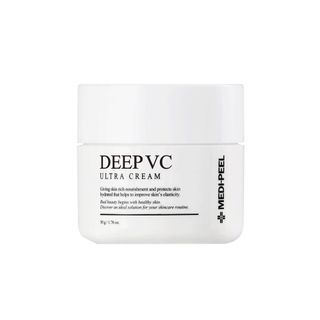
“Deep VC Ultra Cream”
This product can help improve hydration of the skin with the two types of ingredients.
The first type is called “humectants”:
these ingredients help attract water.
When humectants are on the surface of the skin, they “pull in” the moisture from the outside environment, or from
within deeper layers of the skin. The following ingredients in this product do the job:
glycerin, glyceryl glucoside.
This product also contains ingredients called “occlusives”. They help reduce the speed with which our skin loses moisture to the outside environment. These ingredients also help soften the upper layer of the skin, so it feels less tight and nicer to the touch. The following ingredients in this product do the job: butyrospermum parkii butter, dimethicone.
The following ingredients in this product are especially good for supporting the skin barrier and helping with the hydration level: ceramide 3, panthenol
Anti-oxidationNot advertised by the brand · 6 ingredients credited for this claimModerate support
This product contains antioxidants (pyridoxine) that might be able to help neutralize free radicals in skin to lessen the damage it gets from the UV light (sun). There is not enough evidence to confirm their effectiveness in skin though.
Can it cause trouble?
Irritancy2 strong irritants: Citrus paradisi seed oil, LimoneneMedium risk
Comedogenic3 ingredients rated 2 or more on the 0–5 pore-clogging scale3 flagged


User reviews
Be the first — your take helps the next person decide.
Ingredients
Filter by role to see what each ingredient is doing.
Water~45–55%
Dipropylene glycol~6.7–8.2%
- Irritation risk
- Low
Helps to dissolve other ingredients in a formulation. Slows down the rate of product drying
More about Dipropylene glycolHydrogenated polydecene~4.1–5.1%
- Irritation risk
- Low
Helps to soften the upper layer of the skin and create a nice product texture
More about Hydrogenated polydeceneButyrospermum parkii butter~3.3–4%
- Irritation risk
- Low
- Comedogenicity
- 3/5
A great moisturising ingredient that softens the skin and reduces water loss from its upper layer. It also can be helpful in protecting skin from free radicals
More about Butyrospermum parkii butterCetyl ethylhexanoate~2.4–3%
- Irritation risk
- Medium
An emollient that helps soften the skin and creates a thicker product texture
More about Cetyl ethylhexanoateGlycerin~2–2.5%
- Irritation risk
- Low
One of the best moisturizing ingredients. Naturally present in skin. It attracts water to the upper layer of the skin working as a humectant
More about GlycerinCyclopentasiloxane~1.7–2.1%
- Irritation risk
- Low
A silicone that helps improve the product texture and spreadability. Can absorb oil creating a short-term mattifying effect on the skin
More about CyclopentasiloxaneDipentaerythrityl hexa c5-9 acid esters~1.4–1.7%
- Irritation risk
- Low
1,2-hexanediol~0.7–1.05%
Niacinamide~0.95–1.15%
- Irritation risk
- Low
Is proven to be effective in reducing blemishes, evening out skin tone and helping to improve lines and wrinkles. It helps the skin to repair sun damage, calm down inflammation and keep maintain good levels of moisture. The concentration of about 2% is effective for supporting the skin barrier and evening out the skin tone. Concentration of 4-6% is better for helping with acne and balancing the sebum production
More about NiacinamidePanthenol~0.65–1%
- Irritation risk
- Low
Helps attract water to the upper layer of the skin and can help improve skin barrier function
More about PanthenolMethyl gluceth-20~0.55–0.8%
- Irritation risk
- Low
Helps attract water to the upper layer of the skin and soften it
More about Methyl gluceth-20Pentaerythrityl tetraisostearate~0.55–0.8%
- Irritation risk
- Medium
Used to create a thicker product consistency
More about Pentaerythrityl tetraisostearateTriethylhexanoin~0.4–0.6%
- Irritation risk
- Medium
Helps soften the upper layer of the skin
More about TriethylhexanoinCetearyl alcohol~0.45–0.7%
- Irritation risk
- Low
- Comedogenicity
- 2/5
A non-drying alcohol. Works as an emollient. Helps water and oil mix together and creates a nice product texture
More about Cetearyl alcoholGlyceryl glucoside~0.35–0.65%
- Irritation risk
- Low
Can help to restore skin barrier function and soften its upper layer
More about Glyceryl glucosideHydrolyzed collagen~0.45–0.65%
- Irritation risk
- Low
A typically plant-derived compound that is supposed mimic human collagen. Cannot penetrate the skin barrier so is not particularly useful in skincare products beyond attracting water to the upper layer of the skin
More about Hydrolyzed collagenGlyceryl stearate se~0.35–0.6%
- Irritation risk
- Low
- Comedogenicity
- 2/5
Used to stabilize the product formulations and works as an emollient
More about Glyceryl stearate seDimethicone~0.35–0.65%
- Irritation risk
- Low
A silicone that helps to reduce water loss from the surface of the skin. Can temporarily "fill in" lines and wrinkles, absorb oil, and create a nice product finish
More about DimethiconeCetearyl olivate~0.3–0.6%
C14-22 alcohols~0.3–0.55%
- Irritation risk
- Low
A non-drying alcohol that helps stabilize product formulations
More about C14-22 alcoholsGlyceryl stearate~0.35–0.6%
- Irritation risk
- Low
An emollient that softens the skin and forms a protective layer on its surface. Helps water and oil mix together
More about Glyceryl stearatePeg-100 stearate~0.35–0.6%
- Irritation risk
- Low
Helps oil and water mix togehter and creates a nice product texture
More about Peg-100 stearateSorbitan olivate~0.25–0.5%
Squalane~0.3–0.55%
- Irritation risk
- Low
An oil naturally present in skin. Works as an emollient to soften the skin and form a protective layer on its surface without a greasy feeling.
More about SqualanePalmitic acid~0.3–0.55%
- Irritation risk
- Low
An emollient that is naturally present in skin and helps soften it
More about Palmitic acidStearic acid~0.4–0.6%
- Irritation risk
- Low
Helps oil and water mix together and works as an emollient
More about Stearic acidAmmonium acryloyldimethyltaurate/vp copolymer~0.25–0.5%
- Irritation risk
- Low
Increases thickness of a product. Texture enhancer for oil-in-water emulsions
More about Ammonium acryloyldimethyltaurate/vp copolymerC12-20 alkyl glucoside~0.3–0.5%
- Irritation risk
- Medium
Helps water and oil mix together
More about C12-20 alkyl glucosideCitrus paradisi seed oil~0.25–0.4%
- Irritation risk
- High
Xanthan gum~0.25–0.5%
- Irritation risk
- Low
Used to create a thicker product consistency
More about Xanthan gumCarbomer~0.25–0.5%
- Irritation risk
- Low
Helps create a thicker or gel-like product texture. It is not a surfactant but can be used in gentle cleansing formulations
More about CarbomerHydrogenated lecithin~0.3–0.5%
- Irritation risk
- Low
Helps to retain moisture by creating a protective barrier on the skin. Rich in fatty acids. Improves product texture and helps with the penetration of other ingredients.
More about Hydrogenated lecithinAdenosine~0.25–0.45%
- Irritation risk
- Low
Might help improve cell turnover and reduce inflammation in skin. One study shows that the ingredients might be able to help reduce dynamic wrinkles (for example, in the corners of the eyes or on the forehead)
More about AdenosinePropanediol~0.3–0.5%
- Irritation risk
- Low
Acts as a solvent for other ingredients. Speeds up the absorption of other ingredients into the skin
More about PropanediolSodium hyaluronate~0.25–0.5%
- Irritation risk
- Low
One of the best moisturizing ingredients. Attracts water into the upper layer of the skin
More about Sodium hyaluronateSodium polyacrylate starch~0.3–0.5%
- Irritation risk
- Low
Used to create a thicker product consistency
More about Sodium polyacrylate starchMagnolia officinalis bark extract~0.25–0.45%
- Irritation risk
- Low
Sodium hyaluronate crosspolymer~0.25–0.5%
- Irritation risk
- Medium
Attracts water into the upper layer of the skin
More about Sodium hyaluronate crosspolymerCeramide 3~0.3–0.55%
- Irritation risk
- Low
A type of lipid similar to ceramides naturally present in skin. Helps to soften the upper layer of the skin and supports the skin barrier function to keep it hydrated. Can help to prevent inflammation in skin
More about Ceramide 3Hydrolyzed glycosaminoglycans~0.25–0.45%
- Irritation risk
- Low
Long sugars that help attract water to the upper layer of the skin
More about Hydrolyzed glycosaminoglycansButylene glycol~0.25–0.5%
- Irritation risk
- Low
Used to create a nice product texture and help delivery of other ingredients. Might be somewhat helpful in attracting water to the upper layer of the skin
More about Butylene glycolLactobacillus/rye flour ferment~0.25–0.45%
- Irritation risk
- Low
Lactobacillus/soymilk ferment filtrate~0.25–0.45%
- Irritation risk
- Low
Lactobacillus/soybean ferment extract~0.25–0.45%
- Irritation risk
- Low
A fermentation product created by bacteria Lactobacillus out of soybean. The fermented product helps to attract water to the upper layer of the skin and has anti-bacterial properties. It might be helpful in calming down inflammation and could be helpful in evening out skin tone, but studies are lacking
More about Lactobacillus/soybean ferment extractMaltodextrin~0.25–0.5%
- Irritation risk
- Low
Used to stabilize the product formulation and can help absorb oil
More about MaltodextrinCalcium pantothenate~0.25–0.5%
- Irritation risk
- Low
Helps support skin barrier function improving skin hydration and reducing sensitivity
More about Calcium pantothenateSodium starch octenylsuccinate~0.25–0.5%
- Irritation risk
- Low
Benzyl glycol~0.25–0.5%
- Irritation risk
- Medium
Helps dissolve other ingredients and preserve products
More about Benzyl glycolGlycereth-20~0.25–0.5%
- Irritation risk
- Low
Sodium ascorbyl phosphate~0.25–0.5%
- Irritation risk
- Medium
A stable derivative of vitamin C. It is oil-soluble which means it is more likely to penetrate the skin compared to the pure form of vitamin C (which is water-soluble), but it is less bio-available and is way less effective in stimulating collagen and reducing wrinkles compared to the pure form of vitamin C (L-ascorbic acid) and its other derivatives (for example, magnesium ascorbyl phosphate). At the same time, this vitamin C derivative has been shown in studies to be effective in reducing acne, blemishes and clogged pores. It is less irritating then the pure form of vitamin C
More about Sodium ascorbyl phosphatePeg-10 rapeseed sterol~0.35–0.65%
Fructan~0.25–0.45%
- Irritation risk
- Low
Hydrolyzed hyaluronic acid~0.25–0.45%
- Irritation risk
- Low
One of the best moisturizing ingredients. Attracts water into the upper layer of the skin. A version of it is naturally present in skin
More about Hydrolyzed hyaluronic acidPyridoxine hcl~0.25–0.45%
- Irritation risk
- Medium
Might help neutralize free radicals in skin
More about Pyridoxine hclTocopheryl acetate~0.25–0.5%
- Irritation risk
- Medium
A more stable but less bio-available form of vitamin E compared to Tocopherol. Might help moisturize and protect the skin from free radicals, but mostly used in low concentrations to stabilize other ingredients.
More about Tocopheryl acetateEthylhexylglycerin~0.25–0.5%
Silica~0.35–0.65%
Tromethamine~0.25–0.45%
Hyaluronic acid~0.25–0.45%
- Irritation risk
- Low
One of the best moisturizing ingredients. Attracts water into the upper layer of the skin. Naturally present in skin. Typically has large molecule size unless advertised otherwise on the product label. Helps support skin's barrier function and may help to reduce inflammation
More about Hyaluronic acidFolic acid~0.25–0.4%
- Irritation risk
- Low
Can help stimulate collagen production in skin. While available studies are promising, more research is needed to confirm the efficacy in skin
More about Folic acidPantothenic acid~0.2–0.4%
- Irritation risk
- Low
Helps attract water to the upper layer of the skin and may help reduce inflammation in skin
More about Pantothenic acidPyridoxine~0.2–0.4%
- Irritation risk
- High
Might help neutralize free radicals in skin, but evidence of effectiveness in skin is lacking. It might be irritating
More about PyridoxineRaspberry ketone~0.2–0.35%
- Irritation risk
- High
Used as a fragrance. It can reduce skin pigmentation, but it is not safe to use for these purposes in high concentrations as use of raspberry ketone and its derivative is linked to causing loss of skin pigmentation in people (leukoderma)
More about Raspberry ketoneThiamine hcl~0.2–0.35%
- Irritation risk
- Medium
Can help attract water to the upper layer of the skin. Is studied as a mosquito repellent
More about Thiamine hclRiboflavin~0.2–0.35%
- Irritation risk
- Low
Cyanocobalamin~0.2–0.35%
- Irritation risk
- Low
Can support skin barrier function and reduce inflammation in skin
More about CyanocobalaminCi 19140~0.15–0.3%
Limonene~0.1–0.2%
- Irritation risk
- High
A common frangrance that can easily irritate skin, especially if exposed to air, light or heat
More about LimoneneIngredient list view
Water, Dipropylene glycol, Hydrogenated polydecene, Butyrospermum parkii butter, Cetyl ethylhexanoate, Glycerin, Cyclopentasiloxane, Dipentaerythrityl hexa c5-9 acid esters, 1,2-hexanediol, Niacinamide, Panthenol, Methyl gluceth-20, Pentaerythrityl tetraisostearate, Triethylhexanoin, Cetearyl alcohol, Glyceryl glucoside, Hydrolyzed collagen, Glyceryl stearate se, Dimethicone, Cetearyl olivate, C14-22 alcohols, Glyceryl stearate, Peg-100 stearate, Sorbitan olivate, Squalane, Palmitic acid, Stearic acid, Ammonium acryloyldimethyltaurate/vp copolymer, C12-20 alkyl glucoside, Citrus paradisi seed oil, Xanthan gum, Carbomer, Hydrogenated lecithin, Adenosine, Propanediol, Sodium hyaluronate, Sodium polyacrylate starch, Magnolia officinalis bark extract, Sodium hyaluronate crosspolymer, Ceramide 3, Hydrolyzed glycosaminoglycans, Butylene glycol, Lactobacillus/rye flour ferment, Lactobacillus/soymilk ferment filtrate, Lactobacillus/soybean ferment extract, Maltodextrin, Calcium pantothenate, Sodium starch octenylsuccinate, Benzyl glycol, Glycereth-20, Sodium ascorbyl phosphate, Peg-10 rapeseed sterol, Fructan, Hydrolyzed hyaluronic acid, Pyridoxine hcl, Tocopheryl acetate, Ethylhexylglycerin, Silica, Tromethamine, Hyaluronic acid, Folic acid, Pantothenic acid, Pyridoxine, Raspberry ketone, Thiamine hcl, Riboflavin, Cyanocobalamin, Ci 19140, Unknown, Limonene
Compare prices
Retailers ranked by price — lowest first.

Affiliate links · prices updated regularly
Worth comparing, line by line.
Match % combines shared ingredients, the first five ingredients, shared actives and hero ingredients, irritancy (lower counts in the alternative's favour), texture and body area. Only products in the same routine step are compared.
| MEDI-PEELDeep VC Ultra CreamYOUR PRODUCT | Serendi BeautyLa-bloom Vital Repair Cream | 12 GRABSOlibetaine Rich Hyaluron Moist Cream | SNPPeptaronic Cream | |
|---|---|---|---|---|
| Match | — | 87% | 80% | 79% |
| Price | $24.85 | $74.42+$49.57 | $19.80−$5.05 | $12.00−$12.85 |
| Shared key ingredients | — | 12 of 22 | 9 of 22 | 8 of 22 |
| Key difference | — | Oligopeptide-1 | Betaine | Hexapeptide-11 |
| Irritancy | Medium | Medium | Low | Medium |
| Drying alcohol | — | — | — | — |
| View product | Shop | Shop | Shop |

Product summary
Judging from the ingredient list, "MEDI-PEEL - Deep VC Ultra Cream" works well for improving skin hydration To work well, any moisturizer needs to include a combination of water-binding and emollient ingredients. MEDI-PEEL - Deep VC Ultra Cream ticks this box. Humectants in this product (panthenol, glycerin, glyceryl glucoside, hyaluronic acid and hydrolyzed collagen) help to increase the water content in the upper layer of the skin. (These ingredients do so by "capturing" water molecules from the outside air or from within the deeper layers of the skin). Emollients in this formulation (ceramide 3, hydrolyzed collagen, butyrospermum parkii butter, dimethicone and squalane) help to reduce the moisture loss from the skin. They also soften the skin surface and relieve the feeling of dryness and tightness.
Ingredient callouts
- As a plus, this moisturizer also contains Ceramides (ceramide 3 0.30% - 0.55%). Ceramides are a type of lipids that our skin produces itself. They are a building block of the skin's barrier. Ceramides used in skincare are synthetic or extracted from plants. They work well for softening the skin surface and "patch holes" in the skin's barrier.
- Adenosine 0.25% - 0.45%. It is a chemical present inside our skin cells. A clinical trial confirmed that topical application of Adenosine in a low concentration can reduce dynamic wrinkles (these are the wrinkles that appear with age in a places where our mimic is the most active, for example, in the corners of the eyes or on the forehead).
- Panthenol (pro-vitamin B5) at about 0.65% - 1.00% concentration. In this concentration, Panthenol works effectively to improve the skin barrier and reduce inflammation.
Irritation risk
We assess the overall irritancy of this moisturizer to be medium. For a detailed overview of all potential irritants: click here
You can see the detailed formula review with the breakdown of all actives in the product and the full ingredient list with estimated concentrations in the tables below.
Price
The product retails for 25.10$ in the United States.
For a detailed price comparison: click here.
Sources cited in this review
Every concentration estimate and effectiveness label is anchored to one of these 38 studies and safety reviews.
- 1Safety Assessment of Polyene Group as Used in Cosmeticscir-safety.org
- 2
- 3
- 4
- 5
- 6Skin moisturizing effects of panthenol-based formulationspdfs.semanticscholar.org

Affiliate links · As an Amazon Associate, WIMJ earns from qualifying purchases.