Works for:
based on ingredients and %- Moisturizing
- Anti-aging
- Evens skin tone
- Anti-blemish
Can it cause trouble?
- Irritation risk: medium
- Comedogenic risk ingredients: 0
Key actives

Anti-aging
This product can help reduce and prevent fine lines and wrinkles, improve skin elasticity and firmness because it contains niacinamide.
These ingredients in the product can also be helpful, even though there is less evidence for their effectiveness: serine, threonine.
Keep in mind that it typically takes at least 6 weeks to notice any results because the changes that are needed to improve fine lines and elasticity happen in the deeper layers of the skin. No topical anti-aging product can “erase” wrinkles or fully reverse signs of aging.
Is proven to be effective in reducing blemishes, evening out skin tone and helping to improve lines and wrinkles. It helps the skin to repair sun damage, calm down inflammation and keep maintain good levels of moisture. The concentration of about 2% is effective for supporting the skin barrier and evening out the skin tone. Concentration of 4-6% is better for helping with acne and balancing the sebum production
An amino-acid that helps to attract water to the upper layer of the skin. In combination with other amino-acids, might help to reduce fine lines and wrinkles
An amino-acid that helps to attract water to the upper layer of the skin. In combination with other amino-acids, might help to reduce fine lines and wrinkles
One of the best moisturizing ingredients. Attracts water into the upper layer of the skin. Naturally present in skin. Typically has large molecule size unless advertised otherwise on the product label. Helps support skin's barrier function and may help to reduce inflammation
Helps attract water to the upper layer of the skin, calm down inflammation and irritation, restore the barrier function and support wound healing. It can be helpful in reducing fine lines and wrinkles
An exfoliating and moisturizing alpha-hydroxy acid (AHA). Typically causes less irritation than other AHAs, for example, glycolic acid. At high concentrations (about 15%), lactic acid can help reduce lines and wrinkles. Recent studies show that lactic acid can support the "good" bacteria living on skin's surface (healthy skin microbiome)
A moisturizing vitamin C derivative. It is considered to be one of the most stable ones. It is effective in neutralizing free radicals and can help to even out the skin tone if used in high enough concentration
Evens skin tone
This product can help reduce hypepigmentation and even out the skin tone because it contains the following effective ingredients: niacinamide
The following ingredient (ingredients) in this product might be helpful, but there is no evidence to confirm that it actually can help even out the skin tone: alanine.
Keep in mind that you would need to apply any topical skincare targetted at hypigmentation consistently for a couple of months to get a result. No topical skincare product can help get rid of hyperpigmentation (including post-acne marks and age spots) instantly.
Is proven to be effective in reducing blemishes, evening out skin tone and helping to improve lines and wrinkles. It helps the skin to repair sun damage, calm down inflammation and keep maintain good levels of moisture. The concentration of about 2% is effective for supporting the skin barrier and evening out the skin tone. Concentration of 4-6% is better for helping with acne and balancing the sebum production
An amino-acid that helps to attract water to the upper layer of the skin and might help to lighten the skin, but solid evidence is lacking
An exfoliating and moisturizing alpha-hydroxy acid (AHA). Typically causes less irritation than other AHAs, for example, glycolic acid. At high concentrations (about 15%), lactic acid can help reduce lines and wrinkles. Recent studies show that lactic acid can support the "good" bacteria living on skin's surface (healthy skin microbiome)
A moisturizing vitamin C derivative. It is considered to be one of the most stable ones. It is effective in neutralizing free radicals and can help to even out the skin tone if used in high enough concentration
Moisturizing
What does the product description say?
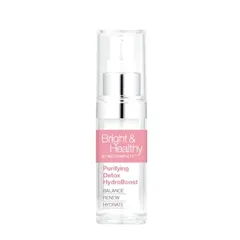
Purifying Detox HydroBoost
Source: From product name
This product can help improve hydration of the skin with the two types of ingredients.
The first type is called “humectants”:
these ingredients help attract water.
When humectants are on the surface of the skin, they “pull in” the moisture from the outside environment, or from
within deeper layers of the skin. The following ingredients in this product do the job:
alanine, arginine.
This product also contains ingredients called “occlusives”. They help reduce the speed with which our skin loses moisture to the outside environment. These ingredients also help soften the upper layer of the skin, so it feels less tight and nicer to the touch. The following ingredients in this product do the job: arginine, caprylyl glycol.
The following ingredients in this product are especially good for supporting the skin barrier and helping with the hydration level: niacinamide, panthenol, urea
An amino-acid that helps to attract water to the upper layer of the skin. In combination with other amino-acids, might help to reduce fine lines and wrinkles
Helps attract water to the upper layer of the skin
One of the best moisturizing ingredients. Attracts water into the upper layer of the skin. Naturally present in skin. Typically has large molecule size unless advertised otherwise on the product label. Helps support skin's barrier function and may help to reduce inflammation
Attracts water into the upper layer of the skin
Is proven to be effective in reducing blemishes, evening out skin tone and helping to improve lines and wrinkles. It helps the skin to repair sun damage, calm down inflammation and keep maintain good levels of moisture. The concentration of about 2% is effective for supporting the skin barrier and evening out the skin tone. Concentration of 4-6% is better for helping with acne and balancing the sebum production
Helps attract water to the upper layer of the skin and can help improve skin barrier function
Naturally present in skin and helps to attract water to its upper layer
Yeast extract that contains copper. Can help to attract water to the upper layer of the skin and can help in skin wound healing
An amino-acid that helps to attract water to the upper layer of the skin. In combination with other amino-acids, might help to reduce fine lines and wrinkles
Naturally present in skin (urea makes up about 7% of natural moisturizing factors in skin). Attracts water to the upper layer of the skin. Also has a positive effect on the skin barrier beyond the humectant action. Can enhance penetration of other ingredients. Is an exfoliating ingredient when used in high concentrations
An amino-acid that helps to attract water to the upper layer of the skin and might help to lighten the skin, but solid evidence is lacking
An amino acid that is naturally present in skin and helps keep it hydrated. When used together with AHAs, it can reduce their irritating effect on the skin
Helps attract water to the upper layer of the skin, calm down inflammation and irritation, restore the barrier function and support wound healing. It can be helpful in reducing fine lines and wrinkles
Helps attract water to the upper layer of the skin and improves the product texture
An amino-acid that helps attract water to the upper layer of the skin
One of the best moisturizing ingredients. Naturally present in skin. It attracts water to the upper layer of the skin working as a humectant
Helps to attract water to the upper layer of the skin and can help restore the skin barrier function
Used to create a nice product texture and help delivery of other ingredients. Might be somewhat helpful in attracting water to the upper layer of the skin
Helps preserve products and creates a nice product texture
A moisturizing vitamin C derivative. It is considered to be one of the most stable ones. It is effective in neutralizing free radicals and can help to even out the skin tone if used in high enough concentration
Helps attract water to the upper layer of the skin. Is often used to adjust the pH level of the product
An exfoliating and moisturizing alpha-hydroxy acid (AHA). Typically causes less irritation than other AHAs, for example, glycolic acid. At high concentrations (about 15%), lactic acid can help reduce lines and wrinkles. Recent studies show that lactic acid can support the "good" bacteria living on skin's surface (healthy skin microbiome)
Naturally present in skin and helps to attract water to its upper layer
Anti-blemish
This product might be able to help reduce blemishes and clogged pores because it contains niacinamide.
Is proven to be effective in reducing blemishes, evening out skin tone and helping to improve lines and wrinkles. It helps the skin to repair sun damage, calm down inflammation and keep maintain good levels of moisture. The concentration of about 2% is effective for supporting the skin barrier and evening out the skin tone. Concentration of 4-6% is better for helping with acne and balancing the sebum production
Helps attract water to the upper layer of the skin, calm down inflammation and irritation, restore the barrier function and support wound healing. It can be helpful in reducing fine lines and wrinkles
Anti-oxidation
This product contains antioxidants (camellia sinensis extract, epilobium angustifolium flower/leaf/stem extract) that might be able to help neutralize free radicals in skin to lessen the damage it gets from the UV light (sun). There is not enough evidence to confirm their effectiveness in skin though.
A plant extract that might contain antioxidants
Tea extract. Might be helpful in neutralizing free radicals in skin
Helps attract water to the upper layer of the skin, calm down inflammation and irritation, restore the barrier function and support wound healing. It can be helpful in reducing fine lines and wrinkles
A moisturizing vitamin C derivative. It is considered to be one of the most stable ones. It is effective in neutralizing free radicals and can help to even out the skin tone if used in high enough concentration
How honest is this product?
| Promise | Can it deliver? |
|---|---|
| Moisturizing |
Total Promises Fulfilled score: 100/100.
Potential irritants
Comedogenic ingredients
No comedogenic ingredients detected
User reviews (0)
Averages from community submissions.
No reviews yet for this product.
Be the first to share your experience!
Tried this product?
Help capture what the ingredient list can't—texture, finish, pilling, scent, and more. Answer what you can, skip the rest.
Takes ~30 seconds.
Reviews are shown in aggregate. No personal details.
| Product | Similarity | Price | Irritancy |
|---|---|---|---|
 MD Complete Skincare Purifying Detox HydroBoost | Current | - | |
MD Complete by Dr. Brian Zelickson Quench Restore Advanced Hyaluronic Treatment | 84% | $34.99 | |
 MDC Dermatologics Plump, Boost Firm Eye Hydro Gel | 75% | $64.00 | |
Maruderm Hyaluronic Acid Moisturizer Face & Body Cream | 74% | $21.99 | |
 endota spa Peptide 8 Hyaluronic Serum | 74% | ≈ $125.12 | |
 Cetaphil Restoring Water Gel | 72% | $19.79 |
Key Actives
Is proven to be effective in reducing blemishes, evening out skin tone and helping to improve lines and wrinkles. It helps the skin to repair sun damage, calm down inflammation and keep maintain good levels of moisture. The concentration of about 2% is effective for supporting the skin barrier and evening out the skin tone. Concentration of 4-6% is better for helping with acne and balancing the sebum production
Helps attract water to the upper layer of the skin, calm down inflammation and irritation, restore the barrier function and support wound healing. It can be helpful in reducing fine lines and wrinkles
A moisturizing vitamin C derivative. It is considered to be one of the most stable ones. It is effective in neutralizing free radicals and can help to even out the skin tone if used in high enough concentration
Helps attract water to the upper layer of the skin and can help improve skin barrier function
One of the best moisturizing ingredients. Attracts water into the upper layer of the skin. Naturally present in skin. Typically has large molecule size unless advertised otherwise on the product label. Helps support skin's barrier function and may help to reduce inflammation
One of the best moisturizing ingredients. Attracts water into the upper layer of the skin. Naturally present in skin. Typically has large molecule size unless advertised otherwise on the product label. Helps support skin's barrier function and may help to reduce inflammation
Naturally present in skin (urea makes up about 7% of natural moisturizing factors in skin). Attracts water to the upper layer of the skin. Also has a positive effect on the skin barrier beyond the humectant action. Can enhance penetration of other ingredients. Is an exfoliating ingredient when used in high concentrations
An amino-acid that helps to attract water to the upper layer of the skin and might help to lighten the skin, but solid evidence is lacking
An amino-acid that helps to attract water to the upper layer of the skin. In combination with other amino-acids, might help to reduce fine lines and wrinkles
An amino-acid that helps to attract water to the upper layer of the skin. In combination with other amino-acids, might help to reduce fine lines and wrinkles
A new synthetic humectant that, according to the first tests, works better than glycerin in attracting moisture to the skin surface. It might be able to keep attracting water to the upper layer of the skin for longer compared with glycerin. Its texture is also nicer. Because of this, products with it are likely to be less sticky and more pleasant on application. It is unlikely to cause irritation and products with it work for sensitive skin. For best hydration results, it should be used at about 5-10% in a formulation. This ingredient is developed by a supplier Nouryon and is sold to skincare brands under the name Elfamoist AC.
Helps attract water to the upper layer of the skin and improves the product texture
One of the best moisturizing ingredients. Naturally present in skin. It attracts water to the upper layer of the skin working as a humectant
An amino acid that is naturally present in skin and helps keep it hydrated. When used together with AHAs, it can reduce their irritating effect on the skin
Tea extract. Might be helpful in neutralizing free radicals in skin
A plant extract that might contain antioxidants
Helps to attract water to the upper layer of the skin and can help restore the skin barrier function
Helps attract water to the upper layer of the skin
An amino-acid that helps attract water to the upper layer of the skin
Attracts water into the upper layer of the skin
Yeast extract that contains copper. Can help to attract water to the upper layer of the skin and can help in skin wound healing
Naturally present in skin and helps to attract water to its upper layer
Naturally present in skin and helps to attract water to its upper layer
Helps attract water to the upper layer of the skin. Is often used to adjust the pH level of the product
Potential irritants
Helps oil and water mix together and can enhance the penetration of other ingredients into the skin. It can be irritating
A moisturizing vitamin C derivative. It is considered to be one of the most stable ones. It is effective in neutralizing free radicals and can help to even out the skin tone if used in high enough concentration
A plant extract that might contain antioxidants
An essential oil. Potential allergen and can be irritating. It has some anti-bacterial properties
Helps preserve products and creates a nice product texture
An exfoliating and moisturizing alpha-hydroxy acid (AHA). Typically causes less irritation than other AHAs, for example, glycolic acid. At high concentrations (about 15%), lactic acid can help reduce lines and wrinkles. Recent studies show that lactic acid can support the "good" bacteria living on skin's surface (healthy skin microbiome)
Helps attract water to the upper layer of the skin. Is often used to adjust the pH level of the product
Can work as an exfoliant but is typically used to adjust the product pH
Comedogenic ingredients
We couldn't find any comedogenic ingredients in this product
All ingredients
Helps oil and water mix together and can enhance the penetration of other ingredients into the skin. It can be irritating
A new synthetic humectant that, according to the first tests, works better than glycerin in attracting moisture to the skin surface. It might be able to keep attracting water to the upper layer of the skin for longer compared with glycerin. Its texture is also nicer. Because of this, products with it are likely to be less sticky and more pleasant on application. It is unlikely to cause irritation and products with it work for sensitive skin. For best hydration results, it should be used at about 5-10% in a formulation. This ingredient is developed by a supplier Nouryon and is sold to skincare brands under the name Elfamoist AC.
Increases thickness of a product. Texture enhancer for oil-in-water emulsions
Helps attract water to the upper layer of the skin and improves the product texture
One of the best moisturizing ingredients. Naturally present in skin. It attracts water to the upper layer of the skin working as a humectant
Is proven to be effective in reducing blemishes, evening out skin tone and helping to improve lines and wrinkles. It helps the skin to repair sun damage, calm down inflammation and keep maintain good levels of moisture. The concentration of about 2% is effective for supporting the skin barrier and evening out the skin tone. Concentration of 4-6% is better for helping with acne and balancing the sebum production
Helps attract water to the upper layer of the skin and can help improve skin barrier function
Naturally present in skin (urea makes up about 7% of natural moisturizing factors in skin). Attracts water to the upper layer of the skin. Also has a positive effect on the skin barrier beyond the humectant action. Can enhance penetration of other ingredients. Is an exfoliating ingredient when used in high concentrations
A moisturizing vitamin C derivative. It is considered to be one of the most stable ones. It is effective in neutralizing free radicals and can help to even out the skin tone if used in high enough concentration
An amino-acid that helps to attract water to the upper layer of the skin and might help to lighten the skin, but solid evidence is lacking
An amino acid that is naturally present in skin and helps keep it hydrated. When used together with AHAs, it can reduce their irritating effect on the skin
Used to create a nice product texture and help delivery of other ingredients. Might be somewhat helpful in attracting water to the upper layer of the skin
Tea extract. Might be helpful in neutralizing free radicals in skin
Helps preserve products and creates a nice product texture
A plant extract that might contain antioxidants
Helps to attract water to the upper layer of the skin and can help restore the skin barrier function
An amino-acid that helps attract water to the upper layer of the skin
Attracts water into the upper layer of the skin
One of the best moisturizing ingredients. Attracts water into the upper layer of the skin. Naturally present in skin. Typically has large molecule size unless advertised otherwise on the product label. Helps support skin's barrier function and may help to reduce inflammation
An exfoliating and moisturizing alpha-hydroxy acid (AHA). Typically causes less irritation than other AHAs, for example, glycolic acid. At high concentrations (about 15%), lactic acid can help reduce lines and wrinkles. Recent studies show that lactic acid can support the "good" bacteria living on skin's surface (healthy skin microbiome)
An essential oil. Potential allergen and can be irritating. It has some anti-bacterial properties
A preservative. It helps prevent bacterial growth in cosmetic products
Yeast extract that contains copper. Can help to attract water to the upper layer of the skin and can help in skin wound healing
Helps attract water to the upper layer of the skin, calm down inflammation and irritation, restore the barrier function and support wound healing. It can be helpful in reducing fine lines and wrinkles
An amino-acid that helps to attract water to the upper layer of the skin. In combination with other amino-acids, might help to reduce fine lines and wrinkles
One of the best moisturizing ingredients. Attracts water into the upper layer of the skin. Naturally present in skin. Typically has large molecule size unless advertised otherwise on the product label. Helps support skin's barrier function and may help to reduce inflammation
Naturally present in skin and helps to attract water to its upper layer
An amino-acid that helps to attract water to the upper layer of the skin. In combination with other amino-acids, might help to reduce fine lines and wrinkles
Naturally present in skin and helps to attract water to its upper layer
Helps attract water to the upper layer of the skin. Is often used to adjust the pH level of the product
Can work as an exfoliant but is typically used to adjust the product pH
Ingredient list view
Water, Polysorbate 20, Propylene glycol, Acetamidoethoxyethanol, Ammonium acryloyldimethyltaurate/vp copolymer, Betaine, Glycerin, Niacinamide, Panthenol, Urea, 3-glyceryl ascorbate, Unknown, Unspecified form of vitamin c, Alanine, Arginine, Benzoic acid, Ci 42090, Butylene glycol, Camellia sinensis extract, Caprylyl glycol, Citrus aurantium amara leaf/twig oil, Epilobium angustifolium flower/leaf/stem extract, Ethylhexylglycerin, Unknown, Glycine, Glycogen, Glutamic acid, Hydrolyzed sodium hyaluronate, Unknown, Hyaluronic acid, Lactic acid, Lavandula angustifolia oil, Lysine hcl, Phenoxyethanol, Proline, Saccharomyces/copper ferment, Schizophyllan, Beta-glucan, Serine, Sodium butyroyl hyaluronate, Unknown, Hyaluronic acid, Pca, Threonine, Sodium pca, Sodium lactate, Triethyl citrate, Citric acid, Unknown, Zinc citrate
- Surfactants and experimental irritant contact dermatitis
- Propylene Glycol
- Skin-sensitizing and irritant properties of propylene glycol
- NATIONAL INDUSTRIAL CHEMICALS NOTIFICATION AND ASSESSMENT SCHEME (NICNAS) PUBLIC REPORT Acetamide, N-[2-(2-hydroxyethoxy)ethyl]- (INCI Name: Acetamidoethoxyethanol)
- ElfaMoist AC humectant (manufacturer's report)
- Glycerol and the skin: holistic approach to its origin and functions
- Niacinamide - mechanisms of action and its topical use in dermatology
- Gehring, W. (2004). Nicotinic acid/niacinamide and the skin. Journal of Cosmetic Dermatology, 3(2), 88–93. doi:10.1111/j.1473-2130.2004.00115.x
- Skin moisturizing effects of panthenol-based formulations
- Safety Assessment of Panthenol, Pantothenic Acid, and Derivatives as Used in Cosmetics
- Topical urea in skincare: A review
- Safety and Efficacy of Bis-Glyceryl Ascorbate (Amitose DGA) to Prevent Hand-Foot Skin Reaction in Patients With Renal Cell Carcinoma Receiving Sunitinib Therapy: Protocol for a Phase I/II, Uncontrolled, Single-Arm, Open-Label Trial
- 3‐O‐Glyceryl‐2‐O‐hexyl ascorbate suppresses melanogenesis by interfering with intracellular melanosome transport and suppressing tyrosinase protein synthesis
- 3‐O‐Laurylglyceryl ascorbate improves the development of sensitive skin through the reduction of oxidative stress
- Combination of amino acids reduces pigmentation in B16F0 melanoma cells
- Therapeutic Potential of Polyphenols from Epilobium Angustifolium (Fireweed): Polyphenols from Fireweed
- Effect of Topical Application of Glycine and Proline on Recalcitrant Leg Ulcers of Prolidase Deficiency
- Functional glycine receptor in cultured human keratinocytes
- Efficacy of a New Topical Nano-hyaluronic Acid in Humans
- Physiochemical properties and application of hyaluronic acid: a systematic review
- Epidermal and dermal effects of topical lactic acid
- Dual Effects of Alpha-Hydroxy Acids on the Skin
- β-Glucans: Multi-Functional Modulator of Wound Healing
- Anti-Wrinkle Therapy: Significant New Findings in the Non-Invasive Cosmetic Treatment of Skin Wrinkles with Beta-Glucan
- Skin Health Promotion Effects of Natural Beta-Glucan Derived from Cereals and Microorganisms: A Review
- Anticancer properties of low molecular weight oat beta-glucan – An in vitro study
- A critical review on production and industrial applications 2 of beta-glucans
- Improving skin function with CM-glucan, a biological response modifier from yeast
- Preparation, characterization, and biological properties of β-glucans
- Characterization of a new beta(1-3)-glucan branching activity of Aspergillus fumigatus
- Topical palmitoyl pentapeptide provides improvement in photoaged human facial skin
- Citric Acid, Inorganic Citrate Salts and Alkyl Citrate Esters As Used in Cosmetics