Marks and Spence Formula Sleep & Replenish Light Sleep Cream
Works for
1 of 1 advertised claim delivered
MoisturizingUrea, Acetyl dipeptide-1 cetyl ester + 28 moreStrong evidence
“Browse SPF skincare to protect, and cooling aftersun to soothe and moisturise, all with free delivery over £60.”
This product can help improve hydration of the skin with the two types of ingredients.
The first type is called “humectants”:
these ingredients help attract water.
When humectants are on the surface of the skin, they “pull in” the moisture from the outside environment, or from
within deeper layers of the skin. The following ingredients in this product do the job:
acetamidoethoxyethanol, glycerin.
This product also contains ingredients called “occlusives”. They help reduce the speed with which our skin loses moisture to the outside environment. These ingredients also help soften the upper layer of the skin, so it feels less tight and nicer to the touch. The following ingredients in this product do the job: cera alba, dimethicone.
The following ingredients in this product are especially good for supporting the skin barrier and helping with the hydration level: acetyl dipeptide-1 cetyl ester, niacinamide, palmitoyl tetrapeptide-7, palmitoyl tripeptide-1, urea
Anti-agingNot advertised by the brand · Niacinamide, Acetyl dipeptide-1 cetyl ester + 6 moreStrong evidence
This product can help reduce and prevent fine lines and wrinkles, improve skin elasticity and firmness because it contains niacinamide.
These ingredients in the product can also be helpful, even though there is less evidence for their effectiveness: acetyl dipeptide-1 cetyl ester, palmitoyl tetrapeptide-7, palmitoyl tripeptide-1, serine.
Keep in mind that it typically takes at least 6 weeks to notice any results because the changes that are needed to improve fine lines and elasticity happen in the deeper layers of the skin. No topical anti-aging product can “erase” wrinkles or fully reverse signs of aging.
Evens skin toneNot advertised by the brand · NiacinamideStrong evidence
This product can help reduce hypepigmentation and even out the skin tone because it contains the following effective ingredients: niacinamide
Keep in mind that you would need to apply any topical skincare targetted at hypigmentation consistently for a couple of months to get a result. No topical skincare product can help get rid of hyperpigmentation (including post-acne marks and age spots) instantly.
Anti-blemishNot advertised by the brand · NiacinamideStrong evidence
This product can help reduce breakouts and clogged pores because it contains the following ingredient: niacinamide. This ingredient is used for treating acne and can have a noticeable effect.
Can it cause trouble?
Irritancy2 strong irritants: Parfum, Benzophenone-4Medium risk
Comedogenic3 ingredients rated 2 or more on the 0–5 pore-clogging scale3 flagged

User reviews
Be the first — your take helps the next person decide.
Ingredients
Filter by role to see what each ingredient is doing.
Water~45–55%
Glycerin~5–6.2%
- Irritation risk
- Low
One of the best moisturizing ingredients. Naturally present in skin. It attracts water to the upper layer of the skin working as a humectant
More about GlycerinNiacinamide~4.1–5%
- Irritation risk
- Low
Is proven to be effective in reducing blemishes, evening out skin tone and helping to improve lines and wrinkles. It helps the skin to repair sun damage, calm down inflammation and keep maintain good levels of moisture. The concentration of about 2% is effective for supporting the skin barrier and evening out the skin tone. Concentration of 4-6% is better for helping with acne and balancing the sebum production
More about NiacinamideButylene glycol~3–3.6%
- Irritation risk
- Low
Used to create a nice product texture and help delivery of other ingredients. Might be somewhat helpful in attracting water to the upper layer of the skin
More about Butylene glycolIsododecane~2.3–2.8%
- Irritation risk
- Low
An emollient that helps soften the skin and can decrease moisture loss. Helps create a nice product texture
More about IsododecaneC10-18 triglycerides~1.9–2.3%
- Irritation risk
- Low
Helps soften the skin and attract water to its upper layer. Helps create nice product texture
More about C10-18 triglyceridesIsodecyl neopentanoate~1.6–2%
- Irritation risk
- Low
An emollient that helps soften the skin. It also forms a protective on its surface to reduce water loss.
More about Isodecyl neopentanoateAcetamidoethoxyethanol~1.4–1.7%
- Irritation risk
- Low
A new synthetic humectant that, according to the first tests, works better than glycerin in attracting moisture to the skin surface. It might be able to keep attracting water to the upper layer of the skin for longer compared with glycerin. Its texture is also nicer. Because of this, products with it are likely to be less sticky and more pleasant on application. It is unlikely to cause irritation and products with it work for sensitive skin. For best hydration results, it should be used at about 5-10% in a formulation. This ingredient is developed by a supplier Nouryon and is sold to skincare brands under the name Elfamoist AC.
More about AcetamidoethoxyethanolIsononyl isononanoate~1.3–1.6%
- Irritation risk
- Low
Forms a protective film on the surface of the skin to prevent moisture loss. Gives a velvety feel to products while reducing tackiness
More about Isononyl isononanoateDimethicone~1–1.3%
- Irritation risk
- Low
A silicone that helps to reduce water loss from the surface of the skin. Can temporarily "fill in" lines and wrinkles, absorb oil, and create a nice product finish
More about DimethiconeHydrogenated tetradecenyl/methylpentadecene~0.7–1.05%
- Irritation risk
- Low
Cera alba~0.75–1.1%
- Irritation risk
- Medium
Forms a protective barrier that holds water and keeps dry skin hydrated. Keeps an emulsion from separating into its oil and liquid components, and increases the thickness of a product. Can be an allergen
More about Cera albaButyrospermum parkii butter~0.55–0.85%
- Irritation risk
- Low
- Comedogenicity
- 3/5
A great moisturising ingredient that softens the skin and reduces water loss from its upper layer. It also can be helpful in protecting skin from free radicals
More about Butyrospermum parkii butterSucrose polystearate~0.5–0.75%
- Irritation risk
- Medium
Helps oil and water mix together
More about Sucrose polystearateGlyceryl stearate~0.5–0.75%
- Irritation risk
- Low
An emollient that softens the skin and forms a protective layer on its surface. Helps water and oil mix together
More about Glyceryl stearatePeg-100 stearate~0.55–0.8%
- Irritation risk
- Low
Helps oil and water mix togehter and creates a nice product texture
More about Peg-100 stearatePhenoxyethanol~0.45–0.65%
- Irritation risk
- Low
A preservative. It helps prevent bacterial growth in cosmetic products
More about PhenoxyethanolBehenyl alcohol~0.45–0.7%
- Irritation risk
- Low
Non-drying alcohol that helps water and oil mix together. Also serves as an emollient
More about Behenyl alcoholOlea europaea callus culture lysate~0.35–0.65%
- Irritation risk
- Low
Tocopheryl acetate~0.3–0.55%
- Irritation risk
- Medium
A more stable but less bio-available form of vitamin E compared to Tocopherol. Might help moisturize and protect the skin from free radicals, but mostly used in low concentrations to stabilize other ingredients.
More about Tocopheryl acetateParfum~0.25–0.5%
- Irritation risk
- High
An aromatic blend of unspecified and possibly irritating ingredients
More about ParfumAcrylamide/sodium acryloyldimethyltaurate copolymer~0.25–0.5%
- Irritation risk
- Low
Helps water and oil mix together and create gel-like textures
More about Acrylamide/sodium acryloyldimethyltaurate copolymerTrehalose~0.25–0.45%
- Irritation risk
- Low
A sugar that attracts water to the upper layer of the skin
More about TrehaloseUrea~0.25–0.45%
- Irritation risk
- Low
Naturally present in skin (urea makes up about 7% of natural moisturizing factors in skin). Attracts water to the upper layer of the skin. Also has a positive effect on the skin barrier beyond the humectant action. Can enhance penetration of other ingredients. Is an exfoliating ingredient when used in high concentrations
More about UreaCarbomer~0.25–0.5%
- Irritation risk
- Low
Helps create a thicker or gel-like product texture. It is not a surfactant but can be used in gentle cleansing formulations
More about CarbomerCaprylyl glycol~0.3–0.5%
- Irritation risk
- Medium
Helps preserve products and creates a nice product texture
More about Caprylyl glycolDimethicone crosspolymer~0.25–0.5%
- Irritation risk
- Low
Used to create a thicker product texture. Helps soften the upper layer of the skin and might be able to prevent moisture loss from its surface
More about Dimethicone crosspolymerBenzophenone-4~0.45–0.7%
- Irritation risk
- High
Sulisobenzone. A UV filter. Is typically used to improve the product stability under exposure to UV light. It is effective against both UVA and UVB rays. It can be used is larger concentrations as a sun protection ingredient for the skin, but can be irritating
More about Benzophenone-4Isohexadecane~0.35–0.65%
- Irritation risk
- Low
Improves the texture of the product and helps soften the skin. Helps oil and water mix together and can be used as a cleansing agent
More about IsohexadecaneXanthan gum~0.25–0.5%
- Irritation risk
- Low
Used to create a thicker product consistency
More about Xanthan gumDisodium edta~0.25–0.45%
Sorbitan laurate~0.25–0.5%
Chlorphenesin~0.16–0.32%
Sclerocarya birrea seed oil~0.3–0.5%
- Irritation risk
- Medium
An emollient that helps to soften the skin. It has a high contetn of oleic acid that might weaken the skin barrier. Might have some anti-oxidant properties. It might be somewhat helpful against hyperpigmentation.
More about Sclerocarya birrea seed oilAleurites moluccanus seed oil~0.25–0.45%
- Irritation risk
- Low
Helps soften the upper layer of the skin
More about Aleurites moluccanus seed oilCetyl palmitate~0.3–0.55%
- Irritation risk
- Low
An emollient that helps soften the skin and is used to improve product texture and stability
More about Cetyl palmitatePentylene glycol~0.3–0.55%
- Irritation risk
- Medium
Used to preserve products, dissolve other ingredients and create a nice product texture
More about Pentylene glycolSerine~0.25–0.45%
- Irritation risk
- Low
An amino-acid that helps to attract water to the upper layer of the skin. In combination with other amino-acids, might help to reduce fine lines and wrinkles
More about SerinePolysorbate 80~0.3–0.5%
Sodium hydroxide~0.25–0.45%
Hydroxyethylcellulose~0.3–0.5%
- Irritation risk
- Low
Used to thicken product formulations and create gel-like textures
More about HydroxyethylcelluloseAcetyl dipeptide-1 cetyl ester~0.25–0.45%
- Irritation risk
- Low
A type of peptide. Peptides are excellent moisturizers and might be able support collagen production reducing fine lines and wrinkles
More about Acetyl dipeptide-1 cetyl esterSodium lactate~0.25–0.45%
- Irritation risk
- Medium
Helps attract water to the upper layer of the skin. Is often used to adjust the pH level of the product
More about Sodium lactateSorbitan oleate~0.25–0.5%
- Irritation risk
- Medium
- Comedogenicity
- 2/5
Helps oil and water mix together
More about Sorbitan oleateAlgin~0.25–0.45%
- Irritation risk
- Low
- Comedogenicity
- 3/5
Used to thicken product formulation. Can help attract water to the upper layer of the skin
More about AlginDisodium phosphate~0.25–0.45%
- Irritation risk
- Low
Helps adjust the product pH and stabilize the formulation
More about Disodium phosphateGlyceryl polyacrylate~0.25–0.45%
- Irritation risk
- Low
Helps to create a nice product texture and spread the product more easily on the skin
More about Glyceryl polyacrylatePullulan~0.25–0.45%
- Irritation risk
- High
Creates a thin drying film on the skin resulting in a short-term tightening effect
More about PullulanSodium hyaluronate~0.25–0.4%
- Irritation risk
- Low
One of the best moisturizing ingredients. Attracts water into the upper layer of the skin
More about Sodium hyaluronateCitric acid~0.2–0.4%
- Irritation risk
- Medium
Can work as an exfoliant but is typically used to adjust the product pH
More about Citric acidPolysorbate 20~0.25–0.45%
Sodium benzoate~0.2–0.35%
Potassium phosphate~0.2–0.4%
Cyamopsis tetragonoloba gum~0.15–0.3%
- Irritation risk
- Low
Tocopherol~0.15–0.3%
- Irritation risk
- Low
Pure form of vitamin E. Can help moisturise and protect the skin from free radicals. Often used to help stabilise other ingredients or the formula itself
More about TocopherolAscorbyl palmitate~0.15–0.25%
- Irritation risk
- Medium
Being a lipid soluble form of vitamin C, it is more stable and can penetrate the skin better than L-Ascorbic acid. It is effective in protecting the skin from free radicals, as well as evening the skin tone, but is less effective in stimulating collagen production compared to L-Ascorbic acid.
More about Ascorbyl palmitateTetrapeptide-26~0.15–0.3%
- Irritation risk
- Low
Palmitoyl tripeptide-1~0.15–0.25%
- Irritation risk
- Low
A type of peptide. Peptides are excellent moisturizers and might be able support collagen production reducing fine lines and wrinkles
More about Palmitoyl tripeptide-1Palmitoyl tetrapeptide-7~0.15–0.25%
- Irritation risk
- Low
A type of peptide. Peptides are excellent moisturizers and might be able support collagen production reducing fine lines and wrinkles
More about Palmitoyl tetrapeptide-7Ingredient list view
Water, Glycerin, Niacinamide, Butylene glycol, Isododecane, C10-18 triglycerides, Isodecyl neopentanoate, Acetamidoethoxyethanol, Isononyl isononanoate, Dimethicone, Hydrogenated tetradecenyl/methylpentadecene, Cera alba, Butyrospermum parkii butter, Sucrose polystearate, Glyceryl stearate, Peg-100 stearate, Phenoxyethanol, Behenyl alcohol, Olea europaea callus culture lysate, Tocopheryl acetate, Parfum, Acrylamide/sodium acryloyldimethyltaurate copolymer, Trehalose, Urea, Carbomer, Caprylyl glycol, Dimethicone crosspolymer, Benzophenone-4, Isohexadecane, Xanthan gum, Disodium edta, Sorbitan laurate, Chlorphenesin, Sclerocarya birrea seed oil, Aleurites moluccanus seed oil, Cetyl palmitate, Pentylene glycol, Serine, Polysorbate 80, Sodium hydroxide, Hydroxyethylcellulose, Acetyl dipeptide-1 cetyl ester, Sodium lactate, Sorbitan oleate, Algin, Disodium phosphate, Glyceryl polyacrylate, Pullulan, Sodium hyaluronate, Citric acid, Polysorbate 20, Sodium benzoate, Potassium phosphate, Cyamopsis tetragonoloba gum, Tocopherol, Ascorbyl palmitate, Tetrapeptide-26, Palmitoyl tripeptide-1, Palmitoyl tetrapeptide-7
Compare prices
Retailers ranked by price — lowest first.

Affiliate links · prices updated regularly
Worth comparing, line by line.
Match % combines shared ingredients, the first five ingredients, shared actives and hero ingredients, irritancy (lower counts in the alternative's favour), texture and body area. Only products in the same routine step are compared.
| Marks and SpenceFormula Sleep & Replenish Light Sleep CreamYOUR PRODUCT | FormulaAbsolute Ultimate Sleep Cream | e.l.f. CosmeticsFragrance Free Holy Hydration! Face Cream | MiildSkin Love The Comfort Cream | |
|---|---|---|---|---|
| Match | — | 86% | 82% | 80% |
| Price | — | $21.15 | $13.00 | — |
| Shared key ingredients | — | 15 of 17 | 7 of 17 | 5 of 17 |
| Key difference | — | Beeswax | Panthenol | Diglycerin |
| Irritancy | Medium | Medium | Low | Low |
| Drying alcohol | — | — | — | — |
| View product | Shop | Shop | Shop |

Product summary
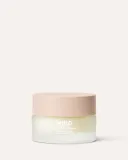
"Marks and Spence - Formula Sleep & Replenish Light Sleep Cream" has a good moisturizing formula. The formulation is based on a combination of good humectants and emollients. Both are needed to increase the skin hydration level. Humectants in this product (urea, acetamidoethoxyethanol, glycerin, sodium hyaluronate and sodium lactate) help to increase the water content in the upper layer of the skin. (These ingredients do so by "capturing" water molecules from the outside air or from within the deeper layers of the skin). Emollients in this formulation (palmitoyl tetrapeptide-7, palmitoyl tripeptide-1, cera alba, dimethicone and c10-18 triglycerides) help to reduce the moisture loss from the skin. They also soften the skin surface and relieve the feeling of dryness and tightness.
Ingredient callouts
- We love that this moisturizer contains a good concentration of niacinamide 4.10% - 5.00%. Niacinamide is a perfect active in a moistruizer because it helps calm down inflamation in skin and support the skin barrier. More than that, it is helpful for most common skin concerns: it helps regulat oil production, help reduce acne and clogged pores, improve skin tone and prevent pigmentation marks. It also helps fight photodamage.
- We like that this moisturizer contains peptides (palmitoyl tetrapeptide-7 0.15% - 0.25%, palmitoyl tripeptide-1 0.15% - 0.25% and acetyl dipeptide-1 cetyl ester 0.25% - 0.45%). There are many different kind of Peptides and they are naturally present in our skin. They all are a combination of aminoacids. Some of them work as natural antibiotics, promote wound-healing and production of collagen. The science is still not settled on how effective Peptides are in skincare, but it is very likely that they have a benefit. Peptides might help restore the skin barrier and fight the signs of aging. At the very least, Peptides work as humectants: they attract water to the upper layer of the skin and improve its hydration.
Irritation risk
This formulation includes some common irritants, including ingredients that do not provide a benefit for the skin. We assess the overall irritancy of this moisturizer to be medium. For a detailed overview of all potential irritants: click here
You can see the detailed formula review with the breakdown of all actives in the product and the full ingredient list with estimated concentrations in the tables below.
Sources cited in this review
Every concentration estimate and effectiveness label is anchored to one of these 19 studies and safety reviews.
- 1
- 2
- 3
- 4
- 5ElfaMoist AC humectant (manufacturer's report)krahnnordics.com
- 6

Affiliate links · As an Amazon Associate, WIMJ earns from qualifying purchases.