Works for
1 of 1 advertised claim delivered
Moisturizing27 ingredients credited for this claimStrong support
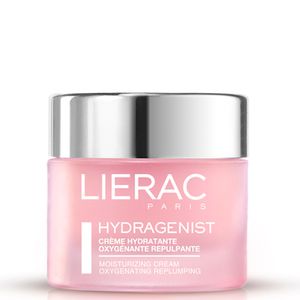
“Hydragenist Moisturizing Cream”
This product can help improve hydration of the skin with the two types of ingredients.
The first type is called “humectants”:
these ingredients help attract water.
When humectants are on the surface of the skin, they “pull in” the moisture from the outside environment, or from
within deeper layers of the skin. The following ingredients in this product do the job:
betaine, glycerin.
This product also contains ingredients called “occlusives”. They help reduce the speed with which our skin loses moisture to the outside environment. These ingredients also help soften the upper layer of the skin, so it feels less tight and nicer to the touch. The following ingredients in this product do the job: dimethicone, helianthus annuus seed oil.
The following ingredients in this product are especially good for supporting the skin barrier and helping with the hydration level: panthenol, urea
Can it cause trouble?
Irritancy4 strong irritants: Parfum, Citrus aurantium dulcis juice + 2 more — patch-test recommendedHigh risk
Comedogenic2 ingredients rated 2 or more on the 0–5 pore-clogging scale2 flagged
User reviews
Be the first — your take helps the next person decide.
Ingredients
Filter by role to see what each ingredient is doing.
Water~45–55%
Glycerin~4.7–5.7%
- Irritation risk
- Low
One of the best moisturizing ingredients. Naturally present in skin. It attracts water to the upper layer of the skin working as a humectant
More about GlycerinBetaine~3.8–4.6%
- Irritation risk
- Low
Helps attract water to the upper layer of the skin and improves the product texture
More about BetaineDimethicone~3.1–3.8%
- Irritation risk
- Low
A silicone that helps to reduce water loss from the surface of the skin. Can temporarily "fill in" lines and wrinkles, absorb oil, and create a nice product finish
More about DimethiconeBeheneth-25~2.4–3%
Hexyldecanol~1.8–2.3%
- Irritation risk
- Low
Helps soften the upper layer of the skin
More about HexyldecanolHexyldecyl laurate~1.6–1.9%
- Irritation risk
- Low
Helps soften the upper layer of the skin
More about Hexyldecyl laurateCetearyl alcohol~1.5–1.8%
- Irritation risk
- Low
- Comedogenicity
- 2/5
A non-drying alcohol. Works as an emollient. Helps water and oil mix together and creates a nice product texture
More about Cetearyl alcoholParfum~1.1–1.4%
- Irritation risk
- High
An aromatic blend of unspecified and possibly irritating ingredients
More about ParfumSodium polyacrylate~1–1.2%
- Irritation risk
- Low
Used to create a gel-like product texture, as well as to stabilize emulsions
More about Sodium polyacrylatePalmitic acid~0.7–1%
- Irritation risk
- Low
An emollient that is naturally present in skin and helps soften it
More about Palmitic acidSynthetic fluorphlogopite~0.55–0.85%
- Irritation risk
- Low
A mineral that is used as an optical filter (makes the skin looks nicer through light reflection) and to improve the texture of cosmetic products
More about Synthetic fluorphlogopiteSodium hyaluronate~0.45–0.65%
- Irritation risk
- Low
One of the best moisturizing ingredients. Attracts water into the upper layer of the skin
More about Sodium hyaluronateStearic acid~0.6–0.9%
- Irritation risk
- Low
Helps oil and water mix together and works as an emollient
More about Stearic acidHydroxyethyl acrylate/sodium acryloyldimethyl taurate copolymer~0.3–0.6%
- Irritation risk
- Medium
A gelling agent that thickens the product consistency and leaves the skin with a velvety finish
More about Hydroxyethyl acrylate/sodium acryloyldimethyl taurate copolymerPrunus armeniaca kernel oil~0.35–0.65%
- Irritation risk
- Medium
An emollient that helps soften the skin
More about Prunus armeniaca kernel oilIsohexadecane~0.55–0.8%
- Irritation risk
- Low
Improves the texture of the product and helps soften the skin. Helps oil and water mix together and can be used as a cleansing agent
More about IsohexadecaneUrea~0.25–0.5%
- Irritation risk
- Low
Naturally present in skin (urea makes up about 7% of natural moisturizing factors in skin). Attracts water to the upper layer of the skin. Also has a positive effect on the skin barrier beyond the humectant action. Can enhance penetration of other ingredients. Is an exfoliating ingredient when used in high concentrations
More about UreaHydrogenated vegetable oil~0.25–0.5%
- Irritation risk
- Low
- Comedogenicity
- 2/5
An oil from a mixture of different vegetables. Helps soften the upper layer of the skin
More about Hydrogenated vegetable oilHydrolyzed sweet almond protein~0.2–0.35%
- Irritation risk
- Low
Glycine~0.2–0.35%
- Irritation risk
- Low
Helps to attract water to the upper layer of the skin and can help restore the skin barrier function
More about GlycineXanthan gum~0.2–0.35%
- Irritation risk
- Low
Used to create a thicker product consistency
More about Xanthan gumSodium pca~0.15–0.3%
- Irritation risk
- Low
Naturally present in skin and helps to attract water to its upper layer
More about Sodium pcaCitric acid~0.15–0.3%
- Irritation risk
- Medium
Can work as an exfoliant but is typically used to adjust the product pH
More about Citric acidPolysorbate 60~0.2–0.35%
Panthenol~0.15–0.3%
- Irritation risk
- Low
Helps attract water to the upper layer of the skin and can help improve skin barrier function
More about PanthenolPyridoxine hcl~0.15–0.3%
- Irritation risk
- Medium
Might help neutralize free radicals in skin
More about Pyridoxine hclCitrus aurantium dulcis juice~0.15–0.3%
- Irritation risk
- High
Sodium lactate~0.15–0.3%
- Irritation risk
- Medium
Helps attract water to the upper layer of the skin. Is often used to adjust the pH level of the product
More about Sodium lactateVernonia appendiculata leaf extract~0.15–0.3%
- Irritation risk
- Low
Tocopherol~0.2–0.35%
- Irritation risk
- Low
Pure form of vitamin E. Can help moisturise and protect the skin from free radicals. Often used to help stabilise other ingredients or the formula itself
More about TocopherolRetinyl palmitate~0.15–0.3%
- Irritation risk
- High
Three steps removed from the active form of vitamin A - retinoic acid. To have an effect in the skin, it first needs to be converted twice to become the retinoic acid. This means it is less potent than retinol, but could also be less irritating. Once converted to the retinoic acid in the skin, it helps against all signs of aging, improves skin cell turnover and helps fight blemishes and clogged pores. However, in many cosmetic formulations, it is used in a concentration that is too low to have the full effect
More about Retinyl palmitateHelianthus annuus seed oil~0.2–0.35%
- Irritation risk
- Low
A great emollient due to its high linoleic acid content. One of the most effective plant oils in helping skin hydration and repairing skin barrier function
More about Helianthus annuus seed oilSorbitan isostearate~0.2–0.35%
- Irritation risk
- Low
Helps oil and water mix together
More about Sorbitan isostearatePotassium gluconate~0.2–0.35%
- Irritation risk
- Low
A mineral that might be able to support skin hydration, but convincing research on its effectiveness in topical skincare is lacking
More about Potassium gluconateMagnesium gluconate~0.15–0.3%
- Irritation risk
- Low
A mineral that might be able to support skin hydration, but convincing research on its effectiveness in topical skincare is lacking
More about Magnesium gluconateCalcium gluconate~0.2–0.35%
- Irritation risk
- Low
Helps attract water to the upper layer of the skin and helps to improve appearance of the product
More about Calcium gluconateZinc gluconate~0.15–0.3%
- Irritation risk
- Medium
Typically used to stabilize the product formulations. It is a salt of a polyhydroxy acid (PHA) and in larger concentrations, can help shed the dead cells from the skin surface revealing smoother skin. It can help attract water to the upper layer of the skin. Might to be helpful against acne and clogged pores. Could be helpful in neutralizing free radicals, but solid research is missing. Due to the zinc content, might help calm down inflammation in skin
More about Zinc gluconateMethylsilanol mannuronate~0.15–0.3%
- Irritation risk
- Low
Manganese gluconate~0.15–0.3%
- Irritation risk
- Low
Might be able to help restore skin barrier function supporting its hydration
More about Manganese gluconateCopper gluconate~0.15–0.3%
- Irritation risk
- Medium
Typically used to stabilize the product formulations. It is a salt of polyhydroxy acid (PHA) and in larger concentrations, can help shed the dead cells from the skin surface revealing smoother skin. It can help attract water to the upper layer of the skin. Might to be helpful against acne and clogged pores. Could be helpful in neutralizing free radicals, but solid research is missing
More about Copper gluconateMagnesium silicate~0.2–0.35%
- Irritation risk
- Low
Silica~0.3–0.55%
Pentylene glycol~0.2–0.4%
- Irritation risk
- Medium
Used to preserve products, dissolve other ingredients and create a nice product texture
More about Pentylene glycolPropylene glycol~0.15–0.3%
- Irritation risk
- High
Helps oil and water mix together and can enhance the penetration of other ingredients into the skin. It can be irritating
More about Propylene glycolChlorphenesin~0.15–0.3%
Sodium benzoate~0.15–0.3%
Sodium salicylate~0.15–0.3%
- Irritation risk
- Medium
The salt of salicylic acid. Helps exfoliate the upper layer of the skin. Can also work to preserve cosmetic products
More about Sodium salicylatePhenoxyethanol~0.2–0.35%
- Irritation risk
- Low
A preservative. It helps prevent bacterial growth in cosmetic products
More about PhenoxyethanolSodium metabisulfite~0.1–0.2%
Potassium sorbate~0.15–0.3%
Tetrasodium glutamate diacetate~0.15–0.3%
- Irritation risk
- Low
Helps stabilize the product formulation
More about Tetrasodium glutamate diacetateSodium hydroxide~0.15–0.3%
Sorbic acid~0.15–0.3%
Alpha-isomethyl ionone~0.15–0.25%
- Irritation risk
- High
A fragrance. Potential allergen and can be irritating
More about Alpha-isomethyl iononeCi 14700~0.1–0.15%
Ci 17200~0.1–0.15%
Ingredient list view
Water, Glycerin, Betaine, Dimethicone, Beheneth-25, Hexyldecanol, Hexyldecyl laurate, Cetearyl alcohol, Parfum, Sodium polyacrylate, Palmitic acid, Synthetic fluorphlogopite, Sodium hyaluronate, Stearic acid, Hydroxyethyl acrylate/sodium acryloyldimethyl taurate copolymer, Prunus armeniaca kernel oil, Isohexadecane, Urea, Hydrogenated vegetable oil, Hydrolyzed sweet almond protein, Glycine, Xanthan gum, Sodium pca, Citric acid, Polysorbate 60, Panthenol, Pyridoxine hcl, Citrus aurantium dulcis juice, Sodium lactate, Vernonia appendiculata leaf extract, Tocopherol, Retinyl palmitate, Helianthus annuus seed oil, Sorbitan isostearate, Potassium gluconate, Magnesium gluconate, Calcium gluconate, Zinc gluconate, Methylsilanol mannuronate, Manganese gluconate, Copper gluconate, Magnesium silicate, Silica, Pentylene glycol, Propylene glycol, Chlorphenesin, Sodium benzoate, Sodium salicylate, Phenoxyethanol, Sodium metabisulfite, Potassium sorbate, Tetrasodium glutamate diacetate, Sodium hydroxide, Sorbic acid, Alpha-isomethyl ionone, Ci 14700, Ci 17200
Compare prices
Retailers ranked by price — lowest first.
Affiliate links · prices updated regularly · As an Amazon Associate, WIMJ earns from qualifying purchases.
Product summary
Based on the ingredients included, "Lierac - Hydragenist Moisturizing Cream" works well for moisturizing the skin. This moisturizer uses a good combo of humectants and emollients. These both types of ingredients are essentials for improving the skin hydration and keeping the skin barrier healthy. Humectants in this product (urea, betaine, glycerin, glycine and sodium hyaluronate) help to increase the water content in the upper layer of the skin. (These ingredients do so by "capturing" water molecules from the outside air or from within the deeper layers of the skin). Dimethicone, helianthus annuus seed oil, cetearyl alcohol, hexyldecanol and hydrogenated vegetable oil in this product help decrease the water evoporation from the skin, so that it stays hydrated for longer. These ingredients also soften the skin and take away the feeling of tightness and dryness.
Ingredient callouts
- this moisturizer includes a form of Retinoids (vitamin A) - retinyl palmitate 0.15% - 0.30%, but this type of vitamin A is not very effective. It could in theory help with fine lines and wrinkles, but the effect is most likely minimal.
Irritation risk
We assess the overall irritancy of this moisturizer to be high. For a detailed overview of all potential irritants: click here
You can see the detailed formula review with the breakdown of all actives in the product and the full ingredient list with estimated concentrations in the tables below.
Price
The product retails for 50.80CA$ in Canada and for 29.00£ in the United Kingdom.
For a detailed price comparison: click here.
Sources cited in this review
Every concentration estimate and effectiveness label is anchored to one of these 27 studies and safety reviews.
- 1
- 2
- 3Final Report on the Safety Assessment of Dimethicone Copolyoljournals.sagepub.com
- 4Hyaluronic acid: A key molecule in skin agingncbi.nlm.nih.gov
- 5
- 6Topical urea in skincare: A reviewpubmed.ncbi.nlm.nih.gov

Affiliate links · As an Amazon Associate, WIMJ earns from qualifying purchases.