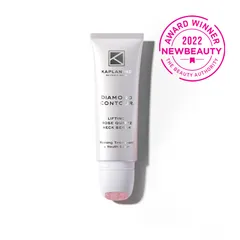
Works for:
based on ingredients and %- Evens skin tone
- Moisturizing
- Anti-aging
- Anti-oxidation
Can it cause trouble?
- Irritation risk: high
- Comedogenic risk ingredients: 3
Key actives


Anti-aging
What does the product description say?
Dr. Kaplan's award winning Lifting Rose Quartz Neck Serum is a powerful new anti aging treatment that is clinically proven to improve skin firmness, skin elasticity and skin crepiness- after just 1 use!
Source: Kaplan MD
This product can help reduce and prevent fine lines and wrinkles, improve skin elasticity and firmness because it contains tetrahexyldecyl ascorbate.
These ingredients in the product can also be helpful, even though there is less evidence for their effectiveness: retinyl palmitate, sh-oligopeptide-1, sh-oligopeptide-2, sh-polypeptide-1, sh-polypeptide-11, sh-polypeptide-9, trifluoroacetyl tripeptide-2.
Keep in mind that it typically takes at least 6 weeks to notice any results because the changes that are needed to improve fine lines and elasticity happen in the deeper layers of the skin. No topical anti-aging product can “erase” wrinkles or fully reverse signs of aging.
Being a lipid soluble form of vitamin C, it is more stable than ascorbic acid, but still degrades quickly and needs to be stabilized in a formulation with another ingredient. It is claimed to penetrate skin better than pure vitamin C and have the the similar benefits, but solid studies of its effectiveness are lacking. Is likely to require a higher concentration in a product than pure vitamin C to be effective. It might be able to help reduce pore clogging.
A type of peptide. Peptides are excellent moisturizers and might be able support collagen production reducing fine lines and wrinkles
Three steps removed from the active form of vitamin A - retinoic acid. To have an effect in the skin, it first needs to be converted twice to become the retinoic acid. This means it is less potent than retinol, but could also be less irritating. Once converted to the retinoic acid in the skin, it helps against all signs of aging, improves skin cell turnover and helps fight blemishes and clogged pores. However, in many cosmetic formulations, it is used in a concentration that is too low to have the full effect
A type of peptide. Peptides are excellent moisturizers and might be able support collagen production reducing fine lines and wrinkles
A type of peptide. Peptides are excellent moisturizers and might be able support collagen production reducing fine lines and wrinkles
A type of peptide. Peptides are excellent moisturizers and might be able support collagen production reducing fine lines and wrinkles
A type of peptide. Peptides are excellent moisturizers and might be able support collagen production reducing fine lines and wrinkles
A type of peptide. Peptides are excellent moisturizers and might be able support collagen production reducing fine lines and wrinkles
A plant extract that can help neutralize free radicals in skin. Can contain fragrand compounds like linalool that can be irritating
The most well-researched antioxidant that works in skin. Helps neutralize free radicals supporting collagen production, helping to even out the skin tone and preventing early signs of aging
Pure form of vitamin E. Can help moisturise and protect the skin from free radicals. Often used to help stabilise other ingredients or the formula itself
Anti-oxidation
This product contains antioxidants (tetrahexyldecyl ascorbate) that can help neutralize free radicals in skin. By doing so, they can lessen the damage the skin gets from the UV light (sun).
The following ingredients - camellia sinensis extract, ginkgo biloba leaf extract, ilex paraguariensis leaf extract also can have an antioxidant effect, but there is less evidence to confirm their effectiveness in skin.
Being a lipid soluble form of vitamin C, it is more stable than ascorbic acid, but still degrades quickly and needs to be stabilized in a formulation with another ingredient. It is claimed to penetrate skin better than pure vitamin C and have the the similar benefits, but solid studies of its effectiveness are lacking. Is likely to require a higher concentration in a product than pure vitamin C to be effective. It might be able to help reduce pore clogging.
A plant extract that can help neutralize free radicals in skin. Can contain fragrand compounds like linalool that can be irritating
Tea extract. Might be helpful in neutralizing free radicals in skin
A plant extract that might help neutralize free radicals and reduce inflammation in skin. It can be irritating
A plant extract that might help neutralize free radicals in skin
Pepper extract. Might help neutralize free radicals in skin
A plant extract that might have some anti-oxidant properties, but evidence is lacking
The most well-researched antioxidant that works in skin. Helps neutralize free radicals supporting collagen production, helping to even out the skin tone and preventing early signs of aging
Pure form of vitamin E. Can help moisturise and protect the skin from free radicals. Often used to help stabilise other ingredients or the formula itself
A more stable but less bio-available form of vitamin E compared to Tocopherol. Might help moisturize and protect the skin from free radicals, but mostly used in low concentrations to stabilize other ingredients.
A plant extract that might have some anti-inflammatory properties, but solid evidence is lacking. It can be irritating
Evens skin tone
What does the product description say?
Crushed DiamondsInstantly brightens and evens skin tone for a luminous, radiant glow.
Source: Kaplan MD
This product can help reduce hypepigmentation and even out the skin tone because it contains the following effective ingredients: tetrahexyldecyl ascorbate
The following ingredient (ingredients) in this product might be helpful, but there is no evidence to confirm that it actually can help even out the skin tone: retinyl palmitate.
Keep in mind that you would need to apply any topical skincare targetted at hypigmentation consistently for a couple of months to get a result. No topical skincare product can help get rid of hyperpigmentation (including post-acne marks and age spots) instantly.
Being a lipid soluble form of vitamin C, it is more stable than ascorbic acid, but still degrades quickly and needs to be stabilized in a formulation with another ingredient. It is claimed to penetrate skin better than pure vitamin C and have the the similar benefits, but solid studies of its effectiveness are lacking. Is likely to require a higher concentration in a product than pure vitamin C to be effective. It might be able to help reduce pore clogging.
Three steps removed from the active form of vitamin A - retinoic acid. To have an effect in the skin, it first needs to be converted twice to become the retinoic acid. This means it is less potent than retinol, but could also be less irritating. Once converted to the retinoic acid in the skin, it helps against all signs of aging, improves skin cell turnover and helps fight blemishes and clogged pores. However, in many cosmetic formulations, it is used in a concentration that is too low to have the full effect
The most well-researched antioxidant that works in skin. Helps neutralize free radicals supporting collagen production, helping to even out the skin tone and preventing early signs of aging
Moisturizing
What does the product description say?
Dr. Kaplan's formula utilizes a proprietary combination of skin fortifying actives like Crushed Diamonds, 22 Certified Organic Extracts and Fermented BioActive Complex, which provides superior anti-wrinkle, hydration and cell vitalization benefits.
Source: Kaplan MD
This product can help improve hydration of the skin with the two types of ingredients.
The first type is called “humectants”:
these ingredients help attract water.
When humectants are on the surface of the skin, they “pull in” the moisture from the outside environment, or from
within deeper layers of the skin. The following ingredients in this product do the job:
dextran, glycerin.
This product also contains ingredients called “occlusives”. They help reduce the speed with which our skin loses moisture to the outside environment. These ingredients also help soften the upper layer of the skin, so it feels less tight and nicer to the touch. The following ingredients in this product do the job: dimethicone, isododecane.
The following ingredients in this product are especially good for supporting the skin barrier and helping with the hydration level: sh-oligopeptide-1, sh-oligopeptide-2, sh-polypeptide-1, sh-polypeptide-11, sh-polypeptide-9, trifluoroacetyl tripeptide-2
A type of peptide. Peptides are excellent moisturizers and might be able support collagen production reducing fine lines and wrinkles
Helps attract water to the most upper layer of the skin. Derived from sugar
A type of peptide. Peptides are excellent moisturizers and might be able support collagen production reducing fine lines and wrinkles
A type of peptide. Peptides are excellent moisturizers and might be able support collagen production reducing fine lines and wrinkles
A type of peptide. Peptides are excellent moisturizers and might be able support collagen production reducing fine lines and wrinkles
A type of peptide. Peptides are excellent moisturizers and might be able support collagen production reducing fine lines and wrinkles
One of the best moisturizing ingredients. Attracts water into the upper layer of the skin
One of the best moisturizing ingredients. Naturally present in skin. It attracts water to the upper layer of the skin working as a humectant
A silicone that helps to reduce water loss from the surface of the skin. Can temporarily "fill in" lines and wrinkles, absorb oil, and create a nice product finish
A type of peptide. Peptides are excellent moisturizers and might be able support collagen production reducing fine lines and wrinkles
An emollient that helps soften the skin and can decrease moisture loss. Helps create a nice product texture
Helps preserve products and creates a nice product texture
Used to create a nice product texture and help delivery of other ingredients. Might be somewhat helpful in attracting water to the upper layer of the skin
Used mostly for creating emulsions - helping oil and water mix together. Helps soften the upper layer of the skin
Pure form of vitamin E. Can help moisturise and protect the skin from free radicals. Often used to help stabilise other ingredients or the formula itself
Traditionally used to treat sunburns, dermatitis and inflammation, but evidence for its effectiveness is lacking. The extract can contain humectants that help attract water into the skin
How honest is this product?
| Promise | Can it deliver? |
|---|---|
| Anti-aging | |
| Moisturizing | |
| Evens skin tone |
Total Promises Fulfilled score: 100/100.
We receive a small commission for purchases made through these links at no cost for you. Thank you for your support! Learn more
Potential irritants
Comedogenic ingredients
User reviews (0)
Averages from community submissions.
No reviews yet for this product.
Be the first to share your experience!
Tried this product?
Help capture what the ingredient list can't—texture, finish, pilling, scent, and more. Answer what you can, skip the rest.
Takes ~30 seconds.
Reviews are shown in aggregate. No personal details.
| Product | Similarity | Price | Irritancy |
|---|---|---|---|
 KAPLAN MD SKINCARE DIAMOND CONTOUR LIFTING ROSE QUARTZ NECK SERUM | Current | $75.00 | |
KAPLAN MD Diamond Contour Rose Quartz Roller Neck Serum | 69% | $75.00 | |
OARS + ALPS Wake Up Face Serum | 57% | $48.00 | |
La Roche-Posay Pure Vitamin C12 Serum | 57% | ≈ $31.69 | |
 CeraVe Skin Renewing Vitamin C Serum | 57% | ≈ $11.90 | |
L'Oréal Paris Revitalift Clinical | 57% | ≈ $20.94 |
Key Actives
A plant extract that might help neutralize free radicals and reduce inflammation in skin. It can be irritating
Three steps removed from the active form of vitamin A - retinoic acid. To have an effect in the skin, it first needs to be converted twice to become the retinoic acid. This means it is less potent than retinol, but could also be less irritating. Once converted to the retinoic acid in the skin, it helps against all signs of aging, improves skin cell turnover and helps fight blemishes and clogged pores. However, in many cosmetic formulations, it is used in a concentration that is too low to have the full effect
Pure form of vitamin E. Can help moisturise and protect the skin from free radicals. Often used to help stabilise other ingredients or the formula itself
Being a lipid soluble form of vitamin C, it is more stable than ascorbic acid, but still degrades quickly and needs to be stabilized in a formulation with another ingredient. It is claimed to penetrate skin better than pure vitamin C and have the the similar benefits, but solid studies of its effectiveness are lacking. Is likely to require a higher concentration in a product than pure vitamin C to be effective. It might be able to help reduce pore clogging.
The most well-researched antioxidant that works in skin. Helps neutralize free radicals supporting collagen production, helping to even out the skin tone and preventing early signs of aging
A silicone that helps to reduce water loss from the surface of the skin. Can temporarily "fill in" lines and wrinkles, absorb oil, and create a nice product finish
A type of peptide. Peptides are excellent moisturizers and might be able support collagen production reducing fine lines and wrinkles
A type of peptide. Peptides are excellent moisturizers and might be able support collagen production reducing fine lines and wrinkles
A type of peptide. Peptides are excellent moisturizers and might be able support collagen production reducing fine lines and wrinkles
A type of peptide. Peptides are excellent moisturizers and might be able support collagen production reducing fine lines and wrinkles
A type of peptide. Peptides are excellent moisturizers and might be able support collagen production reducing fine lines and wrinkles
A type of peptide. Peptides are excellent moisturizers and might be able support collagen production reducing fine lines and wrinkles
A plant extract that can help neutralize free radicals in skin. Can contain fragrand compounds like linalool that can be irritating
A plant extract that might help neutralize free radicals in skin
One of the best moisturizing ingredients. Naturally present in skin. It attracts water to the upper layer of the skin working as a humectant
One of the best moisturizing ingredients. Attracts water into the upper layer of the skin
Tea extract. Might be helpful in neutralizing free radicals in skin
Tea extract. Might be helpful in neutralizing free radicals in skin
Helps attract water to the most upper layer of the skin. Derived from sugar
Potential irritants
The most well-researched antioxidant that works in skin. Helps neutralize free radicals supporting collagen production, helping to even out the skin tone and preventing early signs of aging
A plant extract that might help neutralize free radicals and reduce inflammation in skin. It can be irritating
Plant extract that can have healing and anti-inflammatory properties. It is a potential allergen and can be irritating
A plant extract that might have some anti-inflammatory properties, but solid evidence is lacking. It can be irritating
A plant extract that can help neutralize free radicals in skin. Can contain fragrand compounds like linalool that can be irritating
A plant extract that might help neutralize free radicals in skin
Three steps removed from the active form of vitamin A - retinoic acid. To have an effect in the skin, it first needs to be converted twice to become the retinoic acid. This means it is less potent than retinol, but could also be less irritating. Once converted to the retinoic acid in the skin, it helps against all signs of aging, improves skin cell turnover and helps fight blemishes and clogged pores. However, in many cosmetic formulations, it is used in a concentration that is too low to have the full effect
Pepper extract. Might help neutralize free radicals in skin
An aromatic blend of unspecified and possibly irritating ingredients
Being a lipid soluble form of vitamin C, it is more stable than ascorbic acid, but still degrades quickly and needs to be stabilized in a formulation with another ingredient. It is claimed to penetrate skin better than pure vitamin C and have the the similar benefits, but solid studies of its effectiveness are lacking. Is likely to require a higher concentration in a product than pure vitamin C to be effective. It might be able to help reduce pore clogging.
Traditionally used to treat sunburns, dermatitis and inflammation, but evidence for its effectiveness is lacking. The extract can contain humectants that help attract water into the skin
A plant extract that might have some anti-oxidant properties, but evidence is lacking
A more stable but less bio-available form of vitamin E compared to Tocopherol. Might help moisturize and protect the skin from free radicals, but mostly used in low concentrations to stabilize other ingredients.
Helps preserve products and creates a nice product texture
Comedogenic ingredients
All ingredients
An emollient that helps soften the skin and can decrease moisture loss. Helps create a nice product texture
Helps to create a nice product texture
A silicone that helps to reduce water loss from the surface of the skin. Can temporarily "fill in" lines and wrinkles, absorb oil, and create a nice product finish
Being a lipid soluble form of vitamin C, it is more stable than ascorbic acid, but still degrades quickly and needs to be stabilized in a formulation with another ingredient. It is claimed to penetrate skin better than pure vitamin C and have the the similar benefits, but solid studies of its effectiveness are lacking. Is likely to require a higher concentration in a product than pure vitamin C to be effective. It might be able to help reduce pore clogging.
One of the best moisturizing ingredients. Naturally present in skin. It attracts water to the upper layer of the skin working as a humectant
The most well-researched antioxidant that works in skin. Helps neutralize free radicals supporting collagen production, helping to even out the skin tone and preventing early signs of aging
A preservative. It helps prevent bacterial growth in cosmetic products
One of the best moisturizing ingredients. Attracts water into the upper layer of the skin
Does not have known skin benefits. Might help create an optical illusion of smoother skin
A type of peptide. Peptides are excellent moisturizers and might be able support collagen production reducing fine lines and wrinkles
A type of peptide. Peptides are excellent moisturizers and might be able support collagen production reducing fine lines and wrinkles
A type of peptide. Peptides are excellent moisturizers and might be able support collagen production reducing fine lines and wrinkles
A type of peptide. Peptides are excellent moisturizers and might be able support collagen production reducing fine lines and wrinkles
A type of peptide. Peptides are excellent moisturizers and might be able support collagen production reducing fine lines and wrinkles
A type of peptide. Peptides are excellent moisturizers and might be able support collagen production reducing fine lines and wrinkles
Traditionally used to treat sunburns, dermatitis and inflammation, but evidence for its effectiveness is lacking. The extract can contain humectants that help attract water into the skin
Tea extract. Might be helpful in neutralizing free radicals in skin
A plant extract that might help neutralize free radicals and reduce inflammation in skin. It can be irritating
Plant extract that can have healing and anti-inflammatory properties. It is a potential allergen and can be irritating
A plant extract that might have some anti-oxidant properties, but evidence is lacking
A plant extract that might have some anti-inflammatory properties, but solid evidence is lacking. It can be irritating
Tea extract. Might be helpful in neutralizing free radicals in skin
A plant extract that can help neutralize free radicals in skin. Can contain fragrand compounds like linalool that can be irritating
A plant extract that might help neutralize free radicals in skin
A more stable but less bio-available form of vitamin E compared to Tocopherol. Might help moisturize and protect the skin from free radicals, but mostly used in low concentrations to stabilize other ingredients.
Used mostly for creating emulsions - helping oil and water mix together. Helps soften the upper layer of the skin
Three steps removed from the active form of vitamin A - retinoic acid. To have an effect in the skin, it first needs to be converted twice to become the retinoic acid. This means it is less potent than retinol, but could also be less irritating. Once converted to the retinoic acid in the skin, it helps against all signs of aging, improves skin cell turnover and helps fight blemishes and clogged pores. However, in many cosmetic formulations, it is used in a concentration that is too low to have the full effect
Used to create a nice product texture and help delivery of other ingredients. Might be somewhat helpful in attracting water to the upper layer of the skin
Helps preserve products and creates a nice product texture
Pure form of vitamin E. Can help moisturise and protect the skin from free radicals. Often used to help stabilise other ingredients or the formula itself
Helps attract water to the most upper layer of the skin. Derived from sugar
Pepper extract. Might help neutralize free radicals in skin
An aromatic blend of unspecified and possibly irritating ingredients
Ingredient list view
Isododecane, Dimethicone/bis-isobutyl ppg-20 crosspolymer, Dimethicone, Tetrahexyldecyl ascorbate, Water, Silica, Glycerin, Ascorbic acid, Phenoxyethanol, Sodium hyaluronate, Diamond powder, Trifluoroacetyl tripeptide-2, Sh-oligopeptide-1, Sh-oligopeptide-2, Sh-polypeptide-1, Sh-polypeptide-9, Sh-polypeptide-11, Bacillus/folic acid ferment filtrate extract, Aloe barbadensis leaf extract, Camellia sinensis extract, Salvia officinalis extract, Pelargonium graveolens extract, Melissa officinalis extract, Ginkgo biloba leaf extract, Lavandula intermedia extract, Rosmarinus officinalis extract, Mentha piperita extract, Thymus vulgaris extract, Chamomilla recutita extract, Trifolium pratense extract, Rosa canina fruit extract, Borago officinalis extract, Macrocystis pyrifera extract, Panax ginseng root extract, Camellia sinensis extract, Ilex paraguariensis leaf extract, Lippia citriodora leaf extract, Citrus grandis extract, Sambucus nigra flower extract, Fucus vesiculosus extract, Tocopheryl acetate, Acetyl glutamine, Lecithin, Retinyl palmitate, 1,2-hexanediol, Butylene glycol, Caprylyl glycol, Oleyl alcohol, Tocopherol, Dextran, Hexyl cinnamal, Linalool, Geraniol, Zanthoxylum bungeanum fruit extract, Parfum
- Dimethicone as a protective ingredient in topical medications
- Final Report on the Safety Assessment of Dimethicone Copolyol
- Double-blind, half-face study comparing topical vitamin C and vehicle for rejuvenation of photodamage
- Application of tetra-isopalmitoyl ascorbic acid in cosmetic formulations: Stability studies and in vivo efficacy
- Glycerol and the skin: holistic approach to its origin and functions
- Hyaluronic acid: A key molecule in skin aging
- Hyaluronan (Hyaluronic Acid): a natural moisturizer for skin care
- Safety Assessment of Ginkgo biloba-Derived Ingredients as Used in Cosmetics
- Cosmeceutical Critique: Ginkgo Biloba
- Ginseng in Dermatology: A Review
- Antiaging effects of the mixture of Panax ginseng and Crataegus pinnatifida in human dermal fibroblasts and healthy human skin
- Topical formulation containing Ilex Paraguariensis extract increases metalloproteinases and myeloperoxidase activities in mice exposed to UVB radiation
- Chemical composition and antioxidant activity of yerba-mate (Ilex paraguariensis A.St.-Hil., Aquifoliaceae) extract as obtained by spray drying
- Essential oil and antioxidant activity of green mate and mate tea (Ilex paraguariensis) infusions
- The antioxidant properties of alcoholic extracts from Sambucus nigra L. (antioxidant properties of extracts)
- Inhibition of Proinflammatory Activities of Major Periodontal Pathogens by Aqueous Extracts From Elder Flower (Sambucus nigra)
- The influence of alkane chain length on the skin irritation potential of 1,2-alkanediols
- Vitamin E in dermatology
- Vitamin E and Skin Health
- Annex I: Clinical evidence regarding sensitisation to individual fragrance chemicals and to natural extracts
- The effect of Zanthoxylum bungeanum maxim extract on crow's feet: A double-blind, split-face trial