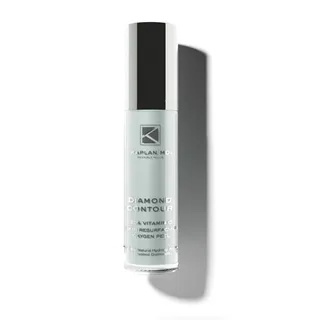
KAPLAN MD SKINCARE Diamond Contour 20% Vitamin C Skin Resurfacing Oxygen Peel

KAPLAN MD SKINCARE Diamond Contour 20% Vitamin C Skin Resurfacing Oxygen Peel

Efficacy100/100IrritancyHigh

Works for

Exfoliation
Betaine salicylate
Works well
What the product description says
“Diamond Contour 20% Vitamin C Skin Resurfacing Oxygen Peel”
Source: Kaplan MD

This product can help exfoliate the skin. In other words, it helps break down the bonds between dead cells on the surface of the skin and speed up the skin turnover. Skin often appears softer and brighter after exfoliation, but overdoing it can result in disrupted skin barrier. The following ingredient is doing the exfoliating job in this product: betaine salicylate.

Betaine salicylateKey activeEffect: HighExfoliating acid, a "relative" of salicylic acid~1.2–1.4%
Moisturizing
Linoleic acid, Panthenol + 14 more
Works well
What the product description says
“Oxygen molecules are pulled toward your skin to improve hydration allowing the product to exfoliate and brighten without any irritation.”
Source: Kaplan MD

This product can help improve hydration of the skin with the two types of ingredients.

The first type is called “humectants”:
these ingredients help attract water. When humectants are on the surface of the skin, they “pull in” the moisture from the outside environment, or from within deeper layers of the skin. The following ingredients in this product do the job: glycerin, sodium hyaluronate.

This product also contains ingredients called “occlusives”. They help reduce the speed with which our skin loses moisture to the outside environment. These ingredients also help soften the upper layer of the skin, so it feels less tight and nicer to the touch. The following ingredients in this product do the job: linolenic acid, carthamus tinctorius oleosomes.

The following ingredients in this product are especially good for supporting the skin barrier and helping with the hydration level: linoleic acid, panthenol

Linoleic acidHero· EmollientEffect: HighAn excellent emollient. Helps soften the skin, restore its barrier function, and can help to calm down inflammation. It can be helpful to prevent blemishes and clogged pores~0.45–0.65%
PanthenolHero· HumectantEffect: HighHelps attract water to the upper layer of the skin and can help improve skin barrier function~0.2–0.4%
GlycerinKey active· HumectantEffect: HighOne of the best moisturizing ingredients. Naturally present in skin. It attracts water to the upper layer of the skin working as a humectant~0.95–1.2%
Sodium hyaluronateKey active· HumectantEffect: HighOne of the best moisturizing ingredients. Attracts water into the upper layer of the skin~0.45–0.65%
Linolenic acidKey active· EmollientEffect: HighAn emollient that helps soften the skin and calm down inflammation~0.4–0.6%
GlutathioneKey activeEffect: HighA peptide that can help neutralize free radicals in skin and reduce melanin production resulting in skin lightening effect and reduction in hyperpigmentation. It can also help attract moisture to the upper layer of the skin~0.3–0.5%
Saccharum officinarum extractKey activeEffect: HighSugar extract that helps attract water to the upper layer of the skin~0.25–0.5%
Carthamus tinctorius oleosomesKey active· EmollientEffect: MediumHelps soften the upper layer of the skin~0.2–0.35%
Butylene glycol· HumectantEffect: LowUsed to create a nice product texture and help delivery of other ingredients. Might be somewhat helpful in attracting water to the upper layer of the skin~2–2.5%
Hydrolyzed opuntia ficus-indica flower extractEffect: LowA plant extract. Can help attract water the upper layer of the skin and might have some anti-oxidant properties~0.55–0.85%
AlginEffect: LowUsed to thicken product formulation. Can help attract water to the upper layer of the skin~0.3–0.5%
Caprylyl glycol· Humectant, EmollientEffect: LowHelps preserve products and creates a nice product texture~0.3–0.55%
LecithinEffect: Low, below effective doseUsed mostly for creating emulsions - helping oil and water mix together. Helps soften the upper layer of the skin~0.3–0.6%
Camellia sinensis leaf extractEffect: Low, below effective doseCan contain potent anti-oxidant compounds (abbreviated ECG, GCG, EGC, and EGCG) that might help protect the skin from free radicals. Can help calm down inflammation and has some anti-bacterial properties. Unfortunately, these antioxidants are unstable and lose their effectiveness very quickly in products. The concentration of the antioxidant compounds in the extract also tends to be low to be effective in topical formulation~0.15–0.25%
NiacinamideUnder-dosedIs proven to be effective in reducing blemishes, evening out skin tone and helping to improve lines and wrinkles. It helps the skin to repair sun damage, calm down inflammation and keep maintain good levels of moisture. The concentration of about 2% is effective for supporting the skin barrier and evening out the skin tone. Concentration of 4-6% is better for helping with acne and balancing the sebum production~0.45–0.65%
Pyrus malus fruit extractUnder-dosedCan have some moisturizing properties due to its sugar content~0.3–0.55%
Anti-aging
Ascorbic acid, Ascorbyl palmitate + 3 more
Works well
What the product description says
“97% said fine lines and wrinkles looked visibly reduced.”
Source: Kaplan MD

This product can help reduce and prevent fine lines and wrinkles, improve skin elasticity and firmness because it contains ascorbic acid.

Keep in mind that it typically takes at least 6 weeks to notice any results because the changes that are needed to improve fine lines and elasticity happen in the deeper layers of the skin. No topical anti-aging product can “erase” wrinkles or fully reverse signs of aging.

Ascorbic acidHeroEffect: HighThe most well-researched antioxidant that works in skin. Helps neutralize free radicals supporting collagen production, helping to even out the skin tone and preventing early signs of aging~6.7–8.2%
Ascorbyl palmitateEffect: Low, below effective doseBeing a lipid soluble form of vitamin C, it is more stable and can penetrate the skin better than L-Ascorbic acid. It is effective in protecting the skin from free radicals, as well as evening the skin tone, but is less effective in stimulating collagen production compared to L-Ascorbic acid.~0.4–0.6%
Camellia sinensis leaf extractEffect: Low, below effective doseCan contain potent anti-oxidant compounds (abbreviated ECG, GCG, EGC, and EGCG) that might help protect the skin from free radicals. Can help calm down inflammation and has some anti-bacterial properties. Unfortunately, these antioxidants are unstable and lose their effectiveness very quickly in products. The concentration of the antioxidant compounds in the extract also tends to be low to be effective in topical formulation~0.15–0.25%
Tetrahexyldecyl ascorbateUnder-dosedBeing a lipid soluble form of vitamin C, it is more stable than ascorbic acid, but still degrades quickly and needs to be stabilized in a formulation with another ingredient. It is claimed to penetrate skin better than pure vitamin C and have the the similar benefits, but solid studies of its effectiveness are lacking. Is likely to require a higher concentration in a product than pure vitamin C to be effective. It might be able to help reduce pore clogging.~2.4–3%
NiacinamideUnder-dosedIs proven to be effective in reducing blemishes, evening out skin tone and helping to improve lines and wrinkles. It helps the skin to repair sun damage, calm down inflammation and keep maintain good levels of moisture. The concentration of about 2% is effective for supporting the skin barrier and evening out the skin tone. Concentration of 4-6% is better for helping with acne and balancing the sebum production~0.45–0.65%
Evens skin tone
Ascorbic acid, Glutathione + 4 more
Works well
What the product description says
“These Crushed Diamonds, along with a powerful complex of 20% Vitamin C and 8% Natural Hydroxy Acids, lifts away dead skin cells while delivering advanced skin brightening treatment.”
Source: Kaplan MD

This product can help reduce hypepigmentation and even out the skin tone because it contains the following effective ingredients: ascorbic acid.

In addition, this product contains betaine salicylate, glutathione. This ingredient (ingredients) might help reduce hyperpigmentation, but the effect, if any, is likely to be small.

The following ingredient (ingredients) in this product might be helpful, but there is no evidence to confirm that it actually can help even out the skin tone: arbutin.

Keep in mind that you would need to apply any topical skincare targetted at hypigmentation consistently for a couple of months to get a result. No topical skincare product can help get rid of hyperpigmentation (including post-acne marks and age spots) instantly.

Ascorbic acidHeroEffect: HighThe most well-researched antioxidant that works in skin. Helps neutralize free radicals supporting collagen production, helping to even out the skin tone and preventing early signs of aging~6.7–8.2%
GlutathioneKey activeEffect: HighA peptide that can help neutralize free radicals in skin and reduce melanin production resulting in skin lightening effect and reduction in hyperpigmentation. It can also help attract moisture to the upper layer of the skin~0.3–0.5%
ArbutinKey activeEffect: MediumBeta-arbutin. Can help to reduce hyperpigmentation and has an anti-oxidant effect when used in high enough concentration. Is less effective compared to alpha-arbutin~0.25–0.5%
Camellia sinensis leaf extractEffect: Low, below effective doseCan contain potent anti-oxidant compounds (abbreviated ECG, GCG, EGC, and EGCG) that might help protect the skin from free radicals. Can help calm down inflammation and has some anti-bacterial properties. Unfortunately, these antioxidants are unstable and lose their effectiveness very quickly in products. The concentration of the antioxidant compounds in the extract also tends to be low to be effective in topical formulation~0.15–0.25%
Tetrahexyldecyl ascorbateUnder-dosedBeing a lipid soluble form of vitamin C, it is more stable than ascorbic acid, but still degrades quickly and needs to be stabilized in a formulation with another ingredient. It is claimed to penetrate skin better than pure vitamin C and have the the similar benefits, but solid studies of its effectiveness are lacking. Is likely to require a higher concentration in a product than pure vitamin C to be effective. It might be able to help reduce pore clogging.~2.4–3%
NiacinamideUnder-dosedIs proven to be effective in reducing blemishes, evening out skin tone and helping to improve lines and wrinkles. It helps the skin to repair sun damage, calm down inflammation and keep maintain good levels of moisture. The concentration of about 2% is effective for supporting the skin barrier and evening out the skin tone. Concentration of 4-6% is better for helping with acne and balancing the sebum production~0.45–0.65%
Anti-oxidation
Side benefit · Ascorbic acid, Glutathione + 7 more
Works well

This product contains antioxidants (ascorbic acid, glutathione) that can help neutralize free radicals in skin. By doing so, they can lessen the damage the skin gets from the UV light (sun).

The following ingredients - arbutin also can have an antioxidant effect, but there is less evidence to confirm their effectiveness in skin.

Ascorbic acidHeroEffect: HighThe most well-researched antioxidant that works in skin. Helps neutralize free radicals supporting collagen production, helping to even out the skin tone and preventing early signs of aging~6.7–8.2%
GlutathioneKey activeEffect: HighA peptide that can help neutralize free radicals in skin and reduce melanin production resulting in skin lightening effect and reduction in hyperpigmentation. It can also help attract moisture to the upper layer of the skin~0.3–0.5%
ArbutinKey activeEffect: MediumBeta-arbutin. Can help to reduce hyperpigmentation and has an anti-oxidant effect when used in high enough concentration. Is less effective compared to alpha-arbutin~0.25–0.5%
Hydrolyzed opuntia ficus-indica flower extractEffect: LowA plant extract. Can help attract water the upper layer of the skin and might have some anti-oxidant properties~0.55–0.85%
Ascorbyl palmitateEffect: Low, below effective doseBeing a lipid soluble form of vitamin C, it is more stable and can penetrate the skin better than L-Ascorbic acid. It is effective in protecting the skin from free radicals, as well as evening the skin tone, but is less effective in stimulating collagen production compared to L-Ascorbic acid.~0.4–0.6%
Tocopheryl acetateEffect: Low, below effective doseA more stable but less bio-available form of vitamin E compared to Tocopherol. Might help moisturize and protect the skin from free radicals, but mostly used in low concentrations to stabilize other ingredients.~0.35–0.65%
Pyrus malus fruit extractEffect: Low, below effective doseCan have some moisturizing properties due to its sugar content~0.3–0.55%
Tetrahexyldecyl ascorbateUnder-dosedBeing a lipid soluble form of vitamin C, it is more stable than ascorbic acid, but still degrades quickly and needs to be stabilized in a formulation with another ingredient. It is claimed to penetrate skin better than pure vitamin C and have the the similar benefits, but solid studies of its effectiveness are lacking. Is likely to require a higher concentration in a product than pure vitamin C to be effective. It might be able to help reduce pore clogging.~2.4–3%
Camellia sinensis leaf extractUnder-dosedCan contain potent anti-oxidant compounds (abbreviated ECG, GCG, EGC, and EGCG) that might help protect the skin from free radicals. Can help calm down inflammation and has some anti-bacterial properties. Unfortunately, these antioxidants are unstable and lose their effectiveness very quickly in products. The concentration of the antioxidant compounds in the extract also tends to be low to be effective in topical formulation~0.15–0.25%
Anti-blemish
Side benefit · Betaine salicylate, Linoleic acid + 3 more
May help

This product might be able to help reduce blemishes and clogged pores because it contains betaine salicylate.

The following ingredient (ingredients) in this product might be helpful, but there is no evidence to confirm that it actually works: linoleic acid

Betaine salicylateKey activeEffect: HighExfoliating acid, a "relative" of salicylic acid~1.2–1.4%
Linoleic acidKey activeEffect: MediumAn excellent emollient. Helps soften the skin, restore its barrier function, and can help to calm down inflammation. It can be helpful to prevent blemishes and clogged pores~0.45–0.65%
KaolinEffect: LowA type of clay that consists mainly of aluminum silicate. Helps absorb oil and creates a thicker product consistency. Can be used to add a white color~0.8–1.2%
Camellia sinensis leaf extractEffect: Low, below effective doseCan contain potent anti-oxidant compounds (abbreviated ECG, GCG, EGC, and EGCG) that might help protect the skin from free radicals. Can help calm down inflammation and has some anti-bacterial properties. Unfortunately, these antioxidants are unstable and lose their effectiveness very quickly in products. The concentration of the antioxidant compounds in the extract also tends to be low to be effective in topical formulation~0.15–0.25%
NiacinamideUnder-dosedIs proven to be effective in reducing blemishes, evening out skin tone and helping to improve lines and wrinkles. It helps the skin to repair sun damage, calm down inflammation and keep maintain good levels of moisture. The concentration of about 2% is effective for supporting the skin barrier and evening out the skin tone. Concentration of 4-6% is better for helping with acne and balancing the sebum production~0.45–0.65%

Can it cause trouble?

Irritancy
10 strong irritants: Citrus limon fruit extract, Citrus aurantium dulcis fruit extract + 8 more — patch-test recommended
High risk
We flagged 27 ingredients with irritancy potential. Severity depends on your sensitivity threshold; the table lists the worst offenders first.
IngredientFunctionIrritationEst. amount
Ascorbic acidThe most well-researched antioxidant that works in skin. Helps neutralize free radicals supporting collagen production, helping to even out the skin tone and preventing early signs of agingHigh~6.7–8.2%est.
Decyl glucosideHelps oil and water mix together. Can be irritatingHigh~1.8–2.2%est.
Cocamidopropyl betaineHelps water and oil mix together. Used as a cleansing ingredient. Could be an allergenHigh~1.3–1.6%est.
Hydrolyzed opuntia ficus-indica flower extractA plant extract. Can help attract water the upper layer of the skin and might have some anti-oxidant propertiesHigh~0.55–0.85%est.
Citrus limon fruit extractUsed as a fragrance. Can be irritating and cause photosensitivityHigh~0.3–0.55%est.
Citrus aurantium dulcis fruit extractA plant extract that is used as a fragrance. Can be irritating and lead to photosensitivityHigh~0.3–0.55%est.
AlcoholCan be drying and contribute to skin irritation. Used in formulars to dissolve other ingredients, create a thinner product consistency or for its antibacterial propertiesHigh~0.3–0.55%est.
Benzyl benzoateFragrance with sweet balsamic smell. Help to preserve products and dissolve other ingredients. Could trigger allergic reactions and be irritatingHigh~0.25–0.5%est.
Benzyl salicylateA fragrance. Is a likely irritantHigh~0.25–0.5%est.
CitronellolA fragrance. Can be irritatingHigh~0.25–0.45%est.
Hexyl cinnamalA fragrance with jasmine smell. A likely irritantHigh~0.25–0.45%est.
LimoneneA common frangrance that can easily irritate skin, especially if exposed to air, light or heatHigh~0.2–0.4%est.
LinaloolA fragrance. Can be irritatingHigh~0.2–0.35%est.
ParfumAn aromatic blend of unspecified and possibly irritating ingredientsHigh~0.2–0.4%est.
Tetrahexyldecyl ascorbateBeing a lipid soluble form of vitamin C, it is more stable than ascorbic acid, but still degrades quickly and needs to be stabilized in a formulation with another ingredient. It is claimed to penetrate skin better than pure vitamin C and have the the similar benefits, but solid studies of its effectiveness are lacking. Is likely to require a higher concentration in a product than pure vitamin C to be effective. It might be able to help reduce pore clogging.Medium~2.4–3%est.
Hydroxyethyl acrylate/sodium acryloyldimethyl taurate copolymerA gelling agent that thickens the product consistency and leaves the skin with a velvety finishMedium~1.4–1.8%est.
Betaine salicylateExfoliating acid, a "relative" of salicylic acidMedium~1.2–1.4%est.
Ascorbyl palmitateBeing a lipid soluble form of vitamin C, it is more stable and can penetrate the skin better than L-Ascorbic acid. It is effective in protecting the skin from free radicals, as well as evening the skin tone, but is less effective in stimulating collagen production compared to L-Ascorbic acid.Medium~0.4–0.6%est.
Tocopheryl acetateA more stable but less bio-available form of vitamin E compared to Tocopherol. Might help moisturize and protect the skin from free radicals, but mostly used in low concentrations to stabilize other ingredients.Medium~0.35–0.65%est.
Pyrus malus fruit extractCan have some moisturizing properties due to its sugar contentMedium~0.3–0.55%est.
ArbutinBeta-arbutin. Can help to reduce hyperpigmentation and has an anti-oxidant effect when used in high enough concentration. Is less effective compared to alpha-arbutinMedium~0.25–0.5%est.
Linolenic acidAn emollient that helps soften the skin and calm down inflammationMedium~0.4–0.6%est.
Caprylyl glycolHelps preserve products and creates a nice product textureMedium~0.3–0.55%est.
1,2-hexanediolA preservativeMedium~0.3–0.5%est.
EthylhexylglycerinA preservativeMedium~0.3–0.5%est.
GlutathioneA peptide that can help neutralize free radicals in skin and reduce melanin production resulting in skin lightening effect and reduction in hyperpigmentation. It can also help attract moisture to the upper layer of the skinMedium~0.3–0.5%est.
Trisodium ethylenediamine disuccinateUsed to improve stability of the formulationMedium~0.3–0.5%est.
Comedogenic
1 ingredient rated 2 or more on the 0–5 pore-clogging scale
1 flagged
These ingredients have a comedogenic rating of 2 or more on a 0–5 scale; the table shows each one's rating. In leave-on products they can clog pores in acne-prone skin.
IngredientFunctionRatingEst. amount
AlginUsed to thicken product formulation. Can help attract water to the upper layer of the skin3/5~0.3–0.5%est.

User reviews

Would you recommend?
No community reviews yet.

Be the first — your take helps the next person decide.

Ingredients

Filter by role to see what each ingredient is doing.

Water~45–55%
Formula
Irritation risk
Low

Plain old water

More about Water
Ascorbic acid~6.7–8.2%
Hero · Anti-aging, Anti-oxidation, Evens skin toneIrritant · high
Irritation risk
High
Works for
Evens skin toneAnti-agingAnti-oxidation

The most well-researched antioxidant that works in skin. Helps neutralize free radicals supporting collagen production, helping to even out the skin tone and preventing early signs of aging

More about Ascorbic acid
Disiloxane~5–6.1%
Formula
Irritation risk
Low
More about Disiloxane
Polysorbate 20~3.4–4.2%
Formula
Irritation risk
Low
Works for
Cleansing

Helps oil and water mix together

More about Polysorbate 20
Tetrahexyldecyl ascorbate~2.4–3%
Under-dosedIrritant · medium
Irritation risk
Medium
Works for
Anti-oxidationEvens skin toneAnti-aging

Being a lipid soluble form of vitamin C, it is more stable than ascorbic acid, but still degrades quickly and needs to be stabilized in a formulation with another ingredient. It is claimed to penetrate skin better than pure vitamin C and have the the similar benefits, but solid studies of its effectiveness are lacking. Is likely to require a higher concentration in a product than pure vitamin C to be effective. It might be able to help reduce pore clogging.

More about Tetrahexyldecyl ascorbate
Butylene glycol~2–2.5%
Formula
Irritation risk
Low
Works for
Moisturizing

Used to create a nice product texture and help delivery of other ingredients. Might be somewhat helpful in attracting water to the upper layer of the skin

More about Butylene glycol
Decyl glucoside~1.8–2.2%
Irritant · high
Irritation risk
High
Works for
Cleansing

Helps oil and water mix together. Can be irritating

More about Decyl glucoside
Hydroxyethyl acrylate/sodium acryloyldimethyl taurate copolymer~1.4–1.8%
Irritant · medium
Irritation risk
Medium

A gelling agent that thickens the product consistency and leaves the skin with a velvety finish

More about Hydroxyethyl acrylate/sodium acryloyldimethyl taurate copolymer
Betaine salicylate~1.2–1.4%
Key activeIrritant · medium
Irritation risk
Medium
Works for
Anti-blemishExfoliation

Exfoliating acid, a "relative" of salicylic acid

More about Betaine salicylate
Glycerin~0.95–1.2%
Key active
Irritation risk
Low
Works for
Moisturizing

One of the best moisturizing ingredients. Naturally present in skin. It attracts water to the upper layer of the skin working as a humectant

More about Glycerin
Cocamidopropyl betaine~1.3–1.6%
Irritant · high
Irritation risk
High
Works for
Cleansing

Helps water and oil mix together. Used as a cleansing ingredient. Could be an allergen

More about Cocamidopropyl betaine
Kaolin~0.8–1.2%
Formula
Irritation risk
Low
Works for
MattifyingAnti-blemish

A type of clay that consists mainly of aluminum silicate. Helps absorb oil and creates a thicker product consistency. Can be used to add a white color

More about Kaolin
Diamond powder~0.65–0.95%
Formula
Irritation risk
Low

Does not have known skin benefits. Might help create an optical illusion of smoother skin

More about Diamond powder
Niacinamide~0.45–0.65%
Under-dosed
Irritation risk
Low
Works for
Anti-agingEvens skin toneMoisturizingAnti-blemishReduces irritationAntibacterialReduces rednessAnti-inflammatory

Is proven to be effective in reducing blemishes, evening out skin tone and helping to improve lines and wrinkles. It helps the skin to repair sun damage, calm down inflammation and keep maintain good levels of moisture. The concentration of about 2% is effective for supporting the skin barrier and evening out the skin tone. Concentration of 4-6% is better for helping with acne and balancing the sebum production

More about Niacinamide
Sodium hyaluronate~0.45–0.65%
Key active
Irritation risk
Low
Works for
Moisturizing

One of the best moisturizing ingredients. Attracts water into the upper layer of the skin

More about Sodium hyaluronate
Ascorbyl palmitate~0.4–0.6%
Irritant · medium
Irritation risk
Medium
Works for
Anti-oxidationAnti-aging

Being a lipid soluble form of vitamin C, it is more stable and can penetrate the skin better than L-Ascorbic acid. It is effective in protecting the skin from free radicals, as well as evening the skin tone, but is less effective in stimulating collagen production compared to L-Ascorbic acid.

More about Ascorbyl palmitate
Hydrolyzed opuntia ficus-indica flower extract~0.55–0.85%
Irritant · high
Irritation risk
High
Works for
Anti-oxidationMoisturizing

A plant extract. Can help attract water the upper layer of the skin and might have some anti-oxidant properties

More about Hydrolyzed opuntia ficus-indica flower extract
Tocopheryl acetate~0.35–0.65%
Irritant · medium
Irritation risk
Medium
Works for
Anti-oxidation

A more stable but less bio-available form of vitamin E compared to Tocopherol. Might help moisturize and protect the skin from free radicals, but mostly used in low concentrations to stabilize other ingredients.

More about Tocopheryl acetate
Pyrus malus fruit extract~0.3–0.55%
Under-dosedIrritant · medium
Irritation risk
Medium
Works for
MoisturizingAnti-oxidation

Can have some moisturizing properties due to its sugar content

More about Pyrus malus fruit extract
Carbomer/papain crosspolymer~0.3–0.6%
Formula
Citrus limon fruit extract~0.3–0.55%
Irritant · high
Irritation risk
High

Used as a fragrance. Can be irritating and cause photosensitivity

More about Citrus limon fruit extract
Citrus aurantium dulcis fruit extract~0.3–0.55%
Irritant · high
Irritation risk
High

A plant extract that is used as a fragrance. Can be irritating and lead to photosensitivity

More about Citrus aurantium dulcis fruit extract
Arbutin~0.25–0.5%
Key activeIrritant · medium
Irritation risk
Medium
Works for
Anti-oxidationEvens skin tone

Beta-arbutin. Can help to reduce hyperpigmentation and has an anti-oxidant effect when used in high enough concentration. Is less effective compared to alpha-arbutin

More about Arbutin
Linolenic acid~0.4–0.6%
Key activeIrritant · medium
Irritation risk
Medium
Works for
CleansingMoisturizingAnti-inflammatoryReduces irritation

An emollient that helps soften the skin and calm down inflammation

More about Linolenic acid
Linoleic acid~0.45–0.65%
Hero · Moisturizing
Irritation risk
Low
Works for
MoisturizingCleansingAnti-blemish

An excellent emollient. Helps soften the skin, restore its barrier function, and can help to calm down inflammation. It can be helpful to prevent blemishes and clogged pores

More about Linoleic acid
Caprylyl glycol~0.3–0.55%
Irritant · medium
Irritation risk
Medium
Works for
Moisturizing

Helps preserve products and creates a nice product texture

More about Caprylyl glycol
1,2-hexanediol~0.3–0.5%
Irritant · medium
Irritation risk
Medium

A preservative

More about 1,2-hexanediol
Ethylhexylglycerin~0.3–0.5%
Irritant · medium
Irritation risk
Medium

A preservative

More about Ethylhexylglycerin
Lecithin~0.3–0.6%
Formula
Irritation risk
Low
Works for
CleansingMoisturizing

Used mostly for creating emulsions - helping oil and water mix together. Helps soften the upper layer of the skin

More about Lecithin
Saccharum officinarum extract~0.25–0.5%
Key active
Irritation risk
Low
Works for
Moisturizing

Sugar extract that helps attract water to the upper layer of the skin

More about Saccharum officinarum extract
Algin~0.3–0.5%
Comedogenic 3/5
Irritation risk
Low
Comedogenicity
3/5
Works for
Moisturizing

Used to thicken product formulation. Can help attract water to the upper layer of the skin

More about Algin
Glutathione~0.3–0.5%
Key activeIrritant · medium
Irritation risk
Medium
Works for
Anti-oxidationMoisturizingEvens skin tone

A peptide that can help neutralize free radicals in skin and reduce melanin production resulting in skin lightening effect and reduction in hyperpigmentation. It can also help attract moisture to the upper layer of the skin

More about Glutathione
Trisodium ethylenediamine disuccinate~0.3–0.5%
Irritant · medium
Irritation risk
Medium

Used to improve stability of the formulation

More about Trisodium ethylenediamine disuccinate
Xanthan gum~0.3–0.55%
Formula
Irritation risk
Low
Works for
Cleansing

Used to create a thicker product consistency

More about Xanthan gum
Synthetic fluorphlogopite~0.3–0.55%
Formula
Irritation risk
Low

A mineral that is used as an optical filter (makes the skin looks nicer through light reflection) and to improve the texture of cosmetic products

More about Synthetic fluorphlogopite
Alcohol~0.3–0.55%
Irritant · high
Irritation risk
High
Works for
Antibacterial

Can be drying and contribute to skin irritation. Used in formulars to dissolve other ingredients, create a thinner product consistency or for its antibacterial properties

More about Alcohol
Titanium dioxide~0.45–0.65%
Formula
Irritation risk
Low
Works for
Sun protection

Works as a UV filter when used in high concentrations. It is photostable and is effective mostly against the UVB light, with some protection in the UVA range. In small concentrations, used for its ability to improve the color of cosmetic products. Is usually well tolerated by the skin

More about Titanium dioxide
Phenoxyethanol~0.3–0.55%
Formula
Irritation risk
Low

A preservative. It helps prevent bacterial growth in cosmetic products

More about Phenoxyethanol
Benzyl benzoate~0.25–0.5%
Irritant · high
Irritation risk
High

Fragrance with sweet balsamic smell. Help to preserve products and dissolve other ingredients. Could trigger allergic reactions and be irritating

More about Benzyl benzoate
Benzyl salicylate~0.25–0.5%
Irritant · high
Irritation risk
High

A fragrance. Is a likely irritant

More about Benzyl salicylate
Citronellol~0.25–0.45%
Irritant · high
Irritation risk
High

A fragrance. Can be irritating

More about Citronellol
Hexyl cinnamal~0.25–0.45%
Irritant · high
Irritation risk
High

A fragrance with jasmine smell. A likely irritant

More about Hexyl cinnamal
Limonene~0.2–0.4%
Irritant · high
Irritation risk
High

A common frangrance that can easily irritate skin, especially if exposed to air, light or heat

More about Limonene
Linalool~0.2–0.35%
Irritant · high
Irritation risk
High

A fragrance. Can be irritating

More about Linalool
Parfum~0.2–0.4%
Irritant · high
Irritation risk
High

An aromatic blend of unspecified and possibly irritating ingredients

More about Parfum
Panthenol~0.2–0.4%
Hero · Moisturizing
Irritation risk
Low
Works for
MoisturizingReduces rednessReduces irritation

Helps attract water to the upper layer of the skin and can help improve skin barrier function

More about Panthenol
Carthamus tinctorius oleosomes~0.2–0.35%
Key active
Irritation risk
Low
Works for
Moisturizing

Helps soften the upper layer of the skin

More about Carthamus tinctorius oleosomes
Camellia sinensis leaf extract~0.15–0.25%
Under-dosed
Irritation risk
Low
Works for
AntibacterialAnti-oxidationAnti-agingAnti-blemishEvens skin toneMoisturizing

Can contain potent anti-oxidant compounds (abbreviated ECG, GCG, EGC, and EGCG) that might help protect the skin from free radicals. Can help calm down inflammation and has some anti-bacterial properties. Unfortunately, these antioxidants are unstable and lose their effectiveness very quickly in products. The concentration of the antioxidant compounds in the extract also tends to be low to be effective in topical formulation

More about Camellia sinensis leaf extract
Ingredient list view

Water, Ascorbic acid, Disiloxane, Polysorbate 20, Tetrahexyldecyl ascorbate, Butylene glycol, Decyl glucoside, Hydroxyethyl acrylate/sodium acryloyldimethyl taurate copolymer, Betaine salicylate, Glycerin, Cocamidopropyl betaine, Kaolin, Diamond powder, Niacinamide, Sodium hyaluronate, Ascorbyl palmitate, Hydrolyzed opuntia ficus-indica flower extract, Tocopheryl acetate, Pyrus malus fruit extract, Carbomer/papain crosspolymer, Citrus limon fruit extract, Citrus aurantium dulcis fruit extract, Arbutin, Linolenic acid, Linoleic acid, Caprylyl glycol, 1,2-hexanediol, Ethylhexylglycerin, Lecithin, Saccharum officinarum extract, Algin, Glutathione, Trisodium ethylenediamine disuccinate, Xanthan gum, Synthetic fluorphlogopite, Alcohol, Titanium dioxide, Phenoxyethanol, Benzyl benzoate, Benzyl salicylate, Citronellol, Hexyl cinnamal, Limonene, Linalool, Parfum, Panthenol, Carthamus tinctorius oleosomes, Camellia sinensis leaf extract

Compare prices

Retailers ranked by price — lowest first.

Kaplan MD
$110.00 Out of stock
Check

Affiliate links · As an Amazon Associate, WIMJ earns from qualifying purchases.

Worth comparing, line by line.

Match % combines shared ingredients, the first five ingredients, shared actives and hero ingredients, irritancy (lower counts in the alternative's favour), texture and body area. Only products in the same routine step are compared.

Side-by-side comparison of this product against its closest alternatives
KAPLAN MD SKINCAREDiamond Contour 20% Vitamin C Skin Resurfacing Oxygen PeelYOUR PRODUCTNEOGEN X SUR.MEDICDermalogy Lemon Bright PHA Gauze PeelingPurito SEOULPure Vitamin C New FormulaCipher SkincareC-Shield
Match—68%66%66%
Price—$22.40—$135.00
Shared key ingredients—3 of 154 of 152 of 15
Key difference—Sodium Ascorbyl PhosphateAdenosineMadecassoside
Irritancy High Low Low Medium
Drying alcohol Contains drying alcohol ———
View product Shop Shop Shop

More alternatives: Veracity REGENERATING INFUSIONLumene Nordic

Cheaper alternatives? See how this stacks up against similar formulas.
We compare ingredient profiles across our catalog — pick the closest match for your budget.
Open dupe finder

Product summary

"Kaplan MD Shop - Diamond Contour 20% Vitamin C Skin Resurfacing Oxygen Peel" is effective for: Exfoliation, Anti-aging and Evens skin tone

This product could be helpful for: Moisturizing and Anti-blemish, but its actives are not the most effective or are not well-studied.

Ingredient callouts

  • This product also contains Vitamin C (Ascorbic Acid) 6.70% - 8.20% It can be helpful in stimulating collagen production, neutralizing free radicals in skin and improving pigmentation marks. We recommend to use up this product quickly after opening: Ascorbic Acid degrades fast when it gets in contact with air and light. The moment the product turns orange, it is a sign that a significant share of the vitamin C in it is no longer effective.
  • Humectants (sodium hyaluronate 0.45% - 0.65% and glycerin 0.95% - 1.20%). These ingredients help attract water to the upper layer of the skin and improve the skin hydration.

Price

The product retails for 110.00$ in the United States.

For a detailed price comparison: click here.

Sources cited in this review

Every concentration estimate and effectiveness label is anchored to one of these 21 studies and safety reviews.

  1. 1
  2. 2
  3. 3
  4. 4
  5. 5
  6. 6
KAPLAN MD SKINCARE Diamond Contour 20% Vitamin C Skin Resurfacing Oxygen Peel
KAPLAN MD SKINCAREDiamond Contour 20% Vitamin C Skin Resurfacing Oxygen Peel

Affiliate links · As an Amazon Associate, WIMJ earns from qualifying purchases.

As an Amazon Associate, WIMJ earns from qualifying purchases.