Works for
MoisturizingPanthenol, Caprylic/capric triglyceride + 17 moreWorks well
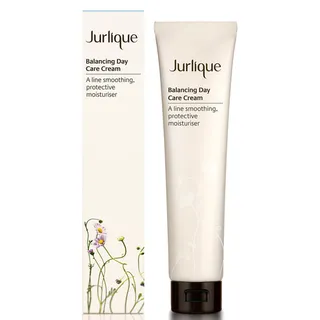
“Experience the hydrating benefits as your skin quickly absorbs this light textured moisturiser that helps to minimise the visible signs of ageing, leaving your skin feeling soft and smooth.”
This product can help improve hydration of the skin with the two types of ingredients.
The first type is called “humectants”:
these ingredients help attract water.
When humectants are on the surface of the skin, they “pull in” the moisture from the outside environment, or from
within deeper layers of the skin. The following ingredients in this product do the job:
glycerin, hydrolyzed soy protein.
This product also contains ingredients called “occlusives”. They help reduce the speed with which our skin loses moisture to the outside environment. These ingredients also help soften the upper layer of the skin, so it feels less tight and nicer to the touch. The following ingredients in this product do the job: caprylic/capric triglyceride, simmondsia chinensis seed oil.
The following ingredients in this product are especially good for supporting the skin barrier and helping with the hydration level: panthenol
Anti-agingVitis vinifera seed extract, Butyrospermum parkii oil + 3 moreMay help
“Experience the hydrating benefits as your skin quickly absorbs this light textured moisturiser that helps to minimise the visible signs of ageing, leaving your skin feeling soft and smooth.”
This product contains vitis vinifera seed extract. This ingredient might be able to help reduce and prevent fine lines and wrinkles, improve skin elasticity and firmness, but there is not enough evidence that it actually works.
Anti-oxidationSide benefit · Camellia sinensis leaf extract, Vitis vinifera seed extract + 9 moreWorks well
This product contains antioxidants (vitis vinifera seed extract) that can help neutralize free radicals in skin. By doing so, they can lessen the damage the skin gets from the UV light (sun).
The following ingredients - camellia sinensis leaf extract also can have an antioxidant effect, but there is less evidence to confirm their effectiveness in skin.
Can it cause trouble?
Irritancy15 strong irritants: Calendula officinalis flower extract, Rosa gallica flower extract + 13 more — patch-test recommendedHigh risk
Comedogenic2 ingredients rated 2 or more on the 0–5 pore-clogging scale2 flagged

User reviews
Be the first — your take helps the next person decide.
Ingredients
Filter by role to see what each ingredient is doing.
Water~45–55%
Caprylic/capric triglyceride~5.5–6.7%
- Irritation risk
- Medium
A good mix of fatty acids that forms a protective layer on the skin. Improves the shelf life of products. Derived from coconut and glycerin
More about Caprylic/capric triglyceridePersea gratissima oil~4.4–5.3%
- Irritation risk
- Medium
An emollient that helps soften the skin and could be helpful in repairing its barrier function
More about Persea gratissima oilCetearyl alcohol~2.5–3.1%
- Irritation risk
- Low
- Comedogenicity
- 2/5
A non-drying alcohol. Works as an emollient. Helps water and oil mix together and creates a nice product texture
More about Cetearyl alcoholRosa canina fruit oil~2.4–2.9%
- Irritation risk
- Medium
A great emollient. Contains vitamin E (tocopherol) which may give it some anti-oxidant properties. Can contain volatile compounds and can be irritating
More about Rosa canina fruit oilGlycerin~2–2.4%
- Irritation risk
- Low
One of the best moisturizing ingredients. Naturally present in skin. It attracts water to the upper layer of the skin working as a humectant
More about GlycerinCarthamus tinctorius seed oil~1.7–2%
- Irritation risk
- Low
An emollient that helps soften the skin and might help calm down inflammation
More about Carthamus tinctorius seed oilGlyceryl stearate citrate~1.4–1.8%
- Irritation risk
- Low
Helps oil and water mix together while softening the upper layer of the skin
More about Glyceryl stearate citrateSimmondsia chinensis seed oil~1.3–1.6%
- Irritation risk
- Medium
Softens the upper layer of skin and helps restore the healthy skin barrier. Has shown to help calm down inflammation in skin. It is a stable oil, meaning that it retains its properties even when exposed to air.
More about Simmondsia chinensis seed oilButyrospermum parkii oil~1–1.2%
- Irritation risk
- Low
- Comedogenicity
- 3/5
Althaea officinalis root extract~0.65–1%
- Irritation risk
- High
A plant extract that can help attract water to the upper layer of the skin and might help to reduce inflammation
More about Althaea officinalis root extractChamomilla recutita flower extract~0.55–0.85%
- Irritation risk
- High
Plant extract that can have healing and anti-inflammatory properties. It is a potential allergen and can be irritating
More about Chamomilla recutita flower extractCalendula officinalis flower extract~0.5–0.7%
- Irritation risk
- High
A plant extract that has some anti-oxidant and anti-bacterial properties. Can be irritating
More about Calendula officinalis flower extractCamellia sinensis leaf extract~0.5–0.7%
- Irritation risk
- Low
Can contain potent anti-oxidant compounds (abbreviated ECG, GCG, EGC, and EGCG) that might help protect the skin from free radicals. Can help calm down inflammation and has some anti-bacterial properties. Unfortunately, these antioxidants are unstable and lose their effectiveness very quickly in products. The concentration of the antioxidant compounds in the extract also tends to be low to be effective in topical formulation
More about Camellia sinensis leaf extractSymphytum officinale extract~0.5–0.75%
- Irritation risk
- Low
Rosa gallica flower extract~0.4–0.6%
- Irritation risk
- High
Vitis vinifera seed extract~0.45–0.65%
- Irritation risk
- Low
A plant extract that contains resveratrol and other anti-oxidant compounds that can help neutralize free radicals, reduce inflammation in skin and even out its tone. Can be also used to stabilize the product formulation
More about Vitis vinifera seed extractBellis perennis flower extract~0.35–0.6%
- Irritation risk
- High
A plant extract. Used as a fragrance. Can be irritating
More about Bellis perennis flower extractViola odorata extract~0.3–0.55%
- Irritation risk
- Low
Echinacea purpurea root extract~0.25–0.5%
- Irritation risk
- Low
Viola tricolor extract~0.3–0.55%
- Irritation risk
- Medium
A plant extract that might have an anti-inflammatory effect in skin
More about Viola tricolor extractCurcuma longa root extract~0.25–0.45%
- Irritation risk
- High
A plant extract that can contain an active compound curcumin, that may have some anti-inflammatory properties when applied to the skin, but solid research is lacking and the typical concentration used in skincare products is too low. Can be an irritant
More about Curcuma longa root extractMacadamia ternifolia seed oil~0.3–0.55%
- Irritation risk
- Medium
Plant oil from nuts that helps soften the upper layer of the skin. Contains a high concentration of oleic acid that can weaken skin's barrier function and increase water-loss while enhancing penetration of other ingredients
More about Macadamia ternifolia seed oilLauroyl lysine~0.25–0.45%
- Irritation risk
- Low
Helps soften the upper layer of the skin and creates a nice product texture
More about Lauroyl lysineParfum~0.25–0.45%
- Irritation risk
- High
An aromatic blend of unspecified and possibly irritating ingredients
More about ParfumHydrolyzed soy protein~0.25–0.45%
- Irritation risk
- Low
Helps attract water to the upper layer of the skin. Might have some anti-aging, anti-oxidant, and skin lightening properties, but solid evidence is missing
More about Hydrolyzed soy proteinAlcohol~0.25–0.45%
- Irritation risk
- High
Can be drying and contribute to skin irritation. Used in formulars to dissolve other ingredients, create a thinner product consistency or for its antibacterial properties
More about AlcoholSodium dehydroacetate~0.25–0.45%
Panthenol~0.25–0.45%
- Irritation risk
- Low
Helps attract water to the upper layer of the skin and can help improve skin barrier function
More about PanthenolXanthan gum~0.25–0.5%
- Irritation risk
- Low
Used to create a thicker product consistency
More about Xanthan gumLactic acid~0.25–0.45%
- Irritation risk
- Medium
An exfoliating and moisturizing alpha-hydroxy acid (AHA). Typically causes less irritation than other AHAs, for example, glycolic acid. At high concentrations (about 15%), lactic acid can help reduce lines and wrinkles. Recent studies show that lactic acid can support the "good" bacteria living on skin's surface (healthy skin microbiome)
More about Lactic acidLecithin~0.3–0.55%
- Irritation risk
- Low
Used mostly for creating emulsions - helping oil and water mix together. Helps soften the upper layer of the skin
More about LecithinOenothera biennis oil~0.25–0.5%
- Irritation risk
- Medium
Helps soften the upper layer of the skin and can support skin barrier function
More about Oenothera biennis oilRetinyl palmitate~0.2–0.4%
- Irritation risk
- High
Three steps removed from the active form of vitamin A - retinoic acid. To have an effect in the skin, it first needs to be converted twice to become the retinoic acid. This means it is less potent than retinol, but could also be less irritating. Once converted to the retinoic acid in the skin, it helps against all signs of aging, improves skin cell turnover and helps fight blemishes and clogged pores. However, in many cosmetic formulations, it is used in a concentration that is too low to have the full effect
More about Retinyl palmitateTocopheryl acetate~0.25–0.45%
- Irritation risk
- Medium
A more stable but less bio-available form of vitamin E compared to Tocopherol. Might help moisturize and protect the skin from free radicals, but mostly used in low concentrations to stabilize other ingredients.
More about Tocopheryl acetateTotarol~0.25–0.45%
- Irritation risk
- Low
Citral~0.2–0.35%
Eugenol~0.15–0.3%
Benzyl salicylate~0.15–0.3%
Coumarin~0.15–0.25%
Geraniol~0.1–0.2%
Linalool~0.15–0.25%
Benzyl benzoate~0.15–0.25%
- Irritation risk
- High
Fragrance with sweet balsamic smell. Help to preserve products and dissolve other ingredients. Could trigger allergic reactions and be irritating
More about Benzyl benzoateCitronellol~0.1–0.15%
Limonene~0.05–0.15%
- Irritation risk
- High
A common frangrance that can easily irritate skin, especially if exposed to air, light or heat
More about LimoneneIngredient list view
Water, Caprylic/capric triglyceride, Persea gratissima oil, Cetearyl alcohol, Rosa canina fruit oil, Glycerin, Carthamus tinctorius seed oil, Glyceryl stearate citrate, Simmondsia chinensis seed oil, Butyrospermum parkii oil, Althaea officinalis root extract, Chamomilla recutita flower extract, Calendula officinalis flower extract, Camellia sinensis leaf extract, Symphytum officinale extract, Rosa gallica flower extract, Vitis vinifera seed extract, Bellis perennis flower extract, Viola odorata extract, Echinacea purpurea root extract, Viola tricolor extract, Curcuma longa root extract, Macadamia ternifolia seed oil, Lauroyl lysine, Parfum, Hydrolyzed soy protein, Alcohol, Sodium dehydroacetate, Panthenol, Xanthan gum, Lactic acid, Lecithin, Oenothera biennis oil, Retinyl palmitate, Tocopheryl acetate, Totarol, Citral, Eugenol, Benzyl salicylate, Coumarin, Geraniol, Linalool, Benzyl benzoate, Citronellol, Limonene
Compare prices
Retailers ranked by price — lowest first.
Affiliate links · As an Amazon Associate, WIMJ earns from qualifying purchases.
Worth comparing, line by line.
Match % combines shared ingredients, the first five ingredients, shared actives and hero ingredients, irritancy (lower counts in the alternative's favour), texture and body area. Only products in the same routine step are compared.
| JurliqueBalancing Day Care CreamYOUR PRODUCT | January LabsRetexturizing Night Cream | Esmi Skin MineralsDetox Hydra-Fluid Moisturiser | Epicuren DiscoveryHydro Plus Moisturizer | |
|---|---|---|---|---|
| Match | — | 55% | 50% | 48% |
| Price | — | — | $56.20 | $67.10 |
| Shared key ingredients | — | 4 of 14 | 4 of 14 | 6 of 14 |
| Key difference | — | Niacinamide | Hyaluronic Acid | Anhydroxylitol |
| Irritancy | High | Medium | Low | Low |
| Drying alcohol | Contains drying alcohol | — | — | — |
| View product | Shop | Shop | Shop |


More alternatives: Epicuren Hydro Plus MoisturizerEvereden Kids Multi-Vitamin Face Cream
Sources cited in this review
Every concentration estimate and effectiveness label is anchored to one of these 20 studies and safety reviews.
- 1
- 2
- 3
- 4
- 5
- 6

Affiliate links · As an Amazon Associate, WIMJ earns from qualifying purchases.