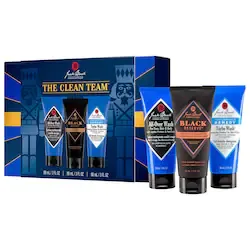
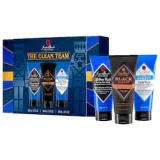
Jack Black The Clean Team - Body Cleanser Gift Set – Trio
Works for
CleansingSodium lauroyl sarcosinate, Cocamidopropyl betaine + 6 moreCleanses gently
“The Clean Team - Body Cleanser Gift Set – Trio”
This product works by removing dirt and oil from the surface of the skin. It uses a combination of mild cleansing agents (cocamidopropyl betaine, glycol distearate, glycol stearate, lauryl glucoside, peg-120 methyl glucose dioleate, peg-20 methyl glucose sesquistearate, sodium c14-16 olefin sulfonate, sodium lauroyl sarcosinate) and should be able to cleanse the skin gently. Still keep in mind that any cleansing can disrupt the skin barrier, and most people do not need to cleanse their skin more than once per day.
Even though this formulation is mild, the following cleansing agents could trigger an irritation or allergy for some people: cocamidopropyl betaine, sodium c14-16 olefin sulfonate
Can it cause trouble?
Irritancy15 strong irritants: Parfum, Rosmarinus officinalis leaf extract + 13 more — patch-test recommendedHigh risk
Comedogenic6 ingredients rated 2 or more on the 0–5 pore-clogging scale6 flagged
User reviews
Be the first — your take helps the next person decide.
Ingredients
Filter by role to see what each ingredient is doing.
Water~45–55%
Lauryl glucoside~6.5–7.9%
Sodium c14-16 olefin sulfonate~5.6–6.8%
- Irritation risk
- High
Helps oil and water mix together and used as a cleansing agent. Can be irritating and is better avoided for sensitive skin
More about Sodium c14-16 olefin sulfonateCocamidopropyl betaine~4.3–5.2%
- Irritation risk
- High
Helps water and oil mix together. Used as a cleansing ingredient. Could be an allergen
More about Cocamidopropyl betainePeg-120 methyl glucose dioleate~2.2–2.7%
Sodium lauroyl sarcosinate~2.5–3%
- Irritation risk
- Medium
Helps oil and water mix together and works as a cleansing agent
More about Sodium lauroyl sarcosinateEthylhexylglycerin~1.5–1.9%
Glycerin~1.4–1.7%
- Irritation risk
- Low
One of the best moisturizing ingredients. Naturally present in skin. It attracts water to the upper layer of the skin working as a humectant
More about GlycerinButyrospermum parkii butter~1.2–1.4%
- Irritation risk
- Low
- Comedogenicity
- 3/5
A great moisturising ingredient that softens the skin and reduces water loss from its upper layer. It also can be helpful in protecting skin from free radicals
More about Butyrospermum parkii butterHelianthus annuus seed oil~0.95–1.15%
- Irritation risk
- Low
A great emollient due to its high linoleic acid content. One of the most effective plant oils in helping skin hydration and repairing skin barrier function
More about Helianthus annuus seed oilPeg-20 methyl glucose sesquistearate~0.65–0.95%
- Irritation risk
- Medium
Helps oil and water mix together
More about Peg-20 methyl glucose sesquistearateGlycol stearate~0.65–0.95%
Parfum~0.45–0.65%
- Irritation risk
- High
An aromatic blend of unspecified and possibly irritating ingredients
More about ParfumSodium phytate~0.4–0.65%
Polyquaternium-7~0.4–0.65%
- Irritation risk
- Low
Helps soften the upper layer of the skin and create a nice product finish
More about Polyquaternium-7Aloe barbadensis leaf juice powder~0.35–0.6%
- Irritation risk
- Medium
Traditionally used to treat sunburns, dermatitis and inflammation, but evidence for its effectiveness is lacking. The extract can contain humectants that help attract water into the skin
More about Aloe barbadensis leaf juice powderLaminaria digitata extract~0.35–0.6%
- Irritation risk
- Low
- Comedogenicity
- 3/5
Seaweed extract that helps the skin to attract water and make it more smooth for touch. Also shows promise of anti-aging properties, but good research is lacking at the moment
More about Laminaria digitata extractPunica granatum extract~0.3–0.55%
- Irritation risk
- Medium
A plant extract that can help neutralize free radicals in skin and even out the skin tone, but is typically used in products in a concentration that is too low to be effective
More about Punica granatum extractOryza sativa bran extract~0.25–0.5%
Helianthus annuus extract~0.3–0.5%
- Irritation risk
- Low
Helps soften the upper layer of the skin
More about Helianthus annuus extractRosmarinus officinalis leaf extract~0.2–0.4%
- Irritation risk
- High
Can be helpful in reducing inflammation in skin, including inflamed acne. It can be irritating
More about Rosmarinus officinalis leaf extractOlea europaea fruit extract~0.25–0.5%
- Irritation risk
- Low
An emollient that helps soften the skin but is not effective for restoring its barrier function. Might be helpful to calm down inflammation
More about Olea europaea fruit extractCitrus grandis fruit extract~0.15–0.3%
- Irritation risk
- High
Camellia sinensis leaf extract~0.25–0.45%
- Irritation risk
- Low
Can contain potent anti-oxidant compounds (abbreviated ECG, GCG, EGC, and EGCG) that might help protect the skin from free radicals. Can help calm down inflammation and has some anti-bacterial properties. Unfortunately, these antioxidants are unstable and lose their effectiveness very quickly in products. The concentration of the antioxidant compounds in the extract also tends to be low to be effective in topical formulation
More about Camellia sinensis leaf extractOcimum basilicum leaf extract~0.2–0.4%
- Irritation risk
- High
Used as a frangrance. Can be irritating. Might have some anti-bacterial properties
More about Ocimum basilicum leaf extractHydrolyzed linseed extract~0.2–0.4%
- Irritation risk
- Low
Helps soften the upper layer of the skin
More about Hydrolyzed linseed extractHydrolyzed jojoba protein~0.2–0.4%
- Irritation risk
- Low
Helps attract water to the upper layer of the skin
More about Hydrolyzed jojoba proteinPanthenol~0.2–0.4%
- Irritation risk
- Low
Helps attract water to the upper layer of the skin and can help improve skin barrier function
More about PanthenolTocopherol~0.2–0.4%
- Irritation risk
- Low
Pure form of vitamin E. Can help moisturise and protect the skin from free radicals. Often used to help stabilise other ingredients or the formula itself
More about TocopherolAscorbyl palmitate~0.2–0.4%
- Irritation risk
- Medium
Being a lipid soluble form of vitamin C, it is more stable and can penetrate the skin better than L-Ascorbic acid. It is effective in protecting the skin from free radicals, as well as evening the skin tone, but is less effective in stimulating collagen production compared to L-Ascorbic acid.
More about Ascorbyl palmitateRetinyl palmitate~0.2–0.4%
- Irritation risk
- High
Three steps removed from the active form of vitamin A - retinoic acid. To have an effect in the skin, it first needs to be converted twice to become the retinoic acid. This means it is less potent than retinol, but could also be less irritating. Once converted to the retinoic acid in the skin, it helps against all signs of aging, improves skin cell turnover and helps fight blemishes and clogged pores. However, in many cosmetic formulations, it is used in a concentration that is too low to have the full effect
More about Retinyl palmitateTocopheryl acetate~0.25–0.45%
- Irritation risk
- Medium
A more stable but less bio-available form of vitamin E compared to Tocopherol. Might help moisturize and protect the skin from free radicals, but mostly used in low concentrations to stabilize other ingredients.
More about Tocopheryl acetateAscorbic acid~0.2–0.4%
- Irritation risk
- High
The most well-researched antioxidant that works in skin. Helps neutralize free radicals supporting collagen production, helping to even out the skin tone and preventing early signs of aging
More about Ascorbic acidCitric acid~0.2–0.4%
- Irritation risk
- Medium
Can work as an exfoliant but is typically used to adjust the product pH
More about Citric acidPhenoxyethanol~0.25–0.4%
- Irritation risk
- Low
A preservative. It helps prevent bacterial growth in cosmetic products
More about PhenoxyethanolChlorphenesin~0.16–0.32%
Sodium benzoate~0.2–0.4%
Sorbic acid~0.2–0.4%
Water~0.2–0.4%
Sodium c14-16 olefin sulfonate~0.35–0.6%
- Irritation risk
- High
Helps oil and water mix together and used as a cleansing agent. Can be irritating and is better avoided for sensitive skin
More about Sodium c14-16 olefin sulfonateCocamidopropyl betaine~0.75–1.15%
- Irritation risk
- High
Helps water and oil mix together. Used as a cleansing ingredient. Could be an allergen
More about Cocamidopropyl betainePeg-120 methyl glucose dioleate~0.25–0.45%
Parfum~0.2–0.35%
- Irritation risk
- High
An aromatic blend of unspecified and possibly irritating ingredients
More about ParfumLauryl glucoside~0.3–0.55%
Ethylhexylglycerin~0.2–0.4%
Rosmarinus officinalis leaf extract~0.2–0.35%
- Irritation risk
- High
Can be helpful in reducing inflammation in skin, including inflamed acne. It can be irritating
More about Rosmarinus officinalis leaf extractEucalyptus globulus leaf extract~0.2–0.35%
- Irritation risk
- High
Used as a fragrance. Can be irritating
More about Eucalyptus globulus leaf extractJuniperus communis fruit extract~0.2–0.35%
- Irritation risk
- Medium
Berry extract that might have some anti-oxidant effect
More about Juniperus communis fruit extractOcimum basilicum leaf extract~0.2–0.4%
- Irritation risk
- High
Used as a frangrance. Can be irritating. Might have some anti-bacterial properties
More about Ocimum basilicum leaf extractCamellia sinensis leaf extract~0.25–0.4%
- Irritation risk
- Low
Can contain potent anti-oxidant compounds (abbreviated ECG, GCG, EGC, and EGCG) that might help protect the skin from free radicals. Can help calm down inflammation and has some anti-bacterial properties. Unfortunately, these antioxidants are unstable and lose their effectiveness very quickly in products. The concentration of the antioxidant compounds in the extract also tends to be low to be effective in topical formulation
More about Camellia sinensis leaf extractLaminaria digitata extract~0.2–0.4%
- Irritation risk
- Low
- Comedogenicity
- 3/5
Seaweed extract that helps the skin to attract water and make it more smooth for touch. Also shows promise of anti-aging properties, but good research is lacking at the moment
More about Laminaria digitata extractAloe barbadensis leaf juice powder~0.2–0.4%
- Irritation risk
- Medium
Traditionally used to treat sunburns, dermatitis and inflammation, but evidence for its effectiveness is lacking. The extract can contain humectants that help attract water into the skin
More about Aloe barbadensis leaf juice powderHelianthus annuus seed oil~0.25–0.45%
- Irritation risk
- Low
A great emollient due to its high linoleic acid content. One of the most effective plant oils in helping skin hydration and repairing skin barrier function
More about Helianthus annuus seed oilHelianthus annuus extract~0.25–0.45%
- Irritation risk
- Low
Helps soften the upper layer of the skin
More about Helianthus annuus extractButyrospermum parkii butter~0.25–0.45%
- Irritation risk
- Low
- Comedogenicity
- 3/5
A great moisturising ingredient that softens the skin and reduces water loss from its upper layer. It also can be helpful in protecting skin from free radicals
More about Butyrospermum parkii butterArnica montana flower extract~0.2–0.35%
- Irritation risk
- High
A plant extract that can be irritating. It can have some anti-bacterial properties, but there are no evidence of a beneficial effect for skin
More about Arnica montana flower extractCitrus grandis fruit extract~0.15–0.3%
- Irritation risk
- High
Oryza sativa bran extract~0.2–0.4%
Thymus vulgaris leaf extract~0.2–0.4%
- Irritation risk
- High
Plant extract that has some anti-bacterial properties. Can be used as a fragrance. Can be irritating
More about Thymus vulgaris leaf extractAscorbic acid~0.2–0.4%
- Irritation risk
- High
The most well-researched antioxidant that works in skin. Helps neutralize free radicals supporting collagen production, helping to even out the skin tone and preventing early signs of aging
More about Ascorbic acidAscorbyl palmitate~0.2–0.4%
- Irritation risk
- Medium
Being a lipid soluble form of vitamin C, it is more stable and can penetrate the skin better than L-Ascorbic acid. It is effective in protecting the skin from free radicals, as well as evening the skin tone, but is less effective in stimulating collagen production compared to L-Ascorbic acid.
More about Ascorbyl palmitateHydrolyzed jojoba protein~0.2–0.4%
- Irritation risk
- Low
Helps attract water to the upper layer of the skin
More about Hydrolyzed jojoba proteinPanthenol~0.2–0.4%
- Irritation risk
- Low
Helps attract water to the upper layer of the skin and can help improve skin barrier function
More about PanthenolRetinyl palmitate~0.2–0.4%
- Irritation risk
- High
Three steps removed from the active form of vitamin A - retinoic acid. To have an effect in the skin, it first needs to be converted twice to become the retinoic acid. This means it is less potent than retinol, but could also be less irritating. Once converted to the retinoic acid in the skin, it helps against all signs of aging, improves skin cell turnover and helps fight blemishes and clogged pores. However, in many cosmetic formulations, it is used in a concentration that is too low to have the full effect
More about Retinyl palmitateTocopheryl acetate~0.25–0.45%
- Irritation risk
- Medium
A more stable but less bio-available form of vitamin E compared to Tocopherol. Might help moisturize and protect the skin from free radicals, but mostly used in low concentrations to stabilize other ingredients.
More about Tocopheryl acetateTocopherol~0.2–0.4%
- Irritation risk
- Low
Pure form of vitamin E. Can help moisturise and protect the skin from free radicals. Often used to help stabilise other ingredients or the formula itself
More about TocopherolGlycerin~0.25–0.45%
- Irritation risk
- Low
One of the best moisturizing ingredients. Naturally present in skin. It attracts water to the upper layer of the skin working as a humectant
More about GlycerinGlycol stearate~0.25–0.5%
Glycol distearate~0.25–0.45%
- Irritation risk
- Medium
Helps water and oil mix together
More about Glycol distearateCitric acid~0.2–0.4%
- Irritation risk
- Medium
Can work as an exfoliant but is typically used to adjust the product pH
More about Citric acidPeg-20 methyl glucose sesquistearate~0.25–0.45%
- Irritation risk
- Medium
Helps oil and water mix together
More about Peg-20 methyl glucose sesquistearatePolyquaternium-7~0.25–0.45%
- Irritation risk
- Low
Helps soften the upper layer of the skin and create a nice product finish
More about Polyquaternium-7Sodium benzoate~0.2–0.4%
Sorbic acid~0.2–0.4%
Sodium phytate~0.2–0.4%
Sodium chloride~0.25–0.45%
- Irritation risk
- Low
Used to stabilize mixtures of oil and water, and create thicker, gel-like product textures
More about Sodium chlorideChlorphenesin~0.16–0.32%
Phenoxyethanol~0.25–0.4%
- Irritation risk
- Low
A preservative. It helps prevent bacterial growth in cosmetic products
More about PhenoxyethanolPotassium sorbate~0.2–0.4%
Sodium hydroxide~0.2–0.4%
Alcohol~0.2–0.4%
- Irritation risk
- High
Can be drying and contribute to skin irritation. Used in formulars to dissolve other ingredients, create a thinner product consistency or for its antibacterial properties
More about AlcoholTetrasodium edta~0.25–0.45%
Benzyl benzoate~0.25–0.4%
- Irritation risk
- High
Fragrance with sweet balsamic smell. Help to preserve products and dissolve other ingredients. Could trigger allergic reactions and be irritating
More about Benzyl benzoateCoumarin~0.25–0.4%
Geraniol~0.25–0.4%
Citral~0.25–0.4%
Limonene~0.25–0.4%
- Irritation risk
- High
A common frangrance that can easily irritate skin, especially if exposed to air, light or heat
More about LimoneneLinalool~0.25–0.4%
Water~0.25–0.45%
Sodium c14-16 olefin sulfonate~0.4–0.6%
- Irritation risk
- High
Helps oil and water mix together and used as a cleansing agent. Can be irritating and is better avoided for sensitive skin
More about Sodium c14-16 olefin sulfonateCocamidopropyl betaine~0.9–1.1%
- Irritation risk
- High
Helps water and oil mix together. Used as a cleansing ingredient. Could be an allergen
More about Cocamidopropyl betainePeg-120 methyl glucose dioleate~0.25–0.5%
Parfum~0.25–0.4%
- Irritation risk
- High
An aromatic blend of unspecified and possibly irritating ingredients
More about ParfumLauryl glucoside~0.35–0.6%
Ethylhexylglycerin~0.25–0.45%
Rosmarinus officinalis leaf extract~0.2–0.4%
- Irritation risk
- High
Can be helpful in reducing inflammation in skin, including inflamed acne. It can be irritating
More about Rosmarinus officinalis leaf extractEucalyptus globulus leaf extract~0.2–0.4%
- Irritation risk
- High
Used as a fragrance. Can be irritating
More about Eucalyptus globulus leaf extractJuniperus communis fruit extract~0.2–0.4%
- Irritation risk
- Medium
Berry extract that might have some anti-oxidant effect
More about Juniperus communis fruit extractOcimum basilicum leaf extract~0.25–0.45%
- Irritation risk
- High
Used as a frangrance. Can be irritating. Might have some anti-bacterial properties
More about Ocimum basilicum leaf extractCamellia sinensis extract~0.25–0.45%
- Irritation risk
- Low
Tea extract. Might be helpful in neutralizing free radicals in skin
More about Camellia sinensis extractLaminaria digitata extract~0.25–0.45%
- Irritation risk
- Low
- Comedogenicity
- 3/5
Seaweed extract that helps the skin to attract water and make it more smooth for touch. Also shows promise of anti-aging properties, but good research is lacking at the moment
More about Laminaria digitata extractAloe barbadensis leaf juice powder~0.25–0.45%
- Irritation risk
- Medium
Traditionally used to treat sunburns, dermatitis and inflammation, but evidence for its effectiveness is lacking. The extract can contain humectants that help attract water into the skin
More about Aloe barbadensis leaf juice powderHelianthus annuus seed oil~0.25–0.5%
- Irritation risk
- Low
A great emollient due to its high linoleic acid content. One of the most effective plant oils in helping skin hydration and repairing skin barrier function
More about Helianthus annuus seed oilHelianthus annuus extract~0.25–0.5%
- Irritation risk
- Low
Helps soften the upper layer of the skin
More about Helianthus annuus extractButyrospermum parkii butter~0.3–0.55%
- Irritation risk
- Low
- Comedogenicity
- 3/5
A great moisturising ingredient that softens the skin and reduces water loss from its upper layer. It also can be helpful in protecting skin from free radicals
More about Butyrospermum parkii butterArnica montana flower extract~0.2–0.4%
- Irritation risk
- High
A plant extract that can be irritating. It can have some anti-bacterial properties, but there are no evidence of a beneficial effect for skin
More about Arnica montana flower extractCitrus grandis fruit extract~0.2–0.35%
- Irritation risk
- High
Oryza sativa bran extract~0.25–0.45%
Thymus vulgaris leaf extract~0.25–0.45%
- Irritation risk
- High
Plant extract that has some anti-bacterial properties. Can be used as a fragrance. Can be irritating
More about Thymus vulgaris leaf extractAscorbic acid~0.25–0.45%
- Irritation risk
- High
The most well-researched antioxidant that works in skin. Helps neutralize free radicals supporting collagen production, helping to even out the skin tone and preventing early signs of aging
More about Ascorbic acidAscorbyl palmitate~0.25–0.45%
- Irritation risk
- Medium
Being a lipid soluble form of vitamin C, it is more stable and can penetrate the skin better than L-Ascorbic acid. It is effective in protecting the skin from free radicals, as well as evening the skin tone, but is less effective in stimulating collagen production compared to L-Ascorbic acid.
More about Ascorbyl palmitateHydrolyzed jojoba protein~0.25–0.45%
- Irritation risk
- Low
Helps attract water to the upper layer of the skin
More about Hydrolyzed jojoba proteinPanthenol~0.25–0.45%
- Irritation risk
- Low
Helps attract water to the upper layer of the skin and can help improve skin barrier function
More about PanthenolRetinyl palmitate~0.25–0.45%
- Irritation risk
- High
Three steps removed from the active form of vitamin A - retinoic acid. To have an effect in the skin, it first needs to be converted twice to become the retinoic acid. This means it is less potent than retinol, but could also be less irritating. Once converted to the retinoic acid in the skin, it helps against all signs of aging, improves skin cell turnover and helps fight blemishes and clogged pores. However, in many cosmetic formulations, it is used in a concentration that is too low to have the full effect
More about Retinyl palmitateTocopheryl acetate~0.25–0.5%
- Irritation risk
- Medium
A more stable but less bio-available form of vitamin E compared to Tocopherol. Might help moisturize and protect the skin from free radicals, but mostly used in low concentrations to stabilize other ingredients.
More about Tocopheryl acetateTocopherol~0.25–0.45%
- Irritation risk
- Low
Pure form of vitamin E. Can help moisturise and protect the skin from free radicals. Often used to help stabilise other ingredients or the formula itself
More about TocopherolGlycerin~0.25–0.5%
- Irritation risk
- Low
One of the best moisturizing ingredients. Naturally present in skin. It attracts water to the upper layer of the skin working as a humectant
More about GlycerinGlycol stearate~0.3–0.55%
Glycol distearate~0.25–0.5%
- Irritation risk
- Medium
Helps water and oil mix together
More about Glycol distearateC18-26 olefin~0.2–0.4%
- Irritation risk
- Low
Citric acid~0.2–0.4%
- Irritation risk
- Medium
Can work as an exfoliant but is typically used to adjust the product pH
More about Citric acidPeg-20 methyl glucose sesquistearate~0.25–0.4%
- Irritation risk
- Medium
Helps oil and water mix together
More about Peg-20 methyl glucose sesquistearatePolyquaternium-7~0.2–0.4%
- Irritation risk
- Low
Helps soften the upper layer of the skin and create a nice product finish
More about Polyquaternium-7Sodium benzoate~0.15–0.3%
Sorbic acid~0.15–0.25%
Sodium phytate~0.15–0.25%
Sodium chloride~0.15–0.3%
- Irritation risk
- Low
Used to stabilize mixtures of oil and water, and create thicker, gel-like product textures
More about Sodium chlorideChlorphenesin~0.1–0.2%
Phenoxyethanol~0.15–0.25%
- Irritation risk
- Low
A preservative. It helps prevent bacterial growth in cosmetic products
More about PhenoxyethanolLimonene~0.05–0.1%
- Irritation risk
- High
A common frangrance that can easily irritate skin, especially if exposed to air, light or heat
More about LimoneneLinalool~0.05–0.1%
Ingredient list view
Water, Lauryl glucoside, Sodium c14-16 olefin sulfonate, Cocamidopropyl betaine, Peg-120 methyl glucose dioleate, Sodium lauroyl sarcosinate, Ethylhexylglycerin, Glycerin, Butyrospermum parkii butter, Helianthus annuus seed oil, Peg-20 methyl glucose sesquistearate, Glycol stearate, Parfum, Sodium phytate, Polyquaternium-7, Aloe barbadensis leaf juice powder, Laminaria digitata extract, Punica granatum extract, Oryza sativa bran extract, Helianthus annuus extract, Rosmarinus officinalis leaf extract, Olea europaea fruit extract, Citrus grandis fruit extract, Camellia sinensis leaf extract, Ocimum basilicum leaf extract, Hydrolyzed linseed extract, Hydrolyzed jojoba protein, Panthenol, Tocopherol, Ascorbyl palmitate, Retinyl palmitate, Tocopheryl acetate, Ascorbic acid, Citric acid, Phenoxyethanol, Chlorphenesin, Sodium benzoate, Sorbic acid, Water, Sodium c14-16 olefin sulfonate, Cocamidopropyl betaine, Peg-120 methyl glucose dioleate, Parfum, Lauryl glucoside, Ethylhexylglycerin, Rosmarinus officinalis leaf extract, Eucalyptus globulus leaf extract, Juniperus communis fruit extract, Ocimum basilicum leaf extract, Camellia sinensis leaf extract, Laminaria digitata extract, Aloe barbadensis leaf juice powder, Helianthus annuus seed oil, Helianthus annuus extract, Butyrospermum parkii butter, Arnica montana flower extract, Citrus grandis fruit extract, Oryza sativa bran extract, Thymus vulgaris leaf extract, Ascorbic acid, Ascorbyl palmitate, Hydrolyzed jojoba protein, Panthenol, Retinyl palmitate, Tocopheryl acetate, Tocopherol, Glycerin, Glycol stearate, Glycol distearate, Citric acid, Peg-20 methyl glucose sesquistearate, Polyquaternium-7, Sodium benzoate, Sorbic acid, Sodium phytate, Sodium chloride, Chlorphenesin, Phenoxyethanol, Potassium sorbate, Sodium hydroxide, Alcohol, Tetrasodium edta, Benzyl benzoate, Coumarin, Geraniol, Citral, Limonene, Linalool, Water, Sodium c14-16 olefin sulfonate, Cocamidopropyl betaine, Peg-120 methyl glucose dioleate, Parfum, Lauryl glucoside, Ethylhexylglycerin, Rosmarinus officinalis leaf extract, Eucalyptus globulus leaf extract, Juniperus communis fruit extract, Ocimum basilicum leaf extract, Camellia sinensis extract, Laminaria digitata extract, Aloe barbadensis leaf juice powder, Helianthus annuus seed oil, Helianthus annuus extract, Butyrospermum parkii butter, Arnica montana flower extract, Citrus grandis fruit extract, Oryza sativa bran extract, Thymus vulgaris leaf extract, Ascorbic acid, Ascorbyl palmitate, Hydrolyzed jojoba protein, Panthenol, Retinyl palmitate, Tocopheryl acetate, Tocopherol, Glycerin, Glycol stearate, Glycol distearate, C18-26 olefin, Citric acid, Peg-20 methyl glucose sesquistearate, Polyquaternium-7, Sodium benzoate, Sorbic acid, Sodium phytate, Sodium chloride, Chlorphenesin, Phenoxyethanol, Limonene, Linalool
Compare prices
Retailers ranked by price — lowest first.

Worth comparing, line by line.
Match % combines shared ingredients, the first five ingredients, shared actives and hero ingredients, irritancy (lower counts in the alternative's favour), texture and body area. Only products in the same routine step are compared.
| Jack BlackThe Clean Team - Body Cleanser Gift Set – TrioYOUR PRODUCT | Sofie Pavitt FaceClean Clean Gentle Gel Foaming Cleanser | VitaminSea.beautyRed Algae Coconut Oil Gel Facial Cleanser | SanexBiomeprotect Pro Hydrate Shower Gel | |
|---|---|---|---|---|
| Match | — | 38% | 36% | 36% |
| Price | $25.00 | $34.00+$9.00 | — | $5.94−$19.06 |
| Shared key ingredients | — | 5 of 21 | 4 of 21 | 4 of 21 |
| Key difference | — | Allantoin | Cocos Nucifera Fruit Extract | Lactic Acid |
| Irritancy | High | Low | Medium | Medium |
| Drying alcohol | Contains drying alcohol | — | — | — |
| View product | Shop | Shop | Shop |
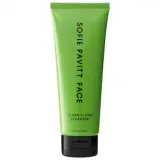

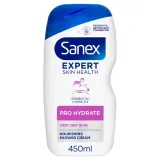
More alternatives: Moroccanoil Shower Gel Spa Du MarocPerricone MD No Makeup Easy Rinse Makeup-Removing Cleanser
Sources cited in this review
Every concentration estimate and effectiveness label is anchored to one of these 21 studies and safety reviews.
- 1Final Report On the Safety Assessment of Sodium Alpha-Olefin Sulfonatesjournals.sagepub.com
- 2
- 3
- 4
- 5Effect of topically applied lipids on surfactant-irritated skinonlinelibrary.wiley.com
- 6

Affiliate links · As an Amazon Associate, WIMJ earns from qualifying purchases.