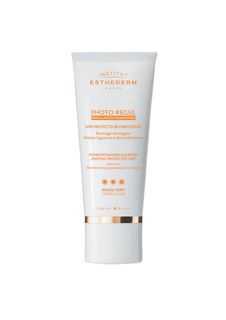
Institut Esthederm PHOTO REGUL PIGMENTATION IRREGULARITIES UNIFYING PROTECTIVE CARE

Institut Esthederm PHOTO REGUL PIGMENTATION IRREGULARITIES UNIFYING PROTECTIVE CARE

Efficacy75/100IrritancyHigh
Edit

Works for

2 of 2 advertised claims delivered

Moisturizing
19 ingredients credited for this claim
Good support
What the product description says
“Protects against UVA, UVB rays.”
Source: Naos Store

This product can help improve hydration of the skin with the two types of ingredients.

The first type is called “humectants”:
these ingredients help attract water. When humectants are on the surface of the skin, they “pull in” the moisture from the outside environment, or from within deeper layers of the skin. The following ingredients in this product do the job: artemia extract, aspartic acid.

This product also contains ingredients called “occlusives”. They help reduce the speed with which our skin loses moisture to the outside environment. These ingredients also help soften the upper layer of the skin, so it feels less tight and nicer to the touch. The following ingredients in this product do the job: helianthus annuus seed oil, caprylyl glycol.

Artemia extractKey active· HumectantEffect: HighZooplankton extract that can attract water to the upper level of the skin and might have some anti-oxidant effect~0.25–0.45%
GlycerinKey active· HumectantEffect: HighOne of the best moisturizing ingredients. Naturally present in skin. It attracts water to the upper layer of the skin working as a humectant~2.4–3%
Helianthus annuus seed oilKey active· Emollient, OcclusiveEffect: HighA great emollient due to its high linoleic acid content. One of the most effective plant oils in helping skin hydration and repairing skin barrier function~0.3–0.5%
MannitolKey active· HumectantEffect: HighHelps to attract water to the upper layer of the skin~0.25–0.5%
Palmaria palmata extractKey activeEffect: HighRed algae extract that helps attract water to the upper layer of the skin~0.25–0.5%
TrioleinKey activeEffect: HighHelps soften the upper layer of the skin~0.25–0.45%
Aspartic acidKey active· HumectantEffect: HighAn amino-acid that helps increase skin hydration and might help to slightly improve skin firmness, potentially reducing lines and wrinkles~0.25–0.45%
CarnosineKey active· HumectantEffect: HighA type of peptide. It attracts water to the upper layer of the skin. It can help neutralize free radicals in skin combatting the sun damage~0.1–0.2%
Hydrolyzed wheat proteinKey active· HumectantEffect: MediumCan help attract water to the upper layer of the skin. Avoid if sensitive to gluten~0.25–0.45%
Hydrolyzed soy proteinKey active· HumectantEffect: MediumHelps attract water to the upper layer of the skin. Might have some anti-aging, anti-oxidant, and skin lightening properties, but solid evidence is missing~0.25–0.5%
Caprylyl glycol· Humectant, EmollientEffect: LowHelps preserve products and creates a nice product texture~0.3–0.55%
Dicaprylyl carbonate· EmollientEffect: LowHelps products spread more easily and works as an emollient to soften skin~4.5–5.5%
Glyceryl stearate· EmollientEffect: LowAn emollient that softens the skin and forms a protective layer on its surface. Helps water and oil mix together~0.45–0.65%
Butylene glycol· HumectantEffect: LowUsed to create a nice product texture and help delivery of other ingredients. Might be somewhat helpful in attracting water to the upper layer of the skin~0.25–0.5%
Oleic acid· EmollientEffect: LowHelps soften the upper layer of the skin. At the same time, it can weaken the skin's barrier enhancing penetration of other ingredients and increasing the risk of skin dryness~0.3–0.6%
Copper gluconateUnder-dosedEffect: HighTypically used to stabilize the product formulations. It is a salt of polyhydroxy acid (PHA) and in larger concentrations, can help shed the dead cells from the skin surface revealing smoother skin. It can help attract water to the upper layer of the skin. Might to be helpful against acne and clogged pores. Could be helpful in neutralizing free radicals, but solid research is missing~0.25–0.45%
Paraffinum liquidumUnder-dosedEffect: HighMineral oil. One of the most effective and well studied occlusive and emollient moisturizing ingredients. Helps reduce moisture loss in skin and repair skin barrier function~0.45–0.7%
Laminaria digitata extractUnder-dosedEffect: MediumSeaweed extract that helps the skin to attract water and make it more smooth for touch. Also shows promise of anti-aging properties, but good research is lacking at the moment~0.2–0.4%
TocopherolEffect: Low, below effective dosePure form of vitamin E. Can help moisturise and protect the skin from free radicals. Often used to help stabilise other ingredients or the formula itself~0.25–0.5%
Evens skin tone
3 ingredients credited for this claim
Moderate support
What the product description says
“PHOTO REGUL PIGMENTATION IRREGULARITIES UNIFYING PROTECTIVE CARE”
From product name

The following ingredient (ingredients) in this product might be helpful, but there is no evidence to confirm that it actually works: glycyrrhetinic acid.

Glycyrrhetinic acidKey activeEffect: MediumActive compound of licorice root. Works to calm down inflammation, as an anti-oxidant, and might be helpful in lightening the skin and reducing hyperpigmentation~0.3–0.55%
Hydrolyzed soy proteinEffect: LowHelps attract water to the upper layer of the skin. Might have some anti-aging, anti-oxidant, and skin lightening properties, but solid evidence is missing~0.25–0.5%
Copper gluconateEffect: Low, below effective doseTypically used to stabilize the product formulations. It is a salt of polyhydroxy acid (PHA) and in larger concentrations, can help shed the dead cells from the skin surface revealing smoother skin. It can help attract water to the upper layer of the skin. Might to be helpful against acne and clogged pores. Could be helpful in neutralizing free radicals, but solid research is missing~0.25–0.45%
Anti-oxidation
Not advertised by the brand · 11 ingredients credited for this claim
Strong support

This product contains antioxidants (carnosine, glycyrrhetinic acid) that can help neutralize free radicals in skin. By doing so, they can lessen the damage the skin gets from the UV light (sun).

The following ingredients - creatine also can have an antioxidant effect, but there is less evidence to confirm their effectiveness in skin.

CarnosineKey activeEffect: HighA type of peptide. It attracts water to the upper layer of the skin. It can help neutralize free radicals in skin combatting the sun damage~0.1–0.2%
Glycyrrhetinic acidKey activeEffect: HighActive compound of licorice root. Works to calm down inflammation, as an anti-oxidant, and might be helpful in lightening the skin and reducing hyperpigmentation~0.3–0.55%
CreatineKey activeEffect: MediumCan support skin's ability to neutralize free radicals and produce collagen, though further research is needed to confirm effectiveness~0.35–0.65%
Medicago sativa extractEffect: LowA plant extract that might help neutralize free radicals in skin~0.25–0.45%
Palmaria palmata extractEffect: LowRed algae extract that helps attract water to the upper layer of the skin~0.25–0.5%
Artemia extractEffect: LowZooplankton extract that can attract water to the upper level of the skin and might have some anti-oxidant effect~0.25–0.45%
Hydrolyzed soy proteinEffect: LowHelps attract water to the upper layer of the skin. Might have some anti-aging, anti-oxidant, and skin lightening properties, but solid evidence is missing~0.25–0.5%
TocopherolUnder-dosedEffect: HighPure form of vitamin E. Can help moisturise and protect the skin from free radicals. Often used to help stabilise other ingredients or the formula itself~0.25–0.5%
Copper gluconateEffect: Low, below effective doseTypically used to stabilize the product formulations. It is a salt of polyhydroxy acid (PHA) and in larger concentrations, can help shed the dead cells from the skin surface revealing smoother skin. It can help attract water to the upper layer of the skin. Might to be helpful against acne and clogged pores. Could be helpful in neutralizing free radicals, but solid research is missing~0.25–0.45%
Tocopheryl acetateEffect: Low, below effective doseA more stable but less bio-available form of vitamin E compared to Tocopherol. Might help moisturize and protect the skin from free radicals, but mostly used in low concentrations to stabilize other ingredients.~0.5–0.7%
Laminaria digitata extractEffect: Low, below effective doseSeaweed extract that helps the skin to attract water and make it more smooth for touch. Also shows promise of anti-aging properties, but good research is lacking at the moment~0.2–0.4%
Anti-aging
Not advertised by the brand · 6 ingredients credited for this claim
Moderate support

This product contains aspartic acid, carnosine, creatine. These ingredients might be able to help reduce and prevent fine lines and wrinkles, improve skin elasticity and firmness, but there is not enough evidence that it actually works.

CreatineKey activeEffect: MediumCan support skin's ability to neutralize free radicals and produce collagen, though further research is needed to confirm effectiveness~0.35–0.65%
CarnosineKey activeEffect: MediumA type of peptide. It attracts water to the upper layer of the skin. It can help neutralize free radicals in skin combatting the sun damage~0.1–0.2%
Aspartic acidKey activeEffect: MediumAn amino-acid that helps increase skin hydration and might help to slightly improve skin firmness, potentially reducing lines and wrinkles~0.25–0.45%
TocopherolEffect: Low, below effective dosePure form of vitamin E. Can help moisturise and protect the skin from free radicals. Often used to help stabilise other ingredients or the formula itself~0.25–0.5%
Copper gluconateEffect: Low, below effective doseTypically used to stabilize the product formulations. It is a salt of polyhydroxy acid (PHA) and in larger concentrations, can help shed the dead cells from the skin surface revealing smoother skin. It can help attract water to the upper layer of the skin. Might to be helpful against acne and clogged pores. Could be helpful in neutralizing free radicals, but solid research is missing~0.25–0.45%
Laminaria digitata extractEffect: Low, below effective doseSeaweed extract that helps the skin to attract water and make it more smooth for touch. Also shows promise of anti-aging properties, but good research is lacking at the moment~0.2–0.4%

Can it cause trouble?

Irritancy
13 strong irritants: Alcohol denat., Parfum + 11 more — patch-test recommended
High risk
We flagged 33 ingredients with irritancy potential. Severity depends on your sensitivity threshold; the table lists the worst offenders first.
IngredientFunctionIrritationEst. amount
Ethylhexyl methoxycinnamateOctinoxate. When used in higher concentrations, works as a sunscreen protecting the skin from UVB rays. When used in lower concentration, helps to preserve the product formulation. Is shown to be harmful to coral reefs - consider avoiding bathing in coral reef areas when wearing a product with this ingredient. It can be irritatingHigh~2.1–2.5%est.
Alcohol denat.Produces temporary toning effect. Can help dissolve other ingredients or preserve productsHigh~0.55–0.8%est.
ParfumAn aromatic blend of unspecified and possibly irritating ingredientsHigh~0.3–0.6%est.
LinaloolA fragrance. Can be irritatingHigh~0.25–0.45%est.
Hexyl cinnamalA fragrance with jasmine smell. A likely irritantHigh~0.25–0.45%est.
HydroxycitronellalA fragrance. A likely allergen and can be irritatingHigh~0.25–0.45%est.
Propylene glycolHelps oil and water mix together and can enhance the penetration of other ingredients into the skin. It can be irritatingHigh~0.25–0.45%est.
AlcoholCan be drying and contribute to skin irritation. Used in formulars to dissolve other ingredients, create a thinner product consistency or for its antibacterial propertiesHigh~0.25–0.5%est.
LimoneneA common frangrance that can easily irritate skin, especially if exposed to air, light or heatHigh~0.25–0.45%est.
Benzyl benzoateFragrance with sweet balsamic smell. Help to preserve products and dissolve other ingredients. Could trigger allergic reactions and be irritatingHigh~0.25–0.45%est.
GeraniolA fragrance. Can be irritatingHigh~0.25–0.45%est.
CitronellolA fragrance. Can be irritatingHigh~0.25–0.45%est.
Isoeugenol—High~0.25–0.4%est.
CoumarinA fragrance. Is a likely skin allergen and can be irritatingHigh~0.2–0.4%est.
CitralA fragrance with a lemon scent. A likely irritantHigh~0.2–0.35%est.
Ethylhexyl methoxycryleneHelps improve stability of sunscreen filters and boost their effectivenessMedium~4.4–5.4%est.
HomosalateA weak sunscreen that offers some protection against the sun rays that cause sunburn (UVB), but does not offer meaningful protection against protect against the most aging sun rays (UVA). It loses its effectiveness quickly when exposed to sunlight. It is an organic, or so called "chemical" sunscreen. When used in low concentrations, helps to stabilize the product formulationMedium~1.9–2.3%est.
Butyl methoxydibenzoylmethaneAvobenzone. An organic, or so-called "chemical" UV filter. Protects against both UVA and UVB rays. Needs to be combined with other filters in a formulation to be stable.Medium~1.6–1.9%est.
Tribehenin peg-20 estersHelps oil and water mix togetherMedium~0.95–1.15%est.
Tocopheryl acetateA more stable but less bio-available form of vitamin E compared to Tocopherol. Might help moisturize and protect the skin from free radicals, but mostly used in low concentrations to stabilize other ingredients.Medium~0.5–0.7%est.
Glycyrrhetinic acidActive compound of licorice root. Works to calm down inflammation, as an anti-oxidant, and might be helpful in lightening the skin and reducing hyperpigmentationMedium~0.3–0.55%est.
MethylpropanediolHelps dissolve other ingredients in a formulationMedium~0.25–0.5%est.
Acrylates/c10-30 alkyl acrylate crosspolymerMaintains the texture of skincare products. Allows the product to spread evenly. Helps oil and water mix togetherMedium~0.25–0.45%est.
ChlorphenesinA preservativeMedium~0.16–0.32%est.
Disodium edtaStabilizes the product formulationMedium~0.25–0.45%est.
Hydrolyzed wheat proteinCan help attract water to the upper layer of the skin. Avoid if sensitive to glutenMedium~0.25–0.45%est.
Oleic acidHelps soften the upper layer of the skin. At the same time, it can weaken the skin's barrier enhancing penetration of other ingredients and increasing the risk of skin drynessMedium~0.3–0.6%est.
Medicago sativa extractA plant extract that might help neutralize free radicals in skinMedium~0.25–0.45%est.
Caprylyl glycolHelps preserve products and creates a nice product textureMedium~0.3–0.55%est.
Copper gluconateTypically used to stabilize the product formulations. It is a salt of polyhydroxy acid (PHA) and in larger concentrations, can help shed the dead cells from the skin surface revealing smoother skin. It can help attract water to the upper layer of the skin. Might to be helpful against acne and clogged pores. Could be helpful in neutralizing free radicals, but solid research is missingMedium~0.25–0.45%est.
BhtA preservativeMedium~0.25–0.5%est.
Potassium sorbateA preservativeMedium~0.2–0.35%est.
Ci 17200A red colorantMedium~0.2–0.35%est.
Comedogenic
2 ingredients rated 2 or more on the 0–5 pore-clogging scale
2 flagged
These ingredients have a comedogenic rating of 2 or more on a 0–5 scale; the table shows each one's rating. In leave-on products they can clog pores in acne-prone skin.
IngredientFunctionRatingEst. amount
Palmaria palmata extractRed algae extract that helps attract water to the upper layer of the skin3/5~0.25–0.5%est.
Laminaria digitata extractSeaweed extract that helps the skin to attract water and make it more smooth for touch. Also shows promise of anti-aging properties, but good research is lacking at the moment3/5~0.2–0.4%est.
Edit
Cheaper Alternatives
Similar formulations, better price
No cheaper similar product found.

User reviews

Would you recommend?
No community reviews yet.

Be the first — your take helps the next person decide.

Write a review · ~30s

Ingredients

Filter by role to see what each ingredient is doing.

Water~45–55%
Formula
Irritation risk
Low

Plain old water

More about Water
Dicaprylyl carbonate~4.5–5.5%
Formula
Irritation risk
Low
Works for
Moisturizing

Helps products spread more easily and works as an emollient to soften skin

More about Dicaprylyl carbonate
Ethylhexyl methoxycrylene~4.4–5.4%
Irritant · medium
Irritation risk
Medium

Helps improve stability of sunscreen filters and boost their effectiveness

More about Ethylhexyl methoxycrylene
Ethylhexyl salicylate~3.6–4.4%
Formula
Irritation risk
Low
Works for
Sun protection

Octisalate. A UV filter. It offers some protection against the sun rays that cause sunburn (UVB), but does not protect against the most aging sun rays (UVA). It loses its effectiveness quickly when exposed to sunlight. It is an organic, or so called "chemical" sunscreen

More about Ethylhexyl salicylate
Glycerin~2.4–3%
Key active
Irritation risk
Low
Works for
Moisturizing

One of the best moisturizing ingredients. Naturally present in skin. It attracts water to the upper layer of the skin working as a humectant

More about Glycerin
Propanediol~1.9–2.4%
Formula
Irritation risk
Low

Acts as a solvent for other ingredients. Speeds up the absorption of other ingredients into the skin

More about Propanediol
Ethylhexyl methoxycinnamate~2.1–2.5%
Irritant · high
Irritation risk
High
Works for
Sun protection

Octinoxate. When used in higher concentrations, works as a sunscreen protecting the skin from UVB rays. When used in lower concentration, helps to preserve the product formulation. Is shown to be harmful to coral reefs - consider avoiding bathing in coral reef areas when wearing a product with this ingredient. It can be irritating

More about Ethylhexyl methoxycinnamate
Homosalate~1.9–2.3%
Irritant · medium
Irritation risk
Medium
Works for
Sun protection

A weak sunscreen that offers some protection against the sun rays that cause sunburn (UVB), but does not offer meaningful protection against protect against the most aging sun rays (UVA). It loses its effectiveness quickly when exposed to sunlight. It is an organic, or so called "chemical" sunscreen. When used in low concentrations, helps to stabilize the product formulation

More about Homosalate
Butyl methoxydibenzoylmethane~1.6–1.9%
Irritant · medium
Irritation risk
Medium
Works for
Sun protection

Avobenzone. An organic, or so-called "chemical" UV filter. Protects against both UVA and UVB rays. Needs to be combined with other filters in a formulation to be stable.

More about Butyl methoxydibenzoylmethane
Tribehenin peg-20 esters~0.95–1.15%
Irritant · medium
Irritation risk
Medium
Works for
Cleansing

Helps oil and water mix together

More about Tribehenin peg-20 esters
Methyl methacrylate crosspolymer~0.7–1.05%
Formula
Irritation risk
Low
Works for
Mattifying

Helps thicken the product consistency

More about Methyl methacrylate crosspolymer
Alcohol denat.~0.55–0.8%
Irritant · high
Irritation risk
High

Produces temporary toning effect. Can help dissolve other ingredients or preserve products

More about Alcohol denat.
Tocopheryl acetate~0.5–0.7%
Irritant · medium
Irritation risk
Medium
Works for
Anti-oxidation

A more stable but less bio-available form of vitamin E compared to Tocopherol. Might help moisturize and protect the skin from free radicals, but mostly used in low concentrations to stabilize other ingredients.

More about Tocopheryl acetate
Paraffinum liquidum~0.45–0.7%
Under-dosed
Irritation risk
Low
Works for
Moisturizing

Mineral oil. One of the most effective and well studied occlusive and emollient moisturizing ingredients. Helps reduce moisture loss in skin and repair skin barrier function

More about Paraffinum liquidum
Creatine~0.35–0.65%
Key active
Irritation risk
Low
Works for
Anti-oxidationAnti-aging

Can support skin's ability to neutralize free radicals and produce collagen, though further research is needed to confirm effectiveness

More about Creatine
Parfum~0.3–0.6%
Irritant · high
Irritation risk
High

An aromatic blend of unspecified and possibly irritating ingredients

More about Parfum
Glyceryl stearate~0.45–0.65%
Formula
Irritation risk
Low
Works for
CleansingMoisturizing

An emollient that softens the skin and forms a protective layer on its surface. Helps water and oil mix together

More about Glyceryl stearate
Glycyrrhetinic acid~0.3–0.55%
Key activeIrritant · medium
Irritation risk
Medium
Works for
Anti-inflammatoryAnti-oxidationEvens skin tone

Active compound of licorice root. Works to calm down inflammation, as an anti-oxidant, and might be helpful in lightening the skin and reducing hyperpigmentation

More about Glycyrrhetinic acid
Mannitol~0.25–0.5%
Key active
Irritation risk
Low
Works for
Moisturizing

Helps to attract water to the upper layer of the skin

More about Mannitol
Methylpropanediol~0.25–0.5%
Irritant · medium
Irritation risk
Medium

Helps dissolve other ingredients in a formulation

More about Methylpropanediol
Peg-100 stearate~0.3–0.6%
Formula
Irritation risk
Low
Works for
Cleansing

Helps oil and water mix togehter and creates a nice product texture

More about Peg-100 stearate
Phenoxyethanol~0.25–0.45%
Formula
Irritation risk
Low

A preservative. It helps prevent bacterial growth in cosmetic products

More about Phenoxyethanol
Acrylates/c10-30 alkyl acrylate crosspolymer~0.25–0.45%
Irritant · medium
Irritation risk
Medium

Maintains the texture of skincare products. Allows the product to spread evenly. Helps oil and water mix together

More about Acrylates/c10-30 alkyl acrylate crosspolymer
Trilinolein~0.2–0.4%
Formula
Irritation risk
Low
More about Trilinolein
Chlorphenesin~0.16–0.32%
Irritant · medium
Irritation risk
Medium

A preservative

More about Chlorphenesin
Acetyl tyrosine~0.25–0.45%
Formula
Aspartic acid~0.25–0.45%
Key active
Irritation risk
Low
Works for
MoisturizingAnti-aging

An amino-acid that helps increase skin hydration and might help to slightly improve skin firmness, potentially reducing lines and wrinkles

More about Aspartic acid
Cerium oxide~0.25–0.5%
Formula
Irritation risk
Low
More about Cerium oxide
Helianthus annuus seed oil~0.3–0.5%
Key active
Irritation risk
Low
Works for
Moisturizing

A great emollient due to its high linoleic acid content. One of the most effective plant oils in helping skin hydration and repairing skin barrier function

More about Helianthus annuus seed oil
Xanthan gum~0.25–0.5%
Formula
Irritation risk
Low
Works for
Cleansing

Used to create a thicker product consistency

More about Xanthan gum
Disodium edta~0.25–0.45%
Irritant · medium
Irritation risk
Medium

Stabilizes the product formulation

More about Disodium edta
Sodium dextran sulfate~0.25–0.45%
Formula
Sodium hydroxide~0.25–0.5%
Formula
Irritation risk
Low

Used to adjust the product's pH

More about Sodium hydroxide
Palmaria palmata extract~0.25–0.5%
Key activeComedogenic 3/5
Irritation risk
Low
Comedogenicity
3/5
Works for
MoisturizingAnti-oxidation

Red algae extract that helps attract water to the upper layer of the skin

More about Palmaria palmata extract
Hydrolyzed soy protein~0.25–0.5%
Key active
Irritation risk
Low
Works for
MoisturizingEvens skin toneAnti-oxidationAnti-inflammatory

Helps attract water to the upper layer of the skin. Might have some anti-aging, anti-oxidant, and skin lightening properties, but solid evidence is missing

More about Hydrolyzed soy protein
Oleoyl tyrosine~0.25–0.45%
Formula
Pentaerythrityl tetra-di-t-butyl hydroxyhydrocinnamate~0.3–0.5%
Formula
Irritation risk
Low

Used to increase stability of product formulations

More about Pentaerythrityl tetra-di-t-butyl hydroxyhydrocinnamate
Butylene glycol~0.25–0.5%
Formula
Irritation risk
Low
Works for
Moisturizing

Used to create a nice product texture and help delivery of other ingredients. Might be somewhat helpful in attracting water to the upper layer of the skin

More about Butylene glycol
Triolein~0.25–0.45%
Key active
Irritation risk
Low
Works for
Moisturizing

Helps soften the upper layer of the skin

More about Triolein
Tripalmitin~0.25–0.45%
Formula
Irritation risk
Low
More about Tripalmitin
Hydrolyzed wheat protein~0.25–0.45%
Key activeIrritant · medium
Irritation risk
Medium
Works for
Moisturizing

Can help attract water to the upper layer of the skin. Avoid if sensitive to gluten

More about Hydrolyzed wheat protein
Silica~0.45–0.65%
Formula
Irritation risk
Low

Used to absorb oil and can temporarily mattify skin

More about Silica
Linalool~0.25–0.45%
Irritant · high
Irritation risk
High

A fragrance. Can be irritating

More about Linalool
Hexyl cinnamal~0.25–0.45%
Irritant · high
Irritation risk
High

A fragrance with jasmine smell. A likely irritant

More about Hexyl cinnamal
Hydroxycitronellal~0.25–0.45%
Irritant · high
Irritation risk
High

A fragrance. A likely allergen and can be irritating

More about Hydroxycitronellal
Andrographis paniculata leaf extract~0.25–0.45%
Formula
Oleic acid~0.3–0.6%
Irritant · medium
Irritation risk
Medium
Works for
CleansingAnti-inflammatoryMoisturizing

Helps soften the upper layer of the skin. At the same time, it can weaken the skin's barrier enhancing penetration of other ingredients and increasing the risk of skin dryness

More about Oleic acid
Medicago sativa extract~0.25–0.45%
Irritant · medium
Irritation risk
Medium
Works for
Anti-oxidation

A plant extract that might help neutralize free radicals in skin

More about Medicago sativa extract
Trilinolenin~0.3–0.5%
Formula
Irritation risk
Low
More about Trilinolenin
Propylene glycol~0.25–0.45%
Irritant · high
Irritation risk
High
Works for
Moisturizing

Helps oil and water mix together and can enhance the penetration of other ingredients into the skin. It can be irritating

More about Propylene glycol
Alcohol~0.25–0.5%
Irritant · high
Irritation risk
High
Works for
Antibacterial

Can be drying and contribute to skin irritation. Used in formulars to dissolve other ingredients, create a thinner product consistency or for its antibacterial properties

More about Alcohol
Limonene~0.25–0.45%
Irritant · high
Irritation risk
High

A common frangrance that can easily irritate skin, especially if exposed to air, light or heat

More about Limonene
Tris(tetramethylhydroxypiperidinol) citrate~0.25–0.5%
Formula
Tristearin~0.25–0.45%
Formula
Irritation risk
Low
More about Tristearin
Caprylyl glycol~0.3–0.55%
Irritant · medium
Irritation risk
Medium
Works for
Moisturizing

Helps preserve products and creates a nice product texture

More about Caprylyl glycol
Benzyl benzoate~0.25–0.45%
Irritant · high
Irritation risk
High

Fragrance with sweet balsamic smell. Help to preserve products and dissolve other ingredients. Could trigger allergic reactions and be irritating

More about Benzyl benzoate
Geraniol~0.25–0.45%
Irritant · high
Irritation risk
High

A fragrance. Can be irritating

More about Geraniol
Copper gluconate~0.25–0.45%
Under-dosedIrritant · medium
Irritation risk
Medium
Works for
MoisturizingAnti-agingAnti-oxidationEvens skin toneAnti-blemishExfoliation

Typically used to stabilize the product formulations. It is a salt of polyhydroxy acid (PHA) and in larger concentrations, can help shed the dead cells from the skin surface revealing smoother skin. It can help attract water to the upper layer of the skin. Might to be helpful against acne and clogged pores. Could be helpful in neutralizing free radicals, but solid research is missing

More about Copper gluconate
Citronellol~0.25–0.45%
Irritant · high
Irritation risk
High

A fragrance. Can be irritating

More about Citronellol
Bht~0.25–0.5%
Irritant · medium
Irritation risk
Medium

A preservative

More about Bht
Artemia extract~0.25–0.45%
Key active
Irritation risk
Low
Works for
MoisturizingAnti-oxidation

Zooplankton extract that can attract water to the upper level of the skin and might have some anti-oxidant effect

More about Artemia extract
Carnosine~0.25–0.45%
Key active
Irritation risk
Low
Works for
Anti-oxidationMoisturizingAnti-aging

A type of peptide. It attracts water to the upper layer of the skin. It can help neutralize free radicals in skin combatting the sun damage

More about Carnosine
Tocopherol~0.25–0.5%
Under-dosed
Irritation risk
Low
Works for
Anti-oxidationMoisturizingAnti-inflammatoryAnti-aging

Pure form of vitamin E. Can help moisturise and protect the skin from free radicals. Often used to help stabilise other ingredients or the formula itself

More about Tocopherol
Triarachidin~0.3–0.55%
Formula
Irritation risk
Low
Works for
Cleansing
More about Triarachidin
Isoeugenol~0.25–0.4%
Irritant · high
Irritation risk
High
More about Isoeugenol
Coumarin~0.2–0.4%
Irritant · high
Irritation risk
High

A fragrance. Is a likely skin allergen and can be irritating

More about Coumarin
Disodium adenosine triphosphate~0.25–0.45%
Formula
Citral~0.2–0.35%
Irritant · high
Irritation risk
High

A fragrance with a lemon scent. A likely irritant

More about Citral
Laminaria digitata extract~0.2–0.4%
Under-dosedComedogenic 3/5
Irritation risk
Low
Comedogenicity
3/5
Works for
MoisturizingAnti-oxidationAnti-aging

Seaweed extract that helps the skin to attract water and make it more smooth for touch. Also shows promise of anti-aging properties, but good research is lacking at the moment

More about Laminaria digitata extract
Potassium sorbate~0.2–0.35%
Irritant · medium
Irritation risk
Medium

A preservative

More about Potassium sorbate
Ci 17200~0.2–0.35%
Irritant · medium
Irritation risk
Medium

A red colorant

More about Ci 17200
Water~0.2–0.35%
Formula
Irritation risk
Low

Plain old water

More about Water
Disodium adenosine triphosphate~0.15–0.3%
Formula
Carnosine~0.1–0.2%
Key active
Irritation risk
Low
Works for
MoisturizingAnti-oxidationAnti-aging

A type of peptide. It attracts water to the upper layer of the skin. It can help neutralize free radicals in skin combatting the sun damage

More about Carnosine
Mineral salts~0.1–0.2%
Formula
Irritation risk
Low

Used to thicked product formulations. Might help to add minerals to the surface of the skin

More about Mineral salts
Ingredient list view

Water, Dicaprylyl carbonate, Ethylhexyl methoxycrylene, Ethylhexyl salicylate, Glycerin, Propanediol, Ethylhexyl methoxycinnamate, Homosalate, Butyl methoxydibenzoylmethane, Tribehenin peg-20 esters, Methyl methacrylate crosspolymer, Alcohol denat., Tocopheryl acetate, Paraffinum liquidum, Creatine, Parfum, Glyceryl stearate, Glycyrrhetinic acid, Mannitol, Methylpropanediol, Peg-100 stearate, Phenoxyethanol, Acrylates/c10-30 alkyl acrylate crosspolymer, Trilinolein, Chlorphenesin, Acetyl tyrosine, Aspartic acid, Cerium oxide, Helianthus annuus seed oil, Xanthan gum, Disodium edta, Sodium dextran sulfate, Sodium hydroxide, Palmaria palmata extract, Hydrolyzed soy protein, Oleoyl tyrosine, Pentaerythrityl tetra-di-t-butyl hydroxyhydrocinnamate, Butylene glycol, Triolein, Tripalmitin, Hydrolyzed wheat protein, Silica, Linalool, Hexyl cinnamal, Hydroxycitronellal, Andrographis paniculata leaf extract, Oleic acid, Medicago sativa extract, Trilinolenin, Propylene glycol, Alcohol, Limonene, Tris(tetramethylhydroxypiperidinol) citrate, Tristearin, Caprylyl glycol, Benzyl benzoate, Geraniol, Copper gluconate, Citronellol, Bht, Artemia extract, Carnosine, Tocopherol, Triarachidin, Isoeugenol, Coumarin, Disodium adenosine triphosphate, Citral, Laminaria digitata extract, Potassium sorbate, Ci 17200, Water, Disodium adenosine triphosphate, Carnosine, Mineral salts

Compare prices

Retailers ranked by price — lowest first.

Naos Store
≈ $76.08
Buy

Affiliate links · prices updated regularly

Worth comparing, line by line.

Match % combines shared ingredients, the first five ingredients, shared actives and hero ingredients, irritancy (lower counts in the alternative's favour), texture and body area. Only products in the same routine step are compared.

Side-by-side comparison of this product against its closest alternatives
Institut EsthedermPHOTO REGUL PIGMENTATION IRREGULARITIES UNIFYING PROTECTIVE CAREYOUR PRODUCTPayotPerform Night Lipo-Sculpting Cream
Match—50%
Price$75.36$88.58+$13.22
Shared key ingredients—2 of 17
Key difference—Palmitoyl Tetrapeptide-7
Irritancy High Medium
Drying alcohol Contains drying alcohol —
View product Shop
Cheaper alternatives? See how this stacks up against similar formulas.
We compare ingredient profiles across our catalog — pick the closest match for your budget.
Open dupe finder

Sources cited in this review

Every concentration estimate and effectiveness label is anchored to one of these 32 studies and safety reviews.

  1. 1
  2. 2
  3. 3
  4. 4
  5. 5
  6. 6
Institut Esthederm PHOTO REGUL PIGMENTATION IRREGULARITIES UNIFYING PROTECTIVE CARE
Institut EsthedermPHOTO REGUL PIGMENTATION IRREGULARITIES UNIFYING PROTECTIVE CARE

Affiliate links · As an Amazon Associate, WIMJ earns from qualifying purchases.

As an Amazon Associate, WIMJ earns from qualifying purchases.